- Call us Via Whatsapp: +84 (0) 832 126 699
4.9 stars on our site
(15,000 reviews)
- Monday - Sunday : 08:00 - 17:00
(15,000 reviews)

Taste the copper metallic tang of deep, oxygen-deprived breathing on your tongue. Listen to the mechanical symphony of your environment: the sharp, rhythmic tick-tick-tick of a carbon-fiber wheelset, the heavy hiss of thirty-eight-millimeter tubeless tires clawing for grip on wet limestone gravel, and the ragged, explosive sound of your own respiration rising in tiny plumes of white mist. The air is freezing, slicing through your jersey like a razor blade, smelling intensely of damp red earth, wild anise, and the sweet, resinous perfume of pine forests clinging to vertical ridges thousands of feet below. You push your weight forward over the handlebars, standing out of the saddle as your quadriceps ignite with a clean, hot burn of lactic acid, fighting for every single inch of traction on a brutal eighteen percent incline. Your vision narrows to the patch of wet earth ahead, but as you break through the heavy cloud deck, the world suddenly explodes into a jagged, infinite ocean of dark stone peaks, emerald valleys, and cascading mountain waterfalls. This is not a vacation; it is a battle against gravity, geology, and your own physical limits. This is the heart of Vietnam Gravel Cycling: Unpaved Epic Journeys.
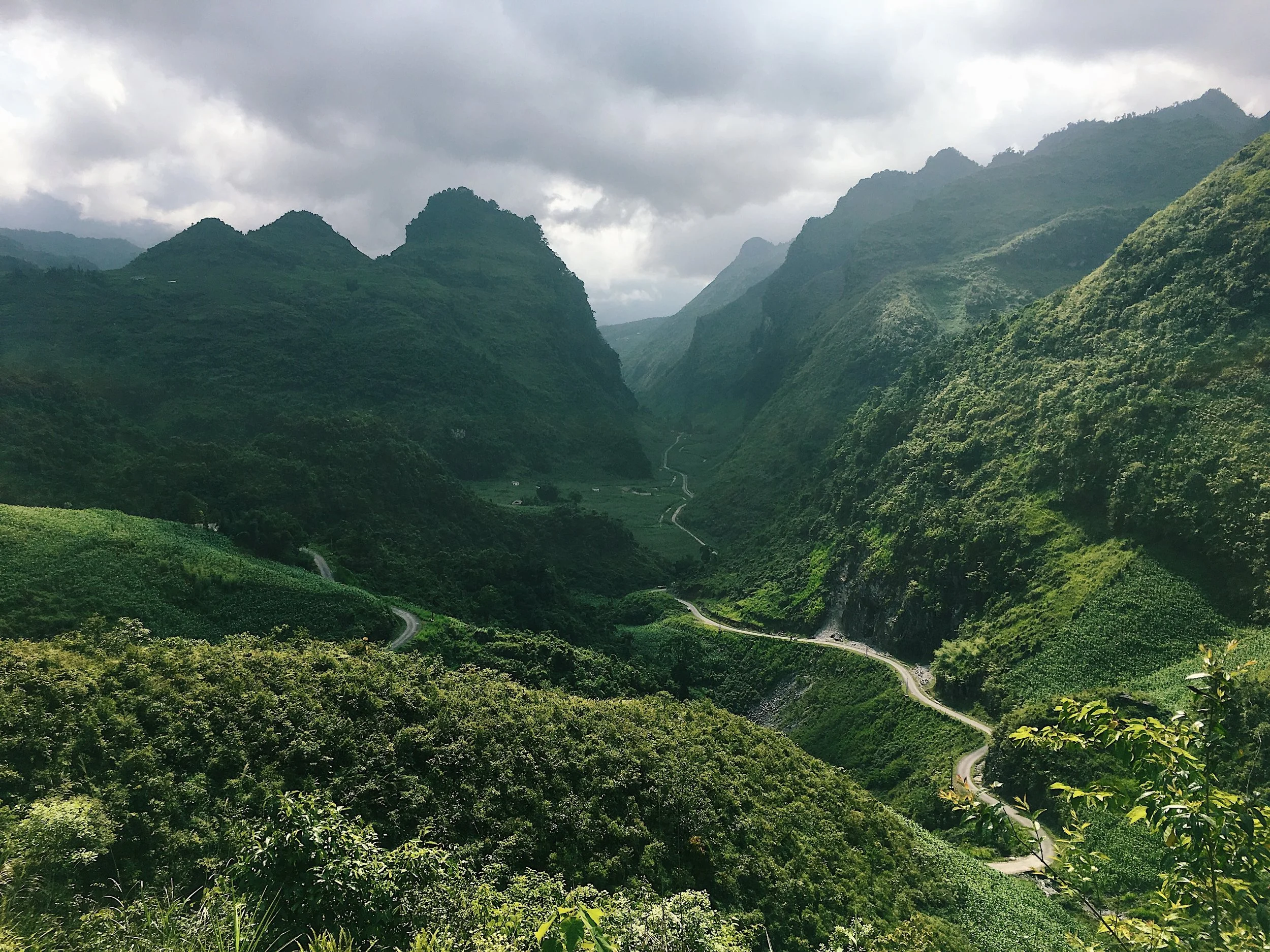
To truly conquer this untamed wilderness, you must surrender to its terms. There is only one way to experience the raw, unfiltered intensity of this high-altitude frontier: by embarking on the legendary Unpaved Epic Journeys: Multi-Day Gravel Bike Tours in Vietnam. Curated and supported by the world-class expedition specialists at Golden Cycling Tours, this itinerary is widely recognized as the most demanding and rewarding off-road challenge in Southeast Asia. This guide dives deep into the logistics, culture, geography, and physical realities of this legendary route, showing you why it is the definitive test of human endurance.
Whether you are an elite amateur racer looking to test your power-to-weight ratio on unpaved slopes or an adventure cyclist seeking a profound spiritual journey through ancient landscapes, this expedition will change your relationship with the bicycle forever. Let us take you beyond the limits of ordinary travel and plunge you directly into the epic, sensory-shattering world of the Vietnamese highlands. If you have ever dreamed of testing your limits alongside a passionate community of global riders, it is time to explore our comprehensive tours and begin planning your ultimate off-road escape.
Vietnam is a geographical masterpiece of dramatic contrasts, spanning over one thousand six hundred kilometers from north to south. While road cyclists stick to the paved highways, gravel riders gain access to the secret veins of the country: ancient trade routes, military supply lines, singletrack paths through rice terraces, and raw mountain fire roads. To plan a successful off-road traverse, you must understand the unique physical and logistical demands of each distinct ecological region.
The northern highlands are a realm of raw geological power. Here, millions of years of tectonic activity have carved a labyrinth of deep limestone canyons, vertical peaks, and mountain passes that rival the French Alps in elevation and difficulty. The gravel routes in this region are steep, technical, and highly unpredictable, often featuring sudden gradients of fifteen to twenty percent on wet concrete strips, loose karst stones, and deep mud.
As you head southward, the rugged highlands transition into the coastal plains of central Vietnam, where the dramatic slopes of the Annamite Range (known locally as the Truong Son Mountain Range) plunge directly into the turquoise waters of the East Vietnam Sea. Here, the gravel challenge shifts to sand-dune fire roads, hard-packed coastal dirt, and remote jungle singletrack. The final segment of the cross-country traverse flattens into the warm, sun-kissed plains of the south, a vast, water-dominated world where life moves to the gentle rhythm of canal networks and tidal rivers.
When deciding on your overall trajectory, you have several primary options to connect these diverse regions into a seamless journey. You can choose to explore via Cycling North to South Vietnam, starting in the misty peaks of the far north and finishing in the tropical warmth of the delta. Alternatively, you can opt for Cycling South to North Vietnam, a path that allows you to build your fitness on the flat coastal plains before tackling the brutal mountain gradients of the northern interior. Whichever path you choose, exploring the country via Cycling Central Vietnam is an unforgettable masterclass in endurance travel.
For riders who want to tackle this life-changing crossing with premium comfort and professional roadside support, our Vietnam Luxury Bike Tours offer an elite level of service, featuring top-tier support vehicles, high-end carbon gravel road bikes, and exceptional boutique properties for nightly recovery. If you are inspired by the grand scale of this route but are concerned about maintaining a consistent pace over consecutive high-mileage mountain days, our Vietnam E-Bikes Tours provide cutting-edge, pedal-assist options that smooth out the steepest climbs without losing any of the sensory magic of the open road.
The first chapter of your gravel traverse begins in the majestic mountains of the Northwest. This is a region of soaring peaks, deep-cut river valleys, and spectacular terraced rice fields that drape over the hillsides like green velvet ribbons.
Your off-road adventure begins in the historic heart of Hanoi, where the energetic, high-octane hum of the streets prepares you for the long journey ahead. Setting off on our expert-guided Hanoi Bike Tours, you navigate the bustling alleyways of the Old Quarter before heading west into the dramatic karst landscapes of Hoa Binh province.
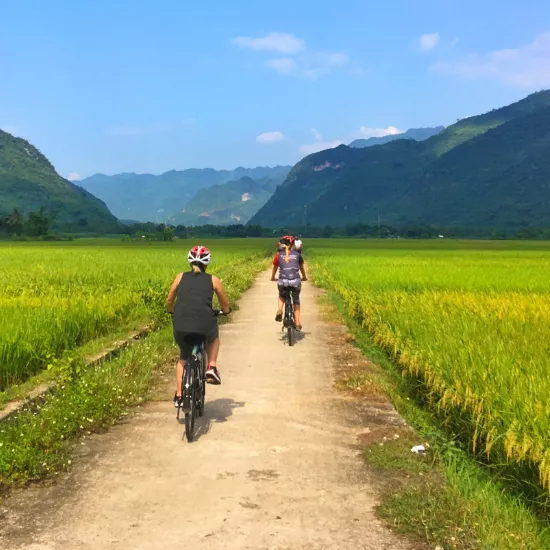
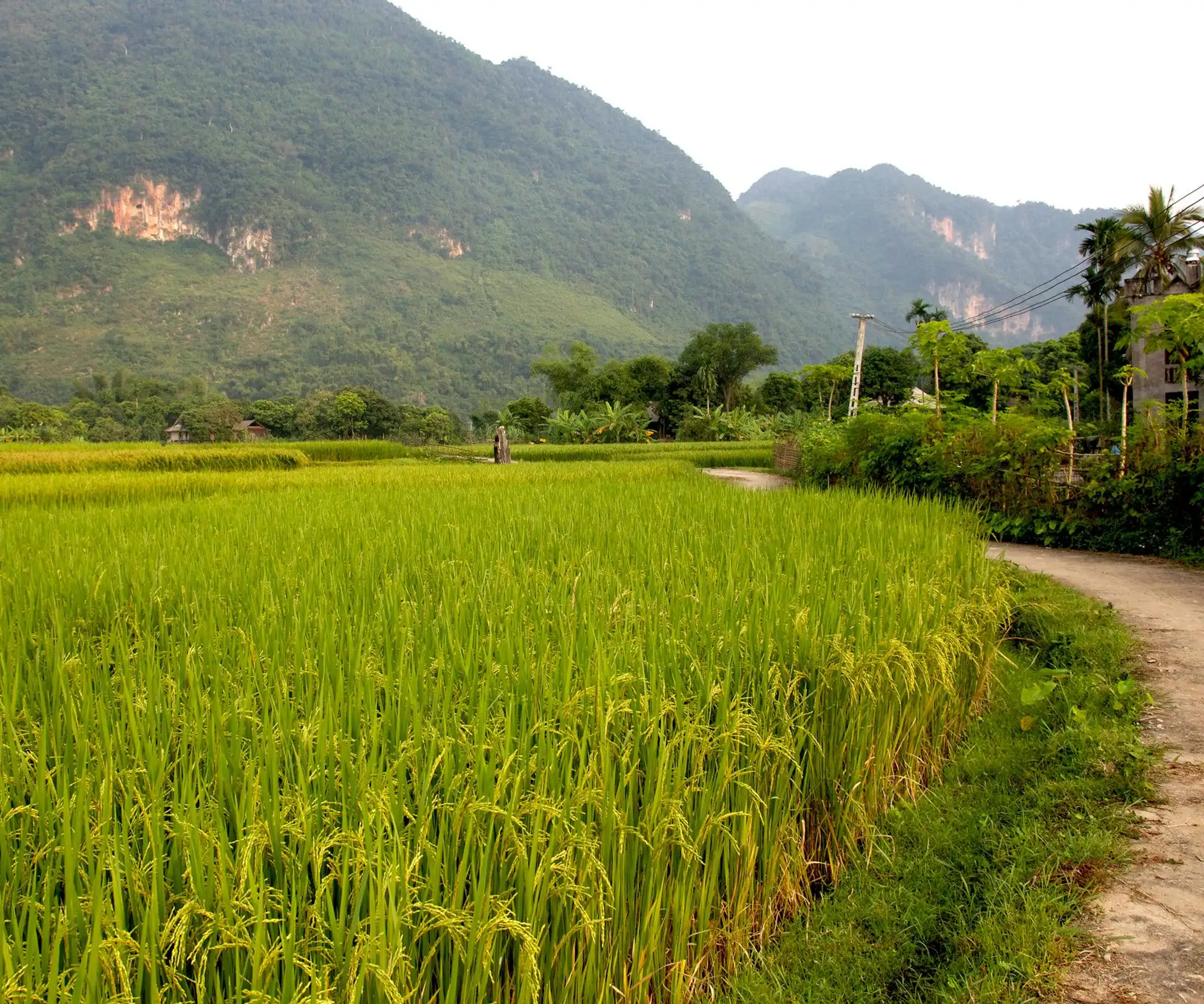
Your first major gravel test is the ascent into the tranquil Mai Chau Valley. As you ride along the quiet, elevated mountain ridges featured in our Mai Chau Bike Tours, the paved roads end, replaced by rocky doubletracks that wind through traditional villages. The mountain air is crisp and cool. Looking down from the pass, you are treated to a stunning view of a flat, peaceful basin carpeted in brilliant green rice fields and dotted with the traditional stilt houses of the White Thai ethnic minority. The fast, flowing gravel descent into the valley is pure joy, requiring active body English and absolute focus as you drift your tires through sweeping, unpaved corners.
From Mai Chau, the route turns south, diving deep into the dense, primeval forests of the Pu Luong Nature Reserve. This is where the terrain gets incredibly rugged and technical. Riding with Pu Luong Bike Tours, you leave all pavement behind to tackle steep, punchy concrete climbs and rocky paths of twelve to eighteen percent that wind through bamboo groves and ancient agricultural terraces.
The air here is thick, warm, and alive with the hum of jungle cicadas. Reaching the remote mountain villages within the reserve, your body will feel the physical toll of the humidity and elevation, but the sight of mist hanging low over the jungle canopy is a spectacular reward that clears away all fatigue. The gravel here is sharp limestone, demanding durable tires and active suspension control as you navigate singletrack trails connecting isolated tribal hamlets.
Heading north from Pu Luong, the mountains grow larger, more intimidating, and infinitely more dramatic. You are now entering the high alpine territory of Sapa, a region famous for its cold, cloud-swept valleys and spectacular terraced fields. As you embark on the high-mileage gravel routes of Sapa Bike Tours, you are preparing to face the ultimate climbing test of the Northwest.
Towering over this region is the legendary O Quy Ho Pass (also known as the Tram Ton Pass), the longest and most spectacular mountain pass in Vietnam. Spanning over fifty kilometers, this giant climbs to an elevation of over two thousand meters above sea level, slicing through the rugged flanks of the majestic Hoang Lien Son Mountain Range.
While road riders stick to the main tarmac highway, our gravel route branches off onto unpaved fire roads that run parallel to the pass. The road clings precariously to vertical cliffs, with deep, gaping chasms on one side and towering walls of green rock on the other. Your heart rate spikes, remaining locked in your maximum aerobic zone for hours. Your fingers grow cold and stiff on the brake hoods, and the sweet, resinous scent of wild mountain pine fills your lungs. As you battle the relentless gradients, you must maintain a steady, metronomic cadence, letting the click of your chain and the rhythm of your breathing guide you upward.
Nearing the summit, known as Heaven's Gate, the climate shifts dramatically. Often, the warm, sunny southern side of the pass suddenly gives way to a wall of freezing, dense white fog on the northern side. Reaching the peak, you stand above a massive, swirling ocean of clouds, with the jagged silhouette of Fansipan Peak—the Roof of Indochina—looming majestically in the distance. This legendary segment is the crown jewel of our Vietnam Northwest Bike Tours, offering a pure, unadulterated showcase of Cycling Northern Vietnam.
Leaving the high peaks of the west behind, the route heads eastward into a landscape that feels almost prehistoric. The Northeast is a wild, remote territory characterized by sheer limestone towers, deep river canyons, and ancient trade routes that hug the northern border.
This is the holy grail of hardcore cycling. Ha Giang is a province of jaw-dropping geological scale, home to the UNESCO-protected Dong Van Karst Plateau Geopark. Riding here with Ha Giang Bike Tours is a deeply emotional, physically punishing experience that will push your endurance to its absolute limits.
The legendary Happiness Road is your primary corridor through this stone wilderness. Built by hand by thousands of young volunteers from different ethnic groups in the mid-twentieth century, this road climbs relentlessly through a surreal landscape of dark, conical limestone peaks that look like the teeth of a sleeping dragon.
Our gravel itinerary dives off this highway onto unpaved frontier trails that trace the border with China. The air is cold, dry, and smells faintly of crushed stone and wild herbs. The absolute pinnacle of this leg is the conquering of Ma Pi Leng Pass, widely regarded as the most spectacular and dangerous pass in Southeast Asia. The climb is a brutal, vertical battle against gravity, featuring unpaved gradients that regularly exceed fifteen percent. Your leg muscles burn with an intense, fiery heat, and your lungs strain to pull in the thin, cold mountain air.
As you fight your way up the narrow, cliff-clinging dirt tracks, you are treated to a view that defies description: the massive, vertical walls of the Ma Pi Leng Canyon drop thousands of feet down to the Nho Que River, which winds through the abyss like a thin, glittering ribbon of emerald-green silk. Reaching the summit of this legendary pass, you will feel an overwhelming sense of triumph. It is a moment of pure, raw connection between human willpower and the monumental scale of nature.
From the rugged limestone of Ha Giang, the route winds eastward into the softer, greener, yet equally challenging valleys of Cao Bang province. Embarking on the remote trails of Cao Bang Bike Tours, you enter a peaceful world of hidden valleys, dense chestnut forests, and slow-moving rivers.
The physical demands of this section are characterized by rolling, undulating terrain that requires constant shifts in pace and power output. You will ride along quiet border roads, passing through ancient ethnic minority villages where the locals look on in wonder at your physical effort. The gravel here consists of packed red clay and river stones, offering a fast but highly engaging surface.
The ultimate destination of this northeast leg is the spectacular Ban Gioc Waterfall, the fourth largest border waterfall in the world. As you approach on unpaved farm tracks, the distant, deep roar of the waterfall guides your path through lush fields of sugarcane. The air becomes damp and cool, thick with a fine, refreshing mist that coats your dust-strewn face and cools your burning muscles. Standing before the massive, multi-tiered cascade as it plunges over the border into China is a poetic, serene conclusion to the brutal physical challenges of the northern loop. This frontier odyssey is a key feature of our Vietnam Northeast Bike Tours, cementing this region as an essential pilgrimage for any serious endurance gravel cyclist.
As your cross-country crossing reaches its second week, the terrain begins to transition. You descend from the high mountains of the far north toward the coastal plains, entering a landscape rich in ancient history and spiritual heritage.
Your transition southward brings you to Ninh Binh, a magical province where vertical limestone karst towers rise directly out of flat, flooded emerald green rice fields. This region is often called "Halong Bay on Land," and it is best explored on two wheels.
With Ninh Binh Bike Tours, you pedal along narrow gravel and dirt dikes, dodging lazy water buffaloes and passing through ancient stone gates. You will ride under the shadow of the spectacular karst formations of the Trang An Scenic Landscape Complex and Tam Coc (adjacent to Cuc Phuong National Park). The air is thick with the scent of ripening rice and wet mud. The riding is flat and fast, offering a welcome reprieve for your legs after the grueling climbs of the north, while still providing a feast for your eyes.
Heading further south, you leave the coastal plains to join the historic Ho Chi Minh Highway. This route takes you inland, slicing through the dense jungles and limestone mountains of central Vietnam.
Our Ho Chi Minh Trail Cycling Tours are more than just a bike ride; they are a journey through the living history of the twentieth century. While the modern highway is paved, our gravel route follows the original unpaved logistics paths that branch deep into the jungle. You will ride through Phong Nha-Ke Bang National Park, home to some of the largest and most spectacular caves on Earth, including the mighty Son Doong Cave.
The dirt road is surrounded by primary rainforest, and the air is alive with the deafening chorus of cicadas and the sweet, heavy scent of tropical vegetation. The surface is smooth red clay but highly undulating, offering a roller-coaster-like ride that keeps your heart pumping and your senses sharp.
As you reach the midpoint of your cross-country journey, you enter Central Vietnam, a region where imperial history, rich artistic traditions, and rugged coastal mountains collide.
Emerging from the jungle-clad interior, you arrive in the former imperial capital of Hue. Steeped in romance and history, Hue is a city of poetry and ancient stone.
Through Hue Bike Tours, you will ride along the gravel paths flanking the poetic Perfume River, exploring the crumbling stone walls of the Imperial Citadel and the majestic, moss-covered tombs of the Nguyen Emperors. The air in Hue feels soft and nostalgic, perfumed by the incense burning in small street shrines.
From Hue, the road leads south toward the ultimate coastal cycling challenge: the world-famous Hai Van Pass (Ocean Cloud Pass). While the main road is well-paved, our gravel route branches onto old military access tracks that climb the ridges of the Annamite Range. As you climb, the green jungle clings to the mountain on your right, while on your left, the cliff drops vertically into the sapphire waters of the East Vietnam Sea. The sea breeze cools your sweat-soaked skin, but the gradient remains unforgiving.
Reaching the summit at Hai Van Gate, you are treated to a panoramic view of the crescent-shaped beach of Lang Co Bay behind you and the modern skyline of Da Nang (with My Khe Beach and the Marble Mountains rising in the distance) ahead. It is a sensory masterpiece of blue, green, and white.
A thrilling, sweeping dirt descent brings you down to the ancient, lantern-lit streets of Hoi An. Exploring the narrow paths of this UNESCO World Heritage town with Hoi An Bike Tours is like stepping back in time. The yellow-walled merchant houses, decorated with blooming pink bougainvillea, glow beautifully under the warm light of thousands of handmade silk lanterns. This entire central stretch is the beating heart of Cycling Central Vietnam.
The final segment of your cross-country epic takes you through a dramatic shift in altitude, climate, and lifestyle as you head into the warm, tropical south.
From the warm coast of Hoi An, the route heads inland once more, climbing steadily up into the temperate southern highlands. Your destination is Da Lat, a city perched high on the Langbian Plateau.
The air changes instantly as you climb. The humid, tropical heat of the coast is replaced by a crisp, cool breeze scented with pine needles and eucalyptus. The gravel roads here wind through rolling hills covered in strawberry farms, flower greenhouses, and vast coffee plantations. Cycling in Da Lat is a refreshing, cool-weather off-road experience that rejuvenates your body and mind before the final push into the southern lowlands.
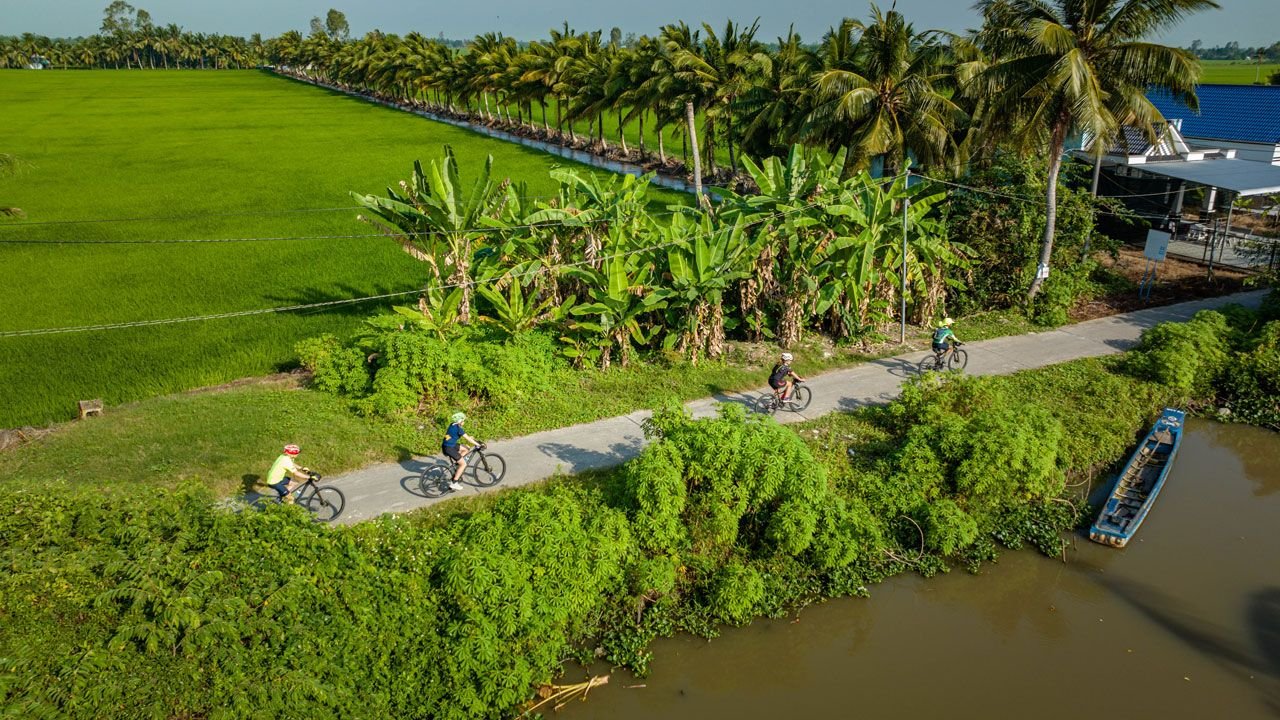
Leaving the pine forests of the highlands, you descend rapidly into the flat, warm, and endlessly fertile plains of the Mekong Delta. This is a world ruled by water, where roads are replaced by canals and life is lived on boats.
The routes of our Mekong Delta Bike Tours are incredibly unique. You will navigate a labyrinth of narrow dirt pathways, small concrete bridges, and quiet canal banks. You will ride through shaded orchards of durian, rambutan, and mango trees, with the sweet, tropical aroma of ripening fruit hanging heavy in the hot air.
The riding is highly interactive and technical on narrow gravel tracks. You will frequently board small local wooden ferries to cross busy rivers, sharing space with locals carrying baskets of fresh fish and vegetables. The sound of water splashing against the hull, the vibrant sights of the Cai Rang Floating Market, and the taste of fresh, sweet coconut water drank straight from the husk make this final leg an unforgettable sensory celebration. It is the ultimate conclusion to Cycling Southern Vietnam.
On an off-road gravel tour where the collective energy expenditure is massive, food ceases to be mere sustenance—it becomes your fuel, your medicine, and your reward. Vietnamese mountain and coastal cuisine is hearty, rustic, and packed with clean carbohydrates, essential minerals, and rich proteins required to keep the gravel engine running.
Pho Bo and Pho Ga: In the cold mountain mornings of the north, nothing compares to a piping hot, fragrant bowl of this iconic noodle soup. The clean, clear broth, simmered for hours with beef bones, charred ginger, star anise, and cinnamon, is an exceptional source of hydration and essential sodium. The tender rice noodles provide immediate, easily digestible glycogen to fuel your morning climb up O Quy Ho Pass or Ma Pi Leng Pass.
Bun Bo Hue: As you enter the central provinces, stop for a bowl of this spicy beef noodle soup in Hue. The rich broth, infused with lemongrass and chili oil, stimulates your circulation and provides a powerful boost to your energy reserves.
Cao Lau: Upon reaching Hoi An, your post-ride reward is a plate of these thick, chewy rice noodles topped with sliced pork and fresh herbs. The unique texture of the noodles offers a dense, slow-burning carbohydrate source to restore your muscle glycogen.
Ga Nuong Sa: In the highland villages, feast on fresh mountain chicken marinated in lemongrass and grilled over open wood charcoal. This lean, protein-rich dish is exceptional for rebuilding damaged muscle fibers after a grueling climbing stage.
To experience the true flavor of Vietnam, avoid tourist-centric restaurants and eat where the locals eat. Stop at small, roadside eateries marked by a simple plastic sign and low blue stools. Here, you will find the freshest, most authentic dishes prepared with ingredients sourced directly from the surrounding hills or seas.
Our professional guides at Golden Cycling Tours have spent years mapping out the best culinary stops along the route, ensuring you enjoy delicious, hygienic, and highly nutritious meals at local family-run diners and mountain markets.
After conquering thousands of meters of vertical climbing on rough terrain, your body requires an environment that facilitates deep, restorative sleep. On this cross-country group expedition, we select accommodations that prioritize physical recovery while keeping you deeply connected to the local environment.
In destinations like Sapa, Mai Chau, and Pu Luong, we stay in beautifully designed mountain eco-lodges that blend seamlessly into the natural topography. Imagine soaking your aching, swollen legs in an infinity pool that hangs directly over the misty valleys of the Pu Luong Nature Reserve or looking out at the massive peaks of the Hoang Lien Son Mountain Range from your private balcony. These lodges use natural materials like local stone, pine wood, and bamboo, creating a serene, peaceful atmosphere where you can fall asleep to the gentle, soothing sounds of the mountain wind.
In historical towns like Hue and Hoi An, you will stay in charming boutique hotels that reflect the elegant architecture of the region. Think French-colonial villas with shaded courtyards, quiet swimming pools surrounded by tropical gardens, and rooms decorated with local artwork and silk textiles. These sanctuaries are located just steps away from the historic centers, allowing you to explore at a leisurely pace after the riding is done.
On the more remote segments of the route, particularly in the wild regions of Ha Giang and Cao Bang, some nights are spent in carefully vetted, high-quality local homestays. Staying in a traditional wooden stilt house of the Tay or White Thai people is a magical experience.
While the amenities are simpler than a luxury hotel, you are provided with clean, comfortable bedding, mosquito nets, hot showers, and unmatched hospitality. There is nothing quite like falling asleep to the cool, clean breeze flowing through the wooden slats of a stilt house, knowing that you are resting in the heart of an ancient community.
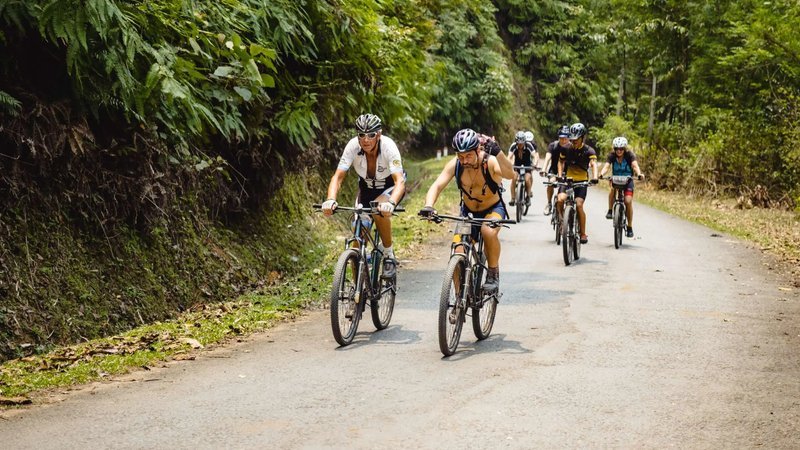
Gravel cycling through these diverse regions as a group is a profoundly moving cultural experience. Because you are traveling at a human-powered pace along remote trails, you are not a detached observer; you are an active participant in the landscape.
In the mountainous north, you will ride through communities of Hmong, Tay, Nung, Dao, and Giay peoples, who have carved a living out of the vertical stone for centuries. You see women in beautiful, hand-woven indigo garments adorned with intricate silver embroidery, tending to their crops on slopes so steep they seem to defy gravity. In the evenings, when the riding is done, you will sit around the open hearth of a traditional wooden stilt house, listening to the elders tell ancient folk stories.
As you head south, you will witness the culture transform. The architectural styles shift from the rustic stilt houses of the north to the elegant, French-colonial villas of Central Vietnam and the simple, water-facing homes of the delta. This raw, authentic human connection is the true soul of Cycling Northern Vietnam, providing a profound sense of purpose that fuels your physical efforts on the road.
Completing a gravel cross-country traverse requires a flawless, professional logistics machine operating behind the scenes. When you ride with Golden Cycling Tours, you are supported by a dedicated team that manages every technical, safety, and physical detail of the expedition.
Our Support Fleet: A dedicated, air-conditioned support passenger van and a heavy-duty luggage truck accompany the group throughout the entire route. The support van is always positioned close behind the riders, carrying chilled water, electrolyte drinks, fresh fruits, and high-energy snacks. If you ever hit a physical wall, suffer from heat exhaustion, or simply want to escape a sudden mountain storm, the support vehicle is always ready to lift you and your bicycle.
Master Mechanical Support: Our team includes a professional, race-certified bicycle mechanic who travels with the group. At the end of every daily stage, your bicycle is thoroughly washed, inspected, and tuned. We carry a comprehensive mobile workshop stocked with high-end spare parts, tires, tubes, chains, and cables. You can focus one hundred percent on your physical performance, knowing that your machine is in perfect working order.
Advanced GPS Navigation: While you will always be guided by our expert cycling guides who ride with the group, we also provide all participants with highly accurate, turn-by-turn GPS route files in GPX format. You can easily load these onto your Garmin, Wahoo, or smartphone, allowing you to monitor the daily elevation profile, upcoming gradients, and your exact position in real-time.
Medical Safety and First Aid: Our guides are fully first-aid certified and carry comprehensive trauma medical kits. We maintain constant communication with local medical centers along the route and have established rapid-evacuation protocols in the event of an emergency.
While the physical challenge of the ride is a major draw, this cross-country loop is packed with world-class natural and historical highlights that demand your attention. During our scheduled rest stops and recovery days, you will have the opportunity to explore these extraordinary sights:
Dong Van Old Quarter: A charming, historic street in Ha Giang lined with century-old clay-walled houses built by the Hmong, Tay, and Chinese merchants, set against a backdrop of vertical limestone cliffs.
Lung Cu Flag Tower: Located at the absolute northernmost tip of Vietnam, this monumental flag tower perched on a high peak overlooks the border with China, offering breathtaking, panoramic views of the surrounding valleys.
Ban Gioc Waterfall: A magnificent, multi-tiered cascade in Cao Bang province that straddles the international border, surrounded by lush, emerald-green bamboo forests and towering karst cliffs.
Pac Bo Cave: A historic site nestled in a beautiful, hidden valley in Cao Bang, featuring the crystal-clear, turquoise waters of Lenin Creek and the dramatic limestone cave where President Ho Chi Minh lived and worked after returning to Vietnam in 1941.
Trang An Scenic Landscape Complex: A UNESCO World Heritage site in Ninh Binh featuring a spectacular maze of limestone karst towers, tranquil rivers, and ancient caves.
Phong Nha-Ke Bang National Park: A spectacular protected area featuring some of the oldest karst mountains in Asia and the largest cave systems on Earth.
Imperial Citadel of Hue: The monumental historic seat of the Nguyen Dynasty, featuring beautiful palaces, ancient temples, and towering stone walls.
Cai Rang Floating Market: The largest and most vibrant floating market in the Mekong Delta, where hundreds of wooden boats trade fresh local fruits and vegetables.
"Taking part in this unpaved gravel traverse was a decision that completely changed my perspective on what my body and mind can achieve. The off-road climb up Ma Pi Leng Pass was grueling and bone-rattling, but descending down toward the valley with the safety of a support vehicle behind me was pure magic. Golden Cycling Tours provided world-class support that rivaled a professional team. If you are looking for a true test of spirit and a feast for the eyes, this is it." — Marcus G., United Kingdom
"I spent weeks training for this, and every single unpaved climb, sweat drop, and burning muscle fiber was worth it. From the misty high-altitude borders near Sapa to the tropical warmth of the Mekong Delta, this tour is a masterclass in gravel travel. The mechanics kept our gravel bikes in immaculate condition, and the local food at every homestay was exceptional. Having an all-inclusive support team changed the entire game—I could just focus on riding and recovery!" — Elena R., Spain
We highly recommend a modern, lightweight carbon-fiber or steel gravel bike fitted with wide, tubeless tires (at least thirty-eight to forty-two millimeters) to handle the varied unpaved surfaces. Crucially, your bike must be fitted with climbing-focused gearing. We recommend a sub-compact double chainset (forty-six to thirty teeth) or a wide-range one-by setup paired with a wide rear cassette to help you maintain a sustainable cadence on the brutal fifteen to twenty percent dirt gradients of the north.
You must commit to a structured endurance training program for at least three to four months prior to the tour. Focus on building a deep cardiovascular base by performing long, consecutive days of riding (four to six hours in the saddle). Additionally, incorporate targeted hill repeats on loose gravel and strength training to prepare your core, leg muscles, and lower back for the relentless climbing and technical unpaved descents.
On a typical day of this cross-country gravel itinerary, you will cover between seventy to one hundred kilometers of riding, with daily elevation gains ranging from flat canal paths in the south to over two thousand five hundred meters of vertical climbing in the northern highlands.
The weather in Vietnam is highly dynamic and varies greatly with latitude and altitude. In the autumn and spring (our primary riding seasons), the low valleys are typically warm and dry (twenty-five to thirty degrees Celsius), while the high mountain passes of Sapa and Ha Giang can be cold, windy, and misty, with temperatures dropping to five to ten degrees Celsius. You must pack high-quality, lightweight windproof and waterproof layers that can be easily stowed in your jersey pockets.
Yes, absolutely. We highly encourage you to bring your own saddle, clipless pedals, gravel shoes, and GPS bike computer. Our professional mechanics will gladly install your personal components onto our premium rental gravel fleet during the initial bike-fitting session in Hanoi, ensuring you enjoy a comfortable, familiar fit throughout the entire journey.
Yes, comprehensive travel insurance that explicitly covers long-distance adventure gravel cycling, high-altitude sports, and emergency medical evacuation is strictly mandatory for all participants. While our support team operates to the highest international safety standards, having robust, comprehensive insurance ensures complete peace of mind as you push your physical limits in this remote wilderness.
The road conditions are highly diverse. In the northern highlands, unpaved routes consist of a mixture of raw doubletracks, technical singletracks through agricultural land, loose limestone gravel, and broken concrete strips. Central regions feature gravel fire roads through national parks alongside dirt sections of the historic Ho Chi Minh Trail. The southern delta roads are mostly flat, narrow concrete paths and dirt pathways running adjacent to water canals, occasionally requiring river crossings on local wooden passenger ferries.
Our guides are fully certified in first aid and trauma care, traveling with advanced medical kits in our support van. We keep satellite trackers active, maintain constant radio communication between lead riders and support vehicles, and have preset emergency evacuation routes mapped to the nearest accredited regional hospitals. Our ground logistics office coordinates with local health clinics in every province to guarantee rapid assistance in any situation.
The majestic, sky-scraping peaks of the north, the sun-kissed coasts of the center, and the rich waterways of the south are calling. Your gravel bicycle is prepped, your gear is packed, and the open, winding trail is waiting to reveal its secrets to you.
Do not let another season pass by simply dreaming of the ultimate journey. Take the leap, test your limits, and experience the absolute pinnacle of off-road adventure on our world-class Unpaved Epic Journeys: Multi-Day Gravel Bike Tours in Vietnam.
Whether you want to challenge yourself on our rugged mountain routes, join one of our premium tours, or customize your own dream itinerary, the elite team at Golden Cycling Tours is here to turn your ultimate physical dream into reality. Your epic journey across the beautiful, wild land of Vietnam begins with a single, powerful pedal stroke. Contact us today, and let's conquer the trail together! Vietnam Gravel Cycling: Unpaved Epic Journeys is calling your name.

Leave a Reply
Your email address will not be published. Required fields are marked *