- Call us Via Whatsapp: +84 (0) 832 126 699
4.9 stars on our site
(15,000 reviews)
- Monday - Sunday : 08:00 - 17:00
(15,000 reviews)

To truly see a country is to step away from the standardized tourist pathways, to lower the barriers of travel, and to let your senses guide you. For the active traveler, a journey across Vietnam is a sensory awakening, and there is no better way to experience this land than from the saddle of a bicycle. When you choose to embark on a Vietnam Dream Cycling Holiday, you trade the generic view from a bus window for the sweet scent of morning rice paddies, the gentle laughter of ethnic minority children waving from their doorsteps, and the satisfying physical challenge of conquering legendary mountain passes.
Vietnam is a slender, geographically diverse nation that shifts dramatically from the alpine limestone massifs of the northern highlands bordering China to the flat, water-dominated agricultural fields of the Mekong Delta in the south. Traversing this topography pedal stroke by pedal stroke allows you to witness the gradual shifts in local dialects, traditional clothing styles, regional architecture, and culinary specialties. However, planning an expedition of this magnitude requires a deep understanding of local climates, route conditions, accommodation networks, and safety protocols.
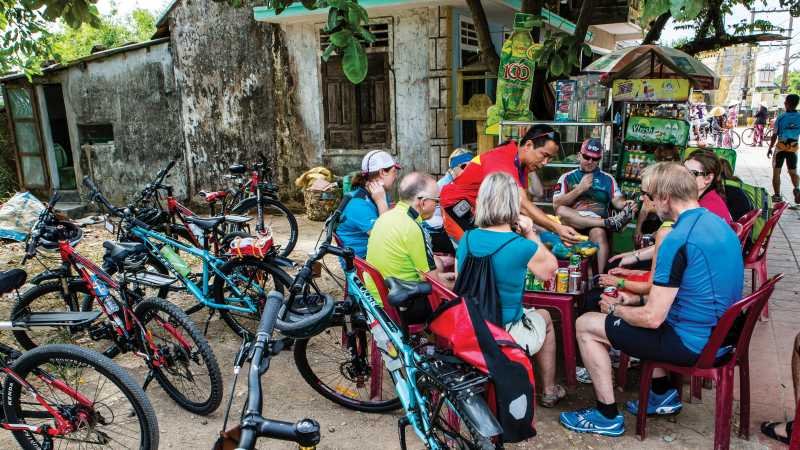
To turn your dreams of a seamless, deep-dive adventure into reality, partnering with a premier operator like Golden Cycling Tours is the ultimate decision. With access to professional-grade carbon road bikes, elite local ride leaders who know the backroads like the back of their hand, and dedicated support vehicles, you are free to focus entirely on the pure joy of the ride. This definitive guide, titled Vietnam Dream Cycling Holiday: Ultimate Guide to Epic Routes, is designed to serve as your comprehensive blueprint for exploring Vietnam on two wheels.
Modern tourism often speeds through beautiful landscapes, leaving travelers with disjointed memories of isolated monuments. Cycling reverses this dynamic. By moving at a human-powered pace, you become an active participant in the environment rather than a passive observer. You hear the rhythmic clanking of water wheels in rural valleys, feel the sudden cool breeze of a mountain forest, and smell the woodsmoke rising from traditional kitchen hearths at dusk.
Riding like a local means adopting a mindset of openness and curiosity. It means rising early with the sun to catch the morning breeze, stopping at simple roadside wooden shacks for a glass of fresh sugarcane juice, and greeting the farmers you pass with a warm smile and a friendly wave.
Moreover, a bicycle is an exceptional tool for breaking down social barriers. When you arrive in a remote ethnic village on a bicycle, you are not viewed as an intrusive outsider; you are recognized as a traveler who has put in the physical effort to visit their home. This shared appreciation for physical effort opens doors to authentic conversations, shared meals, and deep cultural connections that are simply impossible to experience through conventional travel modes.
The northern highlands of Vietnam represent some of the most dramatic, visually spectacular, and physically demanding cycling terrain in all of Asia. This is a land of soaring limestone peaks, deep river canyons, and ancient agricultural terraces carved into vertical hillsides.
The northernmost province of Ha Giang is a dramatic landscape of sheer limestone cliffs and deep valleys. The loop around this province is widely considered the ultimate test of physical and mental endurance for global cyclists. The roads are carved directly into the cliff sides, winding past deep river gorges like the emerald-green Nho Que River. The legendary Ma Pi Leng Pass is the crown jewel of this loop, offering long, sustained climbs with gradients that regularly reach ten to twelve percent. Conquering this wild, remote frontier requires precise route knowledge and robust physical preparation. Booking a specialized trip through Ha Giang bike tours ensures you can navigate this extreme terrain with the peace of mind that comes from having an expert mechanic, spare parts, and a dedicated safety vehicle navigating the hairpin switchbacks alongside you.
Further west, the mountains rise even higher toward the Hoang Lien Son range, home to Fansipan, the highest peak in Indochina. This is the setting for the breathtaking Tram Ton Pass, which climbs to over two thousand meters above sea level, making it the highest paved mountain road in Vietnam. Participating in Vietnam Northwest Bike Tours allows riders to test their climbing endurance on long, alpine-style ascents featuring sweeping switchbacks, deep pine forests, and stunning views of terraced rice valleys. It is an area rich in ethnic diversity, where you will ride past colorful Hmong, Dao, and Tay communities who have farmed these steep hillsides for generations, observing their traditional, sustainable ways of life firsthand.
For riders who crave quiet, lightly trafficked roads and remote natural beauty, the northeastern provinces of Cao Bang and Lang Son are an absolute paradise. The custom routes featured in Vietnam Northeast Bike Tours lead you along high mountain ridges, through lush bamboo forests, and down into tranquil valleys where the spectacular Ban Gioc Waterfall cascades along the border with China. This is a peaceful, off-the-beaten-path region where the traditional way of life remains completely untouched by modern tourism, allowing you to ride through villages where foreigners are still met with genuine, wide-eyed curiosity.
To seamlessly combine these diverse northern highlands into a single, cohesive, high-altitude expedition, exploring the premium itineraries under Cycling Northern Vietnam is the ultimate starting point for planning your custom route.
If your ideal active escape combines moderate daily distances, rolling terrain, and deep natural immersion, the peaceful agricultural basins and nature reserves located just south of Hanoi provide an idyllic setting.
Often described as Halong Bay on land, Ninh Binh is a spectacular landscape of towering limestone monoliths that rise vertically out of green wetlands, winding rivers, and emerald rice paddies. The riding here is flat, fast, and visually spectacular. By joining Ninh Binh bike tours, you will navigate quiet rural lanes, ride through ancient stone temple gates, and follow narrow dikes along winding rivers, completely away from major vehicular traffic.
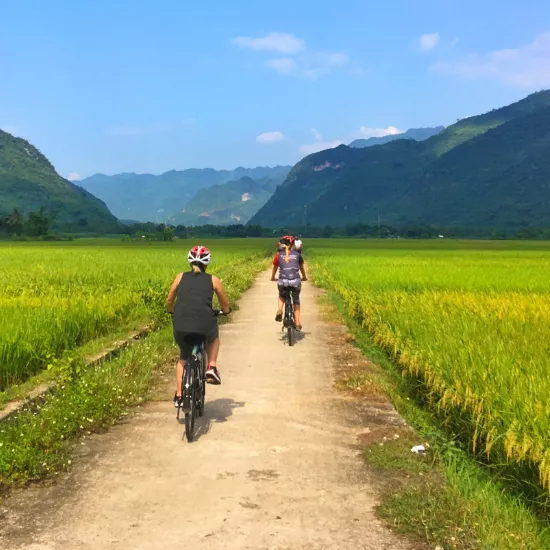
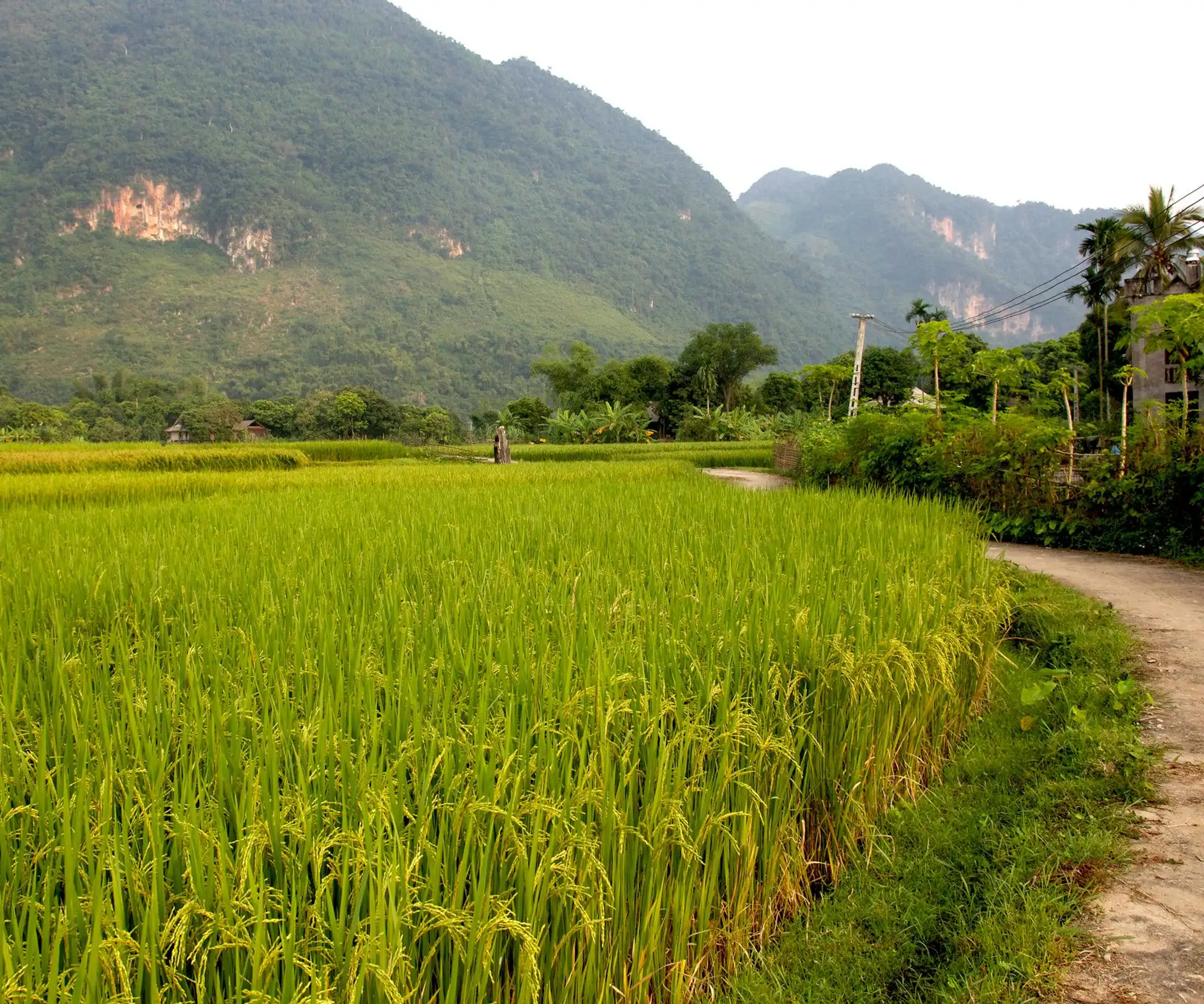
Mai Chau is a lush, flat valley floor surrounded by towering green mountains, inhabited primarily by the White Thai ethnic group. The local paths are perfect for active recovery and relaxed spinning. Participating in Mai Chau bike tours allows you to ride past traditional wooden stilt houses, waving rice paddies, and local handloom weaving workshops, offering a wonderful balance of gentle exercise and authentic cultural connection.
Directly adjacent to Mai Chau lies the spectacular Pu Luong Nature Reserve, a hidden gem of dense tropical forests, cascading waterfalls, and ancient water wheels. The terrain here is more challenging, featuring steep concrete village tracks, rolling mountain paths, and deep valley routes. Conquering these quiet paths on Pu Luong bike tours rewards riders with breathtaking views of terraced hillsides, stays in rustic eco-lodges, and an authentic taste of rural mountain hospitality.
The central waist of Vietnam offers an incredible combination of deep historical significance, challenging inland mountain ranges, and gorgeous coastal passes.
For endurance riders who want to experience pristine wilderness and cover serious daily mileage, the inland Ho Chi Minh Highway is an absolute paradise. This road features perfect, smooth asphalt, very little vehicular traffic, and hundreds of kilometers of rolling, undulating hills that cut through dense jungle and national parks. By booking Ho Chi Minh Trail cycling tours, you will ride through the historic Demilitarized Zone, visit war memorial sites, and pass through Phong Nha-Ke Bang National Park, home to the largest cave systems in the world, all supported by a professional crew who handle every logistical detail.
Central Vietnam is also home to the world-famous Hai Van Pass, a beautiful nine-kilometer climb with a steady six percent gradient that rises five hundred meters above the blue waters of the East Vietnam Sea, providing panoramic views of white-sand bays. The curated tours under Cycling Central Vietnam combine these dramatic coastal passes with challenging inland climbs up to the pine-forested highlands of Da Lat and visits to historic UNESCO World Heritage sites like Hue and Hoi An.
The southern portion of the country presents a complete contrast to the mountainous north, replacing rocky cliffs and pine forests with lush agricultural plains, fruit orchards, and endless water networks.
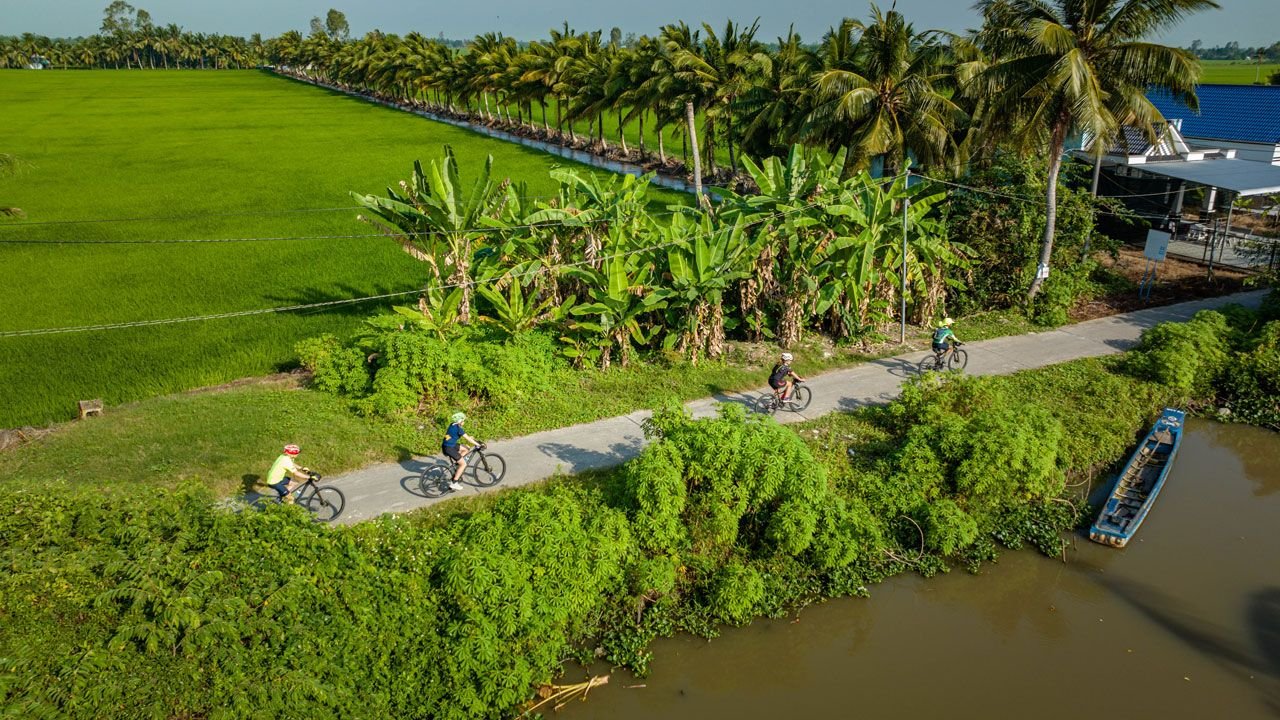
Cycling in the south takes you deep into the agricultural heartland of the Mekong Delta. The terrain is flat, allowing for high-cadence, steady-state pacing along narrow paved paths that border quiet canals, coconut groves, and fruit farms. While there are no major hills to climb, the tropical warmth, humidity, and occasional coastal headwinds provide a satisfying physical challenge. The itineraries within Cycling Southern Vietnam are ideal for winter escapes, offering a close-up look at local floating markets, traditional brick kilns, and incredibly warm riverside communities.
For those seeking the ultimate test of physical and mental endurance, a full traverse of the country is a monumental achievement.
Covering over fifteen hundred kilometers from the capital city of Hanoi to the southern metropolis of Ho Chi Minh City, the Cycling North to South Vietnam expedition is a true bucket-list challenge. Over two to three weeks of sustained riding, you will cross legendary mountain passes, follow the windswept central coastline, and traverse multiple climate zones, experiencing the complete geographic and cultural transition of the country.
Conversely, choosing the Cycling South to North Vietnam tour allows you to start on the flatter, warm coastal plains of the south, building your physical endurance and group pacing before tackling the massive, sustained mountain climbs of the Central Highlands and Northern provinces, aligning perfectly with seasonal weather patterns.
Active travel should be tailored to your precise personal preferences, whether you desire premium pampering or a helpful boost on the steepest mountain passes.
For riders who want to push their physical limits on the road during the day but indulge in world-class comfort by night, Vietnam Luxury Bike Tours represent the absolute gold standard of travel. These elite tours combine challenging daily stages with overnight stays in handpicked five-star beachfront resorts, boutique heritage hotels, and high-end eco-lodges. Supported by a dedicated crew including private mechanics, local culinary experts, and support vehicles stocked with premium sports nutrition, you can focus entirely on the pure joy of riding.
An active adventure should be inclusive, allowing riders of different fitness levels to share the journey together. The Vietnam E-Bikes Tours utilize high-performance, mid-drive electric road and hybrid bikes that provide smooth, intuitive, pedal-assist power. This advanced technology allows partners and friends of varying riding strengths to conquer steep mountain passes together, keep a steady pace on long flat sections, and enjoy the stunning natural scenery without physical exhaustion.
To experience a country like a local, you must eat like one. Vietnamese cuisine is arguably the ultimate fuel for active riders. It is fresh, light, easily digestible, and naturally gluten-free, relying heavily on rice, fresh herbs, and clean proteins. Rather than dining in tourist-oriented hotel restaurants, true culinary discovery happens at simple roadside stalls, local wet markets, and family-run diners.
To maintain your energy levels during a long multi-day ride, prioritize these local staples:
Pho: This famous rice noodle soup, served with beef or chicken, is packed with clean carbohydrates and lean protein. The rich, aromatic broth is loaded with natural sodium and essential electrolytes, making it the perfect post-ride recovery meal.
Bun Cha: A Hanoi classic featuring tender, charcoal-grilled pork patties served over cold rice vermicelli noodles, fresh herbs, and a light, savory dipping sauce. It offers an exceptional balance of carbs and protein.
Banh Mi: A light, crispy baguette stuffed with various meats, pate, fresh cucumber, coriander, and pickled carrots. It serves as a portable and delicious mid-ride pocket snack.
Com Binh Dan: Literally translating to "commoner's rice," these are ubiquitous roadside buffet spots. You can pile your plate high with steamed rice, braised pork, ginger chicken, tofu, eggs, and fresh greens, providing a high-calorie, highly nutritious meal for active riders.
To stay hydrated during warm days in the saddle, skip commercial sports drinks and look for these natural options at roadside stalls:
Nuoc Mia: Freshly squeezed sugarcane juice mixed with a splash of calamansi citrus. It provides an instant, natural carbohydrate boost during a challenging climb.
Fresh Coconut Water: Nature's ultimate sports drink, rich in potassium and essential minerals, harvested fresh right in front of you.
Accommodations across Vietnam are as diverse as the landscapes, reflecting the unique character of each region. Choosing the right lodging is not just about finding a place to rest your head; it is about extending your cultural immersion into the evening hours.
Remote Ethnic Homestays: In rural areas like Ha Giang, Pu Luong, or along the remote sections of the Ho Chi Minh Highway, staying in a traditional stilt house is a highlight of the trip. These communal wooden houses, built by ethnic minority communities, offer simple but exceptionally clean sleeping arrangements, featuring comfortable mattress pads, mosquito nets, hot showers, and incredibly warm hospitality. Sharing a home-cooked dinner and a shot of local rice wine with your host family is an unforgettable experience that embodies the spirit of local travel.
Boutique Eco-Lodges: In destinations like Mai Chau, Pu Luong, and Sapa, gorgeous eco-lodges are nestled directly into mountain cliffsides. These lodges offer spectacular valley views, swimming pools, and hot showers, blending sustainable travel practices with premium comfort. They provide a peaceful environment where you can relax your muscles while listening to the sounds of nature.
Heritage and Beachfront Resorts: In historic and coastal hubs like Hue, Hoi An, Nha Trang, and Mui Ne, you will stay in high-end boutique hotels and beachfront resorts, providing the perfect environment for muscle recovery, massage therapy, and complete relaxation after days of hard work in the saddle.
Successfully executing a long-distance cycling tour requires careful planning, professional equipment, and seamless backup logistics. While the idea of a self-supported, independent tour may sound romantic, the realities of navigating remote Vietnamese road systems can quickly become overwhelming without professional assistance.
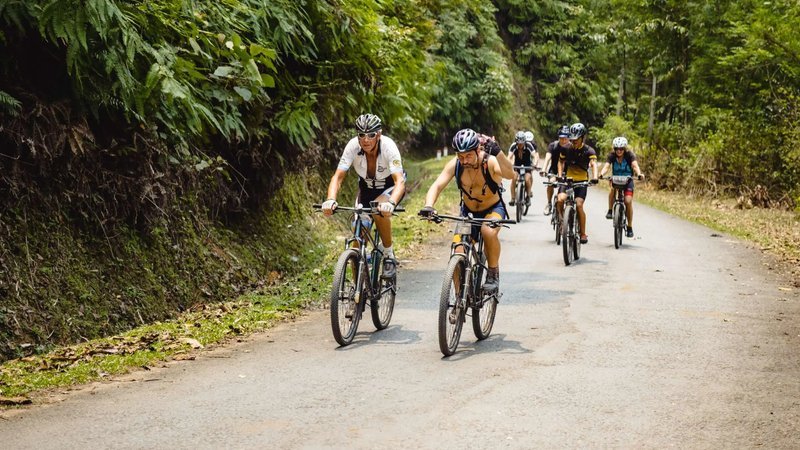
While remote back roads and mountain passes are quiet and scenic, major national highways can be busy with trucks, buses, and agricultural vehicles. For a safe and stress-free guided ride, a professional support vehicle is essential. A dedicated support van carrying spare tires, chains, cassettes, floor pumps, first-aid kits, and extra hydration allows you to ride light and focus entirely on the scenery. If you encounter extreme weather, mechanical failure, or physical exhaustion, the support vehicle is always nearby to provide a safe, air-conditioned haven.
When booking a tour with a premier operator like Golden Cycling Tours, all internal logistics are fully handled. This includes private airport transfers, domestic flights, comfortable train reservations (such as the night train from Hanoi to Sapa), and seamless daily luggage transfers between hotels, allowing you to focus on the road ahead.
Understanding local customs and road dynamics is key to a safe, respectful, and enriching journey. When you respect the local way of life, you will find that doors open, smiles widen, and your travel experience becomes infinitely more meaningful.
Road Hierarchy: In Vietnam, right-of-way is determined by size. Large trucks and buses dominate the roads, followed by cars, motorbikes, and lastly, bicycles. Always ride defensively, stay to the right-hand side of the lane, and use active front and rear lights. Be prepared for drivers to honk; in Vietnam, horns are not used in anger, but simply to alert you that a vehicle is approaching.
Respecting Local Communities: As you ride through ethnic minority villages, always ask for permission before taking photographs of locals. Dress modestly when entering temples, communal houses, or local homes. A simple "Xin Chao" (hello) accompanied by a warm smile will instantly build a connection.
Currency and Payments: While credit cards and mobile payments are widely accepted in cities like Hanoi and Ho Chi Minh City, rural areas operate strictly on cash (Vietnamese Dong - VND). Always carry a small stash of cash for roadside drinks, snacks, and small purchases.
A great cycling trip is not just about the numbers on your bike computer; it is about the places you discover. Some of the must-visit cultural and natural attractions along the routes include:
Trang An Landscape Complex (Ninh Binh): A UNESCO World Heritage site featuring dramatic karst valleys and ancient water caves explored by traditional rowboats.
Phong Nha-Ke Bang National Park: Home to some of the world's largest and most spectacular caves, located along the Ho Chi Minh Highway.
The Imperial City of Hue: The historic capital of the Nguyen Dynasty, rich in royal tombs, ancient temples, and refined imperial cuisine.
Hoi An Ancient Town: A beautifully preserved 15th-century trading port famous for its yellow-walled shophouses, custom tailors, and atmospheric lantern-lit streets.
Read what passionate travelers have to say about their experience on a journey with professional support:
"Choosing to experience my Vietnam Dream Cycling Holiday: Ultimate Guide to Epic Routes with this team was the best travel decision I have ever made. Climbing the passes of Sapa was physically demanding, but our guide kept us perfectly paced. The homestay experience was incredibly warm and authentic." — Jonathan R., Australia
"The central coast tour was spectacular. The carbon road bikes were top-tier, and the beach resorts provided excellent recovery after a long day in the saddle. Our local guide knew the best roadside food stalls, which made us feel like we were getting a truly local experience." — Emily and Mark T., New Zealand
"The Ho Chi Minh Highway tour was amazing. Quiet roads, smooth asphalt, and endless jungle scenery. Riding with an experienced local guide made us feel completely safe and allowed us to learn so much about the history of the country." — Kenji S., Japan
For road-focused tours, a high-quality carbon fiber endurance road bike equipped with hydraulic disc brakes and twenty-eight millimeter or thirty millimeter tires is ideal. The disc brakes provide crucial stopping power and safety on long, steep, and sometimes wet mountain descents. If your route includes gravel paths, rural singletrack, or national park trails, a gravel bike or a front-suspension mountain bike is recommended.
The climbs in Vietnam can be long and exceptionally steep, especially in the northern regions. We highly recommend a compact crankset (50/34T) paired with a wide-range cassette (11-32T or 11-34T). Having a one-to-one gear ratio or lower will help you maintain a high cadence and protect your knees during sustained climbs.
Because Vietnam stretches across different climate zones, the optimal window for a full North-to-South traverse is from October to April. During these months, the north is cool and dry, the central coast has moved past its typhoon season, and the south is warm and sunny.
When traveling with an organized tour, your support vehicle carries a comprehensive array of spare parts, including tires, inner tubes, chains, shift cables, brake pads, and tools. An experienced mechanic accompanies the tour to handle any repairs. If you are riding self-supported, you must carry a multi-tool, spare tubes, a patch kit, a mini-pump, and a spare derailleur hanger, as high-end bike shops do not exist in rural provinces.
Yes, cycling in Vietnam is highly viable and safe if you understand the local traffic patterns. Traffic generally moves at a slower pace compared to Western countries, and local drivers are highly accustomed to sharing the road with slow-moving scooters and agricultural vehicles. However, riding defensively, wearing a high-quality helmet, using active daytime running lights, and utilizing a professional support vehicle are highly recommended safety measures.
Embarking on a cross-country ride through Vietnam is one of the world's great active travel achievements. It is an experience that will test your physical limits on legendary mountain passes, immerse you in ancient local cultures, and treat you to some of the most spectacular natural landscapes on earth.
By choosing a trusted local expert like Golden Cycling Tours, you ensure that every aspect of your trans-Vietnam expedition is managed to the highest standard. From top-tier carbon road bikes and experienced ride leaders to comfortable logistics, local dining, and premium accommodations, you are free to focus entirely on the rhythm of your pedal stroke and the incredible journey ahead.
Whether you want to challenge yourself on the steep climbs of the north, ride the historic roads of the Ho Chi Minh Trail, or glide through the quiet canals of the south, your ultimate Vietnam Dream Cycling Holiday: Ultimate Guide to Epic Routes is ready to begin.

Leave a Reply
Your email address will not be published. Required fields are marked *