- Call us Via Whatsapp: +84 (0) 832 126 699
4.9 stars on our site
(15,000 reviews)
- Monday - Sunday : 08:00 - 17:00
(15,000 reviews)

Imagine pedaling through emerald-green rice paddies, navigating legendary mountain passes shrouded in mist, and cruising along a coastline where pristine beaches meet the turquoise East Vietnam Sea. Vietnam is a land of sensory overload in the best possible way. For active travelers, there is no better way to experience its dramatic transitions from alpine highlands to tropical deltas than from the saddle of a bicycle.
As global travel shifts toward sustainable, immersive, and health-conscious journeys, embarking on a Vietnam Bicycle Journey 2026 represents the pinnacle of Asian adventure travel. Whether you are an elite cyclist seeking to conquer legendary mountain passes or a leisure rider looking to explore peaceful valleys at an easy pace, this comprehensive guide will prepare you for the ultimate two-wheeled odyssey.
Planning a cross-country cycling trip can be daunting, but with the support of professional tour operators like Golden Cycling Tours, your dream ride becomes a seamless reality. From high-quality bike rentals and support vehicles to curated regional itineraries, expert planning ensures you focus entirely on the beauty of the landscape and the warmth of the local communities.
Vietnam's geography is uniquely suited for cycling. Stretching over 1,600 kilometers from north to south, the country offers an incredibly diverse array of terrain, microclimates, and cultural landscapes.
From the jagged limestone karsts of the far north to the flat, canal-crossed plains of the Mekong Delta, the country offers routes for every fitness level. You can challenge your legs on steep mountain switchbacks one week and enjoy flat, scenic coastal cruises the next.
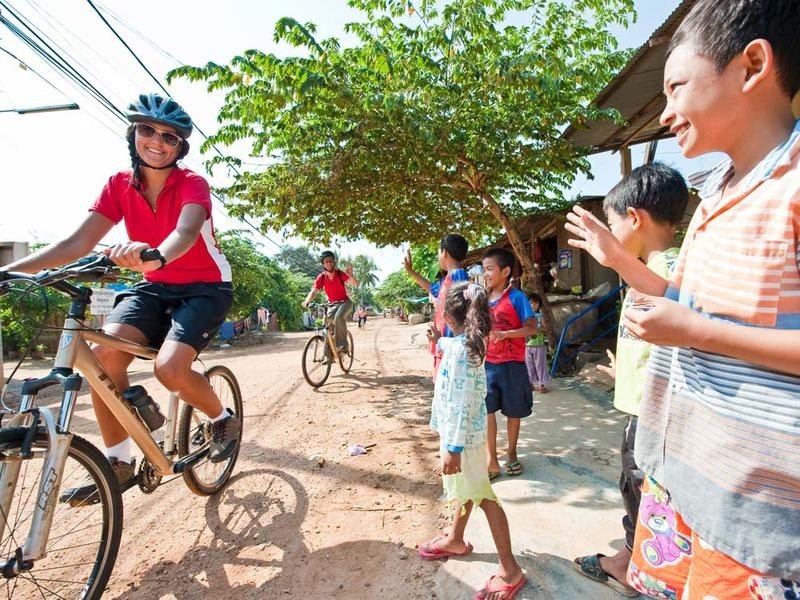
Traveling by bicycle slows you down. It allows you to interact with local communities in a way that is impossible from the window of a tour bus. You will ride past farmers tending to their fields, hear children shouting enthusiastic hellos from schoolyards, and stop at roadside stalls to chat with friendly locals over cups of iced condensed-milk coffee.
Cycling burns a lot of calories, and there is no better place to refuel than Vietnam. The country’s cuisine is celebrated worldwide for its freshness, balance of flavors, and regional diversity. Every province you cycle through boasts its own unique local specialty, ensuring that your culinary journey is just as exciting as your physical one.
To get the most out of your Vietnam Bicycle Journey 2026, it is helpful to understand the distinct geographical regions of the country. Each offers a completely different landscape, climate, and cultural experience.
Northern Vietnam is a dream destination for adventure cyclists. It is home to some of the most dramatic mountain scenery in Southeast Asia, characterized by towering limestone peaks, deep valleys, and intricate networks of terraced rice fields.
If you are drawn to alpine challenges and ethnic minority cultures, exploring the highlands through Cycling Northern Vietnam programs is an absolute must.
For those who want to experience the beauty of northern Vietnam without tackling extreme mountain passes, the valleys of Mai Chau and Pu Luong offer the perfect escape.
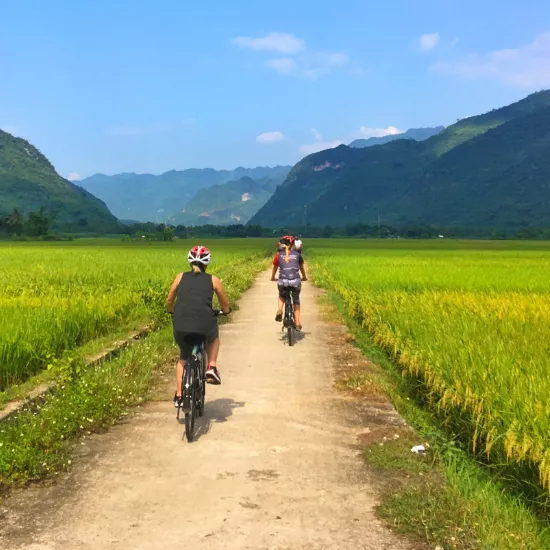
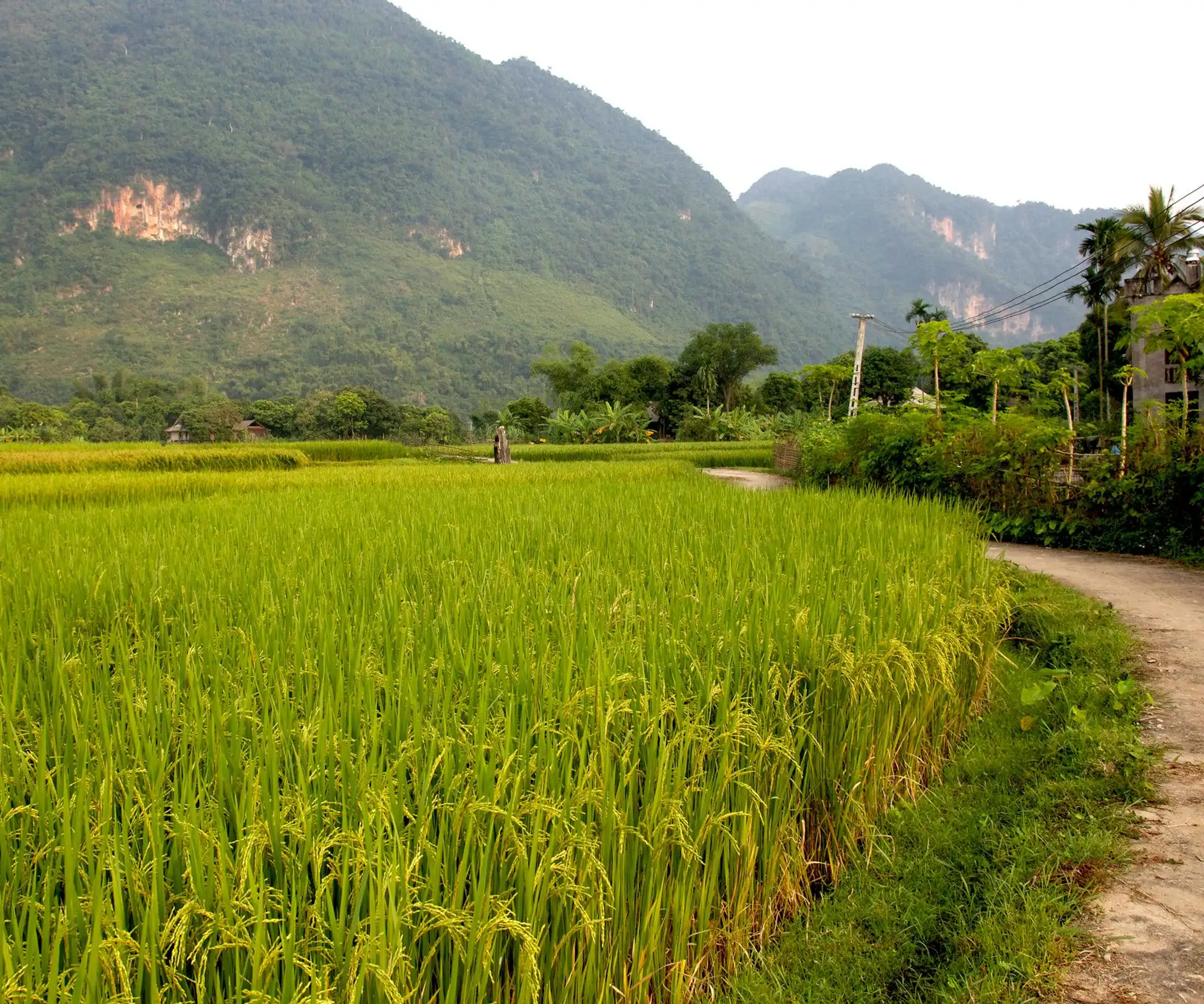
Choosing Mai Chau bike tours allows you to cycle along flat paths through lush green fields, surrounded by dramatic limestone cliffs. The valley is primarily inhabited by the White Thai ethnic group, who live in traditional stilt houses and are known for their incredible weaving skills and warm hospitality.
Just a short distance away lies the stunning Pu Luong Nature Reserve. Opting for Pu Luong bike tours takes you deeper into an untouched landscape of cascading terraced rice fields, dense jungle-clad hills, and quiet bamboo forests. The riding here features a mix of flat valley floors and moderate rolling hills, making it a rewarding experience for active travelers.
Often referred to as "Halong Bay on land," Ninh Binh is a spectacular region where massive limestone towers rise abruptly out of flat, flooded rice fields. Exploring this ancient landscape with Ninh Binh bike tours is highly recommended.
The terrain here is remarkably flat, making it accessible to cyclists of all fitness levels. You can pedal along quiet paved paths, wind through limestone caves, and stop to visit ancient temples like Hoa Lu, the historic capital of Vietnam in the 10th and 11th centuries.
For seasoned riders looking for a true physical challenge, the northern borderlands offer some of the most demanding and beautiful cycling routes in the world.
Conquer the legendary rocky plateaus and deep canyons on Ha Giang bike tours. This loop features towering passes like Ma Pi Leng, which clings to the edge of sheer cliffs above the turquoise Nho Que River. The climbs are long and steep, but the rewarding panoramic views are unparalleled.
To experience the full breadth of these dramatic highlands, you can embark on comprehensive Vietnam Northwest bike tours. This route takes you through iconic destinations like Sapa and Dien Bien Phu, tracing historic valleys and conquering the formidable O Quy Ho Pass.
In contrast, choosing Vietnam Northeast bike tours leads you toward the breathtaking Ban Gioc Waterfall on the Chinese border, navigating through dense forests, peaceful ethnic minority villages, and pristine lakes like Ba Be.
Central Vietnam serves as the country's cultural and historical heart, offering a fascinating mix of sandy beaches, imperial cities, and rugged inland trails.
Cycling through this region allows you to connect several UNESCO World Heritage sites. You can start in the imperial city of Hue, cycle along the tranquil perfume river, and then tackle the famous Hai Van Pass. This spectacular coastal climb rises to an elevation of 500 meters above sea level, offering sweeping views of Lang Co Bay and the city of Da Nang.
From Da Nang, a flat coastal ride brings you to the beautifully preserved ancient town of Hoi An. Designing your trip around Cycling Central Vietnam routes ensures a perfect balance of challenging coastal riding, beachside relaxation, and rich historical exploration.
For history buffs and wilderness lovers, riding along the Ho Chi Minh Trail cycling tours is an unforgettable experience. This inland route follows the historic military supply path that runs along the spine of the Truong Son mountain range.
The road is incredibly quiet, winding through pristine national parks like Phong Nha-Ke Bang, home to some of the world's largest caves. The cycling here features long, rolling hills and dense jungle scenery, offering a peaceful and deeply reflective journey through Vietnam’s modern history.
Southern Vietnam offers a completely different pace and landscape. It is a region of endless sunshine, bustling waterways, and vast agricultural plains.
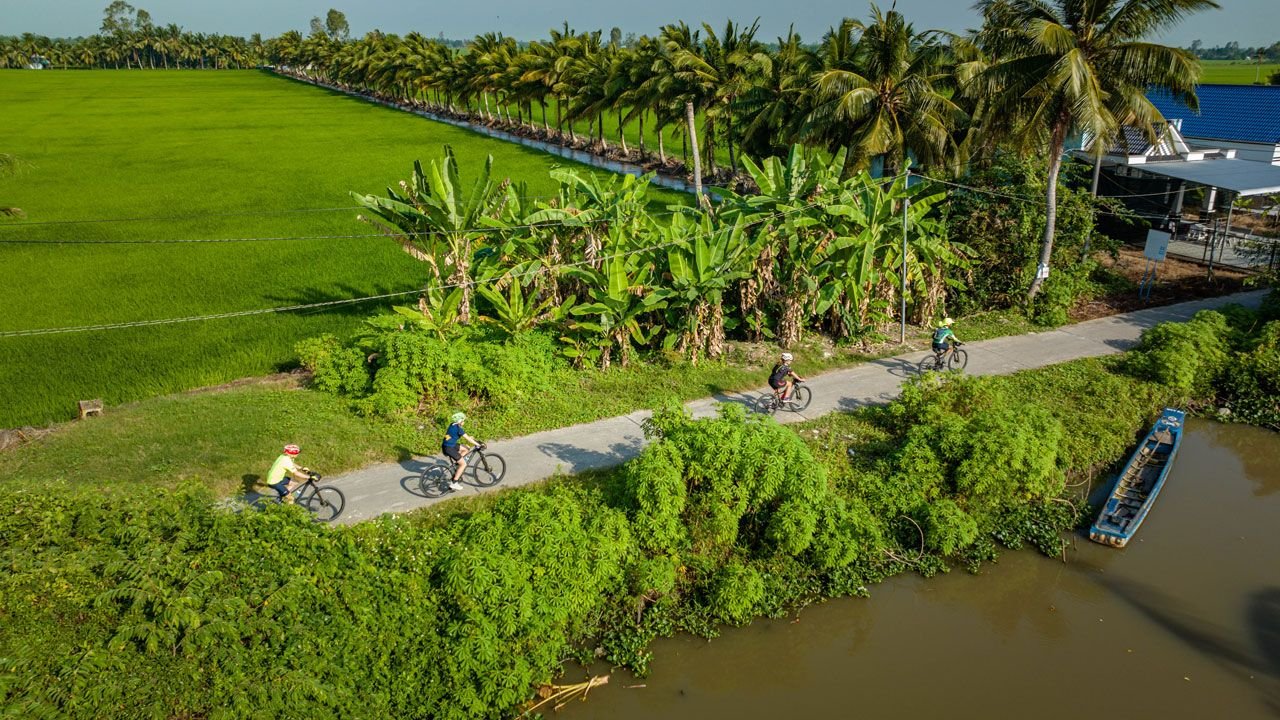
The Mekong Delta is a flat, watery world where life is completely oriented around the river. Engaging in Cycling Southern Vietnam tours takes you off the main highways and onto a network of narrow paved paths that run along canals, orchards, and village farms.
You will cross narrow footbridges, board small local wooden ferries, and cycle under the shade of coconut palms and banana trees. The flat terrain makes this an excellent destination for family cycling trips or those who prefer a relaxed, leisurely ride.
For those with plenty of time and a desire for the ultimate achievement, a cross-country tour is the journey of a lifetime.
To experience the ultimate epic of Cycling North to South Vietnam, you will spend several weeks riding from Hanoi all the way to Ho Chi Minh City. This route showcases the incredible transition of landscapes, temperatures, and cultures as you traverse the entire length of the country.
Alternatively, you can reverse the journey with Cycling South to North Vietnam, starting in the vibrant southern metropolis of Saigon and finishing amidst the French-colonial architecture and quiet lakes of Hanoi.
For travelers who prefer the highest standard of support, premium accommodations, and gourmet dining along the way, booking vietnam luxury bike tours ensures that your long-distance expedition is completed in absolute comfort and style.
If you are worried about your physical fitness over long distances or steep climbs, you can enjoy pedal-assisted ease on vietnam e-bikes tours. Electric bikes open up the dramatic landscapes of Vietnam to riders of all ages and abilities, making even the steepest mountain passes manageable and fun.
One of the greatest joys of cycling in Vietnam is the food. Vietnamese cuisine is incredibly fresh, light, and hydrating, making it the perfect fuel for active travelers.
Pho: This world-famous noodle soup is the ultimate breakfast of champions. A bowl of hot broth, rice noodles, fresh herbs, and beef or chicken provides a perfect balance of carbohydrates, protein, and sodium to start a long day of riding.
Banh Mi: The perfect mid-ride snack. These French-style baguettes are stuffed with pate, meats, fresh cucumber, cilantro, pickled carrots, and a splash of chili sauce. They are lightweight, portable, and incredibly satisfying.
Bun Cha: Particularly popular in Hanoi, this dish features grilled pork patties served in a warm, savory broth, accompanied by a plate of cold rice vermicelli noodles and a mountain of fresh herbs.
In Central Vietnam, do not miss Cao Lau in Hoi An, a unique noodle dish made with local well water, topped with slices of pork and crispy crackers. In the South, try Hu Tieu, a versatile noodle soup popular in the Mekong Delta, featuring a sweet pork-bone broth, shrimp, quail eggs, and fresh herbs.
For the most authentic and delicious meals, look for busy local spots. A restaurant packed with locals is always a guarantee of fresh food and excellent flavor.
When cycling through rural areas, your tour guide from Golden Cycling Tours will introduce you to "Quan Com Binh Dan" (commoner’s rice shops). These buffet-style eateries allow you to point and choose from a wide variety of freshly prepared dishes, including braised pork belly, tofu in tomato sauce, stir-fried morning glory, and fresh fish, served with a generous portion of steamed white rice.
To stay energized during hot riding days, stop at roadside stalls for fresh coconut water (Nuoc Dua), sugarcane juice pressed with calamansi (Nuoc Mia), or a refreshing glass of traditional iced green tea (Tra Da).
After a long day of cycling, having a comfortable and welcoming place to rest your head is essential. Vietnam offers a fantastic variety of accommodations that cater to all preferences and budgets.
In the northern regions like Mai Chau, Pu Luong, and Ha Giang, staying in a traditional ethnic minority homestay is a highlight of the trip. Typically constructed of wood and bamboo, these stilt houses feature a large, open communal sleeping area upstairs, fitted with comfortable mattresses, mosquito nets, and clean linens.
The real magic of a homestay is the hospitality. You will share a home-cooked feast with the host family, toast with local rice wine (locally known as "happy water"), and learn firsthand about their daily lives and traditions.
For those seeking a blend of natural beauty and modern comfort, Vietnam is home to incredible eco-lodges. Often located in stunning valley settings or perched on mountain ridges, places like the Topas Ecolodge in Sapa or boutique lodges in Pu Luong offer infinity pools overlooking terraced rice fields, private bungalows, and excellent spa services to soothe tired muscles.
Along the central coast, you can rest at beautiful beachfront hotels in Da Nang, Nha Trang, or Quy Nhon, where you can fall asleep to the sound of ocean waves. In historic towns like Hue and Hoi An, charming heritage hotels offer beautifully restored French-colonial architecture, lush courtyard gardens, and swimming pools to cool off in after a warm day on the road.
Navigating Vietnam requires a basic understanding of the country's transportation networks. When booking a tour, your local transportation is handled seamlessly, but independent travelers should keep these logistics in mind.
The Reunification Express train runs the entire length of the country between Hanoi and Ho Chi Minh City. It is a fantastic, nostalgic way to travel between major cycling regions. Most trains have soft-sleeper cabins and allow you to transport your bicycle in the cargo carriage, making it an excellent option for moving between hubs like Hue, Da Nang, and Nha Trang.
For those short on time, domestic flights are highly affordable and frequent. Major airlines like Vietnam Airlines, VietJet, and Bamboo Airways connect Hanoi, Da Nang, Nha Trang, and Ho Chi Minh City. If you are traveling with a bicycle, you will need to pack it securely in a bike box or bag and check it as oversized luggage.
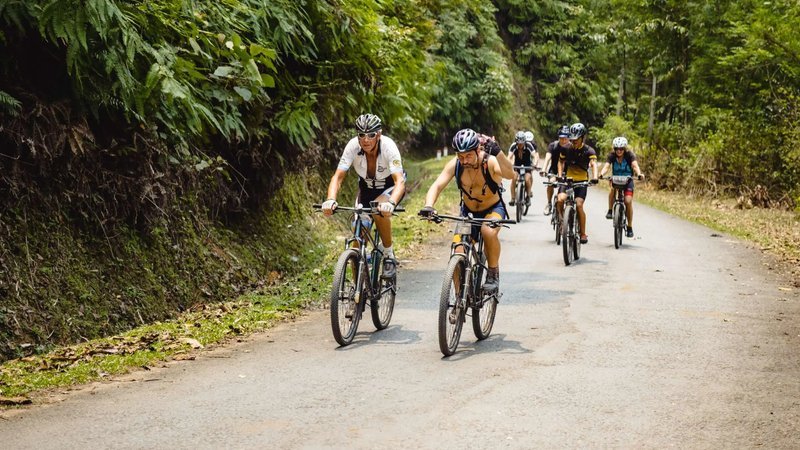
This is where guided tours truly shine. When you travel with an organized team, a dedicated support van or bus follows your cycling group. It carries all your luggage, spare parts, and a first-aid kit. If you ever feel tired, get caught in a sudden downpour, or encounter a climb that is too steep, you can simply hop into the support vehicle and enjoy the ride in air-conditioned comfort.
Understanding and respecting local customs will greatly enrich your interactions during your journey. Vietnamese people are exceptionally welcoming, and showing an awareness of their cultural norms is highly appreciated.
When visiting sacred sites, temples, pagodas, or communal houses, it is essential to dress respectfully. This means covering your shoulders and knees. As a cyclist, it is a good idea to pack a lightweight sarong or a pair of long, loose pants and a light shirt in your daypack that you can easily slip on over your cycling kit when stopping at a temple. Always remove your shoes and hat before entering the main sanctuary of a pagoda.
The Vietnamese are generally polite and non-confrontational. Saving face is important, so try to keep your cool and avoid raising your voice if things do not go exactly as planned. A warm smile and a patient attitude will resolve almost any situation.
When greeting people, a slight bow of the head is polite. To say hello in Vietnamese, use "Xin Chao" (pronounced sin chow). To show your appreciation, say "Cam On" (kahm uhn) for thank you.
Vietnam is incredibly photogenic, and you will want to capture every moment. However, always ask for permission before taking photos of people, particularly in ethnic minority villages. A simple point to your camera and a warm smile are usually enough to get a nod of approval. If they decline, respect their wishes and move on.
While the cycling itself is a major highlight, Vietnam boasts world-class sightseeing destinations that you should absolutely integrate into your itinerary.
This UNESCO World Heritage site is home to the oldest karst mountains in Asia and a mind-boggling system of massive caves. You can take a boat ride through the illuminated caverns of Phong Nha Cave or marvel at the jaw-dropping scale of Paradise Cave, which stretches for over 31 kilometers.
This beautifully preserved 15th-century trading port is famous for its narrow streets lined with yellow merchant houses, historic wooden bridges, and thousands of colorful silk lanterns that illuminate the town at night. It is the perfect place to spend a rest day, exploring the local markets, getting custom clothes tailored, or relaxing on nearby An Bang Beach.
No trip to Vietnam is complete without seeing these iconic marine landscapes. After finishing a northern cycling tour, reward yourself with a traditional wooden junk boat cruise. Spend a night sleeping on the water, kayaking through hidden lagoons, and watching the sunset over thousands of towering limestone islands.
Hearing from travelers who have completed these journeys offers valuable insight into what makes cycling in Vietnam so special.
"We booked the Pu Luong and Mai Chau loop through Golden Cycling Tours, and it was the highlight of our year. Riding through those emerald valley floors and staying in traditional White Thai stilt houses felt like stepping back in time. The bikes were brand new, the support team was always ready with cold water and fresh fruit, and our guide, Huy, felt like family by the end of the trip. Highly recommend!" — Sarah and Mark, Australia
"As an avid road cyclist, the Ha Giang loop was on my bucket list. The climbs were brutal but absolutely breathtaking. Having a support vehicle behind me gave me the confidence to push my limits. Golden Cycling Tours organized everything perfectly, from the heavy-duty mountain bikes to the great local hotels. This is the ultimate way to experience the wild beauty of Vietnam." — Jean-Pierre, France
"Our family did a custom South to North tour. My husband and I rode e-bikes while our teenage kids rode traditional mountain bikes. It was the perfect way to keep everyone happy and moving together. We loved the cooking class in Hoi An and the boat ride in Ninh Binh just as much as the cycling. It was an educational, active, and deeply bonding vacation." — The Henderson Family, USA
To help you prepare for your journey, we have compiled answers to the most common questions asked by cyclists planning their trip.
Because of Vietnam's long shape, the weather varies significantly by region.
Northern Vietnam: The best time to cycle is from October to April, when the weather is cool and dry.
Central Vietnam: Plan your trip between January and August to avoid the heavy autumn rains and typhoon season (September to December).
Southern Vietnam: The dry season runs from November to April, offering sunny skies and reliable riding conditions.
For most routes, a high-quality hybrid bike with front suspension and wide, puncture-resistant tires is ideal. It offers the perfect balance of speed on paved highways and stability on rough country lanes or gravel paths. For rugged mountain routes like Ha Giang, a dedicated mountain bike is recommended. If you prefer a boost, high-end electric mountain bikes are a fantastic choice.
It is not necessary. Bringing a bicycle on international flights can be expensive and carries a risk of damage. Professional operators like Golden Cycling Tours provide top-tier, well-maintained fleets of trekking bikes, mountain bikes, and e-bikes, tailored to your height and riding preferences.
This depends entirely on the route you choose. Flat delta and coastal routes are suitable for anyone with a basic level of fitness. Long-distance mountain tours require good cardiovascular endurance and leg strength. If you are concerned about your fitness, choosing an e-bike tour is an excellent way to ensure you can enjoy the journey without overexerting yourself.
Key essentials include:
High-quality, padded cycling shorts (at least 2-3 pairs).
Moisture-wicking cycling jerseys.
A lightweight, packable rain jacket.
Sturdy closed-toe athletic shoes.
Your own well-fitting cycling helmet (though operators do provide them, personal comfort is key).
High-SPF sunscreen and effective insect repellent.
A small, lightweight daypack or handlebar bag for personal items.
Yes, cycling in Vietnam is highly safe, especially when traveling with an experienced guide who knows the roads. While traffic in major cities like Hanoi and Saigon can look chaotic, drivers are used to sharing the road with slow-moving vehicles and generally give cyclists a wide berth. On rural routes and mountain passes, traffic is typically very light.
A Vietnam Bicycle Journey 2026 is more than just an active vacation; it is a life-changing exploration of a beautiful country, a rich culture, and an exceptionally warm people. From the mist-shrouded limestone peaks of the far north to the sunny, palm-fringed canals of the south, every kilometer pedaled reveals a new perspective and creates an unforgettable memory.
With expert guidance, professional equipment, and a customized itinerary from Golden Cycling Tours, you can embark on your journey with complete peace of mind. Get ready to turn the pedals, breathe in the fresh mountain air, and experience the very best of Vietnam on two wheels.

Leave a Reply
Your email address will not be published. Required fields are marked *