- Call us Via Whatsapp: +84 (0) 832 126 699
4.9 stars on our site
(15,000 reviews)
- Monday - Sunday : 08:00 - 17:00
(15,000 reviews)

The road changes from predictable, smooth asphalt to the raw, untamed texture of the earth. Beneath your tires, loose limestone gravel, rich red basalt clay, and ancient river pebbles shift constantly, demanding your absolute focus. Your chest rises and falls in a deep, rhythmic dance as your quadriceps fire with a satisfying, clean energy. With a crisp, mechanical click-clack, your rear derailleur shifts smoothly to guide your chain up to the largest sprocket.
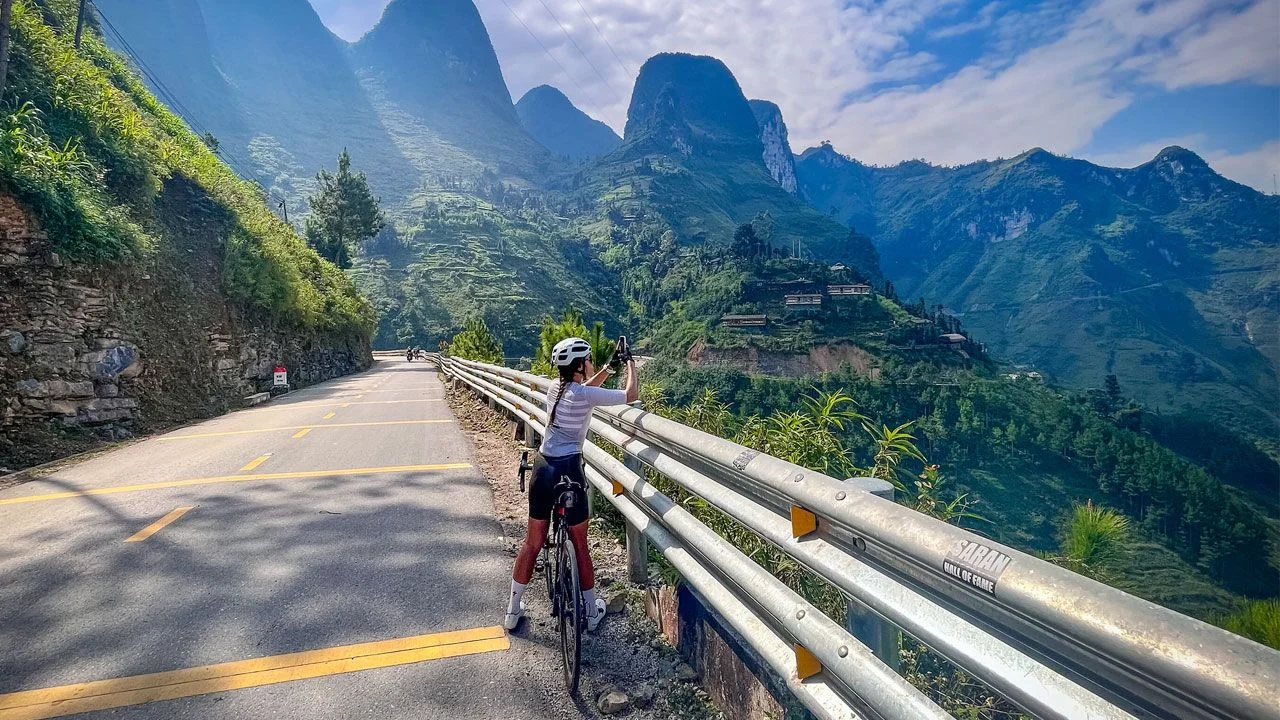
You stand up on the pedals, pressing your weight forward over the bottom bracket as the gradient pitches past twelve percent. There is no frame flex—only the instant, surging acceleration of your bike translating every ounce of your physical effort into forward momentum.
You inhale deeply, filling your lungs with the cool, pristine mountain air. It is thick with the sweet fragrance of damp pine needles, wild lemongrass, and the faint, comforting scent of woodsmoke drifting from a nearby stilt house.
Emerging from a dense canopy of giant bamboo, the horizon opens to reveal a majestic amphitheater of emerald valleys, cascading rice terraces, and towering limestone giants rising through the morning mist.
To experience a landscape this dramatic at a human pace is to realize that how we ride matters just as much as where we go. However, crossing these wild, high-altitude frontiers requires more than just spirit—it demands a body that is conditioned, resilient, and prepared.
To help you transition from a casual rider to a robust endurance explorer, we have crafted this ultimate, comprehensive guide on How to Prepare for Multi-Day Vietnam Gravel Bike Tours [Fitness Tips], supported by the country's premier responsible adventure specialist, Golden Cycling Tours.
To understand how to train your body for this journey, you must first understand the unique physiological demands of gravel biking across Southeast Asia's vertical landscapes. Unlike flat road riding, gravel cycling is a full-body sport that engages your cardiovascular system, core strength, upper body, and stabilizing muscles.
A multi-day cycling journey requires consecutive days of riding, often spanning four to six hours in the saddle. The foundation of your physical preparation must be a robust aerobic energy system.
When you ride at a steady, conversational pace, your body relies primarily on fat oxidation for fuel, preserving precious muscle glycogen stores for steep climbs.
By building your aerobic base, you increase mitochondrial density in your muscles, improve your stroke volume (the amount of blood your heart pumps per beat), and train your body to recover quickly between demanding stages.
The highlands of Northern and Central Vietnam are famous for their long, continuous mountain passes that can stretch for over fifteen to twenty kilometers at a time. Conquering these climbs requires exceptional muscular endurance—the ability of your legs to produce steady, low-impact force over an extended period.
Your quadriceps, hamstrings, glutes, and calves will burn with a satisfying fire as you pedal through steep switchbacks on a constant grade of ten to fifteen percent.
Developing muscular endurance ensures you can maintain a smooth, efficient cadence without fatiguing early in the day.
Gravel trails are dynamic and unpredictable. You will navigate loose shale, deep ruts, sandy riverbeds, and muddy singletracks.
To maintain balance and control your bicycle on rough, unpaved surfaces, your core muscles—including your transverse abdominis, obliques, and lower back—must work continuously.
Additionally, your forearms, wrists, shoulders, and upper back must absorb the continuous, high-frequency vibrations of the trail, preventing muscle fatigue and maintaining precise handling on technical descents.
To prepare your body for consecutive days of off-road riding, you should follow a structured, progressive training program. Ideally, you should begin your physical preparation twelve to sixteen weeks before your scheduled tour departure date on our Golden Cycling Tours Tours Page.
The golden rule of endurance training is gradual progression. You should aim to increase your total weekly riding volume by no more than ten percent each week to prevent overuse injuries and allow your muscles, tendons, and joints to adapt.
A standard training week should consist of three to four rides:
Two short, moderate-intensity mid-week rides focusing on cadence and active recovery (one to two hours each).
One mid-week high-intensity interval session or hill-climbing workout (one hour).
One long, low-intensity weekend ride to build endurance (three to five hours).
If you are training for high-altitude routes, you must simulate the demands of climbing. Look for local hills with a steady grade of six to ten percent, and practice climbing at a slow, controlled cadence of sixty to seventy revolutions per minute.
This low-cadence climbing builds muscular strength and closely replicates the feel of pedaling up a steep clay switchback.
If you live in a flat area, you can simulate climbing by riding into a headwind, using a stationary trainer with adjustable resistance, or performing big-gear intervals where you push a hard gear at a low cadence for ten-minute blocks.
The most critical element of your preparation is training your body to perform on consecutive days when your muscles are already tired.
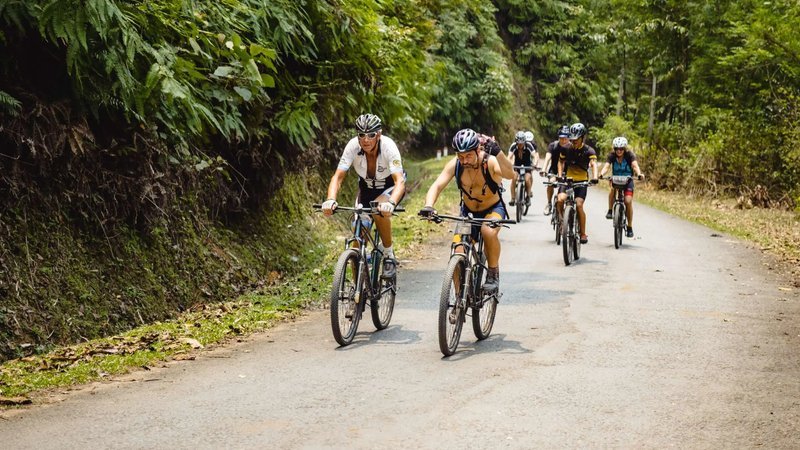
To achieve this, incorporate back-to-back long rides into your weekend schedule during the final six weeks of your training blueprint. For example, ride three hours on Saturday, followed by another three-hour ride on Sunday.
This trains your glycogen-depleted muscles to utilize energy efficiently, refines your recovery routine, and prepares you mentally for the demanding nature of a multi-day tour.
Completing two off-bike strength sessions per week will dramatically improve your comfort and performance in the saddle. Focus on compound, multi-joint exercises that build functional strength and core stability:
Planks and Side Planks: Hold for sixty seconds to build deep core stability and protect your lower back from trail vibration.
Squats and Lunges: Perform three sets of ten to twelve repetitions to build strength in your quadriceps, glutes, and hamstrings, focusing on slow, controlled movements.
Single-Leg Deadlifts: This outstanding exercise corrects muscular imbalances between your legs, strengthens your hamstrings, and improves your balance on the pedals.
Push-Ups and Dumbbell Rows: Strengthen your upper back, shoulders, and chest to prevent upper body fatigue during long, technical descents.
Southeast Asia's tropical climate presents unique physical challenges. Depending on the season and altitude, you may transition rapidly from warm, humid lowlands to cool, mist-shrouded mountain plateaus.
Preparing your cardiovascular system to cope with these environmental changes is essential for a safe, comfortable ride.
When you ride in hot, humid conditions, your heart must work harder to pump blood to both your working muscles and your skin to regulate your core temperature.
To help your cardiovascular system adapt, incorporate heat acclimatization training into the final three to four weeks of your preparation:
Perform moderate, low-intensity rides in warm conditions (always prioritizing safety and hydration).
If training indoors, ride on a stationary trainer in a warm room without a fan to stimulate sweating and plasma volume expansion.
Focus on consistency; your body requires approximately ten to fourteen days of regular, controlled heat exposure to fully adapt.
Staying hydrated is not just about drinking plain water—it is about maintaining a delicate balance of sodium, potassium, magnesium, and calcium in your bloodstream.
As you sweat, you lose vital electrolytes that are essential for muscle contraction and nerve function. If you drink only plain water during a long, hot ride, you risk diluting your blood sodium levels, leading to muscle cramping, fatigue, and headaches:
Pre-Hydration: Begin sipping an electrolyte-rich drink two to three hours before your ride to ensure your cells are fully hydrated.
On the Trail: Aim to drink one bottle of water mixed with high-quality electrolyte tablets or powder for every hour of riding, taking small, frequent sips rather than gulping.
Post-Ride Recovery: Replenish your fluids and electrolytes immediately after your ride to accelerate muscle recovery and prepare your body for the next day's effort.
Endurance is only half the equation; navigating unpaved trails requires sharp bike handling skills and dynamic body positioning.
To ride with confidence, you must learn to read the trail, anticipate line choices, and adapt your body to the changing terrain.
On a paved road, you can remain seated and static in the saddle. On a gravel trail, your bicycle must move freely beneath you.
When navigating rough sections, loose pebbles, or deep ruts, lift your hips slightly off the saddle and keep your weight centered over the bottom bracket:
The "Attack" Position: Keep your elbows bent, your knees slightly out, and your back flat. Your arms and legs act as natural shock absorbers, soaking up the bumps and keeping your tires planted on the trail.
Feathering the Brakes: Avoid braking suddenly, especially on loose gravel or wet clay. Instead, apply smooth, even pressure to both your front and rear brakes (a technique known as feathering) to maintain traction and control your speed.
Looking Ahead: Your bicycle will naturally follow your eyes. Avoid staring down at your front wheel; instead, look five to ten meters ahead down the trail to spot obstacles, select the smoothest lines, and prepare for upcoming switchbacks.
Depending on the weather, you may encounter slick, sticky red clay or soft alluvial sand.
Navigating these challenging surfaces requires a steady, high-cadence pedaling rhythm and a relaxed upper body:
In the Mud: Maintain a smooth, continuous spin, and avoid shifting your weight suddenly, which can cause your rear tire to lose traction and slip on the wet clay.
In the Sand: Shift your weight slightly backward over the rear wheel to keep your front tire from digging into the soft sand, and keep pedaling firmly to float over the loose surface.
Stream Crossings: When splashing through a shallow river, look for a straight, clean path, keep your pedals level, and maintain a steady, forward momentum to carry you safely to the other side.
Now that you understand the physical and technical preparation required, it is time to choose your dream destination. The diverse geography of Vietnam offers an endless playground for gravel cyclists, with routes tailored to every experience and fitness level.
If you crave massive elevation changes, dramatic karst peaks, and deep wilderness immersion, the northern highlands are your ultimate playground.
Embark on our spectacular Cycling Northern Vietnam itineraries, designed to challenge your physical limits and reward you with some of the most breathtaking views on Earth.
Our journeys begin in the historic capital of Hanoi, where you can warm up your legs on our guided Hanoi Bike Tours, navigating quiet dirt paths along the dikes of the Red River through organic orchards and peaceful villages.
From there, head north to tackle the legendary limestone loops of our iconic Ha Giang Bike Tours, climbing through the UNESCO-protected Dong Van Karst Plateau Geopark and conquering the towering, cliff-side Ma Pi Leng Pass overlooking the Nho Que River.
Further west, explore the spectacular terraced valleys of our Sapa Bike Tours, conquering the O Quy Ho Pass—the longest mountain pass in the country—or discover the rugged, untamed borderlands of our custom Cao Bang Bike Tours, riding to the base of the spectacular Ban Gioc Waterfall within the pristine Phia Oac-Phia Den National Park.
For the ultimate off-grid expeditions, join our multi-day Vietnam Northwest Bike Tours or explore the remote, isolated border ridges of our Vietnam Northeast Bike Tours.
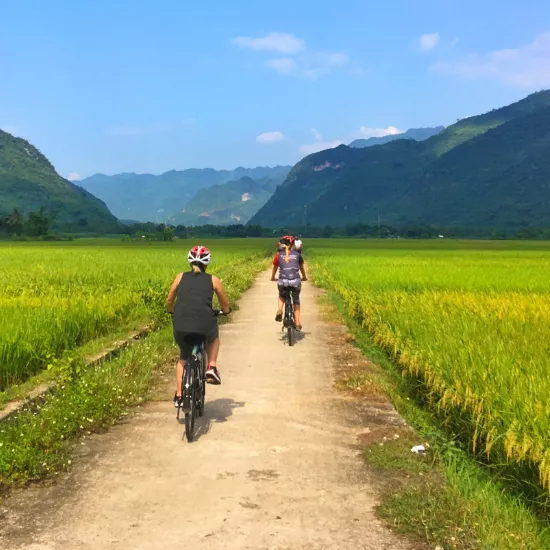
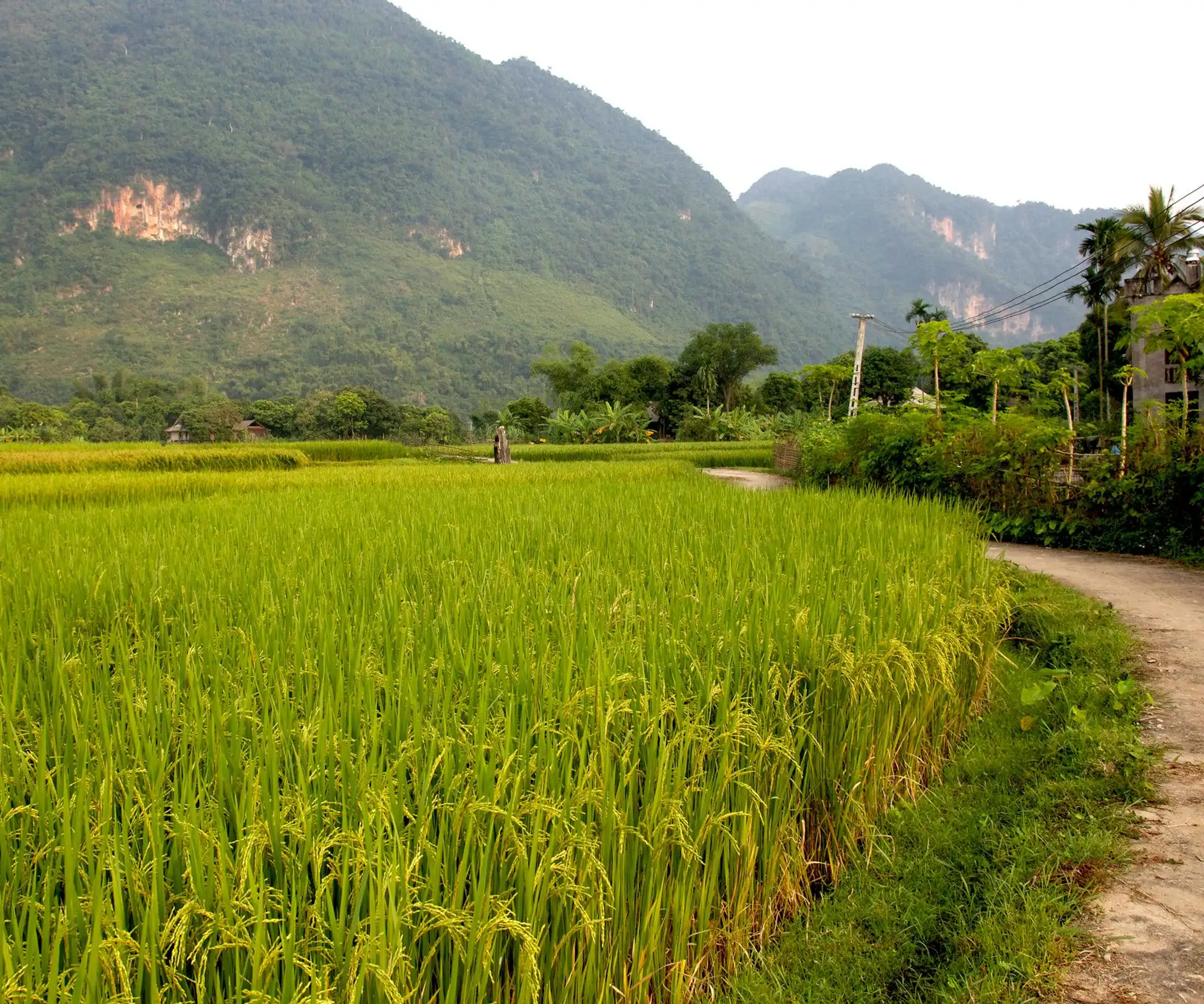
If you prefer flowing, rolling trails that wind through lush agricultural plains and dramatic karst formations, the valleys of Ninh Binh, Mai Chau, and the Pu Luong Nature Reserve offer the perfect playground.
Explore these spectacular, water-carved valleys on our popular Ninh Binh Bike Tours, navigating a labyrinth of red clay singletracks winding tightly around the bases of towering karst peaks within the Trang An Scenic Landscape Complex and the Van Long Wetland Nature Reserve.
For deep forest immersion, the unpaved paths of our Mai Chau Bike Tours and the technical singletracks of our Pu Luong Bike Tours wind through the lush valleys of the Pu Luong Nature Reserve, past traditional wooden waterwheels and peaceful stilt-house hamlets.
Central Vietnam offers an exceptional combination of rich imperial history, dramatic coastal views, and deep, jungle-covered mountain ranges. Explore this culturally rich region on our custom Cycling Central Vietnam packages.
Our regional routes pedal through the peaceful, pine-shaded hills and imperial garden houses of the historic capital on our popular Hue Bike Tours, tracing the scenic banks of the Perfume River.
Further south, navigate the tranquil, lantern-lit agricultural lanes and organic farming communities of our Hoi An Bike Tours, riding along the quiet dikes of the Thu Bon River and exploring the ancient ruins of the Cham civilization at the My Son Sanctuary, tucked deep within a green, jungle-covered valley.
For history enthusiasts seeking the ultimate adventure, challenge your limits on our legendary Ho Chi Minh Trail Cycling Tours, tracing the vital historic supply lines now surrounded by the dense, pristine forests of the Phong Nha-Ke Bang National Park.
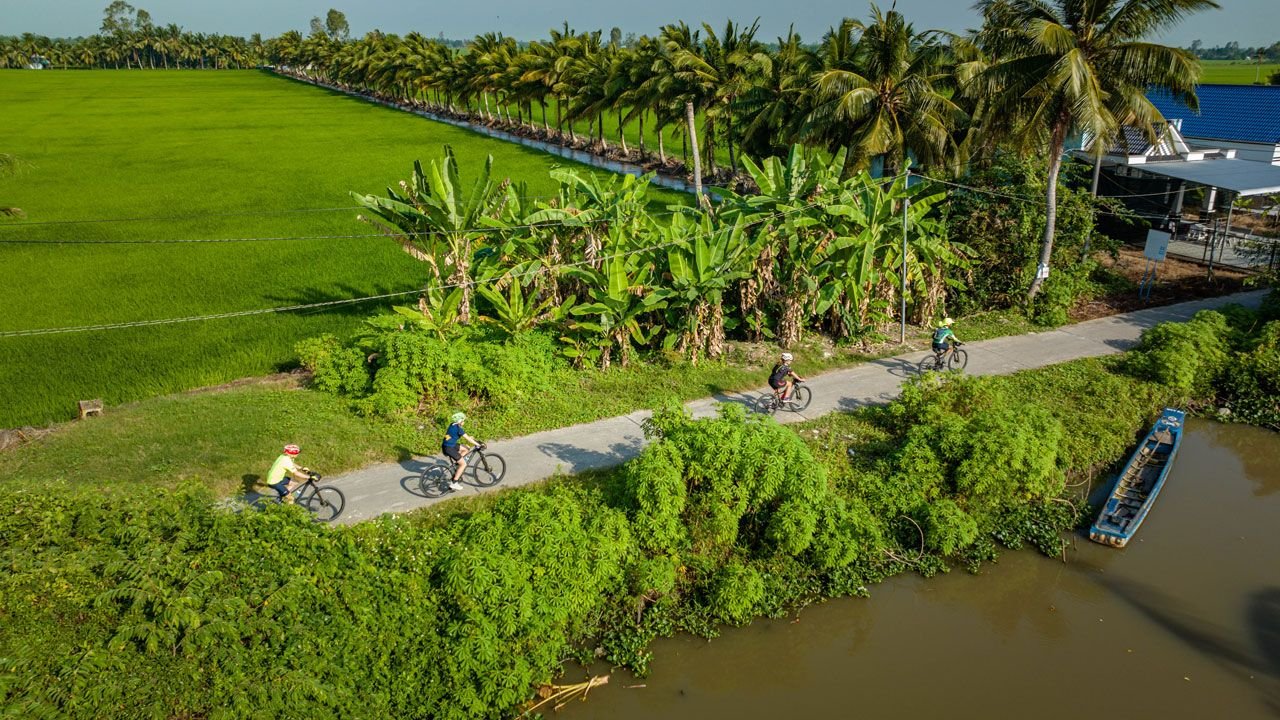
For a completely different landscape, travel south to explore the endless, peaceful waterways, lush fruit orchards, and friendly floating markets of the tropical southwest on our popular Mekong Delta Bike Tours or explore the vast, sun-drenched network of dirt roads on our comprehensive Cycling Southern Vietnam packages.
For the ultimate, bucket-list adventure, we offer epic, multi-week cross-country tours that traverse the entire length of the nation, allowing you to witness the profound transition of cultures, cuisines, and landscapes.
Challenge your endurance on our legendary Cycling North to South Vietnam expedition, or reverse the journey and experience the changing terrain on our Cycling South to North Vietnam tour.
We believe that everyone should be able to experience the magic of sustainable travel, regardless of their fitness level or preferences:
E-Bikes: Enjoy the spectacular scenery and remote gravel trails without the intense physical strain on our modern, motorized Vietnam E-Bikes Tours.
Luxury Cycling: For those who appreciate the finer things in life, our Vietnam Luxury Bike Tours combine premium gravel riding with five-star boutique eco-resorts, private support vehicles, organic gourmet dining, and VIP service.
Endurance gravel riding burns a massive amount of energy, and the traditional cuisine of Vietnam's river basins and highlands is the perfect, clean fuel. Rich in fresh garden herbs, lean proteins, and complex carbohydrates, every meal is a healthy, delicious celebration of local, zero-kilometer ingredients.
Xôi Ngũ Sắc (Five-Colored Sticky Rice): A visual and culinary masterpiece. This high-carbohydrate fuel is colored naturally using local mountain plants—red from Gac fruit, yellow from turmeric, purple and green from forest leaves. It is dense, slightly sweet, and provides a slow, steady release of energy that is perfect for long, sustained climbs.
Cơm Lam (Bamboo Sticky Rice): Sweet sticky rice packed into fresh bamboo tubes and slow-roasted over open charcoal coals until the outer skin is perfectly caramelized. It is highly portable, delicious, and incredibly satisfying on the trail, wrapped in nature's own biodegradable packaging.
Canh Chua Nam Bộ (Southern Sour Soup): A refreshing, sweet-and-sour broth simmered with fresh, sustainably caught river fish, pineapples, tomatoes, bean sprouts, and tamarind, topped with fresh herbs. It is the ultimate hydrating and replenishing recovery soup after a long day in the saddle.
Rau Rừng Xào Tỏi (Stir-Fried Wild Forest Greens): Freshly harvested wild mountain greens, quickly tossed in a hot wok with garlic and local sesame oil. It is exceptionally fresh, crisp, and packed with vital vitamins and minerals to aid muscle recovery.
Tam Coc Valley Bistro (Ninh Binh): A charming garden bistro surrounded by towering karst peaks, offering a fresh, healthy mix of traditional Vietnamese dishes and western-style cyclist fuel made from organic ingredients sourced from nearby family farms.
Mang Den Pine Bistro: A beautiful rustic eatery nestled in a fragrant pine forest, specializing in organic, forest-to-table dishes and premium local mountain teas.
Community Homestay Feasts: The absolute highlight of any off-grid journey. Sit down around a low wooden table with your local hosts to share a massive, family-style feast of slow-roasted mountain pork, stir-fried ginger chicken, fresh forest vegetables, and organic mountain rice.
Quality recovery is essential on a multi-day gravel tour. Our carefully curated itineraries feature a balanced mix of comfortable, environmentally conscious eco-lodges and highly clean, community-owned local homestays.
Topas Ecolodge (Sapa): A world-renowned eco-lodge situated on a stunning hilltop deep in the valleys of Sapa, featuring private stone bungalows built from local materials, solar-powered facilities, spectacular infinity pools overlooking the terraced valleys, and traditional Red Dao herbal baths.
Mai Chau Ecolodge (Mai Chau): Nestled in the heart of the peaceful Mai Chau Valley, this beautiful lodge features traditional stilt-house architecture, lush green organic gardens, waste-water recycling systems, and a large outdoor pool perfect for relaxing your tired muscles.
Emeralda Resort Ninh Binh: A luxurious five-star resort styled after a traditional northern Vietnamese village, built with sustainable materials and located next to the serene Van Long Wetland Nature Reserve.
Du Gia Homestay (Ha Giang): A charming, traditional wooden stilt house located in a peaceful valley surrounded by green rice fields and rushing mountain streams, offering clean bedding, mosquito nets, and a warm communal dining experience.
Trang An River View Homestay (Ninh Binh): Cozy, rustic bungalows located directly on the banks of a quiet river, offering breathtaking views of the karst mountains and exceptional family hospitality.
Getting to the remote starting hubs of your gravel tour is simple and environmentally friendly when planned correctly.
By Train: Roll your boxed bicycle onto the comfortable, energy-efficient overnight sleeper train from the historic Hanoi Railway Station to Lao Cai Railway Station (the gateway to Sapa and Y Ty), arriving refreshed and ready to ride at sunrise while minimizing your travel emissions.
By Luxury Electric Limousine: Modern, fully electric transport vans run daily from Hanoi directly to major adventure hubs like Ninh Binh, Mai Chau, and Ha Giang.
Support Vehicles with Golden Cycling Tours: Our support vehicles are carefully routed and shared among small groups to maximize efficiency. They transport all your luggage, spare parts, and mechanical tools, ensuring a safe, fully supported journey without unnecessary emissions.
For our off-road routes, we recommend a dedicated gravel bike equipped with wide, high-volume tubeless tires (38mm to 45mm) run at lower pressures to maximize traction and comfort on sand, loose pebbles, and red clay.
During our comprehensive, pre-tour bike fittings, our expert mechanics adjust your saddle height, handlebar drop, and suspension pressures to match your specific anatomical measurements, ensuring your bike behaves like a custom-built machine.
A wide-range drivetrain is essential for maintaining a smooth, efficient cadence through steep valley climbs and river crossings.
Don't just take our word for it. Here is what international gravel riders have to say about their experience riding with Golden Cycling Tours.
"I have ridden my gravel bike all over the world, but navigating the rugged trails of Vietnam on a heavy rental was my biggest worry. Deciding to utilize the fitness preparation tips and support from Golden Cycling Tours was an absolute game-changer. The bike was incredibly lightweight, stiff, and perfectly tuned. I conquered the massive climbs of Ha Giang with ease and descended the loose gravel of Ma Pi Leng with absolute confidence. It felt like my own personal race bike!" — Marcus L., Portland, USA (Rider on the How to Prepare for Multi-Day Vietnam Gravel Bike Tours [Fitness Tips] masterclass)
"As a performance cyclist, I am very picky about my equipment setup. The mechanics at Golden Cycling Tours did an incredible job fitting me to the carbon gravel bike before the tour started. The carbon frame dampens trail buzz so well that I had zero lower back pain after riding consecutive seventy-mile days. Riding through the small farming villages and sleeping in traditional stilt houses was magical, but doing it on a premium carbon rig made it unforgettable." — Elena S., Munich, Germany (Rider on the How to Prepare for Multi-Day Vietnam Gravel Bike Tours [Fitness Tips] masterclass)
While we offer routes for all levels, a basic level of aerobic fitness is highly recommended. For our standard tours, you should be comfortable riding three to four hours at a steady, conversational pace. If you are joining our high-altitude mountain tours, focusing on climbing-specific intervals and back-to-back weekend rides will ensure a comfortable, rewarding experience.
Saddle sores are caused by friction, pressure, and moisture. To prevent them, invest in a high-quality pair of padded cycling bib shorts, use a premium chamois cream to reduce friction, and ensure your saddle height and angle are professionally adjusted during your pre-tour bike fitting.
The best way to adapt is gradual heat exposure. In corporate moderate training rides in warm conditions in the final three weeks of your preparation. On the trail, prioritize sodium and electrolyte intake over plain water, and take advantage of our support vehicles for shade and cooling breaks whenever needed.
Modern gravel bikes with wide, tubeless tires are the absolute best tool for these trails. They are significantly faster and more efficient on the flat dike roads and rolling valley tracks, while still providing confident handling and dampening on the rocky, high-altitude passes.
Long after you return home, long after you have washed the fine, red clay from your riding shoes, the memories of the sustainable trails will remain. You will close your eyes and still feel the gentle warmth of the mountain sun on your face, still hear the rhythmic, clean hum of your tires carving through the earth, and still see the majestic limestone giants and winding green valleys rising through the morning mist.
Are you ready to experience the pinnacle of off-road cycling performance with absolute confidence? Pack your bags, dust off your passport, and let us show you the soul of Vietnam on two wheels.
Learn How to Prepare for Multi-Day Vietnam Gravel Bike Tours [Fitness Tips] and book your dream ride with the experts at Golden Cycling Tours today, and discover the magic of a country designed to be explored on a premium bicycle.

Leave a Reply
Your email address will not be published. Required fields are marked *