- Call us Via Whatsapp: +84 (0) 832 126 699
4.9 stars on our site
(15,000 reviews)
- Monday - Sunday : 08:00 - 17:00
(15,000 reviews)

There is a place in the far northern reaches of Vietnam where the earth does not merely roll; it erupts. Giant limestone obelisks pierce the clouds, emerald rivers carve dizzying canyons through ancient stone, and roads cling precariously to sheer cliff faces like ribbons dropped from the heavens. This is Ha Giang, a mythical realm of geological wonders and vibrant ethnic minority cultures. For decades, intrepid travelers have sought to conquer this frontier. While motorbikes have long dominated the narrative of this frontier, a new and far more intimate way to experience its majesty has emerged. When you choose to Discover the Ha Giang Loop by Bike: The Ultimate Adventure Guide, you embark on an immersive, physically transformative, and deeply soulful pilgrimage that connects you directly to the heartbeat of this spectacular landscape.

Choosing to cycle this frontier allows you to slow down and absorb details that motorized travelers miss entirely. You feel the sudden drop in temperature as you climb into the clouds of a high-altitude pass. You hear the rhythmic clatter of traditional looms from wooden stilt houses, the laughter of children echoing across terraced fields, and the whisper of the mountain breeze through bamboo groves. It is a journey that demands physical effort, but rewards you with a profound sense of accomplishment and a collection of memories that will last a lifetime.
To help you turn this challenging dream into a reality, we have crafted this definitive guide to navigating the far north on two wheels. Whether you are an experienced cyclist looking to test your limits against legendary climbs or an active traveler seeking an assisted mountain journey, your ultimate Vietnamese cycling adventure begins right here.
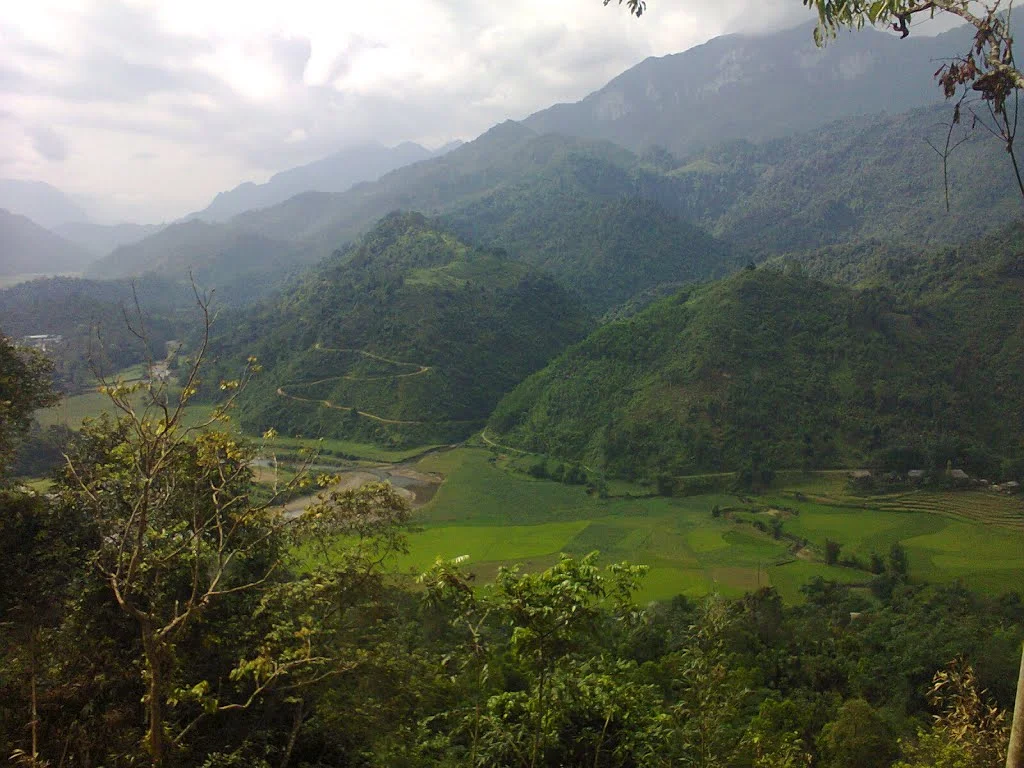
The far northern highlands of Vietnam present a topographical masterpiece. Carved over hundreds of millions of years by tectonic activity, marine sedimentation, and water erosion, the terrain transitions rapidly from deep, fertile valleys to jagged limestone massifs that define the horizon.
For cyclists, geography is destiny. In Ha Giang, that destiny involves lung-busting climbs, rewarding panoramic vistas, and exhilarating, technical descents. Here, you do not just look at the mountains; you interact with them. You feel the cool mountain breeze change to misty moisture as you climb, and you feel the sudden rush of warm valley air as you sweep down the other side of a mountain pass.
The sheer variety of roads, ranging from freshly paved highways with sweeping curves to rugged singletrack trails cutting through remote villages, means that every style of rider can find their perfect path. Cycling gives you the freedom to stop whenever a view takes your breath away, without worrying about finding a safe pull-off for a motorized vehicle. It turns the journey itself into the destination.
What truly elevates a cycling expedition through the north from a sporting event to a deeply emotional journey is the people. The highlands are home to dozens of distinct ethnic minority groups, including the Hmong, Tay, Nung, Dao, Thai, and Giay. Each community possesses its own unique language, architectural style, colorful traditional attire, and distinct culinary heritage.
As you pedal through peaceful villages, you are greeted not with indifference, but with genuine smiles, waves, and enthusiastic cries of "Hello!" from local children. Spending your evenings in traditional stilt houses and sharing home-cooked meals with local hosts offers a level of cultural immersion that conventional transport simply cannot replicate. On a bicycle, you are completely accessible; there are no glass windows or noisy engines separating you from the warm hospitality of the locals.
Embarking on an ambitious journey through remote mountainous regions requires meticulous planning, premium equipment, and deep local knowledge. This is where Golden Cycling Tours comes in. As the premier adventure cycling operator in Vietnam, they specialize in crafting unforgettable itineraries that balance physical challenge with comfort and cultural discovery.
From providing top-tier mountain bikes and professional support vehicles to securing authentic homestays and luxury eco-lodges, they ensure that your only responsibility is to pedal and absorb the magnificent surroundings. Their professional guides are not only expert mechanics but also cultural ambassadors who can open doors to experiences that independent travelers could never access.
The classic journey through the far north is a loop that begins and ends in Ha Giang City. The route covers approximately 350 kilometers of winding mountain roads, traversing some of the most geologically significant landscapes on earth.
The entire loop winds through the Dong Van Karst Plateau Geopark, a UNESCO-protected site that covers four districts: Quan Ba, Yen Minh, Dong Van, and Meo Vac. This region is a wonderland of limestone peaks, deep canyons, fossil-rich stone forests, and dramatic karst formations.
Eighty percent of the landscape is limestone, showing dramatic evidence of the Earth's evolution over 500 million years. As you cycle through this grey, stony desert, you will marvel at the ingenuity of the local people, who have terraced every available inch of soil, planting corn in the tiny pockets of earth between jagged rocks.
Each district along the loop offers a unique landscape and challenge:
Quan Ba: Known as the gateway to the high country, characterized by sweeping green hills and iconic twin peaks.
Yen Minh: Famous for its cool pine forests, winding rivers, and steep climbs.
Dong Van: The rocky heart of the geopark, featuring massive stone forests and a historic ancient town.
Meo Vac: Home to the most dramatic canyon landscapes and the legendary Ma Pi Leng Pass.
Du Gia: A hidden valley of rushing streams, waterfalls, and lush rice terraces, offering a tranquil escape.
To complete the loop safely and enjoyably, we recommend a minimum of four days of riding. This allows you to tackle the climbs in manageable segments and leaves plenty of time for cultural encounters and sightseeing.
Your journey begins as you depart the bustling hub of Ha Giang City and immediately start climbing into the mountains. The road follows the winding course of the Mieng River before presenting your first major physical challenge: the climb up Bac Sum Pass. This steep, winding stretch of road features dozens of hairpin turns that will test your climbing legs and gears.
As you reach the summit of the pass, you are rewarded with sweeping views back down the valley. Continuing onward, you will reach the famous Quan Ba Heaven Gate. Standing at an altitude of over 1,500 meters, this gap in the mountain ridge offers a breathtaking panoramic view over the town of Quan Ba and the iconic Co Tien Twin Mountain (also known as the Fairy Breast Mountain). These two perfectly symmetrical limestone hills rise side-by-side from the flat valley floor, looking like a work of natural art.
From Quan Ba, the road descends into a scenic valley before climbing again through dramatic pine forests toward the town of Yen Minh. The air becomes noticeably cooler and fresher here, providing a welcome relief after the physical exertions of the day's climbs. You will spend your first night in this peaceful mountain town, resting and preparing for the challenges ahead.
Leaving Yen Minh, the road wastes no time in climbing back into the high country. Your first major landmark of the day is the legendary Tham Ma Pass. This iconic, nine-turn winding pass is one of the most photographed roads in Vietnam. The climb is steady and demanding, but the view from the top looking down at the perfect S-curves of the road below is an unforgettable reward.
At the summit of Tham Ma Pass, you officially enter the high-altitude stone desert of the Dong Van Karst Plateau. The landscape changes dramatically, transitioning from green hills to a wild, grey world of jagged limestone peaks. Next, you will tackle the steep climbs of Chin Khoanh Pass, another set of winding curves that leads you into the historic Sa Phin Valley.
In Sa Phin Valley, you will take a break from the saddle to explore the magnificent Hmong King Palace (also known as the Vuong Mansion). Built in the early 20th century for the ruler of the local Hmong people, this unique palace blends traditional Chinese, Hmong, and French architectural styles. It is constructed from precious wood and stone, surrounded by towering pine trees, and offers a fascinating glimpse into the history of the region's opium trade.
After exploring the palace, a final scenic push brings you to the historic Dong Van Ancient Town. Nestled in a valley surrounded by sheer limestone cliffs, this charming town features century-old clay houses with tiled roofs, a bustling market square, and a wonderfully atmospheric old quarter where you can enjoy a hot drink and reflect on a spectacular day of riding.
Today is the crown jewel of your expedition. Many riders choose to begin the day with a detour north to the Lung Cu Flag Tower. Located atop Dragon Mountain, this monumental flag tower marks the northernmost point of Vietnam, right on the border with China. The climb up the mountain is physically demanding, but standing at the base of the giant national flag, looking out over the vast, rugged landscapes of both Vietnam and China, is a deeply moving experience.
Returning to the main loop, you will prepare to conquer the ultimate peak of your journey: the legendary Ma Pi Leng Pass. Often referred to as the king of mountain passes in Vietnam, this breathtaking stretch of road is carved directly into the sheer limestone cliffs, suspended high above the abyss.
As you pedal along this cliffside road, you will look down in awe at the turquoise waters of the Nho Que River winding through the bottom of the spectacular Tu San Canyon, the deepest canyon in Southeast Asia. The views here are simply immense, defying description and making every ounce of physical effort worthwhile.
The descent from Ma Pi Leng Pass is an exhilarating, technical ride that sweeps you down into the deep valley of Meo Vac. This remote town is surrounded by towering mountains and serves as a major cultural hub for the local ethnic minority communities, making it the perfect place to rest your legs after an epic day of riding.
The final leg of your journey takes you through some of the wildest and most untouched landscapes of the loop. Leaving Meo Vac, you will ride through the rugged, rocky terrain of Mau Due, where the limestone formations are exceptionally sharp and dramatic. The road here is quieter and less traveled, offering a sense of deep solitude and connection to nature.
From Mau Due, you will descend into the idyllic valley of Du Gia. Surrounded by lush green hills, carpeted with emerald rice terraces, and home to traditional Tay and Hmong villages, Du Gia Village feels like a hidden paradise. You can take a refreshing break to swim in the cool, crystal-clear waters of Du Gia Waterfall, a secret oasis hidden in the forest.
The final stretch of the loop involves a long, challenging climb over the high passes of Lung Tam before a final, long descent back to Ha Giang City. As you roll back into the city where your journey began, you will feel a profound sense of achievement. You have conquered one of the most challenging and spectacular roads on earth using your own physical power.
A journey through the north is as much a cultural exploration as it is a physical adventure. The mountains are home to a rich tapestry of ethnic minority communities, each preserving ancient traditions that have vanished from other parts of the world.
The dominant ethnic group in the high stone plateau is the Hmong, recognizable by the vibrant, intricately embroidered clothing worn daily by the women. You will also encounter the Tay, who live in peaceful valleys in traditional wooden stilt houses; the Dao, known for their colorful headscarves and silver jewelry; and the Lolo, one of the smallest and most culturally distinct ethnic groups in Vietnam.
Lung Tam Linen Village: Located in the valley of Quan Ba, this cooperative of Hmong women preserves the ancient art of making linen from hemp plants. You can watch the entire manual process, from stripping the hemp bark to weaving on traditional wooden looms and dyeing the fabric with natural indigo. It is a wonderful place to purchase authentic, high-quality souvenirs that directly support the local community.
Traditional Weekly Markets: If your schedule allows, visiting a weekend market is an absolute must. The Dong Van Market and Meo Vac Market on Sunday mornings are spectacles of color and life. Thousands of people from various ethnic groups dress in their finest traditional clothing and travel from remote mountain villages to trade goods, livestock, and socialize. The energy is electric, filled with sights, sounds, and aromas found nowhere else.
The Khau Vai Love Market: Held only once a year on the 27th day of the third lunar month, this legendary festival in Meo Vac is a unique cultural phenomenon where ex-lovers meet to share stories, catch up on their lives, and celebrate their past relationships with the blessing of their current spouses.
When cycling through remote ethnic villages, you are a guest in the ancestral homes of these communities. Behaving respectfully and mindfully ensures positive interactions and preserves the warmth and openness of these communities for future travelers:
Dress Modestly: While athletic cycling gear is practical on the bike, avoid wearing overly revealing clothing when exploring villages or visiting temples. Keeping a light t-shirt or sarong handy to cover up when off the bike is highly recommended.
Ask Before Taking Photos: The colorful traditional dress of the local people is beautiful, but always ask for permission before taking a photo, especially of children or elders. A simple smile and a nod of your camera are usually enough to ask.
Support the Local Economy: Buy handicrafts, textiles, and snacks directly from local artisans and small village shops. This ensures that the economic benefits of tourism go directly into the hands of the communities you visit.
Respect Sacred Spaces: Avoid touching sacred objects, entering private homes without an invitation, or taking items from local altars. If you are staying in a traditional homestay, your host or guide will happily explain the specific customs of their household.
Cycling in the mountains burns a massive amount of calories, making mealtime one of the most exciting parts of the day. Mountain cuisine in Northern Vietnam is fresh, hearty, flavorful, and uniquely distinct from the food found in the lowlands.
Thang Co (Horse Soup): A traditional dish of the Hmong people, traditionally enjoyed at weekend ethnic markets. It is a rich, warming stew made from horse meat and organs, slow-cooked with a blend of local mountain herbs, cardamom, lemongrass, star anise, and cinnamon. It is a hearty, warming dish designed to combat the cold mountain air.
Au Tau Porridge: A specialty of Ha Giang, this unique porridge is made from high-quality sticky rice, pork trotter, and the root of the Au Tau plant (bitter nightshade). The root is toxic in its raw state and must be painstakingly processed and cooked for many hours to remove the toxins, leaving a unique, slightly bitter flavor that is believed to have medicinal properties, particularly for soothing tired joints and promoting deep sleep.
Dried Buffalo Meat (Thit Trâu Gác Bếp): Fresh buffalo meat is marinated with garlic, ginger, chili, and wild mac khen (forest pepper), then hung above the kitchen fireplace to be slow-smoked for months. The result is a savory, smoky, and highly spiced jerky that makes the perfect high-protein, energy-boosting snack to carry in your jersey pocket.
Buckwheat Cakes (Bánh Tam Giác Mạch): Made from the seeds of the buckwheat flower, which carpets the valleys in shades of pink and purple during the autumn months. The seeds are ground into flour, mixed with water, molded into flat cakes, and steamed or grilled over hot coals. They are dense, slightly sweet, and perfect for fuel.
Men Men (Steamed Corn Meal): Because rice is difficult to grow in the rocky stone desert of the plateau, corn is the historical staple food of the Hmong. Corn is ground by hand using stone mills, mixed with water, and steamed twice in a traditional wooden pot. It has a delicate, sweet corn flavor and is often eaten alongside bowls of soup.
Along the cycling routes, your guide from Golden Cycling Tours will introduce you to hidden local gems:
Roadside Trail Cafes: Perfect for a quick cup of strong Vietnamese drip coffee sweetened with condensed milk, paired with fresh local bananas.
Local Market Food Stalls: Bustling hubs where you can sit on low plastic stools and enjoy steaming bowls of Pho or Bun (noodle soup) topped with fresh mountain herbs.
Homestay Family Dinners: The absolute best place to enjoy a feast of home-cooked dishes, including stir-fried wild vegetables, roasted mountain pork, and crispy spring rolls, always accompanied by a small glass of "happy water" (traditional corn or rice wine) poured by your host.
A crucial element of any multi-day cycling expedition is finding the right place to rest, recover, and recharge for the next day's ride. The northern highlands of Vietnam offer a surprisingly diverse range of accommodation options, from deeply immersive local stays to luxurious eco-resorts.
For many riders, the nights spent in local homestays are the absolute highlights of their journey. In regions like Du Gia Village, local families open their traditional wooden stilt houses to travelers.
The Experience: You will sleep in a clean, communal loft area equipped with comfortable mattresses, mosquito nets, and clean linens.
The Vibe: Authentic, warm, and communal. You will have the opportunity to enjoy incredible "family-style" dinners cooked by your hosts, featuring fresh ingredients from their gardens and local markets. It is an unmatched way to learn about local customs and experience genuine Vietnamese hospitality.
If you prefer private facilities and a touch of comfort after a long day of cycling, the highlands are home to some spectacular eco-lodges that blend harmoniously with the natural landscape.
Where to Stay: Properties like the Hmong Village Resort in Quan Ba offer private bungalows perched on mountain ridges, private balconies with panoramic views of terraced fields, infinity pools overlooking deep valleys, and exceptional spa facilities to soothe tired muscles.
The Vibe: Serene, peaceful, and rejuvenating. These properties prioritize sustainability, local employment, and environmental conservation, aligning perfectly with the eco-friendly ethos of bicycle touring.
In larger highland hubs such as Ha Giang City, Dong Van, or Meo Vac, clean and comfortable 2-star to 4-star hotels are readily available. These hotels offer private rooms, en-suite bathrooms, hot showers, reliable Wi-Fi, and hearty buffet breakfasts to fuel your mornings. They provide a practical, comfortable base for exploring the local towns and night markets.
A successful cycling expedition requires a smart transport strategy. Mountain roads can be demanding, weather conditions can change quickly, and mechanical issues can occur in remote areas.
The journey typically begins in the historic capital of Hanoi:
Overnight Sleeper Buses: These modern buses feature comfortable reclining cabin beds and run nightly between Hanoi and Ha Giang City. It is a practical and time-saving option, allowing you to sleep through the journey and arrive at the starting point of the loop refreshed and ready to ride.
Luxury Limousine Shuttles: Private, high-end shuttle buses equipped with spacious leather seats, USB chargers, and Wi-Fi run daily, offering a faster and more comfortable daytime transfer.
Private Transfers: For custom private tours booked through Golden Cycling Tours, a dedicated private van will pick you up directly from your hotel in Hanoi and transport you and your equipment directly to the first cycling stage.
When you book an organized trip with Golden Cycling Tours, you are never truly alone on the road. A dedicated support vehicle (typically a comfortable, air-conditioned passenger van) follows the cycling group at a discreet distance:
Luggage Transport: The support van carries your heavy luggage, allowing you to ride light with only a small frame bag or backpack for essentials.
Mechanical Assistance: The van is loaded with spare parts, extra tubes, tires, and professional tools, with an expert mechanic ready to handle any issues that arise on the road.
Nutrition and Hydration: The vehicle serves as a mobile aid station, stocked with chilled bottled water, fresh seasonal fruits, and high-energy snacks.
Peace of Mind: If you hit a climb that is too steep, feel fatigued, or experience a sudden rain shower, you can simply load your bike onto the custom roof rack and jump inside the comfortable cabin to rest.
Embarking on a journey through the far north is a major undertaking, but Golden Cycling Tours makes it effortless. In addition to their dedicated loop itineraries, they offer a spectacular range of cycling adventures across Vietnam:
Explore the ancient lakeside paths and historic landmarks of the capital with Hanoi Bike Tours.
Pedal through towering karst peaks and ancient temples with Ninh Binh Bike Tours.
Cycle through peaceful wooden stilt villages with Mai Chau Bike Tours.
Challenge yourself against the cascading rice terraces of Pu Luong Bike Tours.
Conquer high-altitude alpine climbs in the shadow of Fansipan Peak with Sapa Bike Tours.
Ride through the historic valleys and spectacular waterfalls of the east with Cao Bang Bike Tours.
Experience the ultimate pinnacle of mountain cycling with dedicated Ha Giang Bike Tours.
Immerse yourself in the spectacular landscapes and cultures of the west with Vietnam Northwest Bike Tours.
Traverse the rugged karst geopark and historical borderlands with Vietnam Northeast Bike Tours.
Combine the best of both eastern and western loops with a comprehensive package for Cycling Northern Vietnam.
Embark on the ultimate cross-nation voyage from the northern highlands to the Mekong Delta with Cycling North to South Vietnam.
The challenging terrain of the far north demands high-quality, reliable equipment. Choosing the right style of bike can make the difference between a grueling struggle and an enjoyable adventure.
For the rugged and unpredictable roads of the highlands, we highly recommend a high-quality mountain bike or a sturdy gravel bike. Mountain bikes equipped with front suspension fork, wide knobby tires, and a wide-range gear system offer the ultimate control, comfort, and stability on uneven surfaces, steep climbs, and gravel sections. Gravel bikes provide a faster, more aerodynamic option for riders who prefer drop handlebars and have experience navigating mountain descents on narrower tires.
If you love the idea of exploring the mountain passes and remote ethnic villages on two wheels but worry about the physical demands of long, steep climbs, technology has provided the perfect equalizer. Participating in Vietnam E-bikes Tours opens up the majestic highlands to riders of all fitness levels.
Premium electric-assist mountain bikes provide a smooth, controllable boost as you pedal, turning intimidating climbs like the Bac Sum Pass or Ma Pi Leng Pass into enjoyable, breezy ascents. This allows companions of differing fitness levels to ride together seamlessly, ensuring that everyone can focus on the breathtaking scenery and rich cultural interactions rather than physical exhaustion.
For those who believe that a challenging day in the saddle should be rewarded with exceptional comfort, booking Vietnam Luxury Bike Tours provides the perfect blend of premium carbon-fiber bicycles, top-tier support services, and overnight stays at the region's finest boutique resorts and eco-lodges.
To ensure your comfort and safety on the road, we recommend packing the following key items:
Cycling Apparel: At least 2-3 pairs of high-quality padded cycling shorts, moisture-wicking jerseys, and a lightweight, packable windproof and waterproof jacket.
Footwear: Sturdy, comfortable athletic shoes or dedicated cycling shoes.
Protection: A well-fitting, high-quality cycling helmet (included in all Golden Cycling Tours rentals), a good pair of UV-blocking sunglasses, and high-SPF sunscreen.
Hydration: Reusable water bottles or a hydration pack to stay hydrated on long climbs.
Personal Items: A small, lightweight backpack or waist pack for carrying your camera, phone, and personal items on the bike.
Evening Wear: Comfortable, casual clothing for evenings, including a warm layer (such as a fleece or light down jacket) as mountain temperatures can drop significantly at night, especially in the winter months.
While the mountain roads have been extensively paved in recent years, they remain narrow, winding, and steep. Respecting the following safety guidelines is essential for a safe and successful journey:
Ride on the Right: Always stay on the right-hand side of the road, especially around blind corners where oncoming traffic may cross the center line.
Control Your Speed: The long descents are incredibly thrilling, but they demand absolute focus and control. Keep your hands on the brakes, anticipate corners, and never ride faster than your reaction time allows.
Be Aware of Road Hazards: Watch out for loose gravel, wet leaves, slow-moving agricultural vehicles, domestic animals (such as water buffalo, cows, goats, and dogs) crossing the road, and occasional rockfalls after heavy rains.
Stay Visible: Wear bright, high-visibility clothing and ensure your bike is equipped with working front and rear lights, especially if you encounter sudden mountain fog or find yourself riding late in the afternoon.
Follow Your Guide: If riding with an organized tour, always follow the safety instructions and pacing suggestions of your lead guide. They know the road conditions, traffic patterns, and potential hazards intimately.
Bac Sum Pass: A spectacular winding pass that serves as the dramatic entrance to the high-altitude stone country.
Quan Ba Heaven Gate: A high mountain pass offering breathtaking panoramic views over the town of Quan Ba and the iconic twin hills.
Tham Ma Pass: A legendary nine-turn winding pass that is one of the most iconic and photographed roads in Vietnam.
Hmong King Palace: A historic palace blending Chinese, Hmong, and French architectural styles, offering a fascinating glimpse into local history.
Lung Cu Flag Tower: A monumental national flag tower marking the northernmost point of Vietnam on the border with China.
Ma Pi Leng Pass: The absolute king of mountain passes in Vietnam, featuring sheer cliffside roads and awe-inspiring views.
Tu San Canyon: The deepest canyon in Southeast Asia, with vertical rock walls framing the turquoise waters of the Nho Que River.
Nho Que River: A beautiful river winding through the bottom of the canyon, perfect for a boat cruise after a long climb.
Du Gia Waterfall: A hidden forest waterfall located in the scenic valley of Du Gia, offering a refreshing natural swimming pool.
Lung Tam Linen Village: A traditional cooperative where Hmong women preserve the ancient art of hand-weaving linen from hemp.
"My partner and I booked the 5-day Ha Giang loop cycling expedition with Golden Cycling Tours, and it was hands down the most incredible travel experience of our lives. The landscapes of the Dong Van Karst Plateau are absolutely mind-blowing; no photo can possibly capture the sheer scale and beauty of the mountains. Cycling up the legendary Ma Pi Leng Pass was a physical challenge, but looking down at the Nho Que River from the summit was a spiritual moment. The support team was flawless; our guide was incredibly knowledgeable, funny, and always kept our bikes in perfect condition, while the support van was always waiting with cold water and fresh fruit right when we needed it. Staying in the traditional stilt-house homestays and sharing home-cooked dinners with local families made the trip truly unforgettable. We cannot recommend this team highly enough!"
Robert & Elena S., Australia
"As an active senior, I love cycling but was worried about my ability to conquer the steep mountain passes of northern Vietnam. Choosing the E-bike tour option was the absolute best decision I could have made! The premium electric-assist mountain bikes provided by the company were top-of-the-line and gave me the perfect, smooth boost to glide up intimidating climbs like Tham Ma Pass and Bac Sum Pass without getting exhausted. It allowed me to fully enjoy the spectacular views of the terraced fields and jagged limestone peaks without being in physical pain. The accommodations were excellent, combining cozy boutique guesthouses with the spectacular Hmong Village Resort. If you want a scenic, active, and comfortable vacation in one of the most beautiful places on earth, this is the way to do it!"
Hans K., Switzerland
The ideal windows for cycling in the northern highlands are during the autumn months (September to November) and spring (March to May). During these periods, the weather is generally dry, clear, and comfortably cool, providing excellent visibility for mountain passes and comfortable riding temperatures. Summer (June to August) brings heavy rains and high heat, which can make mountain roads slippery and prone to landslides. Winter (December to February) can be surprisingly cold and foggy, especially at high altitudes.
The physical requirements depend on the route and the type of bike you choose. Standard cycling tours involve significant daily climbing and are best suited for riders with a good level of cardiovascular fitness and experience with hill climbing. However, flatter routes in Ninh Binh or the gentle valleys of Mai Chau are suitable for casual riders. Additionally, opting for an E-bike tour makes even the steepest mountain routes accessible to anyone with basic cycling skills and moderate fitness.
No, you do not need to deal with the hassle and expense of flying with your own bicycle. Golden Cycling Tours maintains a fleet of premium, professionally maintained mountain bikes, gravel bikes, and E-bikes from world-renowned brands. These bikes are specifically chosen for their durability, gearing, and suitability for the highland terrain. Your tour package includes bike rental, matching helmet, and all necessary repair tools and spare parts.
Yes, but they require focus and respect. Many roads have been paved in recent years, but they remain winding, narrow, and steep. You will share the road with local motorbikes, agricultural vehicles, and occasional trucks. Riding with an experienced local guide is highly recommended, as they know the road conditions, blind corners, and traffic patterns. Having a dedicated support vehicle trailing the group adds an invaluable layer of safety and peace of mind.
Because Ha Giang is a border province, all foreign travelers are required to obtain a border area permit. When you book a tour with Golden Cycling Tours, they handle all the paperwork and secure the permits on your behalf, allowing you to focus entirely on enjoying your ride.
Proper nutrition and hydration are critical in the mountains. Your support vehicle carries a continuous supply of chilled bottled water, electrolyte drinks, fresh seasonal fruits, and high-energy snacks. Your guide will schedule regular rest stops to ensure everyone is drinking enough water and keeping their energy levels up. Meals are structured to provide plenty of healthy carbohydrates and proteins to help your body recover.
The dramatic mountain passes, peaceful terraced valleys, and warm, welcoming smiles of Northern Vietnam are waiting for you. To truly Discover the Ha Giang Loop by Bike: The Ultimate Adventure Guide remains the gold standard for travelers seeking an authentic, challenging, and deeply rewarding experience.
Whether you want to conquer the legendary curves of the far north, cruise through the lush valleys of Mai Chau, or experience the entire country on a grand cross-nation ride, we have the perfect itinerary to match your dreams.
Explore our range of curated tours and let us help you plan your ultimate adventure. Visit Golden Cycling Tours today to find your perfect itinerary, or get in touch with our adventure travel specialists to design a custom private journey tailored precisely to your preferences. The ride of a lifetime is just a pedal stroke away!

.jpg "Cycling in Vietnam in March")
.jpg "Vietnam mountain bikes Trail")
.jpg "Vietnam Biking Trails")
.jpg "Ha Giang Cycling Tours")
Leave a Reply
Your email address will not be published. Required fields are marked *