- Call us Via Whatsapp: +84 (0) 832 126 699
4.9 stars on our site
(15,000 reviews)
- Monday - Sunday : 08:00 - 17:00
(15,000 reviews)

Beyond the buzzing motorbikes, high-density traffic, and towering apartment complexes of modern Hanoi lies an entirely different world. Just across the historical waterways of the Red River, the scenery shifts dramatically into pastoral tranquility. Here, centuries-old traditions remain deeply rooted in the soil, ancient pagodas cast long shadows over emerald rice paddies, and local life moves to the gentle rhythm of the agricultural seasons. Embarking on an Authentic Hanoi Countryside by Bike tour is not just an active day out; it is an intimate portal into the historical heart and living heritage of Northern Vietnam.
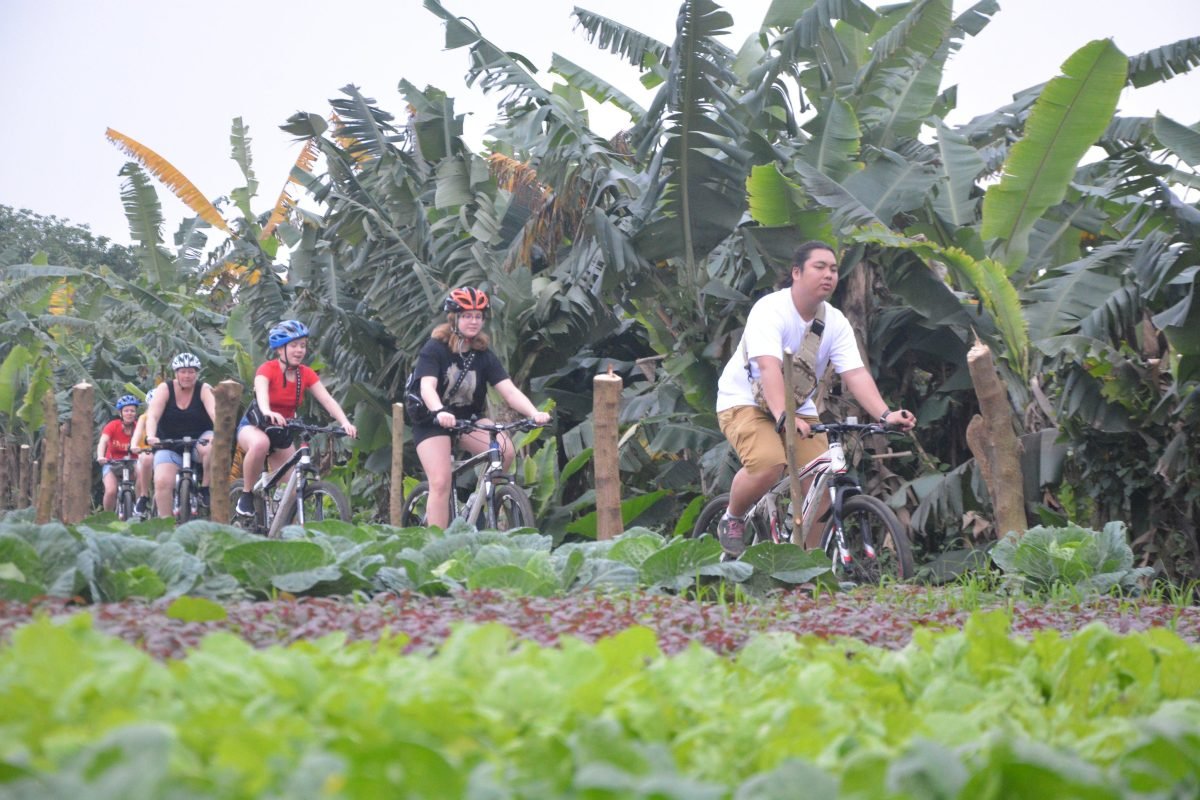
Whether you are navigating the narrow brick alleyways of ancient villages, sharing tea with a third-generation farmer in his courtyard, or cruising along peaceful dyke paths flanked by banana plantations, traveling by bicycle offers a sensory connection that motorized transport simply cannot replicate. In this ultimate travel guide, we will unpack everything you need to know to plan your perfect cycling adventure around Hanoi’s rustic outskirts, while showcasing how you can seamlessly extend your adventure into the majestic mountainous regions of Vietnam with professional operators like Golden Cycling Tours.
To truly understand Hanoi, one must understand its agricultural roots. For thousands of years, the capital was defined not by its urban grid, but by the surrounding ring of handicraft villages, farming communes, and spiritual sanctuaries that fed and built the city.
By choosing an Authentic Hanoi Countryside by Bike itinerary, you bypass the typical tourist traps and step directly into local backyards. Traveling on two wheels allows you to notice the subtle details of Vietnamese rural life: the scent of ripening rice during the harvest seasons, the sight of water buffaloes cooling off in small ponds, the delicate clatter of weaving looms from residential workshops, and the warm smiles of children waving from their doorsteps.
Cycling is also an incredibly environmentally friendly and sustainable way to travel. It minimizes your carbon footprint, reduces noise pollution in fragile historical ecosystems, and ensures that your tourism dollars directly support local rural economies through visits to family-run workshops, traditional market stalls, and village eateries. If you are looking for highly professional and curated experiences, booking specialized Hanoi bike tours ensures you are paired with premium gear, expert local guides, and carefully designed routes that keep you off busy highways and on scenic, quiet backroads.
The rural fringe of Hanoi is rich with historical and geographical landmarks that date back to the birth of Vietnamese civilization. Depending on the direction of your ride, here are the key highlights you should not miss:
Built at the turn of the 20th century by the French architect Gustave Eiffel's firm, Long Bien Bridge is a historic cantilever bridge spanning the Red River. It serves as the magnificent gateway between the bustling city center and the quiet eastern countryside. Cycling across its historic steel spans, alongside local commuters and vendors carrying baskets of fresh produce on their vintage bicycles, is an unforgettable experience.
Directly beneath the Long Bien Bridge lies Banana Island, a fertile, alluvial green oasis untouched by modern high-rises. Navigating the dirt paths of this island reveals vast plantations of bananas, papayas, and seasonal vegetables. It feels incredibly remote, yet it is only minutes away from the busy streets of the city center.
As the oldest ancient capital of Vietnam, Co Loa Citadel dates back to the 3rd century BC during the reign of King An Duong Vuong. The site is famous for its unique spiral design, which originally featured three concentric earthen ramparts. Today, you can pedal along these ancient ramparts, visit the sacred An Duong Vuong Temple, and learn about the legendary golden turtle claw crossbow that once protected the kingdom.
Located about 50 kilometers west of central Hanoi, Duong Lam Ancient Village is a living museum of Northern Vietnamese representation. It is famous for its preserved houses built from laterite bricks (a clay-rich rock hardened in the sun) and decorated with traditional dark-tiled roofs. Biking through the grand Mong Phu Temple Gate, exploring old communal houses, and visiting 400-year-old family homes offers a rare glimpse into the feudal era of the Red River Delta.
Situated on the banks of the Red River, Bat Trang Ceramic Village has been producing high-quality pottery and porcelain since the Ly Dynasty in the 11th century. Cycling through the narrow alleys of this craft village reveals drying pottery lining the walls and active kilns in local courtyards. You can try your hand at the potter's wheel or admire the magnificent modern architecture of the Bat Trang Ceramic Museum.
For a shorter but highly scenic ride, cycling around the 17-kilometer shoreline of West Lake offers a wonderful transition from urban lakeshore to peaceful, temple-dotted neighborhoods. The route passes by the ancient Tran Quoc Pagoda and beautiful lotus ponds, making it a favorite for afternoon sunset rides.
Northern Vietnamese cuisine is celebrated for its balance, purity of flavors, and clever use of fresh herbs. When you venture out into the countryside, you leave behind the westernized menus of the city center and enjoy authentic, rustic dishes that have sustained farming communities for generations.
A specialty of rural districts like Phu Nhi, Banh Te is a traditional steamed rice cake wrapped in green phrynium or banana leaves. The smooth, gelatinous outer rice layer is made from high-quality local grains, filled with a savory mixture of minced pork, wood-ear mushrooms, shallots, and black pepper. Served piping hot, it is the perfect, energy-boosting mid-ride snack.
Most famous in Duong Lam Ancient Village, this legendary dish involves wrapping thick slabs of pork belly around bamboo poles lined with fragrant guava leaves. The pork is roasted slowly over hot coals for up to six hours until the skin becomes blistered and incredibly crispy, while the meat inside remains tender and infused with the herbal aroma of the guava leaves.
A deeply comforting country dish, catfish caught from local ponds is slow-cooked in a clay pot with chunks of green bananas, fried tofu, turmeric, fresh ginger, and perilla leaves. The resulting rich, yellow broth is highly aromatic, offering a perfect blend of savory, earthy, and herbal notes.
For dessert or a sweet treat during a tea break, nothing beats Che Lam. Made from roasted glutinous rice flour, ginger juice, brown sugar, and roasted peanuts, this chewy sweet cake has a warm, spicy ginger kick. It is traditionally paired with a hot cup of green tea while chatting with village elders.
When cycling, avoid fancy tourist restaurants and look for:
Chuan Que (Rustic Countryside Eateries): Typically marked by signs reading "Quan Com Binh Dan" (commoner's rice shop). They serve buffet-style spreads of freshly prepared local vegetables, tofu in tomato sauce, braised fish, and local pork.
Traditional Market Stalls: Stop at local village morning markets. The vendors are friendly, and you can sample freshly fried Banh Ran (sesame-crusted rice balls) or hot bowls of rustic beef noodle soup (Pho Bo) at a fraction of city prices.
Local Homestays: If you book a structured tour, enjoying a family-style lunch prepared by a local host inside a historic ancestral home in Duong Lam Ancient Village is an unrivaled culinary experience.
Whether you wish to base yourself in the heart of the city and do day-trips, or fully immerse yourself by sleeping under the roof of a countryside homestay, the lodging options around Hanoi cater to every type of traveler.
For the ultimate cultural immersion, choose a registered homestay in Duong Lam Ancient Village or the outlying rural districts of Soc Son and Dong Anh. You will sleep in comfortable, renovated rooms within traditional wooden compounds, wake up to the sound of roosters crowing, and enjoy home-cooked breakfasts made from ingredients plucked straight from the garden.
Nestled along the quiet outer rings of Hanoi, beautiful ecolodges offer rustic luxury. These properties feature stilt-house architecture, swimming pools overlooking lotus ponds or rice paddies, and dedicated bicycle rental centers, making them excellent bases for multi-day rural exploration.
If you prefer to return to luxury and a vibrant nightlife after a long day of cycling, staying in a boutique hotel in the Hanoi Old Quarter or near Hoan Kiem Lake is highly convenient. It allows you to easily join early morning departures for countryside tours and explore the capital's top cultural sites during the evenings.
Navigating the transition from central Hanoi to the peaceful countryside requires a bit of planning. Here is how you can manage your logistics smoothly:
The terrain of the Hanoi countryside consists of a mixture of paved roads, packed dirt pathways, elevated concrete canal dykes, and occasional rocky village paths.
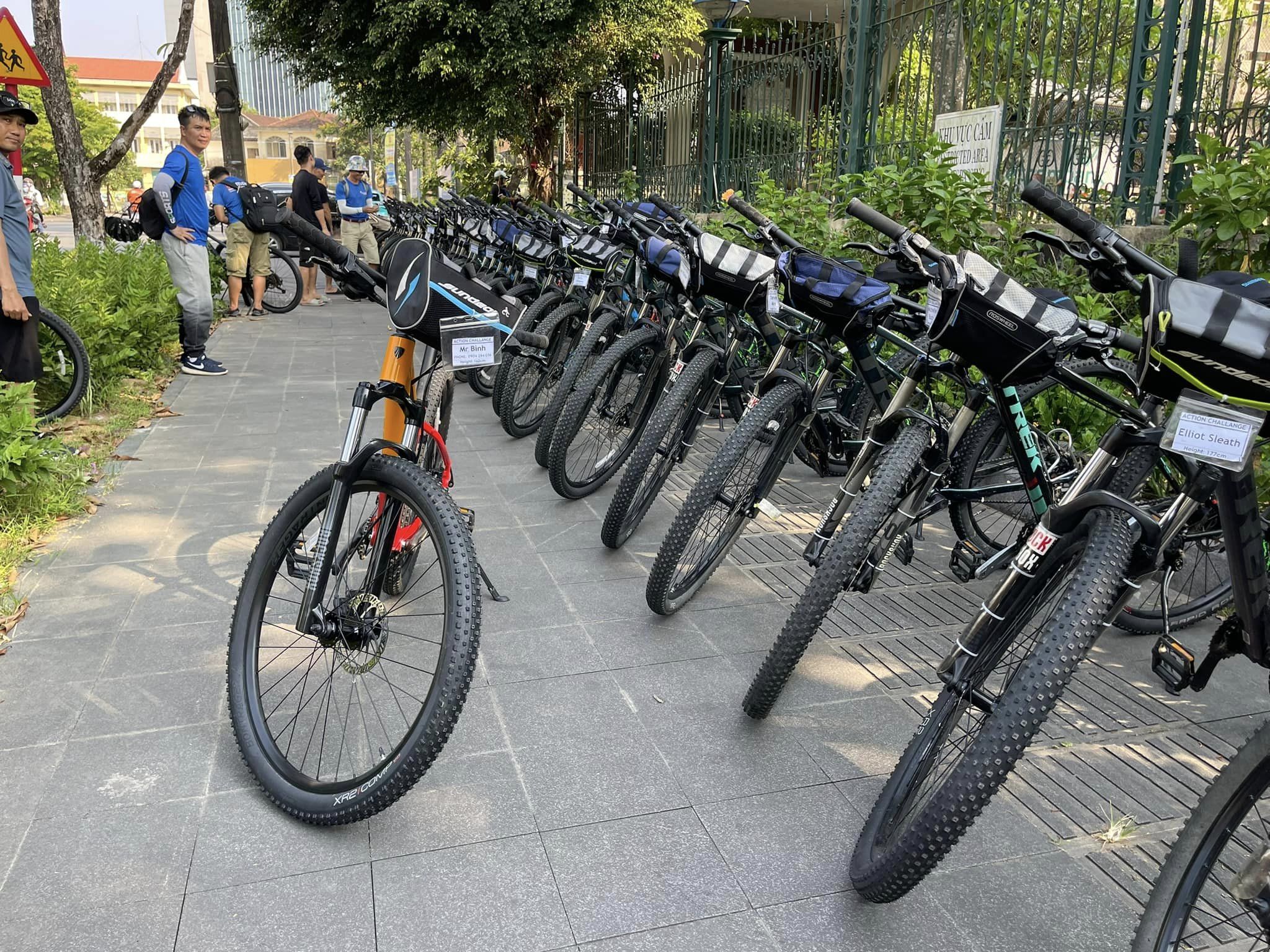
Trekking / Hybrid Bikes: These are the ideal choice. They feature comfortable upright riding positions, front suspension to absorb bumps, and semi-slick tires that roll efficiently on both pavement and light dirt.
Mountain Bikes (MTB): Excellent if you plan to explore rougher terrains, hilly areas like Ba Vi, or off-road tracks along the Red River banks.
Electric Bikes (E-Bikes): Perfect for travelers who want to enjoy the rural scenery without worrying about physical fatigue. If you are interested in exploring with a little extra boost, checking out premium Vietnam e-bikes tours is highly recommended.
If you are planning to ride independently, you can cycle directly from your hotel in the Hanoi Old Quarter across the Long Bien Bridge or the modern Nhat Tan Bridge. However, if you are heading further out to destinations like Duong Lam Ancient Village or Ba Vi, it is best to organize a private support vehicle or a local taxi to transport you and your bicycle past the heavy highway traffic of the urban sprawl. Professional tour companies will always include comfortable, air-conditioned support vans to transport guests and gear safely to the quietest countryside lanes.
Vietnamese countryside communities are incredibly warm, welcoming, and hospitable. However, they remain socially conservative and deeply traditional. Showing respect for their local customs ensures a positive interaction for both you and your hosts.
Many cycling routes will take you past historic spiritual sites, such as the ancient Chua Thay or village communal houses (Dinh).
Modest Attire: Always ensure your shoulders and knees are covered when entering sacred grounds. If you are wearing cycling shorts and jerseys, carry a lightweight sarong or long pants in your backpack to wrap around yourself before stepping inside a temple.
Remove Shoes and Hats: Look at the entrance of temple buildings; if you see a pile of sandals, it is customary to remove your footwear and hat before stepping onto the wooden floorboards.
Ask Before Taking Photos: While farmers, craftsmen, and village elders are often happy to pose for a photograph, always ask politely first by pointing to your camera and saying "Xin chao" (Hello) with a warm smile.
Greeting Elders: In Vietnamese culture, respect for seniority is paramount. When entering a home or starting a conversation with an older resident, a slight bow of the head is a highly appreciated sign of respect.
Do Not Litter: The countryside is a living, breathing ecosystem. Keep all snack wrappers, water bottles, and plastic trash inside your bike bags until you find a proper waste bin.
While exploring the rural boundaries of Hanoi provides a fantastic introduction, the true magic of Vietnam’s landscapes unfolds when you venture deeper into the surrounding provinces. Northern Vietnam boasts some of the most dramatic terrain, towering limestone karsts, deep valleys, and legendary mountain passes in Southeast Asia.
If you are eager to turn your day ride into an epic expedition, Golden Cycling Tours offers a magnificent portfolio of multi-day routes tailored to all fitness levels.
Just a two-hour drive south of Hanoi, Ninh Binh province is often referred to as "Ha Long Bay on Land." Here, towering karst mountains rise abruptly from flat green rice fields. Embarking on Ninh Binh bike tours allows you to cycle along quiet village paths, through natural limestone caves, and visit ancient structures like the Hoa Lu Ancient Capital and the scenic Trang An Scenic Landscape Complex.
For those who love lush green valleys and minority cultures, heading southwest leads to the peaceful stilt-house villages of the White Thai ethnic group. Booking Mai Chau bike tours takes you over gentle mountain passes into a peaceful valley of endless rice paddies.
From Mai Chau, you can push deeper into the sensational mountain wilderness with Pu Luong bike tours. This region is home to the pristine Pu Luong Nature Reserve, famous for its dramatic terraced rice fields, bamboo water wheels, and traditional villages nestled in dense jungle slopes.
If you crave challenging climbs and jaw-dropping mountain passes, Northern Vietnam has some of the finest alpine cycling in the world.
Sapa: Experience the roof of Indochina, cycling past dramatic valleys and ethnic Hmong villages with specialized Sapa bike tours.
Ha Giang: Conquer the absolute pinnacle of Vietnamese adventure. Ha Giang bike tours take you through the geological wonders of the Dong Van Karst Plateau Geopark and over the legendary Ma Pi Leng Pass, a jaw-dropping road carved directly into the sheer cliffside above the emerald Nho Que River.
Cao Bang: Ride through the lush borderlands of Cao Bang bike tours to reach the spectacular Ban Gioc Waterfall, one of the largest and most beautiful border waterfalls in the world.
For the ultimate cycling enthusiast, combining these regions into a single, seamless expedition is the dream of a lifetime. You can choose to explore the rugged peaks and diverse ethnic traditions of the western mountains on Vietnam Northwest bike tours, or delve into the wild karsts and historical war sites of the eastern frontier on Vietnam Northeast bike tours.
Whether you opt for a comprehensive itinerary focusing on cycling Northern Vietnam or decide to push your limits on an epic cross-country odyssey like cycling North to South Vietnam, traveling with an experienced team ensures that your logistics, mechanical support, and accommodations are perfectly taken care of. For travelers seeking premium comforts, high-end boutique lodgings, and top-tier support crew, booking Vietnam luxury bike tours provides the absolute finest way to experience the nation's natural wonders.
Read what passionate globetrotters have to say about their cycling experiences around the countryside of Hanoi:
"Our day spent on the Authentic Hanoi Countryside by Bike tour was easily the highlight of our entire trip to Vietnam. Crossing the historic Long Bien Bridge in the morning mist was magical. We pedaled past endless fields of herbs and corn, chatted with local farmers, and ended up having a delicious family lunch in Duong Lam Ancient Village. It felt like stepping back in time. The bikes provided by Golden Cycling Tours were brand new, and our guide was incredibly knowledgeable about local history and customs. Highly recommend!"
"We wanted an active escape from the noise of the Hanoi Old Quarter, and this bicycle tour delivered exactly that. The transition from busy city streets to quiet alluvial farmlands on Banana Island was amazing. We got to see a side of Vietnam that most tourists completely miss. The route was completely flat and easy to cycle, with plenty of stops for fresh local fruit, local snacks, and green tea. We loved it so much that we immediately booked one of their multi-day Ninh Binh bike tours for the following weekend. An absolute must-do!"
"As an avid cyclist, I was highly impressed by the organization and route design. We rode along elevated concrete canal paths and through ancient village gates without encountering heavy traffic. Visiting the ancient Co Loa Citadel on two wheels was an incredible cultural experience. The guide adjusted the pace perfectly to our fitness level. If you want a genuine, healthy, and deep cultural connection, this countryside tour is perfect."
The most pleasant months for cycling in Hanoi are from October to April. During the autumn (October to December) and spring (March to April), the weather is cool, dry, and sunny, with temperatures ranging from 18 to 26 degrees Celsius. This is also when the countryside is at its most beautiful, with vibrant green or golden-yellow rice fields waiting for harvest. The summer months (June to August) can be extremely hot, humid, and prone to sudden tropical downpours, requiring early morning departures to beat the heat.
Yes, absolutely. The vast majority of our countryside routes around the Red River Delta are flat, paved, or consist of packed dirt paths with very minimal elevation gain. We can easily customize the distance and speed of the ride to match the comfort level of beginners, senior travelers, and families traveling with children. We also offer specialized child-sized bicycles, tag-along attachments, and child seats to ensure everyone has a safe and enjoyable journey.
We highly recommend wearing lightweight, breathable athletic clothing or cycling apparel. Since you will be visiting traditional villages and sacred temples, carrying a light long-sleeved shirt or a sarong to cover your shoulders and knees is necessary. Don't forget to pack a high-protection sunscreen, sunglasses, a camera or smartphone, a lightweight rain jacket (just in case), and closed-toe athletic shoes or sneakers (do not ride in flip-flops). We provide high-quality helmets and refillable purified water bottles on all our tours.
Safety is our absolute number one priority. Our expert local guides are highly trained in group management and defensive riding techniques. When leaving the busy city center, we navigate via quiet back-alleys and designated crossing zones to reach the pedestrian-friendly paths of Long Bien Bridge or West Lake. For tours located further away, such as Duong Lam Ancient Village, we transport all guests and bicycles safely in our private support vehicles to the quiet countryside starting points, ensuring you never have to navigate busy urban highways.
Yes, we have a premium fleet of modern, pedal-assist electric mountain bikes available for rent. E-Bikes are an excellent option if you want to cover longer distances, enjoy the beautiful rural landscapes with minimal physical exertion, or keep up easily with more experienced riders in your group. Please let us know during your booking process so we can prepare and fit the perfect E-Bike for you.
The show must go on! Northern Vietnam's weather can be unpredictable, and a bit of light rain often adds a beautiful, atmospheric mist to the rural farmlands. We provide high-quality, lightweight rain ponchos for all participants. If the weather conditions become severe, stormy, or unsafe for cycling, we will immediately adjust our route, seek comfortable shelter in a local village home, or utilize our accompanying support van to transport everyone safely back to the hotel. We also offer flexible rescheduling options for severe weather events.
Yes, all our guided cycling packages are fully inclusive of high-quality, purified drinking water, fresh seasonal fruits, traditional local snacks during our rest breaks, and a comprehensive, family-style lunch prepared with fresh ingredients at a traditional countryside home or local boutique restaurant. We are also happy to accommodate any specific dietary restrictions, such as vegetarian, vegan, gluten-free, or food allergies—simply inform our team when booking.
Booking your dream cycling adventure is quick and simple. You can visit our official website at https://goldencyclingtours.com to browse our extensive range of day trips and multi-day packages. Once you have selected your preferred itinerary, fill out our secure online inquiry form, and our travel specialists will get back to you within 24 hours to finalize your reservation, customize your route, and confirm your bicycle sizes.

.jpg "Cycling in Northern Vietnam")
.jpg "Cycling Hanoi to Luang Prabang")
.webp "Hanoi Cycling Tour")
Leave a Reply
Your email address will not be published. Required fields are marked *