- Call us Via Whatsapp: +84 (0) 832 126 699
4.9 stars on our site
(15,000 reviews)
- Monday - Sunday : 08:00 - 17:00
(15,000 reviews)

The sharp, metallic click of a carbon derailleur dropping three gears in rapid succession. The hot, shallow rhythm of your breath condensing into a fine salt-mist as the morning humidity rises. The deep, dull ache of lactic acid pooling in your quadriceps, screaming for reprieve as the gradient spikes to a brutal twelve percent. The intoxicating scent of wild pine needles, crushed eucalyptus, and heavy ocean brine swirling through a thick blanket of coastal fog that clings to your skin like cold sweat. This is not a leisurely tour through manicured resort grounds. This is the ultimate connection of history, nature, and raw physical performance.
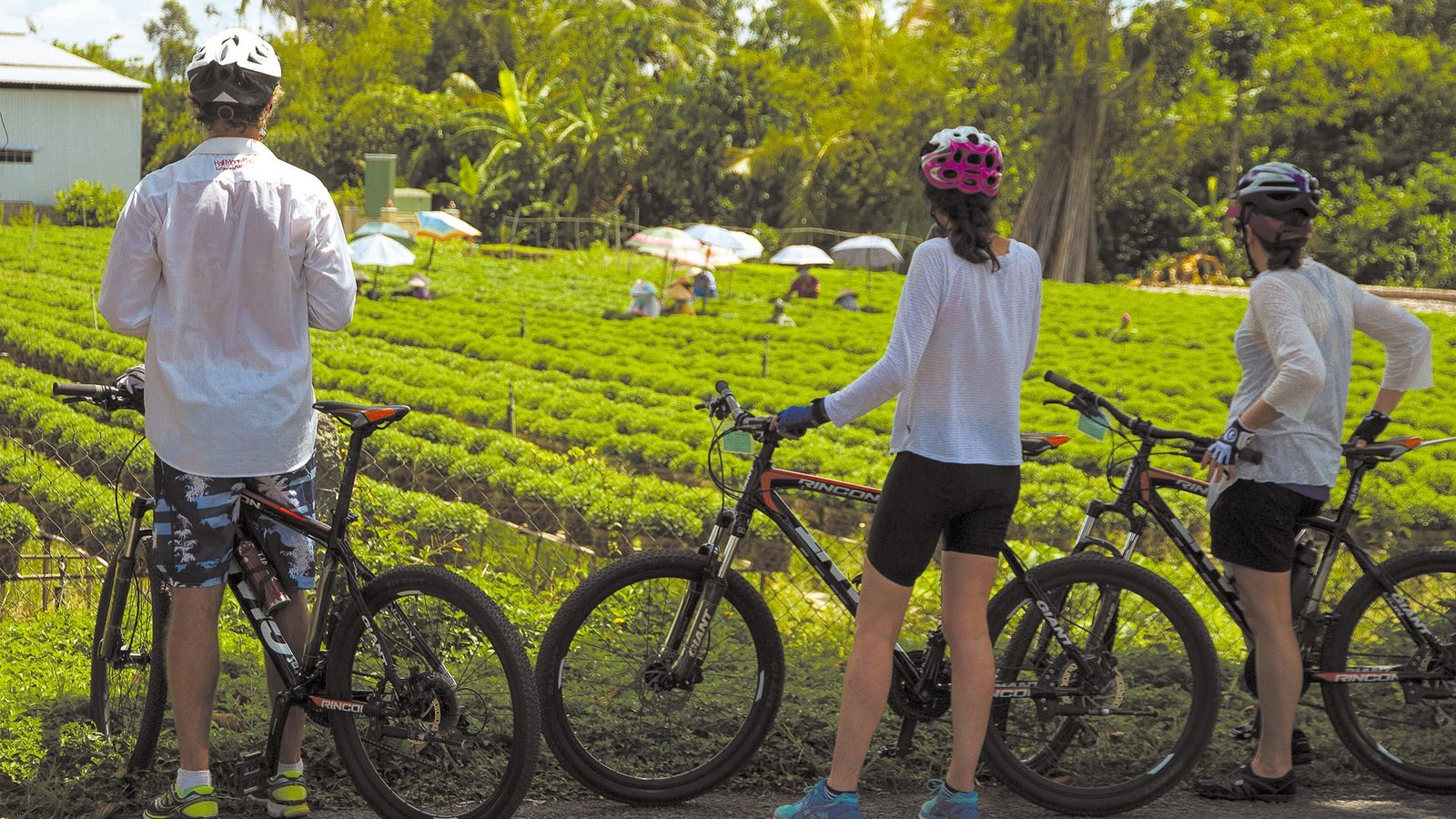
For cyclists who measure their journeys in both centuries of cultural heritage and vertical meters of climbing, embarking on the Central Vietnam Heritage Cycling Tour: Connect Hue, Da Nang & Hoi An stands as the definitive coastal pilgrimage of Southeast Asia. Stretching across the rugged waistline of Vietnam, this route links the imperial majesty of Hue, the modern coastal energy of Da Nang, and the ancient, lantern-lit charm of Hoi An. By swapping flat tour buses for this relentless coastal and mountain route, you join an elite class of active travelers who seek to conquer legendary summits, explore ancient ruins, and experience the breathtaking majesty of the central coast from the raw, unfiltered perspective of the saddle.
Choosing to embark on the Central Vietnam Heritage Cycling Tour: Connect Hue, Da Nang & Hoi An is more than an active holiday—it is a sensory odyssey. It is a journey where every kilometer must be earned through physical effort, and where every summit rewarded presents a dramatic new backdrop of turquoise bays, rugged cliffs, and historic cities.
To undertake this epic journey is to subject your body and mind to an immersive, multi-sensory drama where the landscape changes with every revolution of your pedals. Your journey begins in the quiet, historic atmosphere of Hue, the former imperial capital.
Your adventure starts in the soft, lavender-hued light of dawn along the banks of the Perfume River. The air is cool and damp, carrying the faint, sweet scent of river moss and incense drifting from ancient Buddhist temples. You check your high-performance road bike, ensuring the tires are pressurized and the disc brakes are sharp. As you pedal away from your hotel, your tires hum softly against the historic streets, heading toward the massive, weathered stone walls of the Hue Imperial City.
Riding through the ancient gates, you enter a living monument of dynastic history. You navigate quiet, tree-lined lanes, passing beneath the majestic shadow of the Hue Citadel walls. The soundscape is peaceful: the quiet rustle of banyan leaves, the distant chime of the bronze bell at Thien Mu Pagoda, and the rhythmic breathing of your cycling group settling into an easy, warm-up pace.
You head south out of the city, following winding asphalt roads that trace the river toward the spectacular forest-shrouded valleys housing the royal tombs. Stopping at the majestic Khai Dinh Tomb, you walk up the stone steps, your cycling cleats clicking against the weathered concrete. The view from the top is magnificent, looking back over the pine-covered hills and valleys where ancient emperors found their eternal rest. Returning to the saddle, you cruise along quiet country lanes, the warm morning sun burning away the river mist to reveal a patchwork of vibrant emerald-green vegetable gardens and quiet villages.
Leaving the imperial city behind, your route heads toward the vast coastal wilderness of the Tam Giang Lagoon, one of the largest brackish water lagoon systems in Southeast Asia. The terrain here is exceptionally flat and fast, allowing you to settle into a tight, aerodynamic paceline, your muscles synchronized with the rhythm of the trail.
The air changes rapidly, shedding the earthy, river-borne scent of Hue and replacing it with the sharp, salty tang of the open ocean. You cycle along narrow dikes that cut directly through the shimmering water of the lagoon, where local fishermen in long wooden boats cast their nets in the morning light. The reflections are stunning: the blue sky, the white clouds, and the distant mountains are mirrored perfectly on the glassy surface of the water.
By afternoon, you arrive at the spectacular crescent bay of Lang Co Beach, nestled at the foot of the mountains. The sound of crashing waves fills your ears, and the cool sea breeze provides a refreshing contrast to the warm tropical sun. Looking south, your eyes trace the jagged, green ridge of the mountains rising abruptly from the turquoise water, crowned by the legendary pass that awaits your ascent tomorrow.
This is the day your legs have prepared for. The climb of the legendary Hai Van Pass, also known as the Ocean Cloud Pass, is one of the most famous and physically demanding mountain roads in Asia. The climb begins at sea level, directly from the shores of Lang Co Lagoon, and rises steadily over ten kilometers to an elevation of nearly five hundred meters.
The flat road tilts upward at an unforgiving angle, instantly demanding your full focus. Your fingers click the gear levers, dropping the chain onto your largest climbing cog. Your breathing settles into a heavy, rhythmic rasp, matching the steady, sixty-revolution-per-minute cadence of your legs. Sweat drips from your forehead, stinging your eyes and splashing onto your carbon handlebar stem.
As you ascend, the tropical forest closes in around the road, with massive tree ferns and jungle vines clinging to the steep cliffs. The temperature drops noticeably with every hundred meters of elevation gain, and the air becomes thick with mountain mist. With every hairpin bend, the view behind you grows more spectacular, revealing the entire sweeping curve of Lang Co Bay lying far below like a giant turquoise jewel.
With one final, standing effort, your muscles burning with a white-hot intensity, you round the final corner and conquer the summit. Standing beneath the historic stone gate of Hai Van Gate, the mist suddenly parts to reveal a breathtaking panoramic view of the vast East Sea, the modern skyline of Da Nang, and the endless coastline stretching south toward Hoi An.
The descent is an absolute thrill. You release your brakes, lean your body into the sweeping corners, and fly down the southern slopes of the pass, the tires humming against the smooth asphalt as the coastal air grows warmer and thicker with every kilometer.
Your journey continues south, leaving the high peaks behind as you cruise along the wide, sun-drenched coastal highways of Da Nang. You ride past the famous stretch of My Khe Beach, where the white sand is lapped by gentle, warm waves and coconut palms sway in the sea breeze.
To your right, the dramatic limestone towers of the Marble Mountains rise abruptly from the flat plains, their sheer cliffs housing hidden Buddhist sanctuaries and ancient caves. You stop to explore, walking through the cool, stone-paved paths that offer a welcome break for your legs after the heavy climbing of the previous day.
In the afternoon, the modern high-rises of Da Nang yield to the quiet, pedestrian-only streets of Hoi An Ancient Town. Cycling through this UNESCO World Heritage site feels like stepping back into the seventeenth century. You navigate narrow, yellow-walled alleys lined with historic wooden merchant houses, Chinese assembly halls, and Japanese-style bridges.
As dusk falls, the town is illuminated by thousands of colorful silk lanterns, their warm, golden glow reflecting beautifully on the quiet waters of the Thu Bon River, completing your epic traverse of Central Vietnam's heritage corridor.
For serious road cyclists, understanding the physical reality of a climb is essential for pacing and power management. To climb a mountain pass of the caliber of the Hai Van Pass, a rider must continuously fight the force of gravity. The total mechanical power output required to move a cyclist upward is a combination of gravitational resistance, rolling resistance of the tires on the asphalt, and aerodynamic drag.
In high-gradient climbing environments, aerodynamic resistance becomes negligible as speeds drop below fifteen kilometers per hour, and gravity becomes the dominant force. The power required to overcome gravity is directly proportional to the total system mass (the combined weight of the rider, bicycle, and gear), the acceleration due to gravity, the forward velocity of the bicycle, and the sine of the slope angle.
On a steady seven percent gradient over ten kilometers, a rider weighing seventy kilograms on an eight-kilogram road bicycle must maintain a sustained power output of approximately two hundred and eighty watts to complete the climb in forty-five minutes. This requires an efficient power-to-weight ratio of approximately three point six watts per kilogram, highlighting why proper physical conditioning, cardiovascular endurance, and professional-grade equipment are essential for conquering this legendary pass.
Conquering the diverse and challenging terrain of Central Vietnam independently presents significant logistical challenges, safety hazards, and cultural barriers. Navigating busy coastal highways, securing high-performance road bikes with correct gearing, managing hydration in tropical humidity, and organizing luggage transfers between distant heritage cities can quickly become overwhelming.
When you book your coastal adventure with Golden Cycling Tours, every logistical detail of your itinerary is managed with world-class professionalism and care, allowing you to focus entirely on the physical joy, cultural discovery, and sensory beauty of the ride. Their premium services include:
Professional-Grade Road Bicycles: Rental of premium, lightweight carbon fiber road bikes from global brands like Trek or Specialized, equipped with compact gearing systems and responsive hydraulic disc brakes, which are absolutely essential for descending safely in wet mountain conditions.
Fully Equipped Support Vehicles: A dedicated, air-conditioned support van follows the riders at a discreet distance throughout the entire journey, carrying all personal luggage, spare wheelsets, mechanical tools, plenty of chilled water, electrolyte replacement drinks, and fresh local fruits to keep your muscles fueled and prevent debilitating cramping.
Passionate Local Cycling Coaches: Ride alongside experienced, bilingual local guides who grew up in the region. They understand the precise pacing, gear selection, and descent lines of the mountain passes, can repair any mechanical issue in seconds, and maintain deep personal relationships with local families, opening doors to authentic heritage visits.
Custom Cultural Workshops: Integrated hands-on activities designed to keep you engaged, including traditional lantern-making classes in Hoi An, private imperial dining experiences in Hue, and interactive visits to ancient artisan villages.
To explore their full directory of professional, expertly supported cycling adventures across the country, visit their main portal of curated collection of tours.
Vietnam is a land of incredible geographical and cultural diversity, offering a spectacular canvas for active travel. Conquering the coastal passes and historic heritage sites of the central region is often the perfect introduction to a lifetime of cycling adventures across the country.
If you want to explore the rich history and vibrant street life of the capital before heading south, booking a professional Hanoi bike tours is the perfect warm-up. From the city, you can transition to the spectacular, water-carved landscapes of Ninh Binh bike tours, where you can cycle along quiet rivers beneath towering limestone cliffs and explore ancient cave temples.
To dive deeper into the beautiful highland valleys of the northwest, look into specialized Mai Chau bike tours designed for all fitness levels, or explore the rugged jungle paths and iconic water wheels of Pu Luong bike tours.
For athletes who crave extreme high-altitude challenges and spectacular alpine vistas, the dramatic climbs of Sapa bike tours offer legendary routes through ethnic minority villages, while the scenic borderlands of Cao Bang bike tours lead you to majestic waterfalls and hidden caves.
No road cycling bucket list is complete without mentioning the rocky, towering loops of Ha Giang bike tours, home to the world-famous Ma Pi Leng Pass, which stands as one of the most dramatic mountain roads in Southeast Asia.
Whether you choose the high-altitude trails of Vietnam Northwest bike tours or the untamed frontiers of Vietnam Northeast bike tours, there is no denying that cycling Northern Vietnam is one of the premier family and adventure travel experiences in the world.
As you travel south, the landscape changes, offering new riding styles and coastal wonders. You can explore imperial palaces, ancient royal tombs, and scenic coastal roads with Hue bike tours, or cruise along the flat, quiet streets of the central coast on Hoi An bike tours, riding past organic vegetable farms and sandy beaches.
Experiencing the dramatic coastal cliffs, pristine sandy beaches, and misty mountain passes by cycling Central Vietnam is an absolute must-do for any serious road cyclist or active family.
In the far south, the terrain becomes lush, flat, and tropical. You can navigate the labyrinth of palm-shaded canals, fruit orchards, and floating markets with Mekong Delta bike tours, or enjoy sun-drenched coastal paths while cycling Southern Vietnam.
For cyclists with a grand vision and weeks to spare, you can embark on the ultimate lifetime adventure, cycling North to South Vietnam or cycling South to North Vietnam, capturing the full geographical, culinary, and cultural spectrum of this beautiful country.
History enthusiasts can ride the historic arteries of the Ho Chi Minh Trail cycling tours, retracing monumental pathways through deep jungles and remote mountain villages.
If you prefer to experience these incredible routes with premium comforts, including boutique luxury eco-resorts, private vehicle support, and fine dining, explore vietnam luxury bike tours.
Alternatively, if you want a bit of modern assistance to help family members of all ages conquer the rolling hills and steep mountain passes with absolute ease, booking vietnam e-bikes tours is the perfect modern solution.
To ensure your coastal heritage cycling journey is as seamless and enjoyable as possible, we have assembled this comprehensive guide containing all the essential logistical details.
The Central Heritage route is highly accessible, with several international airports, train stations, and modern highways connecting the major cities:
Da Nang International Airport: Located in the center of the region, this modern airport receives daily direct flights from major Asian transit hubs like Singapore, Seoul, Taipei, and Bangkok, as well as domestic flights from Hanoi and Ho Chi Minh City. It is the ideal gateway for beginning or ending your tour.
Hue Phu Bai Airport: Located fifteen kilometers south of Hue city, this domestic airport offers multiple daily flights to and from Hanoi and Ho Chi Minh City, perfect for those starting their ride in the imperial capital.
Reunification Express Train: For a classic and scenic travel experience, the north-south railway connects Hanoi and Ho Chi Minh City with stations in both Hue and Da Nang. The section of railway crossing the Hai Van Pass is recognized as one of the most scenic train rides in the world, hugging the coastal cliffs high above the water.
Private Support Minivans: When booking with Golden Cycling Tours, your transportation is fully integrated. A private, air-conditioned support van comfortably transports you, your fellow riders, and all high-performance cycling equipment between destinations and provides on-road vehicle backup at all times.
Central Vietnam offers some of the most unique, atmospheric, and beautiful accommodations in Southeast Asia, blending historic architecture with modern comfort:
Historic Imperial Hotels in Hue: Perched along the quiet banks of the Perfume River, classic properties like the Azerai La Residence offer French art deco architecture, beautiful saltwater pools, and peaceful gardens that evoke the elegance of a bygone era.
Beachfront Luxury in Lang Co Bay: Nestled in a secluded lagoon, premium resorts like Banyan Tree Lang Co or Angsana Lang Co offer private pool villas, full-service luxury spas specializing in deep-tissue recovery massage, and a world-class eighteen-hole golf course designed by Sir Nick Faldo, perfect for relaxing before the big climb.
Boutique Heritage Hotels in Hoi An: Located within walking distance of the historic old town, properties like the Anantara Hoi An Resort or hotel boutique villas offer beautiful colonial-style architecture, private courtyards, and tranquil spas overlooking the Thu Bon River, allowing you to fully immerse yourself in the ancient town's unique charm.
Cycling along the coast and climbing mountain passes burns a tremendous amount of energy. Fortunately, the unique culinary heritage of Central Vietnam is exceptionally fresh, flavorful, and nutrient-rich, perfect for refueling your body and repairing tired muscle fibers:
Bun Bo Hue (Imperial Beef Noodle Soup): The signature dish of Hue, featuring thick rice vermicelli noodles in a rich, spicy broth flavored with lemongrass, shrimp paste, and fresh herbs, served with tender slices of beef shank and pork knuckles, offering a perfect balance of carbohydrates and protein.
Hue Royal Dumplings: Delicate steamed rice cakes like Banh Beo (served in small ceramic saucers with dried shrimp and scallion oil) or Banh Bot Loc (translucent tapioca dumplings filled with shrimp and pork), offering light, clean energy.
Cao Lau Noodles in Hoi An: The absolute signature dish of the town, featuring thick, chewy wheat noodles tossed with sliced barbecue pork, fresh local herbs grown in the organic gardens of Tra Que Herb Village, and crisp rice crackers, dressed in a rich, savory soy-based sauce.
Banh Mi Hoi An: Made famous by local street stalls, these perfectly crispy baguettes are stuffed with local pork pate, slow-roasted pork belly, fresh herbs, cucumber, and a signature chili sauce, serving as the ultimate portable energy snack along the trail.
Fresh Coastal Seafood: Refuel in Da Nang or Lang Co Beach with grilled sea bass seasoned with turmeric and lemongrass, steamed clams with ginger, and salt-crusted tiger prawns caught fresh from the local waters.
The cultural landscape of Central Vietnam is shaped by its rich, deeply rooted history, spanning ancient kingdoms, imperial dynasties, and maritime trade:
The Imperial Legacy of Hue: The local culture is deeply influenced by the traditions of the Nguyen Dynasty, characterized by elegant architecture, classical court music (Nha Nhac, recognized by UNESCO), and a refined culinary heritage that treats dining as an art form.
The Cham Heritage: Before the Vietnamese expanded south, the central coast was the heart of the ancient kingdom of Champa. You can explore their incredible brick temples and stone sculptures at the UNESCO-recognized My Son Sanctuary or the Museum of Cham Sculpture in Da Nang.
Hoi An Maritime History: For centuries, Hoi An was one of the busiest trading ports in Southeast Asia, welcoming merchants from Japan, China, Portugal, and France. This has created a unique multicultural community, visible in the architecture, spiritual beliefs, and local arts of the town.
Cultural Etiquette: When visiting ancient temples, pagodas, or royal tombs, always dress modestly (shoulders and knees covered). Remove your shoes before stepping inside traditional family homes, greet local elders with a respectful bow of your head, and always ask for permission before taking photographs of individuals.
When you are not pushing your physical limits in the saddle, make sure to explore these spectacular natural and historic attractions along the loop:
Hue Imperial Citadel: A massive, walled fortress enclosing the Forbidden Purple City, featuring ornate palaces, temples, and formal gardens that showcase the height of nineteenth-century imperial architecture.
My Son Sanctuary: Nestled in a lush green valley south of Hoi An, this spectacular complex of red-brick temple towers built by the Cham kings between the fourth and fourteenth centuries stands as a monument to ancient spirituality.
Linh Ung Pagoda on Son Tra Peninsula: Perched on the forested hills overlooking Da Nang bay, this magnificent Buddhist temple features the tallest Lady Buddha statue in Vietnam, standing at sixty-seven meters and looking out over the water like a peaceful guardian.
An Bang Beach: Located just four kilometers from Hoi An, this pristine stretch of white sand offers a relaxed atmosphere, excellent beachfront dining, and the perfect place to watch the sunset over the sea after a long day of riding.
Read what active travelers have experienced on this challenging and beautiful route:
"I have done road cycling tours in many parts of the world, but the Central Vietnam Heritage Cycling Tour: Connect Hue, Da Nang & Hoi An was an absolute masterpiece of adventure travel. The physical challenge of climbing the legendary Hai Van Pass was immense, but descending into the vibrant city of Da Nang and riding through the lantern-lit streets of Hoi An felt like stepping into a beautiful dream. The team at Golden Cycling Tours was outstanding. Our guide paced me perfectly on the climbs, the carbon road bikes were flawless, and the support van was a lifesaver with cold water and fresh fruit at the top of every hill. Outstanding service!" — David K., United States
"Riding along the quiet dikes of the Tam Giang Lagoon and exploring the ancient ruins of My Son Sanctuary was a deeply spiritual experience. The contrast between the imperial history of Hue and the absolute peace of the coastal villages was mind-blowing. Golden Cycling Tours handled every logistical detail perfectly, allowing us to focus entirely on the physical joy and sensory beauty of the ride. We highly recommend this tour to anyone who loves nature, history, and active travel." — Clara and Thomas, Sweden
The tour is classified as moderate to challenging. The terrain along the coastal lagoons of Hue and the paths surrounding Hoi An is flat and easy, perfect for leisure riding. However, climbing the massive Hai Van Pass and navigating rolling coastal highways require a good level of cardiovascular fitness, leg strength, and basic road bike handling skills.
We provide high-quality, professional carbon fiber road bikes from top global brands like Trek or Specialized. These bikes are equipped with compact double cranksets, wide-range rear cassettes for easy climbing gear ratios, and reliable hydraulic disc brakes for superior stopping power on steep mountain descents.
Yes, premium E-bikes are available upon request. Choosing a vietnam e-bikes tours is a fantastic option for those who want to enjoy the spectacular mountain scenery of the Hai Van Pass and keep pace with more experienced road cyclists without worrying about physical fatigue.
The absolute best time to plan your central heritage ride is from February to May. During these months, the weather is dry, cool, and pleasant, offering excellent visibility and comfortable temperatures for outdoor activity. The summer months (June to August) can be hot and humid, while the autumn months (September to November) are prone to heavy rainfall and tropical storms.
We provide a dedicated support vehicle (a comfortable, air-conditioned minivan) that follows the riders at a discreet distance throughout the entire tour. If a rider becomes tired, gets hot, or simply wants a break on a particularly steep section of the pass, both the rider and their road bicycle can easily be loaded into the support van at any time.
We recommend packing lightweight, moisture-wicking road cycling jerseys, comfortable bib shorts with high-quality padding, closed-toe road cycling shoes, and a windproof or waterproof jacket for the cooler mountain passes. Don't forget high-SPF sunscreen, insect repellent, personal toiletries, a camera, and a lightweight backpack. Helmets are provided, but you are welcome to bring your own.

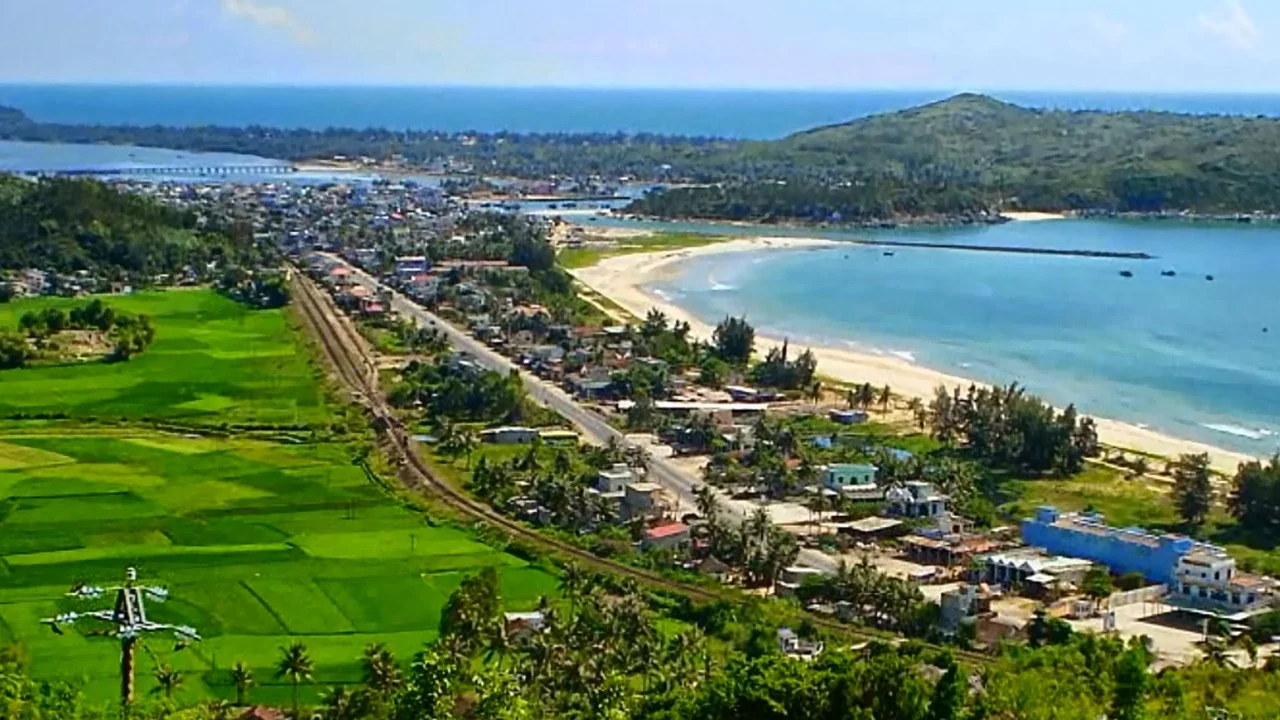
.jpg "Binh Dinh Cycling Vietnam")
Leave a Reply
Your email address will not be published. Required fields are marked *