- Call us Via Whatsapp: +84 (0) 832 126 699
4.9 stars on our site
(15,000 reviews)
- Monday - Sunday : 08:00 - 17:00
(15,000 reviews)

By The Golden Cycling Tours Team
The first time you step out of the airport in Hanoi or Ho Chi Minh City, it hits you. The hum. The motion. The sheer, overwhelming volume of two-wheeled machinery.
Vietnam’s traffic is legendary. To the uninitiated Western eye, it looks like chaos. It looks like a swarm of bees, a river of metal, or a disaster waiting to happen. Traffic lights seem to be mere suggestions, lanes are fluid concepts, and the sidewalk is occasionally just an extra lane.
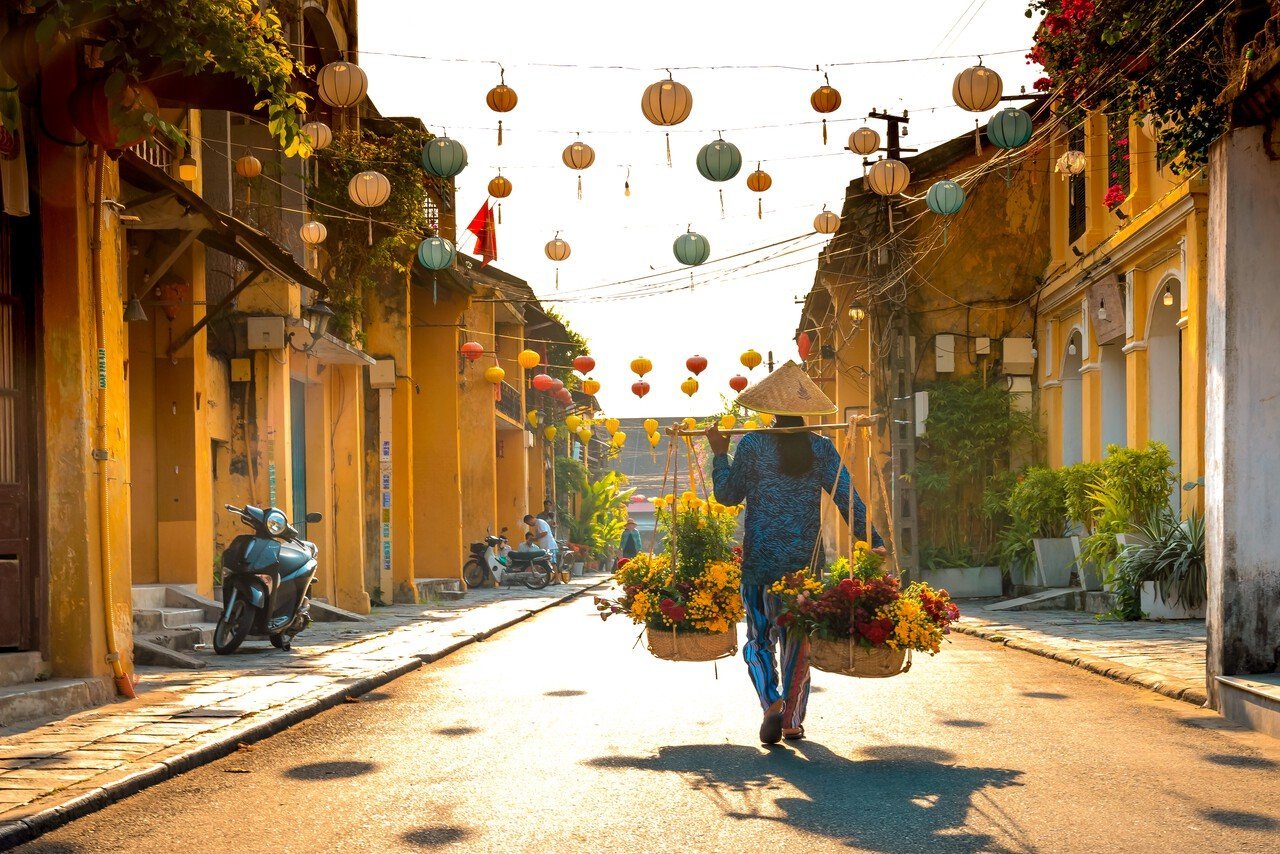
For a cyclist, this sight can be terrifying. You might ask yourself: "Am I crazy to ride a bicycle in this?"
The answer is: No.
In fact, cycling is one of the safest and most rewarding ways to see Vietnam—if you understand the rules of the game. The chaos is not random; it is organized. There is a rhythm, a flow, and a language to the road that, once learned, makes riding here feel like a beautifully choreographed dance.
In this ultimate survival guide, brought to you by Golden Cycling Tours, we will decode the "Organized Chaos." We will teach you how to communicate with Vietnamese drivers, how to navigate the dreaded roundabouts, and why the safest place to be is often right in the middle of the mix.
To survive Vietnamese traffic, you must unlearn Western traffic rules.
In the West, traffic is digital. It is Stop or Go. It is Red or Green. It is "My Right of Way" vs. "Your Right of Way."
In Vietnam, traffic is analog. It is fluid. It is a continuous flow.
Imagine a school of fish or a flock of birds. They move together, turning and weaving without colliding. This is Vietnam. The golden rule is not "Stop," but "Flow."
If you wait for someone to give you the right of way because you have a green light or you are on a main road, you will be waiting forever. In Vietnam, right of way is taken, not given. It is negotiated in real-time through body language and speed.
In Western driving, you are responsible for 360 degrees of your vehicle. In Vietnam, the rule is simpler: You are responsible for what is in front of you.
Drivers assume that if they can see you, they can avoid you. Conversely, they assume that the person behind them will avoid them. This is why you will see motorbikes merge into traffic without looking back. They trust the "river" to part around them. As a cyclist, this means you don't need to panic about what is behind you. Focus on the 180 degrees in front.
You are on a bicycle. You are slower than a motorbike but more agile than a car. Here is how to use that to your advantage.
This is the most critical lesson in this entire guide.
The Danger: Hesitation causes accidents. If you start to cross an intersection and then suddenly stop or jerk back because you get scared, the driver who calculated a path around you will hit you.
The Fix: Move at a steady, consistent pace. Be slow, but be constant. Vietnamese drivers are expert mathematicians; they are constantly calculating your trajectory. If you maintain your speed, they will flow around you like water around a rock.
There is safety in numbers. When you are stopped at a red light, or approaching a busy junction, stick close to the motorbikes around you. Move when they move. Use them as a shield (a moving block) against cross-traffic. Do not try to be the lone hero breaking away from the pack.
Before making a move—merging, turning, or crossing—try to lock eyes with the oncoming driver.
If they look at you, they have seen you. They will adjust.
If they are looking at their phone or talking to a passenger, yield.
In the West, a car horn means "Hey idiot, watch out!" or "I am angry!" In Vietnam, a horn means "Hello, I am here." or "I am passing you on the left."
Do not get angry when people honk at you. They are actually being polite. They are letting you know their position so you don't swerve into them. If you are cycling on a busy road, ringing your bicycle bell is often too quiet. Use your voice or simply rely on visual positioning.
Standard international hand signals (left arm out for left turn) work, but Vietnam has its own dialect of gestures.
When a local wants to turn left or merge, you will often see them extend their left hand and wave it slightly, palm down, like they are patting a dog. This means "I am slowly drifting this way, please let me in."
Tip: As a cyclist, use this. Extend your arm fully. It makes you look wider and forces traffic to give you space.
If you are leading a group and need to stop, raise your hand open, palm facing back (like a high-five), or pump your hand palm-down towards the ground.
Often, a driver won't use a blinker or a hand. They will simply tilt their head or look intensely in the direction they want to go. Watch the helmets of the drivers in front of you. Where the helmet looks, the bike follows.
Vietnamese roundabouts are chaotic. Traffic enters from all sides, and nobody yields.
How to ride it: Do not hug the outer curb (the "death zone" where people turn right abruptly). Enter the flow. Stay relaxed. Keep pedaling slowly. You will feel like you are in a whirlpool. Just keep your eyes on your exit and slowly drift outward. Trust the flow.
Turning left across oncoming traffic is the most dangerous maneuver.
The Wrong Way: Stopping in the middle of the road waiting for a clear gap. The gap will never come.
The Right Way (The Shark Fin): Start merging left way before your turn. Drift diagonally across the lane. Make yourself visible. As you approach the turn, move slowly into the oncoming lane (yes, really) if there is a gap, or curve widely with the flow of traffic turning with you.
This is where the "Organized Chaos" becomes dangerous. Buses and trucks in Vietnam operate on the law of physics: "I am bigger, therefore I have the right of way."
The Rule: Stay away from trucks. They have huge blind spots. Their air horns are deafening and can startle you into a crash.
The Strategy: If a truck or bus is honking behind you on a narrow road, pull over. Get off the tarmac and onto the dirt/gravel shoulder. Stop. Let them pass. It is not worth the risk.
The best way to survive Vietnamese traffic is to avoid it entirely.
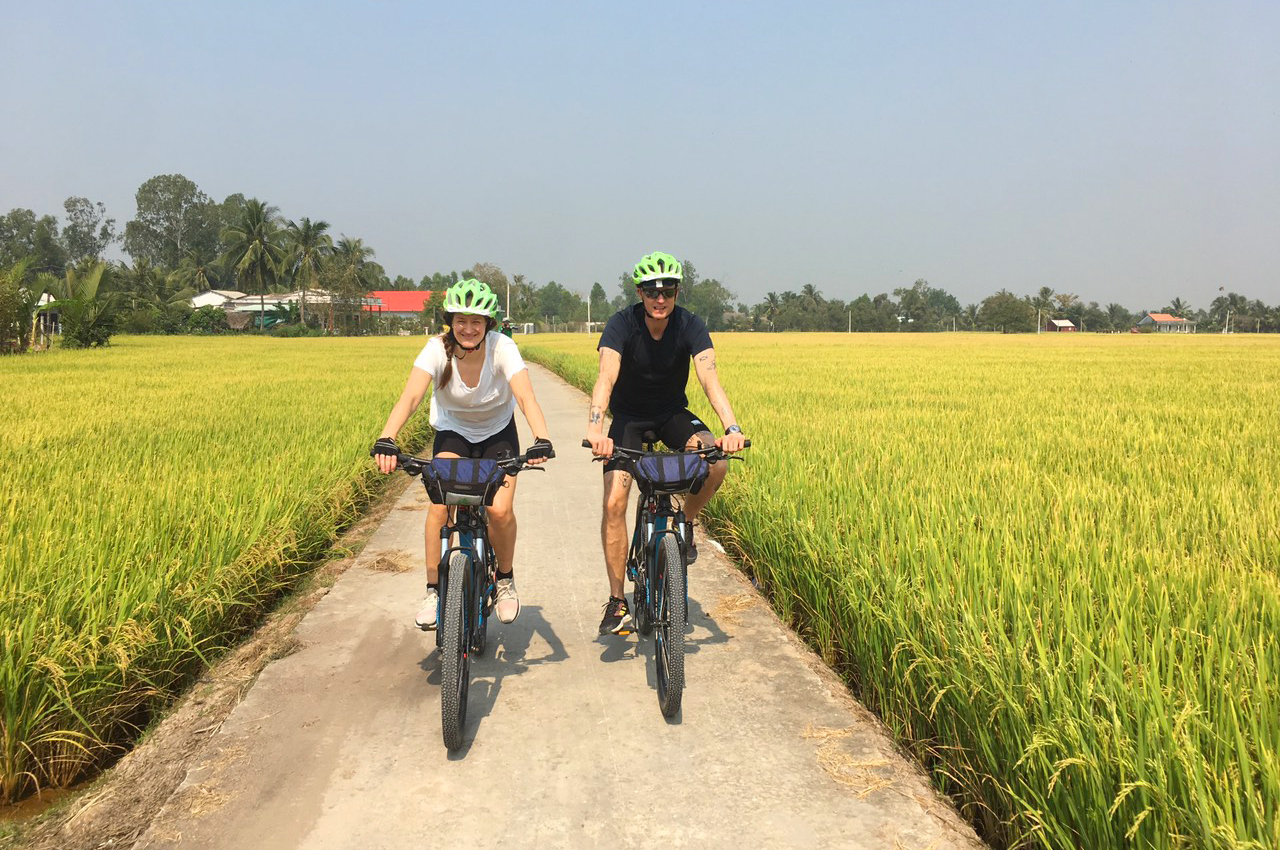
Vietnam has a secret network of infrastructure: thousands of kilometers of concrete lanes that run through rice paddies, dragon fruit farms, and villages. These paths are too narrow for cars and trucks. They are the domain of bicycles, scooters, and ducks.
This is where Golden Cycling Tours excels.
Most tourists use Google Maps, which directs them to the shortest route—usually Highway 1 (The Highway of Death).
The Golden Cycling Tours Difference: We have spent years mapping the "veins" of the country. Our routes keep you off the highways for 90-95% of the trip. We take you on the dyke walls, the village paths, and the bamboo bridges where the only traffic you face is a farmer walking his buffalo.
When you book a tour with us or ride on your own, ensuring your gear increases your visibility is vital.
The Helmet: Non-negotiable.
Bright Clothing: Wear neon yellow, orange, or bright pink. Do not wear grey or camouflage. You want to stand out against the green rice fields and grey tarmac.
Rear Lights: Even during the day, a flashing red rear light catches the eye of motorbike drivers coming up behind you.
Sunglasses: Not just for sun, but for dust and insects.
Can you cycle Vietnam alone? Yes. Is it safer with a guide? Absolutely.
Here is how Golden Cycling Tours mitigates the traffic risk for our guests:
Our guides are trained to act as human shields. When the group needs to cross a busy intersection, the guide goes first. They position their bike to block oncoming traffic, creating a "safety bubble" for you to cross.
Some stretches of road in Vietnam are unavoidable links between beautiful areas. These links might be busy, dusty highways.
Solo Rider: You have to ride it.
Golden Rider: You hop in our air-conditioned van. We skip the dangerous 20km highway section and unload the bikes when the road becomes quiet and scenic again.
A blown tire or a snapped chain on a busy road is dangerous. Our bikes (Trek/Giant mountain & hybrid bikes) are maintained to professional standards, minimizing the risk of mechanical failure in traffic.
Q: Do I need insurance? A: Yes. Ensure your travel insurance covers "adventure activities" or "cycling." Most standard policies cover leisure cycling, but check the fine print.
Q: Is it safe to cycle with children? A: On the main roads? No. In the countryside/Mekong Delta backroads? Yes. Golden Cycling Tours specializes in family trips where we stay exclusively on car-free village paths. We also provide tag-along bikes and child seats.
Q: What about pollution? A: In Hanoi and Saigon, the air quality is poor. We recommend wearing a mask (N95) if cycling out of the city. However, once you are 15km out of the city center, the air is fresh and clean.
Q: What happens if I get in an accident? A: In a minor collision, usually, everyone just keeps moving. If you are on a tour with us, our guide handles the situation, speaks the language, and contacts local medical support if needed.
"I was terrified, then I was thrilled!" "I watched YouTube videos of Hanoi traffic and almost cancelled my trip. But riding with Golden Cycling Tours was different. The guide, Tuan, made me feel so safe. He taught us how to 'flow' and by day 2, I was crossing roundabouts like a local!" — Jennifer S., USA ⭐⭐⭐⭐⭐
"The Backroads are the Secret" "We rode from Hue to Hoi An. The team kept us off the highway almost the entire time. We saw no trucks, just water buffalo and smiling kids. The support van was great for skipping the busy pass entrance." — Mark & David, UK ⭐⭐⭐⭐⭐
"Safety in Numbers" "Solo cycling Vietnam seemed daunting. Doing it with a group and a professional lead guide changed everything. They block the traffic for you! It felt like VIP treatment on the road." — Sarah L., Australia ⭐⭐⭐⭐⭐
Cycling in Vietnam is not about fighting the traffic; it is about joining it. It is about surrendering to the rhythm of the country.
There is a unique adrenaline rush that comes from successfully navigating a busy Vietnamese market street on a bicycle. You feel alive. You feel connected. You feel like you are part of the fabric of local life, not just an observer behind a bus window.
Don't let the fear of traffic steal this experience from you. With the right mindset, the right route, and the right guide, the chaos becomes part of the charm.
Ready to find your flow? Let us guide you safely through the most beautiful backroads of Vietnam.
👉 Book your safe & supported cycling adventure: https://goldencyclingtours.com/

.jpg "Road Bike Tours")
.jpg "Cycling Day Trips Vietnam")
.jpg "Vietnam Bike Tours for Seniors")

Leave a Reply
Your email address will not be published. Required fields are marked *