- Call us Via Whatsapp: +84 (0) 832 126 699
4.9 stars on our site
(15,000 reviews)
- Monday - Sunday : 08:00 - 17:00
(15,000 reviews)

By The Golden Cycling Tours Team
We live in an era of checklist tourism. We have apps that tell us where to go, influencers who tell us what to photograph, and high-speed trains that whisk us from city to city in a matter of hours. It is possible, in 2024, to "do" Vietnam in ten days. You can wake up in Hanoi, sleep on a train, take a selfie on the Golden Bridge in Da Nang, and be drinking a cocktail on a rooftop in Saigon the next day.
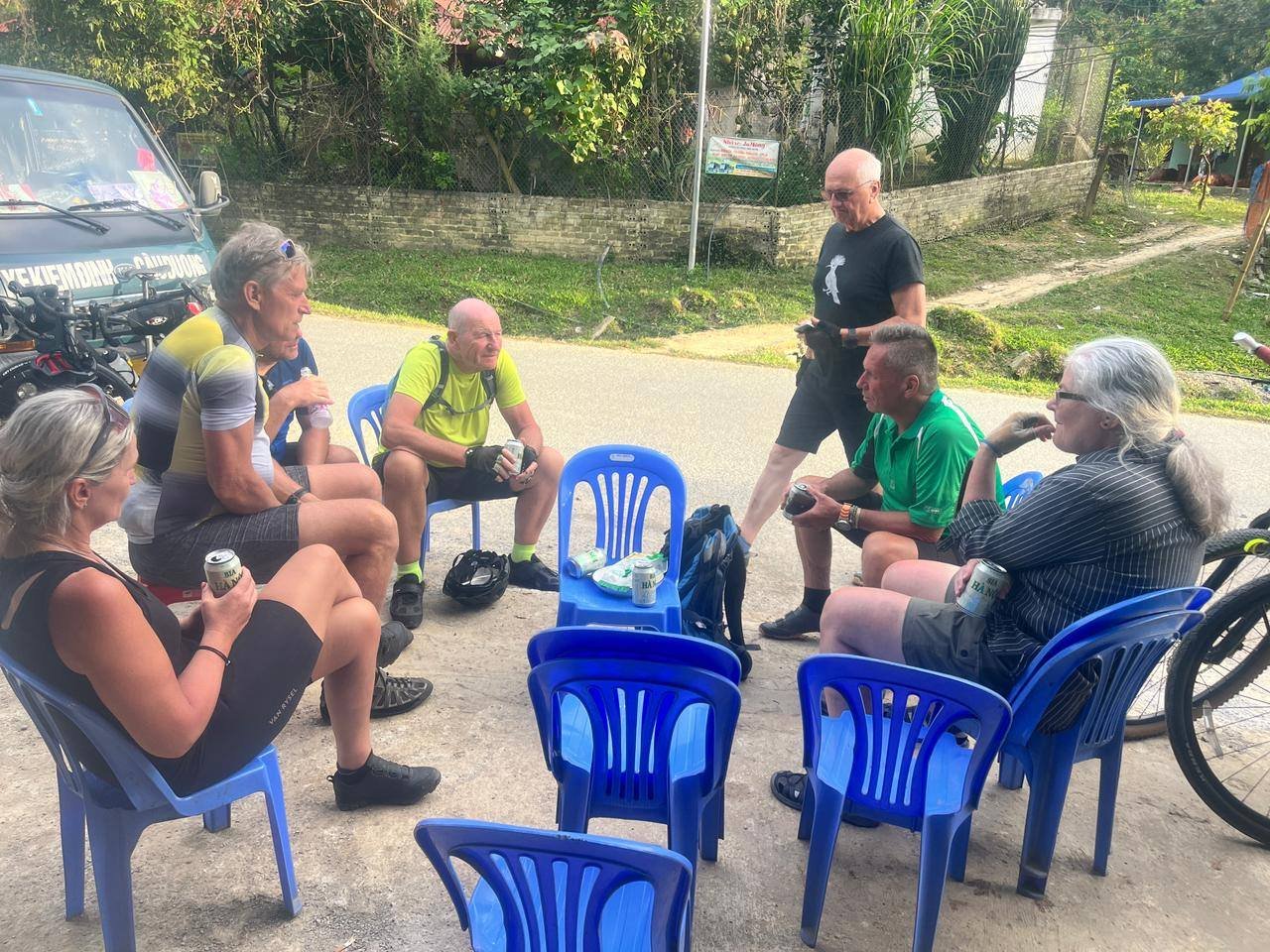
But ask yourself this: Did you see Vietnam? Or did you just scroll past it?
Vietnam is not a collection of Instagram spots. It is a living, breathing tapestry of unparalleled complexity. It is the smell of wet earth after a tropical storm; it is the sound of a loom clacking in a hidden village; it is the taste of a tangerine given to you by a farmer who speaks no English but understands the language of hospitality.
To truly access this Vietnam, you must do something radical. You must slow down.
At Golden Cycling Tours, we champion the philosophy of Slow Travel. And there is no vehicle better suited to this philosophy than the humble bicycle. In this manifesto for the slow traveler, we explore why trading horsepower for pedal power will unlock a side of Vietnam that the window-seat tourists never even know exists.
Most tourists experience Vietnam from behind a pane of glass.
On a tour bus or a train, you are a spectator. You watch the landscape roll by like a movie. You see the farmer in the conical hat tending the buffalo, and you think, "What a beautiful picture." You snap a photo, and the bus keeps moving.
But you miss the context. You don't feel the humidity that makes the farmer’s work so grueling. You don't hear the song he is humming. You don't smell the smoke from the pile of rice straw burning in the distance. The glass wall separates you from the reality of the country. It keeps you sterile, cool, and disconnected.
Slow Travel breaks the glass. When you are on a bicycle, there is no barrier. You are in the environment, not just passing through it. If it rains, you get wet. If it’s sunny, you sweat. If someone is cooking garlic and lemongrass in a roadside kitchen, that aroma fills your lungs. You become a participant in the scene, vulnerable and open to the world around you.
Vietnam is a country that demands to be experienced with all five senses. Slow travel amplifies everything.
Travel by bus, and you smell air conditioning and diesel. Travel by bike, and you smell the seasons changing.
In the North (Oct-Nov): The air is thick with the sweet, nutty scent of drying rice. Farmers lay the golden grains out on the warm concrete of the backroads (the very roads we cycle on). As your tires crunch over the stray grains, the smell is intoxicating.
In the South (Ben Tre/Mekong): The air is heavy and sweet, smelling of fermenting coconuts, muddy river water, and tropical fruit ripening in the heat.
The countryside is never silent.
The Machinery: The rhythmic thump-thump-thump of a water pump irrigating a field.
The Nature: The deafening chorus of cicadas in the jungle canopy of Cuc Phuong or the Truong Son mountains.
The Commerce: The "Mobile Supermarkets"—motorbikes laden with vegetables, broadcasting their inventory over a loudspeaker: "Banh Bao! Banh Bao nong day!" (Hot dumplings here!).
When you fly from Hanoi to Da Nang, you skip the geography. When you cycle, you earn it. You feel the gradual rise of the land as you approach the Hai Van Pass. You feel the temperature drop 5 degrees as you enter the cloud line. You understand the physical scale of the country in your legs.
This is the secret weapon of the bicycle tourist. It is a phenomenon we call The "Hello!" Factor.
In major tourist hubs, interactions can be transactional. You are a customer; they are a vendor. But when you cycle into a remote village in the Mekong Delta or a hamlet in the Northern mountains, the dynamic shifts.
You are a curiosity. You are a guest.
As you pedal through rural villages, you will hear it before you see it. A high-pitched chorus of "Hello! Hello! What is your name?" Children will run out of their houses, abandoning their homework or their games, just to high-five you as you ride past. They race you on their oversized, rusty bicycles. They scream with laughter. It is pure, unadulterated joy. You cannot experience this from a bus doing 80km/h.
One of the "hazards" of slow travel with Golden Cycling Tours is that you might never reach your destination on time—because people keep inviting you in. A flat tire in a village often leads to a local man bringing out a plastic stool and a pot of tea. He might not speak a word of English, and you might not speak Vietnamese, but for 20 minutes, you share a moment. He shows you his chickens; you show him your bike. This is the cultural exchange that travel brochures promise but rarely deliver.
The best parts of Vietnam are hidden.
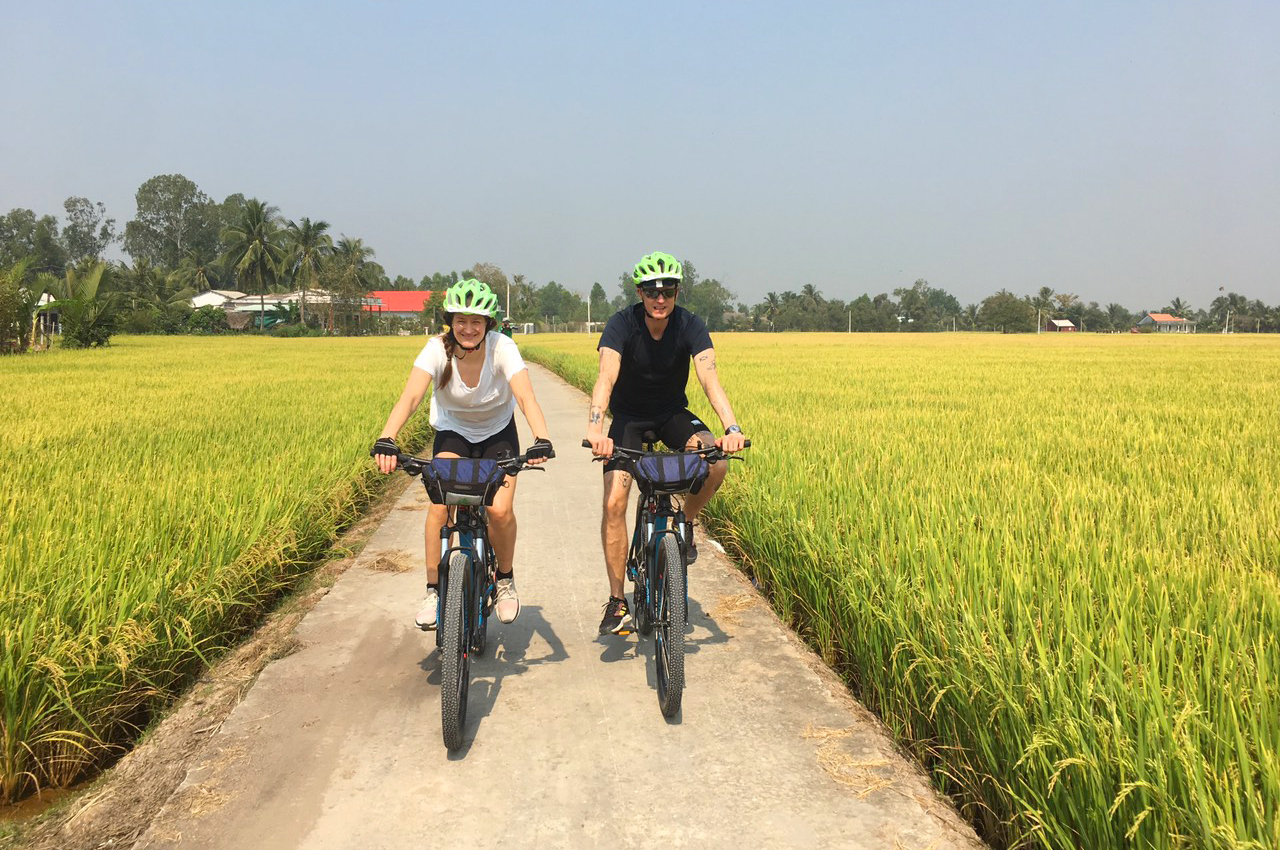
The "Highways" of the Mekong Delta are often just one meter wide—concrete ribbons that weave through fruit orchards and over bamboo bridges. The "Roads" of Ha Giang are sometimes single-track goat paths clinging to a limestone cliff.
A bus cannot fit here. A car cannot fit here.
Only a motorbike or a bicycle can navigate the capillary system of Vietnam’s true interior. By choosing slow travel, you unlock a map that doesn't exist for the mass tourist.
You discover hidden pagodas that haven't seen a foreigner in months.
You find swimming spots in clear mountain streams known only to local teenagers.
You find the Banh Mi stand that has no sign but has a line of locals stretching around the block.
Slow travel isn't just better for you; it's better for the places you visit.
Mass Tourism Model: You stay in a multinational chain hotel. You eat at a restaurant owned by a large investment group. You take a bus owned by a large transport company. Much of your money leaks out of the local economy.
The Cycling/Slow Travel Model:
Hydration: You stop at a small roadside shack run by a grandmother to buy a sugarcane juice. That money goes directly to her family.
Snacks: You buy bananas from a farmer’s basket.
Lunch: You eat Com Tam (broken rice) at a family-run stall in a village.
Accommodation: You stay in local homestays or eco-lodges.
Cycling distributes tourism revenue directly to the grassroots level. Your presence supports the preservation of traditional villages because you are proving that people will pay to see culture, not just casinos and cable cars.
You might be thinking: "I love the idea of slow travel, but I don't want to get lost, and I don't want to be stranded."
This is where we come in. Golden Cycling Tours bridges the gap between adventure and comfort. We facilitate Slow Travel, but with a safety net.
We have spent years finding the perfect backroads. We know which dirt path leads to a waterfall and which one leads to a dead end. We ensure your "slow travel" doesn't become "stuck travel."
Slow travel is great, until it isn't. Maybe it's 38°C. Maybe you have climbed 1,000 meters and your legs are screaming. Maybe a monsoon just hit. Our support van follows every tour. It is your escape hatch. You can ride as much or as little as you want. You get the immersion of the bike, with the air-conditioned luxury of the van whenever you need it.
Our guides are not just map-readers; they are cultural bridges. When that farmer invites you for tea, our guide translates the conversation. When you see a strange ritual in a temple, our guide explains the meaning. They deepen the "slow" experience by adding layers of understanding.
In the fable of the Tortoise and the Hare, the Tortoise wins not because he is faster, but because he is consistent, observant, and connected to the ground beneath him.
Vietnam is a country that reveals itself in layers. If you rush, you see the surface layer—the traffic, the noise, the neon lights. But if you slow down, if you pedal quietly along a dyke wall at sunset, the other layers reveal themselves. The peace. The history. The resilience. The warmth.
Don't just visit Vietnam. Absorb it.
Trade the window seat for the saddle. Come slow down with us.
Start your immersive journey today: https://goldencyclingtours.com/
Q: I am not an athlete. Is slow travel by bike too hard for me? A: Not at all. "Slow" is the keyword! Our Mekong Delta and Hoi An tours are entirely flat. We ride at a conversational pace. If you can ride a bike to the grocery store, you can ride with us. Plus, E-bikes are available!
Q: Doesn't slow travel take too much time? A: It takes more time to cover distance, but you see more in that time. A 4-hour bus ride is 4 hours of "dead time." A 4-hour bike ride is 4 hours of adventure. You optimize your experience, not just your transit.
Q: Is it safe to stop in random villages? A: Vietnam is one of the safest countries in the world for travelers. Violent crime against tourists is virtually non-existent. In rural areas, the biggest risk is being overwhelmed by hospitality (and perhaps drinking too much rice wine!).
"I saw more in 3 days on a bike than 2 weeks on a bus" "We did the typical bus tour years ago. This time, we booked Golden Cycling Tours for the Mekong Delta. It was a completely different country. We stopped to watch a lady weave mats. We ate fruit right off the tree. It was magical." — Sarah & Jenkins, UK ⭐⭐⭐⭐⭐
"The 'Hello' Factor is Real!" "I felt like a celebrity. The kids in the villages are so cute. Stopping to high-five them was the highlight of my trip. You just don't get that connection inside a car." — Mike D., Canada ⭐⭐⭐⭐⭐
"Perfect Balance" "I was worried about the heat, but the Golden team managed the pace perfectly. We rode early, rested often, and really took our time. It felt like a vacation, not a race." — Elena, Germany ⭐⭐⭐⭐⭐

.jpg "Road Bike Tours")
.jpg "Cycling Day Trips Vietnam")
.jpg "Vietnam Bike Tours for Seniors")

Leave a Reply
Your email address will not be published. Required fields are marked *