- Call us Via Whatsapp: +84 (0) 832 126 699
4.9 stars on our site
(15,000 reviews)
- Monday - Sunday : 08:00 - 17:00
(15,000 reviews)

By The Golden Cycling Tours Team
Vietnam is a country best viewed from two wheels. While the view from a bus window is passive, and the view from a motorbike is fast, the view from a bicycle is immersive. You smell the drying rice, you feel the humidity change as you ascend a mountain pass, and you hear the greetings of "Hello!" from children in every village you pass.
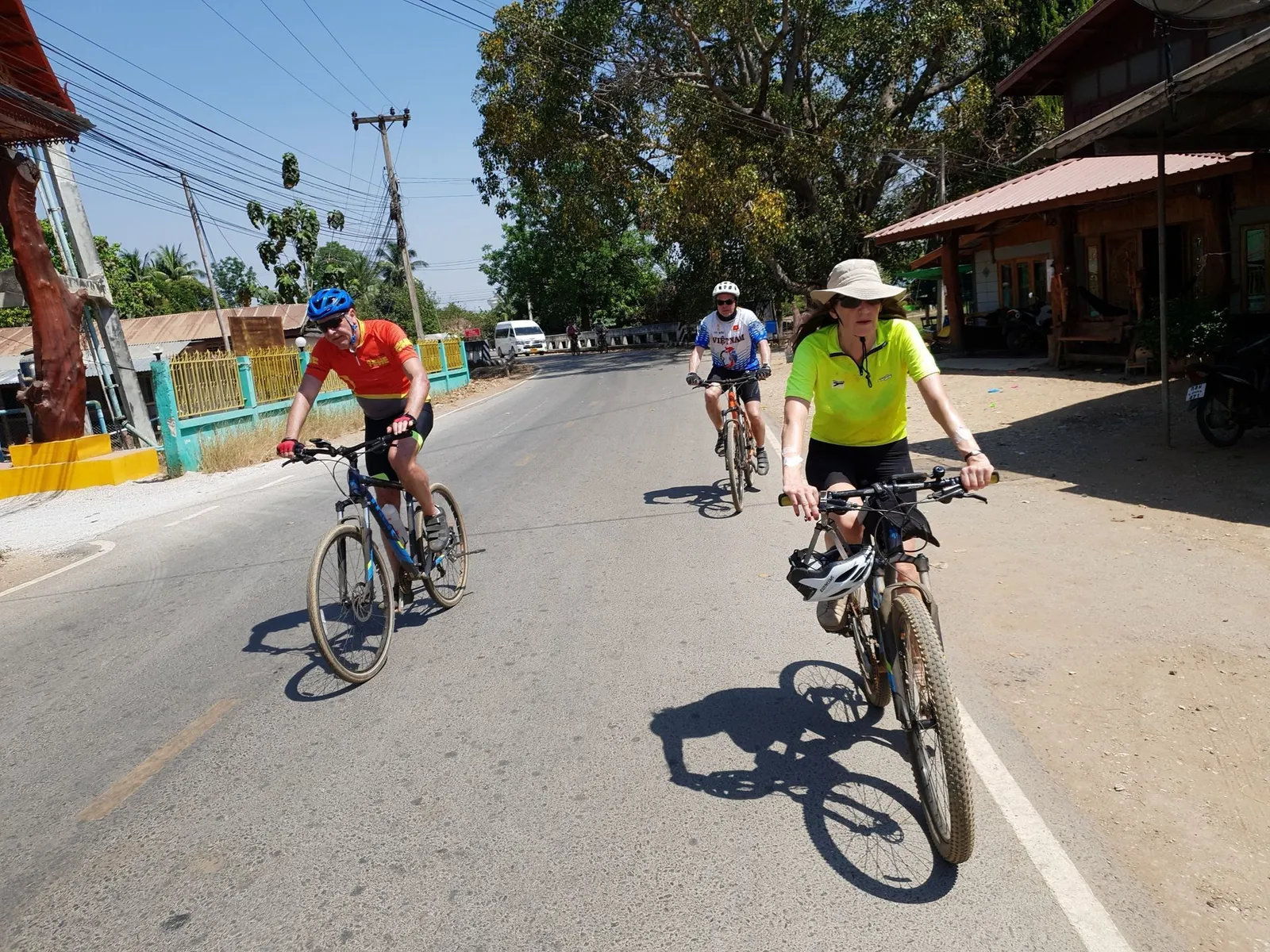
The journey from Hanoi in the North to Ho Chi Minh City (Saigon) in the South—or vice versa—is one of the world’s great cycling pilgrimages. Spanning roughly 1,200 to 2,000 kilometers depending on your specific route, it is a journey through history, culinary excellence, and shifting landscapes.
However, the "Trans-Vietnam" ride is not without its challenges. The traffic can be chaotic, the tropical heat unforgiving, and the navigation tricky. This guide is your blueprint. We will break down the route, the road conditions, the hidden coastal gems, and how to tackle the "S-shape" country safely.
Whether you are a seasoned road cyclist chasing elevation or a touring cyclist seeking culture, this is your ultimate guide to cycling Vietnam’s coastline.
There are two main arteries running the length of Vietnam: the Ho Chi Minh Highway (mountainous and inland) and Highway 1 (coastal). While the mountains offer solitude, the coastline offers life.
1. The Ocean Views: Vietnam boasts over 3,000 kilometers of coastline. The coastal route takes you along turquoise bays, through fishing villages where basket boats line the shore, and over cliffs that drop dramatically into the East Sea.
2. The Culture: Civilization in Vietnam has historically clustered near the water. By cycling the coast, you hit the major heritage sites: the Imperial City of Hue, the ancient town of Hoi An, the Cham towers of Quy Nhon, and the bustling modernity of Da Nang.
3. The Culinary Journey: Seafood. Fresh, cheap, and abundant. From Bun Ca (fish noodle soup) in Nha Trang to the clam rice of Hue, the coastal route is a 2,000km buffet.
Before you clip in, you need to plan. Vietnam is long, and the weather in the North can be vastly different from the South on the same day.
Vietnam has three distinct weather zones.
Ideal Window: January to April.
During these months, the South is dry and not too hot. The Central coast has finished its rainy season. The North is cool (sometimes cold) but dry.
The Heat Wave: May to August is incredibly hot, with temperatures often exceeding 35°C (95°F).
Typhoon Season: September to December is risky for the Central Coast (Hue/Hoi An) due to heavy rains and potential flooding.
Road Bike: Doable, but you must stick to paved roads. Vietnam’s tarmac varies from smooth highways to potholed nightmares.
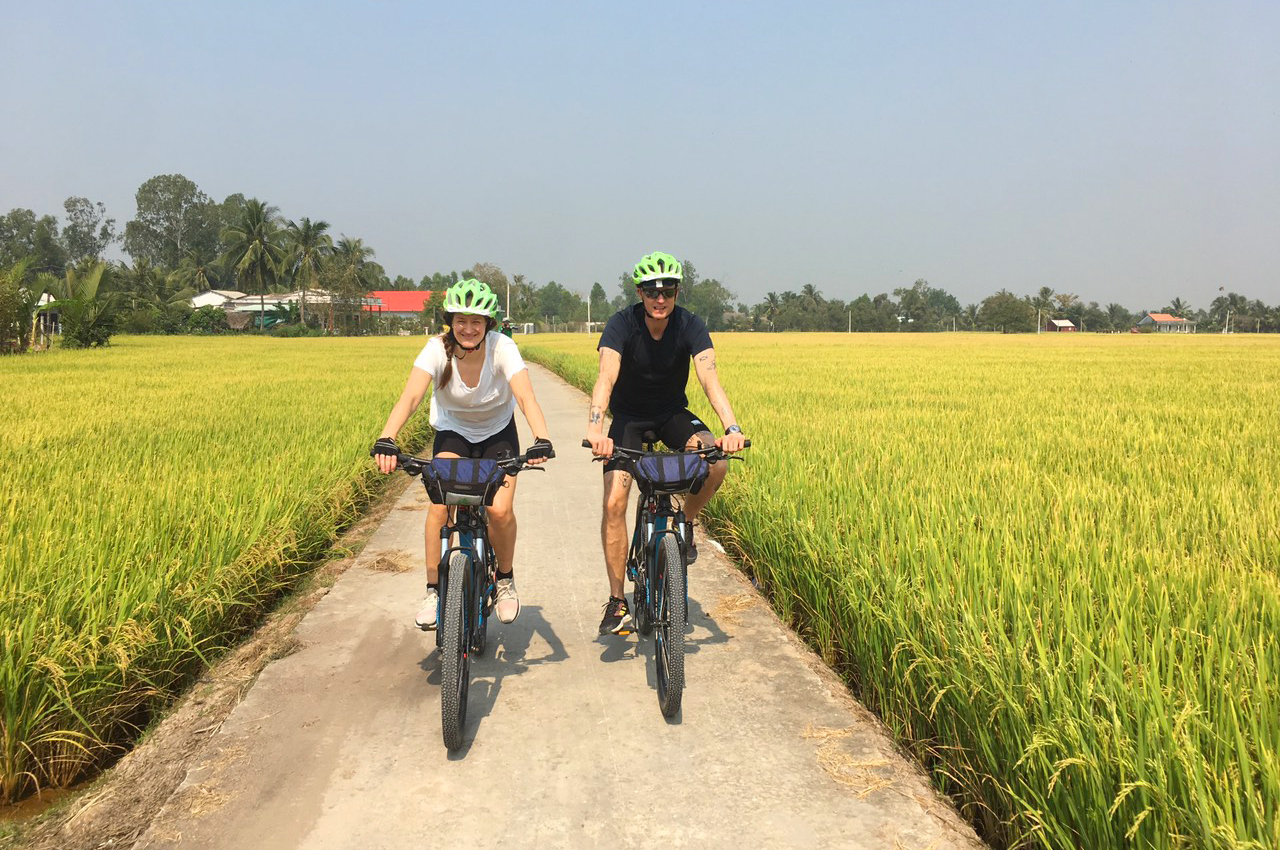
Gravel/Touring Bike: The best choice. Wider tires (32mm+) will forgive the rough patches and allow you to take scenic dirt paths through rice paddies.
Mountain Bike: Great for comfort, but heavy for the long paved stretches.
The National Highway 1A is the main trucking route. It is dusty, loud, and dangerous. Do not plan to cycle the main highway. The secret to a successful trip is finding the smaller coastal roads that run parallel to the highway.
This is where a guided tour shines. At Golden Cycling Tours, our local guides know the "secret" backroads that Google Maps often misses, keeping you safe and scenic.
We have divided the trans-Vietnam route into manageable legs. While you can cycle the whole way, many cyclists choose to transfer through the "boring" flat sections and focus on the highlights.
Distance: Approx. 100km
Terrain: Flat, limestone karsts.
Highlights: Van Long Nature Reserve, Tam Coc.
Starting in Hanoi is an adrenaline rush. Escaping the city traffic requires nerves of steel. Once you break the city limits, the Red River Delta opens up. This is flat, easy riding through endless green paddies. The destination is Ninh Binh, often called "Halong Bay on Land," where limestone cliffs rise vertically from the rice fields.
Distance: Approx. 350km
Terrain: Flat to rolling dunes.
Highlights: Phong Nha-Ke Bang (detour), Vinh Moc Tunnels, DMZ.
This section is historically significant but geographically long. You pass through the DMZ (Demilitarized Zone) at the 17th parallel. We recommend visiting the Vinh Moc Tunnels, where an entire village lived underground during the war. As you approach Hue, the route hugs the coastline, offering desolate, beautiful beaches.
Distance: Approx. 130km
Terrain: The Hai Van Pass (Climbing).
Highlights: The Imperial Citadel, Lap An Lagoon, Hai Van Pass, Lang Co Beach.
This is the crown jewel of cycling in Vietnam. You start in Hue, the ancient capital. The ride south leads you to the foot of the Hai Van Pass (Ocean Cloud Pass).
The Climb: It is a 21km climb with an average gradient of 5-6%. It is challenging but achievable for fit cyclists.
The Reward: The view from the top is legendary—misty mountains on one side, the azure ocean on the other.
The Descent: A thrilling, winding descent into Da Nang, followed by a flat coastal cruise into the UNESCO World Heritage town of Hoi An.
Distance: Approx. 500km
Terrain: Rolling coastal hills, windy bays.
Highlights: My Lai Massacre Memorial, Quy Nhon, Dai Lanh Cape.
Leaving Hoi An, the crowds thin out. This section features some of the best riding in the country. The road from Quy Nhon to Tuy Hoa is a masterpiece of coastal engineering, carved into the cliffs.
Must-Ride: The Vung Ro Bay pass leading into Dai Lanh. The winds here can be strong (headwinds are common heading north, tailwinds heading south), but the scenery is unmatched.
Distance: Approx. 430km
Terrain: Coastal cliffs turning into flat dragon fruit plantations.
Highlights: Nui Chua National Park, Mui Ne Sand Dunes, Vung Tau.
From Nha Trang, take the route toward Cam Ranh and Nui Chua National Park. This is arid, almost desert-like terrain with cactus and goats. It contrasts sharply with the lush North.
The Challenge: The approach to Ho Chi Minh City is extremely busy. We strongly recommend ending the ride in Vung Tau and taking the hydrofoil ferry into Saigon, or booking a support vehicle to transfer the last 60km.
Vietnam is not flat. While the deltas are level, the coastline is rugged.
1. The Passes: Besides the famous Hai Van Pass, you will encounter the Ca Pass (Deo Ca) and the Co Ma Pass in the south-central region. These climbs are usually 10-12km long. They are paved but can be narrow.
2. Road Surface:
Backroads: Usually concrete or older asphalt. Watch out for drying rice laid out on the road during harvest season!
Coastal Roads: Generally excellent condition, smooth tarmac, and wide shoulders.
Highways: Avoid. High-speed trucks and buses use the center of the road.
Cycling in the tropics depletes electrolytes fast.
Drink: Nuoc Mia (Sugarcane juice) is sold everywhere. It is nature’s energy drink—sugar, water, and lime.
Eat: Do not rely on energy gels. Eat real food. Banh Mi is the perfect cycling fuel—carbs, protein, and veg in a portable package.
The rule of the road in Vietnam is "Flow." Traffic moves like water.
Be Predictable: Do not make sudden movements.
Use Your Horn/Voice: Locals use horns to say "I am here," not "Get out of the way."
Size Matters: Trucks and buses have the right of way. Always yield to them.
Can you cycle Vietnam alone? Absolutely. Is it better with support? We believe so.
The logistics of cycling Vietnam are complex. Finding accommodation in remote fishing villages, fixing a broken spoke in a town with no bike shop, or navigating a language barrier when you are exhausted can turn an adventure into an ordeal.
Enter Golden Cycling Tours.
We specialize in premium, supported cycling adventures across Vietnam. When you book with us, you get:
The SAG Wagon: An air-conditioned support van that carries your luggage, water, and snacks. Too hot? Hop in. Big hill? We’ll give you a lift.
Curated Routes: We take you off Highway 1. We know the ferry crossings, the village paths, and the coastal shortcuts that aren't on the maps.
Mechanical Support: Our guides are trained mechanics. Flat tires and gear adjustments are handled while you drink a coconut.
Authentic Food: We don't just stop at tourist traps. We take you to the places locals eat.
Ready to ride the dragon? Explore our 12-day and 14-day Trans-Vietnam itineraries. 👉 Plan your adventure here: https://goldencyclingtours.com/
Q: How fit do I need to be? A: For a full Trans-Vietnam tour, you should be comfortable riding 60-80km per day on consecutive days. However, with Golden Cycling Tours, the support van is always there, making the trip accessible to recreational cyclists.
Q: Is it safe to cycle in Vietnamese traffic? A: It looks chaotic, but it is slow-moving. Once you understand the "flow," it is surprisingly manageable. The most dangerous roads are the highways, which we avoid on our tours.
Q: What about my luggage? A: If you tour solo, you need panniers. If you tour with us, our van carries everything. You just ride with your water and camera.
Q: Can I rent a bike? A: Yes! We provide high-quality Trek and Giant mountain and road bikes, maintained to international standards. You can also bring your own, and we will help with assembly.
"The Trip of a Lifetime" "I was worried about the heat and the hills, but the team at Golden Cycling Tours managed everything perfectly. The route from Hue to Hoi An over the Hai Van Pass was the highlight of my year. The guides were funny, knowledgeable, and kept us safe." — Mark D., USA ⭐⭐⭐⭐⭐
"Hidden Gems Everywhere" "We would never have found those back roads on our own. Cycling through the small fishing villages and having kids high-five us was magical. The support van was a lifesaver on the hot days." — Sarah & Tom, UK ⭐⭐⭐⭐⭐
"Excellent Logistics" "From the bike fit to the snack stops (fresh fruit every hour!), the attention to detail was superb. Highly recommend the coastal route with this team." — Jürgen, Germany ⭐⭐⭐⭐⭐
Cycling from Hanoi to Ho Chi Minh City is more than a vacation; it is an achievement. It is a journey that connects the limestone karsts of the North, the imperial history of the Center, and the vibrant energy of the South.
The coastline of Vietnam is calling. The roads are waiting. Whether you tackle a single segment or the entire length of the country, seeing Vietnam from the saddle of a bicycle will change the way you travel forever.
Don't just see Vietnam—ride it.
Book your cycling expedition today: https://goldencyclingtours.com/

.jpg "Road Bike Tours")
.jpg "Cycling Day Trips Vietnam")
.jpg "Vietnam Bike Tours for Seniors")

Leave a Reply
Your email address will not be published. Required fields are marked *