- Call us Via Whatsapp: +84 (0) 832 126 699
4.9 stars on our site
(15,000 reviews)
- Monday - Sunday : 08:00 - 17:00
(15,000 reviews)

Author: Golden Cycling Tours Team
Category: Adventure Travel / Cycling Vietnam
Difficulty Level: Challenging / Expert
Region: Northeast Vietnam
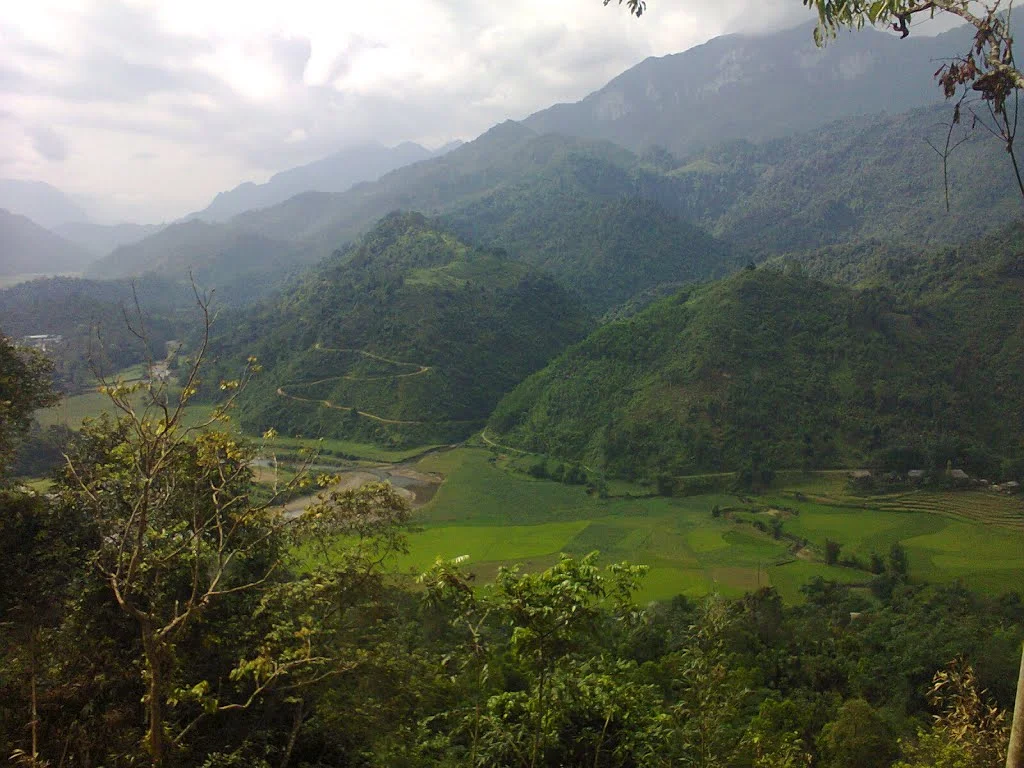
Vietnam is a country of sensory overload, but nowhere is this truer than in the far north. The Ha Giang Loop has become legendary among travelers, typically associated with the roar of motorbikes and the rush of exhaust. However, a quiet revolution is taking place on these limestone slopes. Ha Giang Loop cycling is emerging as the ultimate test of endurance and the purest way to experience the majestic Dong Van Karst Plateau.
.jpg)
Imagine pedaling through a sea of clouds, feeling the burn in your legs as you ascend the Heaven’s Gate, and the rush of pure adrenaline as you navigate the winding ribbons of asphalt that hug the Chinese border. Cycling this loop isn't just about covering distance; it is about earning every view. It is about slow travel in its most visceral form.
While the motorbike crowds zoom past the details, cyclists are immersed in the environment—the scent of pine forests, the vibrant indigo colors of Hmong hemp clothing, and the profound silence of the high mountains. To cycle Ha Giang is to touch the soul of Vietnam.
In this extensive guide, we will break down everything you need to know to conquer the Ha Giang Loop by bicycle, from elevation maps and gear selection to the indispensable support provided by experts like Golden Cycling Tours.
Let’s be transparent: Cycling the Ha Giang Loop is not a Sunday ride in the park. It is widely considered one of the toughest cycling routes in Southeast Asia.
Elevation: You will be dealing with thousands of meters of elevation gain. The terrain is relentless, characterized by "shark's teeth" profiles—steep ups followed by sharp downs.
Gradients: Expect gradients ranging from 7% to 15%.
Distance: The classic loop is roughly 300km to 350km, typically broken down over 4 to 5 days to make it manageable.
If the challenge sounds daunting, the rewards are incomparable.
Unfiltered Interaction: Locals are fascinated by cyclists. You will find children running out to high-five you (the "Xin Chao!" chorus) and elders offering tea when you stop for a breath.
Photography: You can stop anywhere, anytime. No parking struggles, no helmet hair blocking your view. You own the pace.
The "High": Reaching the peak of the Ma Pi Leng Pass under your own power offers a sense of achievement that motorized transport simply cannot match.
Weather plays a critical role in safety and enjoyment. The mountains are unpredictable, so timing is key.
Spring (March to May): The weather is pleasant, and the flowers are in full bloom (peach and plum blossoms paint the hills white and pink). Temperatures are moderate, perfect for climbing.
Autumn (September to November): This is widely considered the best time for Ha Giang Loop cycling. The rice terraces are golden yellow (Harvest Season), the air is crisp and dry, and visibility is at its peak. October marks the beginning of the famous Buckwheat Flower (Tam Giac Mach) season, turning the valleys into a sea of purple.
Summer (June to August): It is hot, humid, and notoriously rainy. Heavy downpours can cause landslides, making cycling dangerous and visibility poor.
Winter (December to February): It can get freezing cold, with thick fog obscuring the views. While atmospheric, the cold can be biting on the descents.
The roads in Ha Giang are mostly paved, but road conditions vary from smooth tarmac to construction gravel.
Mountain Bike (Hardtail): The safest and most comfortable choice. The lower gearing helps with the steep climbs, and the front suspension absorbs the shocks from potholes and construction zones.
Gravel Bike: An excellent choice for experienced riders who want speed but need stability.
Road Bike: Not recommended unless you are a professional with a support vehicle. The gearing is often too hard for the gradients, and the skinny tires are risky on the rough patches.
Since weight is your enemy on the climbs, you must pack light or use a support van.
Clothing: Padded cycling shorts (bibs) are non-negotiable. Bring a windbreaker/rain jacket (essential for long, cold descents), moisture-wicking layers, and gloves.
Safety: High-quality helmet, sunglasses (polarized for the glare), and front/rear lights (fog can roll in quickly).
Nutrition: Electrolyte tablets, energy gels, or bars. Local shops sell water and snacks, but specific sport nutrition is hard to find in remote villages.
Pro Tip: When you book with Golden Cycling Tours, high-quality mountain bikes (Trek or Giant) and safety gear are often included or arranged for you, saving you the hassle and cost of transporting your bike to Vietnam.
This itinerary is designed to balance physical exertion with cultural immersion.
Distance: ~50km
Elevation Gain: High
Highlight: Quan Ba Heaven’s Gate.
The Ride: The warmup is short. You leave the city following the Lo River and almost immediately begin the ascent. The climb to Heaven’s Gate is legendary—a steady grind into the clouds. Once at the top, the view of the Twin Mountains (Fairy Bosom) and the Tam Son valley below is your reward.
Overnight: Stay in a Dao ethnic homestay in Nam Dam village to soak in the culture.
Distance: ~55km
Highlight: The Pine Forests and Can Ty Pass.
The Ride: You will cycle through dramatic landscape changes. The road winds through cool, fragrant pine forests that feel more like Europe than Southeast Asia. The descent into Yen Minh town is thrilling but requires good brakes.
Distance: ~45km
Highlight: Tham Ma Pass and the Hmong King’s Palace.
The Ride: This is where you enter the core of the UNESCO Global Geopark. The landscape turns to jagged black rock. You will tackle the photogenic Tham Ma Pass (the iconic S-shaped road seen in every photo). Be sure to stop at the Vuong Family Mansion (Hmong King’s Palace) for a history lesson on the opium trade and Hmong royalty.
Overnight: Dong Van Old Quarter.
Distance: ~30km
Highlight: Ma Pi Leng Pass (The King of Passes).
The Ride: Short distance, but high intensity and emotional impact. This is the most beautiful road in Vietnam. You are cycling on the edge of a precipice with the Nho Que River appearing as a turquoise thread thousands of meters below. Take your time here.
Activity: Take a boat ride on the Nho Que River (requires a hike or motorbike transfer down) to see the Tu San Canyon from below.
Distance: ~90km+ (Very long day)
Highlight: The "M" shaped road and varying terrain.
The Ride: Most cyclists choose to take a support van transfer for part of this leg or split it into two days (stopping in Du Gia). The route back via Mau Due offers incredible, rugged scenery that is less trafficked than the main loop.
Planning a cycling expedition in a remote mountainous region involves complex logistics. You need to consider bike maintenance, permits, food safety, and emergency evacuation. This is where Golden Cycling Tours transforms a stressful trip into a seamless adventure.
While "bikepacking" solo is possible, it is risky due to the isolation and mechanical support needs. Why a support van is a game-changer:
Mechanical Issues: If your chain snaps or a tire blows out in the middle of a pass, you are miles from a mechanic. Our support team carries spares, tools, and replacement bikes.
Bonking: Everyone has a limit. If you hit "the wall" or the heat gets too much, you can simply hop in the AC van, rehydrate, and save your legs for the downhill.
Luggage: You ride unencumbered. The van carries your heavy bags to the next hotel. You just carry water and a camera.
Foreigners are required to have a "Border Area Permit" to stay overnight in the border areas (Dong Van, Meo Vac). These can be obtained in Ha Giang City at the immigration office, but Golden Cycling Tours handles all this paperwork for you in advance.
Our guides are not just map-readers; they are cyclists. They know how to pace the group, they know which "shortcut" is actually a hike-a-bike nightmare, and most importantly, they act as cultural bridges, translating your interactions with the local tribes.
Cycling burns massive calories, so refueling is vital. Ha Giang cuisine is hearty and unique.
Pho: The classic breakfast fuel.
Banh Cuon: Steamed rice rolls, a Ha Giang specialty, served with a bone broth dipping sauce (different from the Hanoi version).
Thang Co: A traditional horse meat soup (for the adventurous eater).
Men Men: Steamed cornmeal, the staple food of the Hmong people.
Family Style Rice: Most lunches and dinners will be shared dishes of pork, chicken, tofu, and plenty of mountain vegetables (cabbage, mustard greens).
The loop offers a mix of:
Homestays: Sleep in traditional stilt houses (common in Nam Dam and Du Gia). Amenities are basic but clean, usually with mosquito nets and shared bathrooms. This is the best way to connect with the culture.
Hotels: Dong Van and Meo Vac have more modern hotels with private ensuite bathrooms, hot water, and air conditioning.
You are riding through the living rooms of the Hmong, Dao, Tay, and Lo Lo people. Respect is key.
Photography: Always ask for permission before taking close-up photos of people, especially elders. A smile and a nod usually suffice.
Children: You will be greeted by thousands of "Hellos." High-fives are great. However, do not give candy or money to children. It encourages begging and keeps them out of school.
Dress: When off the bike and visiting villages, dress modestly.
We don't just rent you a bike; we provide a full ecosystem of support. At Golden Cycling Tours, we specialize in crafting immersive cycling tours that cater to your fitness level and sense of adventure.
Why Cyclists Choose Us:
Premium Fleet: We provide well-maintained Mountain Bikes specifically geared for climbing.
Custom Itineraries: Whether you want a hardcore 3-day sprint or a relaxed 6-day cultural immersion with photography stops, we tailor the route to you.
Safety First: Our guides are trained in First Aid and mountain safety.
Ready to ride? Check out our specialized cycling packages and book your adventure today at https://goldencyclingtours.com/. Let us handle the logistics so you can focus on the pedal stroke.
"The Hardest Thing I’ve Ever Loved" "I was hesitant about cycling the Ha Giang Loop, thinking I wasn't fit enough. The team at Golden Cycling Tours was incredible. The support van was my safety net, but I ended up riding 80% of it! The feeling of conquering Ma Pi Leng Pass is something I will never forget. The guide, Tuan, was encouraging and knowledgeable." — Sarah J., Australia
"Impeccable Organization" "From the high-quality bikes to the amazing homestays, everything was perfect. Seeing the loop by bike is totally different than by motorbike—you see so much more. The silence of the mountains is spiritual. Highly recommended." — Mark & Elena, UK
"Adventure of a Lifetime" "If you are debating between motorbiking and cycling, CHOOSE CYCLING. It’s tough, but the connection with nature is unreal. Golden Cycling Tours made the logistics seamless. We didn't have to worry about permits, food, or mechanicals." — David L., Canada
Q1: Do I need to be a professional cyclist to do the Ha Giang Loop? A: No, but a good level of cardio fitness is required. If you ride regularly at home, you can do it. If you are not a pro, we strongly recommend booking a tour with a support vehicle so you can rest when the climbs get too steep.
Q2: Is it safe to cycle in Ha Giang? A: Generally, yes. Traffic is lighter than in the cities. However, the roads are narrow and winding. You must be comfortable controlling your speed on steep descents. Avoid cycling in heavy rain or fog.
Q3: Can I rent a bike in Ha Giang City? A: Yes, there are rental shops. However, for a multi-day intense ride, the quality of the bike is paramount. Cheap rentals often have poor brakes or gears. Tours like those offered by Golden Cycling Tours ensure you have professional-grade equipment.
Q4: How do I get from Hanoi to Ha Giang with my bike? A: You can take a "Cabin Bus" or Limousine van. They have storage underneath. If you book a tour, the transfer from Hanoi is usually arranged for you.
Q5: Is there internet access on the Loop? A: Yes, 4G/5G coverage is surprisingly good in most towns (Quan Ba, Yen Minh, Dong Van). It may drop out in the high passes or deep valleys.
The Ha Giang Loop is a rite of passage for travelers in Vietnam. While thousands see it through a visor, only a few feel the wind on their skin, the burn in their legs, and the triumph of the summit. Cycling the loop transforms a sightseeing trip into a personal expedition. It connects you to the land and its people in a way that no other mode of transport can.
Whether you are a solo adventurer or a group of friends looking for a challenge, the mountains are calling.
Are you ready to accept the challenge?
Visit https://goldencyclingtours.com/ to view our itineraries, chat with our experts, and secure your spot on the most breathtaking cycling route in Southeast Asia.

.jpg "Cycling in Vietnam in March")
.jpg "Vietnam mountain bikes Trail")
.jpg "Vietnam Biking Trails")
.jpg "Ha Giang Cycling Tours")
Leave a Reply
Your email address will not be published. Required fields are marked *