- Call us Via Whatsapp: +84 (0) 832 126 699
4.9 stars on our site
(15,000 reviews)
- Monday - Sunday : 08:00 - 17:00
(15,000 reviews)

When it comes to adventure cycling in Southeast Asia, few routes possess the mythical allure and raw physical beauty of the Ho Chi Minh Trail. While the trail spans north to south through the spine of Vietnam, one specific section has recently captured the hearts of intrepid cyclists worldwide: the Central Highlands, specifically through the province of Dak Lak.
Ho Chi Minh Trail cycling in Dak Lak is not merely a physical activity; it is a journey through history, a sensory immersion into the "Coffee Capital" of Vietnam, and a deep dive into the indigenous cultures that have called these misty plateaus home for centuries.
This comprehensive guide will take you mile by mile through the rolling hills, thundering waterfalls, and vibrant minority villages that define this spectacular route. Whether you are a seasoned road warrior or an adventure seeker looking for your next challenge, riding the Ho Chi Minh Trail through Dak Lak is the experience of a lifetime.
.jpg)
To understand the magnitude of cycling this route, one must first respect its history. Once a clandestine network of footpaths and truck routes used to supply the southern front during the Vietnam War, the Ho Chi Minh Trail was a symbol of resilience. Today, much of the original trail has been reclaimed by the jungle, but a modern artery—the Ho Chi Minh Highway—runs parallel to or on top of the historic route.
However, for the cyclist, the magic lies in the detours. The section winding through Dak Lak province offers a perfect blend of paved tarmac, gravel backroads, and red dirt paths that cut through endless horizons of green. It is here that the noise of the modern world fades, replaced by the hum of tires on pavement and the rustle of coffee trees in the wind.
Dak Lak is often bypassed by tourists rushing between Da Lat and Hoi An, which is a mistake. As the largest province in the Central Highlands, it offers a topography that is uniquely suited for Vietnam adventure cycling.
Unlike the flat Mekong Delta or the punishing climbs of the far North, Dak Lak offers "rolling terrain." This is the sweet spot for touring. You will encounter long, gentle ascents that get your heart rate up, followed by exhilarating, winding descents that seem to last for miles. The altitude—averaging around 500 to 800 meters above sea level—keeps the temperature cooler than the coast, providing ideal riding conditions.
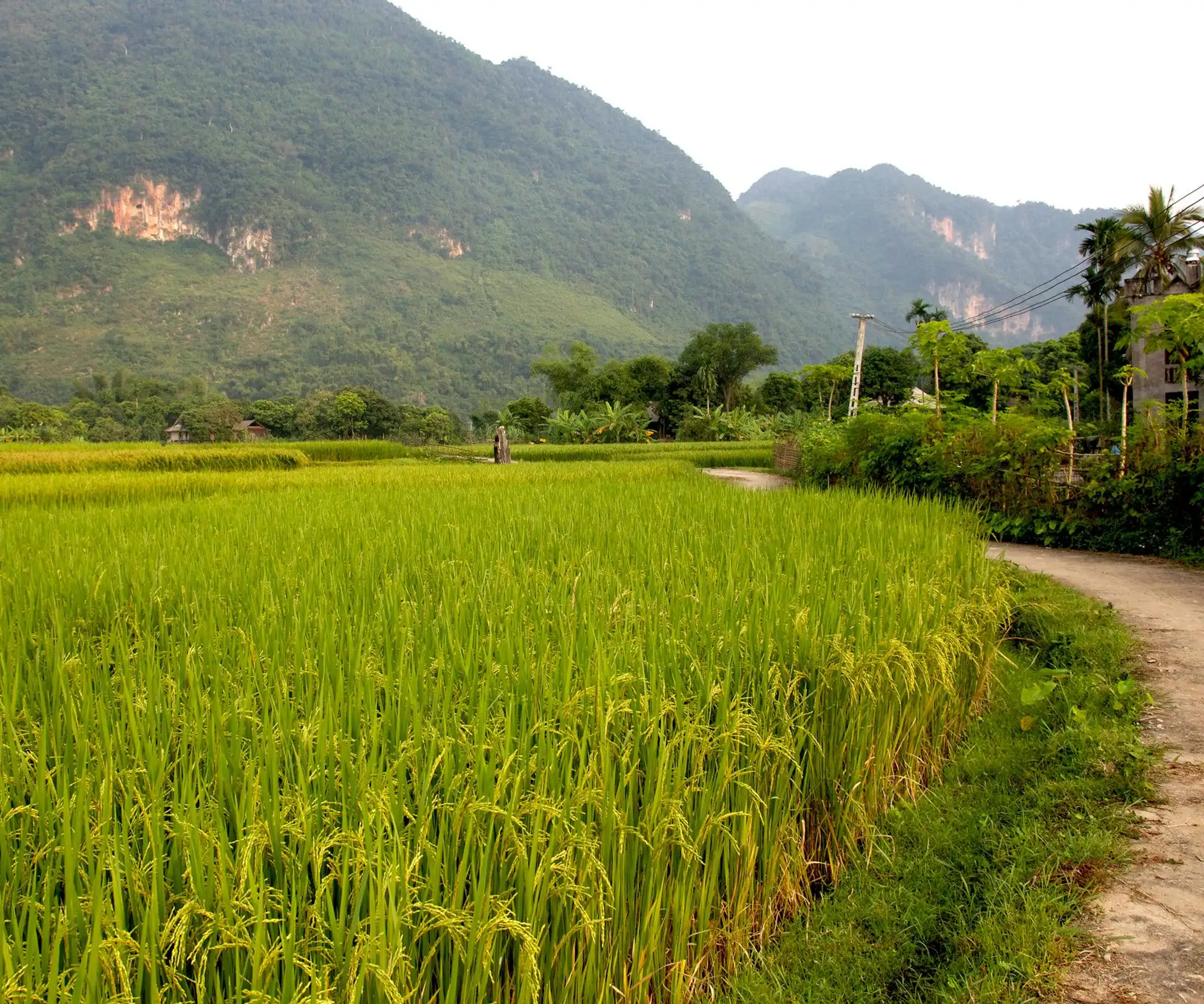
Dak Lak produces the majority of Vietnam’s coffee. Cycling through coffee plantations is a sensory experience distinct to this region. In the spring, the hills are covered in white coffee blossoms resembling snow, filling the air with a jasmine-like fragrance. During harvest, the roads are lined with beans drying in the sun, creating a mosaic of earthy aromas.
This region is home to the Ede, M'nong, and Jarai ethnic minorities. A Ho Chi Minh road bicycle tour here isn't just about the scenery; it's about stopping at a longhouse, drinking Rượu cần (rice wine drunk through bamboo straws), and listening to the UNESCO-recognized Space of Gong Culture.
A typical itinerary focuses on the connection between Buon Ma Thuot (the provincial capital) and the surrounding natural wonders. Here is what you can expect on the road.
Your journey typically begins in Buon Ma Thuot. Before hitting the saddle, cyclists often explore the Trung Nguyen Coffee Village or the poignant Dak Lak Museum. The city vibe is relaxed, with wide boulevards that are surprisingly bike-friendly compared to Hanoi or Saigon.
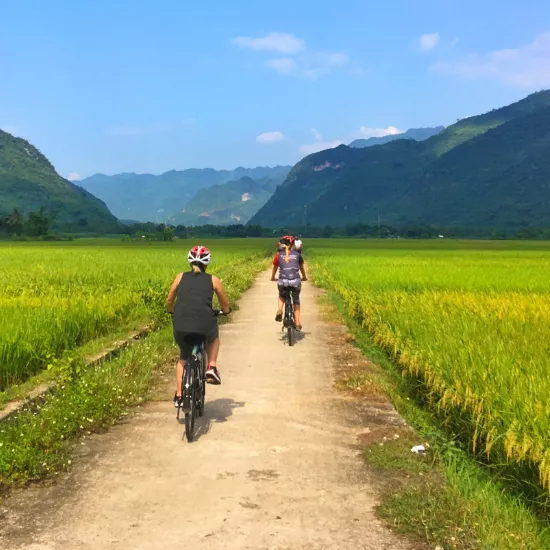
One of the most popular segments of Dak Lak bike tours is the ride south toward Lak Lake. As you leave the city, the urban sprawl quickly gives way to pepper farms and rubber plantations. The rubber forests are particularly hauntingly beautiful; the trees are planted in perfect symmetry, creating cathedral-like tunnels of shade that are perfect for cycling.
Lak Lake is the largest natural freshwater lake in the Central Highlands. Here, the road flattens out, hugging the shoreline. This area is dominated by the M'nong people.
The Experience: Swap your bike for a wooden dugout canoe. Paddling on the placid waters of Lak Lake at sunset, surrounded by lotus flowers and watching elephants graze on the banks, is a highlight of cycling Vietnam Central Highlands.
The Accommodation: Many tours offer stays in traditional Longhouses on stilts, providing an authentic night’s sleep to the sound of nature.
No Buon Ma Thuot cycling trip is complete without visiting the twin waterfalls of Dray Nur and Dray Sap. These are not small trickles; they are massive, thundering walls of water fed by the Serepok River. The ride to the falls often involves navigating "red dirt" roads—the iconic soil of the region. This can be a fun challenge for gravel bike enthusiasts. The payoff is a refreshing swim in the pools at the base of the falls, a natural massage to soothe tired leg muscles.
For those seeking deeper wilderness, the route extends west toward Yok Don National Park, near the Cambodian border. The dry dipterocarp forest here creates a savannah-like landscape. Cycling here feels like a safari; the trees are sparse, the grass is golden, and the feeling of isolation is profound. It is a stark contrast to the lush green of the coffee regions.
The beauty of traveling by bicycle is the vulnerability it affords. You are not sealed behind the glass of a bus. When you stop for water in a remote village, you interact.
In Dak Lak, you will encounter the matriarchal society of the Ede people. Their longhouses are architectural marvels, accessible by two staircases: one for men and one for women (the women's stair is adorned with breasts, symbolizing vitality).
Cycling from Buon Ma Thuot to Da Lat or surrounding areas allows you to witness daily life unfiltered: farmers drying pepper, children riding water buffalo, and artisans weaving brocade.
The Central Highlands has two distinct seasons:
Dry Season (November to April): This is the prime time for Ho Chi Minh Trail cycling Dak Lak. The weather is cool, dry, and the skies are a brilliant blue. December is particularly festive with the coffee harvest.
Rainy Season (May to October): While the landscape is incredibly green, the afternoon downpours can make the red dirt roads slippery and challenging. However, the waterfalls are at their most majestic during this time.
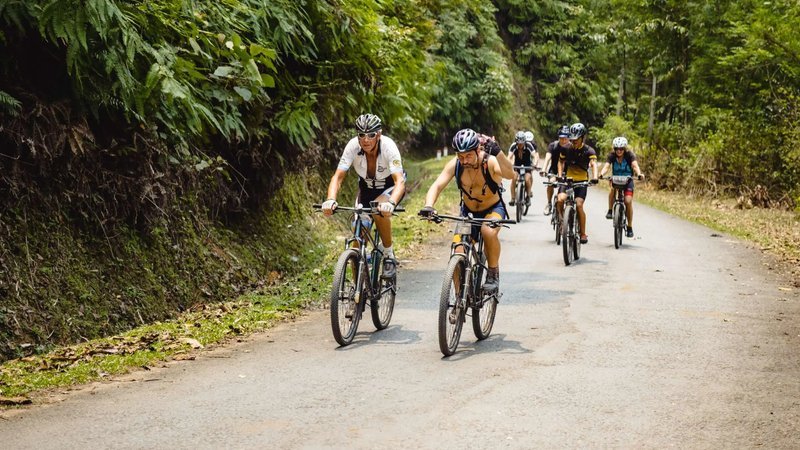
The Bike: A robust hybrid or mountain bike is recommended. While the main Ho Chi Minh Highway is paved, the best gems in Dak Lak are found on secondary roads which can be bumpy or unpaved.
Clothing: Unlike the humid coast, Dak Lak can get chilly in the early morning and evening. Bring a light windbreaker. Padded shorts are non-negotiable for the long days in the saddle.
You will burn serious calories on the rolling hills. Fortunately, the food in Dak Lak is exceptional.
Must-Try: Bún Đỏ (Red Noodle Soup), a specialty of Buon Ma Thuot.
Hydration: Local sugarcane juice (nước mía) is the ultimate natural energy drink found at roadside stalls.
While solo cycling is possible, the Ho Chi Minh Trail in the Highlands is complex. Maps can be outdated, language barriers in remote villages are real, and mechanical support is scarce.
This is where expertise matters. A dedicated tour operator ensures you find the hidden paths that Google Maps doesn't know about. They provide the support van (essential for those sudden relentless uphills or if heat exhaustion sets in), handle the logistics of permits for border areas, and facilitate cultural interactions that would be impossible on your own.
For those looking to undertake this journey with professional backing, Golden Cycling Tours stands out as the premier operator in the region. Specializing in high-quality, immersive bicycle vacations, they have mapped out the most scenic and safe routes through Dak Lak.
Their Ho Chi Minh Trail cycling tours are curated to balance physical activity with cultural discovery. They don't just show you the road; they introduce you to the people living along it. With high-end bikes, English-speaking local guides, and a focus on sustainable tourism, they turn a bike ride into a seamless adventure.
Whether you are looking for a multi-day expedition connecting the Highlands to the Coast, or a focused exploration of the Coffee Capital, their itineraries are crafted by cyclists, for cyclists.
To give you a taste of the adventure, here is a typical 3-day flow:
Day 1: Buon Ma Thuot to Lak Lake (55km)
Morning: Visit the Coffee Museum.
Ride: Backroads through pepper farms and minority villages.
Evening: Gong show and overnight in a Longhouse.
Day 2: Lak Lake to Dray Nur Waterfall (60km)
Morning: Elephant watching or canoeing.
Ride: A mix of paved and gravel roads climbing out of the lake basin towards the Serepok River.
Afternoon: Swimming at the falls.
Day 3: Dray Nur to Buon Ma Thuot (40km)
Morning: Visit a brick factory and cocoa plantation.
Ride: Rolling hills back to the city.
Afternoon: Farewell coffee tasting.
Q1: Is the Ho Chi Minh Trail in Dak Lak safe for cyclists? A: Yes, generally. The section through Dak Lak (Highway 14 and secondary roads) is safer than the coastal Highway 1. However, traffic can move fast on the main artery. This is why booking with operators like Golden Cycling Tours is advisable, as they utilize support vehicles and know the low-traffic backroads.
Q2: How fit do I need to be? A: Moderate fitness is required. You should be comfortable riding 40-60km a day. The terrain is rolling—meaning constant ups and downs—but there are rarely the grueling, hour-long climbs found in Northern Vietnam.
Q3: Can I rent a bike in Buon Ma Thuot? A: High-quality bike rentals are scarce in the city itself. Most travelers arrange their bikes through their tour operator to ensure safety and quality (e.g., Trek or Giant mountain bikes).
Q4: What is the food situation for vegetarians? A: Vietnam is very vegetarian-friendly due to Buddhist influences. You will find plenty of tofu, vegetable stir-fries, and tropical fruits in Dak Lak.
Q5: Is there internet access on the trail? A: 4G coverage is surprisingly good throughout Vietnam, even in the Central Highlands. You will have signal in most villages, though it may drop in the deep sections of Yok Don Park.
"A Side of Vietnam I Never Knew Existed" "I've cycled the coast, but the Ho Chi Minh Trail in Dak Lak was totally different. The smell of the coffee flowers and the coolness of the air made the riding pleasant. The visit to the Dray Nur waterfall was the highlight. The team at Golden Cycling Tours took care of everything, so I could just focus on the pedaling." — Sarah Jenkins, UK
"Rolling Hills and Red Dust" "This is real adventure cycling. Not too hard, but not easy. The interaction with the M'nong families at Lak Lake was genuine and touching. Highly recommend doing the section from Buon Ma Thuot down to Dalat if you have the legs for it." — Markus Weber, Germany
"Impeccable Organization" "We booked the 3-day Highlands tour. The bikes were top notch (Giant ATX), and the guide, Tuan, was a walking encyclopedia of the Vietnam War history. Riding the Ho Chi Minh Trail has been on my bucket list for years, and doing it through the coffee plantations was magical." — Emily & David, Australia
Ho Chi Minh Trail cycling Dak Lak offers an escape from the tourist traps. It is a journey into the heart and soul of Vietnam's highlands. It challenges your legs, delights your eyes, and warms your heart with the hospitality of the highlanders.
Whether you are seeking the thrill of the descent, the peace of the pine forests, or the taste of the world's best Robusta coffee right from the source, Dak Lak is calling. Don't just read about history—ride through it.
For the ultimate guided experience, explore the expertly crafted itineraries at Golden Cycling Tours and book your spot on the trail today.

Leave a Reply
Your email address will not be published. Required fields are marked *