- Call us Via Whatsapp: +84 (0) 832 126 699
4.9 stars on our site
(15,000 reviews)
- Monday - Sunday : 08:00 - 17:00
(15,000 reviews)

Sapa, often described as the "Tonkinese Alps," is a destination that feels like it was designed by nature specifically for adventure seekers. While many visitors choose the slow pace of trekking, the truly intrepid know that the best way to experience the verticality of the Hoang Lien Son mountain range is through a Sapa bike tour.
At Golden Cycling Tours, we have spent years mapping out the most exhilarating trails, from the technical single-tracks of the Muong Hoa Valley to the soaring heights of the O Quy Ho Pass. In this guide, we dive deep into everything you need to know about embarking on a Sapa bike tour, covering geography, cultural etiquette, technical gear, and the surrounding regions that make Northern Vietnam a global mountain biking powerhouse.

Sapa is unique because it offers a "three-dimensional" experience. Unlike the flat coastal roads of Central Vietnam, a bike tour here involves constant engagement with elevation, climate zones, and a mosaic of ethnic cultures.
The landscape around Sapa is dominated by Fansipan, the highest peak in Indochina. This massive granite block creates deep valleys and steep ridges. For a cyclist, this means variety. You can spend the morning grinding up a 10% gradient on a paved mountain pass and the afternoon navigating a narrow, muddy path used by water buffalo. The diversity of the terrain is why Sapa bike tours attract everyone from recreational riders to professional downhill racers.
A bicycle is a "social bridge." When you ride through a village, you aren't separated from the locals by a bus window. You hear the laughter of children, smell the smoke from Hmong kitchen fires, and see the intricate needlework of Red Dao women up close. This sustainable approach to travel ensures that your visit benefits the local communities directly. Our Vietnam Northwest Bike Tours are designed to facilitate these authentic interactions while respecting local traditions.
The trail network in Sapa is vast. Choosing the right route depends on your fitness, technical skill, and how much "off-road" you are willing to handle.
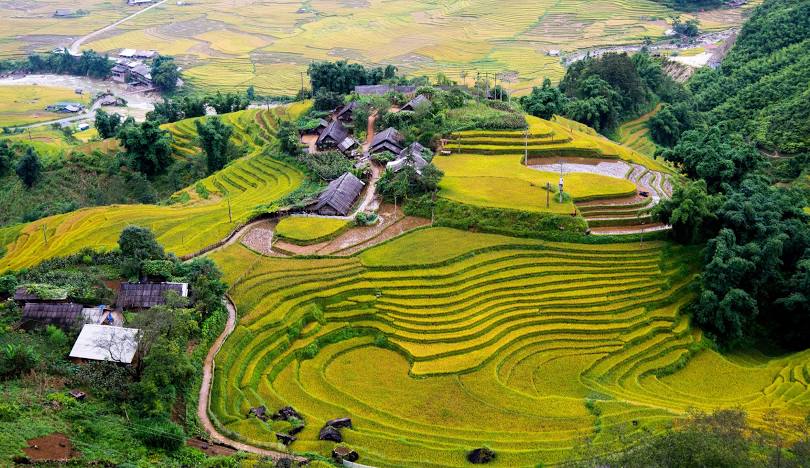
The Muong Hoa Valley is the most iconic cycling destination in Sapa. A typical route takes you from Sapa town, descending sharply toward Lao Chai and Ta Van.
The Ride: You’ll navigate a mix of concrete village roads and rocky paths.
The View: Ancient rock carvings, cascading rice terraces, and the rushing Muong Hoa River.
The Experience: This is the best place to witness the Giay and Black Hmong cultures. It’s a perfect introduction to the region’s beauty.
If you are a fan of road cycling or "sky-high" vistas, the O Quy Ho Pass (The Heaven’s Gate) is a mandatory inclusion in your Sapa bike tour itinerary.
The Challenge: It is one of the "Four Great Passes" of Northern Vietnam, reaching an altitude of over 2,000 meters.
The Reward: On a clear day, the views extend deep into Lai Chau bike tours territory. The descent is legendary—nearly 25 kilometers of winding asphalt that will test your cornering skills and your brakes.
For those who want to avoid the tourist crowds, we head north. This route takes you through old-growth forests and into the valley of the Red Dao people.
Terrain: Undulating hills with very little traffic.
Highlights: Beautiful waterfalls and a chance to see the "Square Head" Red Dao, a subgroup with distinct traditional dress.
Sapa is the gateway, but the adventure doesn't have to end at the district borders. Northern Vietnam is a vast network of riding opportunities.
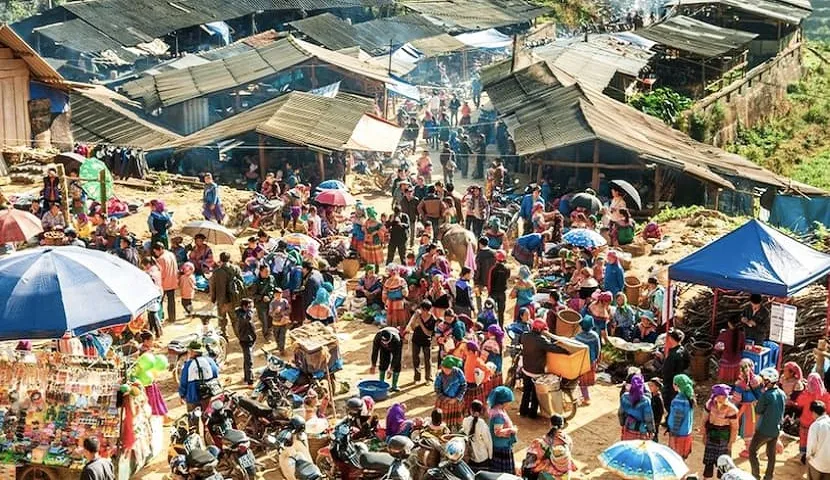
East of Sapa lies the Bac Ha plateau. Known for its colorful markets and plum blossoms, a Bac Ha bike tour offers a different vibe. The trails here are often drier and more "cross-country" in style. Riding from Sapa to Bac Ha is a popular multi-day journey that transitions from high-altitude mist to the sun-drenched hills of the Flower Hmong.
Continuing west from Sapa leads you into Lai Chau province. This is where the mountains become even more jagged and the tourism infrastructure disappears. Our Lai Chau bike tours are for those seeking true solitude. You will encounter the Lu and Lao ethnic groups, known for their blackened teeth and beautiful weaving traditions.
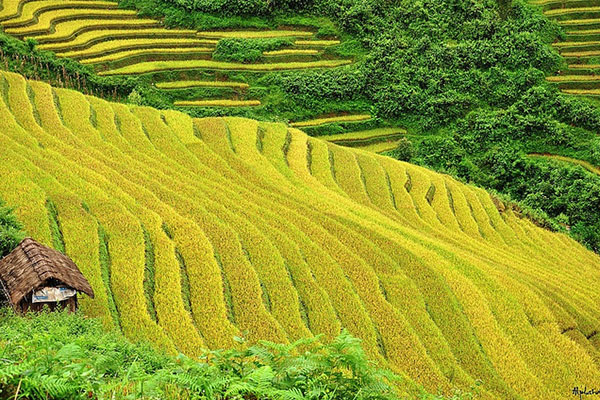
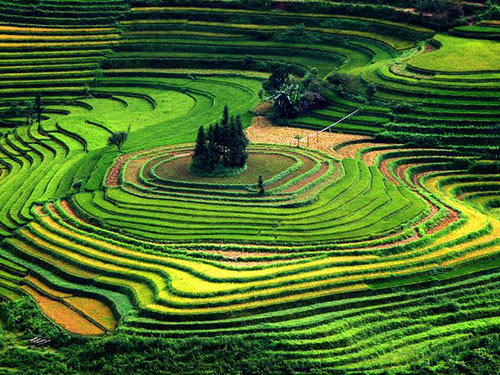
To the south, the Mu Cang Chai district in Yen Bai province offers arguably the most spectacular rice terraces in all of Asia. A Yen Bai Bike Tours adventure focuses on the Khau Pha Pass and the "Golden Season" harvest in September. The cycling here is demanding but visually unparalleled.
You cannot "wing it" in the mountains. Preparation is the difference between a life-changing adventure and a grueling ordeal.
For Sapa, a front-suspension mountain bike (hardtail) is the minimum requirement. However, for the more technical trails in the valley, a full-suspension bike offers much more comfort and control.
Brakes: Hydraulic disc brakes are essential. The long descents will overheat rim brakes or mechanical cables.
Tires: Look for tires with a "knobby" tread for the muddy sections, but high enough pressure to handle the paved climbs.
E-Bikes: At Golden Cycling Tours, we now offer high-performance E-mountain bikes. These are perfect for those who want to see the sights without the leg-burning exhaustion of 1,000-meter climbs.
Clothing: Layering is key. It can be 25°C in the valley and 10°C at the top of a pass. Always carry a lightweight, breathable rain jacket.
Footwear: Sturdy MTB shoes or trail runners. Avoid flip-flops or smooth-soled sneakers.
Protection: Helmets are non-negotiable. Padded cycling shorts will save your trip after 4 or 5 hours in the saddle.
Nutrition: While we provide snacks, having your own electrolyte powder and energy gels can help during the steeper segments.
You don't need to be an Olympic athlete, but you should have a baseline of cardiovascular fitness. If you can comfortably ride for 2-3 hours on undulating terrain at home, you will be able to enjoy a Sapa bike tour. If you are planning a Vietnam Northwest Bike Tour, we recommend adding some hill repeats to your training schedule 4 weeks before arrival.
Weather in the Northwest is notoriously fickle. Here is the breakdown:
September to November (The Harvest): This is the peak season. The weather is dry, cool, and the rice terraces are a brilliant gold. This is the best time for photography and long-distance riding.
March to May (Springtime): The hills are covered in blossoms (peach, plum, and orchid). The air is fresh, and the visibility is usually excellent.
June to August (The Monsoon): Expect rain. The trails become muddy and challenging. However, the waterfalls are magnificent, and the rice is at its greenest. If you like "mud-plugging," this is your season.
December to February (The Mist): It can get very cold, sometimes even snowing on Fansipan. Visibility can be low due to thick fog, creating a mystical atmosphere but requiring extra caution on descents.
There are many operators in Vietnam, but Golden Cycling Tours stands out for several reasons:
Premium Fleet: We don't use "budget" bikes. We provide well-maintained equipment from brands like Giant, Trek, and Cannondale.
Expert Guides: Our guides aren't just bikers; they are cultural ambassadors who speak local dialects and know the history of every trail.
Safety & Support: Every multi-day tour is accompanied by a support van. If you get tired or the weather turns, the "sag wagon" is right there.
Community First: We prioritize homestays and local eateries to ensure the benefits of your Sapa bike tour reach the right people.
Flexible Options: Check out our guaranteed tours for fixed departure dates, or contact us for a completely bespoke private expedition.
Mark Stephenson from Canada:
"I did the 5-day Sapa to Bac Ha loop. The views were mind-blowing, but it was the small moments—having tea with a Hmong family or seeing the sunrise over the Muong Hoa Valley—that I'll never forget. The bikes were in top condition, and our guide, Huy, was a legend!"
Linda & Thomas from Switzerland:
"We were worried about the hills, so we opted for the E-bike Sapa bike tour. It was the best decision! We could focus on the scenery rather than just struggling with the pedals. Golden Cycling Tours organized everything perfectly."
Aleksei from Russia:
"If you want real mountain biking, ask for the single-track routes. The technical descents in the Northwest are world-class. I'll be back for the Lai Chau bike tours next year."
Q: Do I need a visa for Vietnam? A: Most nationalities require an E-visa, which is easily obtained online. Check the latest government regulations before booking.
Q: Is it safe to cycle in Sapa? A: Yes, provided you follow the guide's instructions and wear protective gear. Traffic in the villages is very light, though you must be careful of animals on the road!
Q: What is the average daily distance? A: For a standard Sapa bike tour, we cover 30 to 50 kilometers per day, depending on the elevation gain.
Q: Can I bring my own pedals and saddle? A: Absolutely. Our mechanics will be happy to swap them onto our bikes for you at the start of the tour.
Q: Are there vegetarian food options? A: Definitely. The local cuisine features a huge variety of fresh vegetables, tofu, and rice dishes. Just let us know your dietary requirements in advance.
A Sapa bike tour is more than just a physical challenge; it is a sensory explosion. It is the smell of rain-drenched pine trees, the sight of endless golden terraces, and the feeling of accomplishment as you reach the summit of a mountain pass.
At Golden Cycling Tours, we invite you to step away from the tourist path and into the heart of the mountains. Whether you are looking for a day trip or a 14-day Vietnam Northwest Bike Tour, we have the expertise to make it happen.
Are you ready to ride? Browse our guaranteed tours today and take the first step toward the adventure of a lifetime.

.jpg "What to Do in Bac Ha Vietnam ?")
Leave a Reply
Your email address will not be published. Required fields are marked *