- Call us Via Whatsapp: +84 (0) 832 126 699
4.9 stars on our site
(15,000 reviews)
- Monday - Sunday : 08:00 - 17:00
(15,000 reviews)

The northernmost province of Vietnam, Ha Giang, is a place where geography seems to have been sculpted by the hands of giants. It is a world of verticality, where jagged limestone pinnacles pierce the clouds and turquoise rivers carve through canyons deeper than the mind can easily comprehend. While the "Happiness Road" has become a bucket-list legend for travelers worldwide, there is a distinct difference between observing this landscape from a vehicle and conquering it through the pedals. A Ha Giang Loop remote cycling tour is the ultimate test of endurance, offering a visceral, slow-motion encounter with the most dramatic topography in Southeast Asia.
At Golden Cycling Tours, we believe that the only way to truly "hear" the mountains is through the rhythmic breath of a cyclist. Our professionally supported Ha Giang bike tours are designed to help you navigate this vertical world with confidence, providing elite equipment and local expertise. Whether you are a dedicated climber or a gravel enthusiast, this guide will walk you through every facet of the ultimate Vietnam Northeast Bike Tours.
.jpg)
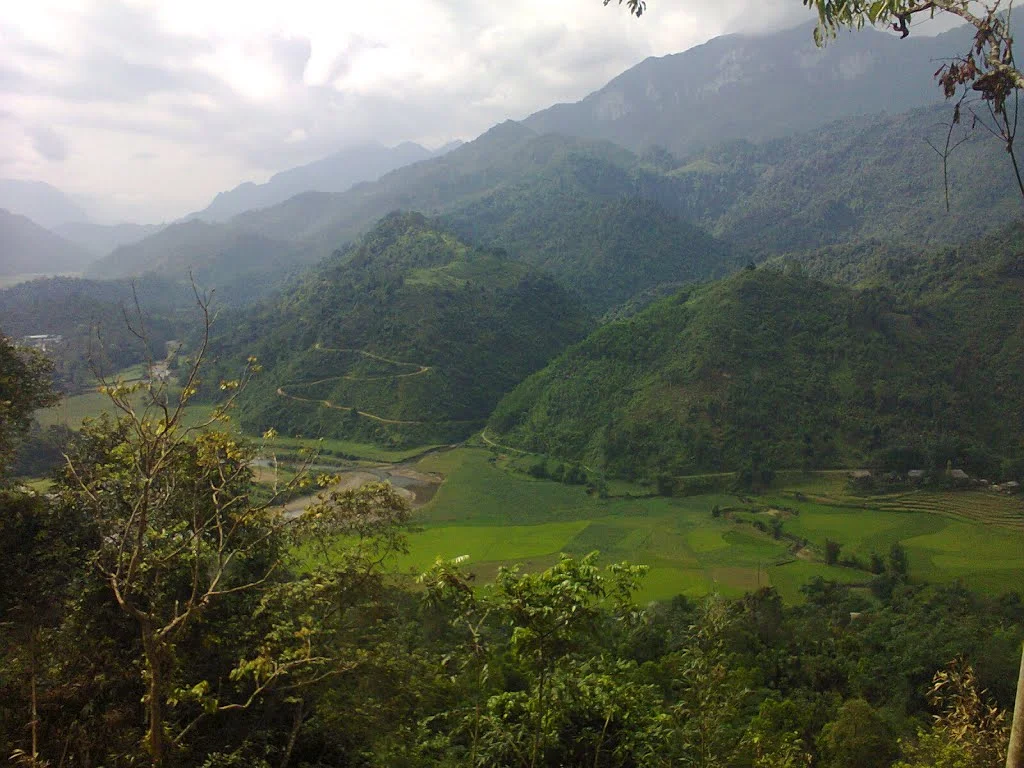
The Ha Giang Loop is not just a mountain range; it is a geological masterpiece spanning over 2,300 square kilometers within the UNESCO Dong Van Karst Plateau Global Geopark. For a cyclist, the terrain is defined by its "stone forests"—vast fields of jagged limestone that rise vertically from the valley floors.
Why choose a Ha Giang Loop remote cycling tour over a motorbike or car? The answer lies in the intimacy of the experience. On a bicycle, the world slows down to a human pace. You notice the intricate patterns of Hmong weaving on a porch, the scent of blooming buckwheat flowers in the valleys, and the rhythmic sound of the Nho Que River far below the cliffs. You aren't just passing through a landscape; you are participating in it.
There is a profound psychological difference between reaching the summit of a 1,500-meter pass by twisting a throttle and reaching it after hours of sustained climbing. In the remote reaches of Ha Giang, every panoramic view is "sweat-earned." Reaching the Ma Pi Leng Pass on two wheels provides a sense of achievement that stays with you long after you return home.
The region is home to 22 ethnic minority groups, including the Hmong, Tay, Dao, and Lo Lo. Cycling through their ancestral lands allows for spontaneous, non-intrusive interactions. You are perceived as a guest rather than a tourist, often leading to invitations for tea or a warm smile from children tending to water buffalo on the road.
The mountains of Northern Vietnam are temperamental. Choosing the right window is the difference between a golden memory and a grueling struggle against the elements.
This is arguably the most iconic time for a Ha Giang Loop remote cycling tour. The terraced fields turn a brilliant, shimmering gold as the rice ripens. The weather is generally dry and the air is crisp, offering the highest visibility for photography across the plateau.
Following the harvest, the hillsides are blanketed in the soft pinks and purples of buckwheat flowers. This is peak season, and while the roads are busier, the aesthetic beauty of the limestone peaks against the floral valleys is unparalleled.
Spring brings plum and peach blossoms to the mountain villages. The landscape is often veiled in a poetic mist, creating an ethereal "ink-wash painting" atmosphere. While the roads can be damp, the cool temperatures are ideal for high-intensity climbing.
Expect heat and lush greenery. While the landscape is vibrant, the humidity makes the climbs grueling. It is the "pouring water" season, meaning waterfalls are at their most majestic, though cyclists must be prepared for sudden tropical downpours.
A remote cycling expedition requires more than just a bike; it requires the right bike and a specific set of skills.
The Mountain Bike (Hardtail): This is our most recommended choice for a Ha Giang Loop remote cycling tour. The front suspension handles the occasional road construction and gravel patches with ease, while the wide gearing (e.g., a 1x12 setup with a 50t cog) is a lifesaver on 15% gradients.
The Gravel Bike: For the modern purist. A gravel bike with 40mm+ tubeless tires offers the perfect blend of speed on the tarmac and stability on the rougher backroads often found near the border regions.
You will spend hours in your "granny gear." Don't be afraid to over-gear your bike. Furthermore, hydraulic disc brakes are a non-negotiable safety requirement. The descents from Heaven’s Gate or Ma Pi Leng are long and technical; rim brakes simply cannot provide the consistent stopping power needed in these conditions.
You should be comfortable with back-to-back days of 50-80km with at least 1,500m of vertical gain. Training on sustained climbs prior to your trip is highly recommended. However, at Golden Cycling Tours, our support van ensures that you can skip a climb if you feel over-exerted.
To truly appreciate the region, a 6-day itinerary is the gold standard. Here is a breakdown of how we structure the ultimate adventure.
The journey begins at the 0km milestone in Ha Giang City. The first 30km are a gentle warm-up along the river before you hit the Bac Sum Pass. This is your introduction to the "Dragon’s Back"—a series of winding hairpins that climb sharply toward the "Heaven’s Gate." At the summit, you look down upon the Twin Mountains (Co Tien), signaling your entry into the high plateau.
This stage transitions from lush greenery to the stark karst formations. You’ll ride through pine forests that feel almost European before descending into the Yen Minh valley. The descent is fast and technical, requiring confident handling. Yen Minh is the last "large" town before entering the most remote sections of the loop.
This is the heart of the UNESCO Karst Plateau. You will tackle the "Nine-Ramp Pass" (Doc Chin Khoanh) and visit the Hmong King’s Palace (Dinh Vua Meo) in Sa Phin. The architecture here reflects the historical power of the local clans. As you approach Dong Van town, the peaks become more jagged, creating a prehistoric atmosphere.
This is the "Queen Stage." Hanging 1,200 meters above the turquoise Nho Que River, the road here is a miracle of engineering. For a cyclist, this 20km stretch is sacred ground. The verticality is staggering, and the silence of the canyon below is profound. You will likely spend more time taking photos than pedaling on this section.
Leaving the main tourist route, the road to Du Gia is narrower and more remote. This is "Off the Beaten Path" at its best. You will pass through Lũng Hồ and see some of the most untouched scenery in Northern Vietnam. Du Gia is a hidden gem, a Tay village where a refreshing dip in a waterfall is the perfect reward for a hard day's ride.
The final day involves one last significant climb out of the Du Gia valley followed by a long, winding descent back to the lowlands. The sense of achievement as you roll back into Ha Giang City is unparalleled.
Ha Giang is home to the Hmong, Tay, Dao, and Lo Lo people. Your journey is a window into their lives.
If your schedule aligns, the Meo Vac or Dong Van Sunday Market is essential. This is not a tourist attraction; it is a vital social and economic hub. People from remote villages congregate to trade livestock, textiles, and local produce. As a cyclist, you arrive as a curious guest, often sparking friendly conversations with locals.
Forget luxury hotels. The best way to experience the north is in a traditional stilt house. We curate homestays that provide an authentic look into local life. Sharing a "family dinner" and a few rounds of "Happy Water" (local corn wine) with your hosts is the ultimate way to bond after a long day in the saddle.
Photography: Always ask for permission before taking photos, especially of children or inside homes.
Gifts: Avoid giving candy or money to children on the road, as it encourages begging. Instead, support local artisans or schools.
Language: Learning a few basic words of Vietnamese or the local Hmong dialect goes a long way. A simple "Xin chào" (Hello) and a smile are universal.
The logistics of the far north are complex. From border permits to mechanical support, having a professional team behind you allows you to focus solely on the ride.
Our guides are more than just navigators; they are cultural ambassadors. They speak the local dialects, know the history of the "Happiness Road," and can identify the best-hidden coffee spots in the mountains. Their expertise ensures that you don't just see the loop; you understand it.
Ha Giang is a border province, and special permits are required for foreign travelers. We handle all the administration, permit procurement, and accommodation bookings. Our Ha Giang bike tours are turn-key adventures.
We maintain a fleet of high-end bikes that are serviced after every single trip. If you bring your own bike, our mechanics are on hand every evening to ensure your gears are indexed and your brakes are sharp for the next day's descent. Every tour is backed by our Vietnam Northeast Bike Tours expertise.
The "Happiness Road" is a masterpiece of engineering, but it demands respect.
Shared Roads: You will share the road with local motorbikes, trucks, and livestock. Always stay to the right and be mindful of "blind corners" on mountain passes.
Weather Patterns: Sudden mist can reduce visibility to a few meters. Our guides use radio communication to ensure group safety during these periods.
Physical Resilience: Listen to your body. Heat exhaustion and dehydration are risks. We provide electrolyte-balanced hydration and scheduled rest stops on all our tours.
As Ha Giang grows in popularity, responsible travel becomes paramount. Cycling is inherently low-impact, but our commitment goes deeper. We prioritize locally owned homestays and restaurants to ensure that your travel dollars stay within the mountain communities. By choosing a Ha Giang Loop remote cycling tour, you are already reducing your carbon footprint compared to motorized travel.
Is the Ha Giang Loop remote cycling tour too difficult for intermediate cyclists? It is a challenge, but achievable. With our support vehicle and a good base of fitness, intermediate riders can conquer the loop. We can also customize the route to include more descents or flatter valley sections.
What kind of food should I expect? Local cuisine is fresh, organic, and hearty. Expect plenty of mountain vegetables, free-range chicken, pork with ginger, and rice. We also cater to vegetarian and vegan requirements with advance notice.
Do I need a special permit? Yes, Ha Giang is a border province. A "Border Area Permit" is required for all foreign visitors. Golden Cycling Tours handles this paperwork as part of our all-inclusive service.
Can I bring my own bike? Absolutely. Many riders prefer the familiarity of their own machine. We can help with the assembly and transport of your personal bike from Hanoi to the start of the loop.
"The hardest thing I've ever done, but the most rewarding. Ma Pi Leng on a bike is a spiritual experience. The support from Golden Cycling Tours was flawless—I never had to worry about my gear or where I was going." — Mark S., United Kingdom
"A cycling tour is the only way to truly see the north of Vietnam. Our guide, Hung, was incredible—he knew every local family and the best places to eat. If you want a real adventure, this is it." — Elena R., Italy
"A massive thank you to the team. The technical knowledge of the guides and the quality of the support van made me feel safe throughout the entire loop. The views are world-class." — David W., Australia
The Ha Giang Loop is a journey that demands respect but gives back infinitely more in return. To stand at the top of Ma Pi Leng, your lungs burning and your heart racing, looking out over the Nho Que River, is to know true freedom. It is a place that strips away the noise of modern life and replaces it with the raw beauty of the natural world.
Don't just see the frontier—conquer it. Explore our specialized Ha Giang bike tours and join the ranks of those who have pedaled through the clouds. For more inspiration on riding through Vietnam's remote reaches, check out our full range of Vietnam Northeast Bike Tours. The mountains are calling, and your adventure begins with a single pedal stroke.

.jpg "Cycling in Vietnam in March")
.jpg "Vietnam mountain bikes Trail")
.jpg "Vietnam Biking Trails")
.jpg "Ha Giang Cycling Tours")
Leave a Reply
Your email address will not be published. Required fields are marked *