- Call us Via Whatsapp: +84 (0) 832 126 699
4.9 stars on our site
(15,000 reviews)
- Monday - Sunday : 08:00 - 17:00
(15,000 reviews)

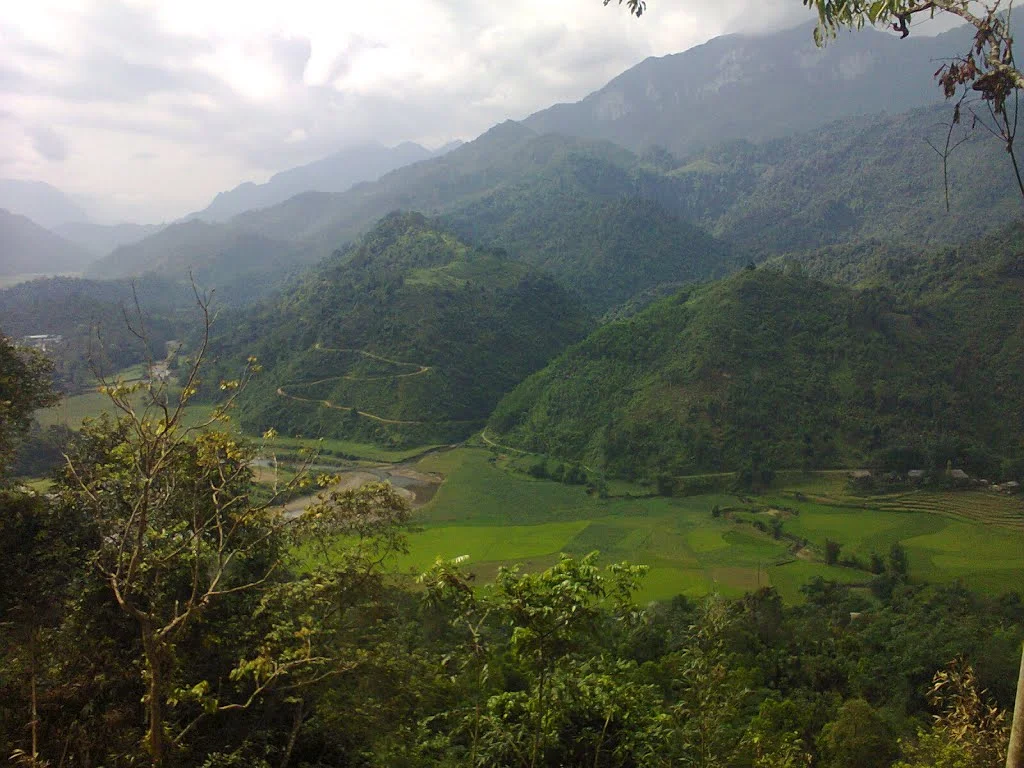
The Ha Giang Loop is more than just a route; it is a legendary pilgrimage through the "Final Frontier" of Northern Vietnam. Spanning the rugged limestone peaks of the Dong Van Karst Plateau UNESCO Global Geopark, this circuit offers some of the most dramatic topography on Earth. However, for a cyclist, the experience is profoundly shaped by the elements. Gravity is constant, but the weather is a temperamental god. Choosing the best time for Ha Giang Loop cycling is the single most important decision you will make, impacting everything from the grip of your tires on the "Happiness Road" to the clarity of the vistas at the Ma Pi Leng Pass.
At Golden Cycling Tours, we have spent years navigating these high-altitude passes across all seasons. We understand that while one rider seeks the vibrant gold of harvest, another might crave the poetic mist of the blossom season. Our professionally supported Ha Giang bike tours are tailored to synchronize with the rhythms of the north, ensuring you have the elite gear and local expertise required for any weather condition. If you are planning an expedition through the Vietnam Northeast Bike Tours circuit, this guide is your definitive resource.
.jpg)
Ha Giang features a subtropical highland climate, which means the year is divided into distinct seasons that radically transform the visual and physical landscape. For a cyclist, each season presents a unique set of challenges and rewards.
For the majority of enthusiasts, the late September to October window is heralded as the absolute best time for Ha Giang Loop cycling. This is the "Harvest Season," a period of transition where the humidity of summer begins to fade, replaced by a crisp, cool air that is perfect for high-intensity climbing.
The Visual Spectacle: This is when the terraced rice fields—sculpted over centuries by the Tay and Hmong people—turn a shimmering, brilliant gold. The contrast between the golden valleys and the jagged grey limestone is a photographer’s dream.
Riding Conditions: Visibility is at its peak. When you reach the summit of Heaven’s Gate or the Ma Pi Leng Skywalk, the views extend for miles into the horizon. The roads are generally dry, offering maximum traction for both road and gravel bikes.
Temperature: Expect pleasant daytime temperatures ranging from 18°C to 25°C—ideal for sustained efforts without the risk of overheating.
As autumn turns to winter, the landscape shifts into a more stark, prehistoric beauty. This period is famous for the Buckwheat Flower Festival (Lễ hội hoa tam giác mạch), where the hillsides are blanketed in soft pinks and purples.
The Atmospheric Challenge: Winter brings a poetic mist to the mountains. While this can reduce visibility on the high passes, it creates an ethereal atmosphere that makes you feel as though you are cycling through an ancient ink-wash painting.
Technical Considerations: The "Happiness Road" can become damp and slippery due to the mist and low clouds. This is where hydraulic disc brakes become a non-negotiable safety feature on our Ha Giang bike tours.
Clothing: You will need high-quality technical layers. While the climbs will keep you warm, the 15-kilometer descents into Yen Minh or Meo Vac can be bone-chilling without a windproof shell and thermal gear.
Following the Lunar New Year (Tet), the mountains undergo a stunning transformation. This is the blossom season, where peach and plum trees decorate every Hmong village with white and pink petals.
Cultural Depth: This is a vibrant time for cultural immersion. You will witness many local festivals and traditional games in the villages.
Climate: The weather begins to warm, though morning fog is common. The air is fresh, and the humidity is still low, making it a very comfortable time for multi-day expeditions.
Niche Appeal: If you seek the most "authentic" feeling of the north, where the tourists are fewer and the local life is in full bloom, this is arguably the best time for Ha Giang Loop cycling.
Summer in Ha Giang is a time of incredible vitality. The mountains are a lush, deep green, and the waterfalls are at their most powerful. However, this is also the wet season.
The Physical Test: Cycling in the summer requires a high tolerance for heat and humidity. The climbs are more grueling, demanding impeccable hydration and pacing strategies.
The Monsoon Risk: Heavy rains can lead to landslides and road closures. At Golden Cycling Tours, we use our local network to monitor road conditions in real-time, often rerouting groups to safer, "off the beaten track" paths during the peak rainy months.
The Reward: The air is incredibly clear after a rainstorm, providing the most vivid colors and best long-distance visibility. The "Pouring Water" season (May-June) when farmers flood the terraces is a unique visual phenomenon found only in the Vietnam Northeast Bike Tours region.
To provide more granular detail, let’s deconstruct the year month-by-month to find your specific "sweet spot" for adventure.
The coldest month of the year. Temperatures in Dong Van can drop near freezing at night. For the hardy cyclist, January offers empty roads and a rugged, quiet version of the loop. You must be prepared for the "cloud hunting" experience where you cycle above the mist.
A month of transition. The peach and plum blossoms arrive, but the mist remains thick. It is a period of high humidity but low rainfall. The cultural energy is high due to the Tet holiday, though some services may be limited during the actual festival days.
Many veteran riders consider March to be the second-best window of the year. The weather is stable, the blossoms are still out, and the extreme humidity of April has not yet arrived. Visibility is generally excellent for the Ma Pi Leng Pass.
Temperatures begin to climb. This is often the time of the Khau Vai Love Market (late April), a unique cultural event. The greenery is returning to the karst plateau, but the afternoon thunderstorms begin to make an appearance.
This is a niche favorite for photographers. The terraced fields are flooded, acting as giant mirrors reflecting the limestone peaks. It is hot and humid, so early morning starts (5:00 AM) are mandatory for any cycling group.
Statistically the wettest months. We generally recommend this time only for experienced mountain bikers who don't mind getting wet and who value the raw, wild power of the waterfalls and the vibrant greenery.
The first half of the month is often wet, but by late September, the transformation begins. The rain stops, the skies clear, and the rice turns yellow. This is the beginning of the peak season.
The absolute peak. Perfect weather, perfect views, and the Buckwheat flowers begin to bloom toward the end of the month. If you want the "textbook" Ha Giang experience, book your tour for October.
Excellent for those who prefer cooler temperatures. The buckwheat is in full bloom. The visibility remains high, and the chance of rain is very low.
Similar to January, but slightly drier. The mountains look their most ancient and rugged as the vegetation thins out, revealing the true skeletal beauty of the karst plateau.
Regardless of when you go, the best time for Ha Giang Loop cycling is only as good as the equipment you bring. The difficulty of the loop is constant, but the weather adds a layer of complexity.
In the dry season (Oct-Nov), rim brakes can suffice for elite riders, but we strongly advocate for hydraulic disc brakes. During the misty months (Jan-Mar) or rainy months (May-Aug), disc brakes are essential. They offer consistent stopping power on the 15% gradients when the tarmac is damp or covered in mountain grit.
Dry Season (Sep-Nov): Fast-rolling 28mm or 32mm slick tires are ideal for the tarmac of the "Happiness Road."
Wet/Misty Season (Jan-Aug): We recommend 35mm to 40mm tires with a light tread (Gravel style). This provides the necessary traction on corners that may have mud or loose stones from road run-off.
The temperature can change by 10°C between a valley floor and a pass summit.
Base Layer: Moisture-wicking (Merino wool is best for its anti-odor and thermal properties).
Mid-Layer: Lightweight jersey with full zip for ventilation.
Outer Layer: A high-quality GORE-TEX or similar windproof/waterproof shell. This is your "survival" piece for the long descents.
A Ha Giang Loop cultural cycling tour is significantly enhanced by aligning your trip with local market days or festivals.
The Meo Vac Sunday Market is the heartbeat of the north. Regardless of the month, we always try to time our Ha Giang bike tours so that we spend Saturday night in Meo Vac. Waking up to the sights and sounds of the market—thousands of people in traditional dress trading everything from water buffalo to silver—is an unforgettable sensory explosion.
This is the province's signature event. The local government organizes cultural performances, traditional sports, and food fairs. While the roads are busier, the festive atmosphere is infectious.
A legendary market held once a year where former lovers meet to talk about their lives. It is located in a very remote part of Meo Vac, and reaching it on a bicycle is a true "off the beaten track" achievement.
Navigating the seasonal nuances of the north requires more than just a weather app; it requires local intuition. We have refined our logistics to ensure that the best time for Ha Giang Loop cycling is whenever you decide to join us.
Our guides know the microclimates of every pass. They know that while it might be sunny in Ha Giang City, the Ma Pi Leng Pass could be shrouded in mist. We adjust our daily start times and pacing to ensure you reach the summits when the light and weather are most favorable.
Every tour is accompanied by a "sag wagon." In the summer, it provides a cool refuge with cold water and electrolytes. In the winter, it carries your dry clothes and offers a warm seat if a descent becomes too cold. This support is what allows our riders to focus on the beauty rather than the struggle.
High humidity and mountain grit are hard on drivetrains. Our mechanics service every bike daily, ensuring that your shifting is crisp and your brakes are silent, whether it's the dusty dry season or the damp spring mist.
Explore our full range of Vietnam Northeast Bike Tours to see how we adapt our itineraries to the shifting seasons of the north.
Regardless of the season, safety remains our paramount concern.
Visibility: We provide all riders with high-visibility gear and daytime running lights, which are essential for the misty months.
Hydration: In the summer months (May-Aug), dehydration is the primary cause of fatigue and accidents. We provide professional-grade hydration solutions on all tours.
Ethical Interaction: We encourage our riders to respect local customs. During blossom season (Spring), please do not pick flowers from the orchards, as these are the livelihoods of the local Hmong and Dao families.
Q: Is it safe to cycle the Ha Giang Loop during the rainy season (July-August)? A: It is more challenging due to the rain and humidity, but with professional support, it is doable. We use our local network to ensure we avoid any areas with active landslides. However, for the best experience, we recommend the drier months.
Q: What is the coldest it gets on the loop? A: In January, the temperature in high-altitude towns like Dong Van can drop to 2°C or 3°C at night. During the day, it usually sits around 10°C to 12°C. Good thermal layers are essential.
Q: When is the best time for photography? A: Late September to mid-October for the golden rice terraces, and February to March for the poetic mists and blossoms.
Q: Are the roads crowded during peak season (October)? A: Yes, there are more motorbikes on the road. However, our guides know the secondary "backroads" and timing strategies to ensure you still get plenty of quiet time on the pedals.
"I joined the 6-day tour in early October, and it was everything I hoped for. The rice fields were incredibly gold, and the weather was perfect—cool for the climbs and clear for the views. The team at Golden Cycling Tours were absolute pros." — James T., Australia
"Cycling the loop in March was a different kind of beautiful. The mist made the limestone peaks look like islands in a sea of clouds. It was damp, but the support van was always there with dry gear and hot tea. A life-changing trip!" — Sarah L., UK
"We did the tour in November. The buckwheat flowers were stunning, and the temperature was exactly what I like for riding—cool and dry. If you want to test your legs on the Ma Pi Leng Pass, this is the time." — Mark D., Canada
There is no "wrong" time to visit Ha Giang, but there is a "right" time for you. Whether you seek the golden glory of autumn, the floral awakening of spring, or the rugged, misty challenge of winter, the northern frontier is waiting to be conquered. The Ha Giang Loop is a journey that demands respect but gives back infinitely more in return. To stand at the top of a pass, your lungs burning and your heart racing, looking out over a landscape that has remained unchanged for millennia, is to know true freedom.
Don't just see the frontier—live it. Explore our specialized Ha Giang bike tours and join the elite few who have pedaled through the clouds. For more inspiration on riding through Vietnam's remote reaches, check out our full range of Vietnam Northeast Bike Tours. The mountains are calling, and your adventure begins with a single pedal stroke.

.jpg "Cycling in Vietnam in March")
.jpg "Vietnam mountain bikes Trail")
.jpg "Vietnam Biking Trails")
.jpg "Ha Giang Cycling Tours")
Leave a Reply
Your email address will not be published. Required fields are marked *