- Call us Via Whatsapp: +84 (0) 832 126 699
4.9 stars on our site
(15,000 reviews)
- Monday - Sunday : 08:00 - 17:00
(15,000 reviews)

Choosing the right moment to embark on a journey through the northeastern frontier of Vietnam is the difference between a good trip and a life-changing odyssey. The Cao Bang province, a land of mystical limestone karsts and roaring waterfalls, is a year-round destination, but for the discerning cyclist, timing is everything. Whether you are chasing the shimmering gold of the autumn harvest or the ethereal mist of a mountain spring, understanding the nuances of the climate is essential for mastering the Cycling Northern Vietnam experience.
At Golden Cycling Tours, we have spent decades navigating the peaks and valleys of the Non Nuoc Cao Bang UNESCO Global Geopark. We know that every month tells a different story. In this exhaustive guide, we will break down the weather patterns, cultural festivals, and landscape transformations to help you identify the absolute best time for Cao Bang Loop cycling based on your personal preferences and riding style.
.jpg)
To understand the best time to visit, one must first understand the geography. Cao Bang is located in the far northeast of Vietnam, sharing an extensive border with China. The province is characterized by high mountains, deep canyons, and the distinctive "tower karst" formations.
Unlike the flatter regions of the south, Cao Bang experiences a subtropical highland climate. This means it has four distinct seasons, each influenced by the monsoon cycles. The humidity trapped in the valleys and the crisp air of the ridges create micro-climates that can change significantly within a single day’s ride. When you book one of our professional Cao Bang bike tours, our guides are trained to navigate these shifts, ensuring your safety and comfort regardless of the forecast.
Widely considered the pinnacle of the cycling calendar, autumn is the undisputed champion for those seeking the best time for Cao Bang Loop cycling. As the sweltering heat of the summer fades, the region undergoes a spectacular transformation.
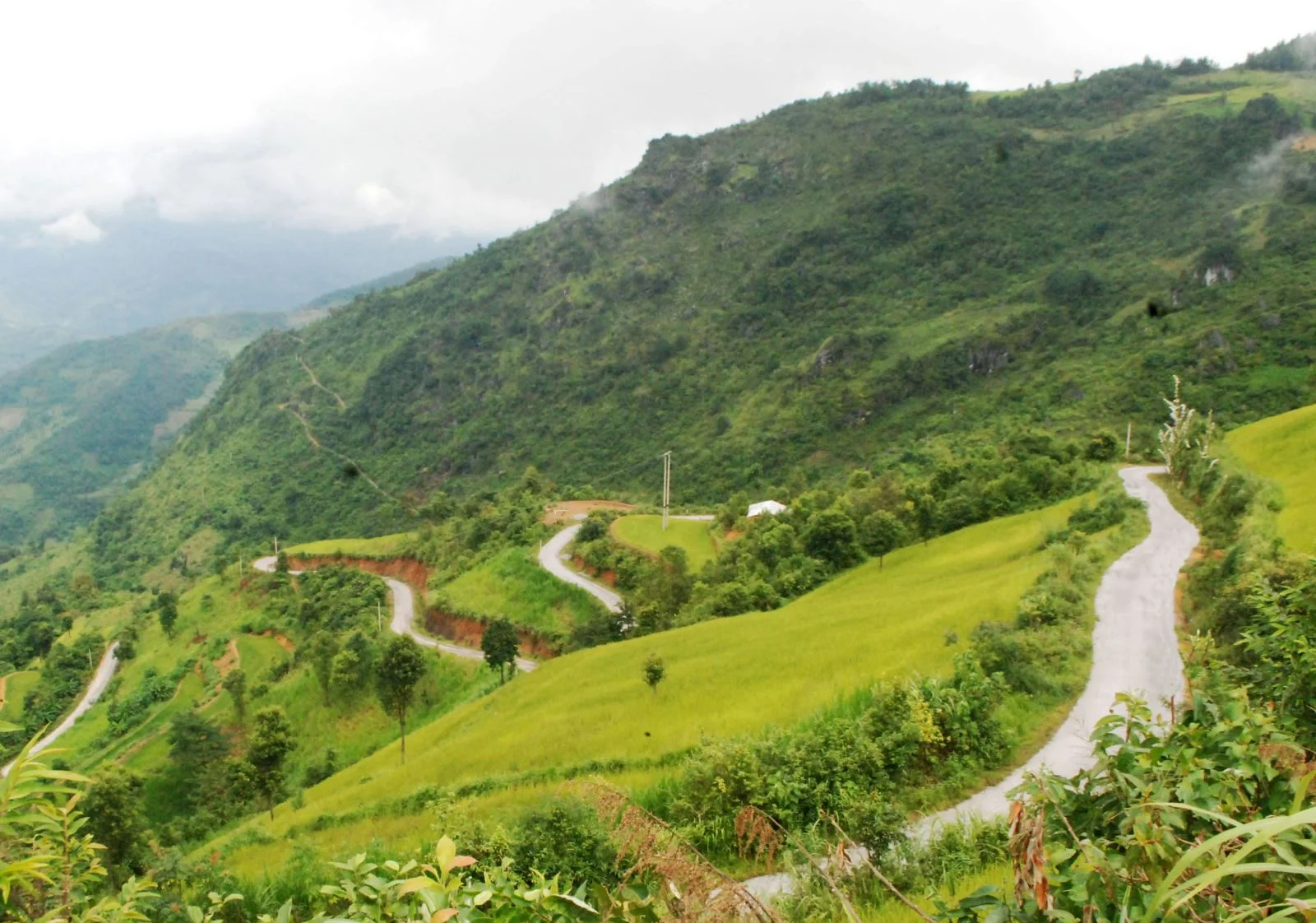
From late September to mid-October, the terraced rice fields that cling to the limestone slopes turn from a vibrant emerald to a blinding, shimmering gold. This is the harvest season, and the visual impact is nothing short of breathtaking. Cycling through the valleys of Trung Khanh during this period feels like pedaling through a field of spun gold.
Autumn offers the most stable weather in Northern Vietnam. The skies are predominantly blue and clear, providing the long-range visibility required to appreciate the scale of the karst mountains. Temperatures range from a comfortable 15°C (59°F) at night to 25°C (77°F) during the day. This lack of extreme heat or heavy rain makes it the perfect time for our guaranteed tours, where we can push for higher mileage without the risk of heat exhaustion.
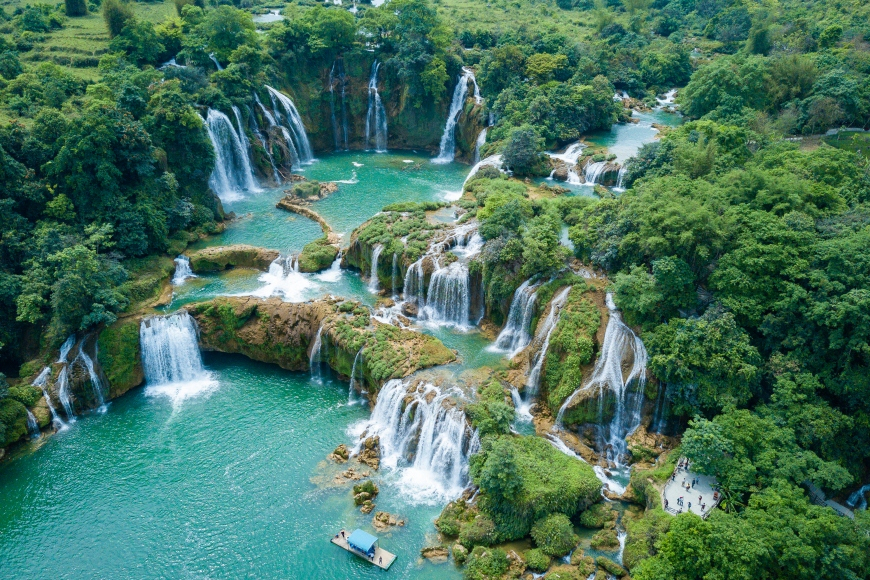
While the rain has subsided, the rivers are still full from the summer monsoons. This means the Ban Gioc Waterfall—the crown jewel of the loop—is at its most majestic. The water is clear, the flow is thunderous, and the surrounding foliage is still lush.
If autumn is about gold and clarity, spring is about life and mystery. For many, this is the most romantic and visually poetic time to explore the loop.
As February turns to March, the hillsides of Cao Bang erupt in color. Peach blossoms, plum flowers, and the iconic "Hoa Ban" (Bauhinia) trees decorate the landscape. The contrast between the delicate pink petals and the rugged grey limestone is a photographer’s dream.
Early spring often brings the "crachin"—a fine, mystical mist that hangs in the valleys. While it can make the roads damp, it creates a surreal atmosphere that makes the karst towers look like islands floating in a sea of clouds. For a Vietnam Northeast Bike Tours enthusiast, this mist adds a layer of adventure and "Zen" to the ride.
By late April and May, the temperatures begin to climb, and the first rains of the season arrive. This triggers a massive growth of greenery. The forests of the Phia Oac - Phia Den National Park become a deep, prehistoric green, and the air becomes thick with the scent of wild orchids.
Summer is the season for the truly adventurous. It is the hottest and wettest time of the year, but it offers rewards that the drier seasons cannot match.
During the summer, the landscape is at its most vibrant. Every blade of grass and leaf is bursting with life. The rivers are swollen, and hidden waterfalls that stay dry for half the year suddenly roar to life. If you want to see the "wild" side of the frontier, this is the time.
Rain in the summer is usually characterized by heavy, short-lived tropical downpours in the late afternoon. While these can disrupt a cycling schedule, they also bring an incredible cooling effect. At Golden Cycling Tours, we adjust our summer itineraries to start early in the morning, completing our main mileage before the afternoon showers arrive. Our support vehicles on ha-giang-bike-tours and Cao Bang tours are always ready to provide a dry haven during heavy bursts.
Temperatures can soar to 35°C (95°F) with high humidity. This makes the mountain passes significantly harder. We recommend this season only for fit cyclists who are comfortable with tropical conditions and high hydration requirements.
Winter in Cao Bang is a season of stark beauty and cultural depth. It is the coldest time, but also the driest.
While it can be cold, winter offers the best long-range visibility. The lack of humidity means the air is incredibly crisp. On clear days, the views from the high passes toward the Chinese border are unparalleled. You can see for dozens of kilometers, tracing the outlines of every jagged peak.
Winter is the time of the Lunar New Year (Tet) and numerous ethnic festivals. This is the best time for Cao Bang Loop cycling if your goal is cultural immersion. You will witness traditional ceremonies of the Nung and Tay people, taste unique festival foods, and see the local communities in their finest traditional indigo attire.
Cyclists must be prepared for temperatures as low as 5°C (41°F) in the mornings and on high passes. Proper layering is essential. Descending a mountain pass at 40km/h in winter requires professional-grade windproof gear.
To help you pinpoint the exact month, here is a detailed breakdown of what to expect on the road.
Weather: Cold and dry. Morning frost is possible on the high ridges.
Cycling Condition: Excellent road traction but requires heavy layering.
Highlight: Seeing the buck-wheat flowers in their final bloom and the start of spring festival preparations.
Weather: Cool, occasional drizzle (crachin).
Cycling Condition: Roads can be slick; caution on descents is required.
Highlight: Participating in "Tet" festivities. Be aware that many local shops may close for the holiday, making our supported guaranteed tours even more valuable.
Weather: Warming up, misty mornings.
Cycling Condition: Moderate difficulty due to humidity.
Highlight: The explosion of plum and peach blossoms. This is arguably the most beautiful month for photography.
Weather: Pleasant, occasional thunderstorms.
Cycling Condition: Ideal. Not too hot, not too cold.
Highlight: The waterwheels of the Tay people start working at full capacity as they prepare the fields for the new crop.
Weather: Warm and humid.
Cycling Condition: Good, but requires high hydration.
Highlight: The "Water Pouring" season in the terraced fields, where the mountains reflect the sky like giant mirrors.
Weather: Hot with frequent rain.
Cycling Condition: Challenging. Be prepared for mud on the "niche" village trails.
Highlight: The lushness of the jungle and the peak volume of Ban Gioc Waterfall.
Weather: Peak heat and rain.
Cycling Condition: For experienced, heat-tolerant riders only.
Highlight: Witnessing the sheer power of nature. This is a great time to combine the loop with ba-be-lake-bike-tours for a refreshing swim.
Weather: Still hot, but rain starts to decrease toward the end of the month.
Cycling Condition: Improving.
Highlight: The first hints of yellow appearing in the rice fields at lower elevations.
Weather: Perfect. Crisp air and clear skies.
Cycling Condition: 10/10. The best month for performance cycling.
Highlight: The start of the golden rice season. This is our busiest month for Vietnam Northeast Bike Tours.
Weather: Mild and dry.
Cycling Condition: Ideal.
Highlight: Seeing the local Nung and Tay people harvesting the rice by hand. The smell of fresh hay in the air is unforgettable.
Weather: Cooling down, very dry.
Cycling Condition: Excellent.
Highlight: The "Wild Sunflower" season. The roadsides are lined with bright yellow blooms that thrive in the cool air.
Weather: Cold and dry.
Cycling Condition: Very clear visibility.
Highlight: Traditional winter markets where you can buy handmade indigo fabrics and warm local spirits.
Many of our guests ask if the best time for Cao Bang Loop cycling is the same as for the ha-giang-bike-tours. While they are neighbors, there are subtle differences.
Cao Bang is generally slightly lower in elevation and more "green" than the rocky plateaus of Ha Giang. This means Cao Bang stays warmer in the winter but can feel more humid in the summer. If you find Ha Giang too rocky and "austere" in the winter, Cao Bang offers a more sheltered and lush environment. Conversely, the harvest in Cao Bang often happens 1-2 weeks earlier than in the higher altitudes of Ha Giang.
No matter when you choose to go, your gear must match the season. At Golden Cycling Tours, we provide high-quality Trek and Giant mountain bikes, but your personal apparel is key.
Autumn/Spring: Lightweight moisture-wicking jerseys, a thin windbreaker for descents, and arm/leg warmers for the mornings.
Summer: High-SPF sunscreen, salt tablets for electrolytes, and highly breathable mesh jerseys. A lightweight rain shell is a must.
Winter: Thermal base layers, a fleece-lined cycling jacket, long-fingered gloves, and shoe covers.
Weather in the mountains is unpredictable. A sunny morning can turn into a misty afternoon. Our guaranteed tours provide the ultimate safety net.
The Support Van: Our modern van follows the group at a distance. If it rains too hard in the summer or gets too cold on a winter pass, you can hop in the van for a lift to the next village.
Local Expertise: Our guides know exactly which month the "God’s Eye Mountain" looks best and which trails remain dry even during the monsoon.
Logistical Ease: We handle all permits and accommodation, ensuring you are staying in the most comfortable, well-ventilated (or well-heated) rooms available in the region.
If you want to sync your trip with local life, consider these dates:
Long Tong Festival (January/February): Celebrated by the Tay and Nung people to pray for a good harvest. Expect traditional games, lion dances, and lots of local food.
Ban Gioc Waterfall Festival (October): A large-scale celebration at the foot of the falls featuring cultural performances and local craft exhibitions.
Chestnut Festival (October/November): Cao Bang is famous for its large, sweet chestnuts. This is the time to taste them fresh from the roaster.
The best time for Cao Bang Loop cycling is ultimately a reflection of what you seek. If you want the most iconic views and perfect riding conditions, target September to November. If you want a mystical, floral adventure, March and April are your windows. For the budget-conscious traveler or the solitude seeker, the winter months offer a quiet, crisp beauty that is rarely shared with others.
Cao Bang is a masterpiece of nature that never stops giving. No matter the month, the rhythm of the pedals and the majesty of the karsts will provide a sense of freedom that is impossible to find elsewhere.
The frontier is calling. The seasons are changing. Are you ready to ride? Join Golden Cycling Tours for a journey that transcends the calendar.
Yes, it is safe if you are on a supported tour. The main roads are well-maintained. However, some "off the beaten track" trails may become muddy. Our guides adjust the route daily based on the weather to ensure safety.
Expect daytime temperatures between 22°C and 26°C (72°F - 79°F). It is the most comfortable temperature for sustained physical activity in the mountains.
If you are cycling between December and February, yes. While the sun can be warm, the descents are very cold, and temperatures drop sharply after 4:00 PM.
Usually, the rice starts to turn yellow in mid-September. For the full "golden sea" effect, the first two weeks of October are the most reliable.
The spring bloom does bring out more insects in the jungle areas. We provide insect repellent on all our tours, and wearing moisture-wicking long sleeves helps significantly.
"I took the 5-day Cao Bang tour in October. I've cycled in the Alps and the Rockies, but nothing compares to the golden rice fields of the Northeast. The weather was like a dream—cool, dry, and crystal clear. Golden Cycling Tours handled every detail perfectly!" — Mark T., Australia
"We went in March for the blossoms. It was a bit misty, but it made the mountains look like they were from a movie. The mist actually kept us cool on the long climbs. Best trip of my life!" — Sarah L., United Kingdom
"Cycling in the winter was a challenge, but the lack of crowds was amazing. We had the Ban Gioc waterfall almost to ourselves. The guides from Golden Cycling Tours made sure we had warm tea and a hot meal at every stop." — Jean-Pierre M., France

.jpg "Vietnam Biking Vacation")
.jpg "Vietnam Biking Holiday")
.jpg "Cao Bang Cycling Vietnam")
Leave a Reply
Your email address will not be published. Required fields are marked *