- Call us Via Whatsapp: +84 (0) 832 126 699
4.9 stars on our site
(15,000 reviews)
- Monday - Sunday : 08:00 - 17:00
(15,000 reviews)

Embarking on a cross-country cycling journey through Vietnam is a dream for many endurance athletes and adventure seekers. Stretching over 1,600 kilometers from the vibrant streets of Ho Chi Minh City to the historic charm of Hanoi, this journey is as demanding as it is beautiful. However, one of the most frequent questions potential travelers ask is: "How hard is it really?" Understanding Vietnam bike tour difficulty is essential for proper preparation, ensuring that your adventure remains a joy rather than a grueling ordeal.
Vietnam’s geography is a complex tapestry of flat deltas, rolling coastal hills, and formidable mountain ranges. To accurately assess the difficulty of such a trip, one must look beyond just the mileage. Factors such as tropical humidity, road conditions, elevation gain, and the psychological impact of long-distance travel all play a role. In this exhaustive guide, we will break down the difficulty levels by region, discuss the impact of the elements, and explain how the professional support provided by Golden Cycling Tours can transform a high-difficulty challenge into an achievable milestone.
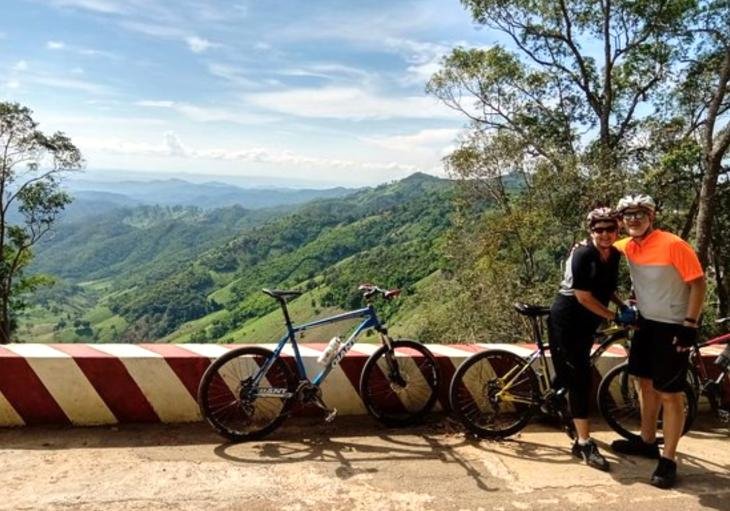
When evaluating a South to North Vietnam cycling expedition, we generally categorize difficulty into three main pillars.
The most obvious factor is the physical demand. On a standard 14 to 21-day tour, you will likely be covering between 70km and 100km per day. While the southern plains are flat, the central and northern regions feature significant vertical gain. Climbing the legendary Hai Van Pass or the mountain roads around Dalat requires a solid aerobic base and leg strength.
In Vietnam, the weather is often a greater challenge than the terrain. Tropical humidity can make a moderate 80km ride feel like a double-century. Managing core temperature, electrolyte balance, and hydration is a technical skill in itself. The "perceived difficulty" of a ride increases significantly when the mercury hits 35°C (95°F) with 90% humidity.
While Vietnam has invested heavily in infrastructure, cycling here requires high concentration. You will navigate a mix of smooth asphalt, narrow village paths, and occasionally gravel or broken roads in remote areas. Furthermore, the "organized chaos" of Vietnamese traffic patterns requires a level of mental alertness that can be fatiguing over several weeks.
To truly understand Vietnam bike tour difficulty, we must look at the country in sections. Each region offers a different grade of challenge.
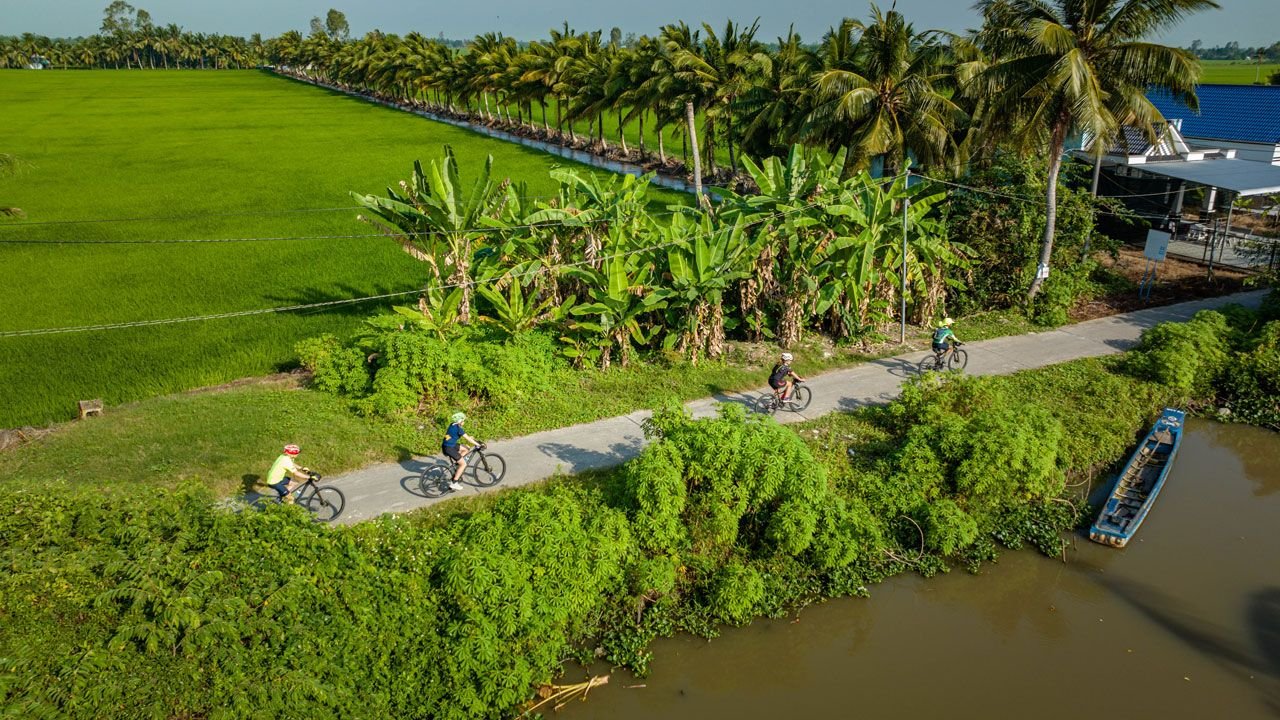
The southern tip of Vietnam is the "Rice Bowl" of the nation. The terrain here is incredibly flat, making it ideal for those who are new to multi-day touring. The main difficulty here isn't the gradient, but the labyrinthine nature of the backroads and the heat.
The Challenge: High humidity and navigating narrow canal paths.
The Reward: Intimate cultural experiences and a gentle introduction to the saddle.
As you move toward Central Vietnam, the map starts to get "spiky." This region is characterized by rolling coastal hills and the dramatic headlands of the Annamite Range.
The Challenge: The Hai Van Pass. Rising 500 meters over a 10km climb with an average gradient of 5-6%, it is the ultimate test for many riders.
The Reward: Breathtaking views of the East Sea and the satisfaction of conquering one of the most famous passes in Asia.
Heading inland toward Dalat or the Ho Chi Minh Trail involves long, sustained climbs through pine forests and coffee plantations.
The Challenge: Sustained climbing at altitude and unpredictable mountain weather.
The Reward: Cooler air, misty landscapes, and a glimpse into ethnic minority cultures.
The north is home to the most dramatic limestone karsts and steepest valleys.
The Challenge: Steep, switchback climbs and technical descents, particularly in regions like Ninh Binh or the mountain approaches to Hanoi.
The Reward: Cinematic scenery that looks like a traditional Chinese scroll painting.
One of the biggest misconceptions about Vietnam bike tour difficulty is that you have to suffer to succeed. At Golden Cycling Tours, we specialize in "Supported Adventure." This means we provide the infrastructure to lower the difficulty barrier, making the 1,600km journey accessible to enthusiasts, not just professional athletes.
The most critical tool in managing difficulty is our support vehicle. It follows the group at all times, carrying your luggage, spare parts, and chilled water. More importantly, it offers a "bail-out" option. If a climb like the Hai Van Pass becomes too much, or if the afternoon heat is overwhelming, you can simply load your bike and ride in the air-conditioned van to the next checkpoint.
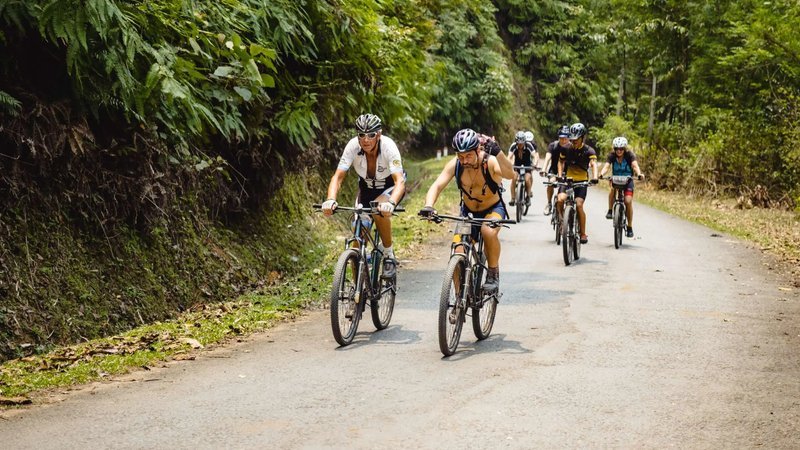
Our guides are local experts who know how to manage the group's energy. They set a sustainable "touring pace" and know exactly where the best shaded coffee stops are. By avoiding the busy and dusty Highway 1, they steer you onto quiet backroads where the mental fatigue of traffic is non-existent.
Difficulty is often exacerbated by poor equipment. We provide top-tier Trek and Giant mountain or hybrid bikes, professionally maintained to ensure every gear shift is crisp and every brake is responsive. A well-tuned bike can reduce the "effort cost" of a 100km day by up to 20%.
Even with the best support, a Cycling North to South Vietnam tour requires preparation. To decrease the subjective difficulty, we recommend a three-month training block.
Base Endurance: Focus on "time in the saddle" rather than speed. Aim for two back-to-back long rides on weekends (e.g., 60km on Saturday, 60km on Sunday).
Heat Acclimatization: If you live in a cooler climate, try some indoor training or "hot yoga" to get your body used to sweating efficiently.
Core and Back Strength: Long-distance cycling strains the lower back and neck. Planks and basic yoga can significantly improve your comfort over a 14-day trip.
Long-distance cycling is as much a mental game as a physical one. By day 4 or 5, "saddle fatigue" and the repetition of the road can set in. This is why our itineraries include rest days in cultural hubs like Hoi An and Hue. These pauses are essential for mental reset, allowing you to appreciate the journey rather than just focusing on the odometer.
A Vietnam bike tour difficulty rating is subjective. With a positive mindset and the knowledge that a cold beer and a comfortable hotel await you at the end of every day, the "hard" parts become the highlights of your story.
You cannot conquer Vietnam on an empty tank. To keep the difficulty manageable, you must embrace the local "cycling fuel."
Pho and Bun Bo Hue: These noodle soups are the perfect recovery meals—rich in complex carbohydrates, hydrating broth, and essential salts.
Vietnamese Coffee: A "Ca Phe Sua Da" at 10:00 AM provides the caffeine and glucose spike needed to power through the midday slump.
Tropical Hydration: Our support vans provide unlimited fresh fruit and electrolytes, ensuring you never "bonk" on a long coastal stretch.
Timing your trip can drastically change the Vietnam bike tour difficulty.
Spring (Feb-April): The "Goldilocks" zone. Moderate temperatures and dry roads make the difficulty rating "Standard."
Summer (May-Aug): The "Heat Challenge." Difficulty increases to "Hard" due to thermal stress.
Winter in the North (Dec-Jan): The "Mist Challenge." Low visibility and damp roads can make technical descents more difficult.
The short answer is: Absolutely. The difficulty is the price of admission for a life-changing experience. Reaching the summit of a pass and looking back at the 1,000 kilometers of coastline you’ve already conquered provides a sense of achievement that no luxury resort can offer.
At Golden Cycling Tours, we believe that everyone has a "Grand Traverse" in them. Whether you choose to go South to North or North to South, our mission is to manage the logistics and the difficulty so you can focus on the beauty of the ride.
Are you ready to test your limits? Visit Golden Cycling Tours today and book your adventure.
1. Do I need to be an elite athlete to cycle across Vietnam? No. While a good level of fitness is required, our tours are designed for enthusiasts. Our support van is always available if you want to skip a section or if a hill is too steep.
2. What is the hardest part of the ride? Physically, the Hai Van Pass in Central Vietnam and the mountain climbs in the North are the most demanding. Environmentally, the heat in the southern plains can be very challenging.
3. Is the traffic dangerous for cyclists? While Vietnamese traffic can be intimidating, our guides focus on quiet backroads and coastal paths to avoid heavy traffic. Our support vehicle also acts as a safety buffer for the group.
4. How many kilometers do we ride on average each day? We typically average between 70km and 90km per day. We focus on quality scenery and cultural stops rather than high-speed racing.
5. Can I bring my own bike? Yes, you are welcome to bring your own bike. However, we provide high-quality rentals that are specifically suited and maintained for the local terrain, which saves you the hassle of international shipping.
"I was worried about the Vietnam bike tour difficulty since I'm in my 50s and not a pro. But the support team at Golden Cycling Tours was incredible. They knew exactly when I needed a break and the van was always there. Reaching Hanoi was the proudest moment of my life!" — Robert W., UK
"The Hai Van Pass was tough, but our guide set such a perfect pace that I made it to the top without stopping. The heat is the real challenge, but the cold towels and electrolytes provided by the support team made it manageable. Best trip ever!" — Sarah K., Australia
"Everything from the bike maintenance to the choice of routes was 5-star. They took the 'difficulty' out of the logistics, leaving me with just the joy of pedaling and the amazing views. Highly recommend the south to north route." — Hans G., Germany

Leave a Reply
Your email address will not be published. Required fields are marked *