- Call us Via Whatsapp: +84 (0) 832 126 699
4.9 stars on our site
(15,000 reviews)
- Monday - Sunday : 08:00 - 17:00
(15,000 reviews)

For many cyclists, the appeal of Vietnam lies in its emerald rice paddies and flat coastal roads. However, for the elite adventurer, the true challenge sits in the far north. The Ha Giang Loop cycling elevation is a statistic that strikes both awe and a healthy dose of respect into the hearts of riders worldwide. It is a journey where the sky meets the limestone, and where every pedal stroke is a battle against gravity.
To ride Ha Giang is to understand the language of the mountains. It is not merely a distance to be covered, but a series of vertical milestones to be conquered. In this definitive guide, we dive deep into the topography of the Dong Van Karst Plateau, providing you with the technical insights needed to survive and thrive on one of the most elevation-dense cycling routes on the planet.
.jpg)
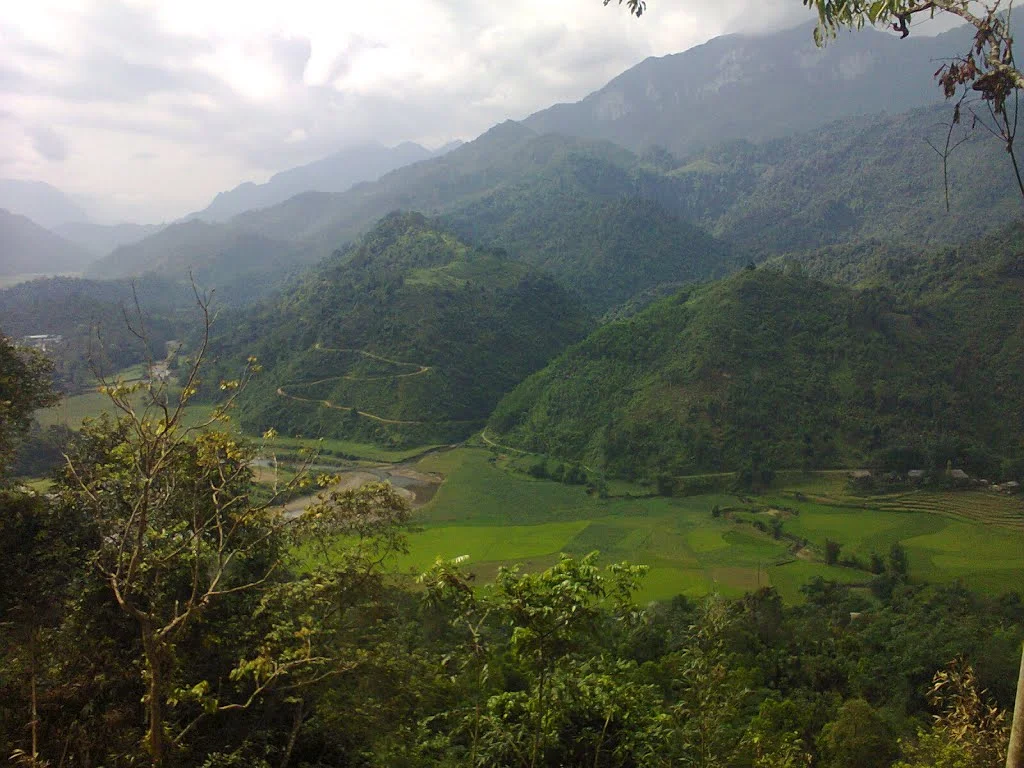
When we discuss the Ha Giang Loop cycling elevation, we aren't talking about a single mountain. We are talking about a relentless serrated edge of climbs. A typical 5 to 7-day loop will accumulate a total vertical gain ranging from 8,000 to 12,000 meters. To put that in perspective, you are climbing the height of Mount Everest plus an extra 2,000 to 3,000 meters of "bonus" elevation—all starting from nearly sea level.
While the average gradient across the loop might sit at a deceptively manageable 6-7%, the reality on the ground is far more fluctuating. You will frequently encounter sustained sections of 10% to 15% gradients. In some of the more remote "back-door" routes, short ramps can even kick up to 18-20%, requiring high-torque climbing and immense core stability.
In Ha Giang, a 60-kilometer day can feel like a 160-kilometer day elsewhere. The elevation gain saps your glycogen stores faster, puts intense pressure on your knees, and demands a different psychological approach. This is why many riders choose the expertise of Ha Giang bike tours provided by Golden Cycling Tours, where the pacing is professionally managed to ensure you don't burn out by day three.
To master the loop, you must understand the individual "monsters" you will face. Each pass has its own personality, its own rhythm, and its own unique elevation profile.
As you leave Ha Giang City, the Bac Sum Pass serves as your initiation. It is a long, winding "S" shaped climb that gains roughly 400 meters over a short distance. It’s not the highest, but it’s the first real test of your gearing and your cooling system.
Reaching the top of Heaven’s Gate in Quan Ba takes you into the high-altitude realm. The air begins to thin slightly, and the temperature drops. The descent from Heaven’s Gate is equally important; it is technical and requires excellent braking skills to manage the speed generated by the steep drop.
The Tham Ma Pass is perhaps the most famous section of the Vietnam Northeast bike tour elevation profile. It consists of nine perfectly sculpted hairpins. While the distance of the climb itself is relatively short (around 5km), the visual impact of looking down at where you just climbed is one of the most rewarding moments of the journey.
At an elevation of approximately 1,200 to 1,500 meters, Ma Pi Leng is the undisputed crown jewel. The road is carved directly into the limestone cliffside. Here, the elevation isn't just a number on your GPS; it’s a physical sensation of hanging over the Nho Que River, which sits nearly a kilometer below you. The wind can be a factor here, adding another layer of difficulty to the climb.
Cycling at these heights introduces variables that many riders from flatter regions aren't prepared for.
As you move between 800m and 1,500m of elevation, the air temperature can fluctuate by as much as 10 degrees Celsius. In the winter months, the high-elevation sections of the loop can be shrouded in "dry fog" or even frost, making the descents bone-chillingly cold.
While 1,500 meters isn't "high altitude" in the Himalayan sense, the cumulative effect of riding 1,500m+ of gain every single day for a week creates a significant oxygen debt. Your heart rate will likely stay in Zone 3 or 4 for hours on end. Proper hydration and mineral replacement are critical to prevent cramping during these long vertical hauls.
You cannot "wing it" in Ha Giang. The cycling elevation difficulty requires a specific training regimen.
Hill Repeats: Find a hill with at least a 7% gradient and do repeats until your legs scream.
Low Cadence Drills: Practice "grinding" at 50-60 RPM. In Ha Giang, there will be times when you simply cannot spin, and you need the raw muscular strength to push through a steep hairpin.
Descending Skills: Elevation gain always results in elevation loss. You must be comfortable descending at speed, picking lines through hairpins, and managing brake heat.
For those who want to experience the beauty without the brutal physical toll, Golden Cycling Tours offers E-bike options on their Vietnam Northeast Bike Tours. These high-torque motors flatten the mountains, allowing you to focus on the culture and the views rather than the lactic acid.
The wrong gear can turn a dream trip into a nightmare. When facing the Ha Giang Loop cycling elevation, consider the following:
Cassette Size: A 34T or even a 36T rear cog is highly recommended. You want a 1:1 gear ratio (or lower) to keep your legs moving on the 15% ramps.
Disc Brakes: Rim brakes are dangerous on long, wet descents in Ha Giang. Hydraulic disc brakes provide the modulation and stopping power required for safe elevation management.
Tires: 28mm to 32mm tires with good grip are ideal. The roads can be slippery with mist or gravel.
Elevation in Ha Giang is synonymous with the H'Mong, Dao, and Tay people. As you climb higher, the villages change. You will see H'Mong farmers tilling soil on nearly vertical slopes, an elevation feat that puts our cycling efforts to shame. The higher you go, the more traditional and untouched the culture remains.
Golden Cycling Tours prides itself on stopping in these high-altitude villages, ensuring that your journey is not just a physical achievement but a cultural immersion.
Managing 10,000 meters of elevation in a foreign country is a logistical puzzle.
Mechanical Support: A support van is essential for carrying spare parts and providing a "sag wagon" if the elevation becomes too much.
Nutrition: Our guides know exactly where to find high-energy local foods to keep your engine running.
Pacing: Professional guides understand how to "save" your legs on day one so you have the power for Ma Pi Leng on day four.
"The most vertical fun I've ever had!"
"I thought I was a strong climber, but the Ha Giang Loop cycling elevation is on another level. Golden Cycling Tours made it happen. Their bikes were perfectly geared for the steep stuff, and the guide knew exactly how to motivate us through the toughest climbs. Five stars!" — David W., UK
"A life-changing experience"
"I was nervous about the climbing, so I opted for an E-bike tour. It was incredible. I could still feel the effort, but I wasn't suffering. Seeing the Ma Pi Leng pass from the seat of a bike is something I will never forget. Best tour in Vietnam." — Sarah L., Canada
Q1: What is the highest point of the Ha Giang Loop? The highest points are generally around the Lung Cu area and certain passes between Dong Van and Meo Vac, reaching approximately 1,500 to 1,600 meters above sea level.
Q2: How much total elevation gain should I expect daily? On average, you will climb between 1,200 and 1,800 meters per day.
Q3: Can a beginner handle the Ha Giang elevation? It is very challenging for a true beginner. However, with an E-bike and professional support from Golden Cycling Tours, it is accessible to anyone with a basic level of fitness and cycling confidence.
Q4: Is the road paved on the steep climbs? Most of the main loop (Happiness Road) is paved, but "paved" in Ha Giang can include sections of broken asphalt, loose gravel, and construction zones.
Q5: What is the steepest gradient on the loop? While most of the road is 6-10%, you will encounter short sections of 15% to 18% on the back roads and certain pass shortcuts.
The Ha Giang Loop cycling elevation is a formidable opponent, but it is also a generous teacher. It teaches you patience, resilience, and the value of a slow, steady rhythm. When you stand atop a pass, looking out over a sea of limestone peaks that stretch into China, the thousands of meters you climbed fade into insignificance compared to the sense of wonder.
Whether you are looking to test your limits or simply want a supported journey through Vietnam's most dramatic landscape, Golden Cycling Tours is here to guide you every meter of the way.

.jpg "Cycling in Vietnam in March")
.jpg "Vietnam mountain bikes Trail")
.jpg "Vietnam Biking Trails")
.jpg "Ha Giang Cycling Tours")
Leave a Reply
Your email address will not be published. Required fields are marked *