- Call us Via Whatsapp: +84 (0) 832 126 699
4.9 stars on our site
(15,000 reviews)
- Monday - Sunday : 08:00 - 17:00
(15,000 reviews)

Hue, Vietnam, is often synonymous with regal tranquility—the Purple Forbidden City, the Perfume River, and the poetic moss-covered tombs of the Nguyen Emperors. But for the adventure cyclist, Hue is the gateway to something far wilder. Just to the west, rising like a green wall against the sky, lies the Truong Son Mountain Range and the legendary supply route that changed history.
Ho Chi Minh Trail cycling Hue offers a unique duality found nowhere else in Vietnam. It is a journey that begins in the refined cultural heart of the country and ascends into the raw, rugged beauty of the Ashau Valley. It is a transition from the manicured gardens of royalty to the untamed jungle paths of soldiers.
In this extensive guide, we will map out the challenge of connecting the coast to the mountains, explore the haunting history of the region, and provide everything you need to know to conquer this epic ride.
.webp)
To understand the allure of cycling this specific section, you must understand the geography. Hue sits on the coastal plain. To its west lies the A Luoi district—a valley made famous during the Vietnam War as the "Ashau Valley." The Ho Chi Minh Trail (specifically the Western Branch) runs through A Luoi, parallel to the Lao border.
Cycling from Hue to the trail involves conquering Highway 49, a road that snakes its way up from sea level to over 1,000 meters in elevation. It is one of the most rewarding climbs in Central Vietnam, offering panoramic views that stretch from the jungle canopy all the way back to the glittering South China Sea.
While other sections of the trail offer deep isolation, the Hue connector offers variety.
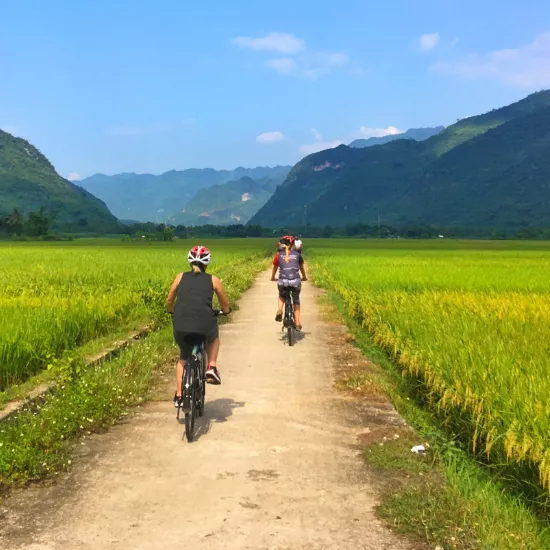
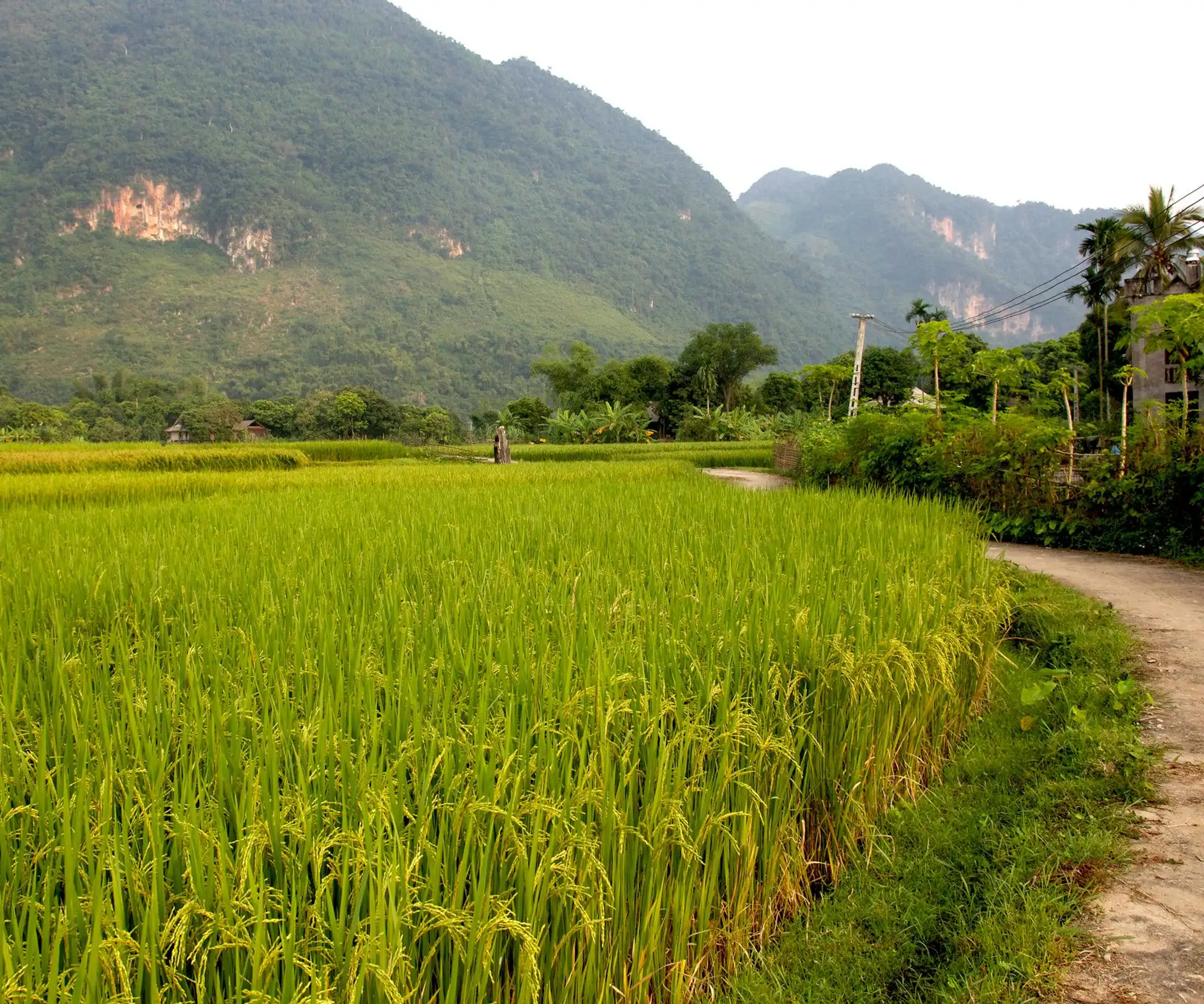
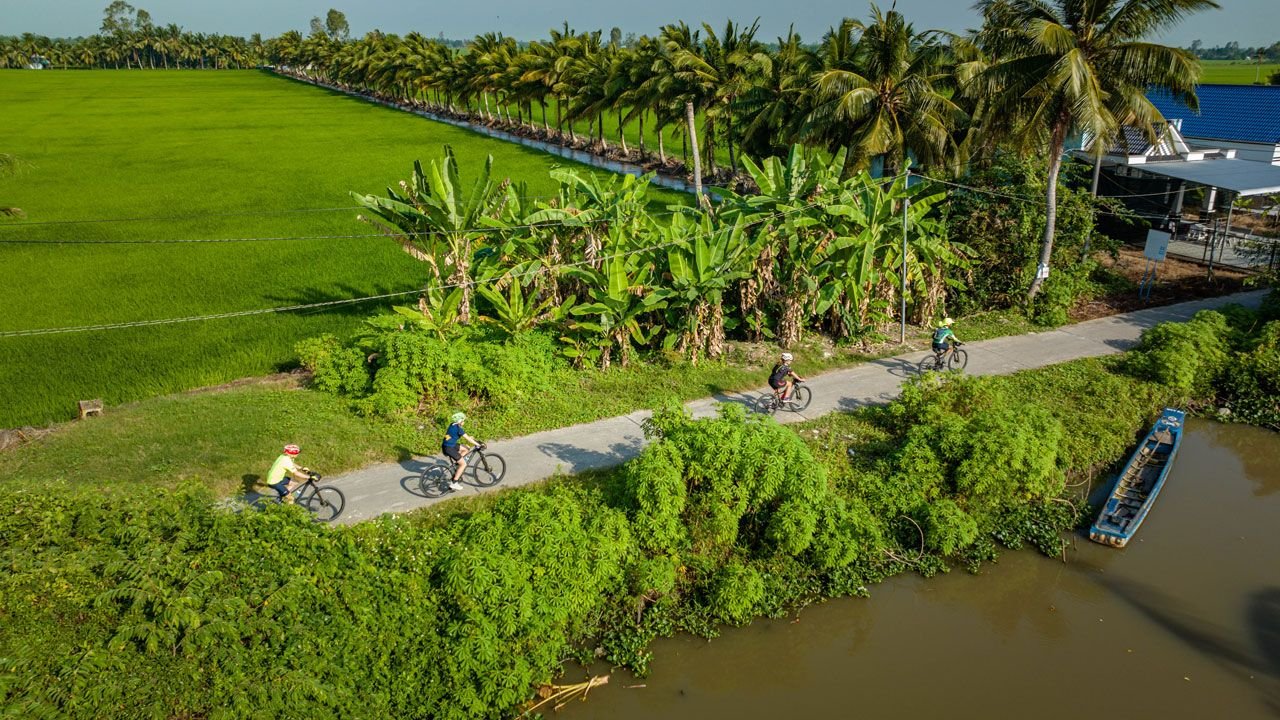
A typical ride starts in the verdant rice paddies of the Hue countryside. You pass water buffalo wallowing in mud and farmers tending to ancestral shrines. Within hours, the scenery shifts dramatically. The air cools, the humidity drops, and the vegetation turns into dense tropical rainforest. You are no longer in the tourist hub; you are in the domain of the Pa Co and Ta Oi ethnic minorities.
This region saw some of the fiercest fighting of the war. The ride takes you past "Hamburger Hill" (Hill 937), a site of immense historical significance. Cycling through the silent, green valley today, it is a powerful experience to reflect on the contrast between the peaceful present and the turbulent past.
Let’s be honest: cyclists ride to eat. Hue is the culinary capital of Vietnam. Ending (or starting) your Ho Chi Minh Trail adventure here means fueling up on Bún Bò Huế (spicy beef noodle soup), Bánh Khoái (crispy pancakes), and the delicate Cơm Hến (clam rice). There is no better recovery meal after a 100km mountain ride.
The journey of Ho Chi Minh Trail cycling Hue can be broken down into distinct stages, each with its own character.
Leaving the city center, you navigate the smaller backroads along the Perfume River. This is a gentle warm-up. You pass the iconic Thien Mu Pagoda and the imperial tombs of Minh Mang and Khai Dinh.
Cyclist Tip: Take a moment to appreciate the architecture. The stone mandarins guarding the tombs seem to bid you farewell as you head toward the mountains.
This is the challenge. As you pass the town of Binh Dien, the road pitches up. The climb is steady but relentless. You will navigate switchbacks that offer increasingly spectacular views.
The Atmosphere: The traffic thins out. You are now sharing the road only with local motorbikes and perhaps the occasional truck. The sound of city honking is replaced by the call of cicadas and the rush of waterfalls cascading down the roadside cliffs.
Upon reaching the summit, you descend into the A Luoi valley. This is where you officially intersect with the Ho Chi Minh Trail. The valley floor is surprisingly flat, surrounded on both sides by towering peaks.
The Vibe: It feels like a different country. The stilt houses of the ethnic minorities line the road. The pace of life is slower. You are now riding on the historic supply line.
From A Luoi, you have a choice:
Head North: Ride towards the Dak Rong Bridge and Khe Sanh. This route is paved and winds through dramatic limestone karst scenery, eventually linking you to the DMZ.
Head South: Ride towards Prao. This is a wilder, more remote section that eventually leads to Da Nang and Hoi An.
One of the greatest privileges of Hue to Ho Chi Minh Trail cycling is the interaction with the local people. The A Luoi district is home to the Pa Co and Ta Oi people.
Unlike the shy interactions you might have in a busy city, encounters here are warm and genuine. You might see women weaving distinct textiles with patterns unique to their tribe.
The "Zeng" Weaving: Look for the traditional "Zeng" cloth, a heritage craft of the Ta Oi people. It’s not just a souvenir; it’s a piece of cultural identity.
Cycling this route requires preparation.
Weather: Hue is famous for its rain. The rainy season (October to January) can be intense, with mist obscuring the mountain views. The dry season (February to August) is hot, but perfect for riding if you start early.
Supplies: Once you leave the outskirts of Hue, convenience stores disappear. You need to be self-sufficient with water, electrolytes, and tools.
Road Conditions: While Highway 49 is paved, mountain weather can cause potholes or landslides. You need a bike that can handle rougher tarmac.
Can you do this alone? Technically, yes. Should you? For most travelers, a guided tour transforms a logistical headache into the trip of a lifetime.
The ascent from Hue is steep, and if you bonk (run out of energy) halfway up without a support vehicle, you are stranded. Furthermore, the history of the Ashau Valley is hidden in the landscape; without a knowledgeable guide, a grassy hill is just a hill, not a historic landmark.
This is where Golden Cycling Tours shines. As the leading experts in Central Vietnam cycling, they have crafted itineraries that maximize the joy of riding while eliminating the stress.
Their Ho Chi Minh Trail cycling tours are designed for discovery.
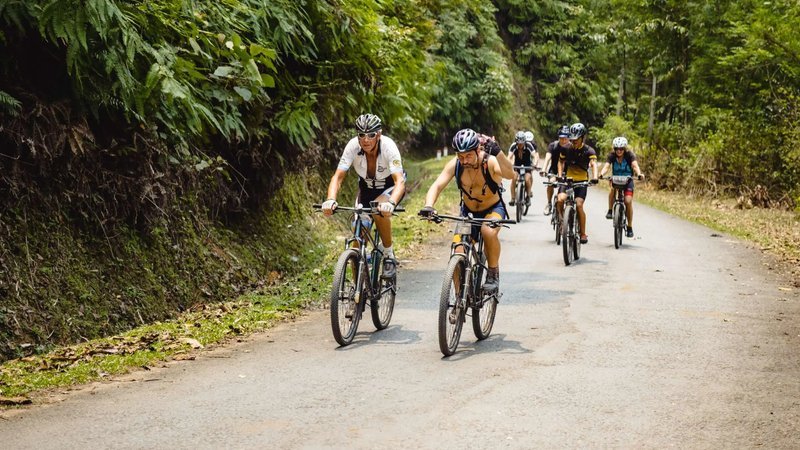
Safety First: They provide high-quality mountain or hybrid bikes with hydraulic brakes—essential for the long descents back to the coast.
The Support Van: The "Magic Bus." It carries your luggage, endless ice-cold water, fresh tropical fruit, and offers a ride if the midday sun becomes too much.
Local Insight: Their guides are locals who know the best Bánh Mì spot in a tiny village and can translate your conversations with the Pa Co elders.
Whether you want a one-day challenge riding up to A Luoi and back, or a multi-day expedition connecting Hue to Hoi An via the mountains, Golden Cycling Tours handles the permits, the food, and the route finding.
Here is a sample of what a 2-day adventure looks like:
Day 1: The Imperial Escape (Hue to A Luoi)
08:00: Depart your hotel in Hue. Ride along the riverbank.
10:00: Begin the climb on Highway 49. Stop at a roadside waterfall to cool off.
12:30: Picnic lunch at the summit with views over the canopy.
14:30: Arrive in A Luoi. Check into a local guesthouse or homestay.
16:00: Visit the Hamburger Hill monument (requires a short hike) or a local weaving village.
18:00: Dinner with a local family, trying "Com Lam" (rice cooked in bamboo tubes).
Day 2: The Jungle Trail (A Luoi to Prao or Return)
07:00: Breakfast with strong Vietnamese coffee.
08:00: Cycle a section of the actual Ho Chi Minh Highway West. The road is smooth concrete, cutting through silent jungle.
11:00: Visit a historic airfield used during the war.
12:00: Lunch in a minority village.
13:30: Transfer back to Hue by van (saving your legs for a night out) OR continue cycling South towards Da Nang if on a multi-day tour.
Q1: How difficult is the ride from Hue to A Luoi? A: It is considered "Moderate to Challenging." The climb involves significant elevation gain (approx 1000m). However, the gradient is manageable for fit cyclists. If you book with Golden Cycling Tours, the van is always there if you need a break.
Q2: Is the road safe? A: Highway 49 has been improved in recent years. Traffic is generally light compared to Highway 1A. However, caution is always needed on blind corners.
Q3: Can I rent a bike in Hue for this? A: Basic city bikes are available in Hue, but they are NOT suitable for mountain passes. You need a proper mountain bike or touring bike with gears. It is highly recommended to book a tour that provides professional-grade equipment.
Q4: What should I wear? A: Hue can be hot, but the mountains are cool. Wear breathable cycling kit, but bring a windbreaker for the descent. In the rainy season, a high-quality rain jacket is mandatory.
Q5: Is English spoken in the mountains? A: Very little. In A Luoi and the surrounding villages, distinct dialects are spoken. A guide is crucial for communication.
"The Best Day of My Vietnam Trip" "I was tired of temples and wanted to see the 'real' Vietnam. The ride up to A Luoi was tough but incredible. The transition from rice paddies to deep jungle was instant. Golden Cycling Tours made it easy—the guide, Nam, was hilarious and knew so much history." — Thomas K., Netherlands
"Hauntingly Beautiful" "Riding past Hamburger Hill gave me chills. It’s such a peaceful place now. We did the 2-day ride from Hue. The homestay food was amazing. The downhill back towards the coast was pure adrenaline!" — Sarah & Mike, Canada
"Great Service, Great Bikes" "I was worried about the climb, but the support van was right behind us. The bikes were Trek Marlins, very well maintained. If you are in Hue, skip the bus tour and get on a bike." — Jean-Luc, France
Ho Chi Minh Trail cycling Hue is more than a workout; it is a connection. It connects the coast to the mountains, the past to the present, and the traveler to the land. It strips away the noise of the modern world, leaving you with the rhythm of your breath and the stunning grandeur of the Truong Son range.
Whether you are chasing history, seeking a physical challenge, or simply want to breathe the cleanest air in Vietnam, this route delivers.
Don't just see the mountains from your hotel window—conquer them. Visit Golden Cycling Tours to find your perfect itinerary and book your Ho Chi Minh Trail adventure today.

Leave a Reply
Your email address will not be published. Required fields are marked *