- Call us Via Whatsapp: +84 (0) 832 126 699
4.9 stars on our site
(15,000 reviews)
- Monday - Sunday : 08:00 - 17:00
(15,000 reviews)

For adventure cyclists, few roads on Earth carry the weight, the beauty, and the profound silence of the Ho Chi Minh Trail. While the trail snakes through the length of Vietnam, one segment stands apart as the most historically significant and geographically stunning: the province of Quang Tri.
Ho Chi Minh Trail cycling Quang Tri is more than just a bike ride; it is a pilgrimage through the history of the 20th century, set against a backdrop of breathtaking limestone karsts, emerald jungles, and the resilient spirit of the Vietnamese people. This is the land of the DMZ (Demilitarized Zone), where the fiercest battles of the Vietnam War took place, and where today, peace reigns over paved roads that wind through the Truong Son Mountains.
In this extensive guide, we will explore every mile of this legendary route, offering you the insights, logistics, and inspiration needed to tackle the most epic ride of your life.
.jpg)
To cycle here is to ride through living history. During the war, Quang Tri was the most heavily bombed province in Vietnam. It was the dividing line between North and South, the fiery crucible of the conflict. The Ho Chi Minh Trail here wasn't just a road; it was a lifeline, a complex web of tracks hidden beneath the jungle canopy used to transport supplies and troops.
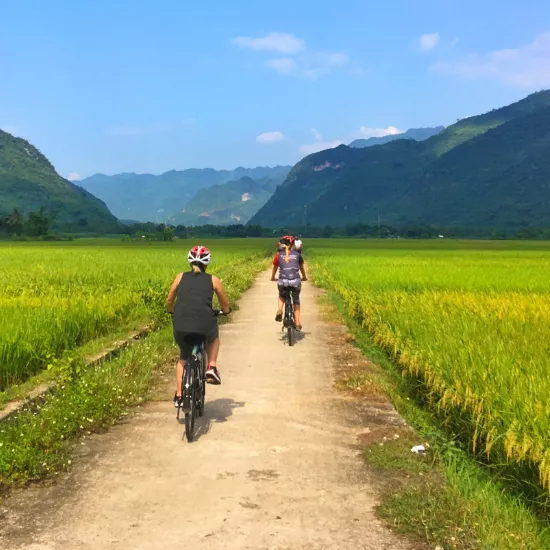
Today, that web has been consolidated into the Ho Chi Minh Highway, specifically the Western Branch (Đường Hồ Chí Minh Tây). This paved road is a marvel of engineering and a dream for cyclists. It runs parallel to the Lao border, far removed from the bustling coastal highways. When you embark on a Quang Tri cycling tour, you are often the only vehicle on the road for hours, accompanied only by the sounds of the jungle and the rhythmic whir of your chain.
While you can cycle the trail in other provinces like Nghe An or Dak Lak, Quang Tri offers a unique convergence of factors that make it the crown jewel of Vietnam adventure cycling.
This is the holy grail for paved-road touring in Southeast Asia. Unlike the Eastern branch which is busy with trucks, the Western branch in Quang Tri is pristine concrete, winding through the remote Truong Son mountain range. The road surface is generally excellent, perfect for hybrid or touring bikes, yet the environment feels wildly remote.
Nowhere else are the remnants of history so visible. You will ride past the Rockpile, a solitary karst used as a Marine observation post. You will cross the Dak Rong Bridge, a symbolic choke point on the original trail. You will visit the Khe Sanh Combat Base, where rusted tanks and captured aircraft sit silently amidst coffee plantations.
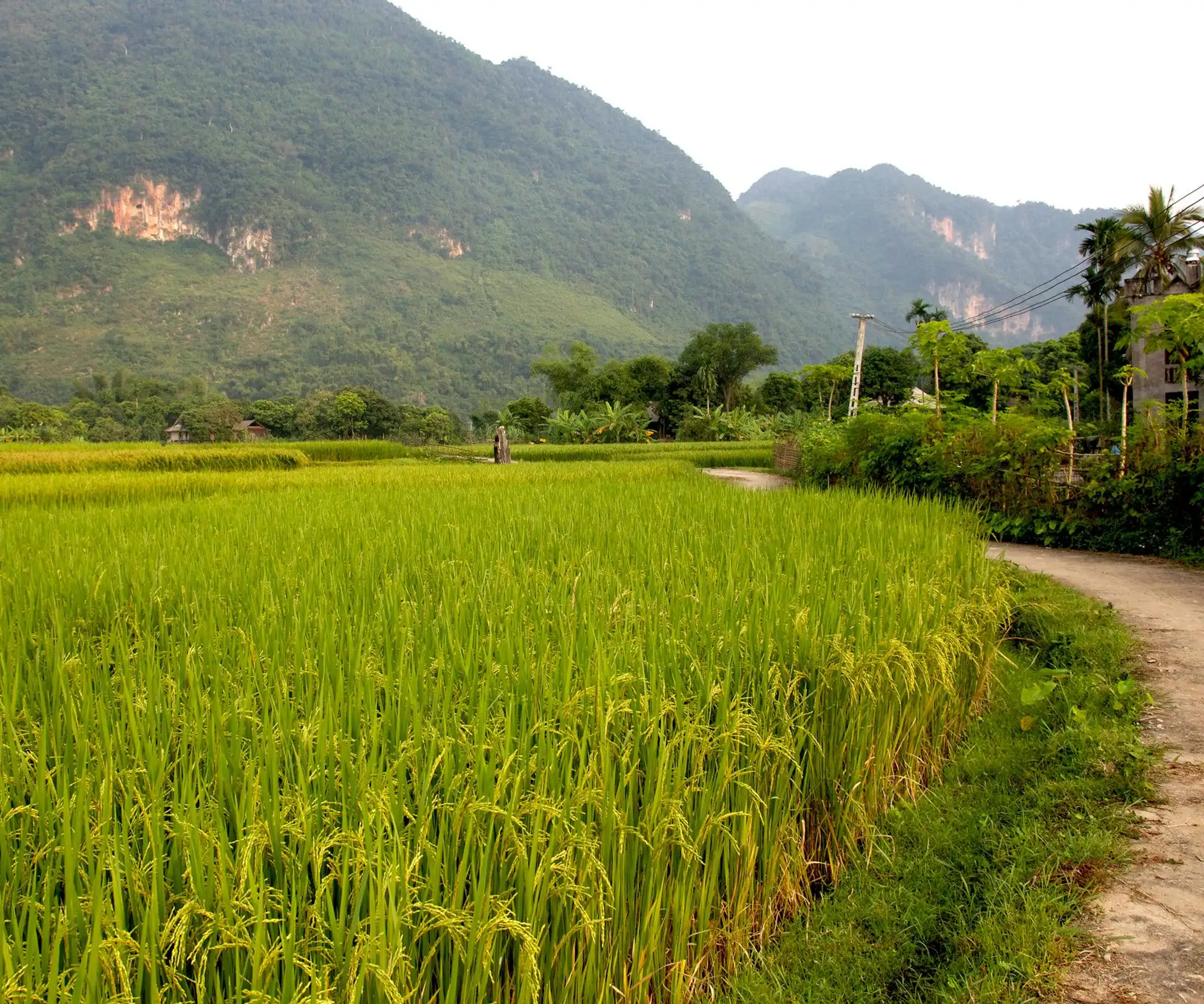
The topography of Quang Tri is dramatic. As you pedal towards the Lao border, the landscape shifts from coastal plains to jagged limestone mountains that pierce the clouds. This is the same geological formation found in Phong Nha-Ke Bang, offering spectacular vertical scenery that makes every grueling climb worth the effort.
The mountains of Quang Tri are home to the Bru-Van Kieu and Pa Co ethnic minorities. Cycling offers a pace slow enough to interact. You will pass stilt houses perched on hillsides, see children walking to school in traditional dress, and perhaps be invited to share a cup of tea. This cultural cycling experience adds a rich human layer to the physical challenge.
A typical Ho Chi Minh Trail cycling Quang Tri itinerary focuses on the stretch between the Phong Nha National Park (to the North) and the town of Khe Sanh, and then down towards the A Luoi Valley.
Starting near the DMZ, the ride often begins flat but quickly ascends. The sensation of leaving civilization is palpable. The noise of motorbikes fades. The air gets cooler. You are entering the Truong Son range.
Highlight: The Truong Son National Cemetery. Before hitting the deep mountains, a stop here is essential. It is a sobering, beautifully maintained memorial to over 10,000 soldiers. Walking rows of white headstones against the backdrop of pine trees sets a respectful tone for the ride ahead.
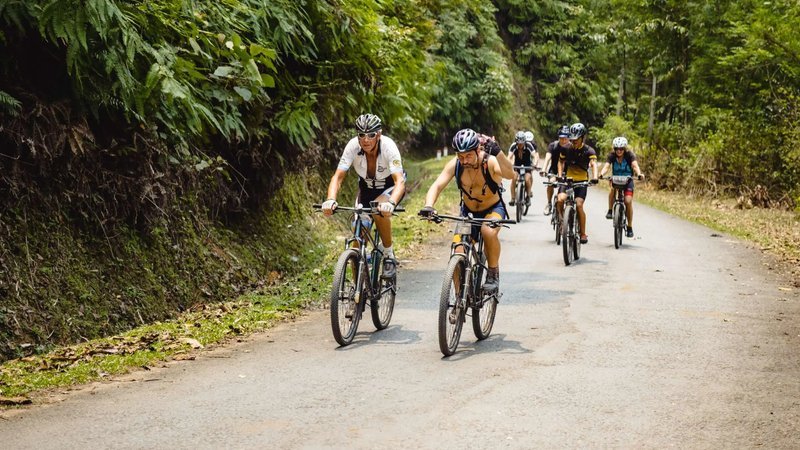
As you push west towards the Lao border, the road begins to undulate. This is "leg day." The climbs here can be long, often 5-10km at gradients of 6-8%.
The Reward: The views are unparalleled. You are riding along the spine of the Annamite Range. To your right is Laos; to your left, the descent towards the South China Sea. The vegetation is thick jungle, often spilling onto the roadside. This section is the essence of remote Vietnam cycling.
Approaching Khe Sanh, the terrain levels out into a plateau. Surprisingly, this former battleground is now famous for its Arabica coffee. The climate here is cooler, often misty.
Highlight: Khe Sanh Combat Base Museum. Riding your bike up the airstrip of this former US Marine base is a surreal experience. It grounds the physical exertion of your ride in the heavy reality of what happened here decades ago.
Leaving Khe Sanh, you descend towards the Dak Rong Bridge. This suspension bridge spans the emerald waters of the Dak Rong River and was a major infiltration point during the war. It marks the junction where the trail splits. It’s a perfect photo opportunity and a psychological milestone on the journey.
Cycling the DMZ Vietnam requires stamina. It is not flat. The Western Ho Chi Minh Road is characterized by "constant rolling" terrain. You go up, you go down. There are very few flat sections.
Climbing: Expect to climb 1,000m to 1,500m of elevation in a single day if you are riding a full stage (80-100km).
Road Surface: Mostly concrete slabs or asphalt. Smooth enough for 32mm tires, but robust enough that you won't worry about potholes.
Quang Tri is famous for its harsh weather.
The Dry Season (April - August): It gets hot. The "Lao Wind" (Föhn wind) blows hot and dry from the west. Hydration is critical.
The Rainy Season (September - December): Heavy rains can cause landslides.
Best Time to Cycle: February to April is the sweet spot. It is cool, often misty in the mornings (creating a mystical atmosphere), and green.
Because the Western branch is so remote, there are very few shops. You can ride for 40km without seeing a vendor.
Tip: You must carry at least 3 liters of water and plenty of snacks.
Lunch: Usually, you must pack a picnic lunch or arrange for a support vehicle to meet you, as restaurants are non-existent in the deep jungle sections.
While the solitary nature of the road appeals to some, Ho Chi Minh Trail cycling Quang Tri is logistically difficult to do solo.
Accommodation: There are no hotels on the 200km stretch of the Western branch between Phong Nha and Khe Sanh. You either need to camp (which requires permits) or have a support van to transfer you to the nearest town.
Mechanicals: If your chain breaks or a tire slashes in the middle of the jungle, you are 50km from the nearest mechanic. Phone signal is patchy.
Permissions: Being a border area, authorities can be sensitive about foreigners stopping in certain unapproved zones.
For a journey this epic, you want a partner who knows every curve of the road and the story behind every hill. Golden Cycling Tours is the premier operator for high-end, adventure-focused cycling in Central Vietnam.
They specialize in transforming this grueling route into an accessible adventure.
Support Vans: Their air-conditioned vans follow the riders. This is a game-changer. It means you can ride the best 60km of the day and skip the final 20km uphill slog if your legs are tired. It carries endless cold water, fresh fruit, and spare parts.
Historical Insight: Their guides aren't just bike mechanics; they are storytellers. They can explain the significance of the Hamburger Hill battle or the logistics of the fuel pipelines that once ran alongside the trail.
Deep Access: They have established relationships with the local Bru-Van Kieu villages, allowing for culturally respectful visits that casual tourists can't access.
If you are looking to book a tour that balances the physical challenge of the ride with the comfort of logistics handled by pros, check out their specific itineraries here: Ho Chi Minh Trail cycling tours. Whether you want a 2-day sprint or a 10-day odyssey from North to South, they are the experts on the ground.
Day 1: The Karst Kingdom (Phong Nha to Khe Sanh)
07:00: Transfer from Phong Nha to the trail head.
09:00: Begin cycling on the Western Ho Chi Minh Road. Immediate immersion in the jungle.
12:00: Picnic lunch by a mountain stream.
14:00: Challenge the "Sa Mu" pass, often shrouded in clouds.
16:00: Transfer the final leg to Khe Sanh town.
18:00: Dinner with local specialties like "Thit Trau Gac Bep" (Smoked Buffalo meat).
Day 2: Echoes of War (Khe Sanh to Hue/A Luoi)
08:00: Visit Khe Sanh Combat Base museum.
09:30: Cycle past the Rockpile and towards the Dak Rong Bridge.
11:00: Visit a Pa Co minority village near the bridge.
13:00: Cycle the A Luoi valley, known as the "Valley of Ash" during the war.
16:00: End the ride and transfer to Hue City.
Q1: Is it safe to cycle in Quang Tri regarding unexploded ordnance (UXO)? A: This is a valid concern. Quang Tri is the most polluted province in terms of UXO. However, it is perfectly safe as long as you stay on the road and established paths. Never wander into the deep bush or pick up strange metal objects. Guided tours stick to cleared, safe routes.
Q2: What type of bike is best for the Ho Chi Minh Trail in Quang Tri? A: A sturdy hybrid bike, gravel bike, or hardtail mountain bike is ideal. Road bikes with thin tires are not recommended due to occasional rough patches and the need for stability on descents. Golden Cycling Tours provides high-quality mountain bikes specifically maintained for this terrain.
Q3: How many kilometers should I expect to ride per day? A: Due to the elevation gain, 60km to 80km in the mountains feels like 100km+ on the flats. Plan for shorter distances to enjoy the scenery.
Q4: Can I cycle this route with children? A: The full Western Branch is too difficult for young children. However, older teenagers with fitness can do it. Alternatively, booking a private tour with a support van allows families to ride only the flat, scenic sections and drive the rest.
Q5: What should I pack? A: High-visibility clothing (fog can be thick), a rain jacket (weather turns fast), sunscreen, insect repellent, and plenty of electrolyte tablets.
"A History Lesson on Two Wheels" "I've read about the Vietnam War all my life, but riding past the Rockpile and crossing the Dak Rong bridge brought it to life in a way books never could. The scenery in Quang Tri is hauntingly beautiful. The team at Golden Cycling Tours made sure we were safe and hydrated the whole way. The support van was a lifesaver on the climbs!" — James T., USA
"The Most Peaceful Road I've Ever Ridden" "I expected traffic, but the Western Ho Chi Minh branch was empty. Just us, the jungle, and the butterflies. It was meditative. The visit to the Truong Son Cemetery was incredibly moving. Highly recommend this for anyone who loves cycling and history." — Sarah & Mark, UK
"Challenging but Worth It" "Don't underestimate the hills! But the downhills are pure joy. We did the Khe Sanh to Hue leg and it was the highlight of our Vietnam trip. The guide knew all the best spots for photos and coffee." — Pierre L., France
The Ho Chi Minh Trail cycling Quang Tri experience is not just a vacation; it is an achievement. It connects you to the earth, to history, and to the resilience of the human spirit. It is a ride that stays with you long after your legs have stopped burning.
Whether you are a solo adventurer or looking for a fully supported expedition, the mountains of Quang Tri are waiting. The road is paved, the jungle is green, and the stories are ready to be heard.
Don't let this adventure remain a dream. Clip in, push off, and discover the true heart of Vietnam. For the best logistical support and expert guidance, visit Golden Cycling Tours to plan your Ho Chi Minh Trail expedition today.

Leave a Reply
Your email address will not be published. Required fields are marked *