- Call us Via Whatsapp: +84 (0) 832 126 699
4.9 stars on our site
(15,000 reviews)
- Monday - Sunday : 08:00 - 17:00
(15,000 reviews)

Northern Vietnam is a land of legends, where limestone giants pierce the clouds and emerald rivers carve deep through ancient valleys. For the modern adventurer, the call of the open road is irresistible. While the famous Ha Giang Loop has long dominated the headlines for motorbikes, a quieter, more profound revolution is taking place further East. The Cao Bang Loop cycling difficulty is one of the most searched topics for enthusiasts seeking raw beauty, authentic cultural immersion, and a physical challenge that stays with you forever.
As part of the Non Nuoc Cao Bang UNESCO Global Geopark, this region offers a landscape that feels prehistoric. However, navigating this frontier on two wheels requires more than just a sense of adventure; it requires a deep understanding of the terrain, your equipment, and your own limits. At Golden Cycling Tours, we specialize in transforming the ruggedness of this frontier into a manageable, life-changing journey. Whether you are considering our Cao Bang bike tours or planning an independent expedition, this guide is your definitive resource for understanding the true "weight" of the ride.
.jpg)
When we talk about the "difficulty" of a cycling route, we often look at a few key metrics: total elevation gain, average gradient, road surface quality, and climatic conditions. The Cao Bang Loop is unique. Unlike the sharp, vertical verticality of the Alps or the Himalayas, Cao Bang offers a "Tower Karst" landscape. This means you aren't just climbing one massive mountain for four hours; you are navigating a series of undulating "waves" through the mountains.
On a scale of 1 to 10 (with 1 being a casual park ride and 10 being a Grand Tour stage), we grade the Cao Bang Loop cycling difficulty at a solid 7.5. It is moderate-to-challenging. It is accessible for the fit weekend warrior, but it will humble the unprepared. In this section, we will break down the technical factors that contribute to this rating.
The total cumulative gain over a standard 5-day loop is approximately 4,500 to 5,500 meters. The gradients on the main provincial roads (like QL3 and QL4A) typically hover between 6% and 8%. However, the "niche" trails—the ones that lead to the most authentic villages—can often hit 12% to 15%. This requires a wide-range drivetrain and a steady cadence.
About 85% of the loop consists of paved asphalt or concrete provincial roads. However, "paved" in Northern Vietnam can mean anything from smooth-as-glass tarmac to weathered concrete with significant potholes. The remaining 15% often involves gravel paths or broken trails. For this reason, we always categorize Cycling Northern Vietnam as a task for mountain bikes or high-clearance gravel bikes.
Difficulty isn't just physical. The mental load of knowing you are 40km from the nearest town with limited cell service adds a layer of "remote difficulty." Navigating border permits near the Chinese frontier and finding quality nutrition in remote hamlets adds to the challenge. This is why many riders prefer our guaranteed tours, which handle all the behind-the-scenes logistics.
To understand the difficulty, you must understand the geology. Recognized by UNESCO in 2018, the Geopark covers over 3,000 square kilometers. It is a "land of fossils" and geological marvels dating back 500 million years. For a cyclist, this geography is your greatest adversary and your greatest reward.
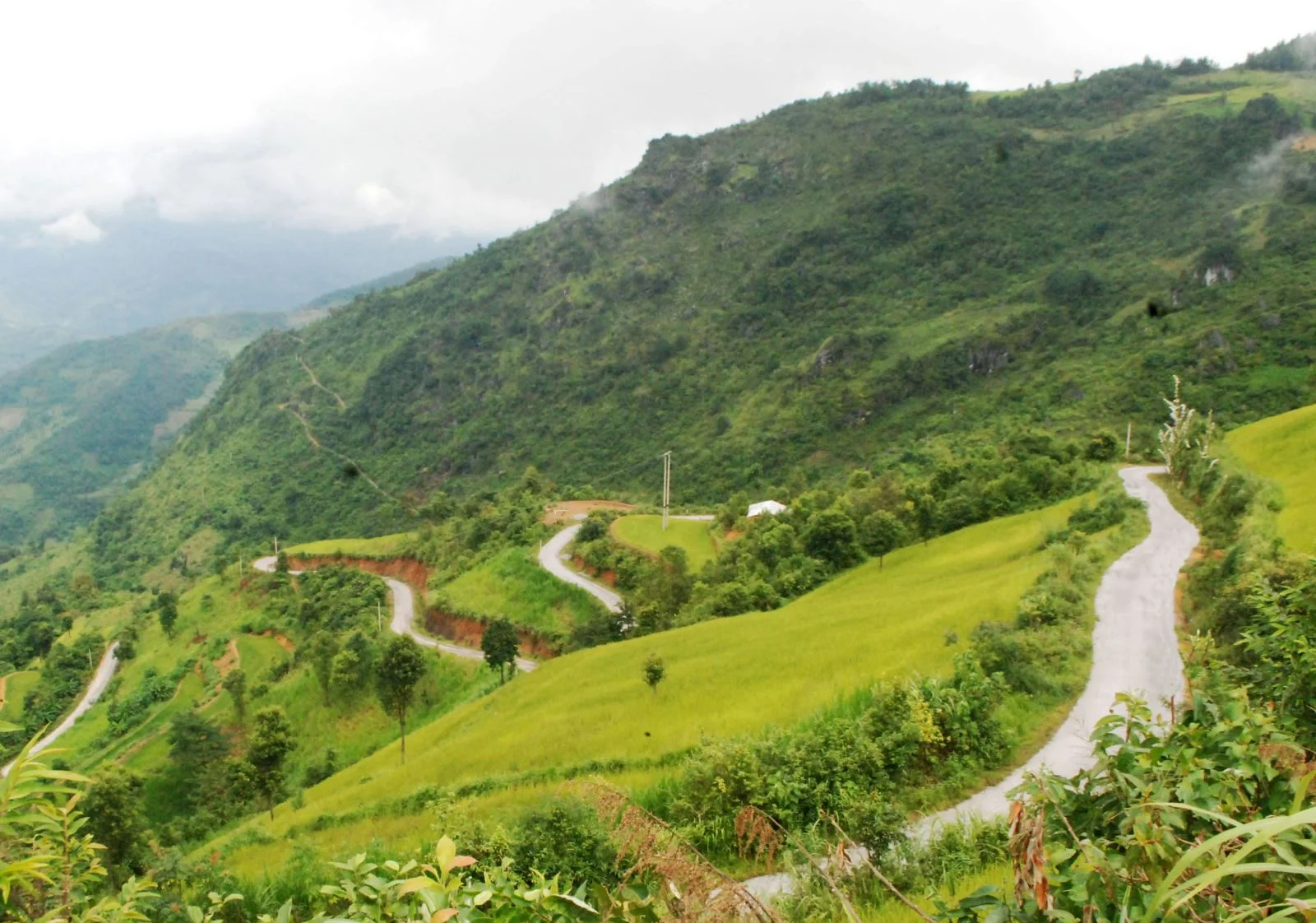
The karst towers are isolated limestone pillars. For a cyclist, this means the route often follows river valleys between these giants. While the valley floors are relatively flat, moving from one valley to the next requires "pass-hopping." Passes like Ma Phuc (Horse Kneeling) and Khau Lieu are legendary milestones that define the Cao Bang Loop cycling difficulty.
The loop follows the Bang River, the Quay Son River, and the Bac Vong River. These waterways have carved deep canyons. Descending into these canyons is exhilarating, but remember: what goes down must come up. The humidity trapped in these river valleys can also add a "perceived difficulty" to the climbs, as the air feels heavier and thicker.
The time of year you choose to ride will drastically alter the Cao Bang Loop cycling difficulty. In Northern Vietnam, the weather is a character in your story.
This is the "Golden Window." The summer rains have subsided, leaving the air crystal clear. The temperatures are mild (15°C to 25°C). For a cyclist, this is the easiest season. The roads are dry, providing maximum traction for descents.
The humidity begins to rise. While the scenery is lush and green, the "mountain mist" can make the roads damp and slick. This increases the technical difficulty of the descents. The "perceived exertion" is higher due to the humidity.
Temperatures in the mountains can drop to 5°C. Cycling in the cold requires more energy as your body works to stay warm. The difficulty here lies in gear management—carrying enough layers to stay warm on descents without overheating on the climbs.
We generally advise against the peak monsoon for the full loop. Landslides are a real risk, and the heavy tropical downpours can turn a 60km day into an 8-hour struggle. The road surfaces become hazardous, and visibility drops.
To help you prepare, we’ve broken down a typical 5-day route based on our Vietnam Northeast Bike Tours.
Difficulty Level: 5/10 (Warm-up)
Terrain: Undulating hills, mostly smooth asphalt.
Vertical Gain: 600m.
Challenge: Crossing the Ma Phuc Pass. The climb is steady, but the "Horse Kneeling" pass is famous for its 7 hairpin turns. It’s a test of your gearing and your patience.
Difficulty Level: 8/10 (The Long Haul)
Terrain: River valleys and high passes.
Vertical Gain: 1,200m.
Challenge: This is the most scenic but physically taxing day. You will follow the Quay Son River. The difficulty lies in the cumulative elevation gain over multiple smaller "humps" before the final descent to the waterfall.
Difficulty Level: 3/10 (Active Recovery)
Terrain: Mostly flat, some short gravel sections.
Challenge: The difficulty today is purely technical. Navigating the gravel paths around the border area and walking your bike through the limestone cave entrance.
Difficulty Level: 9/10 (The Remote Frontier)
Terrain: Rugged, remote mountain roads.
Vertical Gain: 1,400m.
Challenge: Ha Lang is the "hidden" part of the loop. The roads are narrower and the climbs are steeper. This is where the true Cao Bang Loop cycling difficulty is revealed. You will be far from any support, making self-reliance key.
Difficulty Level: 7/10 (The Final Push)
Terrain: Long, winding provincial roads.
Vertical Gain: 900m.
Challenge: A final set of mountain passes before a long, fast descent back to the city. Fatigue is your biggest enemy today.
You cannot conquer the Northeast on a city bike. The Cao Bang Loop cycling difficulty is often exacerbated by poor equipment. At Golden Cycling Tours, we curate our fleet specifically for this terrain.
You need a wide range. We recommend a 1x11 or 1x12 setup with at least a 50T or 51T cog in the back. Having that "granny gear" for the 12% ramps in Ha Lang will save your knees and your morale.
Hydraulic disc brakes are non-negotiable. The long mountain descents (some lasting 10-15km) will cause rim brakes to overheat. Mechanical discs are okay, but hydraulics offer the one-finger modulation needed for technical, damp corners.
We recommend a tire width of 2.1" to 2.3". While the roads are mostly paved, the extra volume provides comfort over the "rumble" of weathered concrete and better grip on the occasional gravel sections.
Many riders ask: "Is it harder than the Ha Giang Loop?" While we offer world-class Ha Giang bike tours, the experiences are distinct.
|
Feature |
Cao Bang Loop |
Ha Giang Loop |
|---|---|---|
|
Max Gradient |
12-15% |
15-20% |
|
Traffic |
Very low |
High (motorbikes) |
|
Road Quality |
Generally Better |
Variable / Rocky |
|
Vertical Gain/Day |
~1,000m |
~1,500m |
|
Overall Difficulty |
7.5 / 10 |
9 / 10 |
Verdict: Ha Giang is vertically harder, but Cao Bang is more "scenic and sculptural." If you have already completed Ha Giang and want something that focuses on "pure cycling" with less traffic noise, Cao Bang is your winner.
We often say that the sweat is the price of admission to a world that hasn't changed in centuries. The Cao Bang Loop cycling difficulty is offset by the profound cultural rewards.
In the heart of the loop, you will stay in traditional stilt houses. The Nung An people (famous for incense making) and the Tay people (famous for waterwheels) offer a level of hospitality that is rare in the modern world. Sharing a "farm-to-table" meal after a 1,200m day of climbing makes the food taste better than any Michelin-star restaurant.
You will need 3,000+ calories a day. Cao Bang’s cuisine is built for this.
Banh Cuon Cao Bang: Rice rolls in bone broth. Perfect breakfast carbs.
Roasted Duck: High-protein recovery meal.
Chestnuts: The ultimate mid-ride energy snack found in Trung Khanh district.
If the thought of navigating the Cao Bang Loop cycling difficulty alone is daunting, that’s where we come in. Our guaranteed tours are designed to provide a "safety net" that allows you to focus on the joy of the ride.
The Support Van: Our "sweeper" van follows at a distance. If a hill is too steep or your legs give out, you can hop in the van for a lift to the summit. It also carries your heavy luggage, leaving you with just a light daypack.
Professional Mechanics: We handle all punctures and mechanical adjustments on the fly.
Local Guides: Our English-speaking guides know the "flow" of the mountains. They know when to push and when to rest. They also handle all the border permits required for the Cao Bang bike tours.
For those who want to extend their adventure, many of our guests combine the Cao Bang circuit with Ba Be Lake bike tours. The ride from Cao Bang to Ba Be involves a transition from limestone towers to the dense, primary forests of the National Park. It is a long, 80km day that marks the transition from "Karst Country" to "Lake Country."
The Cao Bang Loop cycling difficulty is a hurdle, but it is not a wall. It is a challenge designed to reveal the true beauty of Northern Vietnam. It is about the silence of the misty morning, the burn in your lungs as you summit a pass, and the genuine smiles of the people who see very few travelers.
At Golden Cycling Tours, we believe that the frontier is best discovered on two wheels. The road is calling. The mountains are waiting. Join us for a journey that will stay with you long after the final descent.
On a standard tour, expect to be on the bike for 5 to 7 hours per day, including breaks for photography and cultural interaction.
Generally, yes. Vietnam is exceptionally safe for travelers. However, the remote nature of the frontier means that mechanical issues can be difficult to handle alone. We recommend having a reliable GPS and a basic toolkit.
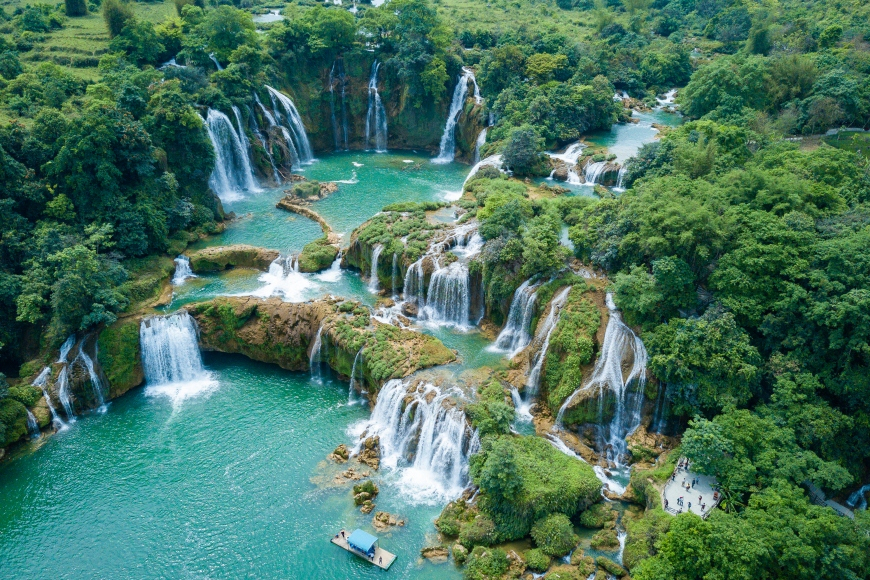
Yes, certain areas near the Chinese border (like Ban Gioc Waterfall and Ha Lang) require a border permit. When you book with Golden Cycling Tours, we handle all administrative work for you.
Our tours attract a wide range of people, from 25 to 65 years old. The key is not age, but a decent base level of cardiovascular fitness.
Quality bike rentals in Cao Bang city are limited. We recommend booking through a specialist like Golden Cycling Tours so we can provide a professionally maintained bike from our main fleet.
"The Most Rewarding Struggle of My Life" "I've cycled in the Alps and the Rockies, but nothing compares to the soul of Cao Bang. The climbs are tough, but the views of the karst towers are surreal. Golden Cycling Tours made the 'difficulty' manageable with their support van and expert guides. Don't skip the Ha Lang section!" — David S., United Kingdom
"Perfect Balance of Adventure and Comfort" "I was worried about the hills, but the support team was incredible. They knew exactly when I needed a cold water break. Cycling to the Ban Gioc waterfall felt like an epic accomplishment. Highly recommend the 5-day loop!" — Sarah M., Australia
"Authentic Beyond Words" "If you want to see the real Vietnam, get on a bike. You miss so much on a motorbike. The Cao Bang Loop difficulty is real, but the rewards are 10x higher. The homestays and the people we met were the highlights of my year." — Markus T., Germany

.jpg "Vietnam Biking Vacation")
.jpg "Vietnam Biking Holiday")
.jpg "Cao Bang Cycling Vietnam")
Leave a Reply
Your email address will not be published. Required fields are marked *