- Call us Via Whatsapp: +84 (0) 832 126 699
4.9 stars on our site
(15,000 reviews)
- Monday - Sunday : 08:00 - 17:00
(15,000 reviews)

For the modern mountain biker, the term "downhill" isn't just a direction; it is an obsession. It is the pursuit of the "flow state," where the world narrows down to the line in front of your front tire and the mechanical feedback from your suspension. In Southeast Asia, there is one destination that stands above the rest as the ultimate gravity playground: Sapa. Nestled in the Hoang Lien Son mountain range of Northern Vietnam, a sapa downhill bike tour offers vertical drops that rival the Alps, combined with a cultural landscape that is entirely unique to the Vietnamese highlands.
At Golden Cycling Tours, we understand that gravity-fed riding requires a different set of skills, equipment, and logistics than cross-country cycling. We have spent years scouting the ridges, buffalo paths, and mountain passes of the Northwest to curate the most exhilarating descents. In this definitive guide, we will explore why a Sapa bike tour with a focus on downhill is the ultimate adrenaline rush for adventure travelers.
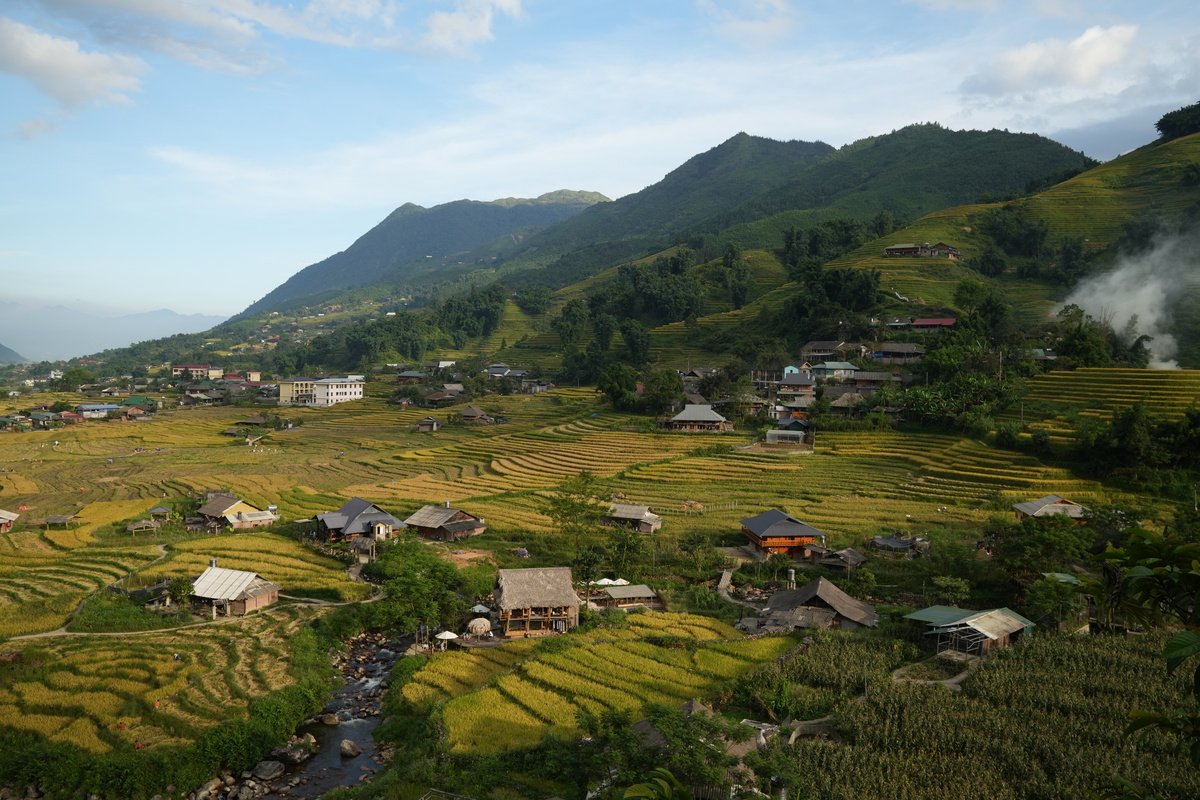
Sapa is often called the "Tonkinese Alps" for good reason. The region is home to Fansipan, the highest peak in Indochina, reaching 3,143 meters. For a downhill enthusiast, this massive elevation differential translates to one thing: long, uninterrupted descents.
Imagine starting a ride at 2,000 meters above sea level and descending into a valley floor at 400 meters. A sapa downhill bike tour can provide descents that last for over 20 kilometers, taking you through three different climate zones in a single afternoon. You might start in the misty, pine-scented air of the high passes and finish in the humid, tropical warmth of the Muong Hoa or Ban Ho river valleys.
Sapa’s trails are not "man-made" bike parks with manicured berms and wood features. They are organic, living trails. You will encounter rock gardens of sharp granite, root-latticed forest paths, and the iconic "water buffalo single-track"—narrow, winding paths carved into the mountainside by livestock. This raw, unpredictable terrain makes Vietnam Northwest Bike Tours a bucket-list item for riders who crave technical challenges.
To get the most out of Sapa’s gravity potential, you need to know where the vertical gems are hidden. Here are the core descents that define the experience.
Stretching between Lao Cai and Lai Chau provinces, O Quy Ho is the longest mountain pass in Vietnam. While many people see it from a bus, the only way to truly "feel" it is on a bike.
The Drop: Nearly 25 kilometers of winding asphalt and optional dirt side-trails.
The View: On a clear day, the "Heaven’s Gate" viewpoint offers a view of the road snaking through the valley like a discarded ribbon.
The Ride: This is a high-speed descent that tests your cornering and braking confidence. If you want to continue the gravity quest further west, our Lai Chau bike tours pick up right where the pass ends, heading into even more remote canyons.
The Muong Hoa Valley is famous for its terraces, but for a sapa downhill bike tour, it is about the "black-diamond" paths that drop from the ridge line into the village centers of Lao Chai and Ta Van.
The Terrain: Rocky, steep, and often muddy. It requires active suspension and precise weight distribution.
The Experience: You’ll drop past Hmong women in traditional indigo dress and kids playing by the trails. It is a sensory overload of technical riding and cultural immersion.
Heading south from Sapa town leads you toward the bottom of the Muong Hoa River.
The Descent: A technical mix of steep concrete village roads and loose gravel paths.
The Reward: The temperature rises as you drop. By the time you reach the Tay village of Ban Ho, you’ll be ready for a dip in the mountain stream. This route is a highlight of our Sapa bike tours for those who enjoy "enduro" style riding—heavy on the gravity, but with short bursts of technical climbing.
While Sapa is the epicenter, the neighboring provinces offer distinct downhill flavors for those who choose a more extensive Vietnam Northwest Bike Tour.
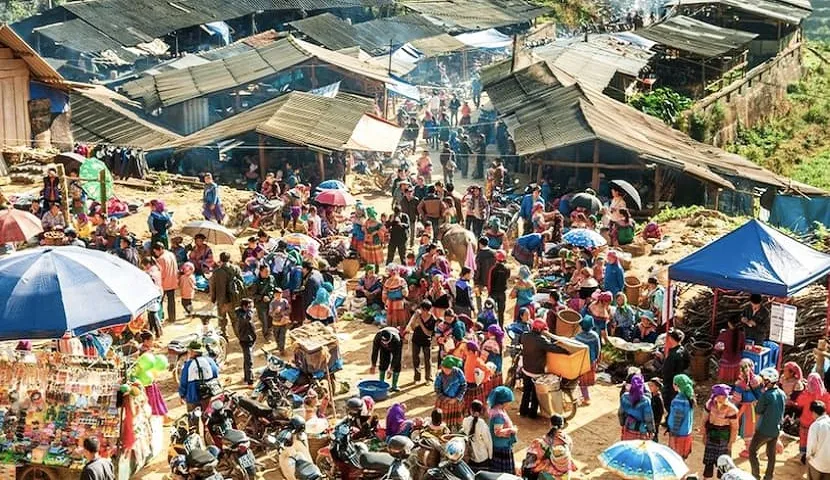
East of Sapa, the Bac Ha plateau offers a different geological makeup. A Bac Ha bike tour typically involves rolling hills and "flowy" red-dirt trails. While less "vertically intense" than Sapa, the descents through plum forests and Flower Hmong villages offer a rhythmic, fast-paced riding style that is incredibly fun for intermediate riders.
Our Lai Chau bike tours are for the explorers. The descents here take you into deep limestone river canyons. Because the region sees very few tourists, the trails are often rugged and overgrown, requiring a high degree of confidence and a spirit of adventure.
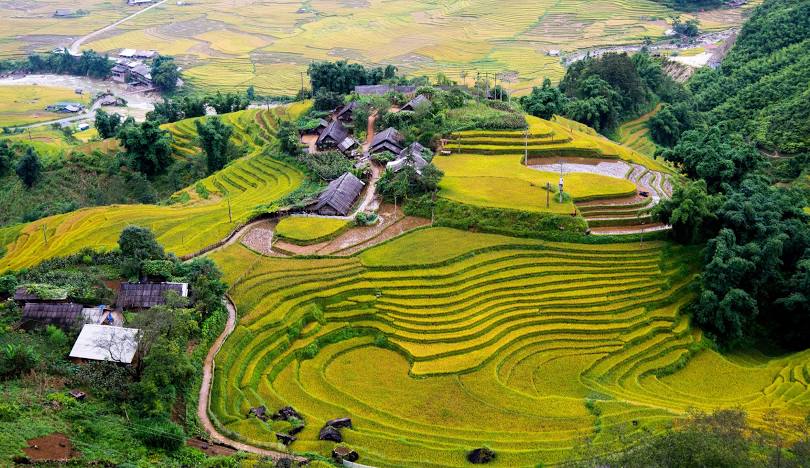
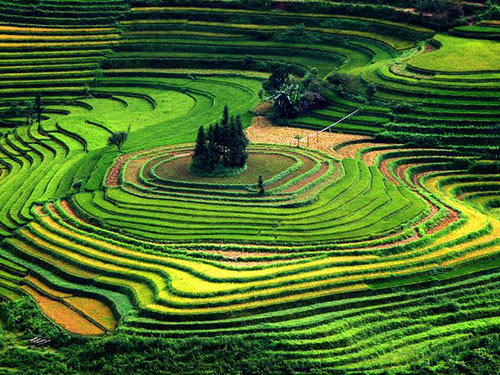
To the south, Yen Bai Bike Tours focus on the Mu Cang Chai district. The descents here involve navigating narrow paths along the edge of the world's most spectacular rice terraces. It is "gravity with a view" at its absolute best.
You cannot bring a "knife to a gunfight," and you cannot bring a cross-country bike to a Sapa downhill descent. The terrain is too demanding for entry-level equipment.
On a 15-kilometer descent with a 12% average gradient, your brakes are your most important asset.
Recommendation: High-quality hydraulic disc brakes with at least 180mm (front) and 160mm (rear) rotors.
Golden Cycling Tours Difference: We meticulously maintain our fleet, ensuring pads are fresh and systems are bled before every tour.
While a hardtail can manage the paved descents, a full-suspension bike is the gold standard for a sapa downhill bike tour.
Travel: Look for bikes with at least 140mm–160mm of travel (Enduro/AM spec).
Geometry: A slacker head tube angle (65-66 degrees) provides stability when the trail gets steep and rocky.
The "Sapa mud" is legendary—slippery and clay-like.
Recommendation: Tires with aggressive side knobs for cornering in loose soil. We use brands like Maxxis or Schwalbe to ensure our riders have maximum traction.
Downhill biking carries risks. We prioritize safety above all else.
Mandatory: Well-fitted helmets and gloves.
Recommended: Knee and elbow pads. For the more technical Sapa bike tours, we suggest riders consider lightweight armor.
Even though gravity is doing the heavy lifting, a sapa downhill bike tour is physically taxing.
Leg Strength: Your "descending muscles" (quads and glutes) need to be strong enough to hold an athletic position for long periods.
Arm Pump: Managing a bike over rocky terrain for an hour straight can lead to forearm fatigue. Practice long descents at home to build your grip strength.
Body Position: Keep your weight centered and eyes up. In Sapa, the trail can change quickly—a water buffalo around a blind corner is a common sight!
The magic of a sapa downhill bike tour is that the trail usually ends in someone's backyard.
As you drop from the ridge into the valley, you are passing through the ancestral lands of the Hmong and Red Dao people. You’ll see the smoke from their morning fires and hear the rhythmic thud of water-powered rice pounders. This cultural proximity is why we integrate homestays into many of our Guaranteed Tours. Sharing a meal of locally sourced ingredients after an epic day of riding is the ultimate way to decompress.
At Golden Cycling Tours, we believe in leaving no trace. Our trails are chosen to minimize erosion, and we work closely with village leaders to ensure that our bike tours provide a positive economic impact without disrupting the local way of life.
Sapa’s weather is the "final boss" of any sapa downhill bike tour.
September to November (The Harvest): The terraces are golden, and the weather is generally dry. The trails offer high grip and stunning visibility. This is the peak season for our Vietnam Northwest Bike Tours.
March to May (Spring): The hills are covered in blossoms. The trails can be a bit more unpredictable, but the temperatures are perfect for long days in the saddle.
The "Mud-Season" (June to August): This is for the hardcore riders. The trails are slippery, technical, and messy. If you love a challenge and don't mind getting dirty, the monsoon season is an adventure in itself.
Downhill biking is much better when you don't have to climb the 1,000 meters you just descended. On our professional tours, a "sag wagon" (support vehicle) follows the group on the accessible roads.
Logistics: The van carries your luggage, spare parts, and plenty of cold drinks.
The Shuttle: On many routes, the van acts as a shuttle, taking you back to the top of the pass for "one more run." This is a key feature of our Guaranteed Tours.
Navigating the Sapa highlands requires more than just a bike; it requires local expertise and a professional safety net.
Premium Fleet: We don't use "budget" bikes. Our inventory consists of high-end mountain bikes from Trek, Giant, and Cannondale.
Expert Guides: Our guides are gravity specialists. They know where the rocks are loose and where the "hero dirt" is hidden.
Tailored Difficulty: We can adjust any sapa downhill bike tour to fit your skill level, from flowy fire roads to technical single-track.
Bespoke Destinations: From the plum forests of a Bac Ha bike tour to the deep valleys of Yen Bai Bike Tours, we provide a full-spectrum view of the Northwest.
Alex from the UK:
"The descent from O Quy Ho Pass with Golden Cycling Tours was the highlight of my year. The bikes were in perfect condition—hydraulic brakes are a must! Our guide, Minh, knew every shortcut. If you want real mountain biking in Vietnam, this is it."
Sarah from Canada:
"I was a bit intimidated by the 'downhill' label, but the team at Golden Cycling Tours was so patient. They chose routes that were challenging but within my ability. Staying in the homestay at the end of the day was an experience I'll never forget."
Hanson from the USA:
"I've biked in Moab and the Alps, but Sapa is different. It’s raw. The technical single-track through the rice terraces is like nothing else on earth. Highly recommend the Sapa Bike Tours for anyone with a bit of dirt in their veins."
Q: Is a sapa downhill bike tour suitable for beginners? A: We recommend some mountain biking experience. However, we have "gravity-assisted" tours that stick to paved or smooth gravel roads, making the thrill of the descent accessible to intermediate riders.
Q: Do I need to bring my own body armor? A: We provide helmets and gloves. If you prefer using knee and elbow pads or a full-face helmet, we recommend bringing your own for the best fit, though we do have some available for rent.
Q: What is an "Enduro" vs. "Downhill" tour? A: A sapa downhill bike tour focuses almost exclusively on descents with vehicle support to the top. Our Enduro tours involve a mix of 70% downhill and 30% technical climbing.
Q: Are there E-bike options? A: Yes! Our high-performance E-mountain bikes are perfect for those who want to tackle the climbs under their own power but with a little "boost" before the descent.
Q: How do I book a tour? A: Visit our Guaranteed Tours page to see fixed departure dates, or contact us directly to arrange a private expedition.
A sapa downhill bike tour is a journey of gravity and grace. It challenges your technical skill while rewarding you with some of the most beautiful vistas in the world. From the high-speed asphalt of a Bac Ha bike tour to the rugged, remote trails of Lai Chau bike tours, the Northwest of Vietnam is a world-class cycling destination waiting to be explored.
At Golden Cycling Tours, we are ready to take you to the top of the pass and watch as you disappear into the mist. The gradient is steep, the views are endless, and the trail is calling.

.jpg "What to Do in Bac Ha Vietnam ?")
Leave a Reply
Your email address will not be published. Required fields are marked *