- Call us Via Whatsapp: +84 (0) 832 126 699
4.9 stars on our site
(15,000 reviews)
- Monday - Sunday : 08:00 - 17:00
(15,000 reviews)

By The Golden Cycling Tours Team
You have booked the flight. You have trained your legs. You have studied the route maps of the Mekong Delta or the elevation profiles of the Ha Giang Loop. But as the departure date draws near, a pile of gear sits on your bedroom floor, and a question nags at you: "What do I actually need to survive cycling in the tropics?"
Packing for a cycling trip in Vietnam is an art form. It requires balancing two opposing forces: the need for preparedness and the absolute necessity of traveling light.
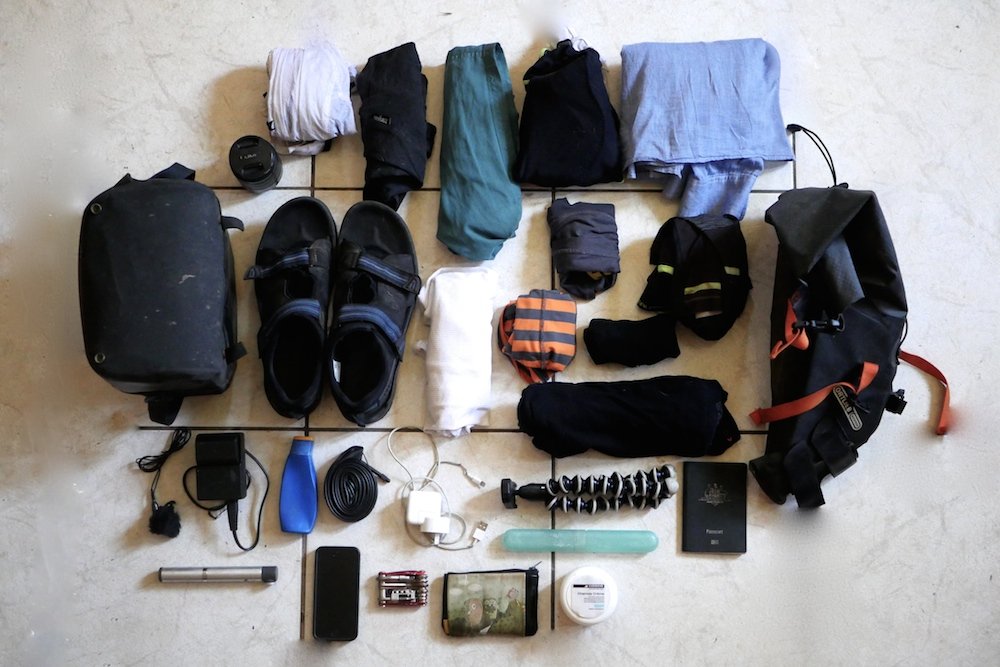
Vietnam’s climate is unique. It is not just hot; it is humid. It is a place where the sun can blister your skin in the morning, and a monsoon downpour can soak you to the bone in the afternoon. It is a place where "waterproof" gear often fails because it doesn't breathe, and where a simple electrolyte tablet can be the difference between a glorious ride and heat exhaustion.
In this ultimate guide, brought to you by the experts at Golden Cycling Tours, we will dissect your suitcase. We will tell you exactly what to bring, what to leave at home, and the secret weapons that professional guides use to stay comfortable in the Vietnamese climate.
Before we list specific items, we must discuss fabric. In Europe or North America, you might get away with a cotton t-shirt on a casual ride. In Vietnam, Cotton is the Enemy.
When cotton gets wet (from sweat or rain), it stays wet. In high humidity, it becomes a heavy, soggy, chafing blanket that breeds bacteria and fungal infections.
The Rule: Everything you pack must be synthetic, moisture-wicking, or merino wool. You need fabrics that pull moisture away from your skin and dry in minutes, not hours.
How many kits should you bring? For a 10-14 day tour, we recommend the "Rule of Three": Wear one, Wash one, Dry one. You do not need a fresh kit for every day.
Fit: Choose a "club fit" (slightly looser) rather than a "race fit." You want air to circulate between the fabric and your skin.
Color: White, yellow, or light blue. Dark colors absorb the tropical sun and will cook you alive.
UV Protection: Look for jerseys with a UPF 30+ rating.
Zipper: A full-length zipper is essential for venting on climbs.
Why Bibs? In high humidity, waistbands on standard shorts can dig in and cause heat rash. Bib shorts eliminate this pressure point and keep the chamois (pad) stable.
The Chamois: This is not the place to save money. Bring shorts with a high-density, high-quality pad. You will be sweating significantly, which increases friction. A good pad prevents saddle sores.
Bring 3-4 pairs of thin, synthetic cycling socks.
Avoid: Thick "cushioned" socks. Your feet will swell in the heat, and thick socks will restrict blood flow and cause hot spots.
Fingerless gloves are preferred. They offer grip on sweaty handlebars and protection in a crash, but allow your hands to breathe.
Tip: Bring two pairs. Gloves take the longest to dry, and putting on soggy gloves in the morning is unpleasant.
Cycling Cap: A cotton or synthetic cycling cap under your helmet is a game-changer. The brim keeps the sun out of your eyes, but more importantly, it acts as a sweatband, preventing salty sweat from dripping into your eyes/sunglasses.
Sweatband/Headband: If you don't like caps, a "Halo" style headband with a silicone sweat seal is highly recommended.
This is the most controversial topic in tropical cycling.
The Western Instinct: Bring a high-end, $300 Gore-Tex waterproof jacket. The Vietnam Reality: You will wear that jacket for 10 minutes, overheat, sweat profusely inside it, and end up just as wet from the inside as you would have been from the rain.
In Vietnam, the rain is often warm. You don't need to stay dry; you need to stay warm enough (if in the mountains) and keep the rain from stinging.
The Golden Cycling Tours Recommendation: Bring a lightweight, breathable windbreaker / rain shell (gilet or jacket) that packs down to the size of an apple. This is for chilly descents or light drizzle.
For Heavy Rain: Buy a plastic poncho locally ($1 USD).
Why? It covers your handlebars and hands. It is essentially a tent. It allows massive airflow from underneath, keeping you cool while blocking the heavy drops. When the rain stops, you shake it off and stuff it in a pocket.
The sun in Vietnam is deceptive. Even on cloudy days, the UV index can be extreme.
Why: Sunscreen in Vietnam (and much of Asia) often contains "whitening" agents which can be harsh on sensitive skin. It is also significantly more expensive for recognized brands (like Nivea or Banana Boat).
Type: Bring a "Sport" or "Water Resistant" formula, SPF 50+. You will sweat it off, so reapplication is key.
Humidity + Sweat + Friction = Saddle Sores.
Apply chamois cream liberally every single morning. It is the cheapest insurance for a happy trip. Brands like Assos or Chamois Butt'r are excellent.
Lens: Polarized lenses are great for reducing glare from wet roads and rice paddies.
Tint: Photochromic lenses (which adjust from clear to dark) are fantastic for days that switch between bright sun and jungle shade.
Mosquitoes are present, especially at dusk and in the Mekong Delta. Bring a small bottle of DEET or Picaridin-based repellent.
Dehydration is the number one reason cyclists fail to finish a ride in Vietnam. You lose electrolytes faster than you realize.
Do not rely on water alone. Drinking 4 liters of plain water can actually flush out your salts, leading to hyponatremia.
The Hack: Bring 2-3 tubes of electrolyte tablets (Nuun, High5, GU). They are compact, easy to carry, and turn bottled water into a sports drink.
Local Alternative: If you run out, Oresol (rehydration salts) is available at every Vietnamese pharmacy for pennies.
Insulated Bottles: We highly recommend insulated bottles (like CamelBak Podium Chill). By hour 3 of a ride, drinking hot water is demoralizing. An insulated bottle keeps water palatable.
Capacity: Aim to carry at least 1.5 liters (two large bottles) on your bike.
While Vietnam has amazing food, finding "energy gels" or "protein bars" in rural villages is impossible.
Bring: Your preferred gels or chews for emergencies.
Buy Local: For real food, stop for Chuoi (Bananas), Banh Mi (Sandwiches), or Keo Lac (Peanut brittle).
Using GPS drains phone batteries fast. Bring a lightweight (10,000mAh) power bank to keep your phone and lights charged.
Vietnam generally uses a mix of Type A (USA style two-pin flat), Type C (Euro style two-pin round), and occasionally Type G (UK style). A universal travel adapter is essential.
Even if you don't plan to ride at night, rain can darken the sky at 2 PM. A small, flashing rear light increases your visibility to trucks significantly.
After the ride, you want to be comfortable and culturally respectful.
Vietnam is a modest country. If you plan to visit pagodas or temples, you must cover your shoulders and knees.
For Men: Lightweight trousers (linen is great) or shorts that cover the knee.
For Women: A Sarong is the ultimate travel tool. Wrap it around your waist as a skirt, or use it as a shawl.
Cycling Shoes: If you use cleats, bring them. (See our "Rent or Bring" guide regarding pedals).
Sandals/Flip-Flops: Essential for letting your feet dry out and breathe after a long ride.
Walking Shoes: One pair of lightweight sneakers for city walking in Hanoi or Saigon.
Heavy Jeans: They take days to dry and are too hot.
Expensive Jewelry: Don't make yourself a target.
Heavy Locks: If you are touring solo, bring a light cable lock. If you are with Golden Cycling Tours, our support staff watches the bikes.
Massive Tool Kits: Unless you are riding solo unsupported.
If you are booking a tour with us, your packing list gets significantly shorter. Here is what Golden Cycling Tours provides, so you don't have to pack it:
The Tools: No need to bring a pump, tire levers, or multitool. Our guides are mechanics.
The Spares: We carry tubes, chains, and cables.
The Snacks: Our support van is stocked with fresh fruit, cold water, and local snacks.
The Heavy Lifting: You don't need panniers. You ride light; our van carries your suitcase to the next hotel.
Experience the luxury of "Lightweight Touring." See our fully supported itineraries here: 👉 https://goldencyclingtours.com/
Print this out and check it off!
Cycling Gear:
[ ] 3x Cycling Jerseys (Light colors)
[ ] 3x Bib Shorts (High quality chamois)
[ ] 4x Socks (Synthetic)
[ ] 2x Gloves (Fingerless)
[ ] 1x Cycling Cap / Sweatband
[ ] 1x Rain Shell / Windbreaker (Lightweight)
[ ] 1x Helmet (If not renting)
[ ] 1x Shoes + Pedals (If using cleats)
[ ] Sunglasses (Polarized)
Toiletries/Medical:
[ ] Sunscreen (SPF 50+, Water resistant)
[ ] Chamois Cream (Tub or individual packs)
[ ] Insect Repellent
[ ] Electrolyte Tablets (3 tubes)
[ ] Lip Balm (with SPF)
[ ] Personal Medication (Imodium/Charcoal tablets are recommended for stomach issues)
Electronics:
[ ] Smartphone + mount (QuadLock etc.)
[ ] Power Bank + Cables
[ ] Universal Adapter
[ ] GoPro/Camera (Optional)
Documents:
[ ] Passport (Valid for 6 months)
[ ] Visa (E-visa printed out)
[ ] Travel Insurance Policy (Must cover cycling)
Q: Can I buy cycling gear in Vietnam if I forget something? A: In Hanoi and Ho Chi Minh City, yes. There are Specialized, Giant, and Trek dealers. However, sizing runs small (Asian fit). If you wear a Western L or XL, you might struggle to find clothing that fits.
Q: Should I bring a CamelBak or hydration pack? A: It depends. For road cycling, bottles are cooler (backpacks trap heat on your back). For off-road mountain biking in remote areas (like Ha Giang), a hydration pack is useful.
Q: How do I wash my kit? A: Most hotels offer laundry service, but it takes 24 hours. We recommend bringing a small travel bottle of detergent. Wash your kit in the shower immediately after the ride, wring it in a towel, and hang it under the AC unit. Synthetic gear will be dry by morning.
"The Chamois Cream Saved Me" "I almost didn't pack it, but the Golden Cycling Tours blog said it was essential. Thank god I did. The humidity is no joke. Being comfortable in the saddle made the trip 100x better." — Mike R., Canada ⭐⭐⭐⭐⭐
"Too Many Clothes!" "I packed for 14 days. I only wore 3 kits. The laundry service at the hotels was cheap and fast. Listen to the advice: pack light!" — Sarah & Tom, UK ⭐⭐⭐⭐⭐
"The Poncho Tip Was Gold" "I brought my expensive Gore-Tex jacket and sweated like a pig. I bought a $1 poncho on the side of the road and it was perfect. Great advice from the Golden team." — Jürgen, Germany ⭐⭐⭐⭐⭐
Packing for Vietnam is about preparation for the elements. You cannot fight the heat or the rain, but you can dress for them.
By focusing on lightweight, wicking materials and managing your hydration, you turn the climate from an enemy into just another part of the adventure.
Remember, the lighter you pack, the freer you feel.
Ready to start packing? Book your adventure and let us handle the rest. 👉 Browse our tours: https://goldencyclingtours.com/

.jpg "Road Bike Tours")
.jpg "Cycling Day Trips Vietnam")
.jpg "Vietnam Bike Tours for Seniors")

Leave a Reply
Your email address will not be published. Required fields are marked *