- Call us Via Whatsapp: +84 (0) 832 126 699
4.9 stars on our site
(15,000 reviews)
- Monday - Sunday : 08:00 - 17:00
(15,000 reviews)

The Ha Giang Loop is often described as the "Holy Grail" of cycling in Southeast Asia. For those seeking to test their mettle against gravity while immersing themselves in a landscape that feels like the edge of the world, understanding the Ha Giang Loop cycling distance is the first step in planning a successful expedition. It is not merely a measurement of kilometers on a map; it is a calculation of vertical gain, oxygen levels, and cultural depth.
In this definitive guide, we will break down every kilometer of this legendary route, helping you navigate the winding roads of the Dong Van Karst Plateau, conquer the "King of Passes," and choose the perfect itinerary with Golden Cycling Tours.
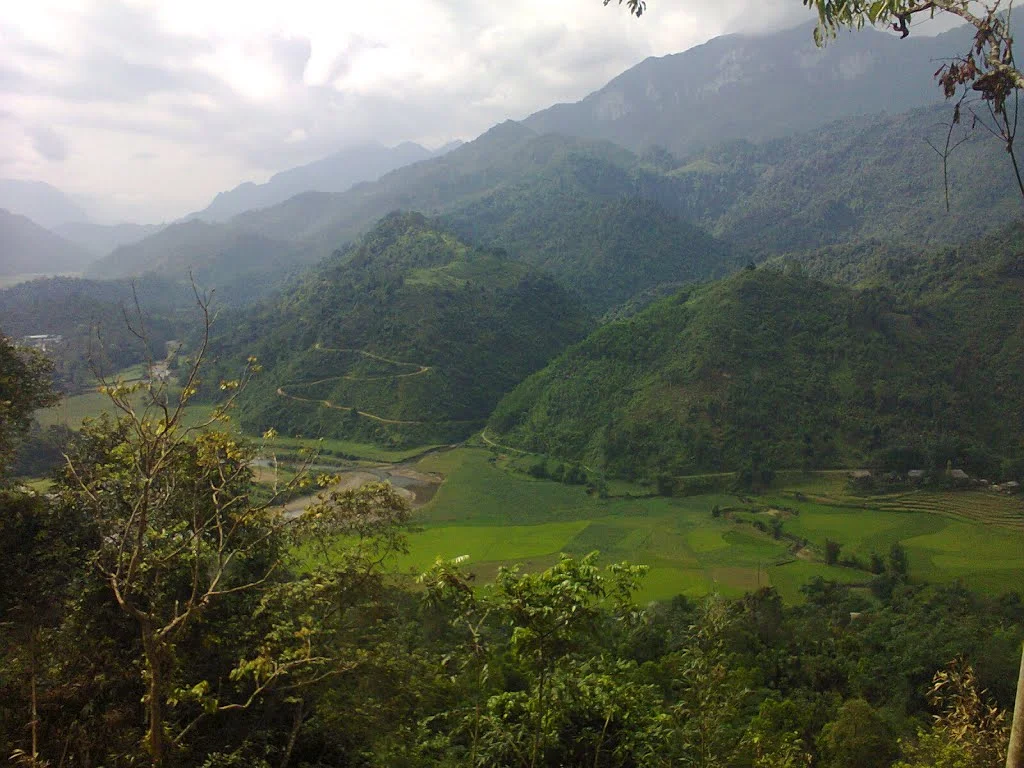
.jpg)
When people ask about the Ha Giang Loop cycling distance, the answer varies depending on your thirst for adventure. A standard "Classic Loop" typically covers approximately 350 kilometers (217 miles). However, many cyclists choose to extend their journey to include the northernmost point of Vietnam or the hidden valleys of Du Gia, pushing the total distance closer to 450 kilometers.
Total Distance: ~350km
Average Elevation Gain: 8,000m – 10,000m
Duration: 5 to 7 days (recommended)
Primary Terrain: Steep mountain passes, limestone pinnacles, and deep river canyons.
For those looking for a professionally curated experience that handles the logistics of these daunting distances, exploring the Ha Giang bike tours offered by Golden Cycling Tours ensures you focus on the pedaling while experts handle the rest.
In the flatlands, 70 kilometers is a light morning ride. In Ha Giang, 70 kilometers is a brutal, soul-searching odyssey. The Ha Giang Loop cycling distance is deceptive because of the verticality. You are rarely on a flat road. You are either grinding up a 10% gradient or descending hairpins that require intense concentration.
A 350km loop in Ha Giang includes over 8,000 meters of climbing. To put that in perspective, you are essentially cycling from sea level to the summit of Mount Everest over the course of a week. This is why the Northeast Vietnam bike tour distance feels significantly longer than the numbers suggest.
While the "Happiness Road" (QL4C) is mostly paved, the quality of the asphalt varies. Recent construction, landslides during the monsoon, and the sheer number of hairpin turns mean your average speed will likely hover between 12km/h and 15km/h. When calculating your daily cycling distance Ha Giang, always factor in extra time for photography and local interaction.
To truly appreciate the region, a 6-day itinerary is the gold standard. Here is how the distance breaks down day by day.
The journey begins with a steady climb out of the provincial capital. The highlight is the Bac Sum Pass, a series of giant "S" curves that introduce you to the elevation of the region.
Challenge: The first 20km are a wake-up call for the legs.
Highlight: The Twin Mountains (Heaven’s Gate).
While shorter in distance, this section offers two choices: the "Main Road" or the "Back Road" through Lao Va Chai.
Distance Variation: The back road adds about 5km but offers much less traffic and more dramatic views of the pine forests.
Terrain: Rolling hills followed by a long, scenic descent into the Yen Minh valley.
This is where the landscape transforms into the world-famous Dong Van Karst Plateau Geopark. The Ha Giang Loop cycling distance for today includes the iconic Tham Ma Pass.
The Climb: A 9-turn zig-zag that is the most photographed spot on the loop.
Culture: You will pass through Chin Khoanh pass and the H'Mong King’s Palace (Dinh Vua Meo).
This is the shortest distance on the loop but the most breathtaking. You will cross the Ma Pi Leng Pass, often cited as the most beautiful mountain pass in Vietnam.
Elevation: The road clings to the side of a cliff 1,200 meters above the Nho Que River.
Experience: Take your time. This 30km should take you all day because you will want to stop every 500 meters for photos.
This is the longest and arguably the toughest day. The road to Du Gia is rugged and remote.
Terrain: Very steep sections and potentially broken pavement.
Reward: Du Gia is a hidden gem, a lush valley home to the Tay and H'Mong people, featuring a refreshing waterfall to soak your tired muscles.
The final stretch brings you back to the start. It is a long day but features a significant amount of downhill as you leave the high plateau.
Completion: You will have completed a total cycling distance of approximately 345km to 360km.
Navigating the Ha Giang Loop bike distance independently is a feat of endurance, but it also carries risks. Mechanical failures in remote areas, language barriers, and finding quality accommodation can be challenging.
Golden Cycling Tours specializes in high-end, supported cycling adventures. Their Vietnam Northeast Bike Tours provide:
Support Vans: Carry your luggage and provide "mechanical rescue" if needed.
Expert Guides: Locals who know every shortcut and every "hidden loop" that isn't on Google Maps.
Top-Tier Equipment: Well-maintained mountain bikes or E-bikes specifically geared for the steep gradients of the Ha Giang Loop.
Whether you are a seasoned pro or an enthusiastic amateur, the team at Golden Cycling Tours ensures that the only thing you have to worry about is the view.
For those who find the 350km classic route too "standard," there are several ways to increase the Ha Giang Loop cycling distance and see even more remote areas.
From Dong Van, you can cycle north to the Lung Cu Flag Tower, the northernmost point of Vietnam. Looking over the border into China, this detour adds significant climbing and about 50km to your total distance.
If you have 10–12 days, you can connect the Ha Giang Loop with the rice terraces of Hoang Su Phi. This increases the total Northeast Vietnam cycling distance to over 600km and takes you through some of the least-visited ethnic minority villages in the country.
Don't let the beauty fool you; the loop is physically demanding. To prepare for the Ha Giang cycling difficulty, you should focus your training on:
Climbing Endurance: Find the steepest hills in your area and do repeats.
Core Strength: Essential for stability during long descents.
Technical Skills: Practice cornering on tight hairpins.
If you aren't a regular climber, consider an E-bike. It doesn't "cheat" the distance; it simply makes the 8,000 meters of elevation accessible so you can enjoy the scenery rather than staring at your front tire in agony.
The weather in Northern Vietnam plays a massive role in how the distance feels.
September to November: The best time. Cool weather and the iconic buckwheat flowers.
March to May: Great visibility and pleasant temperatures.
December to February: Can be extremely cold (near freezing). The distance feels much harder when your fingers are numb.
June to August: Rainy season. Landslides can block roads, turning a 60km day into a 120km detour.
When you are covering 350km+ through the mountains, every gram counts.
The Bike: A hardtail mountain bike with a wide range of gears (1x12 or 2x11) is ideal.
Hydration: Electrolytes are a must. The humidity can be high, leading to rapid fluid loss.
Clothing: Padded bib shorts are non-negotiable for 6 days in the saddle.
"The ride of a lifetime!"
"I was worried about the Ha Giang Loop cycling distance and whether I could handle the climbs. Booking with Golden Cycling Tours was the best decision. The support van was always there with cold water and fruit, and the guide, Nam, knew exactly how to pace us through the Ma Pi Leng pass. It’s tough, but the views are worth every drop of sweat." — Mark S., Australia
"Authentic and challenging"
"We did the 7-day extended loop. The distance on paper doesn't do justice to the scale of these mountains. If you love cycling, this is a must. The Northeast Vietnam Bike Tours are world-class. Everything from the bikes to the homestays was perfect." — Elena R., Spain
Q1: How many kilometers is the Ha Giang Loop for cyclists? The standard loop is approximately 350km, but most cyclists end up doing between 380km and 420km once detours and village explorations are factored in.
Q2: Is the Ha Giang Loop safe for solo cyclists? Yes, but you must be self-sufficient. The roads are narrow and shared with trucks and motorbikes. We highly recommend a guided tour for safety and logistics.
Q3: Can I use a road bike for the Ha Giang Loop? We don't recommend it. While the main roads are paved, there are many sections with gravel, potholes, and steep gradients where the wider tires and lower gearing of a mountain bike or gravel bike are essential.
Q4: How much climbing is involved in the total distance? Expect between 8,000 and 10,000 meters of total vertical gain over a 350km route.
Q5: Are there places to stay along the route? Yes, there is a growing network of homestays and hotels in towns like Quan Ba, Yen Minh, Dong Van, and Meo Vac.
The Ha Giang Loop cycling distance represents more than just a physical challenge; it is a gateway into a world of timeless traditions and staggering natural beauty. While the kilometers are hard-earned, the sense of accomplishment as you roll back into Ha Giang City is unparalleled.
Ready to conquer the loop? Visit Golden Cycling Tours to book your adventure today and experience the very best of Northeast Vietnam.

.jpg "Cycling in Vietnam in March")
.jpg "Vietnam mountain bikes Trail")
.jpg "Vietnam Biking Trails")
.jpg "Ha Giang Cycling Tours")
Leave a Reply
Your email address will not be published. Required fields are marked *