- Call us Via Whatsapp: +84 (0) 832 126 699
4.9 stars on our site
(15,000 reviews)
- Monday - Sunday : 08:00 - 17:00
(15,000 reviews)

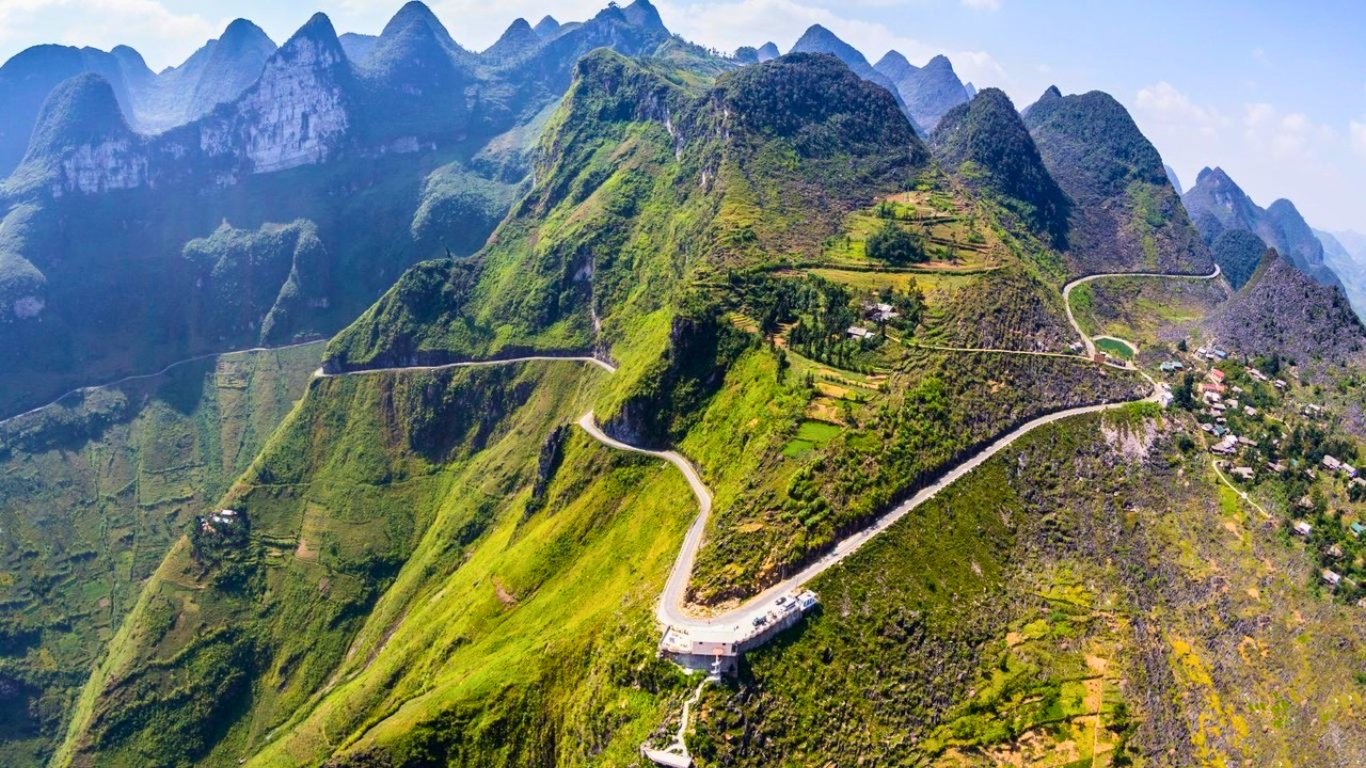
Close your eyes and listen to the music of motion. It begins with the low, persistent whir of high-end hubs spinning in the silence of dawn. Then, the crisp, metallic snap of your electronic derailleur shifting down a cog as the road begins to tilt skyward. Listen to the steady, metronomic rhythm of your own breath rising in the cold, misty air, and the deep sigh of the mountain breeze rustling through the canopy of giant ferns. Breathe in. The air is cold and thick with the heavy scent of wild pine needles, damp granite, and the faint, sweet trace of woodsmoke drifting from a stilt house perched on a ridge thousands of feet below. You stand out of the saddle, your quadriceps igniting with the clean, hot burn of lactic acid as you fight for momentum on a technical, gravel-strewn hairpin turn. Suddenly, you round the bend, breaking through the dense clouds, and the world explodes into a spectacular, jaw-dropping panoramic view of dark basalt peaks, emerald terraced fields, and a silver river snaking through the abyss. This is not just a cycling trip; it is a profound physical and spiritual transformation on two wheels.
To truly understand a nation, you must earn its landscapes. You must feel the steepness of its mountain ranges in your legs, taste the salty spray of its coastlines on your lips, and let the tropical winds dry your sweat-soaked skin. But to execute a journey of this magnitude, you cannot rely on romanticism alone. You need a meticulous, flawless logistical plan. Welcome to the Complete Logistics Guide for Multi-Day Bike Tours in Vietnam, your ultimate blueprint for navigating the technical, geographical, and physical realities of a cross-country cycling traverse. Whether you are planning a solo expedition or seeking the seamless support of a premium guided tour, understanding the complexities of transit, gear selection, navigation, and regional safety is the difference between an administrative nightmare and the ride of your life. Let us guide you on the path to preparation, taking you from the initial planning phase to the very first pedal stroke of your lifetime adventure.
When undertaking an epic traverse, establishing a solid plan is your first step. Our detailed Vietnam Bike Tour Logistics: Complete Multi-Day Guide will walk you through every critical phase of this process. From coordinating a support vehicle to sourcing highly specific replacement parts in remote mountain villages, this guide serves as your master compass.
Vietnam is a geographical masterpiece of dramatic contrasts. Spanning over one thousand six hundred kilometers from north to south, this S-shaped corridor transitions rapidly through a staggering array of ecosystems, climate zones, and elevations. To plan a successful cross-country crossing, you must understand the unique physical and logistical demands of each distinct ecological region.
The northern highlands are a realm of raw geological power. Here, millions of years of tectonic activity have carved a labyrinth of deep limestone canyons, vertical peaks, and mountain passes that rival the French Alps in elevation and difficulty. As you ride through this region, the climate shifts rapidly. You can start your day in a warm, humid valley thick with bamboo forests before climbing into cold, mist-shrouded high-altitude passes where the temperature can drop to single digits. Logistically, this region requires clothing layers that are easily storable, climbing-focused gear ratios, and highly durable tires capable of handling wet, technical descents on broken concrete and loose gravel.
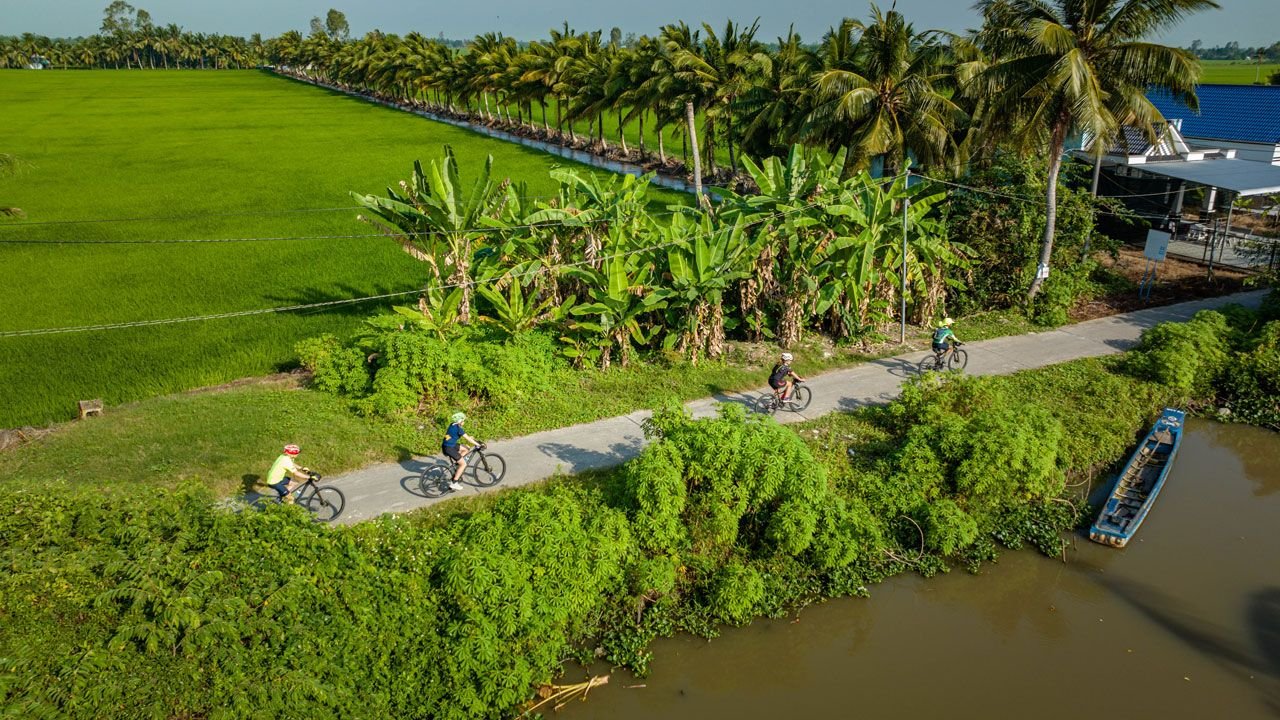
As you head southward, the rugged highlands transition into the coastal plains of central Vietnam, where the dramatic slopes of the Annamite Range (known locally as the Truong Son Mountain Range) plunge directly into the turquoise waters of the East Vietnam Sea. Here, the challenge shifts from vertical mountain grinds to contending with relentless coastal headwinds, high humidity, and sudden tropical downpours. The final segment of the cross-country traverse flattens into the warm, sun-kissed plains of the south, a vast, water-dominated world where life moves to the gentle rhythm of canal networks and tidal rivers.
When deciding on your overall trajectory, you have several primary options to connect these diverse regions into a seamless journey. You can choose to explore via Cycling North to South Vietnam, starting in the misty peaks of the far north and finishing in the tropical warmth of the delta. Alternatively, you can opt for Cycling South to North Vietnam, a path that allows you to build your cardiovascular fitness on the flat coastal plains before tackling the brutal mountain gradients of the northern interior. Whichever path you choose, exploring the country via Cycling Central Vietnam is an unforgettable masterclass in endurance travel.
For cyclists who want to experience this epic crossing with premium comfort and professional roadside support, our Vietnam Luxury Bike Tours offer an elite level of service, featuring top-tier support vehicles, high-end carbon road bikes, and exceptional boutique properties for nightly recovery. If you are inspired by the grand scale of this route but are concerned about maintaining a consistent pace over consecutive high-mileage mountain days, our Vietnam E-Bikes Tours provide advanced pedal-assist options that smooth out the steepest climbs without losing any of the sensory magic of the open road.
The foundation of any successful multi-day cycling tour is your machine. The varied terrain of Vietnam, ranging from smooth coastal asphalt to remote, gravel-strewn mountain fire roads, demands a bicycle that offers a perfect balance of speed, durability, and climbing efficiency.
For riders focusing on paved coastal highways and major mountain passes, a modern endurance carbon-fiber road bike fitted with twenty-eight to thirty-two millimeter tubeless tires is the gold standard. Carbon frames damp road vibrations, reducing physical fatigue over consecutive high-mileage days, while the wider tubeless tires allow you to run lower pressures for increased grip and comfort on varied road surfaces.
If your route includes remote backroads, forest trails, or the unpaved mountain tracks of the far north, a high-performance gravel bike is highly recommended. Gravel bikes feature more relaxed geometry, disc brakes for superior stopping power in wet conditions, and clearance for thirty-eight to forty-two millimeter tires, which provide essential traction and stability on loose limestone gravel, wet mud, and broken concrete.
Crucially, your bicycle must be fitted with climbing-focused gearing. Unlike the long, steady alpine gradients of Europe, the climbs in Vietnam are characterized by sudden, punchy ramps that regularly hit twelve to fifteen percent. To maintain a sustainable, metronomic cadence without burning out your quadriceps, we recommend a compact road chainset with fifty and thirty-four teeth, paired with a wide-range rear cassette containing eleven to thirty-two or eleven to thirty-four teeth. For gravel and touring setups, a one-by drivetrain with a forty-tooth chainring and an eleven-to-forty-two cassette provides the ultra-low gear ratios needed to crawl up the steepest gradients.
When riding through remote regions like the northern border valleys, you cannot rely on local bicycle shops, which are typically equipped only for basic utility utility-bikes. Your personal tool kit must be comprehensive and easily accessible. Every rider should carry:
Two high-quality inner tubes matching your wheel size.
A heavy-duty tire lever set and a vulcanizing patch kit.
A high-volume hand pump or a CO2 inflator with multiple cartridges.
A multi-tool equipped with a chain breaker, T25/T30 Torx keys, and a spoke wrench.
A spare derailleur hanger matching your specific frame model.
A spare chain link and a small bottle of high-viscosity wet chain lubricant to handle tropical humidity and sudden rain.
Navigating the complex road networks of Vietnam requires a blend of advanced digital technology and local geographical knowledge. Relying solely on cellular data in deep mountain canyons is a recipe for getting lost.
Before setting off, you must load highly accurate, turn-by-turn GPS route files in GPX format onto a dedicated cycling computer such as a Garmin or Wahoo. These devices feature highly visible screens under direct sunlight and exceptional battery life, ensuring you can monitor your route, upcoming elevation profiles, and exact coordinates without draining your mobile phone's battery.
It is critical to download comprehensive offline map packages of the entire country. We recommend using specialized navigation applications like RideWithGPS, Komoot, or Maps.me, which allow you to navigate flawlessly even when you lose cellular connectivity in the deep, jungle-clad valleys of the interior.
To maintain communication with your support team and access real-time weather and translation applications, you must secure a local SIM card immediately upon arrival. Major national network providers such as Viettel offer excellent high-speed mobile data coverage, even in highly remote mountainous border regions. You can easily purchase a tourist eSIM or physical SIM card with unlimited data at any international airport.
Our team at Golden Cycling Tours provides all participants with highly accurate, pre-tested GPS route files and maintains a constant digital connection between riders and support staff throughout the journey, ensuring complete peace of mind.
Completing a multi-day cross-country tour safely requires a robust support infrastructure operating seamlessly behind the scenes. Attempting to ride thousands of kilometers self-supported, carrying heavy panniers over high-altitude passes, is an extraordinary physical test that leaves no margin for error.
When you choose a professionally supported tour, a dedicated support passenger van and a heavy-duty luggage truck accompany the group throughout the entire route. The support van is always positioned close behind the riders, carrying:
Chilled water, electrolyte replacement drinks, and fresh tropical fruits.
A comprehensive first-aid and trauma medical kit.
Spare wheels, tires, and a professional floor pump.
A comfortable, air-conditioned cabin where riders can rest if they hit a physical wall, suffer from heat exhaustion, or simply want to escape a sudden tropical downpour.
The luggage truck travels ahead to the evening's destination, ensuring your dry bags, clothing, and recovery gear are already placed in your room when you roll into your rest sanctuary at the end of the daily stage.
Our team includes a professional, race-certified bicycle mechanic who travels with the support fleet. At the end of every daily stage, your bicycle is thoroughly washed, inspected, and tuned. We carry a comprehensive mobile workshop stocked with high-end spare parts, tires, tubes, chains, and cables. This level of support allows you to focus one hundred percent on your physical performance and sensory enjoyment, knowing that your machine is in perfect working order.
Safety is the absolute cornerstone of our logistics machine. Our guides are fully first-aid certified and trained in wilderness trauma response. In the event of a serious medical emergency in a remote mountainous area, we maintain active satellite tracking, keep constant radio communication between lead riders and support vehicles, and have preset emergency evacuation routes mapped to the nearest accredited provincial hospitals. Our ground logistics office coordinates with local health clinics in every province to guarantee rapid assistance in any situation.
To explore our complete range of supported itineraries and select the perfect challenge for your endurance level, visit our dedicated tours page.
Cycling through the diverse provinces of Vietnam is a profoundly moving cultural experience. Because you are traveling at a human-powered pace, you are not a detached observer; you are an active participant in the landscape.
In the rugged north, you will ride through communities of Hmong, Tay, Nung, Dao, and Giay peoples, who have carved a living out of the vertical stone for centuries. You see women in beautiful, hand-woven indigo garments adorned with intricate silver embroidery, tending to their crops on slopes so steep they seem to defy gravity. In the central highlands, you will encounter the Gia Rai and Ba Na ethnic groups, famous for their magnificent Rong Houses—communal stilt houses with soaring, ax-blade-shaped roofs that serve as the sacred heart of community life.
When cycling through these remote ethnic minority villages, practicing cultural sensitivity is paramount:
Always ask for permission before taking photographs of local people, particularly children and elders.
Dress modestly when entering village communal areas, religious temples, or local homes.
Avoid touching sacred cultural artifacts, altars, or the central pillars of traditional stilt houses.
Learn a few basic phrases of greeting in Vietnamese—a simple, warm "Xin Chao" accompanied by a respectful nod will open doors and melt away any cultural barriers.
In the evenings, when the riding is done, you will have the opportunity to gather around the open hearth of a traditional wooden stilt house. The air is warm, smelling of woodsmoke, roasted corn, and the sweet, fermented aroma of Ruou Can (traditional rice wine). You will listen to the elders perform ancient epic poetry, accompanied by the deep, resonant, and hypnotic notes of the Gong Culture of the Central Highlands, a UNESCO-protected masterpiece of oral and intangible heritage. This raw, authentic human connection is the true soul of Cycling Northern Vietnam and Cycling Southern Vietnam, providing a profound sense of purpose that fuels your physical efforts on the road.
On a multi-day bike tour where you are burning between four thousand and six thousand calories a day, food ceases to be mere sustenance—it becomes your fuel, your medicine, and your reward. Vietnamese mountain and coastal cuisine is light, rustic, and packed with the clean carbohydrates, essential minerals, and rich proteins required to keep your physical engine running flawlessly.
Pho Bo and Pho Ga: In the cold mountain mornings of the north, nothing compares to a piping hot, fragrant bowl of this iconic noodle soup. The clean, clear broth, simmered for hours with beef bones, charred ginger, star anise, and cinnamon, is an exceptional source of hydration and essential sodium. The tender rice noodles provide immediate, easily digestible glycogen to fuel your morning climb up O Quy Ho Pass or Ma Pi Leng Pass.
Bun Bo Hue: As you enter the central provinces, stop for a bowl of this spicy beef noodle soup in Hue. The rich broth, infused with lemongrass and chili oil, stimulates your circulation and provides a powerful boost to your energy reserves.
Cao Lau: Upon reaching Hoi An, your post-ride reward is a plate of these thick, chewy rice noodles topped with sliced pork and fresh herbs. The unique texture of the noodles offers a dense, slow-burning carbohydrate source to restore your muscle glycogen.
Ga Nuong Sa: In the highland villages, feast on fresh mountain chicken marinated in lemongrass and grilled over open wood charcoal. This lean, protein-rich dish is exceptional for rebuilding damaged muscle fibers after a grueling climbing stage.
To experience the true flavor of Vietnam, avoid tourist-centric restaurants and eat where the locals eat. Stop at small, roadside eateries marked by a simple plastic sign and low blue stools. Here, you will find the freshest, most authentic dishes prepared with ingredients sourced directly from the surrounding hills or seas.
Our professional guides at Golden Cycling Tours have spent years mapping out the best culinary stops along the route, ensuring you enjoy delicious, hygienic, and highly nutritious meals at local family-run diners and mountain markets.
After conquering thousands of meters of vertical climbing, your body requires an environment that facilitates deep, restorative sleep. On this multi-day expedition, we select accommodations that prioritize physical recovery while keeping you deeply connected to the local environment.
In destinations like Sapa, Mai Chau, and Pu Luong, we stay in beautifully designed mountain eco-lodges that blend seamlessly into the natural topography. Imagine soaking your aching, swollen legs in an infinity pool that hangs directly over the misty valleys of the Pu Luong Nature Reserve or looking out at the massive peaks of the Hoang Lien Son Mountain Range from your private balcony. These lodges use natural materials like local stone, pine wood, and bamboo, creating a serene, peaceful atmosphere where you can fall asleep to the gentle, soothing sounds of the mountain wind.
In historical towns like Hue and Hoi An, you will stay in charming boutique hotels that reflect the elegant architecture of the region. Think French-colonial villas with shaded courtyards, quiet swimming pools surrounded by tropical gardens, and rooms decorated with local artwork and silk textiles. These sanctuaries are located just steps away from the historic centers, allowing you to explore at a leisurely pace after the riding is done.
On the more remote segments of the route, particularly in the wild regions of Ha Giang and Cao Bang, some nights are spent in carefully vetted, high-quality local homestays. Staying in a traditional wooden stilt house of the Tay or White Thai people is a magical experience.
While the amenities are simpler than a luxury hotel, you are provided with clean, comfortable bedding, mosquito nets, hot showers, and unmatched hospitality. There is nothing quite like falling asleep to the cool, clean breeze flowing through the wooden slats of a stilt house, knowing that you are resting in the heart of an ancient community.
While the physical challenge of the ride is a major draw, this cross-country loop is packed with world-class natural and historical highlights that demand your attention. During our scheduled rest stops and recovery days, you will have the opportunity to explore these extraordinary sights:
Dong Van Old Quarter: A charming, historic street in Ha Giang lined with century-old clay-walled houses built by the Hmong, Tay, and Chinese merchants, set against a dramatic backdrop of vertical limestone cliffs.
Lung Cu Flag Tower: Located at the absolute northernmost tip of Vietnam, this monumental flag tower perched on a high peak overlooks the border with China, offering breathtaking, panoramic views of the surrounding valleys.
Ban Gioc Waterfall: A magnificent, multi-tiered cascade in Cao Bang province that straddles the international border, surrounded by lush, emerald-green bamboo forests and towering karst cliffs.
Pac Bo Cave: A historic site nestled in a beautiful, hidden valley in Cao Bang, featuring the crystal-clear, turquoise waters of Lenin Creek and the dramatic limestone cave where President Ho Chi Minh lived and worked after returning to Vietnam in 1941.
Trang An Scenic Landscape Complex: A UNESCO World Heritage site in Ninh Binh featuring a spectacular maze of limestone karst towers, tranquil rivers, and ancient caves.
Phong Nha-Ke Bang National Park: A spectacular protected area featuring some of the oldest karst mountains in Asia and the largest cave systems on Earth.
Imperial Citadel of Hue: The monumental historic seat of the Nguyen Dynasty, featuring beautiful palaces, ancient temples, and towering stone walls.
Cai Rang Floating Market: The largest and most vibrant floating market in the Mekong Delta, where hundreds of wooden boats trade fresh local fruits and vegetables.
To help you design your perfect cross-country itinerary, we have mapped out the key regional tours that can be seamlessly connected into a single, cohesive trans-country epic.
Your journey begins with our expert-guided Hanoi Bike Tours, navigating the historic streets of the capital before heading west into the dramatic karst landscapes of Hoa Binh province. Through Mai Chau Bike Tours and Pu Luong Bike Tours, you will ride through pristine valleys and ancient forests, before tackling the high alpine routes of Sapa Bike Tours and the legendary O Quy Ho Pass. This segment is the crown jewel of our Vietnam Northwest Bike Tours.
From Sapa, head east into the wild limestone wilderness of Ha Giang with our dedicated Ha Giang Bike Tours, conquering the brutal gradients of Ma Pi Leng Pass. Continue through the remote, green valleys of Cao Bang with Cao Bang Bike Tours to the spectacular Ban Gioc Waterfall, exploring the raw geological power of our Vietnam Northeast Bike Tours.
Descend from the mountains into the spectacular karst towers of Ninh Binh with Ninh Binh Bike Tours, before joining our Ho Chi Minh Trail Cycling Tours. This historic highway takes you through the pristine rainforests of Phong Nha-Ke Bang National Park before emerging into the imperial gateway of Hue. Explore the ancient citadel with Hue Bike Tours, conquer the world-famous Hai Van Pass, and descend into the lantern-lit streets of Hoi An with Hoi An Bike Tours.
Finally, descend into the flat, warm, and endlessly fertile plains of the far south. Through our dedicated Mekong Delta Bike Tours, you will trade the rugged mountain passes for a labyrinth of narrow canal paths, shaded fruit orchards, and vibrant floating markets, marking the ultimate, water-dominated conclusion to your cross-country epic.
By choosing to undertake the ultimate challenge of Cycling North to South Vietnam or its challenging counterpart Cycling South to North Vietnam, you are committing to a true multi-week masterpiece of endurance, experiencing the complete, unfiltered spectrum of Vietnam's geography, culture, and climate.
"Planning a multi-day bike tour across Vietnam seemed incredibly daunting at first. The logistics, the terrain, the language barrier—it was overwhelming. But deciding to book a supported tour with Golden Cycling Tours was the best decision I ever made. The team managed every single detail, from the mechanics to the amazing local homestays. The climb up Ma Pi Leng Pass was grueling, but descending down toward the sea with the safety of a support vehicle behind me was pure magic. This was truly the adventure of a lifetime." — Marcus G., United Kingdom
"I spent months training for this, and every single climb, sweat drop, and burning muscle fiber was worth it. From the misty high-altitude borders near Sapa to the tropical warmth of the Mekong Delta, this tour is a masterclass in travel. The mechanics kept our carbon road bikes in immaculate condition, and the local food at every homestay was exceptional. Having an all-inclusive support team changed the entire game—I could just focus on riding and recovery!" — Elena R., Spain
We highly recommend a modern, lightweight carbon-fiber road bike or a high-performance gravel bike fitted with wide, tubeless tires (at least twenty-eight to thirty-two millimeters) to handle the varied road surfaces. Crucially, your bike must be fitted with climbing-focused gearing. We recommend a compact chainset (fifty-thirty-four teeth) paired with a wide-range rear cassette (eleven-thirty-two or eleven-thirty-four teeth) to help you maintain a sustainable cadence on the brutal fifteen percent gradients of the north.
You must commit to a structured endurance training program for at least three to four months prior to the tour. Focus on building a deep cardiovascular base by performing long, consecutive days of riding (four to six hours in the saddle). Additionally, incorporate targeted hill repeats and strength training to prepare your leg muscles and lower back for the relentless climbing and technical descents.
On a typical day of this cross-country itinerary, you will cover between eighty to one hundred and twenty kilometers of riding, with daily elevation gains ranging from flat coastal plains in the south to over three thousand meters of vertical climbing in the northern highlands.
The weather in Vietnam is highly dynamic and varies greatly with latitude and altitude. In the autumn and spring (our primary riding seasons), the low valleys are typically warm and dry (twenty-five to thirty degrees Celsius), while the high mountain passes of Sapa and Ha Giang can be cold, windy, and misty, with temperatures dropping to five to ten degrees Celsius. You must pack high-quality, lightweight windproof and waterproof layers that can be easily stowed in your jersey pockets.
Yes, absolutely. We highly encourage you to bring your own saddle, clipless pedals, cycling shoes, and GPS bike computer. Our professional mechanics will gladly install your personal components onto our premium rental fleet during the initial bike-fitting session in Hanoi, ensuring you enjoy a comfortable, familiar fit throughout the entire journey.
Yes, comprehensive travel insurance that explicitly covers long-distance adventure cycling, high-altitude sports, and emergency medical evacuation is strictly mandatory for all participants. While our support team operates to the highest international safety standards, having robust, comprehensive insurance ensures complete peace of mind as you push your physical limits in this remote wilderness.
The road conditions are highly diverse, reflecting Vietnam's rapidly developing infrastructure. In the northern highlands, roads consist of a mixture of fresh asphalt, technical concrete strips, and sections of loose limestone gravel. Central regions feature well-paved coastal highways alongside technical, cliff-clinging tarmac climbs like the Hai Van Pass. The southern delta roads are mostly flat, narrow concrete pathways running adjacent to water canals, occasionally requiring river crossings on local wooden passenger ferries.
Our guides are fully certified in first aid and trauma care, traveling with advanced medical kits in our support van. We keep satellite trackers active, maintain constant radio communication between lead riders and support vehicles, and have preset emergency evacuation routes mapped to the nearest accredited regional hospitals. Our ground logistics office coordinates with local health clinics in every province to guarantee rapid assistance in any situation.
The majestic, sky-scraping peaks of the north, the sun-kissed coasts of the center, and the rich waterways of the south are calling. Your bicycle is prepped, your gear is packed, and the open, winding road is waiting to reveal its secrets to you.
Do not let another season pass by simply dreaming of the ultimate journey. Take the leap, test your limits, and execute the physical and logistical master plan required to fully understand the Complete Logistics Guide for Multi-Day Bike Tours in Vietnam.
Whether you want to challenge yourself on our rugged mountain routes, join one of our premium tours, or customize your own dream itinerary, the elite team at Golden Cycling Tours is here to turn your ultimate physical dream into reality. Your epic journey across the beautiful, wild land of Vietnam begins with a single, powerful pedal stroke. Contact us today, and let's conquer the road together!
Our primary goal remains the same: to deliver the ultimate trans-country experience. By following our Vietnam Bike Tour Logistics: Complete Multi-Day Guide, you are setting yourself up for an unforgettable expedition.

Leave a Reply
Your email address will not be published. Required fields are marked *