- Call us Via Whatsapp: +84 (0) 832 126 699
4.9 stars on our site
(15,000 reviews)
- Monday - Sunday : 08:00 - 17:00
(15,000 reviews)

Picture the dawn mist clinging softly to sheer limestone cliffs as cold alpine air fills your lungs. Below your handlebars, the fine gravel crunches rhythmically under high-pressure tires, echoing off towering karst peaks that pierce the clouds. The crisp, metallic click-clack of your electronic derailleur shifting into a lower gear signals another steep switchback ahead. In the valley below, early morning woodsmoke, wild mountain cinnamon, and crushed pine needles perfume the air. As your calves and glutes surge with power to conquer a sustained 10% gradient, a breathtaking panorama of emerald terraced fields unfolds before your eyes.
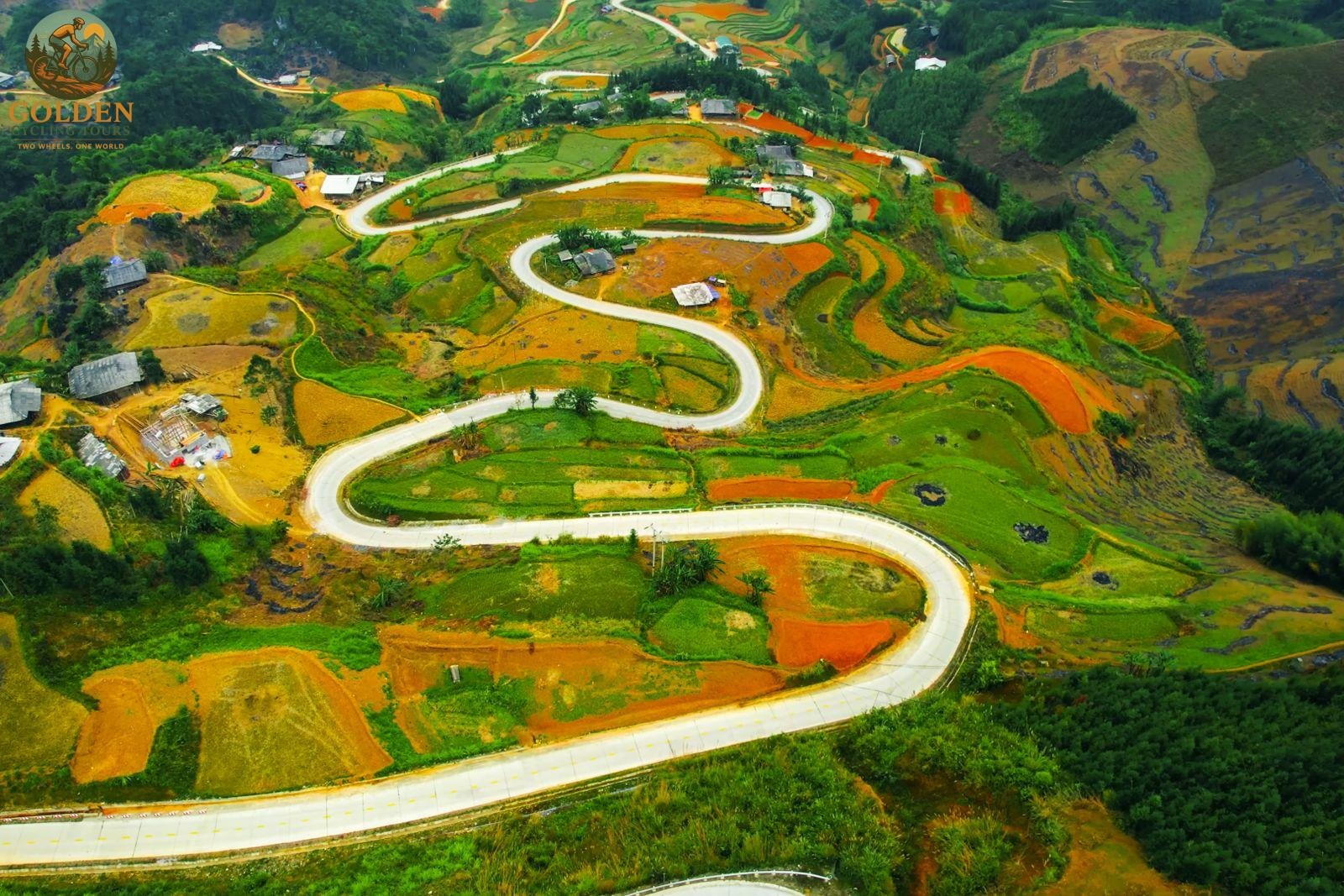
Conquering these legendary mountain corridors requires physical conditioning, mental fortitude, and smart pacing strategies. This guide to Training for Biking Northern Vietnam: Preparing for Mountain Passes by Golden Cycling Tours gives you all the training techniques, gear insights, and route knowledge needed to master Indochina's most dramatic topographies with strength and confidence.
Conquering multi-mile climbs across high-altitude frontier passes demands tailored preparation. Following a structured conditioning routine ensures your muscles, cardiovascular system, and mindset are ready for back-to-back climbing days.
High-cadence pedaling is your greatest asset on extended alpine climbs. Aiming for a steady cadence between 75 and 85 RPM prevents premature muscle fatigue in your quads and calves. Spin in an easy gear rather than mashing big gears, allowing your cardiovascular system to shoulder the workload. Practice seated climbing during training rides to conserve vital energy for sudden, steep gradients.
Building robust leg power and core stability keeps your riding position efficient during long hours in the saddle. Integrate compound strength exercises into your weekly training schedule:
Squats and Lunges: Build quad, hamstring, and glute resilience required for sustained power output on climbs like O Quy Ho Pass and Ma Pi Leng Pass.
Planks and Core Rotations: A solid core reduces lower back fatigue, enabling smooth power transfer from your hips down through the pedals.
Step-Ups and Calf Raises: Strengthen ankle joints and stabilizing muscles for technical gravel climbs and off-road village tracks.
Simulating long mountain climbs on your local roads or indoor trainer is crucial when Training for Biking Northern Vietnam: Preparing for Mountain Passes. Incorporate structured hill repeat sessions once or twice a week:
Sweet Spot Intervals: Perform 2 to 3 sets of 15-minute intervals at 88% to 93% of your Functional Threshold Power (FTP) to build stamina for multi-hour ascents.
Threshold Climbing Repeats: Find a local hill with a 6% to 8% gradient and complete 4 to 6 repeats of 5 minutes at threshold effort, focusing on smooth breathing and steady pedal strokes.
Long Weekend Rides: Accumulate back-to-back long rides on rolling terrain to prepare your body for multi-day cycling itineraries.
Climbing high-altitude passes is as much a mental victory as a physical one. When gradients steepen, focus on deep, abdominal breathing to keep oxygen flowing to your muscles. Break long climbs down into manageable visual markers—such as the next hair-pin turn, a roadside tea stall, or a mile marker—rather than focusing on the summit miles away.
Proper physical preparation unlocks access to Northern Vietnam's most celebrated cycling destinations.
Your cycling expedition often begins in historic Hanoi, where morning air carries the rich aroma of dark-roasted espresso coffee and simmering star anise broth. Warm up your legs by spinning along the leafy perimeter of West Lake, riding across the historic steel beams of Long Bien Bridge, and circling Hoan Kiem Lake. Book our curated hanoi bike tours to kickstart your journey.
In Ninh Binh, vertical limestone towers rise directly out of mirror-like water channels. Riding through Tam Coc, Trang An, and the ancient capital of Hoa Lu offers ideal flat and rolling gravel terrain to adjust your gearing before heading into high mountain passes. Reserve your trip on our tailored ninh binh bike tours.
West of Hanoi lies Mai Chau, a peaceful valley enclosed by soaring limestone walls. Nearby, Pu Luong Nature Reserve features challenging jungle climbs where giant bamboo waterwheels creak lazily alongside clear streams. The rolling terrain here provides an excellent warm-up for high-altitude passes. Discover these pristine sanctuaries on our mai chau bike tours and pu luong bike tours.
High mountain climbs demand peak conditioning. Ascending toward Sapa, test your training against O Quy Ho Pass, one of Vietnam's legendary mountain passes, while taking in sweeping views across the sculpted Muong Hoa Valley. Further east, Bac Ha features vibrant Flower H'mong markets filled with mountain spices and colorful textiles. Test your stamina on our specialized sapa bike tours and backcountry bac ha bike tours.
For ultimate frontier climbing, northernmost Vietnam delivers unmatched grandeur. Riding through Ha Giang takes you through the UNESCO-listed Dong Van Karst Plateau Geopark. Challenge the sheer cliffside road of Ma Pi Leng Pass, hanging thousands of feet above the turquoise Nho Que River. In Cao Bang, gravel routes lead to the roaring mist of Ban Gioc Waterfall. Experience these remote pass routes on our high-end ha giang bike tours and wilderness cao bang bike tours.
Combine regional mountain chains into one multi-day expedition. The dramatic ridges of Vietnam Northwest blend seamlessly with the mystical limestone labyrinths of Vietnam Northeast. Explore our multi-day itineraries for Vietnam Northwest Bike Tours, Vietnam Northeast Bike Tours, and our complete routes for Cycling Northern Vietnam.
Follow the historical backbone of the nation along the iconic Ho Chi Minh Trail. Feel the climate warm as you cycle past dense jungle canopies, historical monuments, and quiet river valleys. For the ultimate cross-country challenge, explore our ho chi minh trail cycling tours and cross-nation Cycling North to South Vietnam packages.
Every mountain pass can be enjoyed with high-torque electric pedal assist, private mechanics, and luxury support vans. Explore our exclusive vietnam luxury bike tours and state-of-the-art vietnam e-bikes tours for the perfect balance of athletic sport and luxury.
Proper nutritional refueling accelerates muscle recovery after demanding climbs. In Hanoi, start your morning with a steaming bowl of Pho Bo filled with tender beef, fresh cilantro, and warm star anise broth. While conquering mountain passes in Ha Giang or Sapa, replenish your energy with tender mountain pork grilled over charcoal with wild Mac Khen pepper berries or hot bamboo-cooked sticky rice known as Com Lam in Mai Chau. Golden Cycling Tours selects clean, authentic farm-to-table restaurants and private homestays where ingredients are harvested daily from local gardens.
Restful sleep is essential for riding recovery. Our itineraries feature hand-selected accommodations designed for comfort and tranquility. Experience eco-luxury resorts with heated infinity pools overlooking mountain ranges in Sapa or peaceful, boutique stilt-house stays in Pu Luong Nature Reserve and Mai Chau. Each property provides plush bedding, modern private bathrooms, hot pressurized showers, bike wash areas, and secure charging stations for e-bike batteries.
From arrival to departure, your journey is handled with absolute precision. Private air-conditioned support vehicles accompany your group throughout the ride. Luggage, extra clothing layers, and spare gear are transported safely inside the van. Professional mechanics travel inside the vehicle to handle gear tune-ups, tire pressure checks, and bike washings after every ride. If your legs need a break on a steep climb, your support van is right behind you.
Riding through remote mountain villages brings you into close contact with Black H'mong, Tay, White Thai, and Red Dzao communities. Respect local customs by removing shoes before entering traditional wooden homestays. Greet hosts warmly with a smile and a gentle nod. When photographing local villagers or market stalls in Bac Ha, ask for permission politely. Using reusable water bottles provided in your support vehicle helps keep mountain ecosystems clean and free of plastic waste.
Timing plays an important role when planning your cycling vacation:
Autumn (September to November): Widely considered the best season for mountain cycling. Days are sunny, humidity is low, and temperatures are pleasantly cool. Shimmering golden rice harvests fill valleys across Mai Chau, Muong Hoa Valley, and Pu Luong Nature Reserve.
Spring (March to May): Another exceptional window for active travel. Mountain slopes bloom with wild plum and peach blossoms, while rivers run clear and green. Packing lightweight layers with a windproof jacket is ideal.
Winter (December to February): Cold and atmospheric in high-altitude destinations such as Ha Giang and Sapa. Thermal layers, full-finger gloves, and warm base layers are essential.
Summer (June to August): Warm and lush with occasional tropical downpours. Pack lightweight, quick-drying cycling apparel and rain jackets for afternoon showers.
"Applying the tips from Training for Biking Northern Vietnam: Preparing for Mountain Passes made all the difference on Ma Pi Leng Pass! My legs felt strong, and having Golden Cycling Tours support vans right behind us gave me complete confidence on every steep climb." — Stefan & Laura K., Austria
"Riding through Sapa and Ha Giang was an absolute bucket-list dream. The training advice on cadence and pacing kept me fresh throughout 8 long riding days. Unforgettable support and incredible boutique homestays!" — David P., Canada
A solid baseline of aerobic fitness and regular cycling experience is recommended. However, with our high-torque e-bike options and full-support vehicles, riders of varying fitness levels can conquer these passes comfortably.
For mechanical road and gravel bikes, a compact chainset (50/34T) paired with a wide-range cassette (11-34T or 11-36T) provides the low gearing necessary to maintain a comfortable cadence on 10% gradients.
Yes! Our private support vehicles follow your cycling group at all times. You can transition into the climate-controlled van whenever you need rest and rejoin the group whenever you wish.
Consume high-carb energy gels, chews, or bananas every 45 to 60 minutes during long climbs. Stay well-hydrated with water and electrolyte drinks provided in your support van.
Ready to test your strength on Indochina's most iconic climbs? Contact Golden Cycling Tours today to book your adventure using our guide to Training for Biking Northern Vietnam: Preparing for Mountain Passes.

.jpg "Thai Binh Vietnam Bicycle")
.jpg "Phu Tho Vietnam Cycling")
.jpg "Thai Nguyen Cycling Vietnam")
.jpg "Tuyen Quang Cycling Vietnam")
.jpg "Vinh Phuc Cycling Vietnam")
Leave a Reply
Your email address will not be published. Required fields are marked *