- Call us Via Whatsapp: +84 (0) 832 126 699
4.9 stars on our site
(15,000 reviews)
- Monday - Sunday : 08:00 - 17:00
(15,000 reviews)

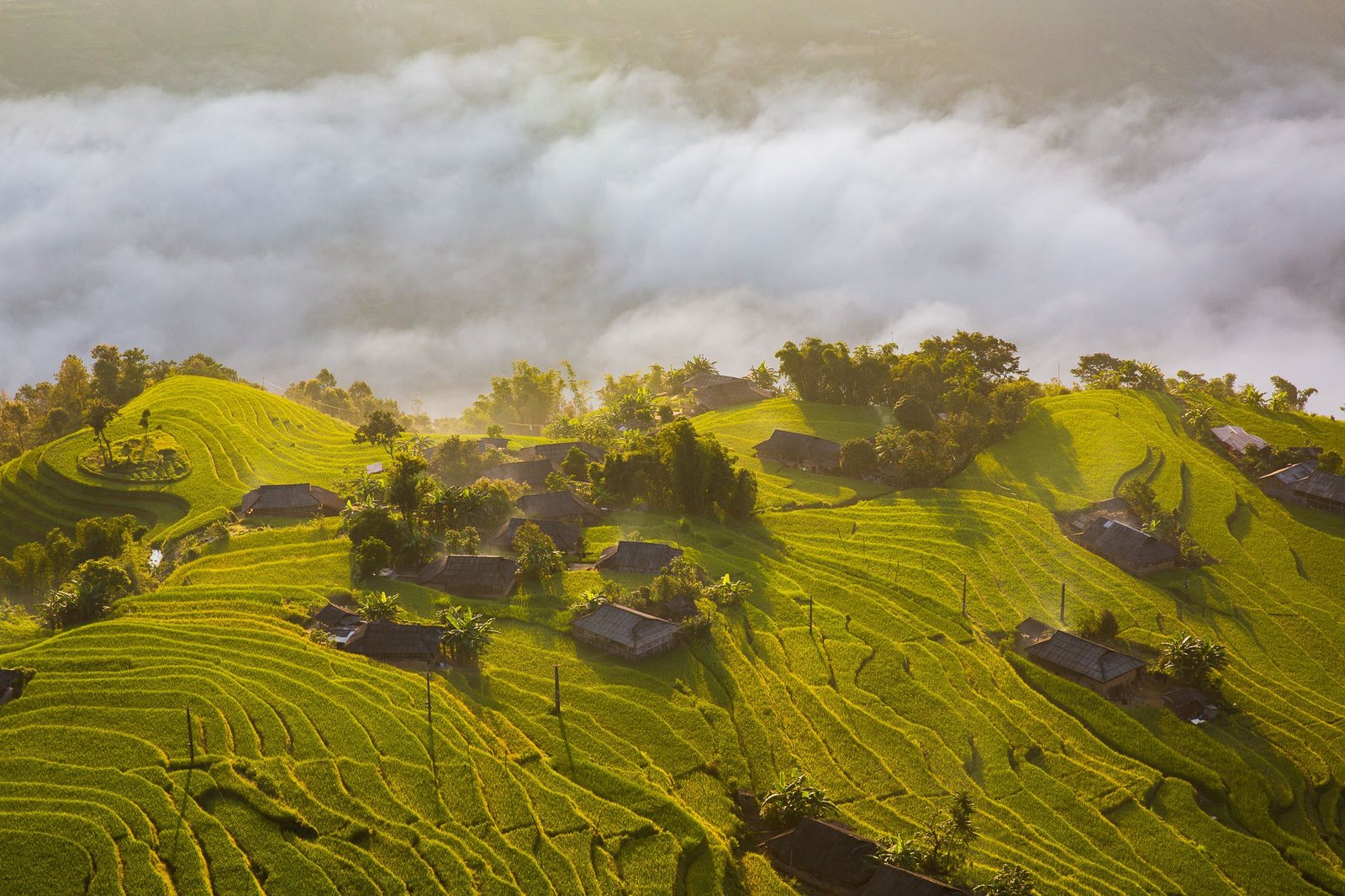
High in the northernmost frontier of Vietnam, where dramatic limestone mountains pierce the sky and shifting clouds gather in deep, verdant valleys, lies an agricultural wonderland untouched by the rapid pace of modern development. This is a region defined by ancient customs, towering mountain ridges, and some of the most spectacular terraced landscapes on Earth. For active travelers, conscious adventurers, and landscape storytellers seeking a deeply authentic and physically rewarding experience, nothing compares to the quiet joy of embarking on a Scenic Mountain Cycling Vietnam: Ultimate Guide to Highland Wonders expedition. This pristine mountainous realm, defined by towering ridges and carved terrace steps, offers an unparalleled canvas for travelers who wish to explore at a human pace. By trading crowded tour buses for the freedom of two wheels, you can experience the visual drama of the highlands intimately, breathe the crisp alpine air, and build meaningful, respectful connections with the ethnic minority communities who have guarded these mountains for centuries.
As the international travel community shifts toward low-impact, sustainable tourism, active travel has emerged as the premier method for exploring sensitive destinations. Traveling by bicycle allows you to navigate narrow farm tracks, share genuine smiles with local families, and access hidden valleys that are completely closed to motorized vehicles. Through specialized, premium tour operators like Golden Cycling Tours, travelers can now experience well-supported, expertly guided journeys that reveal the deepest secrets of the northern highlands. Whether you choose to begin your journey with the historic charm of the capital city through Hanoi Bike Tours or glide past the tranquil, flat waterways of Ninh Binh Bike Tours, this comprehensive guide will prepare you for a transformative journey through the majestic highlands of northern Vietnam.
To truly appreciate the magic of a highland cycling holiday, one must understand the distinct geographic and visual transformations that define this region. Northern Vietnam is a land of extreme contrasts. It transitions from the fertile, flat expanse of the Red River Delta to the near-vertical mountainsides of the northwest and the jagged, extraterrestrial limestone labyrinth of the northeast. This spectacular wilderness undergoes a complete sensory transformation throughout the seasons, offering a unique visual experience depending on when you choose to plan your holiday.
During the spring months, the terraced fields of the highlands are flooded with water from mountain springs in preparation for the new rice planting. The mountainsides look like thousands of giant mirrors cascading down the hillsides, reflecting the dramatic colors of the sunrise and sunset clouds. For photographers and cyclists alike, this season offers unparalleled opportunities to capture the geometry of the terraces, the reflection of the sky, and the silhouettes of farmers working in the water. The weather is dynamic, with cool mornings and warm afternoons, making it an excellent time for active riding.
As the young rice crops grow rapidly, the entire landscape is transformed into a vibrant, endless sea of brilliant emerald green. The weather is warm and tropical, with dramatic afternoon rain showers that clear to reveal pristine, crisp mountain views. The high contrast between the bright green crops, the dark limestone mountains, and the white mountain mist creates a highly dramatic visual environment, perfect for capturing deep landscapes and experiencing the raw, natural power of the highlands.
This is widely considered the most beautiful time of year to visit and is the peak period for any mountain-focused journey. The rice ripens and turns a brilliant, glowing golden-yellow. The air smells of sweet, freshly harvested straw, and the sight of endless golden steps climbing toward the clouds is a sensory experience you will remember for the rest of your life. This season offers a warm, glowing light during the golden hours of sunrise and sunset, painting the districts of Hoang Su Phi, Sapa, and Mu Cang Chai in rich, golden hues.
Tackling the steep gradients of Northern Vietnam on a standard road or mountain bicycle requires an elite level of physical fitness. The roads twist and turn, rising thousands of meters over short distances. When you are carrying daypacks, camera bodies, and extra water, the challenge becomes even more daunting. This is where the premium fleet from Vietnam E-Bikes Tours completely redefines active travel.
Electric pedal-assist mountain bikes flatten the steep hills, making these majestic terrains accessible to travelers of varying fitness levels while maintaining the active, open-air essence of a cycling holiday. The mechanics of e-biking are perfectly suited for mountainous terrain. These e-bikes are not electric scooters; they require the rider to pedal, which preserves the active feel of a classic bicycle tour.
However, as you begin to climb, the mid-drive electric motor senses your effort and provides smooth, proportional assistance. When you encounter steep, rocky ascents leading to high ridges, you can simply increase the assistance level. This allows you to maintain a steady cadence and comfortable heart rate, ensuring you arrive at the summit with plenty of energy to focus on the spectacular views, frame your shots, and explore the mountaintop villages on foot. This means you spend your energy engaging with the culture and capturing beautiful memories rather than battling physical exhaustion.
The northern highlands are ecologically sensitive areas characterized by pristine forests, delicate water management systems for the terraces, and highly localized wildlife habitats. By choosing an e-bike, you drastically minimize your carbon footprint compared to traveling by motorbike or support car.
The near-silent operation of electric bikes ensures that you do not contribute to noise pollution, allowing you to hear the rustle of bamboo leaves, the rushing waters of mountain streams, and the gentle songs of forest birds. This commitment to green travel promotes responsible exploration that preserves the beauty of Vietnam for generations to come.
The geography of northern Vietnam is a dream come true for adventure cyclists. Every bend in the road reveals a new vista, a deeper valley, or a higher peak shrouded in mist. During your ride, you will challenge yourself on legendary roads and stand in awe before natural wonders that have captured the imaginations of travelers for decades.
No cycling tour in this region is complete without testing your mettle against the famous mountain passes. The ride takes you through the steep, winding hairpins of the Cong Troi Pass, also known as Heaven's Gate, in Ha Giang Province. Climbing this pass on an e-bike is an exhilarating experience; as the motor hums softly to assist your climb, you can focus entirely on the dramatic drop-offs, the deep gorges, and the sea of clouds gathering in the valleys below.
Further along the route, you will encounter the misty ridges of Gio Pass, or the Wind Pass. True to its name, this high-altitude corridor is often swept by cool winds and swirling fog, creating an ethereal, mysterious atmosphere as you glide along the ridge lines. The dense foliage of the surrounding Hoang Su Phi Forest National Reserve hugs the roadside, offering cool shade, dappled light, and a sense of deep isolation from the modern world.
In the neighboring region of Sapa, you can test your endurance on the legendary O Quy Ho Pass, one of the four great mountain passes of Vietnam. Stretching over fifty kilometers, this majestic road wraps around the high ridges of the Hoang Lien Son mountain range, offering unparalleled views of deep gorges and towering peaks.
Further west, you can ride across the spectacular Khau Pha Pass, which looks down over the breathtaking Mu Cang Chai terraced valleys, a region world-famous for its perfectly circular, dome-shaped rice terraces. Finally, the ultimate challenge awaits at the Ma Pi Leng Pass, a legendary road carved into the vertical limestone cliffs of the Dong Van Karst Plateau, offering jaw-dropping views of the Nho Que River winding through the deep canyon below.
For those who love high-altitude scenery, the shadows of Vietnam’s northern giants are never far away. The towering massif of Tay Con Linh Peak dominates the skyline. As the highest peak in northeast Vietnam, reaching an elevation of twenty-four hundred and twenty-seven meters, its slopes are home to ancient tea forests and rare alpine ecosystems protected within the Tay Con Linh Nature Reserve.
Another dramatic landmark is Chieu Lau Thi Peak, the second-highest peak in the province at twenty-four hundred and two meters. This peak is famous for its jagged rocky summit and the spectacular cloud hunting opportunities it offers at sunrise. In Sapa, the cloud-shrouded summit of Fansipan Peak, the highest peak in Indochina at thirty-one hundred and forty-seven meters, watches over your journey. While you may not cycle to the very top of these summits, the roads wrapping around their bases provide some of the most challenging, visually rewarding, and photogenic riding in all of Asia.
Your itinerary will lead you through a series of valleys, each boasting its own unique terraced formations and natural wonders.
Ban Phung Terraced Fields are legendary for their sheer depth and steepness. Here, the rice terraces drop almost vertically into the deep gorge below, with small ethnic stilt houses perched precariously on the ridges.
In contrast, the Nam Ty Terraced Fields offer a wider, more expansive view of golden steps that seem to catch the afternoon sun like waves of liquid brass.
You will also explore the quiet beauty of Ban Luoc Terraced Fields, which are officially recognized as a National Heritage Site. This valley features the largest contiguous area of terraced fields in the district, carved over hundreds of years by the Dao and Tay ethnic groups.
Further highlights include the lush Thong Nguyen Valley, nestled at the confluence of three major rivers, and the iconic Muong Hoa Valley in Sapa, which features some of the most famous terraced landscapes in Vietnam winding alongside a crystal-clear river.
In the neighboring province of Yen Bai, the scenic paths of the Tu Le Valley and the challenging climbs of the Lim Mong Valley offer spectacular, close-up views of the highly dramatic Mu Cang Chai terraced fields, displaying a completely different style of masterfully carved mountainsides.
In the northeast, you can ride through the lush valleys of Ba Be National Park, where the quiet trails loop around Ba Be Lake, the largest natural freshwater lake in Vietnam, surrounded by towering karst peaks and ancient limestone caves.
Further east, the spectacular Ban Gioc Waterfall, situated on the international border between Vietnam and China, represents one of the most majestic natural wonders in all of Asia. Here, the Quay Son River cascades down multiple tiers of limestone shelves, surrounded by beautiful bamboo groves and towering karst formations.
The physical landscape of northern Vietnam is inseparable from the human hands that shaped it. The region is a vibrant mosaic of ethnic minority groups, including the Red Dao, Flower H'mong, Nung, La Chi, Tay, and White Thai people. Each community possesses its own unique language, architectural style, colorful attire, and spiritual relationship with the land. When you choose to experience this vibrant heritage up close, traveling at a human pace allows you to appreciate the subtle differences between each valley and enjoy authentic, respectful interactions with daily life.
The Red Dao, easily recognized by their striking red headwear and intricate hand-embellished indigo jackets, are primarily settled on the mid-altitude slopes of Tay Con Linh Peak. They practice a unique form of Taoism blended with animism and are famous for their deep knowledge of forest ecology and traditional medicine. Over generations, they have perfected herbal bath remedies gathered from dozens of wild plants found in the dense forests.
During your cycling stops in villages like Nam Hong Village and Phin Ho Village, you will observe their quiet, respectful relationship with the forest. The Red Dao are also the guardians of ancient tea groves. They harvest tea leaves from moss-covered trees that have stood for hundreds of years on the misty slopes of the Tay Con Linh Nature Reserve, processing the leaves using traditional hand-roasting techniques that preserve a complex, earthy flavor.
Living in some of the highest and most rugged hamlets along the mountain ridges are the Flower H'mong. Renowned for their extraordinary, multi-colored attire featuring geometric embroidery, batik patterns, and heavy silver jewelry, the H'mong are masters of high-altitude farming. They cultivate corn and dry rice on steep slopes where other crops would fail.
As you navigate the winding concrete paths on your bicycle, you will often see H'mong women sitting together on wooden stilt porches, their hands moving with incredible speed as they stitch intricate patterns into hemp fabric. Their vibrant culture is best experienced at the weekend markets, where families travel from distant mountain ridges to trade goods, catch up on local news, and celebrate their shared heritage.
The lower valleys and sweeping hillsides are primarily inhabited by the La Chi, Nung, and Tay communities. The La Chi and Nung are widely credited with being the original creators of the magnificent terraced fields in Hoang Su Phi. Over hundreds of years, they developed sophisticated gravity-fed irrigation networks, using split bamboo pipes to channel water from high-altitude mountain springs down through thousands of individual terraced plots.
The Tay people, on the other hand, traditionally settle near running streams in the lower valleys, constructing beautiful, spacious stilt houses with thatched or tiled roofs. They are famous for their warm hospitality, gentle folk songs accompanied by the Tinh lute, and their beautiful indigo-dyed clothing. Staying in a Tay stilt house allows you to enjoy falling asleep to the peaceful sound of running water and crickets in the valley.
Cycling through high mountain passes builds a serious appetite. Fortunately, the culinary heritage of northern Vietnam's highland districts is as rich and diverse as its landscapes. The local cuisine relies heavily on fresh, locally sourced mountain ingredients, aromatic herbs, and traditional preservation techniques like smoking and fermenting.
To fully immerse yourself in the local culture, you must venture beyond standard western fare and sample authentic regional delicacies.
Shan Tuyet Tea: Sourced from ancient, moss-covered tea trees growing wild on the misty slopes of Phin Ho Village and Siu Thau Village, this premium green tea has a sweet, complex flavor and is famous for its health benefits.
Thang Co: A traditional highland soup made with slow-simmered mountain herbs, spices, and local meats, best enjoyed hot at a bustling weekend market.
Local Black Chicken: A heritage breed raised wild on the mountain slopes, known for its lean, flavorful dark meat, often roasted with wild lime leaves or simmered in a hotpot.
Com Lam (Bamboo Tube Rice): High-quality sticky rice mixed with coconut milk, packed inside fresh bamboo tubes, and roasted over hot coals until fragrant.
Five-Color Sticky Rice: Colored naturally using local forest plants and leaves to represent the five elements of nature, this soft, fragrant dish is a staple of traditional festive meals.
While formal restaurants are rare in these rugged regions, the best culinary experiences are found in local family-run establishments and communal homestays.
Homestays in Nam Hong Village: The communal dinners prepared by the local Red Dao hosts are legendary. You will gather around an open hearth to enjoy platters of crispy roasted pork, stir-fried wild ferns, and steaming bowls of bamboo rice, accompanied by friendly toasts of local rice wine.
Local Eateries in Vinh Quang Town: The district's main town offers several charming, family-run restaurants where you can enjoy hearty bowls of sour noodle soup (Pho Chua) and fresh river fish hotpots.
Hoang Su Phi Sunday Market: A vibrant gathering of colors, scents, and flavors, where you can sample fresh buckwheat cakes, grilled meat skewers, and traditional steamed corn cakes prepared right before your eyes.
Traditional Restaurants in Sapa Town: If your journey takes you through the high ridges of Lao Cai, the small diners in Sapa Town offer excellent hotpots featuring sturgeon, salmon, and local mountain vegetables.
Finding the right place to rest and recharge after a day of mountain cycling is crucial. The highlands offer a delightful range of accommodations that prioritize sustainability, community development, and deep immersion in nature.
For travelers seeking a true cultural exchange, staying in a traditional ethnic homestay is an unforgettable experience.
Nam Hong Village Homestays: Perched high on a scenic ridge overlooking the stunning Nam Ty Terraced Fields, these traditional wood-and-bamboo stilt houses are hosted by local families. They offer comfortable mattress pads, clean bedding, mosquito nets, and hot water showers, along with some of the most spectacular balcony views of the rice terraces in the region.
Kho Khoa Village Homestays: Located in a peaceful valley shaded by giant bamboo, these homestays offer a quiet, rustic retreat where you can enjoy the sounds of nature and starry night skies.
If you prefer a higher level of comfort and privacy while still supporting sustainable tourism practices, the region offers several exceptional eco-lodges. Booking your trip through Vietnam Luxury Bike Tours combines these premium, hand-picked accommodations with top-of-the-line electric mountain bikes.
Hoang Su Phi Lodge: Situated in the heart of Nam Hong Village, this beautiful lodge features private thatch-roofed bungalows constructed from local bamboo and stone. Each bungalow boasts a private balcony looking out over endless tiers of rice fields. The lodge also features a wonderful restaurant, an outdoor swimming pool, and traditional herbal bath facilities.
Pan Hou Retreat: Tucked away in a lush, tropical valley in Thong Nguyen Valley, this eco-resort is a haven of wellness and tranquility. Built alongside a rushing mountain river, the retreat is surrounded by beautifully manicured organic gardens. It is famous for its authentic Dao herbal baths, traditional massages, and commitment to zero-single-use plastics.
Topas Ecolodge: Located high on a scenic ridge deep inside the Sapa valley, this award-winning property features beautiful granite stone bungalows, an infinity swimming pool looking out over the spectacular Muong Hoa Valley terraces, and an unparalleled standard of sustainable luxury.
The pristine isolation of northern Vietnam's terraced districts is part of their charm, but it does require some planning to reach. Located between three hundred to nearly four hundred kilometers north of Hanoi, the journey takes you from the bustling lowlands into the dramatic, sheer-sided valleys of the northern borderlands.
Most travelers begin their journey in Hanoi, the historic capital of Vietnam.
Luxury Limousine Shuttles: High-end, air-conditioned D-Car limousines run daily from Hanoi to Ha Giang Province and Lao Cai, providing a comfortable and scenic journey into the highlands.
Private Transfers: For maximum flexibility and comfort, you can arrange a private car transfer through your tour operator, which will take you directly from your hotel in Hanoi to your accommodation in the mountains.
The Overnight Sleeper Train: For a classic Vietnamese travel experience, you can take the overnight train from Hanoi to Lao Cai station. From Lao Cai, it is a spectacular, scenic drive eastward through Sapa and Bac Ha to reach the western borders of Hoang Su Phi or westward to reach Mu Cang Chai. This option is ideal if you plan to combine your trip with Sapa Bike Tours.
Once you arrive in the target district, your primary mode of transportation will be your high-performance electric bicycle. For luggage transport, emergency assistance, and overall safety, Golden Cycling Tours provides dedicated support vehicles. These support vans carry your heavy bags, spare batteries, mechanical tools, and first-aid kits, allowing you to cycle with complete peace of mind and light daypacks.
To truly appreciate the incredible geographic and cultural diversity of northern Vietnam, we highly recommend designing an itinerary that links different spectacular cycling destinations across the country. Whether you have five days or three weeks, there is a perfect route waiting for you.
For the ultimate adventure, consider a comprehensive route that showcases the absolute best of northern Vietnam's mountainous terrain. You can start your journey with Hanoi Bike Tours to explore the historic temples and fertile plains of the Red River Delta.
From there, transition northward into the steep, limestone-studded valleys of Mai Chau Bike Tours and the dramatic bamboo forests of Pu Luong Bike Tours. These southern highlands provide the perfect training ground, allowing you to adjust to your e-bike’s handling before heading into the extreme elevations of the far north.
After conquering the central valleys, journey northward through the serene landscapes of Ninh Binh Bike Tours, where towering karst towers rise directly out of flooded rice paddies. From Ninh Binh, head deep into the rugged northern borderlands to experience the stunning karst formations of Ha Giang Bike Tours and the majestic waterfalls of Cao Bang Bike Tours. By linking these routes, you create a seamless, epic journey that represents the pinnacle of Cycling Northern Vietnam.
If you want to focus your journey on specific geographic regions, you can choose between two beautifully curated regional routes.
Vietnam Northwest Bike Tours: This route focuses on the dramatic high peaks of the Hoang Lien Son range. You will climb the iconic O Quy Ho Pass, explore the misty valleys of Sapa, and wind your way through the spectacular terraces of Hoang Su Phi and Mu Cang Chai.
Vietnam Northeast Bike Tours: This itinerary takes you through the wild, dramatic landscapes of the Dong Van Karst Plateau, along the steep cliffs of the Ma Pi Leng Pass, and eastward into the pristine, forested valleys of Cao Bang.
For those with a grand vision of exploring the entire length of this beautiful nation, these regional routes can be integrated into a massive, once-in-a-lifetime Cycling North to South Vietnam expedition, allowing you to ride the entire length of this incredibly beautiful and diverse nation on a customized tour.
Nothing speaks louder than the experiences of those who have already pedaled these legendary roads and captured their magic through a lens. Here are a few stories from travelers who chose to book their mountain adventures through our premium services.
"We have cycled and photographed all over the world, but nothing prepared us for the sheer scale and beauty of this region. As active seniors and passionate landscape photographers, we were a bit nervous about the extreme mountain gradients of Ha Giang and Yen Bai while carrying our heavy mirrorless systems and tripods. We decided to book their specialized Scenic Mountain Cycling Vietnam: Ultimate Guide to Highland Wonders package and it completely changed our perception of what active mountain travel could be. Choosing a premium e-bike option was the best decision we ever made. Discovering the authentic ethnic culture on these paths gave us the perfect balance of physical activity and local discovery. We climbed the legendary Cong Troi Pass without feeling completely exhausted and arrived at our homestay in Nam Hong Village with plenty of energy to walk through the terraces, chat with the local Red Dao ladies, and enjoy a wonderful herbal bath. It was an absolutely flawless trip organized by a truly professional team."
"For me, travel and portrait photography are all about connecting with local people in an organic, respectful way. Traveling by e-bike allowed me to glide silently into villages without the loud, disruptive noise of a motorbike engine. During my journey along these mountain roads, I stopped in Ban Phung Village to watch a family working on their irrigation channels. Because I was on a bicycle, they immediately smiled, waved me over, and showed me how they manage the water flow. The guide from Golden Cycling Tours was incredible, translating our conversations and sharing deep insights into the local customs. The food at the homestays was spectacular, the scenery was mind-blowing, and the riding was incredibly fun. I will definitely be back to book their Cao Bang Bike Tours next year!"
To ensure a safe, comfortable, and deeply rewarding journey through the mountains of northern Vietnam, keep these practical tips in mind as you plan your trip.
While the electric assist on your bicycle significantly reduces the physical strain of climbing, you should still be comfortable spending several hours a day in the saddle. The mountain roads can be narrow, winding, and occasionally bumpy, requiring good bike-handling skills and focused concentration on descents. Always wear a high-quality helmet, follow the instructions of your lead guide, and stay hydrated by drinking plenty of water throughout your ride.
High-Quality Cycling Gear: Bring lightweight, moisture-wicking cycling jerseys, padded shorts for long-term comfort, and a windproof, waterproof jacket to protect against sudden mountain showers and cool ridge-line winds.
Appropriate Footwear: Pack sturdy, closed-toe athletic shoes or light trail-running shoes with good grip for pedaling and walking through muddy terraced fields.
Sun and Bug Protection: Bring high-SPF sunscreen, a protective hat for rest stops, polarized sunglasses, and a reliable insect repellent containing DEET or picaridin.
Respectful Attire: When entering local stilt homes or visiting communal villages, dress modestly by covering your shoulders and knees to show respect for the local cultural norms.
The mountains are calling, and the stunning terraces of Hoang Su Phi, Mu Cang Chai, and Sapa are waiting to be explored. Whether you are a seasoned cyclist looking to push your limits, an avid photographer seeking the ultimate landscape shot, or a curious traveler looking for an authentic, sustainable way to experience the beating heart of rural Vietnam, this journey will leave an indelible mark on your soul.
Get in touch with the expert travel designers at Golden Cycling Tours today. Let us help you customize the perfect itinerary, select the ideal premium e-bike for your riding style, and introduce you to the majestic beauty, rich cultures, and warm hospitality of the highlands. Your ultimate mountain adventure starts here!
Yes! Our electric pedal-assist bicycles are incredibly user-friendly and designed to make mountain cycling accessible to riders of all experience levels. If you can ride a standard bicycle and have a basic sense of balance, you can easily enjoy an e-bike tour. Our experienced guides will provide a comprehensive safety briefing and hands-on training session before we head out onto the mountain roads.
We highly recommend carrying your gear in a dedicated, weather-sealed backpack with a fitted rain cover. Our support vehicle is always nearby to carry any heavy tripods or secondary gear you do not wish to ride with. In the event of a sudden downpour, our guide will assist you in packing your gear securely, and you can easily load your bicycle onto our support vehicle if needed.
The high-capacity lithium-ion batteries on our premium e-bikes are specifically chosen for demanding mountain terrains. Depending on the rider's weight, the level of pedal-assist used, and the steepness of the climbs, a single charge typically lasts between sixty to eighty kilometers of mountain riding. Our support vehicle always carries spare, fully-charged batteries, allowing us to swap them out quickly during our lunch breaks if needed.
Safety is our absolute highest priority. All of our routes are carefully scouted to avoid heavy traffic and focus on quiet, scenic backroads and paved rural paths. You will be accompanied by professional, first-aid-certified guides and a dedicated support vehicle equipped with spare parts and communication gear. We closely monitor local weather conditions and adjust our routes to ensure a safe, comfortable, and highly enjoyable riding experience.
Absolutely! We pride ourselves on creating tailored, bespoke travel experiences that match your specific interests, budget, and schedule. Whether you want to add extra rest days to enjoy a relaxing herbal bath at Pan Hou Retreat, spend more time exploring the bustling local markets, or combine your ride with other iconic regional routes like Sapa Bike Tours or Cao Bang Bike Tours, our travel experts will design the perfect journey for you.

.jpg "Thai Binh Vietnam Bicycle")
.jpg "Phu Tho Vietnam Cycling")
.jpg "Thai Nguyen Cycling Vietnam")
.jpg "Tuyen Quang Cycling Vietnam")
.jpg "Vinh Phuc Cycling Vietnam")
Leave a Reply
Your email address will not be published. Required fields are marked *