- Call us Via Whatsapp: +84 (0) 832 126 699
4.9 stars on our site
(15,000 reviews)
- Monday - Sunday : 08:00 - 17:00
(15,000 reviews)

Traversing the entire length of Vietnam on two wheels is a dream journey for active travelers seeking to immerse themselves in the raw, unfiltered beauty of Southeast Asia. To ride from the ancient, tree-lined streets of the northern capital of Hanoi all the way to the pulsing, modern energy of Saigon in the south is to witness a massive, diverse country unfolding in slow motion. Over a distance of roughly two thousand kilometers, you will witness dramatic transitions in landscapes, climates, culinary traditions, and local dialects. If you are looking for a journey that tests your physical endurance while offering an intimate perspective on local culture, the North Vietnam to South Vietnam Bike Tour: The Ultimate Guide is your definitive companion.
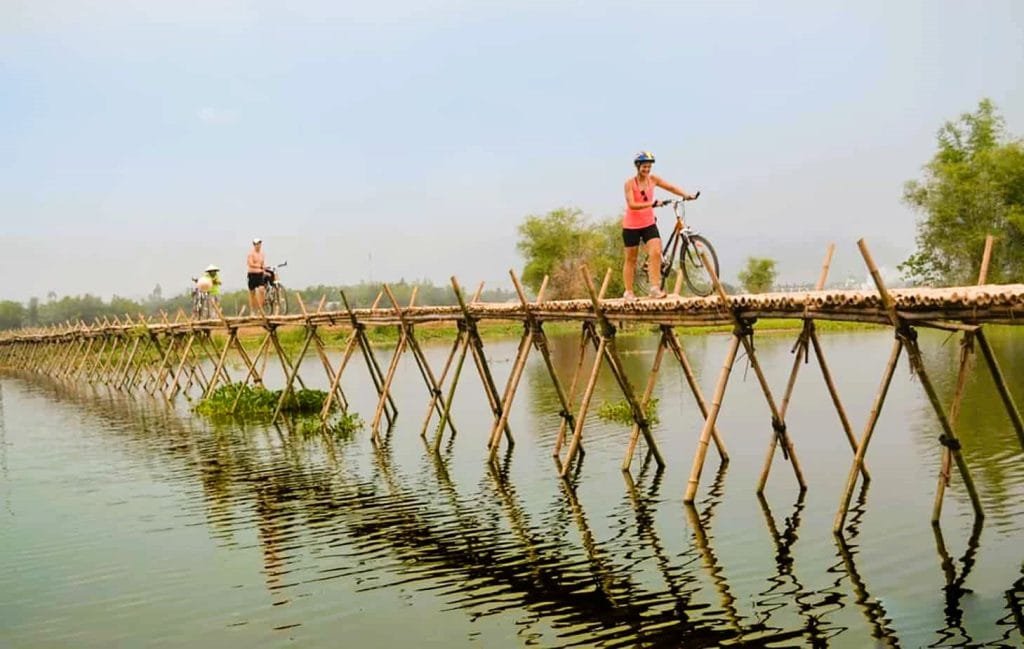
To embark on a trans-national bicycle tour is to choose a slow-travel philosophy where the journey itself is far more important than the destination. From the towering karst peaks of the far north to the flat, sun-drenched concrete canal paths of the Mekong Delta, this journey represents the ultimate cross-country expedition. Planning and executing an adventure of this scale requires careful preparation, a passion for active discovery, and the right local support. By partnering with the travel pioneers at Golden Cycling Tours, you can turn this monumental dream of crossing Vietnam into a seamless, highly rewarding, and safe reality.
To truly appreciate Vietnam, you must experience its transitions mile by mile. When traveling by plane, train, or bus, you miss the quiet, subtle details that make this land so unique. On a bicycle, you hear the changing dialects of the villagers as you cross historical borders, smell the shifting agricultural landscapes from northern pine forest resin to coastal salt air, and feel the tropical humidity rise as you push southwards. The sheer geographical diversity of the route is staggering. You will conquer steep alpine passes in the morning, coast along quiet turquoise bays in the afternoon, and sleep in remote ethnic stilt houses at night.
Starting the journey in Hanoi allows you to build your momentum on some of the country's most rewarding terrain. The cool northern mountains test your climbing legs while your energy levels are at their peak. As the tour progresses southward, the geography opens up into rolling hills, scenic coastal plains, and the flat waterways of the south, rewarding your endurance with relaxed, scenic riding. To ensure a successful trip, professional operators like Golden Cycling Tours provide top-tier equipment, custom-tailored logistics, and local guides who bridge the cultural gap between international adventurers and remote communities.
Whether you are a seasoned cyclist wishing to complete a pure athletic challenge or an active traveler looking to enjoy the route with the smooth pedal-assist of modern electric bikes, this cross-country tour is highly customizable. It is a profound exploration of geography, culinary arts, and local heritage that will permanently redefine your understanding of travel.
Embarking on a long-distance bicycle journey across a country is the ultimate testament to human endurance, a deep cultural pilgrimage, and an unparalleled sensory feast. When it comes to dramatic geography, rich historical layers, and legendary hospitality, very few places on Earth can match the raw appeal of Vietnam. Spanning more than two thousand kilometers from the towering northern alpine peaks bordering China down to the flat, sun-drenched waterways of the southern Mekong Delta, a trans-Vietnam journey is the holy grail of adventure travel. For riders looking to conquer this geographic masterpiece, choosing to participate in a North Vietnam to South Vietnam Bike Tour: The Ultimate Guide represents the most definitive and life-changing travel experience available today.
Taking on an expedition of this magnitude requires thorough preparation, a passion for active discovery, and the right local support. Navigating this vast route means climbing soaring mountain passes, rolling through historic war corridors, winding along pristine coastal cliffs, and traversing a maze of quiet waterways. In this definitive guide, we explore every critical detail of planning this trans-Vietnam cycling journey. From regional route guides and essential gear checklists to local culinary discoveries, cultural etiquettes, and booking coordinates with the experts, this is your roadmap to conquering the length of Vietnam on two wheels.
When planning a cross-country tour of this magnitude, deciding which direction to ride is a major consideration that will shape your entire experience.
Opting for a southward heading of Cycling North to South Vietnam is the most popular choice for long-distance cyclists. This direction allows you to tackle the steepest mountain passes in the north while your physical stamina is at its highest, before easing into the flatter coastal stretches of central and southern Vietnam. Additionally, this direction frequently aligns with the prevailing northerly winds during the dry winter months from November to April, providing a helpful tailwind.
Conversely, choosing the reverse direction on a tour of Cycling South to North Vietnam has its own unique appeal. It allows you to warm up your muscles and build your cycling rhythm on the flat plains of the Mekong Delta and the rolling coastal hills of the south before gradually testing your strength against the monumental alpine passes of the north. Whichever direction you choose, the transitions in culture, cuisine, and landscape remain deeply rewarding.
A journey spanning the entire length of Vietnam is best planned by dividing the country into its distinct geographical zones. Each region offers a unique climate, distinct cultural communities, and specific riding conditions.
Your expedition begins in the rugged north, a region defined by dramatic karst formations, deep river valleys, and spectacular alpine scenery. This is the most physically demanding portion of your journey, but it is also the most visually stunning.
For riders who want to explore the untamed borderlands and dramatic river canyons of the far northeast, focusing on Vietnam Northeast Bike Tours is an excellent choice. This route leads you through remote frontier towns and quiet mountain roads. Conversely, choosing Vietnam Northwest Bike Tours takes you through soaring alpine passes, including the legendary O Quy Ho Pass, which climbs over two thousand meters above sea level to connect the northern mountain provinces.
The ultimate high-altitude challenge can be experienced on dedicated Ha Giang bike tours. This loop takes you through the Dong Van Karst Plateau, a UNESCO Global Geopark, where you will climb the Ma Pi Leng Pass along a road carved into vertical cliffs high above the emerald Nho Que River. This region is home to numerous ethnic minority groups whose vibrant weekly markets and terraced mountainsides provide a beautiful cultural backdrop to your physical efforts.
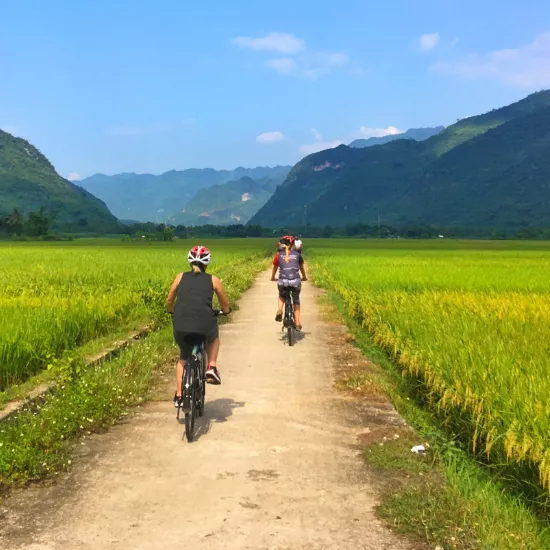
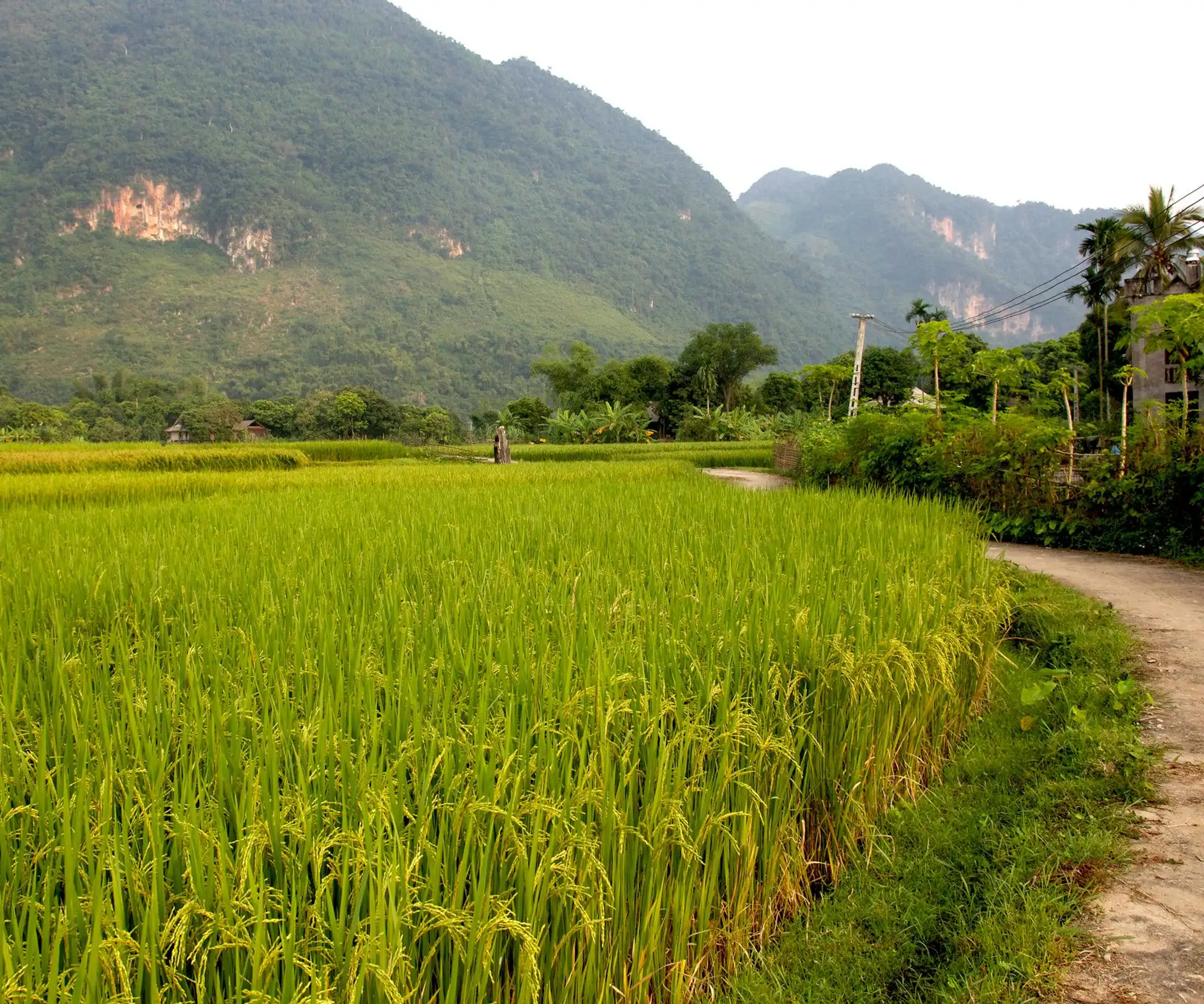
As you head south toward Hanoi, the towering peaks soften into serene valleys. A classic transition route includes exploring the quiet valley of Mai Chau. Joining Mai Chau bike tours allows you to cycle along flat, peaceful paths through green rice paddies, flanked by the traditional stilt houses of the White Thai community. From there, you can easily ride into the lush tropical reserve of Pu Luong. Participating in Pu Luong bike tours offers an exciting mix of dirt trails, bamboo forests, and dramatic terraced hillsides where traditional bamboo waterwheels are still used to irrigate the fields.
Before leaving the northern plains behind, no cyclist should miss the opportunity to ride through Ninh Binh, often called Halong Bay on land. Joining Ninh Binh bike tours takes you along quiet paths that weave through towering karst formations, ancient temples, and flooded rice fields. This incredible variety of scenery highlights why Cycling Northern Vietnam is considered one of the premier cycling experiences in Asia.
Moving south from the Red River Delta, you will face an important route decision: travel along the flat but busy coastal Highway 1, or head inland along the historic spine of the country.
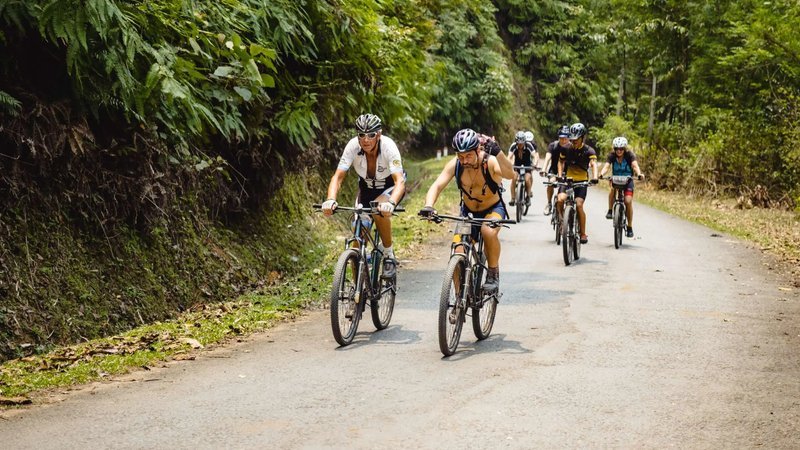
For the true adventure traveler, the inland route along the legendary Ho Chi Minh Highway is the ideal choice. Choosing Ho Chi Minh trail cycling tours offers a quiet, well-paved ride through lush mountain jungles and historic supply corridors. You will cycle through remote valleys, pass small villages of the Bru-Van Kieu and Paco communities, and cross pristine mountain streams.
This section includes a memorable ride through Phong Nha-Ke Bang National Park, home to some of the world’s largest caves and oldest karst mountains. The cycling here features rolling hills and short, steep climbs, but the reward is clean air, minimal traffic, and stunning natural beauty.
As the inland highway meets the sea, you will enter the cultural heartland of Cycling Central Vietnam. This region offers a perfect balance of challenging mountain passes and historic coastal towns.
Your first major cultural stop is Hue, the former imperial capital of the Nguyen Dynasty. Cycling along the Perfume River and exploring the ancient moats of the Imperial Citadel is a peaceful experience. South of Hue, you will encounter the famous Hai Van Pass, which climbs five hundred meters over a distance of twenty-one kilometers, offering spectacular views of Lang Co beach and the Da Nang coastline.
After descending the pass, a flat coastal ride brings you to the UNESCO-listed ancient town of Hoi An. With its yellow-walled merchant houses, historic Japanese covered bridge, and thousands of silk lanterns, Hoi An is the perfect place to rest your legs and explore the surrounding organic farming villages on a leisurely day-ride.
Continuing south from Hoi An, the route follows a dramatic coastline of quiet beaches, salt pans, and blue lagoons, including the bays of Quy Nhon and Nha Trang.
For those who want one final mountain challenge, a classic detour climbs up to the cool temperate highlands of Da Lat, winding through pine forests and coffee plantations. If you prefer to stay on the flat coastal route, the road leads toward Mui Ne, famous for its red and white sand dunes, before turning inland toward Ho Chi Minh City.
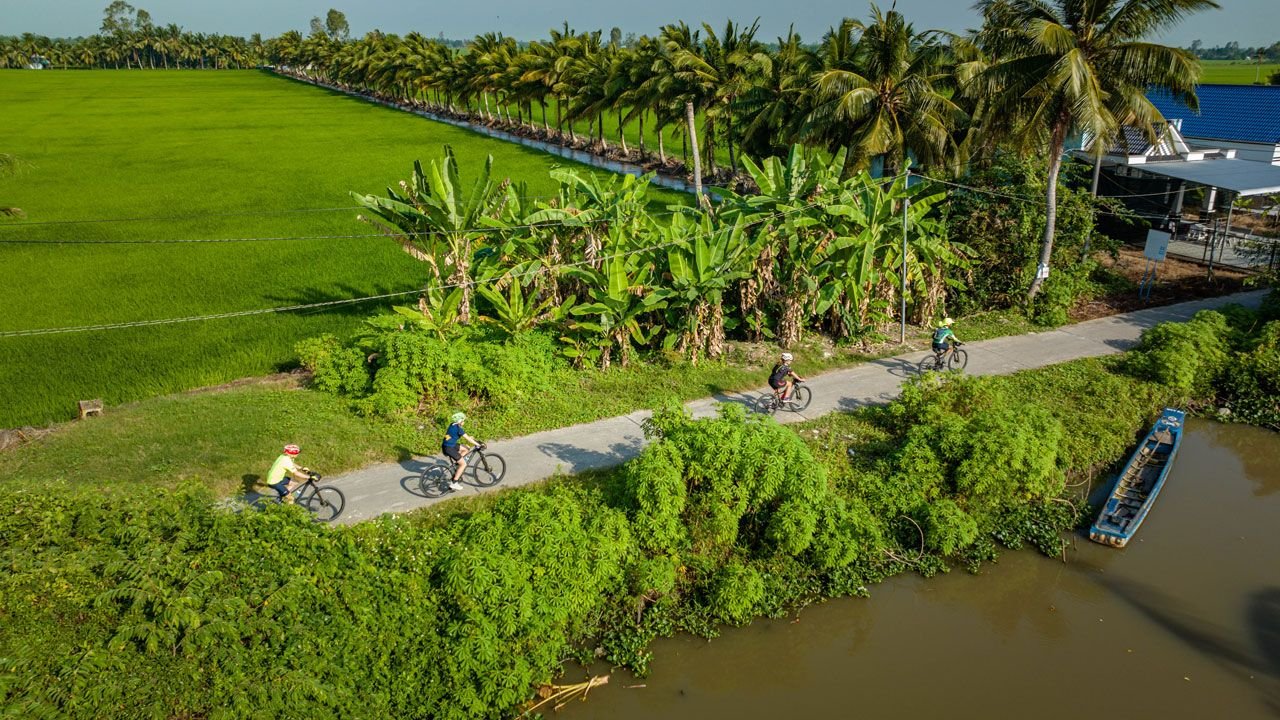
The final leg of your journey transitions into the flat, tropical world of the Mekong Delta. Here, the mountains are replaced by a vast network of rivers, canals, and green rice fields.
Embarking on Cycling Southern Vietnam offers a fast, scenic, and flat riding experience. The main adventure here is navigating narrow concrete canal paths, crossing wooden footbridges, and boarding local river ferries. You will cycle under the shade of coconut palms and fruit orchards heavy with mangoes, durians, and rambutans.
Key hubs like Tra Vinh, Ben Tre, and Can Tho offer a close look at life on the water. Cycling early in the morning allows you to visit bustling floating markets, where local boats gather to trade fresh produce. It is a peaceful, scenic, and triumphant conclusion to your cross-country journey.
Crossing an entire country is an ambitious undertaking, but modern route planning and bicycle technology have made this epic route accessible to riders of all fitness levels.
For purists who love the physical challenge of climbing under their own power, a high-quality touring or gravel bike remains the gold standard. Pushing your own limits over every mountain pass offers a deep sense of athletic accomplishment. A robust steel or aluminum frame with plenty of mounting points for racks, water bottles, and gear is ideal for independent riders.
The physical demands of a two-thousand-kilometer tour can be intimidating, but modern technology has made this journey highly accessible. If you are concerned about your endurance or want to focus more on taking photos and enjoying the scenery, modern electric bikes are a fantastic option. Booking Vietnam e-bikes tours allows you to glide smoothly over the steepest climbs of Ha Giang or the Hai Van Pass. With reliable pedal-assist technology, e-bikes level the playing field, allowing couples, families, and mixed-fitness groups to enjoy the same adventure together.
For those who want to travel with comfort and ease, choosing Vietnam luxury bike tours provides premium carbon road bikes or high-end e-bikes, supported by air-conditioned vans, boutique eco-lodges, and fine dining throughout the journey. To ensure a seamless trip, partnering with a professional agency like Golden Cycling Tours provides expert mechanics, custom logistics, and complete support.
As a cyclist burning thousands of calories each day, eating will be one of the highlights of your adventure. Vietnamese cuisine is famous for its fresh ingredients, vibrant herbs, and balanced flavors. Because the food is highly regional, your daily meals will perfectly mirror the geographic transitions of your ride.
Northern cuisine is subtle, refined, and deeply comforting, relying on high-quality ingredients and black pepper rather than chili for warmth.
Pho Bac (Northern Beef Noodle Soup): Unlike the sweeter southern version, Northern Pho features a clear, savory broth made from slow-simmered beef bones, served with wide rice noodles, tender beef, and fresh green onions.
Bun Cha: Charcoal-grilled pork patties and pork belly served in a warm dipping sauce of fish sauce, vinegar, and papaya slices, accompanied by rice noodles and fresh local herbs.
Where to Eat: In Hanoi, explore the narrow alleys of the Old Quarter. For the best Bun Cha, visit Bun Cha Huong Lien, a popular local spot. In rural areas like Mai Chau and Pu Luong, enjoy family-style dinners at your homestay, featuring grilled stream fish, mountain herbs, and bamboo-tube sticky rice.
Central Vietnamese cuisine is bold, spicy, and deeply flavorful, reflecting the heritage of the Hue imperial court and coastal fishing communities.
Bun Bo Hue: A spicy noodle soup with a rich broth infused with lemongrass and chili oil, served with thick rice noodles, tender beef, and fresh herbs.
Cao Lau: A historic noodle dish found only in Hoi An. The thick noodles are made using water from the ancient Ba Le well mixed with local wood ash, giving them a unique texture. They are topped with barbecue pork, crisp greens, and crunchy rice crackers.
Where to Eat: In Hue, visit local stalls near Dong Ba Market for authentic Bun Bo Hue. In Hoi An, explore the central food market or small family eateries along Tran Phu Street for genuine Cao Lau.
Southern cuisine is vibrant and sweet, influenced by the abundance of coconut milk, palm sugar, and fresh seafood from the Mekong Delta.
Hu Tieu Nam Vang: A pork-based noodle soup with a slightly sweet broth, topped with minced pork, fresh shrimp, quail eggs, and fresh herbs like celery and chives.
Banh Xeo (Southern Crispy Crepes): Crispy, turmeric-colored rice crepes filled with pork, shrimp, and bean sprouts, wrapped in large mustard leaves with fresh herbs and dipped in sweet fish sauce.
Where to Eat: In Can Tho and Tra Vinh, explore the riverside night markets to enjoy fresh Banh Xeo and grilled river prawns.
A good night's sleep is essential for muscle recovery on a long-distance tour. Vietnam offers a wide range of accommodation options, from immersive cultural stays to high-end boutique hotels.
In remote northern areas like Ha Giang, Mai Chau, and Pu Luong, homestays run by local ethnic minority families are a highlight of the trip. These stilt houses offer clean, comfortable sleeping setups with private mattresses, mosquito nets, and clean shared bathrooms. Sharing a home-cooked dinner and a conversation with your local hosts provides a memorable cultural experience.
In destinations like Pu Luong and Ninh Binh, beautiful eco-lodges are built on scenic hillsides overlooking the rice terraces. Constructed from local bamboo, stone, and thatch, these lodges feature comfortable private bungalows, infinity pools, and organic restaurants, offering a perfect blend of rustic charm and modern comfort.
In historic cities and beach towns like Hue, Hoi An, Quy Nhon, and Nha Trang, you can choose from elegant heritage hotels or modern beachfront resorts. Many of these properties offer excellent spa facilities, allowing you to relax with a traditional massage after a long day of cycling.
Managing the logistics of a cross-country bicycle tour requires careful planning, especially when transporting your gear, bike, and yourself between different regions.
If you are traveling independently, you can transport your bike using several reliable methods:
Trains: The Reunification Express train line runs between Hanoi and Ho Chi Minh City, allowing you to register your bike as luggage to be carried in the cargo van. Be sure to arrive early and pack your bike securely in a box or bag.
Domestic Flights: Major airlines like Vietnam Airlines and VietJet Air accept bicycles as checked baggage if packed in an approved bike box or bag. Always check specific airline policies and fees in advance.
For many riders, managing these travel logistics independently can take away from the joy of the journey. This is where booking a fully supported tour with a professional agency offers a major advantage. On a supported tour, a dedicated air-conditioned van accompanies your group throughout the ride. The vehicle carries all heavy luggage, spare parts, tools, and water, serving as a mobile refreshment station. If you ever feel tired, injured, or simply want to skip a busy stretch of highway, you can easily load your bike onto the custom rack and ride comfortably in the support van.
Cycling brings you into close contact with the warm and welcoming people of Vietnam. Understanding a few local customs will ensure your interactions are always respectful.
In the northern hills, you will cycle through areas inhabited by different ethnic minority groups. These communities are incredibly welcoming, and children will often run to the roadside to wave and say hello. A simple smile, a wave, or a polite greeting is a wonderful way to build a friendly connection.
When stopping to explore historic temples or pagodas, keep in mind that these are active places of worship. Dress respectfully by ensuring your shoulders and knees are covered. If you are wearing tight cycling kit, keeping a lightweight sarong or long pants in your bag to slip on before entering is a great habit. Always remove your shoes before stepping into the main sanctuary.
In local markets, bargaining is a normal part of daily shopping, but it should always be done with a friendly smile. If a price does not work for you, politely decline and move on. When taking photos of local people or their stalls, it is polite to ask for permission first with a friendly gesture or a smile.
While the journey itself on two wheels is the main attraction, a cross-country adventure allows you to easily integrate some of Vietnam's most iconic sightseeing destinations into your itinerary.
The Imperial Citadel of Thang Long (Hanoi): A historic complex reflecting over a thousand years of architectural and political history.
Trang An Scenic Landscape Complex (Ninh Binh): A spectacular karst landscape where you can take a traditional rowboat ride through limestone caves and quiet rivers.
The Imperial City of Hue: Explore the expansive palaces, historic gates, royal tombs, and the iconic Thien Mu Pagoda.
My Son Sanctuary: Located a short cycle ride from Hoi An, this UNESCO World Heritage site features ancient, red-brick temple ruins built by the Champa Empire between the fourth and fourteenth centuries.
The Cu Chi Tunnels: An immense underground network located on the outskirts of Ho Chi Minh City, offering a sobering and fascinating look into the guerrilla warfare tactics of the Vietnam War.
Cai Rang Floating Market (Can Tho): The largest floating market in the Mekong Delta, best experienced at sunrise.
Nothing speaks louder than the firsthand experiences of adventurers who have conquered the road before you. Here are real testimonials from travelers who embarked on their dream ride across Vietnam.
Sarah and David Jenkins — Vancouver, Canada "Completing the cross-country ride was an absolute dream come true. We were initially nervous about the mountain climbs in the north, but our guide from Golden Cycling Tours was incredibly patient, helping us find our rhythm. The transition from the dramatic karst passes of Ha Giang to the peaceful, flat canal paths of the Mekong Delta was spectacular. The bikes were brand new, the food was out of this world, and the support vehicle was always there right when we needed a cold drink. It is the best way to see the real Vietnam!"
Marcus Thorne — Sydney, Australia "As an avid road cyclist, I wanted a tour that would challenge me physically while exposing me to authentic local culture. The Ho Chi Minh Trail section was mind-blowing—quiet roads, pristine jungle, and deep history. Climbing the Hai Van Pass under my own steam is a memory I will cherish forever. The team at Golden Cycling Tours handled every detail flawlessly, from hotel bookings to bike maintenance. I cannot recommend this adventure highly enough!"
Yuki Tanaka — Tokyo, Japan "I chose the e-bike option for my cross-country tour, and it was the best decision ever! It allowed me to climb the steep mountain passes of Pu Luong and Mai Chau with ease, leaving me with plenty of energy to enjoy the homestays, talk to local families, and take beautiful photos. The cultural insights provided by our local guide made this trip so much more than just a bike ride. Thank you for a beautiful and unforgettable journey."
The ideal window is between November and April. During these dry winter months, the northern region experiences cool, dry winter weather, the central coast sees a decrease in rainfall, and the south enjoys warm, sunny days. Cycling during this period also allows you to benefit from prevailing northerly winds.
A cross-country tour is physically demanding, requiring you to cycle between fifty to one hundred kilometers per day for multiple consecutive days. We recommend embarking on a structured training program at least three to six months prior to your departure, focusing on building cardiovascular endurance and spending long hours in the saddle. If you are concerned about your fitness level, choosing an e-bike tour is an excellent way to make the journey accessible and enjoyable.
A high-quality touring bicycle, gravel bike, or hybrid bicycle with durable, puncture-resistant tires at least thirty-two to thirty-eight millimeters wide is ideal. The roads in Vietnam are generally well-paved, but you will encounter occasional gravel patches, potholes, and construction zones, making a bike with front suspension or wider tires much more comfortable than a pure, narrow-tired road bike.
While traffic in major cities like Hanoi and Ho Chi Minh City can appear chaotic, rural roads and highways are surprisingly bicycle-friendly. Motorists in Vietnam are accustomed to sharing the road with slow-moving traffic, agricultural vehicles, and bicycles. However, defensive riding is essential: always wear a helmet, install bright front and rear lights, stay to the right-hand side of the lane, and remain highly alert at intersections.
Key essentials include:
High-quality padded cycling shorts (at least two to three pairs).
Moisture-wicking cycling jerseys.
A lightweight, packable rain jacket.
Comfortable cycling shoes and breathable socks.
High-SPF sunscreen and lip balm.
Polarized sunglasses and a well-fitted helmet.
A reusable water bottle or hydration pack.
Personal medication and a basic chamois cream to prevent chafing.
A cross-country cycling tour across Vietnam is far more than a physical journey; it is an emotional and spiritual awakening. It is the smell of woodsmoke drifting across terraced valleys at dawn, the taste of cold sugarcane juice beside a dusty road in the heat of midday, the sound of laughter echoing from schoolyards as you pedal past, and the profound sense of accomplishment as you stand beside your bicycle at the southern tip of this beautiful nation.
Do not let the logistics or the physical distance hold you back. There is no better way to discover the absolute soul of Southeast Asia than with a North Vietnam to South Vietnam Bike Tour: The Ultimate Guide, supported by the dedicated professionals at Golden Cycling Tours. We hope this comprehensive roadmap inspires you to pack your bags, adjust your helmet, and prepare to embark on the ultimate adventure. The road is waiting, and there is no better way to discover it than one pedal stroke at a time.

Leave a Reply
Your email address will not be published. Required fields are marked *