- Call us Via Whatsapp: +84 (0) 832 126 699
4.9 stars on our site
(15,000 reviews)
- Monday - Sunday : 08:00 - 17:00
(15,000 reviews)

The global travel landscape is undergoing a massive transformation. Modern travelers are moving away from rigid, fast-paced itineraries that reduce beautiful landscapes to mere backdrops for quick photos. Today, active travel, environmental responsibility, and physical wellness are taking center stage. If you are an adventurer looking to balance physical excitement with a deep respect for delicate ecosystems and rural communities, embarking on an active vacation in Southeast Asia offers the absolute perfect solution. This is where active, low-impact exploration takes off, especially when planning a journey through Northern Vietnam's ultimate frontier.
Ha Giang, with its dramatic geography of steep terraced hillsides, massive vertical limestone cliffs, and ancient ethnic villages, is a region designed to be experienced slowly. However, deciding on the right vehicle to conquer this extreme terrain is a critical choice for any cyclist. Historically, travelers had to choose between pure human muscle power or motorized transport. Today, the introduction of high-end electric mountain bikes has changed the equation completely. To help you plan your journey, we have designed this ultimate comparison to answer the burning question: Ha Giang E-Bike vs Normal Bike: Which is Better?
.jpg)
To help you turn this dream of active exploration into a reality, Golden Cycling Tours designs premium active vacations. Their carefully crafted vietnam e-bikes tours pair state-of-the-art electric bicycles with professional local guides and authentic cultural encounters, ensuring that your journey through Vietnam is highly adventurous, respectful of local traditions, and entirely eco-friendly.
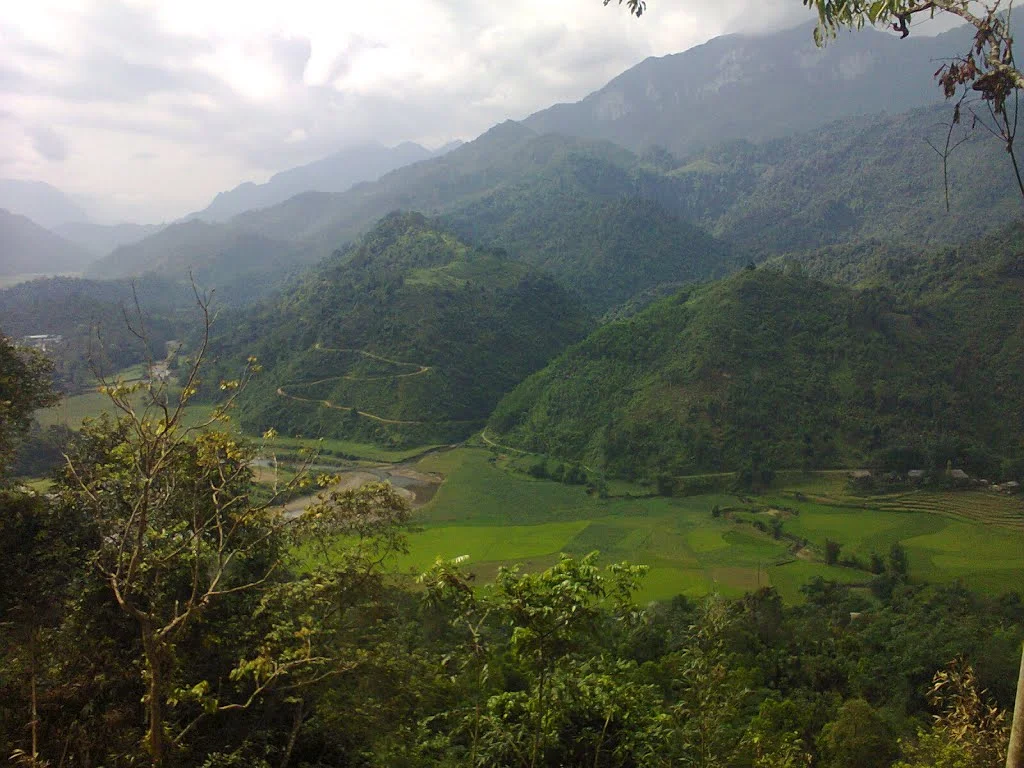
Before comparing the two types of bicycles, it is essential to understand the sheer scale of the landscape you will encounter. The legendary Ha Giang Loop is not a casual countryside ride. It is a high-altitude mountain route characterized by extreme elevation gains, sharp hairpin turns, and rugged road surfaces.
The terrain features long, continuous climbs that rise thousands of meters over short distances, followed by steep, technical descents down into deep river gorges. Mountain passes like Heaven's Gate, the Nine-Ramp Pass, and the iconic Ma Pi Leng Pass will test the limits of both rider and machine. The weather can change rapidly from intense sunshine to thick mountain fog or heavy downpours, making road traction and physical stamina critical factors.
Furthermore, the roads are often shared with local traffic, agricultural vehicles, and other travelers. Navigating these mountain passes requires complete concentration, stable bicycle handling, and the physical endurance to manage multiple days of active riding. This extreme environment is precisely why choosing the right bicycle is so important.
Choosing an electric mountain bike for your journey through Ha Giang offers a completely new way to experience the highlands. E-bikes combine human pedal power with quiet, zero-emission electric motor assistance, providing a highly active yet accessible mountain journey.
The primary advantage of an electric mountain bike is its ability to smooth out the steepest mountain passes. Modern e-bikes utilize intelligent mid-drive motors that detect your pedaling force and deliver a corresponding boost of electric power.
On steep climbs like the Bac Sum Pass, where a normal bicycle would require extreme, red-zone cardiac effort, the e-bike provides the necessary torque to ascend comfortably. You still have to pedal and balance, ensuring a physically active workout, but you avoid the extreme muscle fatigue and exhaustion that can ruin a multi-day trip.
Riding the Ha Giang Loop is about much more than just pedaling; it is about immersing yourself in the vibrant cultures and spectacular sights of the highlands. When you ride a normal bicycle, the physical effort of climbing can leave you completely exhausted by the time you reach a village or a panoramic viewpoint.
With an e-bike, you conserve your physical energy throughout the day. This leaves you feeling refreshed and energized to explore local ethnic villages, hike down to remote river valleys, interact with local families at weekend markets, and fully appreciate the majestic views without feeling physically drained.
One of the greatest benefits of e-bike technology is its ability to democratize active adventure. In almost every travel group, couple, or family, riders have different fitness levels and cycling experience.
On a normal bicycle, stronger riders will naturally pull ahead, leaving others behind to struggle up the mountain passes alone. E-bikes level the playing field. By adjusting the level of motor assistance, riders of different physical capabilities can easily cycle together at the exact same pace. This ensures a highly cohesive, shared experience where everyone can enjoy the adventure together.
While electric assist offers numerous advantages, there is still a passionate community of cyclists who prefer the raw, unassisted challenge of a normal mountain bike.
For elite athletes and highly experienced cyclists, the ultimate appeal of a normal bike lies in the sense of pure physical achievement. Conquering a legendary pass like Ma Pi Leng solely using your own muscle power is a powerful personal milestone.
Every meter climbed is a testament to your personal stamina, training, and athletic determination. For those who view cycling primarily as a grueling physical test, the unassisted mountain bike remains the traditional choice.
Normal mountain bikes are significantly lighter than electric bikes, which carry heavy lithium-ion batteries and mid-drive motors. A lighter bike is easier to maneuver on tight technical singletracks and requires less effort to lift or transport.
Furthermore, normal bikes are mechanically simple. There are no electrical systems, batteries, or digital controllers to worry about. For remote, high-altitude expeditions where support is unavailable, the mechanical simplicity of a traditional bike can be seen as an advantage.
To help you decide which option fits your personal travel style, let us compare how e-bikes and normal bikes perform across key categories along the Ha Giang Loop.
On the flat valley floors, e-bikes and normal bikes travel at similar speeds. However, as soon as the road begins to climb, the difference becomes massive. An e-bike can maintain a steady, efficient climbing speed of fifteen to twenty kilometers per hour on steep gradients, whereas a normal bike may slow down to five or six kilometers per hour.
This means e-bike riders can cover daily distances much faster, leaving more time for leisurely lunches, cultural visits, and photography stops. If you want to maximize your sightseeing time, the e-bike is the clear winner.
Multi-day mountain cycling takes a cumulative toll on your body. Riding a normal bike up steep passes day after day can lead to intense muscle soreness, joint strain, and physical exhaustion, especially for intermediate riders.
An e-bike allows you to customize your physical effort. You can choose to pedal hard for a healthy workout on flatter sections, and then use the motor's power to protect your knees and muscles on the steep climbs. This drastically reduces recovery time, ensuring you wake up every morning feeling fresh and ready to ride.
The sharp hairpin turns of Ha Giang require careful balance and steady momentum. On a normal bike, losing momentum on a steep curve can force you to dismount and push your bike up the hill, which is physically exhausting.
The pedal-assist motor on an e-bike delivers instant torque the moment you step on the pedal. This allows you to maintain steady, stable momentum even when navigating the sharpest, steepest curves, ensuring a much safer and smoother climbing experience.
When you travel with Golden Cycling Tours, a dedicated private support vehicle is always included. On an e-bike, the weight of the bike is easily offset by the powerful motor, making it easy to carry a small daypack with your camera and gear. On a normal bike, even a small amount of extra weight can feel incredibly heavy on steep climbs, making a support vehicle even more critical.
To ensure your journey through the highlands is safe, comfortable, and reliable, Golden Cycling Tours provides state-of-the-art electric mountain bikes. Their premium e-bikes are equipped with powerful mid-drive motors, high-capacity lithium-ion batteries, and heavy-duty hydraulic disc brakes designed specifically for mountain descents.
These state-of-the-art bikes make even the steepest passes feel smooth and accessible. If you want to experience the ultimate blend of active exploration and green technology, booking one of their specialized vietnam e-bikes tours is highly recommended.
Ha Giang is home to a rich, colorful tapestry of ethnic minority groups, including the Hmong, Tay, Dao, Nung, and Lo Lo people. Traveling by bicycle allows you to enter these traditional communities at a human-scale pace, fostering warm and respectful interactions.
The Hmong people are famous for their beautiful indigo-dyed clothing, hand-woven textiles, and highly skilled farming on steep mountain slopes. They live primarily in high-altitude areas like Dong Van and Meo Vac.
The Red Dao people are easily recognized by their vibrant red head scarves and are famous for their deep knowledge of medicinal forest plants, particularly their therapeutic herbal baths.
The Tay and Nung people typically build their traditional stilt houses near clean rivers in the lower valleys, practicing wet-rice farming and traditional metalworking.
To ensure your presence is respectful and positive, please keep these cultural guidelines in mind:
First, always dress modestly. When cycling through rural villages, avoid wearing revealing athletic wear or tight cycling shorts inside local family homes or sacred communal buildings. Keep a lightweight sarong or a pair of casual shorts handy to wear over your riding gear.
Second, always ask for permission before taking a photo. While local people are exceptionally photogenic, it is polite to ask first. A warm smile and gesturing toward your camera are usually enough to get a friendly response.
Third, respect sacred spaces. Avoid touching sacred items inside traditional houses, such as the central house pillar or the family altar. When visiting local pagodas or communal halls, always remove your shoes before entering.
Fourth, support local weavers and artisans directly. Buy handmade crafts, woven brocades, and local honey directly from the families who make them rather than large tourist shops. This ensures that your money goes directly to supporting the weaver's family.
Fifth, do not give candy or money to local children. While it may seem kind, giving out candy causes tooth decay in areas without dental care, and giving money encourages begging. Instead, support local schools through verified community projects or through your tour operator.
Mountain cycling burns a massive number of calories, but fortunately, Vietnamese food is fresh, healthy, and perfectly balanced to keep you energized. The food in the northern mountains relies heavily on fresh mountain herbs, locally sourced organic meats, and fresh field crops.
Pho Bo is the ultimate breakfast for any cyclist. This classic beef noodle soup features a rich, aromatic broth simmered for hours with cinnamon and star anise, served with fresh rice noodles, tender beef, and a generous plate of fresh green herbs.
Com Lam is a delicious, portable snack. Glutinous rice mixed with coconut milk is packed into fresh bamboo tubes and slow-roasted over hot wooden coals. It is sweet, savory, and provides long-lasting energy—perfect to carry in your pocket during a long ride.
Thit Gac Bep is a specialty of the Black Thai and Hmong groups. Strips of beef or buffalo are marinated with wild forest pepper (mac khen) and hung above the kitchen fireplace to slow-smoke. It is a highly savory, high-protein snack that is perfect for the trail.
Ga Doi is another local delicacy. Unlike farm-raised chickens, these free-range chickens roam freely on steep mountain slopes, making their meat lean, firm, and incredibly flavorful. They are typically roasted over open flames with fresh lemon leaves and wild forest honey.
Thang Co and Men Men are traditional Hmong foods found at colorful weekend mountain markets. Thang Co is a robust soup made from horse meat and traditional spices, while Men Men is steamed ground corn, which serves as the traditional daily staple for families living in rocky mountain areas.
When you travel with Golden Cycling Tours, lunch stops are organized at authentic family-run eateries or prepared fresh by our support team using organic ingredients sourced directly from village markets. For dinner, eating at your local homestay is highly recommended. You will sit around a large communal wooden table with your hosts, sharing delicious freshly cooked dishes like stir-fried mountain ferns, ginger chicken, and hand-rolled spring rolls, often accompanied by a small glass of local rice wine as a warm gesture of welcome.
Where you rest your head at night is just as important as where you ride. Choosing sustainable accommodations ensures that your vacation directly supports local conservation efforts and provides green jobs for local villagers.
For a truly authentic experience, nothing compares to staying in a local family homestay. You will sleep in a traditional wooden stilt house, typically on a comfortable mattress set up in a clean, spacious shared loft equipped with mosquito nets, fresh linens, and privacy curtains. Modern, western-style toilets and hot showers are standard. You will feel like part of the family, sharing stories, cooking dinner together, and falling asleep to the peaceful sounds of nature.
Excellent community homestays can be found in places like Nam Dam (Quan Ba) and Du Gia Village.
For travelers seeking a blend of high comfort and environmental responsibility, the northern mountains feature several world-class eco-lodges. Built using locally sourced natural materials like stone, bamboo, and thatch, these lodges use energy-efficient systems, follow strict zero-plastic waste policies, and grow their own organic vegetables.
Topas Ecolodge in Sapa is famous worldwide for its beautiful infinity pool and its strong commitment to local sustainability.
Pu Luong Retreat in Pu Luong offers comfortable rooms built directly overlooking dramatic terraced rice fields.
Avana Retreat in Mai Chau is a luxury eco-sanctuary hidden in a quiet forest, dedicated to community empowerment and forest conservation.
Planning a mountain cycling vacation in a foreign country requires detailed logistics. To ensure your trip is safe and comfortable, here is how our transport systems work.
To travel between major destinations, such as Hanoi to Ha Giang, Sapa, or Lao Cai, we use comfortable shared luxury limousines or overnight sleeper trains, which helps reduce road congestion and carbon emissions per passenger.
For all of our multi-day trips, a private support vehicle is always included. The support vehicle carries all your heavy luggage, spare parts, fresh water, and snacks, leaving you free to ride with just a small water pack. Most importantly, if you ever feel tired or want to skip a steep hill, you can easily hop into the comfortable support van and rest.
As you ride, several world-class natural landmarks deserve a dedicated stop. Here are the top sights to add to your bucket list:
First, Ma Pi Leng Pass in Ha Giang. Often called the King of Mountain Passes, this incredible road clings to a steep cliff face 1,200 meters above the bright turquoise waters of the Nho Que River. The views here are truly breathtaking.
Second, Ban Gioc Waterfall in Cao Bang. This is the largest waterfall in Vietnam, cascading over three beautiful tiers surrounded by bright bamboo forests. You can ride your bicycle right up to the edge of the river.
Third, Lung Cu Flag Tower in Ha Giang. Located on the peak of a mountain, this tower marks the northernmost point of Vietnam, offering panoramic views across the border into China.
Fourth, Muong Hoa Valley in Sapa. A stunning valley filled with ancient carved stones, vast terraced fields, and suspension bridges connecting peaceful ethnic villages.
Fifth, Ban Hieu Waterfall in Pu Luong. A beautiful waterfall located deep inside the jungle reserve, where the mountain water is rich in natural calcium, giving the surrounding rocks a unique, petrified appearance.
To experience the complete spectrum of northern landscapes, Golden Cycling Tours offers several grand multi-day itineraries:
The Northwest Loop: Link Hanoi, Mai Chau, Pu Luong, Son La, Dien Bien Phu, Lai Chau, and Sapa on our custom Vietnam Northwest bike tours.
The Northeast Trail: Explore Lang Son, Cao Bang, Ba Be National Park, and Ha Giang with our professional Vietnam Northeast bike tours.
Comprehensive Northern Expeditions: Experience the ultimate active vacation with the complete cycling Northern Vietnam tour.
The Ultimate Cross-Country Crossing: Experience the journey of a lifetime by crossing the entire country with cycling North to South Vietnam.
Historical Expeditions: Follow the paths of history along legendary routes with our specialized ho chi minh trail cycling tours.
Luxury Eco-Travel: Travel in premium comfort with top-of-the-line bikes and luxury stays on our vietnam luxury bike tours.
Here is what fellow travelers have to say about their experiences:
Conquering the Ma Pi Leng Pass on an electric mountain bike was an absolutely incredible experience. The climbs were steep, but the electric motor allowed me to focus on the spectacular views rather than just gasping for breath. Comparing a Ha Giang E-Bike vs Normal Bike: Which is Better? For me, the e-bike made the trip enjoyable rather than exhausting. (Sarah and David M., United Kingdom)
As a keen cyclist, I initially wanted to ride a normal mountain bike. However, after seeing the steep passes, I was glad I chose the premium e-bike option. Our local guide knew every hidden trail in Pu Luong, and the commitment of Golden Cycling Tours to sustainable travel was highly impressive. (Marc-Antoine L., Canada)
Our tours are designed for all levels of experience. Flat routes in Ninh Binh and the Hanoi outskirts are easy and perfect for beginners and families. For steeper mountain routes in Sapa and Ha Giang, a moderate level of fitness is recommended. However, choosing an electric mountain bike makes even the most challenging high passes comfortable and accessible for everyone.
The ideal season is from October to April, when the weather in Northern Vietnam is cool and mostly dry—perfect for active outdoor sports. September is also highly popular because it is the golden harvest season, when the terraced rice fields turn a beautiful yellow. The summer months from May to August bring hot temperatures and heavy tropical rains.
We recommend packing comfortable padded cycling shorts, light moisture-wicking jerseys, a lightweight windproof and waterproof jacket, sturdy closed-toe sports shoes, sun protection (sunscreen and sunglasses), and effective mosquito repellent. We provide fresh drinking water refills throughout the trip to avoid single-use plastic bottles.
Yes, high-quality, safety-certified helmets are provided on all of our tours. Your guide always carries a complete first-aid kit, bicycle tools, and spare parts. For larger groups, a professional bike mechanic also travels in the support vehicle.
To protect the environment, we do not use single-use plastic water bottles. We carry large, purified water containers in our support vehicles so you can refill your personal reusable bottles throughout the day. All waste from our rides is carried out and recycled responsibly.
Yes! We offer customized, family-friendly routes in Ninh Binh, Mai Chau, and the outskirts of Hanoi. We can provide child-sized bicycles, tag-along attachments, and comfortable child seats to ensure a safe and fun experience for the whole family.
When deciding between a Ha Giang E-Bike vs Normal Bike: Which is Better? The answer ultimately depends on your personal travel goals. If you are an elite athlete seeking a grueling physical test, a normal mountain bike offers a traditional challenge. However, if your goal is to explore this magnificent mountain loop safely, sustainably, and with enough energy to fully enjoy the rich local cultures, spectacular viewpoints, and authentic homestays, then the electric mountain bike is the absolute perfect choice.
Ready to start your green active vacation? Explore our range of custom itineraries and book your sustainable journey today:
Explore our main site and tour packages at Golden Cycling Tours.
Discover historic paths with our Hanoi bike tours.
Ride along beautiful karst valleys with our Ninh Binh bike tours.
Experience peaceful valley homestays with our Mai Chau bike tours.
Explore protected jungle trails with our Pu Luong bike tours.
Conquer majestic mountain passes with our Sapa bike tours.
Climb spectacular frontier roads with our cao bang bike tours.
Experience the ultimate limestone loop with our ha giang bike tours.
Journey through wild landscapes with our Vietnam Northwest bike tours.
Discover remote border regions with our Vietnam Northeast bike tours.
Experience the complete highlands with cycling Northern Vietnam.
Embark on the ultimate trans-Vietnam journey with cycling North to South Vietnam.
Follow the paths of history on our ho chi minh trail cycling tours.
Travel in premium comfort with our vietnam luxury bike tours.
Enjoy effortless climbs on our state-of-the-art vietnam e-bikes tours.

.jpg "Cycling in Vietnam in March")
.jpg "Vietnam mountain bikes Trail")
.jpg "Vietnam Biking Trails")
.jpg "Ha Giang Cycling Tours")
Leave a Reply
Your email address will not be published. Required fields are marked *