- Call us Via Whatsapp: +84 (0) 832 126 699
4.9 stars on our site
(15,000 reviews)
- Monday - Sunday : 08:00 - 17:00
(15,000 reviews)

Imagine waking up to the gentle whisper of mountain breezes rustling through towering bamboo groves, the distant murmur of pristine streams, and the comforting aroma of freshly brewed local coffee. As the morning mist slowly lifts over the valley, it reveals jagged limestone peaks kissing the sky and rustic wooden stilt houses tucked neatly along the hillsides. This is not a dream; this is the breathtaking reality of Pu Luong Nature Reserve, a pristine mountain sanctuary nestled in the southwest of Thanh Hoa Province, Vietnam. For active travelers who yearn to discover the world on two wheels without the physical exhaustion of traditional mountain climbing, the decision to Explore Pu Luong by Electric Bike: The Ultimate Eco Guide offers an unparalleled active travel holiday.
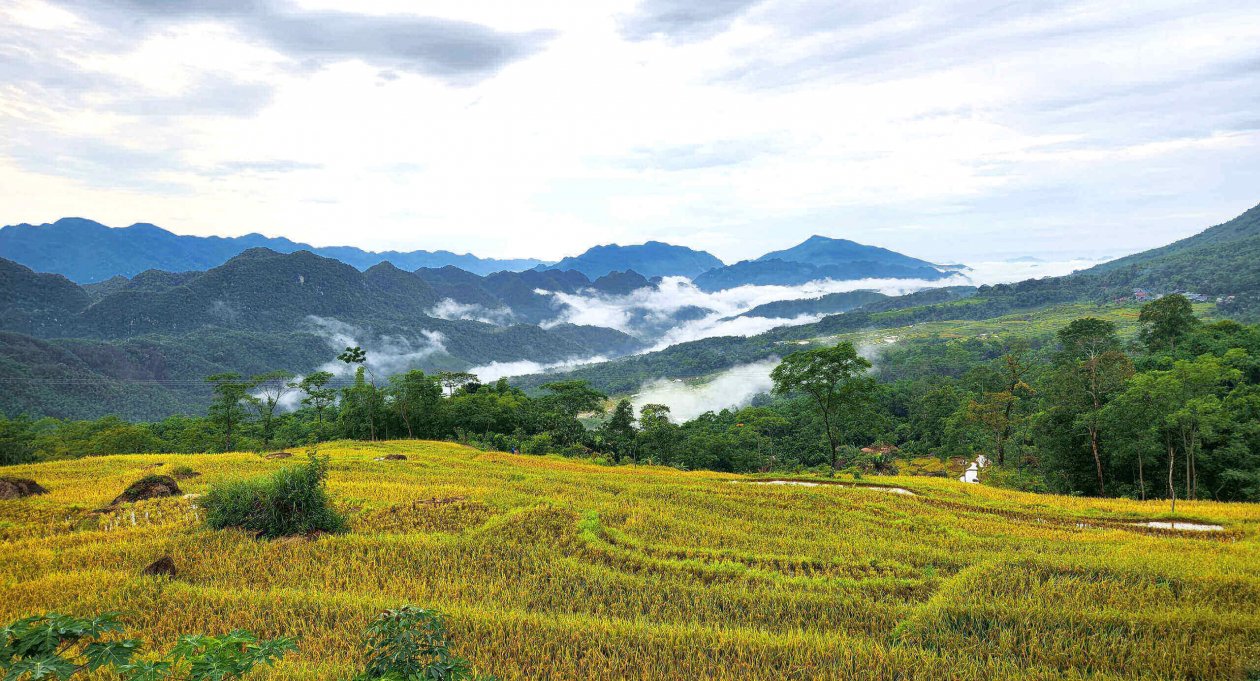
In recent years, Northern Vietnam has emerged as a world-class destination for adventure tourism. While many tourists are confined to crowded bus routes or commercial hotspots, savvy cyclists are turning their handlebars toward the quiet, winding pathways of this protected reserve. To help you navigate this sublime landscape, we have crafted a detailed guide to the absolute best electric-assist cycling experiences in the region. Whether you are an experienced outdoor enthusiast looking to cover more ground or a leisure traveler seeking a relaxing way to cruise through peaceful ethnic minority settlements, choosing to Explore Pu Luong by Electric Bike: The Ultimate Eco Guide is your ticket to a transformative, eco-friendly vacation.
To turn this dream of high-end active exploration into a seamless, worry-free reality, premier adventure operators like Golden Cycling Tours provide masterfully planned itineraries, high-performance electric mountain bikes, private support vehicles, and passionate local guides who serve as cultural ambassadors. From short weekend getaways to expansive multi-day expeditions, exploring this region on a modern e-bike is a journey that will stay with you forever.
To fully appreciate the magic of this destination, one must understand the physical and ecological benefits of modern electric-assist technology. Mountain biking in rugged terrains historically required a high level of physical conditioning, limiting these spectacular landscapes to elite athletes. However, the introduction of premium electric mountain bikes has completely revolutionized the way we travel, making challenging mountain terrains accessible to everyone.
An electric mountain bike, or e-bike, features an integrated electric motor and a high-capacity lithium-ion battery. Unlike a throttle-operated moped, a high-quality electric mountain bike operates on a pedal-assist system. This means the intelligent motor detects your pedaling cadence and amplifies your physical effort by up to three hundred percent, depending on the level of assistance you select. If you encounter a steep mountain gradient of fifteen to twenty percent, you simply increase the motor assist level to trail or boost mode. The motor smooths out the severe incline, allowing you to maintain a comfortable pedaling cadence and a relaxed heart rate as you glide effortlessly up the hills.
By choosing to explore the highlands on an electric bike, you gain the freedom to focus your energy on absorbing the magnificent scenery, taking photos, and interacting with the local people, rather than struggling to catch your breath on a grueling climb. It allows couples, families, and groups of varying fitness levels to ride together in perfect harmony, ensuring that no one is left behind on the steeper sections of the trail.
From an environmental perspective, the philosophy of eco-cycling represents the absolute pinnacle of low-impact, sustainable tourism, especially when entering a fragile ecological zone like the Pu Luong Nature Reserve. By choosing an electric-assist bicycle as your primary vehicle, you eliminate carbon emissions entirely, ensuring that the pristine air quality of the highlands remains pure.
Unlike heavy motorized vehicles, a lightweight electric bike produces zero noise pollution, preventing the disruption of local wildlife, such as the endangered Delacour's langur, which makes its home in the dense forest canopy. Furthermore, the low-impact tires of a bicycle prevent the trail erosion and damage caused by motorbikes, preserving the ancient network of walking paths and logging trails for future generations.
When you book a premium Pu Luong Bike Tours package, you are actively participating in a sustainable tourism model that directly supports the local economy. Because e-bikers travel along remote village lanes and pedestrian paths, they visit communities that never see mainstream tour buses. Every stop you make to purchase a fresh coconut, buy a hand-woven textile, or stay at a family-run stilt house directly injects tourism dollars into the pockets of the White Thai and Muong ethnic families. This sustainable economic support empowers local communities to preserve their ancient customs and protect their surrounding forests.
To understand why the cycling trails here are so spectacular, it is essential to look at the unique geographical layout of Pu Luong Nature Reserve. Located roughly one hundred and fifty kilometers southwest of Hanoi, this massive protected territory covers more than seventeen thousand six hundred hectares. It serves as a vital ecological and geological bridge connecting the dramatic, vertical limestone karsts of Ninh Binh with the wide, peaceful, fertile valleys of Mai Chau.
The reserve is dominated by two parallel mountain ridges running from the northwest to the southeast, separated by a lush, central agricultural valley that is dotted with picturesque ethnic settlements. This unique topographical structure creates an incredible playground for cyclists. Within a single day, you can experience a massive variety of terrains: flat, leisurely concrete paths that trace winding riverbanks, moderate dirt trails that wind through dense bamboo forests, and steep, rocky technical climbs that test your limits on high-altitude mountain flanks.
Because of this elevated topography and the dense tropical forest canopy, the microclimate of Pu Luong Nature Reserve is significantly cooler and fresher than the low-lying coastal plains of Northern Vietnam. During the sweltering summer months, when Hanoi faces intense heatwaves, the high-altitude peaks of the reserve offer a cool, misty sanctuary. The crisp morning air and breezy evenings create the perfect, energizing conditions for active outdoor sports, ensuring that you can spend long, comfortable hours in the saddle without feeling overwhelmed by heat.
The central valley is carved by rivers and streams that feed the iconic terraced rice paddies, which act as a giant natural air conditioning system. This unique hydrology also powers the famous bamboo water wheels, which are a defining feature of the local landscape. Understanding this geography helps cyclists plan their routes effectively, balancing challenging climbs over high passes with relaxed, scenic rides through the flat, fertile basins where the majority of the ethnic Thai villages are located.
The true magic of planning a journey around the concept of a premium electric bike tour lies in the incredible diversity of its secret routes. The reserve is crisscrossed by an ancient network of walking paths and logging trails that connect remote villages. Here is a detailed breakdown of the most spectacular, off-the-beaten-path routes that showcase the very best of the reserve's wild geography and ethnic culture.
For riders who want to experience a perfect blend of moderate physical exercise, jaw-dropping natural scenery, and rewarding water features, this route is an absolute classic. Your journey begins in Ban Don, a picturesque village perched on a hillside that serves as the central launching point for local exploration.
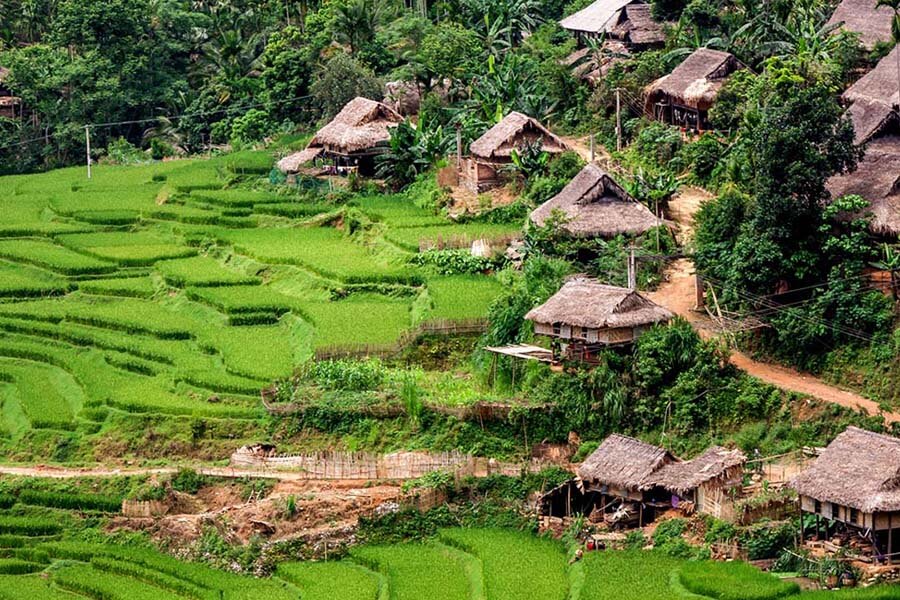
Leaving the main road behind, you will navigate narrow concrete paths and packed-dirt singletracks that wind through endless layers of terraced rice fields. Depending on the month of your visit, these terraces will either be a vibrant, fluorescent green during the growing season or a brilliant, shimmering gold during the harvest. As you pedal, you will pass traditional stilt houses built from dark teak wood and bamboo, where you can watch local women working on traditional hand-looms.
The highlight of this route is your arrival at the remote settlement of Ban Hieu, which is famous for the stunning Hieu Waterfall. This spectacular geological feature features a series of multiple limestone tiers cascading down the mountainside. The water is rich in dissolved calcium carbonate, which coats the rocks in a soft, white-chalky layer and transforms the pools into a mesmerizing, milky-turquoise blue. You can park your e-bike, hike up along the rushing water, and jump into one of the cool, natural rock pools for a highly refreshing swim, the ultimate physical reward after a sweaty ride.
For travelers who want to kickstart their cycling journey directly from the historical streets of the capital before climbing into these pristine highlands, booking a customized itinerary with Hanoi Bike Tours provides a seamless, worry-free transition from urban heritage to mountain wilderness.
If you are an experienced mountain biker who craves a physical challenge, technical rocky trails, and absolute geographical isolation, this backcountry route is designed specifically for you. The ride starts in Ban Hang, a quiet, traditional village inhabited by the Thai ethnic minority, and heads deep into the dense, forested limestone hills.
With the electric assist on your e-bike set to trail or boost mode, you can easily tackle the steep, loose dirt climbs, technical rocky descents, and singletracks that slice through dense wild bamboo forests. Along the way, you will cross rustic wooden bridges suspended over rushing mountain streams and ride directly beneath towering karst cliffs that seem to rise vertically into the clouds.
Your ultimate destination is Ban Kho Muong, a magical, isolated village tucked deep inside a massive, natural karst basin surrounded by towering peaks. This village feels completely untouched by modern tourism, with stilt houses scattered organically among fields of sweet potato, maize, and rice. While resting in the village, you can take a short walk to explore Kho Muong Cave, also known locally as Bat Cave, an enormous underground cavern filled with towering stalactites and stalagmites that have been formed over millions of years.
This challenging backcountry route is a crown jewel of the premium mountain biking itineraries crafted by the team at Golden Cycling Tours, offering a raw look at the most untouched corners of the reserve.
If your passion lies in cultural photography, peaceful flat cruising, and authentic local lifestyle, this easy-to-moderate loop is the perfect itinerary. The route begins near Pho Doan Market, a lively mountain trading post where ethnic Thai and Muong people gather from far-flung mountain communities to trade agricultural goods, colorful hand-woven brocades, and farm animals.
From the market, you will pedal along quiet, flat pathways that run parallel to the pristine waters of the Ma River and Cham River. The trail leads you through the beautiful sister settlements of Ban Uoi and Ban Lan, which are widely considered some of the most scenic and architecturally preserved settlements in the entire region.
Along the riverbanks, you will come face-to-face with the famous giant bamboo water wheels. These ingenious, eco-friendly machines are constructed entirely by hand using local bamboo, wood, and vines. Powered solely by the natural current of the river, the wheels continuously turn, lifting water into elevated bamboo tubes that act as natural aqueducts to irrigate the adjacent terraced rice fields. It is a highly peaceful, poetic sight that perfectly captures the harmonious, sustainable lifestyle of the highland people.
For elite, athletic cyclists who want to test their cardiovascular stamina and conquer one of the most legendary climbs in Northern Vietnam, the route from Lung Van into the reserve is a monumental challenge. Lung Van, located in the neighboring province of Hoa Binh, is affectionately known as the "roof of the Muong ethnic territory" due to its incredible altitude and constant blanket of white clouds.
The ride begins with a long, grueling climb up the steep switchbacks of the legendary Lung Van Pass. Conquering this pass requires exceptional physical conditioning and mental grit, with gradients that will challenge even experienced riders. However, on an advanced e-bike, the integrated electric motor smooths out the severe incline, allowing you to maintain a steady cadence as you ascend high above the clouds. Looking down at panoramic vistas of distant valleys from this elevation is an unforgettable feeling of athletic triumph.
The subsequent descent down into the northern gate of the reserve is equally thrilling, requiring sharp concentration and high-quality disc brakes as you navigate tight, sweeping bends through deep limestone gorges and ancient primeval forests. This epic route showcases a dramatic transition between different mountain forest ecosystems and is often featured as a major highlight in comprehensive Cycling Northern Vietnam expeditions.
A truly successful journey along the hidden paths is not just measured by the miles you pedal or the elevation you gain; it is defined by the human connections you make along the way. Pu Luong Nature Reserve is home to rich cultural traditions that have remained intact for generations.
The valleys and mountainsides of the reserve are inhabited primarily by the White Thai and Muong ethnic minority groups. Each of these communities possesses its own unique dialect, elaborate traditional costumes, rich folk music, and highly sophisticated agricultural systems.
The White Thai people are famous for their magnificent wooden stilt houses, which are elevated high off the ground on thick timber pillars. This traditional architectural style historically protected families from damp ground, seasonal flooding, and wild forest animals, while creating a spacious, shaded area beneath the house for raising livestock, storing agricultural tools, and operating traditional wooden weaving looms. The Muong people also share a deep, spiritual connection with the mountains, practicing sustainable farming on steep slopes and preserving a rich heritage of instrumental music, particularly the enchanting sounds of bronze gongs played during seasonal festivals.
When you join an e-bike tour, you do not just ride past these homes; you have the unique opportunity to step inside, sit on the polished bamboo floors, share a hot cup of locally harvested green tea, and converse with village elders about their history and daily customs.
To ensure that our presence remains a positive, respectful, and enriching experience for the local communities, it is essential for cyclists to adhere to a few simple cultural guidelines:
Always ask for permission before taking photos of local people, particularly children, village elders, or families working in their fields. A warm smile and a polite gesture are always appreciated.
Dress modestly when exploring ethnic villages or entering private stilt houses. While tight cycling jerseys and shorts are perfectly acceptable on the road, it is respectful to cover your shoulders and knees when visiting communal spaces or homes.
Support the micro-local economy by purchasing beautiful handmade fabrics, natural agricultural products, or local snacks directly from family-run stalls in the villages.
Be mindful of drying crops. During the harvest season, local farmers often lay out rice, maize, or sliced cassava to dry on the concrete paths of the villages. Always cycle slowly and carefully around these crops without stepping or riding over them.
Never ride directly through active agricultural plots or damage the fragile earthen walls that retain water in the terraced rice fields.
Exploring the hidden trails burns an incredible amount of calories, and there is no better way to recharge your energy than by savoring the fresh, organic, and highly flavorful cuisine of the Northern Vietnamese highlands. The gastronomy of this region is deeply connected to the natural bounty of the surrounding forests, clean mountain streams, and terraced fields.
The absolute most famous culinary specialty of the reserve is Co Lung Duck, raised in the pristine Co Lung commune. Unlike commercially farmed ducks, these birds are allowed to roam completely free along the cold, fast-flowing mineral streams of the mountains. Because of their active lifestyle and natural diet, their meat is remarkably lean, tender, and bursting with deep flavor, with a thin, crispy skin.
To prepare this local masterpiece, the duck is stuffed with a fragrant mixture of wild forest herbs, lemongrass, and mac khen seeds, then slowly roasted over glowing charcoal until the skin turns a deep, golden-brown. Enjoying a platter of roasted Co Lung Duck alongside a plate of fresh wild herbs and a small glass of traditional rice wine is a culinary experience that will stay with you forever.
A traditional staple of the mountain ethnic communities, Bamboo Rice, known locally as Com Lam, is the ultimate portable high-energy snack for cyclists. Local sticky rice is mixed with a splash of fresh coconut milk, stuffed tightly into hollow segments of young green bamboo, and slowly roasted over an open wood fire.
As the bamboo heats up, it releases a subtle, sweet, and woody aroma that infuses deeply into the rice. Once cooked, the charred outer layer of bamboo is carefully peeled away, leaving a clean, fragrant cylinder of warm sticky rice. It is typically served dipped in a savory mixture of crushed roasted peanuts, sesame seeds, and salt. It fits perfectly into your cycling jersey pocket and provides a sustained, slow release of carbohydrates for long, challenging mountain climbs.
For adventurous food lovers, tasting Bitter Forest Leaves Soup is a must-try culinary experience. This traditional soup is made from wild, bitter leaves harvested by hand from the deep primeval forests of the reserve, typically simmered with minced pork, mountain chicken, or stream fish.
Your very first spoon of the soup will have a sharp, intensely bitter taste, which is immediately followed by a surprising, pleasant, and highly refreshing sweetness at the back of your throat. The local people believe this unique soup has powerful cooling properties, aids digestion, and serves as an excellent natural remedy to restore electrolytes and soothe muscle fatigue after physically demanding activities.
After an adventurous day of pedaling along rugged trails, finding the perfect place to rest, stretch your muscles, and get a good night's sleep is essential. The reserve offers two highly distinct types of accommodation, allowing you to choose the level of comfort and immersion that suits your personal travel style.
For travelers who want to combine rugged outdoor adventure with refined, high-end comfort, the hillsides of the reserve feature several award-winning ecolodges built with sustainable local materials. Properties such as Pu Luong Retreat, Pu Luong Eco Garden, and Pu Luong Bocbandi Retreat offer breathtaking infinity pools that look out over the misty valleys, professional wellness spas, and beautifully designed private bungalows crafted from local stone, timber, and thatch.
These high-end properties provide a peaceful mountain sanctuary where you can soak your sore muscles in a heated pool, enjoy a gourmet fusion dinner featuring both local and international specialties, and watch the sun set behind the dramatic karst peaks. If you want to experience the absolute finest services, integrating these premium properties into customized Vietnam Luxury Bike Tours ensures top-tier comfort, private support vehicles, and exceptional dining throughout your adventure.
For travelers who want to experience the true heart of Vietnamese hospitality, nothing compares to spending the night at an authentic village homestay with a local Thai or Muong family in traditional settlements like Ban Don, Ban Kho Muong, or Ban Hieu.
The homestay experience is delightfully simple yet deeply moving. You will sleep on a clean, comfortable mattress laid out on the polished wooden floor of a communal stilt house, protected by a cozy mosquito net, with the soothing sounds of frogs, crickets, and flowing river water right outside your window.
In the evening, your host family will cook a massive, home-style banquet of local dishes, and you will be invited to sit together, share stories through your guide, and participate in drinking traditional straw wine, known as "Ruou Can," from a large communal clay pot. It is an authentic, heartwarming experience that allows you to make deep, lifelong connections with the local people.
Successfully navigating the dramatic elevation changes and varied terrains of the reserve requires careful logistical planning and the right equipment.
The reserve is located approximately one hundred and fifty kilometers from Hanoi. The scenic drive takes about four to five hours depending on road and weather conditions.
If you book a fully supported tour with a professional operator like Golden Cycling Tours, all your transportation logistics are taken care of. They arrange comfortable private transport for you, your professional guide, and all your cycling gear from Hanoi directly to your accommodation in the reserve, ensuring a completely stress-free start to your holiday.
For independent travelers, several daily limousine shuttle buses run directly from Hanoi's Old Quarter to the major ecolodges in the reserve. Alternatively, experienced riders can hire a motorbike to ride along the highly scenic Ho Chi Minh Highway, passing through spectacular rural landscapes before ascending into the steep mountain passes.
Because of the steep gradients and rugged off-road paths of the reserve, selecting the right bicycle is critical to your safety, comfort, and overall enjoyment.
High-performance mountain bikes, featuring lightweight aluminum or carbon frames, responsive front suspension forks, and multi-gear drivetrains, are highly recommended for navigating the rocky singletracks, loose dirt trails, and steep climbs of the backcountry. They offer excellent control, durability, and a classic, active athletic experience.
For those who are concerned about their physical fitness, have joint sensitivities, or simply want to explore the dramatic mountain passes without physical exhaustion, electric-assist mountain bikes are an absolute game-changer. These modern e-bikes feature integrated electric motors that amplify your pedaling effort, allowing you to glide smoothly up the steepest mountain hills while keeping your heart rate comfortable.
You can explore the specialized itineraries of Vietnam E-Bikes Tours to see how cutting-edge electric bike technology can open up the spectacular mountain regions of Northern Vietnam to riders of all ages and fitness levels.
While the reserve is a world-class cycling destination in its own right, its strategic geographic location makes it the perfect centerpiece for a broader, multi-day active holiday across Northern Vietnam. By partnering with a premier operator like Golden Cycling Tours, you can easily connect your ride with other iconic destinations.
One of the most harmonious combinations is to link the wide, flat valley of Mai Chau with the rugged terraces of the reserve. A typical journey starts with relaxed, gentle riding through the picturesque villages of Mai Chau Bike Tours, followed by a scenic ride over the spectacular Thung Khe Pass or surrounding ridges to enter the reserve. This combination offers the perfect balance of easy valley cruising and moderate mountain cycling.
Another spectacular itinerary takes you from the high mountain forests of the reserve down to the coastal karst plains of Ninh Binh, often described as the "Halong Bay on Land." Exploring the ancient capital of Hoa Lu and the towering limestone peaks of Tam Coc via Ninh Binh Bike Tours after your mountain adventure provides an incredible contrast in both landscape and history.
For passionate cycling enthusiasts who dream of exploring the grandest mountain landscapes on earth, the reserve can serve as your ideal starting point or warm-up destination for a major expedition into the far north of Vietnam.
You can combine your tour with a journey through the majestic, cloud-wrapped terraces of Sapa via Sapa Bike Tours, or tackle the legendary karst loops of Ha Giang through the specialized Ha Giang Bike Tours.
If you wish to explore the wild, rugged northeast, checking out Cao Bang Bike Tours will expose you to breathtaking natural wonders like the famous Ban Gioc Waterfall.
To experience the ultimate geographical and cultural diversity of Northern Vietnam, booking a comprehensive package like Vietnam Northwest Bike Tours or Vietnam Northeast Bike Tours offers an expertly supported, fully guided expedition through the most dramatic mountain terrains imaginable.
For those seeking the ultimate, life-defining adventure, starting your journey in the northern peaks and pedaling all the way to the southern Mekong Delta on the epic Cycling North to South Vietnam expedition represents one of the world's greatest long-distance cycling challenges.
To give you an authentic look at what makes this destination so special, here are real-world stories and feedback from active travelers who have completed a cycling journey in this pristine paradise.
I have been cycling mountain trails in Europe for over ten years, but nothing compared to the absolute raw beauty and warmth of the people in the reserve. Navigating the hidden paths on an electric mountain bike was an incredible adventure. We rode through small villages where children ran out to high-five us, stayed in a gorgeous wooden stilt house in Ban Kho Muong, and enjoyed home-cooked feasts that were out of this world. The support team from Golden Cycling Tours was flawless, providing top-notch electric-assist bikes and amazing local insights.
Jonathan R., Munich, Germany
My husband and I chose an e-bike tour through the valley, and it was the absolute highlight of our three weeks in Vietnam. The electric-assist mountain bikes made the steep climbs up to Hieu Waterfall incredibly fun and accessible, leaving us with plenty of energy to explore the villages and converse with local people. Returning to a beautiful ecolodge each afternoon to watch the sunset over the mountains from an infinity pool was pure heaven. It was the perfect combination of active adventure and high-end relaxation.
Emily and Robert G., San Francisco, USA
The absolute best times of year to visit are during the two golden harvest seasons: from late May to early June, and from late September to October. During these periods, the terraced fields turn a vibrant, shimmering golden yellow, creating an incredible visual display. The spring months of March and April are also excellent, featuring lush green landscapes, clear skies, and highly comfortable temperatures for outdoor activities.
Yes, absolutely. The reserve offers a wide range of trails suitable for all fitness and skill levels. Beginners and families can enjoy flat, relaxing concrete paths along the valley floors, winding through peaceful settlements like Ban Uoi and Ban Lan. The e-bikes make climbs remarkably simple, so even those who are not in peak athletic condition can easily conquer the hills.
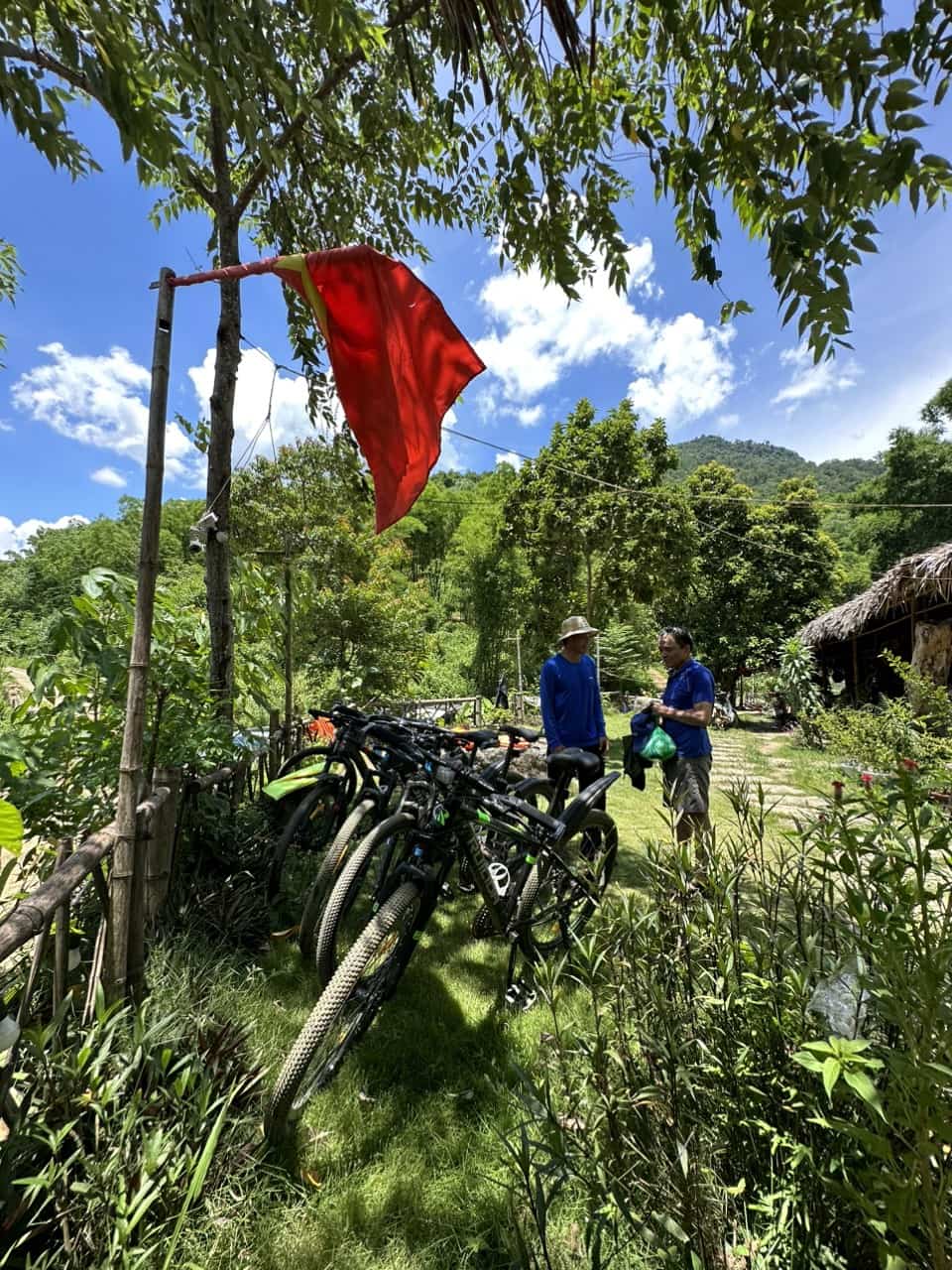
While you are welcome to bring your own bike, it is highly convenient to hire a professional electric bicycle locally or join a fully inclusive guided tour. Premier operators like Golden Cycling Tours provide high-performance, meticulously maintained electric mountain bikes, along with helmets, water bottles, and full mechanical support, saving you the hassle of transporting heavy equipment.
We highly recommend packing lightweight, breathable athletic clothing, padded cycling shorts for comfort in the saddle, sturdy athletic shoes, a lightweight rain jacket for sudden mountain showers, high-factor sunscreen, eco-friendly insect repellent, a reusable water bottle, and a camera or smartphone to capture the magnificent scenery. If you plan to stay in a traditional homestay or resort communal spaces, packing a lightweight sarong and easy slip-on shoes is also helpful.
The reserve has basic local medical clinics in major towns like Pho Doan that can handle minor issues. For serious medical emergencies, patients must be transported to larger regional hospitals in Thanh Hoa City or Hanoi. It is always highly recommended to have comprehensive travel insurance that covers active sports like cycling and to travel with a professional guide who carries a first-aid kit and knows the fastest evacuation routes.
Responsible cycling tours are designed to maximize the economic benefits for the local communities. By staying in village homestays, hiring local guides, dining at family-run restaurants, and purchasing handmade crafts directly from weavers in the villages, your travel directly supports the livelihoods of the White Thai and Muong people, helping to preserve their beautiful heritage.
The whispering bamboo forests, majestic waterfalls, and warm smiles of Northern Vietnam's highland families are waiting to welcome you. Whether you want to challenge your limits on steep mountain climbs, cruise peacefully through terraced agricultural valleys on an electric bike, or spend your evenings sharing traditional meals and stories in a wooden stilt house, embarking on a Explore Pu Luong by Electric Bike: The Ultimate Eco Guide is the ultimate way to create memories that will stay with you forever.
Are you ready to pedal through paradise while protecting its fragile beauty? Contact the passionate travel specialists at Golden Cycling Tours today to customize your dream itinerary, select the perfect high-performance electric bicycle, and embark on a spectacular journey that will showcase the very best of Northern Vietnam on two wheels.

.jpg "Pu Luong Cycling Tours")
Leave a Reply
Your email address will not be published. Required fields are marked *