- Call us Via Whatsapp: +84 (0) 832 126 699
4.9 stars on our site
(15,000 reviews)
- Monday - Sunday : 08:00 - 17:00
(15,000 reviews)

Dawn breaks over the misty valleys of the Hoang Lien Son Mountain Range, casting a violet hue across towering vertical cliffs. Damp alpine air rushes through your lungs as you clip into your pedals, the crisp metallic click echoing into the silence of early morning. Before you lies nearly 50 kilometers of continuous mountain asphalt winding toward the sky—a legendary serpentine ribbon carved into the spine of Indochina. This is the 1-Day O Quy Ho Pass Challenge: Extreme Road Bike Cycling Holidays, an ultimate single-day endurance test designed for cyclists who crave raw altitude, dramatic gradients, and unforgettable high-alpine immersion.
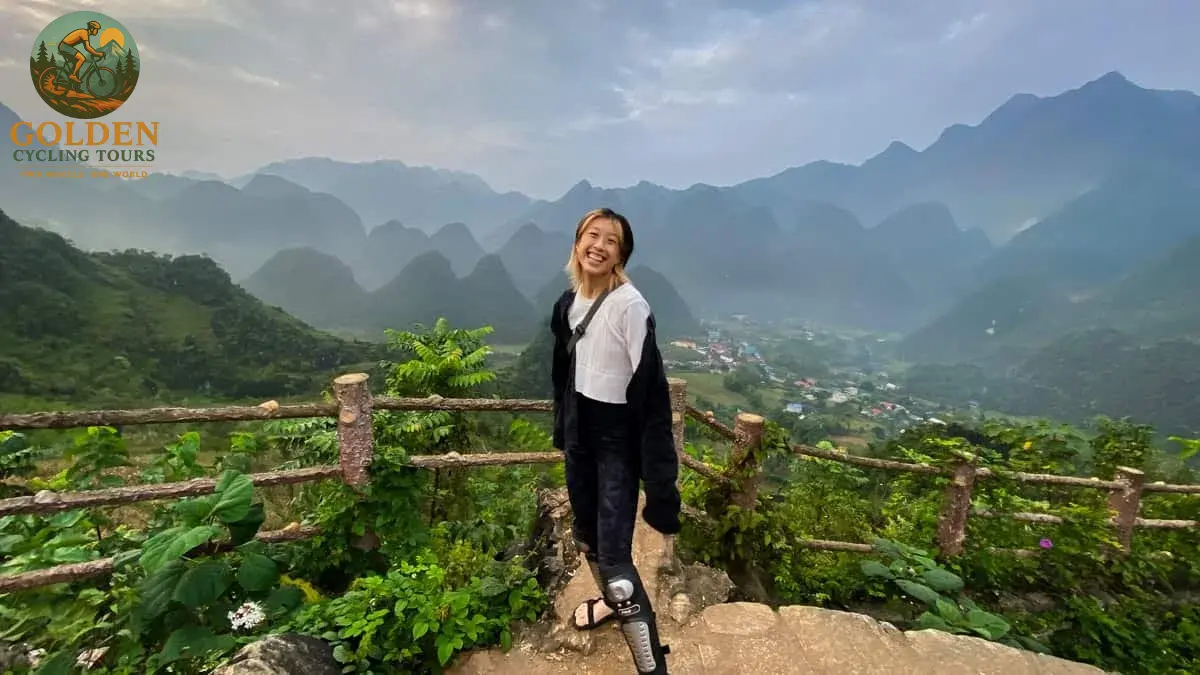
For long-distance cyclists and tarmac purists exploring Cycling Northern Vietnam, conquering O Quy Ho Pass represents the ultimate rite of passage. Known as the longest and most majestic of Vietnam’s "Four Great Mountain Passes," this colossal climb connects the misty alpine town of Sapa in Lao Cai province with the lush tropical valleys of Lai Chau. Partnering with elite travel curators like Golden Cycling Tours transforms this extreme physical feat into a flawlessly executed expedition, complete with top-tier road bikes, expert support, and high-end mountain hospitality.
Tackling the 1-Day O Quy Ho Pass Challenge: Extreme Road Bike Cycling Holidays is a sensory and physical masterpiece. Rising to an altitude of over 2,000 meters above sea level, the pass forms a natural climatic divide between two distinct atmospheric worlds. On the eastern side, cool valley mist often blankets the switchbacks of Sapa, while on the western descent, blinding golden sunlight illuminates sprawling emerald canyons.
From the moment your tires touch the smooth asphalt, every watt of power transferred to your pedals connects you directly with the mountain’s wild pulse. You feel the steady rhythmic burn in your quads, the cool brush of mountain rain giving way to warm sunshine, and the satisfying click of your derailleur dropping into lower gears as the slope steepens to 10%. As you ascend toward Heaven Gate (Cổng Trời), the world below transforms into a vast canvas of cascading clouds, jagged limestone needle peaks, and deep abysses.
To successfully master O Quy Ho Pass, riders must understand its unique topography and relentless profile. Starting from the mountain hub of Sapa, the road immediately tilts upward, weaving through pine-scented forests and high-altitude rose valleys beneath the shadow of Fansipan Peak, the highest summit in Indochina.
Leaving Sapa, the route leads past the roaring waters of Silver Waterfall (Thác Bạc) and Love Waterfall (Thác Tình Yêu). Here, dense canopies of mountain pines and wild rhododendrons line the highway. Gradients sit comfortably at 5% to 7%, allowing riders to establish a steady cadence while breathing in the cool, eucalyptus-scented air.
As you pass the 1,500-meter elevation mark, the tree line thins, exposing sheer rock faces and dramatic horseshoe bends. The wind intensifies, carrying the crisp, thin air of the upper biosphere. Sweeping through tight hairpin curves, you look back to see the asphalt coiling below like a silver ribbon. Power output increases as short ramps touch 9% to 11%, requiring disciplined pacing and mental focus.
Reaching O Quy Ho Pass Heaven Gate at 2,035 meters altitude rewards you with one of the most magnificent panoramic views on Earth. Floating clouds drift across the mountain ridge as you gaze into the mile-deep abyss of the Binh Lu Valley. After a brief pause to refuel with warm ginger tea, you drop into the legendary western descent—a high-speed, technical down-hill stretch of sweeping curves where precise braking and body position let you carve smoothly through the mountain air.
While the 1-Day O Quy Ho Pass Challenge: Extreme Road Bike Cycling Holidays serves as a premier bucket-list challenge, it also acts as a gateway to broader road biking adventures across Northern Vietnam.
Cyclists seeking a grand multi-day mountain voyage can extend their journey across the high-altitude roads of the Northwest. Beyond Sapa, routes loop through the golden agricultural steps of Mu Cang Chai, where riders climb the switchbacks of Khau Pha Pass overlooking vast terraced valleys. Continuing further west leads to the historic curves of Pha Din Pass and the serene plum orchard roads of Bac Ha.
Plan your extended mountain itinerary through specialized Vietnam Northwest Bike Tours, custom Sapa Bike Tours, and cultural Bac Ha Bike Tours.
For riders drawn to raw, karst limestone landscapes and frontier roads, the Northeast offers an unmatched geological spectacle.
The Dong Van Karst Plateau Geopark in Ha Giang features the world-famous Ma Pi Leng Pass, where smooth tarmac clings to sheer cliffs above the turquoise waters of the Nho Que River coiling through Tu San Abyss Alley. Further east in Cao Bang, roads wind gently past ancient cedar forests toward Ban Gioc Waterfall, Southeast Asia’s most spectacular border cascade.
Explore these remote frontier highways through custom-designed Vietnam Northeast Bike Tours, iconic Ha Giang Bike Tours, or scenic Cao Bang Bike Tours.
If you desire a balance between challenging mountain ascents and tranquil lowland valleys, the central-northern circuit offers breathtaking scenery with rolling profiles.
Glide through the serene rice paddies of Mai Chau Valley before climbing into the jungle canopy of Pu Luong Nature Reserve, where ancient bamboo waterwheels frame mountain streams. Finish your ride in Ninh Binh, navigating past the ancient feudal capital of Hoa Lu, the tranquil waterways of Tam Coc, and the subterranean cave networks of Trang An World Heritage Site.
Discover these serene valley routes with tailored itineraries for Mai Chau Bike Tours, eco-focused Pu Luong Bike Tours, and enchanting Ninh Binh Bike Tours.
Connect your high-mountain achievements with the rich cultural heart of the nation.
In Hanoi, enjoy sunrise warm-up rides around West Lake, cross the historic rivets of Long Bien Bridge, and spin along the tree-lined promenades of Hoan Kiem Lake. From the capital, tarmac routes extend along the historic Ho Chi Minh Trail, where riders trace historic supply lines through dense jungle reserves and limestone corridors.
Combine urban heritage with long-distance endurance through guided Hanoi Bike Tours or multi-day Ho Chi Minh Trail Cycling Tours. For cyclists dreaming of the ultimate cross-country saga, explore grand itineraries for Cycling North to South Vietnam.
Riders who want top-tier luxury amenities or pedal-assist support can also opt for specialized Vietnam Luxury Bike Tours or modern Vietnam E-Bikes Tours.
Conquering this high-altitude pass is a vivid, sensory immersion that stays with you forever.
Visuals: Watch the early morning fog dissolve to reveal jagged, saw-toothed mountain peaks touching the sky. Golden sunlight flashes through pine branches as you look out over deep green valleys dotted with colorful ethnic minority villages far below.
Sounds: Listen to the crisp mechanical snap of your electronic shifting as you drop gears for an upcoming ramp. The quiet hum of high-end rubber tires rolling over smooth asphalt merges with the whisper of mountain wind and distant waterfalls tumbling down rock faces.
Smells: Inhale the razor-sharp, ice-cool mountain air infused with scents of damp moss, crushed pine needles, wild orchids, and the faint woodsmoke drifting from hearths in hill-tribe hamlets.
Tactile Vibrations: Feel the cold alpine mist tickle your arms as you start the climb, transitioning to warm sun rays on your back as you break through cloud cover. Experience the intense, satisfying muscle burn in your legs on 10% ramps, followed by the feather-light freedom of a technical, sweeping descent.
Taste: Savor the deep, warming sweetness of hot local ginger tea combined with roasted bamboo sticky rice at the summit, followed by a ice-cold glass of fresh sugarcane juice waiting at the bottom of the pass.
Choosing the right season ensures optimal road grip, breathtaking cloud formations, and comfortable riding temperatures.
Autumn is universally considered the best season for high-altitude road biking. Weather: Clear blue skies, crisp dry air, and ideal temperatures between 15°C and 22°C (59°F to 72°F). Highlights: Dry pavement ensures maximum grip during high-speed technical descents. Autumn coincides with the golden rice harvest in nearby Mu Cang Chai and Sapa.
Spring brings mild climates and lush mountain flora. Weather: Pleasant warming weather with morning fog clearing into bright, sunny afternoons. Highlights: Wild peach blossoms, plum blossoms, and mountain orchids bloom across the slopes of Bac Ha and Sapa, creating a vibrant backdrop for high-altitude riding.
For riders who relish crisp, cold mountain conditions and dramatic sea-of-clouds phenomena. Weather: Cool to cold in the high passes, with temperatures ranging from 5°C to 12°C (41°F to 54°F). Highlights: Crystal-clear air quality and dramatic fog valleys. Thermal cycling layers, windproof jackets, and full-finger gloves are required.
Summer features lush vegetation and dramatic tropical weather contrast. Weather: Warm and humid in lower valleys, cooling down as you gain altitude. Afternoon rain showers are common. Highlights: Waterfalls like Silver Waterfall reach maximum dramatic flow. Early morning starts are recommended to tackle the pass in optimal conditions.
High-altitude road riding demands nutrient-rich, easily digestible fuel. Northern Vietnamese cuisine offers the perfect balance of fresh herbs, complex carbs, and lean proteins.
Must-Try Regional Meals: Phở Bò & Phở Gà: Fragrant morning bone broth simmered with star anise, cinnamon, and fresh herbs, served over rice noodles with tender beef or chicken—the ultimate pre-ride energy bowl. Com Lam (Bamboo Sticky Rice): Compact sticky rice roasted inside fresh bamboo tubes, dipped in crushed sesame peanut salt—a delicious, portable energy bar for jersey pockets. Grilled Mountain Pork & Buffalo: Tender, charcoal-grilled meats seasoned with wild Mắc Khén pepper and forest herbs, served in local village eateries along the pass. Artisanal Teas & Coffee: Refuel at summit rest stops with steaming cups of high-altitude Shan Tuyet green tea or strong Vietnamese drip coffee sweetened with condensed milk.
After an intense day of high-altitude cycling, retreat to exceptional accommodations designed for comfort and recovery.
Boutique Mountain Resorts: High in Sapa, stay in 5-star mountain resorts featuring cliffside infinity pools, full-service hydrotherapy spas, heated rooms, and panoramic balcony views of Fansipan Peak. Valley Eco-Lodges: In Mai Chau and Pu Luong Nature Reserve, relax in luxury bamboo bungalows surrounded by rice paddies and mountain streams. Heritage City Hotels: In Hanoi and Ninh Binh, unwind in elegant colonial boutique hotels offering secure bike storage, massage therapy, and fine dining.
Executing an extreme single-day pass challenge requires professional logistical backing.
Private VIP Support Fleet: Dedicated air-conditioned support vans follow close behind riders throughout the climb. Vans are fully equipped with custom bike racks, floor pumps, professional mechanics tools, spare tires, ice chests filled with electrolyte drinks, cold towels, and fresh seasonal fruit. Rental Fleet Quality: Choose from top-tier carbon fiber road bikes with compact gearing (50/34T chainsets and 11-34T cassettes) or high-performance pedal-assist road e-bikes. Safety Standards: Every tour includes a certified English-speaking lead cycling guide and a dedicated bike mechanic, ensuring immediate assistance in case of mechanical issues or physical fatigue.
O Quy Ho Pass winds through ancestral lands belonging to diverse ethnic minority communities, including the H'Mong, Dao, Tay, and Giay peoples.
Cultural Immersion: Your guide facilitates respectful, authentic interactions with local villagers along the route, helping you learn about traditional indigo dyeing, silver crafting, and mountain folklore. Respectful Conduct: Always ask before capturing portraits of local villagers or children. Dress modestly when visiting ethnic hamlets off the bike. Community Support: Rather than handing out candy or cash to roadside children, support local schools and purchase handmade woven textiles directly from local artisan cooperatives.
Enhance your single-day cycling challenge with these top natural and cultural stops:
O Quy Ho Pass Heaven Gate: Stand on the glass-bottom skywalk or lookout deck at 2,035 meters for sweeping cloudscape views. Silver Waterfall & Love Waterfall: Visit majestic cascades rushing down the rocky cliff faces of Hoang Lien Son Mountain Range. Fansipan Cable Car: Take a scenic ride on the record-breaking cable car to the summit of Fansipan Peak for 360-degree views above the clouds. Glass Bridge Dragon Cloud (Cầu Kính Rồng Mây): Experience the thrilling cantilevered glass skywalk extending out from vertical cliffs above the pass.
Here is what endurance athletes and international travelers say about conquering the pass with Golden Cycling Tours:
"Riding O Quy Ho Pass was the most intense single day I have ever spent on a road bike. The climb felt never-ending, but reaching Heaven Gate at 2,000 meters altitude with clouds floating beneath my wheels was absolute magic. The support van from Golden Cycling Tours was right behind us with chilled water, sports drinks, and encouragement every step of the way."
— Sebastian K., Munich, Germany (Completed 1-Day O Quy Ho Pass Challenge)
"The descent down the western side of O Quy Ho Pass into Lai Chau is a road cyclist's dream! Smooth pavement, wide sweeping turns, and mind-blowing views of Fansipan Peak. The carbon road bike provided was perfectly tuned, and the luxury lodge in Sapa afterwards was world-class."
— Hannah & Thomas L., Boulder, USA (Completed Northwest Alpine Road Challenge)
"As someone who loves high mountain passes in Europe, O Quy Ho Pass easily rivals the Stelvio or Tourmalet in beauty and physical reward. A must-do ride for any serious cyclist visiting Southeast Asia!"
— Pierre M., Annecy, France (Completed Extreme Mountain Tour)
It is considered a challenging, high-altitude ride suitable for intermediate to advanced road cyclists. The climb spans nearly 50 kilometers with sustained gradients averaging 6% to 8% and occasional ramps up to 11%. However, with private support vehicles following at all times, riders can easily rest or take a lift whenever needed.
A compact chainset (50/34T) paired with a wide-range cassette (11-34T or 11-36T) is highly recommended for maintaining a comfortable climbing cadence on sustained mountain gradients. Disc brakes are strongly advised for technical descents.
Yes! High-performance pedal-assist road e-bikes are available through our Vietnam E-Bikes Tours. They smooth out steep climbs effortlessly, allowing riders of varying fitness levels to enjoy high-altitude mountain passes alongside experienced road cyclists.
Yes. National Highway QL4D across O Quy Ho Pass features high-grade, smooth asphalt ideal for standard 28mm or 32mm road bike tires. Support vehicles travel behind the group to ensure maximum safety and traffic management.
Wear lightweight, moisture-wicking cycling jerseys and padded bib shorts for the ascent. Always pack a windproof cycling jacket or rain gilet, arm warmers, and full-finger gloves for the summit and high-speed descents, as temperatures drop with altitude.

.jpg "Thai Binh Vietnam Bicycle")
.jpg "Phu Tho Vietnam Cycling")
.jpg "Thai Nguyen Cycling Vietnam")
.jpg "Tuyen Quang Cycling Vietnam")
.jpg "Vinh Phuc Cycling Vietnam")
Leave a Reply
Your email address will not be published. Required fields are marked *