- Call us Via Whatsapp: +84 (0) 832 126 699
4.9 stars on our site
(15,000 reviews)
- Monday - Sunday : 08:00 - 17:00
(15,000 reviews)

Vietnam is a country best discovered beyond the windshield. Follow a narrow trail into a mist-covered mountain pass, feel the crunch of gravel beneath your tires, and listen as your bicycle chain clicks rhythmically through a demanding climb. Around the next bend, emerald rice terraces descend into quiet valleys, limestone peaks rise above drifting clouds, and small villages welcome travelers with warm smiles and the irresistible aroma of freshly prepared local food.
For mountain biking enthusiasts, Vietnam MTB tours offer much more than an outdoor adventure. They combine challenging terrain, spectacular landscapes, authentic cultural encounters, and the freedom to explore places that conventional sightseeing often misses.
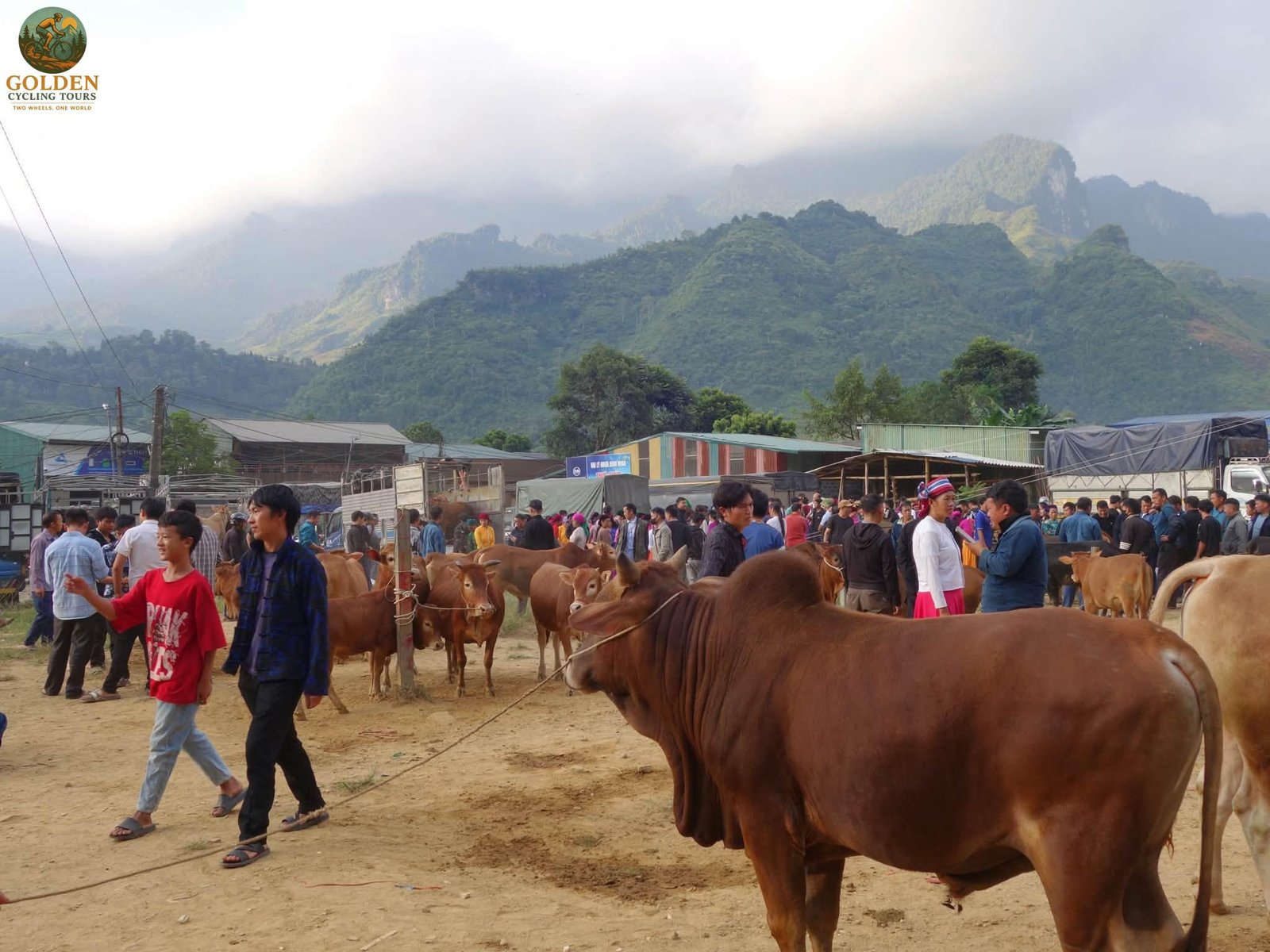
With Golden Cycling Tours, riders can discover northern Vietnam's legendary mountain roads, remote ethnic villages, forest trails, peaceful rice valleys, and dramatic limestone scenery through cycling experiences designed around adventure, discovery, and personal achievement.
Whether you are an experienced mountain biker searching for technical challenges or an adventurous traveler hoping to explore Vietnam at a more immersive pace, this guide will help you plan your ideal journey and understand how to book your ultimate adventure with Golden Cycling Tours.
Vietnam has become an appealing destination for riders who want variety in a single cycling holiday. Within one journey, you may encounter rugged mountain roads, rolling countryside, forest-lined tracks, riverside paths, and quiet rural lanes surrounded by traditional villages.
Unlike destinations where mountain biking means spending every day on a single type of terrain, Vietnam MTB tours can combine physical challenges with cultural experiences and scenic exploration.
Imagine beginning your ride in the cool morning air of the northern highlands. Your tires roll over a winding road bordered by green fields, while distant mountains emerge through layers of pale mist. As the sun climbs higher, the landscape opens into a spectacular panorama of terraced hillsides and deep valleys.
In Ha Giang, limestone mountains form towering natural walls above winding mountain roads. In Hoang Su Phi, rice terraces contour the hillsides in intricate patterns shaped by generations of farming. Around Mai Chau, quiet rural roads lead through rice paddies and traditional Thai villages, where the scent of wood smoke drifts from family kitchens.
Every destination has a different rhythm, and every climb reveals another reason to keep pedaling.
Mountain biking in Vietnam can be physically demanding, especially in the highlands. Steep gradients, long ascents, changing weather, and uneven surfaces reward riders who prepare well and remain flexible.
The sensation is unforgettable: your breathing becomes deeper, your legs work harder, and your hands maintain a steady grip on the handlebars as the road rises ahead. The rear cassette shifts with a familiar mechanical click, your tires find traction on the changing surface, and the next bend becomes a small victory waiting to happen.
Yet the rewards are not limited to reaching a summit. They also come from sharing a meal in a local village, watching farmers tend their fields, and discovering a quiet landscape that feels far removed from the pace of modern cities.
A cycling journey allows you to experience the country at ground level. You can stop to photograph a traditional stilt house, greet villagers working in the fields, or pause at a roadside market filled with colorful produce and handmade textiles.
Northern Vietnam is home to diverse ethnic communities, including Hmong, Dao, Tay, Thai, and Nung peoples. Their languages, clothing, architecture, food traditions, and agricultural practices contribute to the cultural richness of the region.
Responsible Vietnam MTB tours create opportunities to appreciate this diversity respectfully, with local guidance and an understanding that villages are living communities rather than tourist attractions.
Choosing the right destination is one of the most important decisions when planning your cycling holiday. Some areas are ideal for dramatic mountain scenery and sustained climbing, while others offer gentler rides through rice valleys, nature reserves, and traditional villages.
Golden Cycling Tours can help travelers compare routes and choose an itinerary that matches their fitness, riding experience, available time, and preferred level of comfort.
Ha Giang is one of northern Vietnam's most spectacular regions for adventurous cyclists. The landscape is defined by steep limestone mountains, deep valleys, winding roads, and villages that cling to hillsides.
Explore the region through Ha Giang Bike Tours and discover cycling itineraries designed around the area's dramatic terrain.
Ma Pi Leng Pass, along the famous Ha Giang Loop, is among the most recognizable mountain landmarks in Vietnam. Its winding road traces the contours of towering limestone cliffs above the remarkable Nho Que River.
From selected viewpoints, the river appears as a vivid ribbon of turquoise between immense gray-green rock walls. Wind moves across the exposed mountainside, clouds drift through the valleys, and the road seems to disappear into the next fold of the landscape.
For cyclists, the experience combines physical effort with extraordinary scenery. Depending on the itinerary, you may approach sections of the region by bicycle, vehicle, or a combination of transport modes. Always confirm the actual riding route and road conditions with your tour operator before departure.
The Dong Van Karst Plateau UNESCO Global Geopark reveals another side of the northern highlands. Weathered limestone formations rise above rocky fields, traditional homes, and mountain communities that have adapted to a demanding environment.
Visit Dong Van Old Quarter, explore local markets, and appreciate the distinctive architecture of villages throughout the plateau. Cycling through this region is as much about observing everyday life as it is about riding through dramatic scenery.
For a focused itinerary, consider the 10-Day Ha Giang Loop and Hoang Su Phi Cycling Adventure or the 8-Day Epic Ha Giang Loop Cycling Adventure.
Hoang Su Phi, located in Ha Giang Province, is celebrated for its spectacular terraced rice fields. The terraces curve across steep slopes like enormous green staircases, changing color with the agricultural calendar.
During the growing season, young rice plants create luminous green patterns. Closer to harvest, the hills may turn gold beneath the afternoon sun. After rainfall, water reflects the sky in delicate silver patches between the earth-colored embankments.
The atmosphere is particularly captivating in the early morning. Mist hangs above the valleys, birds call from nearby trees, and the scent of damp soil rises from the fields.
Riders interested in this region should explore Vietnam Northeast Bike Tours, where remote landscapes and highland cycling experiences provide inspiration for a longer adventure.
Because some terraced-field roads are narrow, steep, or unpaved, route selection should take local weather, surface conditions, and rider ability into account.
Cao Bang offers an appealing combination of dramatic natural scenery and rural cycling. Its landscapes include limestone mountains, rivers, valleys, traditional villages, and roads that wind through the quieter corners of northeastern Vietnam.
Ban Gioc Waterfall is one of Vietnam's most famous natural attractions. Water cascades over a broad limestone formation, breaking into white ribbons and mist before flowing into the river below.
The sound of falling water grows louder as you approach, contrasting with the peaceful atmosphere of the surrounding countryside. On sunny days, the spray may catch the light, while the green hills create a striking backdrop for photographs.
Although the waterfall is a memorable highlight, cycling distances and access arrangements depend on your itinerary. Confirm whether the waterfall is included as a cycling stop or reached by support vehicle.
Nguom Ngao Cave offers a fascinating contrast to the open mountain landscape. Inside, limestone formations create an underground world of sculpted chambers, textured walls, and dramatic rock shapes.
Combining a visit to the cave with a cycling journey allows travelers to experience both the physical beauty of the highlands and the geological forces that shaped them.
Discover possible routes through Cao Bang Bike Tours and the broader Vietnam Northeast Bike Tours collection.
Mai Chau is an excellent choice for travelers who want scenic cycling without concentrating exclusively on difficult mountain climbs.
The valley is surrounded by forested hills and dotted with rice paddies, village homes, and small rural roads. Depending on the season, fields may appear bright green, golden, or freshly prepared for planting.
The riding experience is intimate and unhurried. You may hear roosters calling from behind a wooden house, children playing near village lanes, or the gentle splash of water moving through irrigation channels. After a warm climb, the shade of a roadside tree can feel wonderfully refreshing.
Lac Village and Pom Coong Village are well-known places to learn about the culture of the White Thai community in the Mai Chau Valley.
Traditional stilt houses, woven textiles, local handicrafts, and family-run homestays give visitors opportunities to experience village life respectfully. Take time to walk through the settlement, purchase locally made crafts directly from artisans, and enjoy a meal prepared with regional ingredients.
For a shorter trip, consider the 4-Day Northern Vietnam Cycling Adventure from Mai Chau to Pu Luong. You can also explore the Mai Chau Bike Tours collection for additional inspiration.
Pu Luong Nature Reserve is known for its forested mountains, terraced fields, limestone scenery, and traditional villages. It offers a rewarding destination for cyclists seeking a slower, nature-focused experience.
The atmosphere changes as you move from open valley roads into shaded stretches bordered by bamboo, tropical vegetation, and trees. In the early morning, moisture clings to leaves, birds call from the canopy, and distant hills appear through layers of mist.
Traditional water wheels are among the region's distinctive rural features. Built to direct water toward agricultural fields, they reflect the ingenuity of communities that have cultivated these valleys for generations.
Depending on the route, riders may encounter small settlements, rice terraces, wooden bridges, and paths overlooking deep green valleys. Not every trail is suitable for every mountain bike, so technical sections should be assessed with a local guide.
Explore Pu Luong Bike Tours or combine the region with Mai Chau on the 4-Day Mai Chau to Pu Luong Cycling Adventure.
Ninh Binh offers a striking change of scenery after the mountains. Here, limestone karsts rise above flat rice fields, waterways wind through green valleys, and quiet rural roads provide a gentler cycling experience.
Explore Trang An Landscape Complex, a UNESCO World Heritage Site known for its dramatic karst scenery and waterways. Visit Tam Coc, where boat journeys pass between towering cliffs and rice fields, or climb to the viewpoint at Hang Mua for sweeping views over the countryside.
Cycling in this region can be an ideal way to balance a more demanding mountain itinerary with relaxed sightseeing. Explore Ninh Binh Bike Tours or consider the 12-Day North Vietnam Cycling Adventure from Hanoi to Ninh Binh.
Ba Be National Park is known for its forested hills, limestone formations, and tranquil lake scenery. The surrounding region offers opportunities to combine cycling with boat trips, village visits, and nature-based exploration.
The still water of Ba Be Lake reflects the green mountains, while nearby villages provide glimpses of local life in northeastern Vietnam. Depending on the itinerary, travelers may enjoy a combination of cycling, walking, and boating rather than a continuous mountain-bike route.
Discover Ba Be Lake Bike Tours for ideas on including this peaceful destination in a broader northern Vietnam adventure.
The best cycling itinerary is not necessarily the longest or most difficult. It is the one that matches your experience, physical condition, available time, and expectations.
Before booking, consider the following factors.
Mountain biking can mean different things to different travelers. Some riders enjoy long climbs and winding paved mountain roads, while others prefer gravel, forest tracks, and technical singletrack.
Ask your tour operator to clarify the expected surface types, elevation gain, daily riding distance, and technical difficulty. A route described as a mountain-bike tour may include paved roads, dirt tracks, or mixed terrain rather than purpose-built downhill trails.
If you are unsure, discuss your previous cycling experience and fitness level before confirming an itinerary.
A useful planning approach is to distinguish between scenic cycling, endurance cycling, and technically demanding mountain biking.
Scenic routes through Mai Chau, Pu Luong, and Ninh Binh can suit travelers seeking a balanced combination of cycling and sightseeing. Highland journeys around Ha Giang, Hoang Su Phi, and Cao Bang may involve longer climbs, steeper gradients, and more demanding road conditions.
Your final difficulty level will depend on the specific route, distance, elevation profile, weather, and support arrangements.
An electric-assist bicycle can make steep climbs more manageable while preserving the enjoyment of outdoor exploration. It is particularly useful for mixed-ability groups, couples with different fitness levels, or travelers who want to enjoy a long day without exhausting themselves.
Explore Vietnam E-Bike Tours if you would like to compare electric-assist options.
E-bikes still require balance, handling skills, and energy management. Battery range can also be affected by elevation, rider weight, terrain, temperature, and assistance settings, so confirm charging arrangements and daily range with your operator.
Private cycling tours can offer greater flexibility around pace, rest stops, photography, and cultural visits. They can be especially useful for families, cycling clubs, experienced riders, or travelers who want a more personalized experience.
For a more comfort-focused trip, explore Vietnam Luxury Bike Tours and ask Golden Cycling Tours about accommodation standards, support vehicles, luggage transfers, and customized route options.
Planning a successful cycling holiday involves more than choosing a destination. You need a route that suits your ability, reliable logistical arrangements, appropriate equipment, and enough flexibility to enjoy the unexpected moments along the way.
Golden Cycling Tours helps travelers explore cycling possibilities across northern Vietnam, from the spectacular highlands to peaceful rice valleys and limestone countryside.
Start by browsing the Golden Cycling Tours website and the full collection of Vietnam cycling tours.
Compare trip duration, destinations, riding style, and sightseeing opportunities. If you have a specific region in mind, browse the destination collections for Ha Giang, Cao Bang, Mai Chau, Pu Luong, Ninh Binh, Bac Ha, and Sapa.
For riders interested in the wider northern highlands, explore Cycling Northern Vietnam, Vietnam Northwest Bike Tours, and Sapa Bike Tours.
Think about what you most want from your journey. Are you hoping to conquer mountain passes, photograph terraced rice fields, explore remote villages, or combine cycling with food and cultural experiences?
Share your riding background, preferred daily distance, fitness level, and travel dates when discussing your options. If you are traveling with a group, mention differences in experience and whether anyone would prefer an e-bike.
Clear expectations help your tour operator recommend a realistic route rather than an itinerary that looks exciting on paper but feels too demanding on the road.
Before making a reservation, confirm:
The daily cycling distance and approximate elevation gain.
Whether the route uses paved roads, gravel, dirt tracks, or technical trails.
The type of bicycle included and whether equipment upgrades are available.
Guide services, support vehicles, luggage transfers, and emergency arrangements.
Accommodation standards, meals, and drinking-water provisions.
What is included in the tour price and what costs extra.
Cancellation terms, deposit requirements, and travel insurance recommendations.
Whether the itinerary may change due to weather, road conditions, or local circumstances.
These details help you compare tours fairly and prepare with confidence.
When contacting Golden Cycling Tours, provide your intended travel dates, group size, preferred destinations, approximate cycling ability, and accommodation preferences.
If you have a specific goal—such as riding the Ha Giang Loop, visiting Ban Gioc Waterfall, or combining Mai Chau with Pu Luong Nature Reserve—mention it clearly.
You can begin exploring your options through the official Golden Cycling Tours website or browse the complete tour collection.
Confirm availability, final pricing, inclusions, and booking conditions directly with the tour operator before making payment.
Choosing the right season can transform your cycling experience. Temperature, rainfall, visibility, road conditions, and agricultural activity all influence the character of a ride.
Northern Vietnam has regional variations, so the ideal travel window depends on where you plan to cycle.
Autumn is often one of the most appealing periods for cycling in northern Vietnam. Conditions can be favorable for mountain scenery, countryside exploration, and long days outdoors, although weather varies from year to year.
In Ha Giang and Hoang Su Phi, the landscapes may display golden rice terraces around harvest time, depending on local planting schedules and altitude. Cooler air can make climbing more comfortable, while clearer intervals offer spectacular mountain views.
This period is worth considering if you want to combine dramatic highland riding with photography and cultural exploration.
Spring can be an attractive time for Vietnam MTB tours, particularly for travelers who want to see the countryside becoming greener after the cooler months.
Rice fields, flowering vegetation, and fresh mountain growth bring color to the landscape. In areas such as Mai Chau and Pu Luong, rural roads pass through vibrant valleys and cultivated hillsides.
Rainfall and humidity can increase as the season progresses, so flexible planning and suitable rain gear remain important.
Winter brings cooler conditions to northern Vietnam, especially at higher elevations. In the mountains around Ha Giang, Cao Bang, and Sapa, mornings can be cold, visibility can change quickly, and mist may settle across the valleys.
For some travelers, this creates a wonderfully atmospheric experience. For others, cold temperatures and damp conditions can make long rides less comfortable.
Pack thermal layers, gloves, and weather-resistant clothing, and confirm expected temperatures for your particular route.
Summer brings warmth, humidity, and periods of heavy rainfall to many parts of northern Vietnam. The hills become intensely green, waterfalls may run strongly, and the countryside feels alive with agricultural activity.
However, heavy rain can create slippery surfaces, muddy tracks, reduced visibility, and a higher risk of landslides on some mountain roads.
Summer cycling can still be rewarding when routes are chosen carefully and local conditions are monitored. Your operator should be prepared to adjust the itinerary when weather makes a planned section unsafe.
Food is an essential part of the cycling experience. After hours in the saddle, a steaming bowl of noodles or a freshly prepared local meal can be as memorable as the landscape itself.
Northern Vietnamese cuisine reflects local ingredients, regional traditions, and the practical needs of communities living in mountain valleys.
Pho is a well-known Vietnamese noodle soup made with rice noodles, herbs, and a fragrant broth, commonly served with beef or chicken.
The rising steam carries aromas of ginger, spices, and fresh herbs. After an early start, a hot bowl of pho can provide warmth and energy before a day of riding.
Recipes vary by region, and small local restaurants may offer their own distinctive versions.
Bun cha, particularly associated with Hanoi, combines grilled pork, rice noodles, herbs, and a dipping sauce.
The smoky scent of grilled meat, the freshness of herbs, and the balance of savory and tangy flavors make it a satisfying meal before or after a cycling excursion.
Com lam, or bamboo-tube rice, is associated with several mountainous and ethnic culinary traditions in Vietnam.
Rice is cooked inside a bamboo tube, creating a subtle fragrance and a firm, slightly sticky texture. It is often served with grilled meat, sesame salt, or other regional accompaniments.
Travelers exploring rural northern Vietnam may encounter local versions of this dish during village meals or homestay stays.
In parts of the northern highlands, especially areas associated with Hmong markets and local traditions, travelers may encounter thang co, a traditional dish with regional variations.
Its ingredients and preparation may not suit every palate, but trying local food can provide insight into the area's culinary heritage. Ask your guide about ingredients and preparation if you have dietary restrictions.
In cities and larger towns, you can find family-run restaurants, noodle shops, and casual eateries. In smaller villages, meals may be arranged through homestays or local hosts, offering dishes made with seasonal vegetables, rice, eggs, fish, pork, or chicken.
Tell your tour operator about allergies, vegetarian preferences, religious dietary requirements, or other restrictions in advance. During long riding days, carry convenient snacks and drink water regularly rather than relying entirely on finding food along remote routes.
Accommodation influences how well you recover between cycling days. The right choice depends on your comfort preferences, budget, route, and the availability of lodging in remote areas.
Homestays in places such as Mai Chau, Pu Luong, and selected northern highland villages can offer a personal introduction to local culture.
You may sleep in a traditional stilt house, share a meal with your hosts, or wake to the sound of roosters and the soft movement of village life. Some properties offer simple rooms and shared facilities, while others provide private rooms and more modern amenities.
Standards vary, so ask about bedding, bathrooms, hot water, heating, and privacy before booking.
Hotels and guesthouses in larger towns can provide a welcome opportunity to rest, enjoy a hot shower, and prepare for the next stage of your journey.
In destinations such as Ha Giang City, Dong Van, and other regional centers, accommodation options range from practical guesthouses to more comfortable hotels. Availability may be limited during busy periods, festivals, or peak travel seasons.
In some rural destinations, eco-lodges and boutique properties provide scenic surroundings, comfortable rooms, and a quieter atmosphere.
These stays can work well for travelers who want to combine active days with restorative evenings. However, premium accommodation is not available everywhere, particularly along remote mountain routes.
Discuss your preferred accommodation level with Golden Cycling Tours before confirming your itinerary, and check whether the price includes every overnight stay.
Most international visitors arrive in Vietnam by air before traveling overland to their cycling starting point. A well-planned transfer can make the beginning and end of a mountain biking trip considerably easier.
Hanoi is a common starting point for cycling holidays in northern Vietnam. International travelers generally arrive at Noi Bai International Airport before continuing to their hotel or regional departure point.
Depending on your tour arrangements, you may travel by private vehicle, minibus, or another transfer service. Allow sufficient time between international arrivals and the scheduled departure of your cycling tour.
On multi-day mountain journeys, support vehicles can help transport luggage, provide assistance, and allow riders to adjust their cycling distance when necessary.
Not every itinerary includes the same level of support. Confirm whether the vehicle follows the riding group, how luggage is transferred, and what happens if a rider cannot complete a planned section.
Depending on the route, a trip may combine cycling with road transfers, walking, boat trips, or other local transport. This can be particularly useful when visiting destinations such as Ba Be Lake, Trang An Landscape Complex, or remote areas where road conditions and travel times vary.
If you bring your own bicycle, check airline requirements, packaging rules, spare-parts availability, and transport arrangements. If you plan to rent a bicycle, confirm the frame size, suspension setup, brakes, tire condition, and included accessories.
One of the greatest rewards of Vietnam MTB tours is the opportunity to experience the country beyond its famous viewpoints.
Riding through a village means entering a place where people live, work, raise families, and maintain traditions. Respectful behavior helps preserve the welcoming relationships that make these journeys special.
Northern Vietnam is home to many ethnic communities, each with its own customs, clothing, language, architecture, and cultural practices.
In the highlands, you may see traditional garments at markets, observe agricultural activities, or encounter distinctive homes built to suit local landscapes and climates.
Approach these encounters with curiosity rather than assumptions. If you want to photograph someone, ask permission first. Be especially considerate around children, religious sites, funerals, and private family spaces.
Buying food, drinks, or handicrafts from local businesses can help ensure that tourism brings practical benefits to the communities you visit.
Consider staying at locally operated homestays, choosing local guides, and purchasing handmade products directly from artisans when possible.
Avoid treating cultural encounters as performances that must happen on demand. Some villages welcome visitors readily, while others may prefer greater privacy.
Mountain landscapes and forest reserves can be sensitive to waste, erosion, and irresponsible visitor behavior.
Carry reusable water bottles where safe refilling is available, take all rubbish with you, and stay on appropriate routes. Do not leave food packaging on the roadside or ride into cultivated fields without permission.
In natural areas such as Pu Luong Nature Reserve and Ba Be National Park, follow local guidance and any restrictions on access.
Many cycling routes in Vietnam use roads shared with motorbikes, cars, trucks, pedestrians, and agricultural vehicles.
Keep a predictable line, communicate clearly with your group, and use lights or reflective clothing when visibility is poor. Descend cautiously, especially after rain, and avoid assuming that every bend offers a clear view of oncoming traffic.
A good guide can help you understand local traffic patterns and make sensible decisions about when to ride, stop, or transfer by vehicle.
The right equipment makes a significant difference to comfort, safety, and enjoyment.
For mixed terrain, a well-maintained hardtail mountain bike may be appropriate for many gravel roads and moderate off-road sections. A full-suspension bike can offer additional comfort and control on rougher terrain, depending on the route.
The best choice depends on surface conditions, technical difficulty, rider preference, and the bicycle options available through your operator.
Weather can shift rapidly between valleys and high elevations. Pack breathable cycling clothing, a lightweight waterproof jacket, warm layers for mountain mornings, padded shorts, gloves, and suitable footwear.
A small day bag can hold snacks, sunscreen, personal medication, and an extra layer.
Even on guided trips, it is useful to have basic personal equipment such as a spare tube compatible with your bicycle, tire levers, a compact multitool, and a portable power bank.
Ask whether the guide or support vehicle carries pumps, spare parts, first-aid supplies, and emergency communication equipment.
Travel insurance should cover the actual activities you intend to undertake, including mountain biking if applicable. Review exclusions and emergency evacuation provisions before departure.
If you are ready to move from inspiration to planning, the following itineraries and destination collections offer useful starting points. Check current availability, inclusions, route details, and suitability directly with Golden Cycling Tours.
The 15-Day Best Vietnam Cycling Northeast Tour is worth exploring if you want to investigate a longer journey through the northeast.
A longer itinerary can provide more time for mountain scenery, rural communities, and regional discoveries, although the actual riding profile should be checked before booking.
The 4-Day Mai Chau to Pu Luong Cycling Adventure is an option to consider if you want a shorter journey focused on valleys, villages, and rural landscapes.
Explore the 10-Day Ha Giang Loop and Hoang Su Phi Cycling Adventure if the dramatic mountain landscapes of northern Vietnam are your main attraction.
Before choosing, ask about daily distances, elevation gain, technical difficulty, and the balance between cycling and vehicle transfers.
The 6-Day Mai Chau, Pu Luong, and Ninh Binh E-Bike Tour may appeal to travelers who want electric assistance while exploring a combination of countryside, nature, and limestone landscapes.
For further ideas, browse Vietnam E-Bike Tours and compare the available options.
The 12-Day North Vietnam Cycling Adventure from Hanoi to Ninh Binh is another itinerary to investigate if you are interested in a longer north-to-south journey through selected northern landscapes.
You can also explore Bac Ha Bike Tours for ideas involving the northwest's highland scenery and local markets.
Yes, some cycling itineraries can suit beginners, but the difficulty varies significantly. Routes through relatively gentle countryside may be appropriate for less experienced riders, while highland journeys can involve long climbs, steep descents, and demanding road conditions.
Discuss your experience, fitness, and preferred daily distance with Golden Cycling Tours before booking.
A short trip of four to six days can work well for travelers focusing on a particular region, such as Mai Chau and Pu Luong. A longer trip of ten to fifteen days allows more time to explore several destinations and manage travel between regions.
Your ideal duration depends on your riding goals, available vacation time, and the distance between destinations.
For northern Vietnam, September to November and March to May are often appealing periods for cycling, although local conditions vary.
Autumn may offer golden rice terraces in some highland areas, while spring can bring fresh green landscapes and comfortable riding temperatures. Check the forecast and local road conditions before departure.
Not necessarily. Depending on the tour, rental bicycles may be available. Ask about bicycle models, frame sizes, suspension, maintenance, helmets, pedals, and spare parts.
If you bring your own bicycle, confirm transport arrangements and airline policies in advance.
E-bike options may be available on selected itineraries. Electric assistance can help manage climbs and long distances, but battery capacity, charging opportunities, and the route's terrain should be considered.
Explore the Vietnam E-Bike Tours collection and confirm the equipment available for your preferred dates.
Guided tours can simplify route planning, accommodation, luggage transfers, local communication, and access to regional knowledge. They can be particularly useful in remote mountain areas where weather and road conditions change quickly.
Independent cycling offers flexibility but requires more preparation, navigation, mechanical knowledge, and contingency planning.
The best option depends on your experience and the type of journey you want.
Choose familiar, balanced meals that provide carbohydrates, protein, and fluids. Rice, noodles, eggs, fruit, and other locally available foods can be useful options depending on your dietary needs.
During long rides, carry snacks and drink regularly. Avoid experimenting with unfamiliar foods immediately before a particularly demanding cycling day if you have a sensitive stomach.
Many travelers enjoy cycling in Vietnam, but no mountain biking destination is without risk. Traffic, steep descents, wet surfaces, landslides, heat, and changing weather require careful judgment.
Choose routes appropriate to your ability, wear a helmet, follow your guide's instructions, and make sure your travel insurance covers the activity.
Ask Golden Cycling Tours whether your preferred destinations, travel dates, group size, accommodation standards, and riding goals can be accommodated in a private itinerary.
Provide as much detail as possible so the team can assess route suitability and explain the available arrangements.
Start at the Golden Cycling Tours website or browse the complete tour collection.
Choose a route that interests you, then contact the operator to confirm availability, pricing, inclusions, equipment, and booking conditions before making a reservation.
There is a particular kind of freedom that comes from exploring a country by bicycle. You feel the temperature change as the road climbs into the mountains. You smell wet earth after a passing shower. You hear the steady rhythm of your drivetrain and the distant sounds of village life. Then, after a demanding ascent, the landscape suddenly opens, revealing a valley of rice terraces, limestone peaks, and winding roads that seem to lead toward the horizon.
These are the moments that make Vietnam MTB tours so rewarding.
From the dramatic passes of Ha Giang and the terraced hillsides of Hoang Su Phi to the peaceful valleys of Mai Chau, the forests of Pu Luong Nature Reserve, and the limestone scenery of Ninh Binh, northern Vietnam offers a remarkable variety of experiences for cyclists.
With thoughtful preparation and a route that matches your abilities, your cycling holiday can become more than a physical challenge. It can be a journey through landscapes, food traditions, local communities, and unforgettable moments of discovery.
Explore the possibilities with Golden Cycling Tours, compare itineraries, and start planning your next adventure through the official website or the Vietnam cycling tour collection.
Your next great ride may begin with a single turn of the pedals.

.jpg "Thai Binh Vietnam Bicycle")
.jpg "Phu Tho Vietnam Cycling")
.jpg "Thai Nguyen Cycling Vietnam")
.jpg "Tuyen Quang Cycling Vietnam")
.jpg "Vinh Phuc Cycling Vietnam")
Leave a Reply
Your email address will not be published. Required fields are marked *