- Call us Via Whatsapp: +84 (0) 832 126 699
4.9 stars on our site
(15,000 reviews)
- Monday - Sunday : 08:00 - 17:00
(15,000 reviews)

Imagine the first light of morning spilling across the mountains of Northern Vietnam. Mist drifts through emerald valleys, rice terraces catch the golden sun, and a narrow road of compact gravel winds between limestone cliffs and sleepy villages. Your tires crunch over the earth. The chain clicks softly as you shift into an easier gear. Somewhere in the distance, a rooster calls, a river rushes over smooth stones, and the scent of woodsmoke rises from a village kitchen.
This is Vietnam beyond the familiar tourist trail—a country best discovered one pedal stroke at a time.
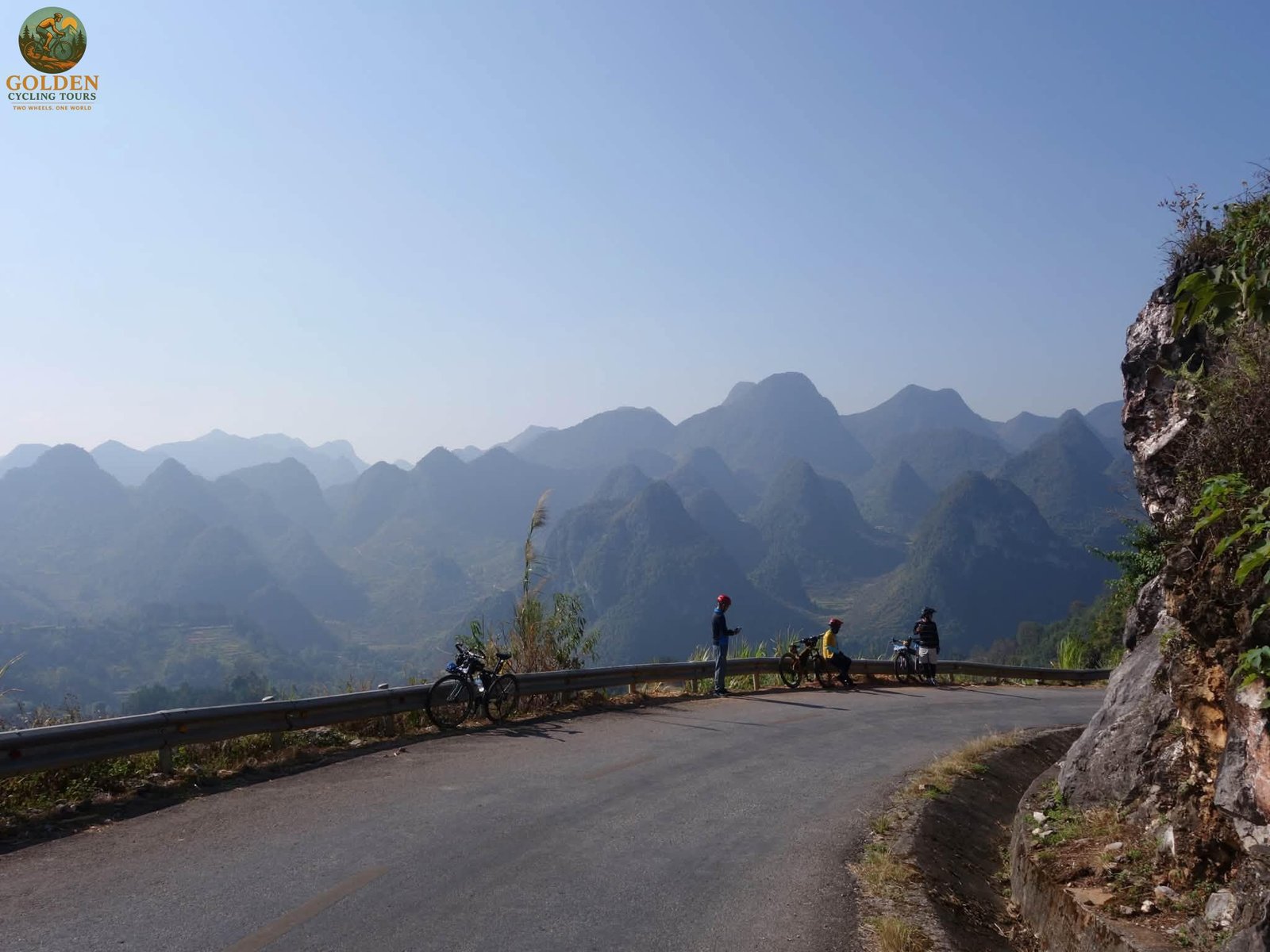
Vietnam Gravel Bike Tours offer an exciting way to experience the country’s extraordinary landscapes, rural communities, mountain roads, and cultural traditions. Combining the freedom of road cycling with the adventurous spirit of off-road exploration, gravel riding opens the door to quieter routes, remote valleys, peaceful countryside lanes, and unforgettable journeys through Northern Vietnam.
Whether you dream of conquering the legendary mountain roads of Ha Giang, rolling through the rice fields of Mai Chau, exploring the wilderness around Pu Luong Nature Reserve, or discovering the limestone landscapes of Ninh Binh, Vietnam offers remarkable possibilities for cyclists who want more than a conventional sightseeing holiday.
With Golden Cycling Tours, you can explore cycling itineraries across Northern Vietnam and discover routes suited to different fitness levels, travel styles, and adventure ambitions. Before booking, discuss your preferred gravel terrain, bike setup, daily distance, and support requirements with the tour operator to ensure the itinerary matches your riding expectations.
Vietnam Gravel Bike Tours are cycling adventures that combine paved roads with suitable gravel tracks, rural lanes, and other unpaved surfaces where the route and local conditions permit. They appeal to riders who want to travel farther into the countryside without limiting themselves to smooth asphalt.
Unlike a conventional road-cycling holiday focused primarily on speed and pavement, gravel cycling places greater emphasis on exploration. The reward is not simply reaching a destination; it is experiencing everything between the starting point and the finish line.
You might pedal past a farmer guiding water buffalo through a field, climb a quiet mountain road bordered by bamboo, or follow a rural lane where children wave from their doorways. After a challenging ascent, you may stop beside a stream, remove your helmet, and feel cool mountain air drying the sweat on your forehead.
Every section of the journey offers a different rhythm.
Vietnam is a compelling destination for adventurous cyclists because its landscapes change dramatically over relatively short distances. Northern Vietnam alone offers limestone mountains, highland plateaus, terraced hillsides, river valleys, forested slopes, and agricultural communities connected by an intricate network of local roads.
A well-planned gravel itinerary can bring these landscapes together in one immersive journey.
The main attractions of Vietnam gravel cycling include:
Scenic diversity: Ride through rice paddies, mountain passes, limestone valleys, forested hills, and riverside countryside.
Cultural encounters: Discover local markets, traditional homes, village crafts, and everyday rural life.
Flexible riding experiences: Combine challenging climbs with gentler countryside stages, depending on the route.
A slower way to travel: Experience the scents, sounds, textures, and small details that often disappear when traveling by car.
Adventure beyond the main tourist routes: Explore quieter roads and suitable gravel sections when local conditions allow.
A rewarding physical challenge: Develop endurance, climbing strength, balance, and bike-handling confidence.
The key is choosing the right route. Not every beautiful mountain road is suitable for every gravel bike, and not every cycling tour marketed as an adventure includes extensive unpaved riding.
Before booking, confirm the actual surface types, road conditions, elevation gain, technical difficulty, and availability of suitable bicycles.
Northern Vietnam is an excellent starting point for riders seeking a combination of dramatic mountain scenery, rural culture, and varied cycling terrain. Each destination offers a distinct character, from remote highland roads to tranquil valleys and limestone landscapes.
Ha Giang is one of Northern Vietnam’s most spectacular destinations for adventurous cyclists. Its mountainous landscape features immense limestone formations, deep valleys, winding roads, and communities whose traditional ways of life remain closely connected to the surrounding terrain.
Explore the region through the Ha Giang Bike Tours destination guide.
For riders seeking an ambitious mountain journey, the experience begins long before the first summit. The road rises through a valley, bends around a rocky hillside, and suddenly reveals a panorama of folded mountains fading into blue distance.
The air becomes cooler as the elevation increases. A thin breeze moves through roadside grasses, while sunlight strikes the pale limestone and throws sharp shadows across the slopes. Your breathing grows heavier, your legs settle into a steady rhythm, and each turn of the pedals brings another section of the landscape into view.
Ma Pi Leng Pass is among the defining landmarks of the Ha Giang region. Its dramatic mountain scenery and views over the Nho Que River make it a memorable highlight for travelers exploring the area.
The road is carved into steep terrain, with immense rock walls on one side and deep valleys opening on the other. Far below, the river can appear as a vivid ribbon of turquoise against the darker mountains.
Cycling here is as much about awareness as physical effort. Riders should manage speed carefully, anticipate traffic, watch for loose gravel and damaged road surfaces, and stop only at safe, designated places.
The famous pass is not automatically a gravel trail. Some sections are paved, and a route containing Ma Pi Leng Pass should not be advertised as predominantly off-road unless its actual surface profile supports that description.
The Dong Van Karst Plateau Geopark offers another extraordinary setting for cycling. The landscape is shaped by limestone formations, steep hillsides, narrow valleys, and villages built into a rugged mountain environment.
As you ride, notice the contrast between the gray rock, green vegetation, and colorful fabrics worn at local markets. The road may climb through exposed highland terrain before descending toward a village where the atmosphere feels calmer and more intimate.
Depending on the chosen route, riders may encounter traditional stone houses, small roadside shops, agricultural plots, and mountain communities with distinctive cultural identities.
For travelers interested in a longer Northern Vietnam adventure, explore the 10-Day Ha Giang Loop and Hoang Su Phi Cycling Adventure.
You can also compare the 8-Day Epic Ha Giang Loop Adventure.
These itineraries provide starting points for planning a mountain-focused cycling holiday. Contact Golden Cycling Tours to confirm which stages are appropriate for gravel bikes, which surfaces are included, and whether the daily distances match your experience.
Hoang Su Phi is renowned for its spectacular terraced rice fields and mountainous countryside. Here, the landscape feels carefully shaped by generations of agricultural knowledge.
From a hillside road, terraces descend in broad curves toward the valley floor. During the growing season, young rice plants create brilliant shades of green. Closer to harvest, the hills may glow in gold and amber, while mist drifts across the higher ridges.
Cycling through this region is a lesson in changing perspective. One moment, you are climbing beneath a canopy of trees; the next, the hillside opens to reveal a vast patchwork of cultivated slopes.
The sensory details are unforgettable: damp earth after rain, the faint sweetness of vegetation, the sound of water moving through irrigation channels, and the distant voices of farmers working in the fields.
Hoang Su Phi is attractive to cyclists who enjoy remote scenery, long climbs, and the feeling of traveling through landscapes that remain deeply connected to local agriculture.
However, road surfaces can vary considerably. Some routes are paved, some may include rough or broken surfaces, and access tracks can become slippery or difficult after heavy rain.
A gravel-focused itinerary should therefore be planned around verified road conditions rather than assumptions based on photographs.
Riders should also remember that rice terraces are working agricultural landscapes, not simply scenic backdrops. Respect private land, follow local guidance, and avoid entering cultivated fields without permission.
Cao Bang is an excellent destination for travelers seeking peaceful countryside, impressive limestone scenery, and cultural exploration in Vietnam’s northeastern highlands.
Discover regional cycling possibilities through the Cao Bang Bike Tours destination page.
The landscape feels different from the high mountain roads of Ha Giang. Here, limestone hills rise above agricultural valleys, rivers weave through the countryside, and rural settlements sit between green fields and forested slopes.
Ban Gioc Waterfall is one of the region’s most celebrated natural attractions. Water cascades over a broad limestone formation into a river framed by vegetation and towering hills.
The sound reaches you before the full view does: a deep, continuous rush that grows louder as you approach. Fine spray hangs in the air, cooling your skin on a warm day. The surrounding greenery creates a vivid contrast with the white water and pale rock.
A cycling trip can combine scenic riding with a visit to this remarkable landmark, subject to the itinerary and access arrangements.
Nguom Ngao Cave offers a striking contrast to the open countryside. Inside, the temperature can feel cooler, while limestone formations create intricate patterns across the cavern walls.
For cyclists, a visit provides a welcome change from the physical demands of the road. It is also a reminder that the landscapes of Northern Vietnam extend well beyond the scenery visible from a bicycle saddle.
Cao Bang offers opportunities to connect rural roads, riverside landscapes, mountain viewpoints, and cultural stops into a rewarding journey.
Its suitability for gravel bikes depends on the specific route. Some stages may be ideal for mixed-surface riding, while others may consist mostly of paved roads.
When planning your trip, ask about road surface percentages, steep descents, traffic, seasonal maintenance, and whether a support vehicle can reach the more remote sections.
For destination information and tour planning, visit Cao Bang Bike Tours and browse the broader Vietnam Northeast Bike Tours collection.
Mai Chau is an inviting destination for riders who want to combine cycling with cultural discovery and beautiful countryside.
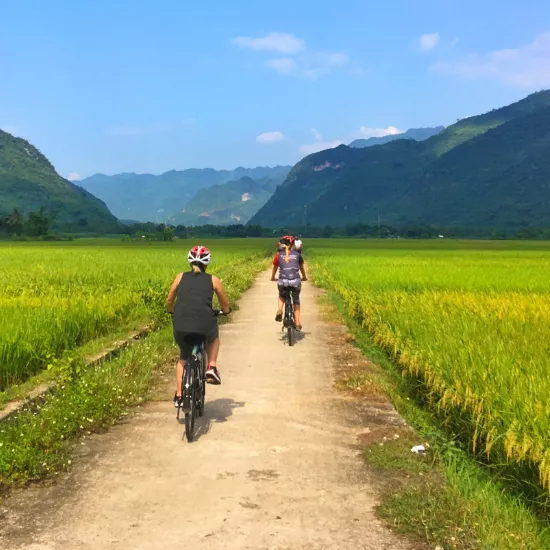
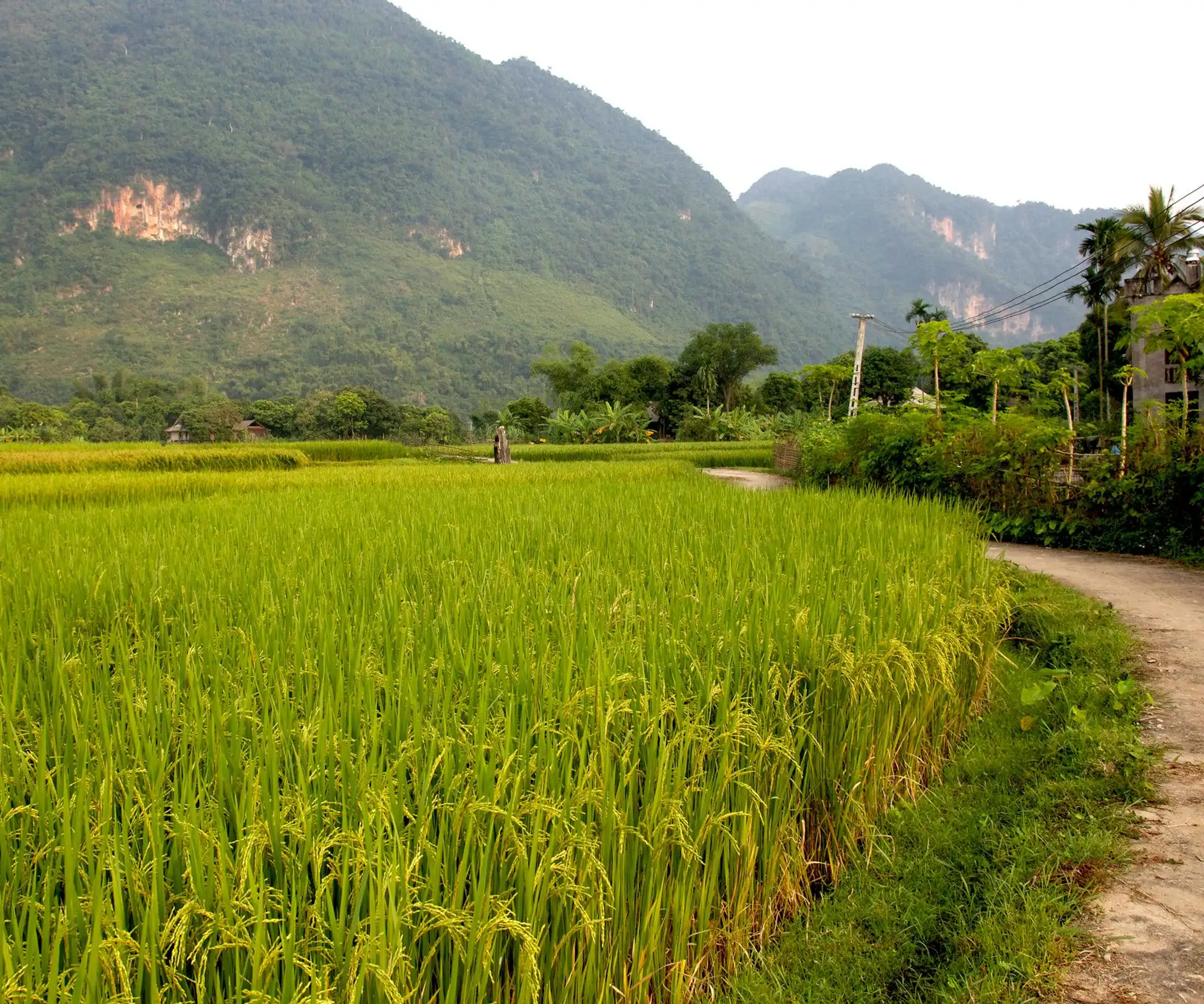
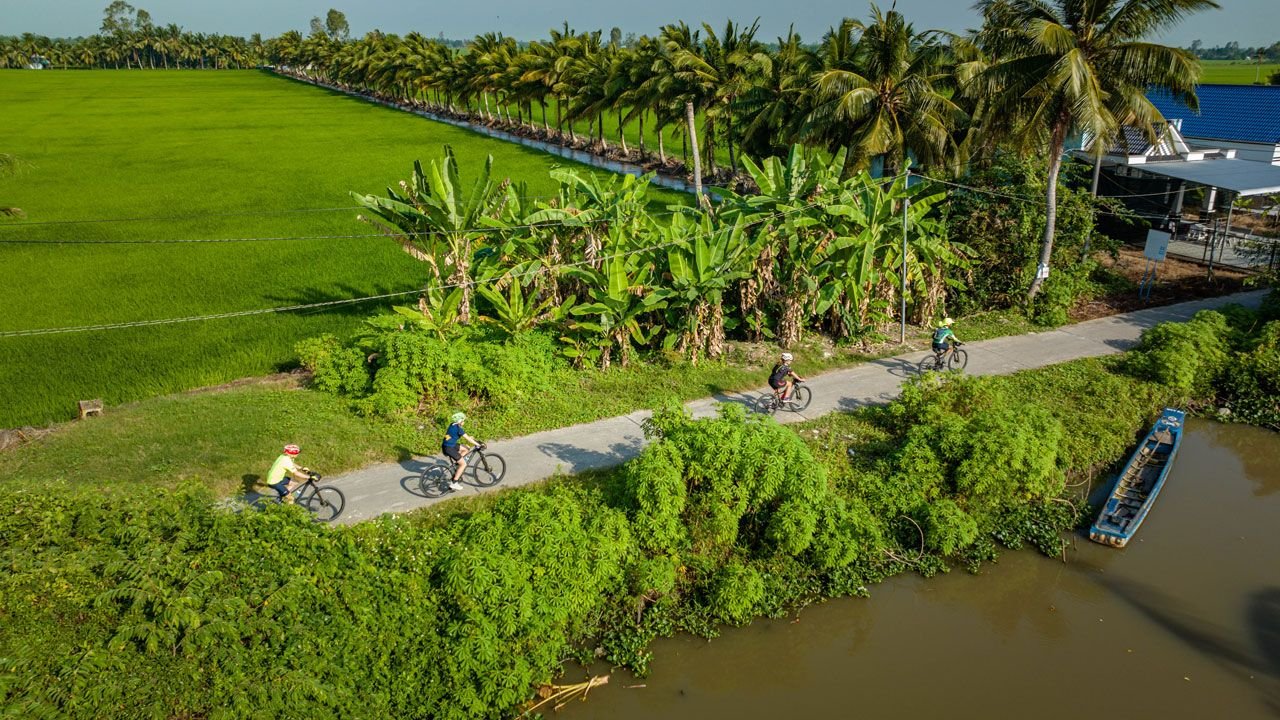
Unlike the more demanding mountain stages found in Ha Giang, parts of the Mai Chau valley offer gentler riding through villages, agricultural land, and rice fields. Surrounding hills create a natural frame for the valley, while local roads connect small communities and traditional houses.
Explore the Mai Chau Bike Tours destination guide.
Imagine starting your ride in the early morning, when the air is still cool and the valley is quiet.
The wheels roll over a narrow country road. Water glints between rice plants, bamboo leaves rustle in a light breeze, and the smell of freshly cooked rice drifts from a nearby home.
You pass wooden houses raised above the ground, gardens filled with vegetables, and farmers preparing for the day's work. A small shop opens its doors, and a dog stretches lazily in the shade.
These are the moments that make cycling so rewarding. You do not merely observe the countryside; you move through it at a pace that allows the details to become part of the journey.
Mai Chau is closely associated with communities of the White Thai people, whose cultural traditions include distinctive architecture, textiles, weaving, food, and hospitality.
Visitors may have opportunities to stay in a local homestay, enjoy regional dishes, or learn about traditional weaving and village life.
Cultural experiences vary by accommodation and itinerary. Choose respectful, locally arranged activities, ask permission before photographing residents, and avoid treating private homes as public attractions.
The 4-Day Northern Vietnam Cycling Adventure from Mai Chau to Pu Luong is worth exploring if you want to combine valley riding with more rugged countryside and nature-focused scenery.
Discuss the route's actual gravel content with the operator before choosing a bicycle.
Pu Luong Nature Reserve offers an immersive countryside experience, with forested hills, terraced fields, traditional villages, and valleys that feel far removed from the pace of major cities.
Explore the Pu Luong Bike Tours destination guide.
The atmosphere changes with the terrain. In the morning, mist may cling to the slopes, softening the outlines of distant mountains. As the sun rises, the valley becomes brighter, revealing rice fields, bamboo groves, and small settlements scattered across the hillsides.
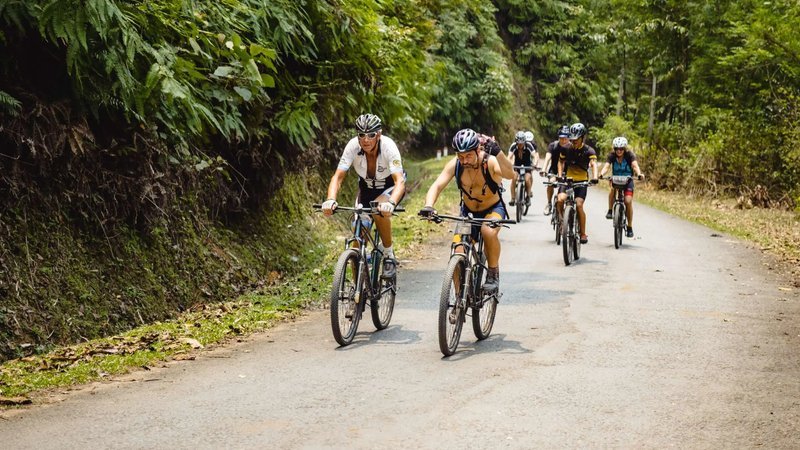
The road may climb steadily away from the valley floor, passing gardens and wooden homes before entering cooler, shaded stretches. On suitable unpaved sections, the sound of gravel beneath your tires becomes part of the experience: a dry crunch, the occasional small stone flicking against the frame, and the rhythmic movement of the drivetrain as you maintain a comfortable cadence.
Pu Luong is especially appealing to travelers who value landscapes, rural culture, and a quieter style of adventure.
Depending on the route, you may encounter terraced fields, forested slopes, village paths, traditional waterwheels, and panoramic viewpoints.
Please remember that a nature reserve is a protected landscape. Stay on permitted roads and paths, avoid disturbing wildlife, carry out all waste, and follow local conservation guidance.
Some tracks can become muddy, steep, or slippery after rainfall. If your itinerary includes rough surfaces, confirm whether your bike has appropriate tires, gearing, and braking capability.
A journey linking Mai Chau and Pu Luong can provide a varied cycling experience, with countryside roads, changing elevation, and opportunities to learn about local life.
Explore the 4-Day Mai Chau to Pu Luong Cycling Adventure to investigate a shorter trip.
For travelers seeking additional flexibility, the 6-Day Mai Chau, Pu Luong, and Ninh Binh E-Bike Tour may also be worth considering. Ask whether an e-bike is available in a gravel-suitable configuration and whether the route's terrain matches the bike supplied.
Ninh Binh offers a very different cycling atmosphere from the northern highlands. Here, limestone karsts rise dramatically from flat green plains, rivers curve through the countryside, and temples and villages sit among rice fields.
Discover more through the Ninh Binh Bike Tours destination guide.
Trang An Landscape Complex, a UNESCO World Heritage Site, is celebrated for its limestone formations, waterways, caves, and cultural landscapes.
Cycling around the wider region allows visitors to appreciate the relationship between mountains, fields, settlements, and water. Some of the area's most famous experiences involve boats rather than bicycles, making it easy to combine a ride with a slower sightseeing excursion.
Tam Coc is known for its river scenery, rice fields, and limestone cliffs. Depending on the season, the landscape may be lush green or golden with ripening rice.
A morning ride can be particularly beautiful. The air is fresh, the road is relatively quiet in some areas, and sunlight gradually illuminates the cliffs. The countryside feels spacious, yet local life remains close: small eateries, farm entrances, temples, and village lanes appear along the way.
Hang Mua Viewpoint is a popular landmark for panoramic views across the surrounding limestone landscape. The climb to the viewpoint is on foot, not by bicycle, so plan time and energy accordingly.
From above, the river winds through fields like a silver ribbon. The limestone formations rise from the plain in dramatic clusters, creating one of the region's most recognizable views.
Ninh Binh is particularly suitable for combining cycling with cultural sightseeing, boat trips, and relaxed countryside exploration. The exact gravel opportunities depend on the chosen route and local access conditions.
Choosing the right itinerary is just as important as choosing the destination. A successful gravel cycling holiday balances scenery, physical challenge, bike suitability, accommodation, and enough time to enjoy the places you visit.
The term “gravel tour” can mean different things to different operators. Some trips include long sections of compact dirt or gravel roads, while others focus primarily on paved country roads with occasional rough surfaces.
Before confirming a booking, ask:
What percentage of the route is paved, compact gravel, dirt, or rough track?
What is the total daily distance?
How much climbing should I expect each day?
Are there steep or technical descents?
Are the roads suitable for a gravel bike with the proposed tire width?
Can the itinerary be adjusted for weather or road conditions?
Is a support vehicle available, and can it access the remote sections?
Is luggage transfer included?
Are bike rental, repair equipment, and emergency support available?
Clear answers help you avoid booking a beautiful tour that does not match your preferred riding style.
A gravel bike is designed to combine efficient riding on paved roads with greater capability on suitable unpaved surfaces than a typical road bike.
It can be an excellent option for mixed-surface touring where the route includes compact gravel, hard-packed dirt, and long connecting sections of asphalt.
However, very rocky trails, deep mud, and highly technical descents may be better suited to a mountain bike.
A mountain bike is often the better choice when a route includes rough tracks, loose stones, steep descents, or more technical terrain.
Its wider tires and suspension, depending on the model, can provide additional control and comfort on demanding surfaces. The trade-off may be slower progress on paved roads.
An e-bike can help riders manage long distances, hills, and changes in elevation with less physical strain.
It may be particularly useful for travelers who want to enjoy Northern Vietnam's mountain scenery without making every climb a maximum-effort challenge.
Battery range, charging access, bike weight, and the suitability of the tires and brakes must be considered carefully. Not every e-bike is designed for gravel riding.
Explore the Vietnam E-Bike Tours collection if you are considering electric assistance.
You do not need to be a professional cyclist to enjoy Vietnam's countryside. You do, however, need an honest understanding of your endurance and technical ability.
A rolling valley ride may feel comfortable for an active beginner, while a full day of steep mountain climbs can challenge even experienced riders.
For mountain-focused trips, train with consecutive riding days before departure. Practice climbing at a steady pace, descending safely, riding on loose surfaces, and managing hydration.
If you are new to gravel cycling, start with a route featuring moderate daily distances and limited technical terrain. You can always plan a more demanding journey once you know how you respond to long days in the saddle.
Northern Vietnam has distinct seasonal patterns, but conditions vary between valleys, high mountain passes, and lowland destinations. The best travel period depends on where you plan to ride, the surfaces included, and your tolerance for heat, rain, and cooler weather.
Spring is often an appealing time for cycling in Northern Vietnam. Temperatures can be comfortable, the countryside is green, and the weather may be suitable for long days outdoors.
In higher elevations, mornings can still feel cool. Mist or light rain may affect visibility, and conditions can change quickly on mountain roads.
For riders interested in Ha Giang, Cao Bang, Mai Chau, or Pu Luong, spring can provide a rewarding mix of scenery and riding conditions.
Carry a lightweight waterproof jacket, a warm layer for early starts, and clothing that dries quickly.
Summer brings vibrant vegetation and intense green landscapes. Rice fields and forested hills can look especially beautiful, but heat, humidity, and heavy rain can make cycling more demanding.
Rain may cause loose surfaces to become muddy, increase the risk of slippery descents, and trigger localized flooding or landslides in mountainous areas.
If you travel during these months, choose a flexible itinerary, start early, drink regularly, and follow local advice on road conditions.
A gravel route that feels straightforward in dry weather can become significantly more technical after a storm.
Autumn is often one of the most attractive periods for exploring Northern Vietnam by bicycle.
In parts of the highlands, rice terraces may turn golden around harvest time. Temperatures can become more comfortable, and the landscape offers a striking combination of green valleys, amber fields, and blue-gray mountains.
September can still bring substantial rainfall in some areas, so conditions should be checked carefully. October and November may offer more settled weather in many locations, but no month guarantees dry roads.
This period is particularly appealing for riders hoping to combine Ha Giang, Hoang Su Phi, and Cao Bang in a longer itinerary.
Winter can bring chilly mornings, fog, and low visibility, especially in highland regions. Some days are clear and beautiful, while others feel damp and cold.
The mist can create a dramatic atmosphere around limestone peaks and terraced hillsides, but it also requires extra care on winding mountain roads.
Bring warm layers, gloves, a windproof jacket, and lights for low-visibility conditions. Check the forecast before committing to long mountain stages.
For many travelers, March to May and October to November are useful periods to consider for Northern Vietnam cycling. However, the best choice depends on the precise destination and annual weather conditions.
If your priority is golden rice terraces, research harvest timing in the specific region. If you prefer cooler temperatures, look at the spring and autumn shoulder seasons. If you want lush green landscapes, summer may appeal, provided you accept the increased weather risks.
Before departure, check current forecasts, road conditions, and any local travel advisories.
A gravel cycling journey is not simply a sequence of distances and elevations. It is a collection of physical sensations, small discoveries, and moments that stay with you long after the trip ends.
The day begins before the valley fully wakes.
You step outside and feel cool air against your cheeks. The sky is pale, the mountains appear as soft silhouettes, and the smell of breakfast drifts from the kitchen.
After checking your tires, brakes, water bottles, and bags, you roll onto the road. The first few kilometers are gentle enough for your muscles to warm up. The chain clicks into a lower gear, your breathing finds a rhythm, and the road begins to climb.
As the gradient steepens, you settle into a steady cadence.
Your legs begin to burn. Sweat gathers beneath your helmet, and your heartbeat becomes more noticeable. The temptation to push harder gives way to the practical wisdom of saving energy for the kilometers ahead.
A bend opens onto a view of green terraces. A farmer works beside the road. The air carries the smell of damp vegetation, and somewhere beyond the trees you hear running water.
You pause to drink, breathe deeply, and take in the view.
After the climb comes a descent, and the experience changes completely.
You shift your weight, keep your eyes ahead, and manage your speed over the surface. On compact gravel, the tires produce a light, continuous crunch. Loose stones demand concentration, while wet patches call for extra caution.
Later, you reach a village where the pace slows. Someone prepares lunch over a hot stove, a dog sleeps in the shade, and children watch the bicycles pass with curiosity.
You may stop for a bowl of noodles, fresh vegetables, or a cup of Vietnamese coffee. The food tastes particularly good after several hours outdoors.
At the end of the stage, the mountains turn darker as the sun drops behind the ridges.
Your legs feel heavy, your shoulders relax, and your appetite returns. A warm meal, a shower, and a comfortable bed suddenly feel like extraordinary luxuries.
Perhaps you sit on a balcony listening to insects in the garden. Perhaps you share stories with fellow riders or watch the last light fade across the rice fields.
This is the quieter reward of Vietnam Gravel Bike Tours: the sense that you have not merely passed through a landscape but experienced it with your whole body.
Vietnamese cuisine is one of the pleasures of traveling by bicycle. Meals offer a window into local culture, and the balance of fresh herbs, fragrant broths, vegetables, rice, and grilled ingredients can be especially satisfying after a long ride.
Food availability varies by village, season, and accommodation, but the following dishes are worth looking for.
Pho is Vietnam's famous noodle soup, commonly served with rice noodles, broth, herbs, and beef or chicken.
The aroma rises from the bowl before the first spoonful. Warm steam carries notes of ginger, herbs, and spices, while the broth provides a comforting start on a cool morning.
For cyclists, pho can be a useful breakfast option because it provides fluids and carbohydrates. Portion sizes and ingredients vary, so add other foods as needed for a longer riding day.
Banh mi combines a crisp baguette with fillings that may include meat, egg, vegetables, herbs, and sauces.
It is practical for a quick stop, especially when you need something portable between villages. Ask about ingredients if you have dietary restrictions, and remember that food availability may be limited on remote mountain stages.
Rice is a staple across Vietnam and appears in many forms, from simple steamed rice to com tam, or broken-rice dishes, often served with grilled meat and accompaniments.
Rice-based meals provide carbohydrates that help replenish energy after cycling. Add vegetables and a protein source to support recovery.
In Northern Vietnam, local meals may include grilled meats, tofu, seasonal vegetables, soups, bamboo shoots, sticky rice, and dishes prepared with regional herbs.
At a homestay, a shared meal can become one of the most memorable cultural experiences of the trip. The table may fill with small dishes, bowls of rice, fresh greens, and steaming soup. Conversations unfold slowly, often with the help of a guide or host who explains the ingredients and traditions.
During a guided tour, ask the operator whether meals are included and how restaurants or homestays are selected.
In larger towns such as Ha Giang City, Cao Bang City, and Ninh Binh, you will generally find a wider choice of restaurants and cafés than in remote villages. In smaller settlements, options may be simpler and opening hours less predictable.
For a more authentic experience, consider a locally arranged homestay meal. Tell the operator in advance about vegetarian preferences, allergies, religious dietary needs, or other restrictions.
Long rides require more than occasional snacks.
Eat a carbohydrate-rich breakfast before demanding stages.
Carry snacks such as bananas, energy bars, or other familiar foods.
Drink regularly rather than waiting until you feel thirsty.
Consider electrolytes during hot, humid weather.
Include protein and carbohydrates after longer rides.
Carry enough food and water for remote sections where shops may be unavailable.
Food hygiene matters, especially when riding far from major towns. Choose freshly prepared meals from reputable establishments and use safe drinking water.
Accommodation can shape the character of a cycling holiday just as much as the route. Northern Vietnam offers a range of possibilities, from comfortable hotels in towns to traditional homestays and nature-focused lodges.
Homestays can provide an intimate introduction to village life.
In destinations such as Mai Chau and Pu Luong, some accommodations feature traditional architecture, wooden interiors, communal dining areas, and views over rice fields or surrounding hills.
You may wake to the sound of roosters, smell breakfast cooking, and watch mist lift from the valley as the day begins.
Facilities vary. Some homestays offer private rooms and modern bathrooms, while others have simpler arrangements or shared facilities. Confirm the accommodation standard before booking.
Hotels can be a good choice for travelers who prefer private bathrooms, air conditioning, and additional comfort after demanding rides.
Town-based accommodation may also make it easier to access restaurants, repair services, shops, and transport connections.
For example, an itinerary through Ha Giang or Cao Bang may include overnight stops in regional centers, depending on the route.
In scenic areas, selected lodges and boutique properties offer a quieter setting with gardens, terraces, and views of the countryside.
These options can be particularly appealing to couples, small groups, and travelers seeking a balance between adventure and comfort.
Explore Vietnam Luxury Bike Tours if you want to investigate more comfort-focused cycling experiences.
Before booking, check:
Whether rooms have private or shared bathrooms.
Whether breakfast and other meals are included.
Whether there is secure bicycle storage.
Whether laundry services are available.
Whether charging facilities are suitable for your devices and e-bike batteries.
Whether the property can accommodate dietary requirements.
Whether the location fits the daily cycling distance.
A well-planned itinerary should leave enough time to shower, eat, recover, and enjoy the destination rather than simply arriving late and leaving early.
Travel logistics are an important part of a successful cycling holiday, particularly when the itinerary begins in a major city and continues into remote mountain regions.
Hanoi is a common starting point for trips into Northern Vietnam. Depending on the destination, travelers may use private transfers, buses, or other local transport connections to reach the first cycling stage.
A private transfer can be especially convenient when traveling with a bicycle, luggage, or a group. However, vehicle arrangements depend on the tour, group size, road access, and operator's plan.
Confirm the pickup location, travel duration, bicycle transport arrangements, and whether the vehicle has enough capacity for your equipment.
For multi-day cycling, a support vehicle can reduce the need to carry overnight luggage on the bicycle. Depending on the tour arrangement, it may also provide access to spare clothing, additional water, mechanical assistance, or a way to shorten a stage if necessary.
Do not assume every tour includes the same level of support. Ask Golden Cycling Tours to confirm exactly what is included in your selected itinerary.
On narrow rural roads or remote tracks, a support vehicle may not be able to follow the cyclists continuously. In such cases, luggage transfer and emergency assistance may operate differently from roadside support on a paved highway.
If you plan to bring your own bike, consider the following:
Confirm airline rules and packing requirements.
Use a suitable bike travel case or box.
Protect the frame, drivetrain, and derailleur.
Check whether local transfers can accommodate the packed bike.
Carry essential spares compatible with your bicycle.
Confirm what tools and repair services are available during the tour.
If you prefer to rent a bike, confirm the available models, frame sizes, tire clearance, gearing, and condition before paying a deposit.
E-bike riders should confirm battery range, charging opportunities, charger compatibility, and whether overnight accommodation permits battery charging.
Remote mountain stages may have limited charging access, so the daily route needs to match the bike's practical range rather than its advertised maximum range under ideal conditions.
For available itinerary options, visit the Vietnam E-Bike Tours collection.
One of the greatest rewards of Vietnam Gravel Bike Tours is the opportunity to encounter local culture at a human pace.
The bicycle allows you to stop at a market, observe a farming activity, or accept an invitation to learn about a local craft without the feeling that the journey must always keep moving.
Northern Vietnam is home to many ethnic communities, each with its own traditions, clothing, languages, architecture, and local customs.
In Mai Chau, visitors may encounter White Thai cultural traditions. In the mountainous areas of Ha Giang and Cao Bang, the region's cultural diversity is reflected in local markets, clothing, farming practices, and village architecture.
Avoid assuming that all communities share the same traditions. Ask your guide about the people and places you visit, and listen to local explanations rather than relying on stereotypes.
A local market can be a vivid introduction to everyday life.
Stalls may display vegetables, rice, herbs, household goods, textiles, and seasonal produce. The air fills with overlapping conversations, the scent of cooked food, and the sounds of people buying and selling.
If you want to take photographs, ask permission first, especially when photographing individuals, children, or private activities.
When staying in a local home, follow the host's guidance about shoes, household spaces, meal arrangements, and shared facilities.
Learn a few simple Vietnamese greetings, show appreciation for meals, and ask before entering private areas.
Buying locally made crafts directly from artisans can also help support the communities you visit, particularly when products are genuinely produced in the region.
Responsible cycling means respecting the landscape and the people who live there.
Stay on permitted routes, do not leave rubbish behind, avoid excessive noise, and do not disturb livestock or wildlife. Support local businesses when practical and follow your guide's advice about sensitive cultural or environmental areas.
The best travel memories are those that leave both visitors and hosts with a positive experience.
Packing well makes a substantial difference to comfort and safety, particularly when the weather changes between lowlands and high mountain passes.
Consider bringing:
A properly fitted helmet.
Cycling gloves and padded shorts.
A breathable cycling jersey and moisture-wicking base layers.
A lightweight waterproof jacket.
A warm layer for cool mornings and high elevations.
Cycling shoes appropriate for your pedals and walking needs.
Sunglasses with suitable eye protection.
Sunscreen and insect repellent.
A reusable water bottle or hydration system.
A basic first-aid kit and personal medication.
Spare tubes or a compatible tubeless repair kit.
A mini pump or CO₂ inflator where appropriate.
Tire levers, a multitool, and a quick link compatible with your drivetrain.
Front and rear lights for low-visibility conditions.
Tire selection depends on the surface.
For compact gravel and paved connecting roads, moderately wide tires with an appropriate tread pattern may provide a useful balance of speed, comfort, and grip.
For loose gravel, rougher tracks, or muddy conditions, wider tires and more aggressive tread may offer additional control, provided the bicycle has sufficient clearance.
Ask the tour operator for route information before deciding. A setup optimized for smooth roads may be uncomfortable or unsafe on rough terrain, while heavily treaded tires may be unnecessary for an itinerary dominated by asphalt.
Mountain weather can change rapidly. Carry a waterproof layer even if the morning begins in sunshine, and bring warmer clothing for exposed descents.
In hot weather, use sun protection and hydrate consistently. During wet periods, check that your brakes, tires, lights, and clothing are ready for difficult conditions.
Beautiful scenery should never distract from safe riding.
Mountain roads can include blind corners, steep gradients, unexpected traffic, livestock, broken pavement, loose stones, and changing weather. Some rural tracks may be narrow, slippery, or difficult to access in an emergency.
On steep or unfamiliar descents, reduce speed before corners and avoid sudden braking on loose surfaces.
Keep your eyes focused ahead, leave enough stopping distance, and avoid riding beyond your comfort level. If a section looks unsafe, dismount and walk.
Roads may be shared with motorbikes, cars, trucks, agricultural vehicles, and pedestrians.
Stay predictable, signal clearly where appropriate, and avoid sudden movements. On narrow mountain roads, choose safe stopping places rather than stopping around blind bends.
Heavy rain can cause landslides, flooding, mud, and damaged surfaces in mountainous regions.
Check local conditions before each stage and remain flexible if your guide recommends changing the route. A safer alternative is preferable to continuing through a hazardous section.
Long-distance cycling becomes more demanding when combined with heat, humidity, climbing, and consecutive riding days.
Set a sustainable pace, eat regularly, and speak up if fatigue, illness, or mechanical problems develop. If your tour includes a guide or support team, discuss difficulties early rather than waiting until they become serious.
Golden Cycling Tours offers a range of cycling itineraries and destination experiences across Northern Vietnam. The tours below are useful starting points for planning a gravel-oriented holiday, but their suitability depends on the exact route surfaces, bike configuration, and your riding preferences.
Explore the Best Vietnam Cycling Northeast Tour – 15 Days if you want to investigate a longer journey through the northeastern region.
A multi-day itinerary can provide time to appreciate changing landscapes, rural communities, and the rhythm of traveling by bicycle rather than rushing between destinations.
Before booking, ask which stages are paved, which include gravel or dirt, and how the tour manages transfers, luggage, accommodation, and mechanical support.
The 10-Day Ha Giang Loop and Hoang Su Phi Cycling Adventure is worth considering if your priority is mountain scenery and highland exploration.
The region's steep climbs, dramatic viewpoints, and terraced landscapes can create a rewarding adventure for experienced riders.
Confirm daily elevation gain, the technical difficulty of descents, seasonal road conditions, and the suitability of a gravel bike before committing.
The 4-Day Northern Vietnam Cycling Adventure from Mai Chau to Pu Luong may appeal to travelers seeking a shorter trip combining countryside scenery, rural culture, and nature-focused exploration.
It is a useful option to investigate if you want a compact cycling holiday rather than a lengthy expedition.
Ask whether the route can be configured for your preferred gravel bike and whether any unpaved sections are suitable for your experience level.
For travelers interested in electric assistance, the 6-Day Mai Chau, Pu Luong, and Ninh Binh E-Bike Tour brings together three distinct landscapes: rural valleys, nature-focused countryside, and limestone scenery.
An e-bike may help you manage the physical demands of a varied itinerary, but confirm the bike model, tire setup, battery arrangements, and suitability for any gravel sections.
To compare available itineraries, start with the main Golden Cycling Tours website or browse the complete cycling tours collection.
You can also explore these destination guides:
Northern Vietnam Cycling for a broader overview of cycling in the region.
Vietnam Northeast Bike Tours for northeastern itineraries.
Ba Be Lake Bike Tours for cycling possibilities around the lake region.
Ha Giang Bike Tours for mountain-focused journeys.
Cao Bang Bike Tours for northeastern landscapes and rural exploration.
Mai Chau Bike Tours for valley cycling and cultural experiences.
Pu Luong Bike Tours for countryside and nature-focused adventures.
Ninh Binh Bike Tours for limestone scenery and rural routes.
Vietnam E-Bike Tours for trips using electric bicycles.
Vietnam Luxury Bike Tours for comfort-focused cycling experiences.
Booking tip: When contacting Golden Cycling Tours, explain that you are specifically looking for a gravel-bike experience. Ask for a route profile, surface breakdown, daily elevation gain, bike specifications, luggage arrangements, accommodation details, and a clear description of what is included in the price.
This will help the operator recommend an itinerary that matches your expectations rather than simply choosing a tour based on its destination name.
The cost of a cycling holiday depends on several factors, including trip length, accommodation standard, group size, bicycle rental, transport, meals, guiding, and support arrangements.
A shorter countryside trip will generally involve different logistics from a multi-day expedition through remote mountain regions.
Before comparing prices, check whether each quotation includes:
Accommodation and breakfast.
Other meals and drinking water.
A gravel bike or suitable bicycle rental.
Guide services, where applicable.
Support vehicle and luggage transfer, if offered.
Transfers to and from the cycling region.
Entrance fees and sightseeing activities.
Mechanical assistance and spare parts.
Single-room supplements and other additional charges.
Do not assume these services are included in every itinerary. Ask for a written breakdown so you can compare tours on the same basis.
For many cyclists, the most meaningful parts of a Vietnam cycling holiday are not necessarily the hardest climbs or the most famous viewpoints. They are the small moments that turn a trip into a personal story.
A well-designed itinerary should allow time to appreciate the scenery, enjoy local food, recover after demanding stages, and interact respectfully with the communities along the route.
When evaluating Golden Cycling Tours, look for recent, verified customer feedback that discusses practical details such as:
Accuracy of the advertised route and daily distances.
Condition and suitability of the bicycles.
Guide communication and local knowledge.
Organization of transfers and luggage.
Quality and comfort of accommodation.
Flexibility when weather or road conditions change.
How well the itinerary matched the rider's experience level.
The following is a review template, not a real customer testimonial. Replace it with genuine feedback from a verified traveler before publishing.
“Our cycling holiday in Northern Vietnam gave us the chance to experience the countryside at a completely different pace. We loved the mountain views, the quiet village roads, the local food, and the opportunity to discover places we would never have experienced in the same way from a car. The most important part was having an itinerary that matched our fitness level and a team that communicated clearly throughout the journey.”
Suggested details to add: Customer's first name or approved display name, travel month and year, tour booked, permission to publish, and a link to the original review where available.
Authentic reviews are more valuable than invented praise. They help future travelers make informed decisions and build trust in the brand.
Yes, some itineraries may suit beginners, particularly those with moderate daily distances, gentle gradients, and limited technical terrain. However, not every cycling tour is suitable for a new rider.
Beginners should choose a route that matches their fitness and bike-handling skills. Ask about surface conditions, elevation gain, daily distances, and available support before booking.
Not necessarily. Northern Vietnam offers a wide range of cycling experiences, from gentler countryside rides to demanding mountain routes.
A challenging highland itinerary may require good endurance and confident descending skills, while a more relaxed valley route may be appropriate for recreational cyclists.
Choose the route based on your actual experience rather than the destination's popularity.
No. Some tours include a mixture of paved roads, compact gravel, dirt tracks, and occasional rough sections. Others may be predominantly paved.
Always request a detailed surface breakdown before booking. Do not assume that a tour is gravel-focused simply because it passes through a rural or mountainous destination.
For dramatic mountain scenery, consider Ha Giang and Hoang Su Phi. For northeastern landscapes and rural exploration, investigate Cao Bang. For a combination of valley roads, village life, and nature-focused scenery, consider Mai Chau and Pu Luong. For limestone scenery and gentler countryside exploration, look at Ninh Binh.
The best destination depends on your preferred terrain, fitness, travel dates, and the exact route available.
Many travelers consider March to May and October to November useful periods for cycling, but weather varies between regions and from year to year.
Summer can bring heavy rain and slippery surfaces, while winter may bring cold mornings and fog in the mountains. Check the local forecast and road conditions before departure.
Both options can work.
Bringing your own bike gives you familiarity with the fit, gearing, and components. Renting can simplify transport and reduce the need to fly with a bicycle.
If renting, confirm the frame size, tire width, drivetrain, brakes, pedals, and mechanical condition. Ask whether the available bike is genuinely suitable for the route's surfaces.
Some itineraries may be suitable for e-bikes, but availability and specifications vary. Confirm that the operator offers an appropriate model and that its tires, brakes, battery range, and charging arrangements match the route.
You can begin by exploring the Vietnam E-Bike Tours collection.
Support arrangements depend on the individual tour. Some itineraries may offer a support vehicle or luggage transfer, while others may have different logistics.
Ask the operator to confirm whether support is included, where the vehicle can access the route, how luggage is transported, and what happens if you need to stop riding unexpectedly.
Options may include hotels in regional towns, traditional homestays, and nature-focused lodges. The available standard depends on the destination and itinerary.
Confirm whether rooms have private bathrooms, whether meals are included, and whether secure bicycle storage or e-bike charging is available.
Vegetarian options may include rice, tofu, vegetable soups, stir-fried greens, noodles, and seasonal dishes. However, some dishes contain fish sauce, meat stock, or other animal ingredients even when they appear vegetable-based.
Tell your operator about dietary requirements before departure and confirm how meals will be handled on remote stages.
Cycling can be rewarding, but mountain roads and rural tracks require care. Hazards can include traffic, blind corners, steep descents, loose gravel, rain, landslides, and changing road surfaces.
Ride defensively, use appropriate equipment, follow local advice, and choose an itinerary that matches your ability. Weather and road conditions should be checked regularly.
Absolutely. Depending on the itinerary, you may be able to combine cycling with local markets, traditional villages, homestay meals, temples, caves, waterfalls, boat trips, and viewpoints.
Destinations such as Mai Chau, Pu Luong, Cao Bang, and Ninh Binh offer particularly varied opportunities to combine outdoor activity with cultural and natural attractions.
Start by browsing the Golden Cycling Tours website and the available tour collection.
Choose a destination or itinerary that interests you, then contact the operator to confirm the route's gravel suitability, bicycle availability, travel dates, accommodation, support services, and total price.
For a more tailored recommendation, share your preferred riding distance, experience level, travel dates, and whether you want a guided trip, an e-bike, or a more comfort-focused holiday.
The beauty of cycling through Vietnam lies in the details: the crunch of gravel beneath your tires, the scent of wet earth after a shower of rain, the distant call of a bird above a forested valley, and the first taste of a hot meal after a long climb.
In Ha Giang, the mountains challenge you to keep climbing. In Hoang Su Phi, terraced fields reveal the extraordinary relationship between people and the land. In Cao Bang, limestone scenery and waterfalls reward curious travelers. In Mai Chau and Pu Luong, the countryside invites you to slow down and appreciate village life. In Ninh Binh, rivers and limestone peaks create a gentler but equally memorable landscape.
The right cycling holiday brings these experiences together at a pace that suits you.
Explore the Golden Cycling Tours website, compare the 15-Day Northeast Cycling Tour, investigate the 10-Day Ha Giang and Hoang Su Phi Adventure, or consider the shorter Mai Chau to Pu Luong Cycling Adventure.
Before making your final choice, confirm that the selected itinerary genuinely matches your gravel-cycling goals.
Because the best journeys are not measured only in kilometers, elevation gain, or the number of mountain passes conquered. They are measured in the landscapes you remember, the people you meet, and the feeling of arriving somewhere new under your own power.
Vietnam Gravel Bike Tours offer an invitation to discover the country with all your senses—and to turn every road, climb, and village stop into part of the adventure.

Leave a Reply
Your email address will not be published. Required fields are marked *