- Call us Via Whatsapp: +84 (0) 832 126 699
4.9 stars on our site
(15,000 reviews)
- Monday - Sunday : 08:00 - 17:00
(15,000 reviews)

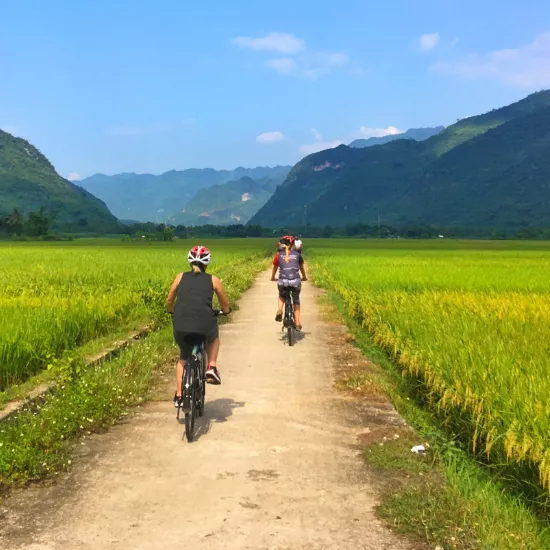
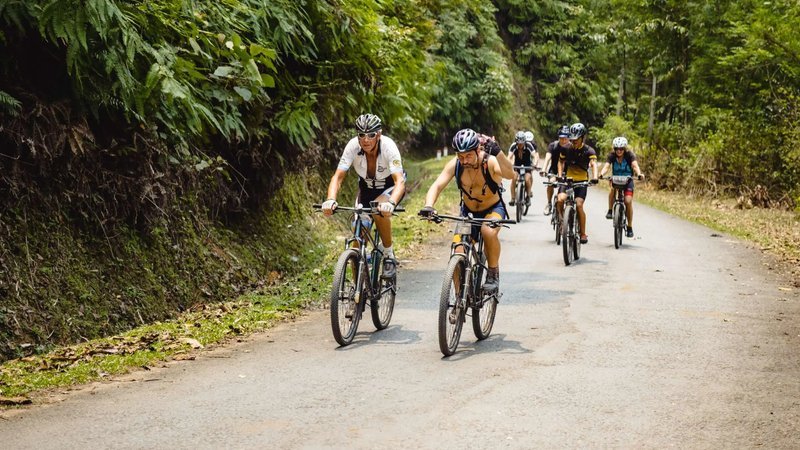
Imagine pedaling along a quiet road as the first rays of sunlight illuminate Vietnam's emerald rice fields. The air is cool and fragrant with damp earth, fresh herbs, and the distant smoke of a village breakfast fire. Your tires whisper over the pavement, the bicycle chain clicks in a steady rhythm, and ahead, a winding road disappears into a landscape of limestone mountains and mist-covered valleys.
.jpg)
This is the magic of Vietnam Cycling Tours: a chance to experience the country beyond the usual tourist trail, one pedal stroke at a time.
From the legendary mountain passes of Ha Giang to the peaceful rice paddies of Mai Chau, from the forested valleys of Pu Luong Nature Reserve to the spectacular limestone scenery of Ninh Binh, Vietnam offers an extraordinary variety of cycling adventures. Along the way, you can discover traditional villages, taste authentic regional cuisine, meet local communities, and experience landscapes that change dramatically from one region to the next.
Whether you are an experienced cyclist looking for a demanding mountain challenge, a couple seeking a scenic countryside escape, or a leisure traveler interested in electric-assisted cycling, there is a Vietnamese cycling journey to match your interests.
With Golden Cycling Tours, you can explore a range of routes, compare multi-day itineraries, and find inspiration for your next cycling holiday.
Start planning your adventure at Golden Cycling Tours.
Vietnam is a country best appreciated slowly. Its landscapes are not simply destinations to photograph; they are living environments filled with the sounds, aromas, and rhythms of everyday life.
Cycling allows you to experience these details in a way that is difficult to replicate from a car or bus.
You might pedal past farmers tending rice fields, stop at a roadside café for a glass of Vietnamese iced coffee, or follow a narrow village lane where children wave as you pass. A few kilometers later, the landscape may open into a sweeping mountain panorama, with clouds drifting across distant peaks.
These transitions make Vietnam Cycling Tours particularly rewarding for travelers who want adventure, culture, nature, and meaningful local experiences in one holiday.
Vietnam's geography creates remarkable variety for cyclists.
In the north, steep mountains and winding passes dominate the scenery. Fertile valleys offer gentler routes through rice fields and traditional villages, while limestone formations rise dramatically from the countryside around Ninh Binh.
Central Vietnam combines coastal roads, historic towns, and rural landscapes. Farther south, cyclists can explore tropical countryside, waterways, orchards, and the extensive canal networks of the Mekong Delta.
Each region offers a different riding experience, making it possible to plan a short countryside escape or a longer journey across several regions.
Cycling encourages spontaneous discoveries.
Instead of passing through a village in a few minutes, you can stop to explore its market, enjoy a meal, or learn about local crafts. You may encounter traditional houses, family-run farms, small temples, and roadside workshops that reveal how people live and work.
These interactions should always be approached respectfully. Ask before taking photographs, follow local guidance, and support community businesses whenever possible.
The result is a more personal travel experience—one shaped by real places and everyday encounters rather than a checklist of attractions.
Not every cycling holiday needs to be physically demanding.
Experienced riders may prefer challenging mountain roads, long daily distances, and remote highland routes. Leisure cyclists may enjoy shorter rides through flat valleys, rice paddies, and villages.
Electric-assist bicycles provide another option, helping riders manage climbs and longer distances while retaining the pleasure of being outdoors.
Depending on the itinerary, travelers can consider guided tours, independent cycling arrangements, conventional bicycles, or e-bikes.
Explore the available Golden Cycling Tours itineraries to compare destinations and travel styles.
Choosing the right destination is the first step toward a memorable cycling holiday.
The following regions offer different combinations of scenery, culture, difficulty, and sightseeing opportunities.
Ha Giang is one of Vietnam's most spectacular destinations for adventurous cyclists. Located in the far north, the region is known for towering limestone mountains, deep valleys, winding roads, and distinctive highland cultures.
The road climbs and curves through rugged terrain, revealing one breathtaking panorama after another. On clear mornings, sunlight illuminates the limestone peaks. When mist settles across the mountains, the scenery becomes atmospheric and mysterious.
One of the region's most famous highlights is Ma Pi Leng Pass, a legendary mountain road overlooking the dramatic Nho Que River gorge.
As you climb, the road narrows visually against the enormous landscape. Your breathing becomes more pronounced, your legs work against the gradient, and the bicycle's drivetrain keeps a steady mechanical rhythm. At a viewpoint, the valley opens beneath you, revealing a ribbon of turquoise water between towering cliffs.
For many riders, the sense of achievement at the summit is as memorable as the scenery itself.
Other highlights include traditional villages, mountain markets, remote valleys, and the remarkable landscapes of the wider Dong Van Karst Plateau UNESCO Global Geopark.
Why choose Ha Giang?
Dramatic mountain scenery and challenging climbs.
Spectacular photography opportunities.
Encounters with diverse local communities.
A strong sense of adventure and remoteness.
Options for multi-day journeys through the northern highlands.
The region is best suited to cyclists who are comfortable with mountain terrain or travelers selecting an appropriate e-bike itinerary with suitable support.
Discover Ha Giang Bike Tours.
For a longer adventure, explore the 10-Day Ha Giang Loop & Hoang Su Phi Cycling Adventure.
You can also consider the 8-Day Northern Vietnam Cycling Tour: Epic Ha Giang Loop Adventure.
Hoang Su Phi, in Ha Giang Province, is famous for its extraordinary terraced landscapes.
Across steep mountain slopes, rice fields form intricate patterns shaped by generations of agricultural knowledge. Depending on the season, the terraces may appear bright green, mirror-like after irrigation, or golden as harvest approaches.
Cycling here provides an opportunity to appreciate the relationship between the landscape and the people who cultivate it.
You may hear water trickling through irrigation channels, smell fresh vegetation after a shower, or watch farmers working along narrow paths between the fields.
The roads can be steep and remote, so route selection is important. For riders who enjoy mountain scenery and cultural discovery, however, the region offers an exceptional experience.
Explore the Ha Giang cycling destination and ask about itineraries that include Hoang Su Phi.
Cao Bang offers a different kind of mountain adventure, combining limestone landscapes, quiet rural roads, forested hills, and remarkable natural attractions.
The region's most celebrated landmark is Ban Gioc Waterfall, where broad cascades tumble over a natural limestone formation along the Vietnam–China border.
The sound of falling water fills the surrounding valley. Mist rises above the river, and the landscape feels especially vivid after rainfall, when vegetation appears intensely green.
Another highlight is Nguom Ngao Cave, a limestone cave system featuring striking geological formations and underground chambers.
Depending on your itinerary, you may also discover quiet villages, riverside scenery, and roads through the broader northeastern highlands.
Top attractions include:
Ban Gioc Waterfall.
Nguom Ngao Cave.
The rural landscapes surrounding Cao Bang.
Traditional villages and local markets.
Scenic routes across Northeast Vietnam.
Explore Cao Bang Bike Tours.
For a longer regional journey, consider the 15-Day Best Vietnam Cycling Northeast Tour.
If you prefer a gentler cycling experience, Mai Chau is an excellent destination.
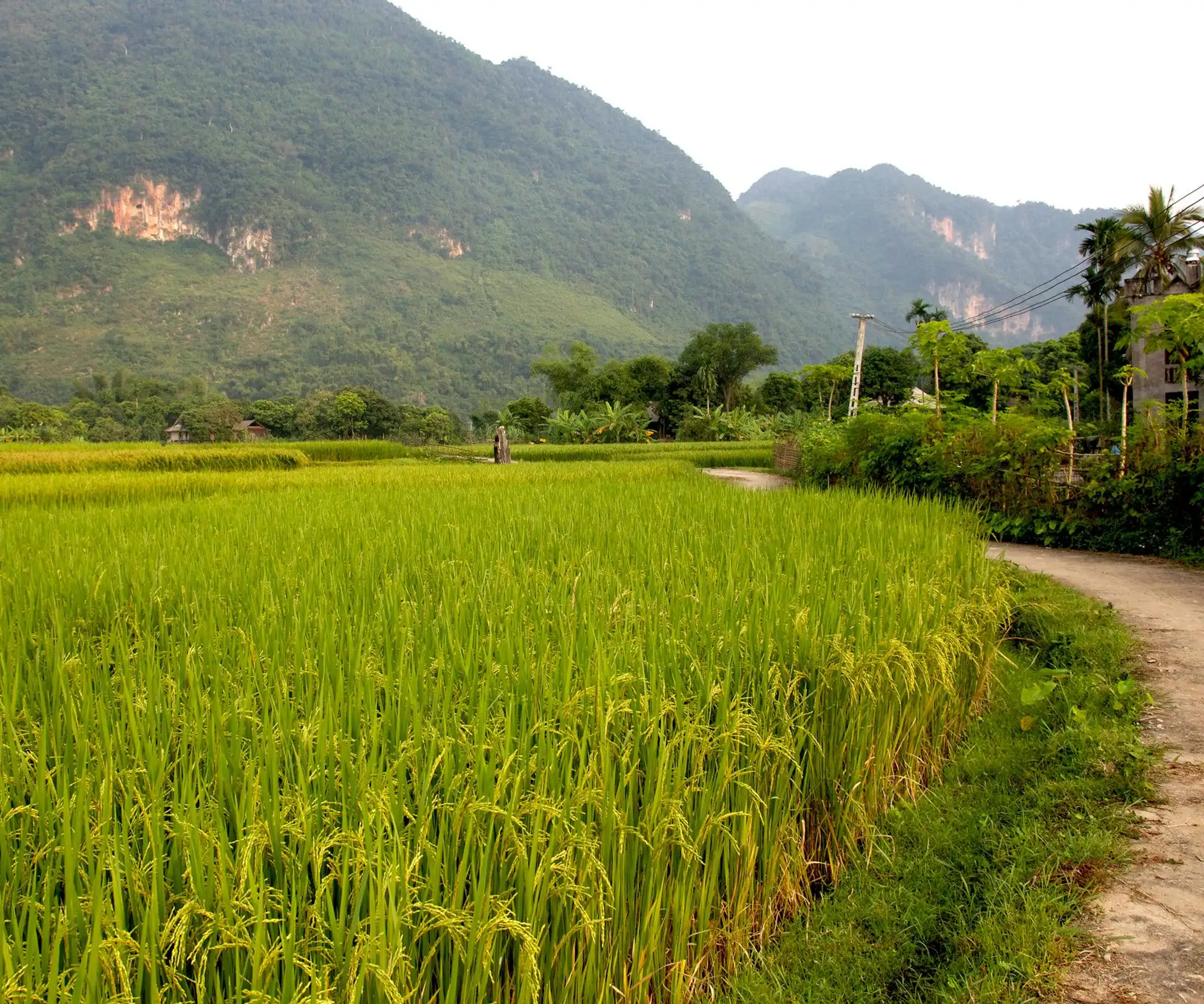
Surrounded by green mountains, Mai Chau Valley is known for rice fields, traditional stilt houses, village lanes, and a relaxed rural atmosphere.
The roads are often suitable for leisurely exploration, although individual routes can include hills and varying surfaces.
Imagine riding through the valley early in the morning. Mist hangs above the fields, birds call from nearby trees, and farmers begin their daily work. The air carries the earthy scent of the countryside, while sunlight slowly spreads across the mountain slopes.
In the villages, you may encounter weaving traditions, local markets, and meals prepared with regional ingredients.
The area is particularly associated with White Thai communities, whose architecture, textiles, food, and traditions contribute to its cultural identity.
Mai Chau is a good choice for couples, leisure cyclists, families with appropriate cycling experience, and travelers who want to combine outdoor activity with cultural immersion.
Explore Mai Chau Bike Tours.
For a shorter journey, discover the 4-Day Northern Vietnam Cycling Tour: Mai Chau to Pu Luong Cycling Adventure.
Pu Luong Nature Reserve offers a peaceful escape into a landscape of forested mountains, terraced fields, streams, and small villages.
The terrain changes throughout the day. One moment, the road follows a cultivated valley; the next, it climbs toward a viewpoint overlooking layers of green hills.
In some areas, traditional water wheels lift water from streams into irrigation channels, demonstrating the practical ingenuity of rural farming communities.
Cycling here is less about speed and more about immersion. You can stop for photographs, explore village paths where permitted, or enjoy a home-cooked meal after a day outdoors.
Some routes are relatively gentle, while others involve steep gradients or rougher surfaces. Check the precise itinerary before choosing your bicycle.
Discover Pu Luong Bike Tours.
Ninh Binh is one of the most visually distinctive cycling destinations in northern Vietnam.
Here, limestone mountains rise dramatically from fertile plains, rivers wind between cliffs, and rice fields create a patchwork of green across the countryside.
The region's major attractions include Trang An, Tam Coc, Hoa Lu Ancient Capital, and Bich Dong Pagoda.
Trang An Landscape Complex is a UNESCO World Heritage property recognized for its exceptional natural and cultural landscape. Boat trips through its waterways and caves offer a different perspective on the limestone formations.
Tam Coc is known for its river scenery and rice fields, while Hoa Lu Ancient Capital introduces visitors to an important chapter of Vietnamese history.
Cycling allows you to move between countryside viewpoints and village roads at your own pace, with time for refreshments and photography.
The terrain is generally more suitable for relaxed cycling than the demanding highlands, although route conditions and traffic still require attention.
Explore Ninh Binh Bike Tours.
For an itinerary combining several landscapes, consider the 6-Day Mai Chau, Pu Luong & Ninh Binh E-Bike Tour.
Ba Be Lake, within Ba Be National Park, is an appealing destination for travelers interested in nature and quieter rural landscapes.
The lake is surrounded by forested hills, limestone formations, and small communities. Its calm waters create a striking contrast with the mountain roads and cultivated valleys found elsewhere in the north.
Cycling in the surrounding region can introduce you to rural settlements and landscapes that are easily overlooked when traveling by car.
Depending on your itinerary, you may also enjoy boat excursions and other nature-based activities.
Explore Ba Be Lake Bike Tours.
A multi-day journey gives you time to experience the changing character of the northern countryside.
You can combine mountain landscapes, rural valleys, traditional villages, and cultural visits in a single holiday, depending on the itinerary.
Start with Cycling Northern Vietnam or browse Vietnam Northeast Bike Tours.
For travelers interested in comfort and premium arrangements, explore Vietnam Luxury Bike Tours.
Although Northern Vietnam is famous for its dramatic mountains, the country's central and southern regions offer equally interesting possibilities for cycling holidays.
Hoi An Ancient Town is renowned for its historic architecture, lantern-lit streets, riverside setting, and distinctive culinary traditions.
Beyond the old town, quieter country roads lead toward vegetable-growing areas, waterways, and coastal landscapes.
A leisurely ride can combine cultural sightseeing with countryside exploration. You might visit Tra Que Vegetable Village, observe traditional farming practices, or enjoy a meal before returning to the historic center in the late afternoon.
The region is well suited to travelers seeking a combination of gentle cycling, food, history, and cultural experiences.
Hue, the former imperial capital of Vietnam, offers a rich combination of history and countryside scenery.
Cycling itineraries may include visits to the Imperial City of Hue, historic pagodas, traditional garden houses, and rural roads along the Perfume River.
The region's cultural attractions make it especially appealing to travelers who want to understand Vietnam's imperial history alongside its contemporary way of life.
Depending on the route, you can combine sightseeing with rides through quieter agricultural areas.
Dalat, in Vietnam's Central Highlands, is known for its cooler climate, pine forests, lakes, and rolling hills.
Cycling through the surrounding countryside can reveal coffee plantations, vegetable farms, flower-growing areas, and scenic mountain roads.
The smell of pine needles, the cool air, and the changing elevation create a different atmosphere from Vietnam's tropical lowlands.
Some routes involve substantial climbing, so choose your itinerary according to your experience and fitness.
The Mekong Delta offers a contrasting cycling experience.
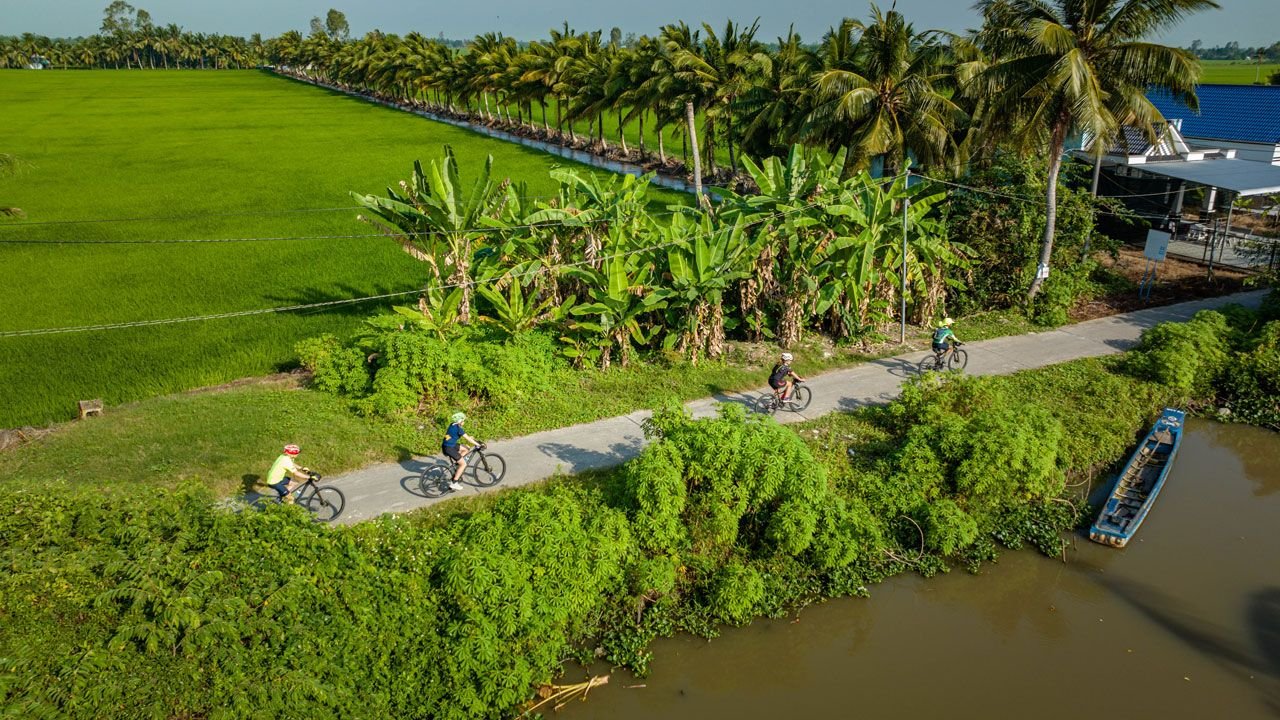
Instead of dramatic mountain passes, the landscape is shaped by rivers, canals, orchards, rice fields, and low-lying rural communities.
Cycling routes may pass fruit gardens, local markets, small bridges, and waterways where boats carry produce between settlements.
Travelers can explore areas around Can Tho, Ben Tre, and other parts of the delta, depending on the itinerary.
The region is especially attractive to cyclists who enjoy food, rural life, and slower-paced exploration.
One of the most important decisions when planning a cycling holiday is how much independence and support you want.
Self-guided cycling suits travelers who enjoy planning their own day and discovering places independently.
Depending on the package, you may receive GPS routes, navigation files, accommodation bookings, bicycle rental, luggage transfers, and local assistance.
The main advantage is flexibility. You can stop for photographs, spend longer in a village, or adjust your pace without following a group schedule.
However, you should be comfortable using navigation tools, monitoring road conditions, and responding to unexpected changes.
Self-guided trips on remote mountain roads require particularly careful planning.
Guided cycling tours provide a more structured experience.
A local guide can explain the region's history, introduce cultural traditions, recommend food, and help coordinate the daily route.
Depending on the tour, support vehicles and luggage transfers may also be available.
Guided trips can be especially useful for first-time visitors, travelers exploring remote areas, or cyclists who prefer not to manage every logistical detail themselves.
Electric-assist bicycles can make hilly routes more manageable.
The motor provides assistance as you pedal, helping reduce the effort needed on climbs. You still need to steer, brake, balance, and maintain control, particularly on steep descents.
Battery range depends on terrain, elevation, assistance settings, rider weight, and battery condition. Confirm charging arrangements and support options before booking.
Explore Vietnam E-Bike Tours for more information about electric-assisted cycling options.
Vietnam's climate varies by region, elevation, and season. Choosing the right travel period can make a major difference to comfort, scenery, and road conditions.
Autumn is often an attractive period for cycling in Northern Vietnam.
Temperatures can be more comfortable than during the hottest months, while the countryside offers spectacular seasonal scenery.
In parts of Hoang Su Phi, September and October may coincide with golden rice terraces, although harvest dates vary with elevation and local agricultural schedules.
Mountain landscapes can be particularly photogenic, and the cooler conditions may make longer rides more enjoyable.
This period is a good starting point for travelers interested in mountain cycling, photography, and multi-day adventures.
Spring is another appealing season for many northern cycling routes.
The countryside becomes lush, rice fields develop vibrant colors, and temperatures are often suitable for outdoor exploration.
Around Mai Chau and Pu Luong, travelers can enjoy green valleys, rural villages, and scenic countryside roads.
Higher elevations may still experience cool weather, mist, or rain, so packing adaptable clothing is important.
Winter can create a distinctive atmosphere in Northern Vietnam.
The highlands may experience cold temperatures, fog, and limited visibility. Areas such as Ha Giang can feel significantly colder than Hanoi or lower valleys.
Winter cycling may appeal to travelers who enjoy quieter roads and dramatic mountain scenery, but careful clothing and route planning are essential.
For e-bike riders, remember that cold conditions can affect battery performance.
Summer brings lush vegetation and vibrant countryside, but it can also bring heat, humidity, heavy rain, and thunderstorms.
Mountain roads may become slippery, and localized flooding or landslides can disrupt travel.
If you choose a summer departure, allow flexibility in your schedule and confirm the operator's arrangements for changing weather.
For many Northern Vietnam itineraries, March to May and September to November are useful periods to consider.
Autumn may offer golden rice terraces and comfortable riding conditions, while spring often brings lush greenery and fresh countryside scenery.
For Central Vietnam, the dry and wet seasons differ from those in the north, so check the conditions for destinations such as Hoi An and Hue before booking.
In the Mekong Delta, cycling is possible in different seasons, but rainfall, heat, and local conditions influence the experience.
Choose your travel dates according to your preferred region rather than assuming the entire country has the same weather.
Food is an essential part of exploring Vietnam.
After a morning on the road, the aroma of a steaming noodle soup or freshly grilled meat can be irresistible. In rural villages, a home-cooked meal offers another way to connect with local traditions.
Pho is one of Vietnam's best-known dishes, typically served with rice noodles, fragrant broth, herbs, and beef or chicken.
It is widely available in towns and cities and can be a satisfying breakfast before a cycling day.
Bun cha combines grilled pork, rice noodles, fresh herbs, and a dipping sauce.
The smoky aroma of the meat contrasts with the freshness of the herbs, creating a balanced meal particularly associated with Hanoi.
Com lam is rice cooked in bamboo sections and is associated with several communities in Vietnam's northern mountains.
Depending on local availability, you may encounter it around Mai Chau and other mountainous destinations.
It is often served with grilled meat, sesame salt, or regional accompaniments.
Depending on where you ride, local meals may include grilled pork, chicken, freshwater fish, seasonal vegetables, mushrooms, tofu, and rice.
In the countryside, homestay meals can introduce you to ingredients and cooking traditions that differ from those found in larger cities.
For breakfast and lunch, local restaurants and small eateries are often practical choices. Larger towns usually offer more variety, while remote villages may have fewer options.
Some organized tours include meals or arrange meals at homestays. Confirm the inclusions of your specific package.
If you have allergies or dietary requirements, inform your operator in advance. Carry snacks for remote stages and drink sufficient water throughout the day.
Accommodation is more than a place to sleep. It shapes how you experience the landscapes and communities along your route.
Homestays can provide an intimate introduction to rural Vietnamese life.
In Mai Chau and Pu Luong, some properties offer traditional-style houses, countryside views, and home-cooked meals.
The evening atmosphere can be memorable: insects calling in the garden, the scent of dinner drifting through the house, and the surrounding hills fading into darkness.
Facilities vary. Check room privacy, bathrooms, hot water, air conditioning, and mosquito protection before booking.
Countryside lodges are attractive to travelers who want comfort while remaining close to nature.
Some properties around Pu Luong overlook terraced fields or forested valleys. In Ninh Binh, accommodations range from countryside bungalows to hotels near major attractions.
If sustainability is important to you, ask about waste management, water use, energy, and local employment.
Hotels are often convenient before and after a cycling tour.
In Hanoi and larger towns, you can find a range of accommodation styles and easier access to restaurants, transport, and bicycle services.
For multi-day rides, ask whether your accommodation offers secure bicycle storage, early breakfast, laundry services, or luggage transfers.
Consider your budget, comfort preferences, location, and interest in local culture.
For remote routes, prioritize reliable facilities, secure bicycle storage, appropriate meals, and a practical location along the itinerary.
If accommodation is included in your tour, check room categories, meal arrangements, and upgrade options before confirming your reservation.
Good transport planning helps ensure that your cycling holiday begins and ends smoothly.
Hanoi is the principal international gateway for many Northern Vietnam cycling holidays.
After arriving, travelers often transfer to their hotel before taking arranged transport to destinations such as Mai Chau, Pu Luong, Ha Giang, or Cao Bang.
For Central and Southern Vietnam, other major cities may provide convenient arrival points depending on your itinerary.
Cycling offers the closest connection to the landscape, but the suitability of each route depends on distance, elevation, road surface, and traffic.
Conventional bicycles are suitable for travelers who enjoy physical effort and can manage the route's demands. E-bikes can help make climbs more manageable.
Choose the bicycle according to the route rather than simply its appearance or price.
Private transfers and buses can help connect distant destinations or return you to your departure city.
Some cycling packages also provide luggage transfers or support vehicles, but these services vary by itinerary.
Before booking, ask whether the package includes bicycle transport, luggage handling, mechanical support, and alternative transport if you cannot complete a stage.
Vietnam's roads range from quiet village lanes to busy highways and technical mountain descents.
Wear a properly fitted helmet, maintain a controlled speed, use lights when needed, and remain alert to motorcycles, cars, trucks, pedestrians, and agricultural vehicles.
For self-guided cycling, download route files before departure, carry a charged phone and power bank, and save emergency contacts.
Avoid riding through severe weather or descending quickly on unfamiliar roads.
Vietnam's cultural diversity is one of the country's greatest attractions.
From the traditions of northern mountain communities to the food culture of central coastal towns and the river-based livelihoods of the Mekong Delta, each region offers its own perspective on Vietnamese life.
Communities such as the White Thai, Hmong, Tay, and Dao have distinct histories, languages, clothing, food, and traditions.
Customs differ between communities and villages, so follow local guidance rather than assuming that one set of practices applies everywhere.
When visiting a home, ask whether you should remove your shoes and follow your host's instructions.
People working in fields, selling goods, or spending time with family are not simply part of the scenery.
Ask permission before taking close-up photographs, especially of children, private homes, or ceremonies.
Respect anyone who declines.
Eating at local restaurants, buying appropriate handmade products, and staying in community-run accommodation can help distribute tourism income.
Pay fair prices and avoid pressuring vendors to accept unfair offers.
Whenever possible, choose services that treat workers respectfully and contribute positively to the communities along your route.
When visiting religious sites, dress modestly and follow posted guidance.
In protected areas such as Pu Luong Nature Reserve and Ba Be National Park, respect access restrictions, avoid disturbing wildlife, and dispose of waste responsibly.
Responsible cycling helps protect the cultural and natural heritage that makes Vietnam special.
The right equipment improves comfort and helps you respond to changing weather and road conditions.
Bring a properly fitted helmet, padded shorts, gloves, breathable clothing, comfortable cycling shoes, sunglasses, and sunscreen.
A waterproof jacket is useful, especially in mountainous areas.
If you are bringing your own repair equipment, consider spare tubes compatible with your bicycle, tire levers, a compact pump, and a basic multitool. Confirm which items your operator supplies.
Mountain temperatures can be much cooler than those in lowland cities.
Pack lightweight layers, quick-drying clothing, warmer garments for high elevations, and waterproof protection.
For winter departures, bring adequate insulation. For hot weather, prioritize breathable clothing and sun protection.
For self-guided trips, download maps and route files before departure.
Bring a charged phone, power bank, and any navigation device you normally use.
E-bike riders should confirm charging facilities, battery range, and the operator's guidance on charging and battery care.
Carry personal medication, a small first-aid kit, insect repellent, hand sanitizer, and enough water for the planned ride.
Pack snacks if your route passes through remote areas with limited food options.
If you have concerns about the distance, elevation, or riding conditions, discuss them with your tour operator before departure.
The best cycling tour is the one that matches your interests, fitness, time, and preferred level of comfort.
Choose Ha Giang, Hoang Su Phi, and the wider northeast if you enjoy challenging climbs, dramatic mountain roads, and remote landscapes.
The 10-Day Ha Giang Loop & Hoang Su Phi Cycling Adventure is an option to consider for a longer highland journey.
For a broader regional experience, explore the 15-Day Best Vietnam Cycling Northeast Tour.
Before booking, confirm the daily distance, total climbing, road conditions, and support arrangements.
If you prefer quiet roads, cultural experiences, and relaxed countryside riding, consider Mai Chau and Pu Luong.
The 4-Day Mai Chau to Pu Luong Cycling Adventure is a useful option to investigate.
These landscapes offer opportunities to enjoy rural life without making every day a demanding athletic challenge.
Travelers who want electric assistance on climbs may prefer an e-bike itinerary.
The 6-Day Mai Chau, Pu Luong & Ninh Binh E-Bike Tour combines several landscapes and cultural settings in one trip.
Confirm that e-bikes are available for your departure and that the selected model is appropriate for the route.
If independence is your priority, ask about navigation files, accommodation arrangements, luggage transfers, bicycle rental, emergency contacts, and mechanical support.
Not every route is offered in a self-guided format, and support services vary.
Start by browsing Golden Cycling Tours and discussing your preferred travel dates and riding experience with the team.
A successful cycling holiday depends on more than beautiful scenery. You also need a suitable route, reliable equipment, realistic daily distances, comfortable accommodation, and clear arrangements for unexpected situations.
Golden Cycling Tours provides a starting point for exploring cycling itineraries and destination options in Vietnam.
Choose the destination that best matches your interests:
Mountain adventure: Ha Giang Bike Tours.
Northeast landscapes: Cao Bang Bike Tours.
Countryside and culture: Mai Chau Bike Tours.
Nature and rural villages: Pu Luong Bike Tours.
Lakeside scenery: Ba Be Lake Bike Tours.
Limestone landscapes: Ninh Binh Bike Tours.
Electric-assisted cycling: Vietnam E-Bike Tours.
Premium cycling experiences: Vietnam Luxury Bike Tours.
Broader regional adventures: Vietnam Northeast Bike Tours.
Northern Vietnam itineraries: Cycling Northern Vietnam.
You can also compare available departures and packages through the complete Golden Cycling Tours collection.
Before confirming your trip, ask the operator:
Is the tour guided or self-guided?
Are conventional bicycles and e-bikes available?
What is the daily cycling distance?
How much climbing should I expect?
Are meals, accommodation, luggage transfers, and support vehicles included?
What happens if the weather becomes unsafe?
Is mechanical assistance available?
What are the payment and cancellation conditions?
Clear answers help you choose a route that matches your expectations and prepares you for a smoother journey.
When choosing a cycling operator, customer feedback can help you understand the practical details behind the photographs and itinerary descriptions.
Look for recent, verifiable reviews that discuss the actual tour you are considering. Useful details include bicycle condition, route planning, guide communication, accommodation, food, luggage transfers, and how the operator handles unexpected problems.
Consider whether reviewers describe the same route, bicycle type, and travel style that you intend to book.
Pay particular attention to comments about:
The accuracy of the itinerary and daily distances.
The condition and suitability of the bicycles.
The quality of communication before and during the trip.
Accommodation and meal arrangements.
Support during mechanical problems or bad weather.
Whether the experience matched the advertised level of difficulty.
For Golden Cycling Tours, consult the reviews and testimonials available on the relevant official tour pages, and compare them with recent independent feedback where available.
Do not rely on generic praise alone. Specific, verifiable details are more helpful when deciding whether a particular cycling holiday is right for you.
After completing your trip, consider leaving an honest review describing the route, your cycling experience, the bicycle you used, and the aspects of the journey you found most rewarding.
Real traveler experiences help future visitors prepare realistically and make informed booking decisions.
For first-time visitors who prefer a relaxed pace, Mai Chau, Pu Luong, and Ninh Binh are useful destinations to explore.
Travelers seeking dramatic mountain scenery may prefer Ha Giang, but should choose an itinerary that matches their experience and fitness.
For many Northern Vietnam itineraries, March to May and September to November are attractive periods.
Autumn may offer golden rice terraces, while spring often brings lush greenery. The ideal season varies by region, so check the weather for your chosen destination.
Yes, some itineraries are suitable for beginners, particularly those featuring shorter distances and gentler terrain.
However, demanding mountain routes require greater preparation. Select a tour based on your current fitness and riding ability rather than the destination's popularity.
E-bikes are available on selected itineraries, subject to destination and departure availability.
Electric assistance can make climbs more manageable, but battery range, charging arrangements, and bicycle suitability should be confirmed before booking.
A short countryside trip may take four days, while a multi-region adventure can require 10 to 15 days or longer.
Allow extra time if you want to combine cycling with cultural visits, sightseeing, and rest days.
Ha Giang is an exceptional destination for mountain cycling, with dramatic passes, deep valleys, and spectacular limestone landscapes.
However, the region can involve steep climbs, technical descents, and changing weather. Riders should choose a suitable itinerary and confirm support arrangements.
Popular choices include pho, grilled dishes, rice, fresh vegetables, regional specialties, and meals at local homestays.
Choose freshly prepared food, carry snacks on remote routes, and communicate dietary restrictions before departure.
Accommodation ranges from city hotels to countryside lodges and village homestays.
Mai Chau and Pu Luong are appealing for rural stays, while larger towns offer more conventional hotel facilities.
Confirm whether accommodation and meals are included in your chosen package.
Many Northern Vietnam itineraries begin in Hanoi, followed by a private transfer, minibus, or other arranged transport to the cycling region.
Transport arrangements vary by tour. Ask whether bicycle transport, luggage transfers, and return transfers are included.
Cycling can be rewarding when the route matches your experience and appropriate safety precautions are followed.
Traffic, road surfaces, weather, and mountain descents vary considerably. Wear a helmet, ride defensively, follow local advice, and avoid riding in unsafe conditions.
Yes. Many itineraries combine countryside riding with village visits, local food, markets, historic sites, and nature excursions.
For example, a trip through Ninh Binh may include Trang An and Hoa Lu Ancient Capital, while a journey through Mai Chau may offer opportunities to learn about local architecture and traditions.
Some packages include accommodation and selected meals, while others offer different arrangements.
Check the itinerary and booking conditions to confirm exactly what is included.
Bring a helmet, cycling clothing, gloves, comfortable shoes, sun protection, a waterproof jacket, personal medication, and navigation equipment if needed.
For mountain routes, pack layers for changing temperatures. Ask your operator which repair tools and accessories are supplied.
Visit Golden Cycling Tours or browse the available cycling tours.
Compare the destinations and itineraries, then contact the team to confirm travel dates, bicycle options, accommodation, route difficulty, and booking conditions.
Premium cycling experiences may include more comfortable accommodation, private arrangements, or additional services, depending on the itinerary.
Explore Vietnam Luxury Bike Tours and confirm the precise inclusions before booking.
The beauty of Vietnam is not limited to its famous landmarks. It lives in the details: the aroma of coffee at sunrise, the sound of water moving through rice fields, the warmth of a freshly prepared meal, and the feeling of cool mountain air against your skin as a winding road climbs toward the clouds.
Through Vietnam Cycling Tours, these details become part of the journey.
You can challenge yourself on the legendary roads of Ha Giang, discover the rice terraces of Hoang Su Phi, ride through the peaceful valleys of Mai Chau, explore Pu Luong Nature Reserve, or admire the limestone scenery of Ninh Binh.
You can travel independently, choose a guided itinerary, or use an e-bike to make selected routes more manageable. The right adventure is the one that fits your abilities, interests, and idea of a perfect holiday.
Explore the destinations, compare the itineraries, and begin planning with Golden Cycling Tours.
The road is waiting. All that remains is to choose your route, prepare your bicycle, and discover Vietnam at the pace of your own two wheels.

Leave a Reply
Your email address will not be published. Required fields are marked *