- Call us Via Whatsapp: +84 (0) 832 126 699
4.9 stars on our site
(15,000 reviews)
- Monday - Sunday : 08:00 - 17:00
(15,000 reviews)

For the modern traveler, Sapa is often synonymous with breathtaking rice terraces and ethnic minority cultures. Yet, as the town center of Sapa becomes more developed, the true essence of the Hoang Lien Son mountains has retreated into the shadows. For those who seek the raw, unfiltered spirit of Northern Vietnam, the answer lies in the hidden trails sapa biking experience. These are the paths not marked on Google Maps; they are the ancient trade routes, the water buffalo single-tracks, and the remote ridge lines known only to the locals and the most dedicated explorers.
At Golden Cycling Tours, we believe that the best way to rediscover the magic of the Northwest is on two wheels. A bicycle allows you to penetrate deeper into the landscape than a vehicle ever could, while covering more ground than a trekker. In this definitive guide, we explore the mystery of Sapa's hidden trails, the technical demands of the terrain, and why a Sapa bike tour is the ultimate way to engage with the heart of Vietnam.
The Hoang Lien Son mountain range, an extension of the Himalayas, creates a vertical world of extreme complexity. Sapa sits in a high-altitude basin surrounded by jagged peaks and deep river canyons. Because the terrain is so steep, the local Hmong, Red Dao, and Giay people have spent centuries carving out a labyrinthine network of paths to connect their isolated hamlets.
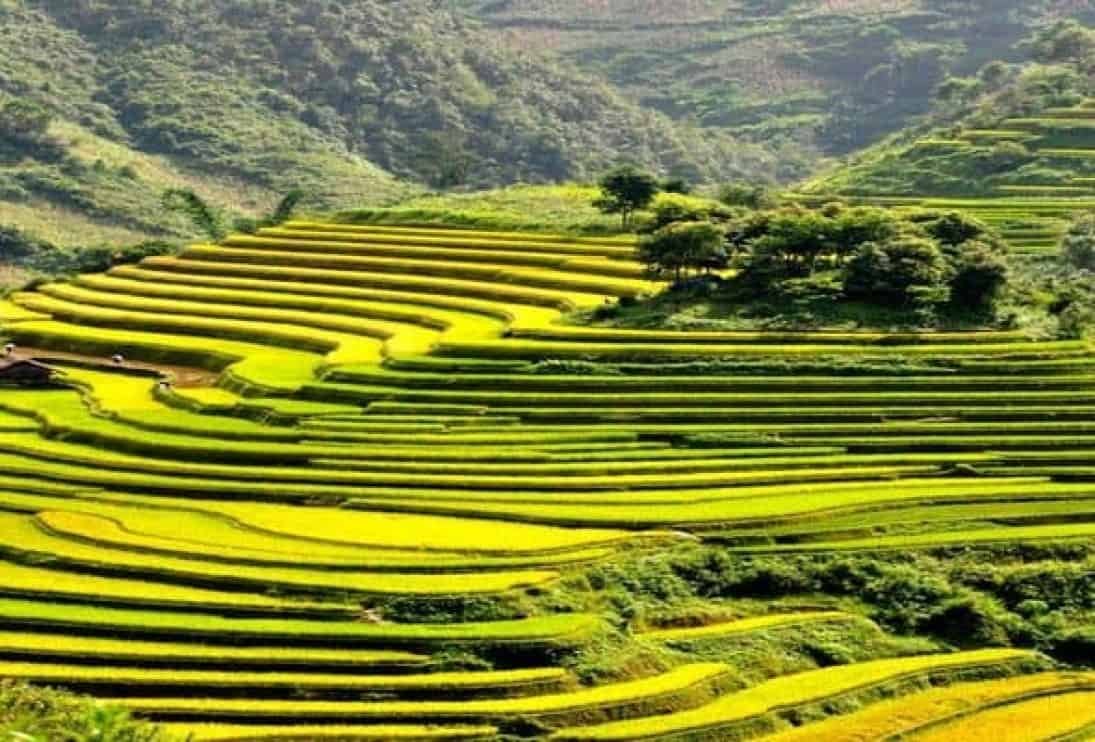
Most tourists stick to the main valley road that leads through the Muong Hoa Valley. However, the hidden trails sapa biking experience begins the moment you turn off the asphalt. The geography here is defined by "false flats" and sudden, sheer drops. These trails were designed for foot traffic and livestock, meaning they follow the natural contours of the mountain, providing a natural "flow" that mountain bikers crave.
As you pedal through these hidden paths, you witness a shifting ecosystem. You might start in an alpine pine forest shrouded in mist and, within an hour of descending, find yourself in a humid bamboo thicket by a rushing river. This diversity is what makes a Vietnam Northwest Bike Tour a sensory masterpiece.
What exactly qualifies as a "hidden trail" in Sapa? It is a combination of exclusivity, technicality, and cultural isolation.
Exclusivity: These are trails that see fewer than a handful of cyclists per month. You won't find souvenir stalls or cafes here; instead, you'll find the quiet dignity of a working agricultural landscape.
Technicality: Many of these paths are "single-track"—meaning they are only as wide as a mountain bike's handlebars. They require balance, precise braking, and a sense of adventure.
Cultural Isolation: In these areas, the local people still wear their traditional indigo-dyed clothing not for tourists, but because it is their way of life. When you arrive on a bike, you are treated as a guest, not a customer.
To help you plan your journey, we have categorized the hidden trails of Sapa into three distinct sectors, each offering a unique riding style.
If you want to truly vanish from the tourist radar, you head south. Most tours stop at the village of Ban Ho, but for a true hidden trails sapa biking adventure, we push further toward Nam Cang.
The Riding: This sector features some of the most technical "off-road" sections in the district. You’ll navigate rocky river crossings and steep, forest-canopied climbs.
The Culture: Nam Cang is home to the Red Dao people, famous for their silver-studded traditional dress and forest medicine. Staying in a homestay here is a core feature of our most immersive Sapa bike tours.
Heading north from Sapa town leads you toward the Chinese border. This area is far less populated and features wide-open ridge lines.
The Riding: Here, the trails are often high-altitude "sky-walks." You’ll ride along mountain ridges with 360-degree views of the Hoang Lien Son range.
The Atmosphere: The silence here is profound. The only sounds are the wind through the pines and the occasional call of a Hmong farmer tending to his buffalo.
Even in the popular Muong Hoa Valley, there are hidden layers. While the main road is busy, there are "low-line" and "high-line" trails that run parallel to the valley floor.
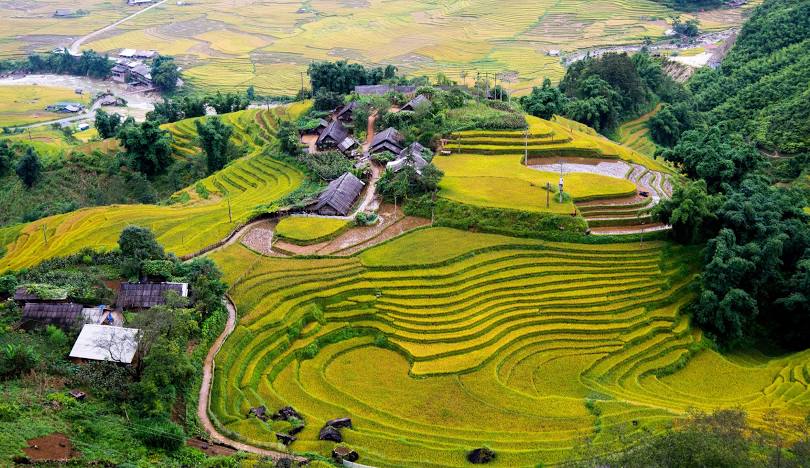
The Riding: These are the classic "buffalo paths." They are narrow, muddy, and exhilariting. They weave directly through the center of the rice terraces, providing a perspective on the landscape that no bus traveler will ever see.
Sapa is the gateway, but the true spirit of the mountains continues across provincial lines. To experience the full spectrum of Northern Vietnam, one must connect these hidden trails into a broader itinerary.
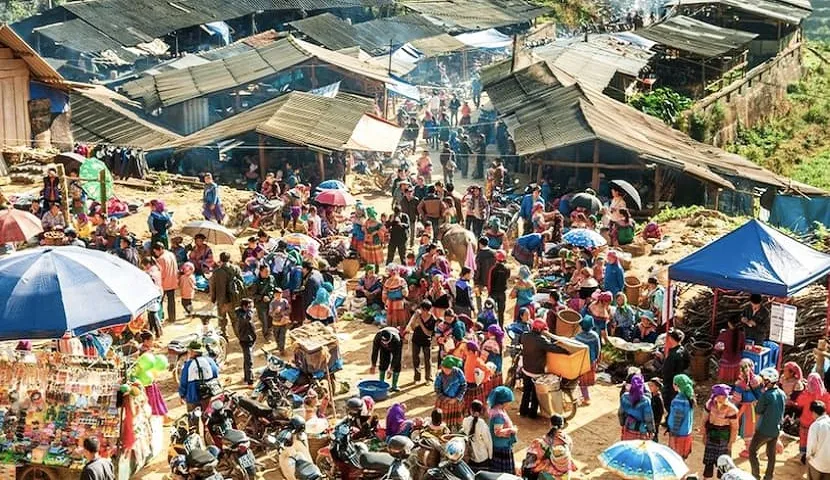
To the east of Sapa lies the Bac Ha plateau. A Bac Ha bike tour offers a fantastic contrast to the steep mountains of Sapa. The trails here are drier and more "rolling," weaving through white plum forests and the colorful territories of the Flower Hmong.
Crossing the O Quy Ho pass—the highest in Vietnam—takes you into Lai Chau. Our Lai Chau bike tours represent the final frontier. The descents here are long (20km+) and take you into deep limestone canyons where the Lu and Lao ethnic groups maintain ancient traditions.
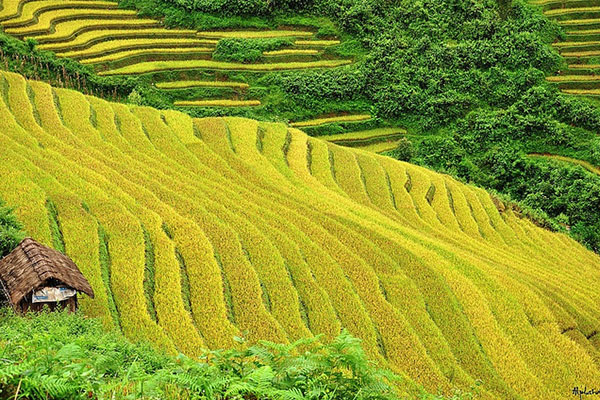
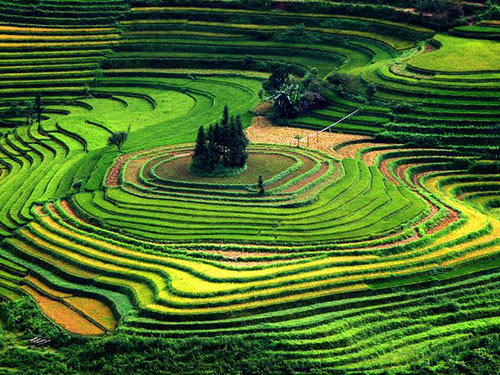
Heading south from Sapa leads you to the Mu Cang Chai district. Yen Bai Bike Tours are world-famous for their rice terraces, which are often cited as a national heritage site. Biking through these massive "stairways to heaven" is the definition of a bucket-list experience.
For those with the time and stamina, our Vietnam Northwest Bike Tour connects all these sectors. It is a 10-to-14-day odyssey that moves from the hidden trails of Sapa to the historic valleys of Dien Bien Phu and the remote frontiers of Ha Giang.
You cannot tackle hidden trails sapa biking with basic equipment. The environment is too demanding, and the terrain is too varied.
At Golden Cycling Tours, we provide premium mountain bikes from Trek, Giant, and Cannondale.
Brakes: Hydraulic disc brakes are mandatory. The 1,000-meter descents common on these hidden trails would render mechanical brakes useless within minutes.
Gearing: A wide-range drivetrain (1x12 or 2x11) is essential for the 15% gradients you will encounter in remote villages.
Tires: We use high-volume, knobby tires to handle the "Sapa mud" and sharp granite rocks.
Hidden trails often involve "hike-a-bike" sections where the trail becomes too steep or rocky to ride. You should be comfortable with:
Technical Descending: Managing your weight over the rear wheel on steep drops.
Endurance: Being able to spend 4–6 hours in the saddle for several consecutive days.
Adaptability: Sapa’s weather can change in minutes. Being mentally prepared for rain or fog is part of the adventure.
When you are on a hidden trails sapa biking expedition, you are far from a convenience store.
Apparel: Moisture-wicking jerseys and padded shorts. Always carry a lightweight, high-quality rain shell.
Hydration: A hydration pack (CamelBak) is more efficient than water bottles on technical trails.
Protection: Helmets are mandatory, and we highly recommend lightweight knee and elbow pads for the technical single-track sections.
The hidden trails of Sapa are a fragile ecosystem. As adventure travelers, we have a responsibility to preserve the beauty and the culture we have come to see.
Support Local Families: By choosing our tours, you stay in authentic homestays. The money goes directly to the families, helping them maintain their traditional homes and farms.
Respect Local Customs: Your guide will advise you on local etiquette. For example, never touch a "spirit tree" or enter a home without an invitation.
Leave No Trace: We strictly adhere to a "pack it in, pack it out" policy. We also avoid riding on rice paddies to ensure we don't damage the local livelihood. This is a core value of our Guaranteed Tours.
The experience of hidden trails sapa biking is dictated by the seasons.
Spring (March to May): The "Blossom Season." Clear skies and cool temperatures. This is the best time for visibility and seeing the peach and plum trees in bloom.
Summer (June to August): The "Green Season." Expect afternoon rain and muddy trails. This is the most challenging time to ride, but the waterfalls are spectacular.
Autumn (September to November): The "Harvest Season." The rice terraces turn a brilliant gold. This is the peak time for any Vietnam Northwest Bike Tour.
Winter (December to February): The "Mist Season." It can be cold and foggy. This is for the soul-seekers who enjoy the mystical, quiet atmosphere of the mountains.
Navigating the hidden trails of Sapa requires more than just a bike; it requires local knowledge, professional support, and a commitment to authenticity.
Professional Logistics: Every multi-day tour is accompanied by a support vehicle. If you’re tired or have a mechanical issue, our "sag wagon" is there to help.
Expert Guides: Our guides are from the region. They speak the dialects and know the shortcuts that aren't on any map.
Fixed-Date departures: Join our Guaranteed Tours to meet other adventurers and share the cost of a professional expedition.
Bespoke Itineraries: Whether you want a 1-day escape or a 14-day epic, we can customize a hidden trails sapa biking experience for you.
Sarah from the UK:
"I’ve done Sapa before on a bus, but the hidden trails sapa biking tour with Golden Cycling Tours was a completely different world. We saw villages where the kids had never seen a mountain bike. The descent into Nam Cang was the highlight of my trip to Vietnam!"
Mark from Australia:
"The bikes were top-notch and the guide was even better. We rode trails that I couldn't believe were passable. If you want a real adventure, stop looking and book a Sapa bike tour with these guys."
Elena from Spain:
"I joined a Guaranteed Tour alone and made friends for life. The support van was a lifesaver on the steep climbs, and the homestays were so authentic. Highly recommend the Vietnam Northwest Bike Tour."
Q: Is hidden trails sapa biking dangerous? A: All adventure sports have risks, but we mitigate them with professional equipment, expert guides, and a support vehicle. We always ride at a pace that is comfortable for the group.
Q: Do I need to bring my own bike? A: No. We provide high-end mountain bikes. However, if you are very attached to your own pedals or saddle, feel free to bring them and our mechanics will fit them for you.
Q: What is the food like? A: You’ll enjoy fresh, locally sourced Vietnamese food. Stir-fries, organic vegetables, and plenty of rice. We easily accommodate vegetarians and vegans.
Q: Are there E-bike options? A: Yes! We now offer high-performance E-mountain bikes for those who want to experience the hidden trails without the intense physical strain of the climbs.
Q: How do I book a tour? A: You can browse our destinations or go directly to our Guaranteed Tours page to see fixed departure dates.
A hidden trails sapa biking adventure is a journey of discovery. It challenges your body, opens your heart to new cultures, and rewards you with vistas that few ever see. From the high passes of Lai Chau bike tours to the golden terraces of Yen Bai Bike Tours, Northern Vietnam is a playground for the soul.
Join Golden Cycling Tours and discover the rhythm of the mountains. The trails are calling—will you answer?

.jpg "What to Do in Bac Ha Vietnam ?")
Leave a Reply
Your email address will not be published. Required fields are marked *