- Call us Via Whatsapp: +84 (0) 832 126 699
4.9 stars on our site
(15,000 reviews)
- Monday - Sunday : 08:00 - 17:00
(15,000 reviews)

Picture this: the early morning mist hangs heavy over towering limestone pinnacles as cool highland air fills your lungs. Beneath your knobby tires, crushed limestone gravel crunches rhythmically with every pedal stroke. The sweet, rustic scent of woodsmoke from traditional Hmong stilt houses floats across emerald rice terraces, mixing with the aroma of damp earth after a midnight mountain rain. You shift into a lighter gear, feeling your quads burn with exhilarating power as you round a razor-sharp hairpin curve high above a turquoise river canyon. This is not just a cycling trip; it is an awakening of all five senses.
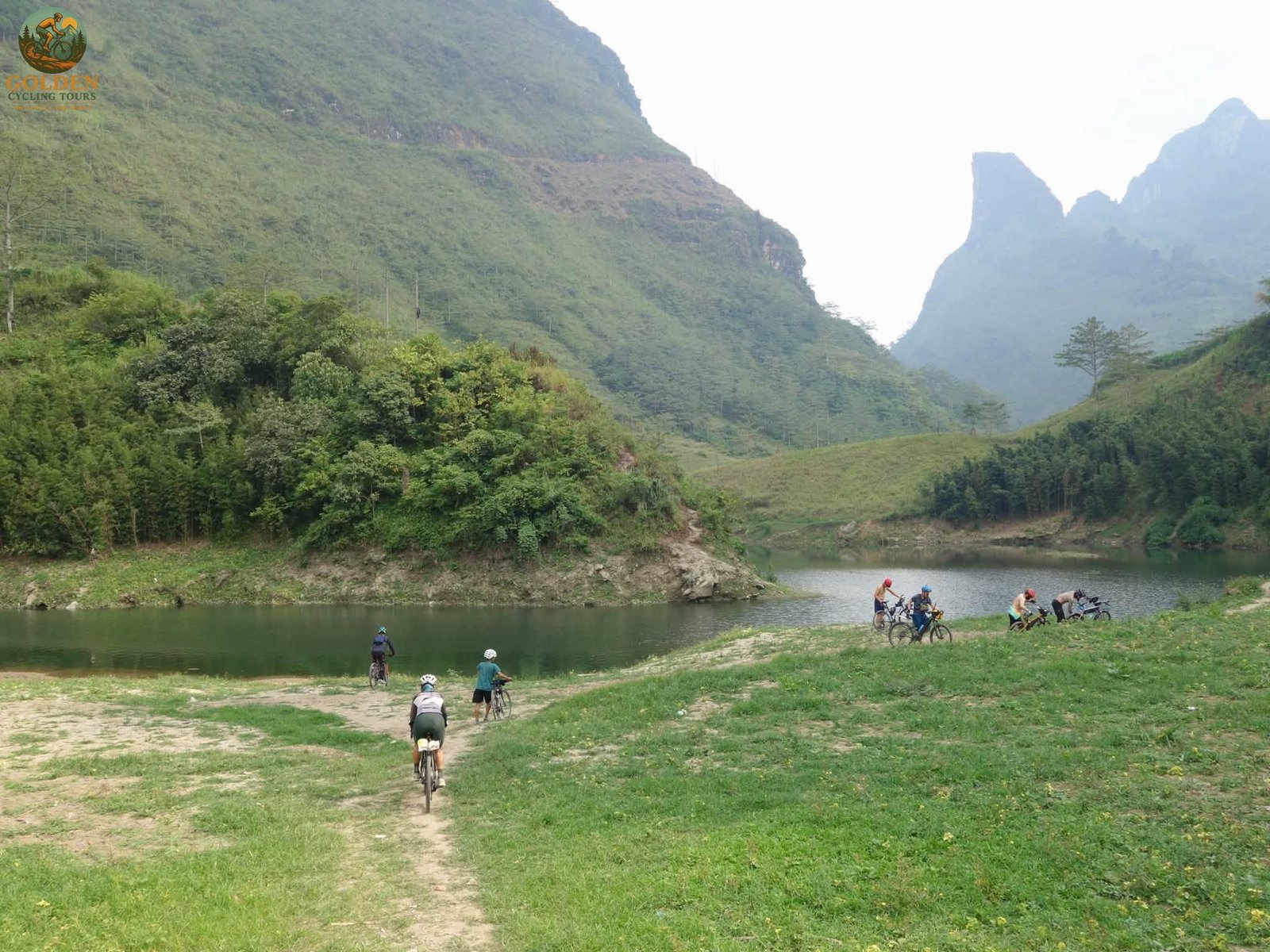
For adventurous riders seeking unpaved wilderness, dramatic mountain passes, and deep cultural immersion, Gravel Bikepacking in Vietnam: Routes, Logistics & Gear Choice offers the definitive blueprint for navigating one of Asia’s most extraordinary cycling destinations. From the wild peaks of Ha Giang to the tranquil trails of Pu Luong Nature Reserve, Vietnam’s rugged geography invites you to throw away the highway map and dive headfirst into backcountry exploration.
Vietnam’s topography seems intentionally sculpted for off-pavement adventure. Over three-quarters of the country is draped in mountains, hills, and dense tropical highlands. While paved roads connect major cities, thousands of miles of singletrack, crushed stone singleways, abandoned logging roads, and ancient footpaths snake through remote ethnic minority villages.
When you choose Gravel Bikepacking in Vietnam: Routes, Logistics & Gear Choice as your guide, you step beyond conventional tourism. Here, every turn yields a contrast of sensations: the icy splash of a mountain stream as you ford a creek bed, the deafening roar of cicadas in jungle canopy trails, the silky taste of local egg coffee during a mid-ride rest stop, and the warm, genuine smiles of hill-tribe children cheering you up brutal gradient ascents.
Whether you seek steep vertical climbing across high-altitude karst plateaus or sweeping, flowing dirt tracks through bamboo forests, Cycling Northern Vietnam delivers an unmatched gravel experience.
The northeastern frontier is legendary among adventure cyclists. It is a land where monolithic limestone karsts pierce the sky and winding gravel tracks hug vertical cliff faces.
Starting in Ha Giang, this route propels you directly into a UNESCO Global Geopark. As your tires bite into loose gravel along backcountry singletrack, you will navigate the mesmerizing curves of Tham Ma Pass before tackling the sheer drops of Ma Pi Leng Pass. Gazing down from this legendary pass, the Nho Que River appears as a thin ribbon of jade nestled deep within the canyon far below.
Riders looking for an all-encompassing expedition can join our curated 10-Day Ha Giang Loop & Hoang Su Phi Cycling Adventure or dive into our dedicated Ha Giang Bike Tours.
West of Ha Giang lies Hoang Su Phi, home to some of the steepest carved rice terraces on earth. Gravel routes here demand technical focus, taking you over loose clay, granite cobblestones, and tight ridge trails. The scent of ripe grain in autumn fills the breeze while the gentle murmur of mountain streams provides a constant soundtrack.
Further east, the terrain opens into lush, hidden valleys surrounded by towering rock spires. Explore remote tracks along Cao Bang Bike Tours and reach the cascading majestic waters of Ban Gioc Waterfall, where thunderous spray cools your skin after hours in the saddle. Connect this with serene lake shores on Ba Be Lake Bike Tours to build an epic multi-day route through Vietnam Northeast Bike Tours.
For riders seeking the ultimate multi-week grand tour, the Best Vietnam Cycling Northeast Tour 15 Days links these highlights into one seamless gravel journey.
If you crave mist-shrouded mountain summits, ancient alpine forests, and rich tribal heritage, the Northwest holds the key.
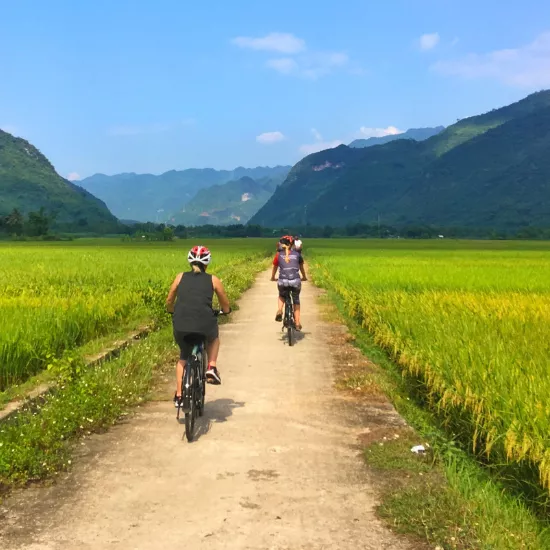
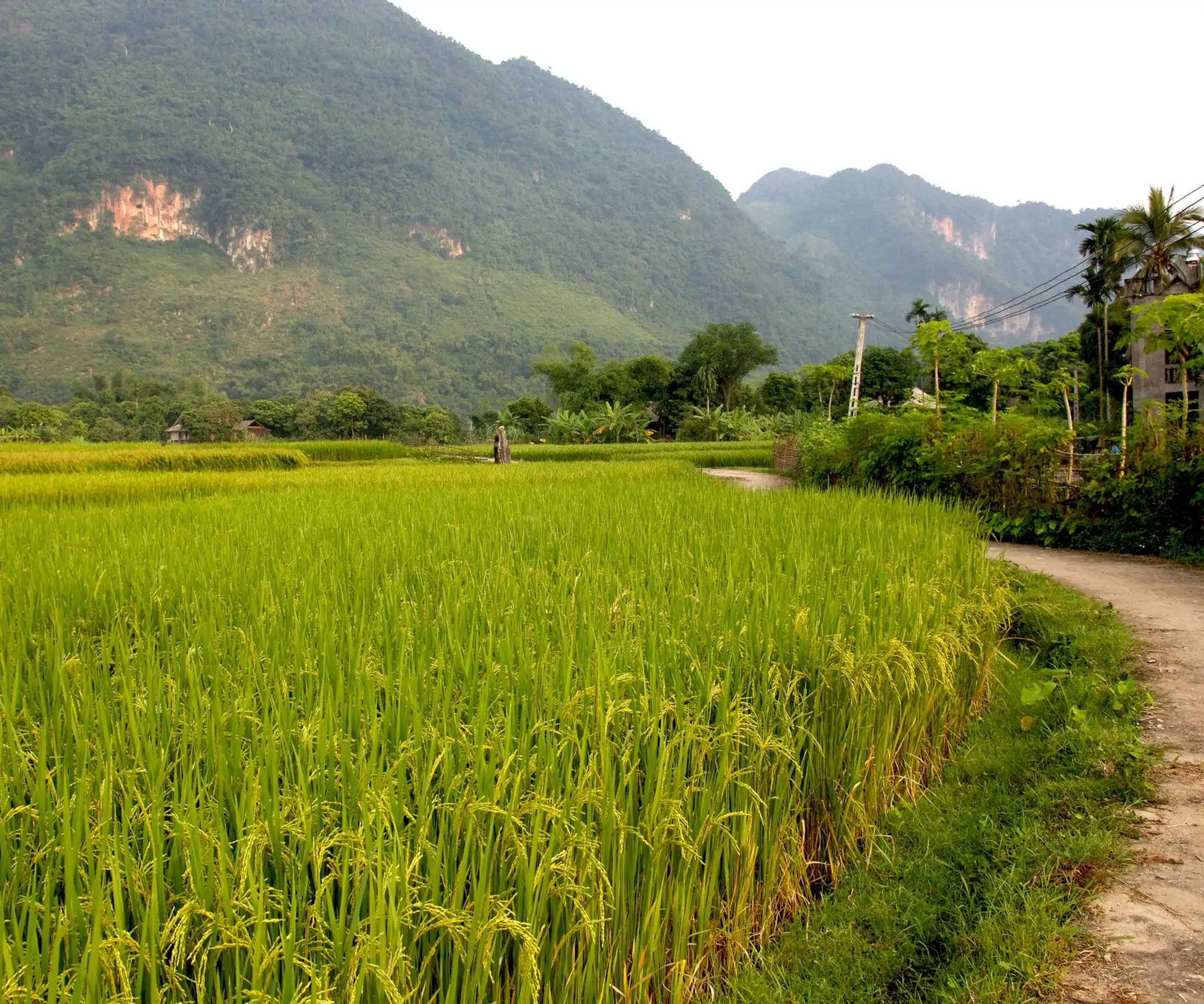
Located just a few hours from Hanoi, the fertile basin of Mai Chau Valley offers smooth dirt tracks flanked by vibrant green paddies. Ascending into Pu Luong Nature Reserve, the gravel turns raw and technical, guiding you through primary rainforests, limestone caverns, and rustic Black Thai hamlets.
Discover shorter escapes with our 4-Day Northern Vietnam Cycling Mai Chau to Pu Luong Adventure or explore dedicated regional routes via Mai Chau Bike Tours and Pu Luong Bike Tours.
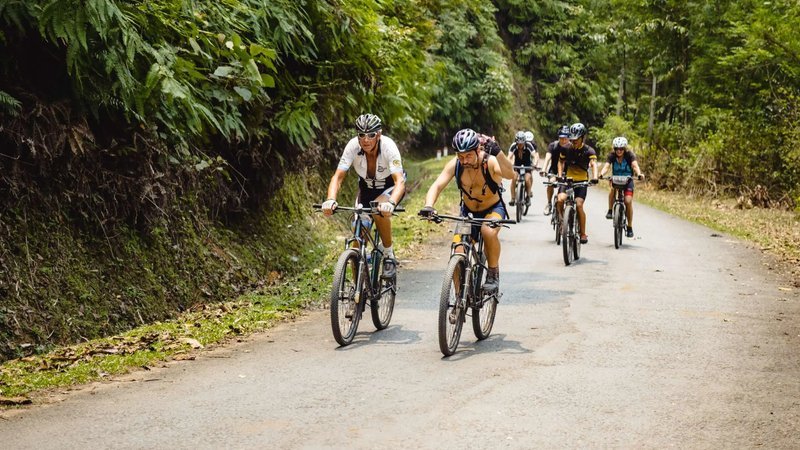
Deeper in the Northwest, the alpine town of Sapa sits under the shadow of Fansipan Peak. Riding along dirt trails cut into steep mountain slopes, you encounter the freezing morning air of O Quy Ho Pass, one of Vietnam's longest and highest mountain passes. Combine this wild terrain with colorful cultural markets by checking out Sapa Bike Tours and Bac Ha Bike Tours, all featured in our comprehensive Vietnam Northwest Bike Tours.
Known as "Halong Bay on Land," Ninh Binh surrounds cyclists with soaring limestone monoliths jutting directly out of calm lotus ponds and rivers. Riding through Tam Coc and into the dense jungle canopy of Cuc Phuong National Park offers dirt trails rich with damp foliage, blooming flora, and fluttering butterflies.
Experience these landscapes on our Ninh Binh Bike Tours, book a flexible trip with the 6-Day Mai Chau, Pu Luong & Ninh Binh E-Bike Tour, or take on the comprehensive 12-Day North Vietnam Cycling Adventure.
For endurance enthusiasts aiming to ride across the spine of the country, traversing the unpaved feeder trails of the historic Ho Chi Minh Trail leads you through remote central mountain ranges, over coastal passes like Hai Van Pass, and straight into southern river deltas. Explore this grand vision with Cycling North to South Vietnam.
Choosing the right equipment determines whether your journey becomes a triumph or an ordeal. Vietnam's mixed surfaces—ranging from smooth asphalt and packed dirt to sharp limestone doubletrack and slick clay—demand a thoughtful gear selection.
A drop-bar gravel bike with progressive geometry, wide tire clearance (at least 700x42c or 650b x 47c), and ample braze-on mounts is ideal for fast-and-light bikepacking. Aluminum or steel frames offer structural reliability over remote terrain.
If your route includes heavy technical singletrack in Ha Giang or Sapa, a lightweight hardtail with 100mm front suspension saves your wrists from high-frequency trail vibration.
Steep gradients in Vietnam frequently exceed 15% to 20%. Modern mid-drive e-gravel and e-mountain bikes open up high-altitude trails to riders who want to conquer mountains without redlining every climb. Explore options at Vietnam E-Bike Tours. For premium support and top-tier rentals, visit Vietnam Luxury Bike Tours.
Tubeless is mandatory. Sharp limestone thorns and loose flint will quickly puncture standard tubes. Select a tire tread with a fast-rolling center strip and aggressive shoulder knobs (e.g., 700x45c). Run lower pressures for traction on wet clay slopes. Pack dynamic sealant and tubeless plug kits.
Gradients are relentless. Opt for a 1x drivetrain with a 38T or 40T front chainring paired with a wide 10-52T cassette, or a sub-compact 2x setup (46/30T front, 11-36T rear). You will need every easy gear when ascending mountain passes under load.
Keep your load centralized and streamlined to handle quick maneuvers on technical dirt tracks.
Store heavy items here (tools, spare parts, power banks, stove kit) to keep your center of gravity low.
Ideal for lightweight, bulky gear like a waterproof sleeping bag, bivvy, or rain jacket.
Pack clothes and extra layers. Ensure it is strapped tightly to prevent sway on fast gravel descents.
Keep high-frequency items within arm’s reach: phone, camera, sunscreen, lip balm, and energy snacks.
High-altitude mornings in the northern mountains can drop below 10°C (50°F), while midday valley sun reaches over 30°C (86°F). Carry moisture-wicking merino wool baselayers, a breathable cycling jersey, windproof gilet, and a fully taped 3-layer waterproof rain jacket.
Offline GPS mapping apps (Gaia GPS, Komoot, RideWithGPS) are vital, as cellular service can drop inside deep mountain gorges. Carry a rugged 20,000mAh power bank and a high-lumen rechargeable headlight.
Always pack two spare tubes, tubeless plugs, chain breaker, quick-links, spare derailleur hanger, compact hand pump, brake pad replacements, and multi-tool.
Executing a smooth gravel expedition requires clear planning around daily logistics.
Getting your bike to the trailheads across Vietnam is straightforward once you understand local transport options.
Comfortable sleeper buses frequently travel between Hanoi and provincial hubs like Ha Giang, Lao Cai, and Cao Bang. Bikes are stored in the lower luggage compartments; remove the front wheel and pad the frame with foam or soft bags.
The overnight train from Hanoi to Lao Cai (for Sapa and Bac Ha) offers dedicated cargo cars. It is a relaxing, scenic way to drift off to sleep and wake up at the foot of the mountains.
When booking through Golden Cycling Tours, private air-conditioned support vehicles handle luggage transfer, bike transport, and mechanical support, leaving you free to ride light and unencumbered.
The heart of Vietnamese bikepacking lies in local homestays. Built on wooden stilts with thatched or tiled roofs, homestays run by Tay, White Thai, Dzay, or Hmong families offer incredible hospitality. Sleep on comfortable mattresses shielded by mosquito nets, accompanied by the peaceful sounds of chirping crickets and rustling bamboo leaves.
In destinations like Mai Chau Valley, Pu Luong Nature Reserve, Sapa, and Ninh Binh, beautiful eco-lodges offer hot showers, infinity pools overlooking rice terraces, and plush bedding to soothe tired muscles after long mountain rides.
Food in Vietnam is fresh, aromatic, and packed with complex flavors—the ultimate fuel for long gravel days.
Start your morning with a steaming bowl of Phở or Bún Chả. The rich, star-anise-infused bone broth hydrates and restores sodium levels, while tender rice noodles supply long-lasting carbohydrates.
For lunch and dinner, enjoy shared family-style feasts: stir-fried jungle greens with garlic, crispy spring rolls, grilled mountain pork cooked over lemongrass charcoal, wild stream fish, and mounds of fragrant jasmine rice (Xôi).
Refuel at rural roadside stands with ice-cold fresh coconut water, freshly pressed sugarcane juice (Nước Mía), or robust drip coffee sweetened with condensed milk. In the evenings, join your homestay hosts in raising a small glass of homemade rice wine (Rượu cần) to celebrate the day’s achievements.
Cycling brings you face-to-face with Vietnam's diverse hill-tribe cultures. Approaching remote communities with curiosity and respect enriches your journey immeasurably.
When entering traditional villages or ancient temples, wear modest clothing that covers your shoulders and knees. Always ask politely before taking photos of elders or children.
Learn a few words of Vietnamese ("Xin chào" for hello, "Cảm ơn" for thank you). Carrying small regional snacks to share or simply offering a warm smile builds instant connections across language barriers.
Timing your trip ensures optimal weather, stunning scenery, and safe trail conditions.
This is widely considered the ultimate window for gravel riding in Northern Vietnam. The monsoon rains subside, leaving crisp sky blue days, comfortable temperatures (18°C–25°C), and brilliant golden rice fields ready for harvest across Hoang Su Phi, Sapa, and Mu Cang Chai.
As winter's chill recedes, spring brings pleasant warmth, clear skies, and vibrant green landscapes. Peach blossoms, plum trees, and wild orchids bloom across mountain passes, making every climb visual magic.
Temperatures in high-altitude zones like Dong Van Karst Plateau can drop near freezing at night, with lingering mountain mists creating dramatic, mysterious vistas. Proper thermal layering is required.
Summer brings hot weather, high humidity, and heavy tropical downpours. While landscapes are vibrantly green and waterfalls crash with maximum power, mountain gravel tracks can turn into slick mud, increasing landslide risks on remote passes.
Navigating remote gravel tracks, securing authentic homestays, overcoming language barriers, and organizing emergency mechanical support can be daunting. Partnering with a premier local expert ensures your adventure is safe, seamless, and deeply rewarding.
At Golden Cycling Tours, we design world-class gravel itineraries tailored specifically to your riding style and fitness level. Whether you prefer total self-supported grit or a fully supported luxury journey with private support vehicles, professional mechanics, and expert bilingual local guides, we bring your dream ride to life.
Explore our curated itineraries:
Take on the ultimate frontier with our 8-Day Epic Ha Giang Loop Adventure.
Discover flexible options across our complete portfolio at Golden Cycling Tours Collection.
Let us handle the route scouting, logistics, and gear optimization so you can focus entirely on the freedom of the open trail.
Yes! While steep climbs require good fitness, routes can be modified based on skill levels. Support vehicles on guided tours allow you to skip overly punishing climbs whenever necessary, while e-gravel bikes offer excellent assistance.
Absolutely. Golden Cycling Tours provides modern, meticulously maintained gravel bikes, hardtail mountain bikes, and premium e-bikes equipped with tubeless tires, hydraulic disc brakes, and proper climbing gear ratios.
Vietnam is one of the safest travel destinations in the world. Local communities are exceptionally welcoming, honest, and helpful. The main safety considerations involve navigating mountain traffic and managing unpredictable weather, which are easily mitigated with good planning or expert local guides.
While major cities accept credit cards, cash (Vietnamese Dong) is essential for rural homestays and roadside fruit stalls. Mobile network coverage (Viettel) is surprisingly robust across most mountain passes, though downloading offline maps before heading into deep river valleys is strongly recommended.

Leave a Reply
Your email address will not be published. Required fields are marked *