- Call us Via Whatsapp: +84 (0) 832 126 699
4.9 stars on our site
(15,000 reviews)
- Monday - Sunday : 08:00 - 17:00
(15,000 reviews)

Dawn breaks softly over the emerald crags of Tonkin. Cool morning fog drifts across sheer limestone walls as the rhythmic, metallic click-clack of your drivetrain echoes through deep alpine gorges. The sharp scent of damp pine needles, wild mountain mint, and sweet woodsmoke wafting from stilt-house chimneys fills your lungs with every deep breath. As you drop into your lowest gear, your tires bite into smooth asphalt, ascending into a realm of floating clouds, cascading terraced valleys, and jagged mountain spires. Pushing your pedals up a relentless 14% switchback, your hamstrings and quadriceps hum with energy, your heart beats in steady rhythm, and the horizon opens up to reveal one of the grandest panoramas on earth. There is no sensory feeling quite like conquering high mountain corridors across Southeast Asia on two wheels.
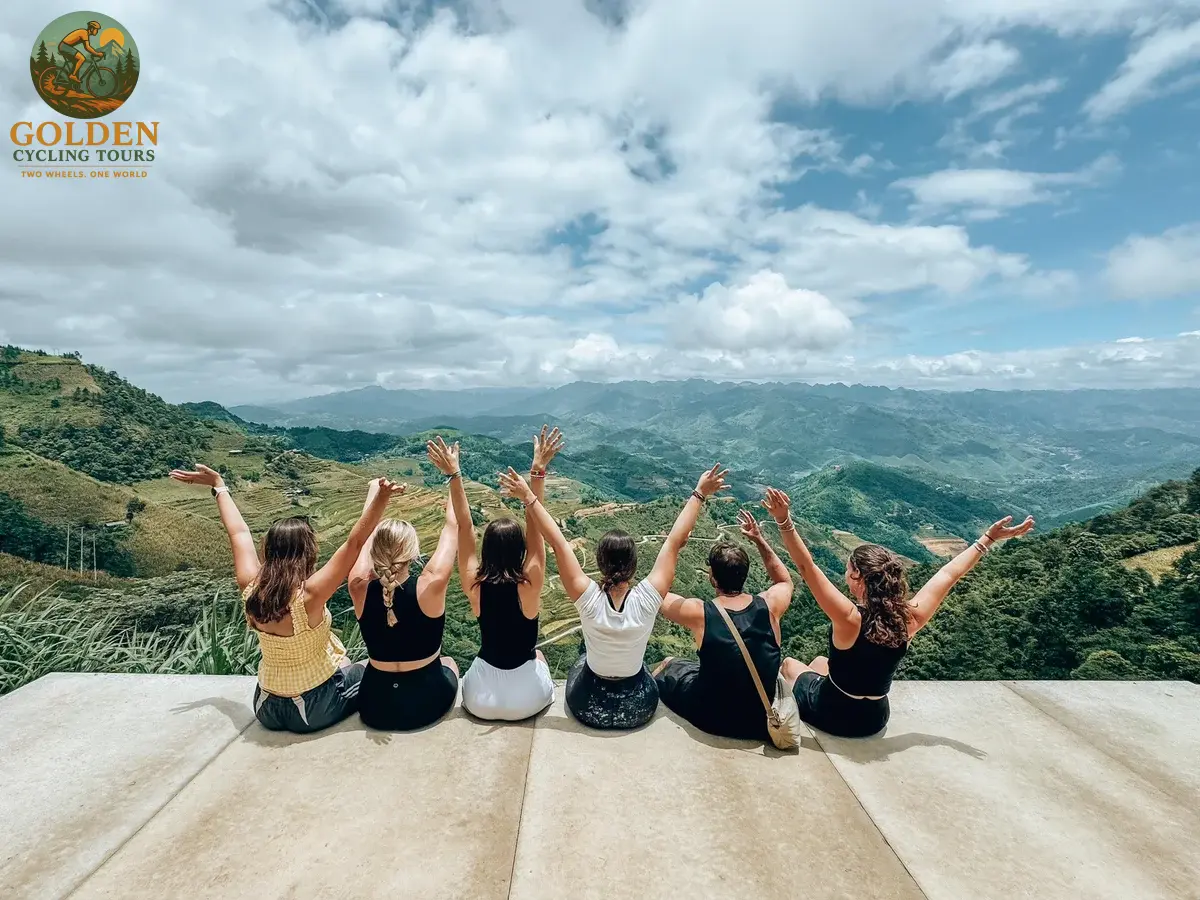
Preparing your body for this extreme terrain requires strategy, stamina, and proper conditioning. Mastering Training for Northern Vietnam Mountain Passes: Physical Preparation Tips gives cyclists, adventure seekers, and endurance enthusiasts the foundation required to conquer high-altitude switchbacks, sustain prolonged climbing efforts, and enjoy every breathtaking kilometer across Southeast Asia's most dramatic topography.
Partnering with Golden Cycling Tours grants you access to world-class logistics, top-tier rental fleets, master mechanics, boutique eco-homestays, and handcrafted itineraries across Vietnam's wild northern frontier. Whether you plan to tackle hair-raising pass ascents or enjoy supported valley cruising, understanding Training for Northern Vietnam Mountain Passes: Physical Preparation Tips guarantees an extraordinary, worry-free expedition tailored to your exact athletic capacity.
Northern Vietnam does not feature gentle, rolling hills. The roads winding through border provinces like Ha Giang, Cao Bang, Lao Cai, and Yen Bai present continuous 8% to 15% gradients that stretch upward for 10 to 20 consecutive kilometers.
Climbing high-altitude corridors such as Ma Pi Leng Pass, Khau Pha Pass, and Tham Ma Pass requires riding at or near your lactate threshold for 60 to 120 continuous minutes. Unlike flat pace-lines where you can draft behind other riders to conserve energy, mountain ascents demand continuous power output. Proper preparation focuses on increasing your Functional Threshold Power (FTP) and developing muscular endurance so your legs can push steady power without premature fatigue.
While climbing tests your cardiovascular system, descending mountain passes tests your upper body, grip strength, and core stability. Technical descents featuring sharp hairpin switchbacks require continuous feathering of hydraulic disc brakes, tight cornering posture, and core engagement to keep your bicycle stable over sudden road surface changes.
To feel strong, comfortable, and energetic across multi-day mountain itineraries, structure your physical preparation around four core athletic pillars.
Begin your training block 8 to 12 weeks before your departure date. Focus on building a deep aerobic base combined with targeted threshold intervals.
Long Aerobic Rides: Complete one weekly endurance ride lasting 3 to 5 hours at a conversational pace (Zone 2 heart rate). This builds mitochondrial density, enhances fat oxidation, and prepares your body for consecutive multi-hour days on the saddle.
Sweet Spot Intervals: Incorporate twice-weekly interval sessions consisting of 3 sets of 15 minutes at 88% to 93% of your FTP. These intervals simulate the sustained aerobic demand of climbing passes like O Quy Ho Pass without overtaxing your nervous system.
Simulated Hill Repeats: Locate a local 5% to 8% gradient climb and complete repeated 10-minute efforts at a steady climbing pace. If you live in a flat region, use an indoor smart trainer to simulate resistance climbing.
High mountain gradients can force your pedaling speed down to 50 or 60 RPM if your gearing is too high. Training your legs to handle both low-cadence torque and high-cadence efficiency prevents quadriceps burnout.
High-Torque Low-Cadence Drills: Perform 5-minute efforts at 50 to 60 RPM in a heavy gear on a slight incline. This strengthens your knees, tendons, and gluteal muscles for steep 14% switchbacks.
High-Cadence Efficiency Drills: Practice pedaling smoothly at 90 to 100 RPM on flat terrain to improve neuromuscular efficiency, reducing muscular fatigue during long valley transfers.
Hours spent bent over handlebars on steep gradients put significant strain on your lower back, shoulders, and neck muscles. A stable core transfers power directly into your pedals without wasting energy.
Core Stability Exercises: Integrate planks, side planks, Russian twists, and bird-dogs three times a week for 20 minutes.
Lower Body Functional Strength: Perform goblet squats, Romanian deadlifts, lunges, and calf raises to build joint stability and protect your knees during heavy climbing efforts.
Depending on the season, mountain valleys can feel warm and humid before you ascend into cooler alpine mists. Learning to manage your body temperature and breathing rhythm is crucial.
Deep Diaphragmatic Breathing: Practice deep, rhythmic belly breathing synchronized with your pedal strokes. Inhale deeply over two pedal strokes and exhale over two pedal strokes to maximize oxygen intake.
Hydration and Thermal Management: Train on warm afternoons to adapt your body to sweating efficiently, and practice drinking before you feel thirsty.
Your physical fitness must be supported by proper gear selection and bicycle tuning.
Equipping your bicycle with proper low-range gearing is essential for preserving leg strength. We recommend a compact front chainring setup (50/34T or 48/32T) paired with a wide-range rear cassette (11-34T or 11-36T). Having a 1-to-1 gear ratio allows you to maintain a healthy cadence even when roads tilt upward at extreme angles.
If you want to experience the dramatic high-altitude scenery of Dong Van Karst Plateau or Hoang Su Phi without intense physical strain, modern mid-drive e-bikes provide the perfect solution. Electric pedal assistance provides smooth power on steep switchbacks, allowing mixed-fitness groups, multi-generational families, and active leisure travelers to ride together seamlessly. Exploring options through Vietnam E-Bikes Tours ensures access to premium Bosch- and Shimano-powered fleets.
Timing your journey around optimal weather windows enhances comfort, road safety, and visual beauty.
Autumn is acclaimed as the prime window for Cycling Northern Vietnam. Monsoon rains subside, dry weather patterns settle over the highlands, and daytime temperatures hover between a comfortable 18°C and 26°C.
Visual Spectacle: In September and October, cascading terraced fields across Hoang Su Phi, Mu Cang Chai, and Pu Luong Nature Reserve ripen into brilliant oceans of gold.
Road Conditions: Mountain tarmac, gravel tracks, and mountain passes remain dry, grippy, and clear, offering panoramic visibility across deep gorges.
Spring brings fresh color back to mountain valleys as winter mists clear and daytime temperatures warm up to an agreeable 20°C to 28°C.
Floral Spectacles: Cycling through Mai Chau Valley and around Sapa reveals hillsides covered in pristine white plum blossoms, pink peach blossoms, and wild orchids.
Riding Dynamics: Mild breezes and clear afternoons provide excellent conditions for continuous endurance riding without extreme heat.
Winter in the northern borderlands brings a dramatic chill. High-altitude locations like Dong Van Karst Plateau experience temperatures between 5°C and 12°C, with atmospheric mists shrouding limestone monoliths. Winter appeals to hardy, adventurous riding groups who enjoy crisp alpine air and quiet mountain roads.
Summer brings warm tropical temperatures (28°C to 34°C) and afternoon monsoon showers. Despite the heat, summer displays the mountains at their most lush and dramatic. Cascading waterfalls like Ban Gioc Waterfall thunder in full force, and terraced fields turn into vibrant emerald basins filled with fresh rainwater.
From short valley escapes to epic multi-day sagas, private itineraries can be matched to your physical preparation and elevation goals.
For cyclists seeking an accessible yet deeply rewarding mountain warm-up, the 4 Days Northern Vietnam Cycling Mai Chau to Pu Luong itinerary offers a balance of smooth valley paths and rainforest climbs. Departing from Hanoi, riders descend into the tranquil bowl of Mai Chau Valley.
Tires roll smoothly over village paths bordered by emerald rice paddies and traditional White Thai wooden stilt houses. On day two, the route elevates into the lush canopy of Pu Luong Nature Reserve. Guests conquer sweeping backroads along the riverbanks of Ban Hang and Kho Muong Village, where giant bamboo waterwheels churn gracefully. Combining routes from Mai Chau Bike Tours and Pu Luong Bike Tours provides an unforgettable riding experience.
Connecting rainforest ridges to ancient coastal monoliths creates one of Southeast Asia's finest mid-length cycling corridors. This route guides your group from the hamlets of Mai Chau through Pu Luong, before descending toward Ninh Binh.
As riders head east, rugged mountains yield to serene waterways framed by towering karst spires in Tam Coc and Trang An. Pedaling past lotus-filled ponds and grazing water buffalo provides effortless group riding. Utilizing the 6 Day Mai Chau - Pu Luong - Ninh Binh E-Bike Tour allows riders of varying fitness levels to stay together without breaking the pace-line.
For active groups hungering for high elevation gain, cliffside drops, and rich mountain culture, nothing matches the 10 Day Ha Giang Loop & Hoang Su Phi Cycling Adventure. Featured among Ha Giang Bike Tours, this journey tackles Vietnam's most legendary passes.
Cyclists tackle the switchbacks of Tham Ma Pass, entering the rock formations of Dong Van Karst Plateau, a UNESCO Global Geopark home to Hmong and Lo Lo communities. The highlight comes as riders pedal across Ma Pi Leng Pass. Hanging high above the turquoise waters of Nho Que River Canyon, every pedal stroke delivers pure adrenaline. The ride concludes among the sculpted rice terraces of Hoang Su Phi, offering technical climbs and sweeping descents into tea valleys.
Another extraordinary expedition takes private groups deep into the wilderness along the northern border. Designed around itineraries from Cao Bang Bike Tours and Ba Be Lake Bike Tours, this route features quiet border roads, ancient caves, and pristine lakes.
Groups ride beneath limestone monoliths to reach the thundering spray of Ban Gioc Waterfall. Gravel tracks lead through hidden valleys to Angel Eye Mountain (Phia Thiot), featuring a natural hollow cave through its peak. The journey culminates with scenic lakeside riding around Ba Be National Park and Ba Be Lake, where team members can swap bikes for kayaks to explore tranquil gorges.
For groups requiring VIP service, dedicated support vehicles, and fine dining, booking through Vietnam Luxury Bike Tours or selecting the grand Best Vietnam Cycling Northeast Tour 15 Days provides an incredible expedition across Vietnam Northeast Bike Tours.
Proper nutrition is fuel for your athletic performance across steep mountain passes. Vietnamese cuisine is light, digestible, and packed with complex carbohydrates and lean proteins.
Pho Ga and Bun Cha: Hot bowls of rich chicken noodle soup or grilled pork served over rice vermicelli in morning village markets provide clean protein, sodium, and hydration to start the day.
Com Lam: Fragrant sticky rice roasted inside bamboo tubes over hot coals offers portable, energy-dense carbohydrates during mid-ride mountain breaks.
Roasted Mountain Chicken: Free-range chicken marinated with wild forest pepper (Mac Khen) and roasted over open flames provides savory protein for evening banquets.
Sauteed Mountain Greens: Freshly gathered chayote leaves, wild mustard greens sauteed with garlic, and forest mushrooms offer rich vitamins and mineral recovery.
Along mountain passes, roadside stalls offer warm green tea (Tra Da), fresh young coconuts, and sweet oranges. Combined with chilled electrolyte drinks from support vans, keeping your body energized and hydrated is effortless.
Restful recovery and comfortable surroundings are vital after conquering high elevation miles.
In rural villages across Mai Chau, Pu Luong, Cao Bang, and Hoang Su Phi, private stays in traditional White Thai, Tay, or Dao wooden stilt houses offer warm cultural immersion. Guests enjoy comfortable bedding dressed with clean linens and mosquito netting, sleeping to the peaceful sounds of mountain streams.
For executive retreats seeking top amenities, boutique eco-lodges along mountain ridges feature infinity pools overlooking terraced valleys. Properties like Pu Luong Retreat, Topas Ecolodge near Sapa, and heritage hotels in Dong Van provide hot showers, plush bedding, farm-to-table feasts, spa treatments, and private terraces ideal for evening debriefs, group socials, and stargazing.
Executing seamless cycling trips across frontier regions requires professional equipment maintenance and specialized support vehicle engineering.
Lead Navigation and Technical Support Van: Drives close to front riders, managing trail navigation, road safety, rapid mechanical fixes, and junction directing.
Luxury Passenger Lounge Support Van: Trails the rear peloton, providing air-conditioned executive seating for resting cyclists on steep switchbacks like Khau Pha Pass, alongside coolers stocked with sparkling water, electrolyte mixes, fresh fruits, espresso, and energy bars.
Riding on two wheels brings your group face-to-face with daily life in mountain hamlets. Cyclists pass ethnic women weaving intricate brocade fabrics, farmers guiding water buffalo through rice fields, and children waving along countryside lanes.
We emphasize respectful cultural interaction and Corporate Social Responsibility (CSR). Private groups can incorporate community engagement initiatives into their itinerary—such as supporting local mountain schools, planting trees in nature reserves, or purchasing handcrafted textiles directly from local artisans to empower village micro-economies.
"Following the advice on Training for Northern Vietnam Mountain Passes: Physical Preparation Tips from Golden Cycling Tours made my dream trip a reality. Conquering Ma Pi Leng Pass with strong legs and proper gearing made every pedal stroke pure joy!" — Marcus V., Endurance Cyclist, Melbourne, Australia
"Our group completed the 6-day e-bike route from Mai Chau to Ninh Binh. The physical preparation guidelines were spot-on, the support vans were flawless, and the homestays were unforgettable!" — Sarah L., Active Traveler, London, UK
We recommend beginning a structured physical preparation program at least 8 to 12 weeks prior to your tour departure. Focus on building cardiovascular threshold power, core strength, and low-cadence climbing endurance.
A compact chainset (50/34T) paired with a 11-34T or 11-36T cassette is ideal. This 1-to-1 gear ratio allows you to maintain a steady cadence on 12% to 14% gradients like Tham Ma Pass without overloading your knees.
Yes! Modern electric pedal-assist mountain bikes and hybrid bikes level the playing field. They provide smooth motorized assistance on steep ascents, allowing you to enjoy breathtaking pass views regardless of your current fitness level.
Our dual-support vehicle infrastructure includes an air-conditioned passenger lounge van that trails the rear peloton. You can hop into the support van at any point to rest, enjoy chilled beverages, and rejoin the ride whenever you feel refreshed.

.jpg "Thai Binh Vietnam Bicycle")
.jpg "Phu Tho Vietnam Cycling")
.jpg "Thai Nguyen Cycling Vietnam")
.jpg "Tuyen Quang Cycling Vietnam")
.jpg "Vinh Phuc Cycling Vietnam")
Leave a Reply
Your email address will not be published. Required fields are marked *