- Call us Via Whatsapp: +84 (0) 832 126 699
4.9 stars on our site
(15,000 reviews)
- Monday - Sunday : 08:00 - 17:00
(15,000 reviews)

Imagine standing atop a cliff-side hairpin bend as the early morning fog peels away to reveal a labyrinth of towering emerald monoliths. The air is cool and sharp, smelling of damp earth, wild pine, and woodsmoke drifting from a distant Tay village nestled in the valley below. Your heart pounds against your ribs, not just from the relentless 10% gradient you just conquered, but from the raw, intoxicating majesty of Northern Vietnam. Down below, a silver ribbon of asphalt carves through vertical limestone peaks, calling you onward.
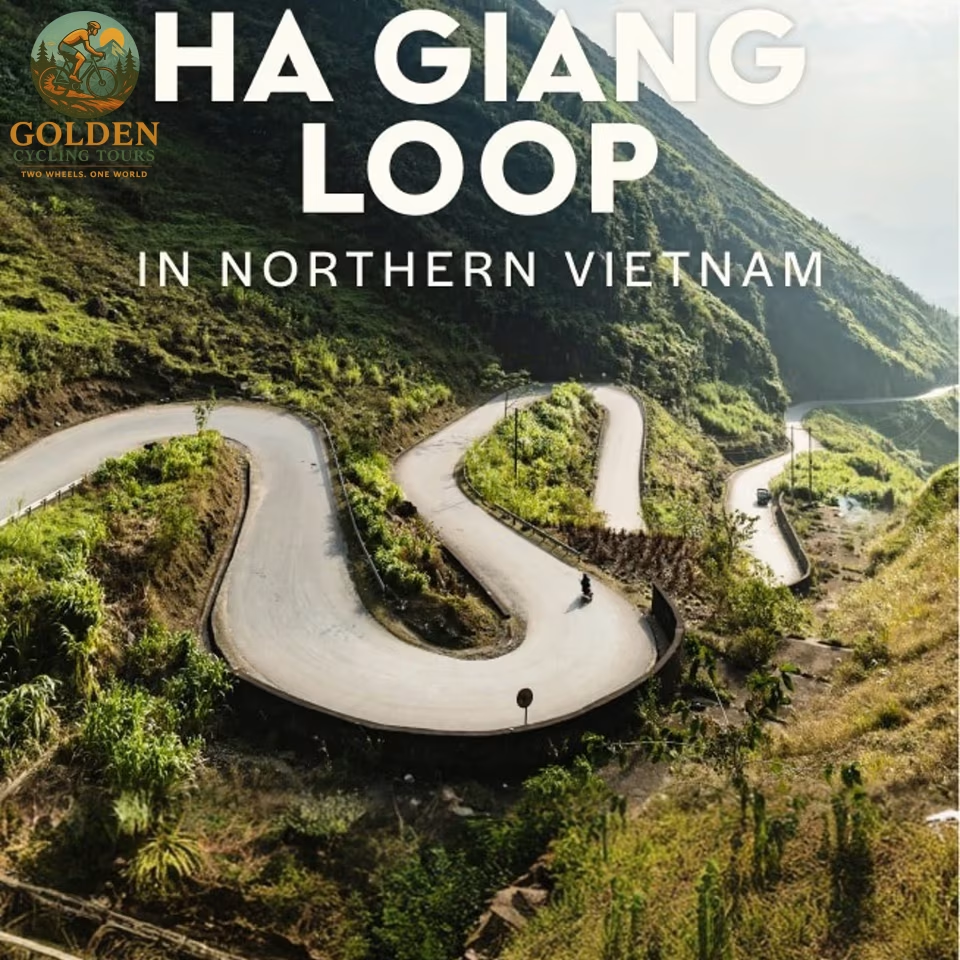
Cycling through Northern Vietnam is widely regarded as one of the ultimate bucket-list adventure trips on the planet. However, as you begin planning your trip across these rugged mountain passes, one crucial question arises: Solo vs Guided Biking Tour in Northern Vietnam: Which Should You Pick?
Whether you are an independent bikepacking purist seeking solitude or an adventurous cyclist desiring smooth logistics and deep cultural access, this comprehensive guide breaks down every aspect of your upcoming journey.
To pedal through Northern Vietnam is to engage every single sense in a thrilling, living tapestry. As you descend from O Quy Ho Pass, the rushing wind whistles against your helmet while your disc brakes sing a faint metallic rhythm. With every turn, the aroma of roasting mountain pork marinated in wild mac khen pepper drifts from roadside stalls, mingling with the crisp mountain breeze. You feel the tactile crunch of gravel beneath your knobby tires, the soothing warmth of hot green tea served in a wooden stilt house after six hours in the saddle, and the awe of gazing down into the abyss of Tu San Canyon as the emerald waters of the Nho Que River snake far below.
The topography here is merciless yet deeply rewarding. Legendary climbs like Ma Pi Leng Pass, Khau Pha Pass, and the winding switchbacks of Hoang Su Phi demand physically sound legs and sharp mental focus. How you choose to experience this dramatic landscape will redefine your entire journey.
Choosing how to tackle these legendary routes comes down to your personal travel philosophy, mechanical self-reliance, and appetite for logistical navigation. When evaluating a Solo vs Guided Biking Tour in Northern Vietnam: Which Should You Pick?, it helps to look deeply at what each option demands from you on the road.
A solo expedition offers an undeniable sense of liberty. You set your own alarm, decide when to stop for a steaming bowl of beef Pho, and alter your daily itinerary on a whim.
Riding solo allows you to immerse yourself completely in the rhythm of the open road. When you pedal alone through the remote mountain hamlets of Cao Bang or along the peaceful shores of Ba Be Lake, every interaction feels earned. You stop at small local markets, practice hand gestures with ethnic Hmong elders, and feel the pure satisfaction of carrying all your gear over towering pass crests under your own power.
However, solo cycling through remote high-altitude corridors comes with significant friction. Mechanical failures in isolated regions can quickly turn an epic day into a desperate search for help. Spare parts for modern gravel bikes or high-end hydraulic brake systems are practically non-existent outside major cities. Additionally, finding reliable, safe accommodation during peak harvest seasons, deciphering non-English mountain directions, and hauling 15 to 20 kilograms of panniers up vertical switchbacks can drain your energy reserves quickly.
A professionally guided tour changes your relationship with the terrain. Instead of stressing over logistics, navigation, and emergency protocols, your focus remains entirely on the thrill of the ride and the beauty of your surroundings.
Imagine attacking the steepest switchbacks of Ma Pi Leng Pass knowing that a air-conditioned support vehicle is trailing comfortably behind. If your legs cramp or sudden mountain downpours strike, you can step into the van, grab a chilled towel, rehydrate with fresh tropical fruit, and rejoin the ride whenever you feel ready. Expert mechanics handle tire punctures, chain cleans, and gear adjustments every evening, ensuring your ride is tuned to perfection for the next morning.
Local guides act as cultural bridge-builders. They take you into authentic minority villages that independent travelers rarely find, translating personal stories over home-cooked dinners inside traditional stilt houses. When booking through established specialists like Golden Cycling Tours, you gain access to vetted, off-the-beaten-path routes, high-spec equipment, and intimate cultural experiences that turn a simple bike trip into an unforgettable voyage.
To help you decide between self-supported exploration and an organized tour, consider how key factors play out on the mountain roads of Northern Vietnam:
Logistical Complexity: Solo riders must personally arrange bike rentals, daily luggage transfers, route navigation, and emergency repairs. Guided tours handle every detail from support vehicles to hotel check-ins.
Physical Load: Solo cyclists carry heavy panniers over steep mountain passes like Khau Pha Pass. Guided cyclists ride lightweight performance bikes while luggage travels in the support vehicle.
Cultural Depth: Solo travelers experience spontaneous interactions, though language barriers often limit deeper conversation. Guided riders benefit from local bilingual guides who open doors to authentic family dinners and ethnic traditions.
Safety Net: Solo riders rely entirely on self-rescue or local luck in remote areas. Guided riders enjoy continuous SAG-wagon protection, emergency first-aid, and real-time mechanical support.
Route Accuracy: Solo routes rely heavily on GPS tracks that may not reflect recent landslides or roadworks. Guided leaders continuously scout conditions to ensure safe, rewarding rides.
Timing is everything when planning to ride through the northern highlands. The weather determines visibility, road conditions, and the vibrant colors of the landscape.
Autumn is widely considered the golden window for Cycling Northern Vietnam. During these months, the summer monsoon rains recede, leaving behind crisp, clear skies and moderate temperatures ranging between 18°C and 25°C.
This season coincides with the spectacular rice harvest across Hoang Su Phi, Mu Cang Chai, and Mai Chau. Entire mountain valleys transform into shimmering golden staircases carved into the hillsides. The scent of ripe grain fills the fresh air, making long hours in the saddle pure magic.
Spring brings pleasant warmth and vibrant life back to the mountains. Peach blossoms, plum blossoms, and wild mustard flowers carpet the limestone cliffs of Dong Van Karst Plateau. Temperatures are comfortable for riding, and the terraced fields fill with water, reflecting the sky like thousands of silver mirrors scattered across the peaks.
Winter (December to February) brings biting cold winds and dense mountain fog to high-altitude passes like O Quy Ho Pass. Temperatures can drop close to freezing, reducing visibility significantly.
Summer (June to August) delivers intense heat in lower valleys along with torrential monsoon downpours that increase the risk of landslides along remote mountain trails. If traveling during these periods, flexible itineraries and support vehicle backup are strongly advised.
Fueling your body with exceptional local food is one of the greatest highlights of riding in Northern Vietnam. Highland cuisine is fresh, vibrant, and packed with complex natural flavors.
Must-Try Dishes: Savor hot bowls of Pho topped with fresh mountain herbs, charcoal-grilled pork belly seasoned with wild forest pepper, stir-fried jungle ferns with garlic, and fragrant sticky rice cooked inside bamboo tubes.
Dining Spots: In town centers like Dong Van, Meo Vac, or Cao Bang, local street markets offer incredible energy-dense meals. In rural areas like Pu Luong Nature Reserve, homestay hosts prepare lavish family-style feasts featuring stream fish grilled over open wood fires.
Where you rest your head after a challenging day in the saddle shapes your experience.
Traditional Homestays: Staying in a traditional Tay, White Thai, or Hmong wooden stilt house offers an unmatched window into local life. You will sleep under cozy mosquito nets, listen to the gentle chirping of crickets, and wake up to sweeping valley sunrises.
Boutique Eco-Lodges & Luxury Escapes: For travelers seeking premium comfort, region-specific luxury resorts offer infinity pools overlooking deep valleys, spa treatments to soothe tired legs, and farm-to-table dining. Explore curated options via Vietnam luxury bike tours to blend rigorous daytime adventure with evening comfort.
Navigating transit to and from starting points in Hanoi requires careful planning. Trains and sleeper buses carry bikes, but delicate derailleur hangers and disc rotors can easily be damaged during loading. Utilizing dedicated private transport with custom bike racks ensures your equipment arrives intact and ready to ride.
The mountain passes of Northern Vietnam are home to over 30 distinct ethnic minority groups, including the Hmong, Dao, Tay, Nung, and White Thai peoples. Pedaling through their ancestral lands requires respect, curiosity, and cultural awareness.
Dress Appropriately: When cycling through villages or entering homestays, wear modest clothing.
Photography Etiquette: Always ask for permission before taking close-up portraits of village elders or children with a simple smile and gesture.
Accepting Hospitality: If offered a glass of home-brewed corn wine or a cup of green tea by your homestay host, accepting with both hands demonstrates gratitude and respect.
Whether you are looking for heart-pounding mountain climbs or relaxing valley rides, these destinations showcase the absolute best riding in the country.
Known as the final frontier of Southeast Asia, Ha Giang boasts jaw-dropping limestone landscapes, vertical canyon walls, and unforgettable ribbon roads.
Riding through Dong Van Karst Plateau toward Meo Vac requires climbing the world-renowned Ma Pi Leng Pass, a cliff-clinging road suspended thousands of feet above the turquoise Nho Que River. West of the main loop lie the untouched, heavily terraced mountains of Hoang Su Phi, where ancient trails weave through deep bamboo forests.
Recommended Tour: Tackle this legendary landscape on a fully supported 10-day Ha Giang Loop & Hoang Su Phi Cycling Adventure or explore dedicated Ha Giang bike tours.
Northeast of Ha Giang lies Cao Bang, a UNESCO Global Geopark filled with surreal karst sugarloaf mountains, hidden caves, and crystal-clear streams.
Pedal along quiet border roads passing through Thong Nong and Quang Uyen to reach Ban Gioc Waterfall, the majestic multi-tiered waterfall straddling the border between Vietnam and China. Combine this with a peaceful ride through Ba Be National Park, where dense jungle trails encircle the serene waters of Ba Be Lake.
Recommended Destinations: Browse curated Cao Bang bike tours and tranquil Ba Be Lake bike tours to build your perfect northeast itinerary.
For an all-encompassing expedition covering the entire frontier, consider the epic 15-day Best of Northeast Vietnam Cycling Tour or explore regional Vietnam Northeast bike tours.
If you prefer lush countryside, fertile rice paddies, and gentler rolling hills, the valley circuit southwest of Hanoi is an absolute paradise.
Starting in the tranquil idyllic basin of Mai Chau, ride through quiet Thai villages before ascending into the pristine primary rainforests of Pu Luong Nature Reserve. Finish your journey gliding between the ancient, soaring limestone monoliths of Ninh Binh and Tam Coc, often referred to as inland Ha Long Bay.
Recommended Tours: Discover lush valleys with Mai Chau bike tours and scenic Pu Luong bike tours. Check out the compact 4-day Mai Chau to Pu Luong cycling adventure.
For riders seeking smooth pedal assistance over undulating countryside, try the premium 6-day Mai Chau, Pu Luong & Ninh Binh e-bike tour or browse modern Vietnam e-bike tours.
Here is what global adventurers say after tackling the switchbacks and valleys of the northern highlands:
"Conquering Ma Pi Leng Pass was the most intense and rewarding physical experience of my life. The air was crisp, the views into Tu San Canyon were unreal, and having the support van nearby gave me the confidence to push up every single 12% ramp without fear." – Marcus S., Australia
"Riding through Pu Luong Nature Reserve on an e-bike was pure magic. The scent of wild mountain herbs, the sound of waterwheels spinning in the streams, and the warmth of our homestay hosts in Mai Chau made this trip unforgettable." – Elena & David R., UK
Mountain routes like Ha Giang and Cao Bang feature long climbs with gradients between 6% and 12%. A good level of cardiovascular fitness and prior road or gravel riding experience is recommended. However, utilizing modern e-bikes on guided itineraries makes these legendary climbs accessible to riders of varying fitness levels.
Yes, but high-end carbon gravel bikes, modern full-suspension mountain bikes, and premium e-bikes are primarily available through specialized operators based in Hanoi. Local mountain rental shops typically offer basic utility bikes that may not be suited for multi-day alpine riding.
Essential gear includes breathable moisture-wicking jerseys, high-quality padded bib shorts, a lightweight windproof and waterproof rain jacket, riding gloves, UV-protection sunglasses, and comfortable stiff-soled cycling shoes. Do not forget multi-spectrum sunscreen, electrolyte tablets, and your preferred personal pedal system.
Mountain roads are generally safe, but require caution due to sharp hairpin turns, roaming livestock, and occasional truck traffic. Guided tours significantly boost safety by placing a support vehicle behind the group to shield riders and handle any emergency situations immediately.
Yes! Even when renting a top-tier bike from your tour operator, bringing your own clip-in pedals and familiar saddle ensures maximum comfort and prevents saddle sores during long days in the saddle.

.jpg "Thai Binh Vietnam Bicycle")
.jpg "Phu Tho Vietnam Cycling")
.jpg "Thai Nguyen Cycling Vietnam")
.jpg "Tuyen Quang Cycling Vietnam")
.jpg "Vinh Phuc Cycling Vietnam")
Leave a Reply
Your email address will not be published. Required fields are marked *