- Call us Via Whatsapp: +84 (0) 832 126 699
4.9 stars on our site
(15,000 reviews)
- Monday - Sunday : 08:00 - 17:00
(15,000 reviews)

Imagine the first light of dawn spilling across the limestone mountains of Northern Vietnam. Mist rises from emerald rice terraces, roosters call from quiet villages, and the cool morning air carries the scent of wet earth, bamboo, and woodsmoke. Beneath your wheels, the road begins to unfold—a narrow ribbon winding between towering cliffs, rivers, forests, and fields where local farmers have worked the land for generations.
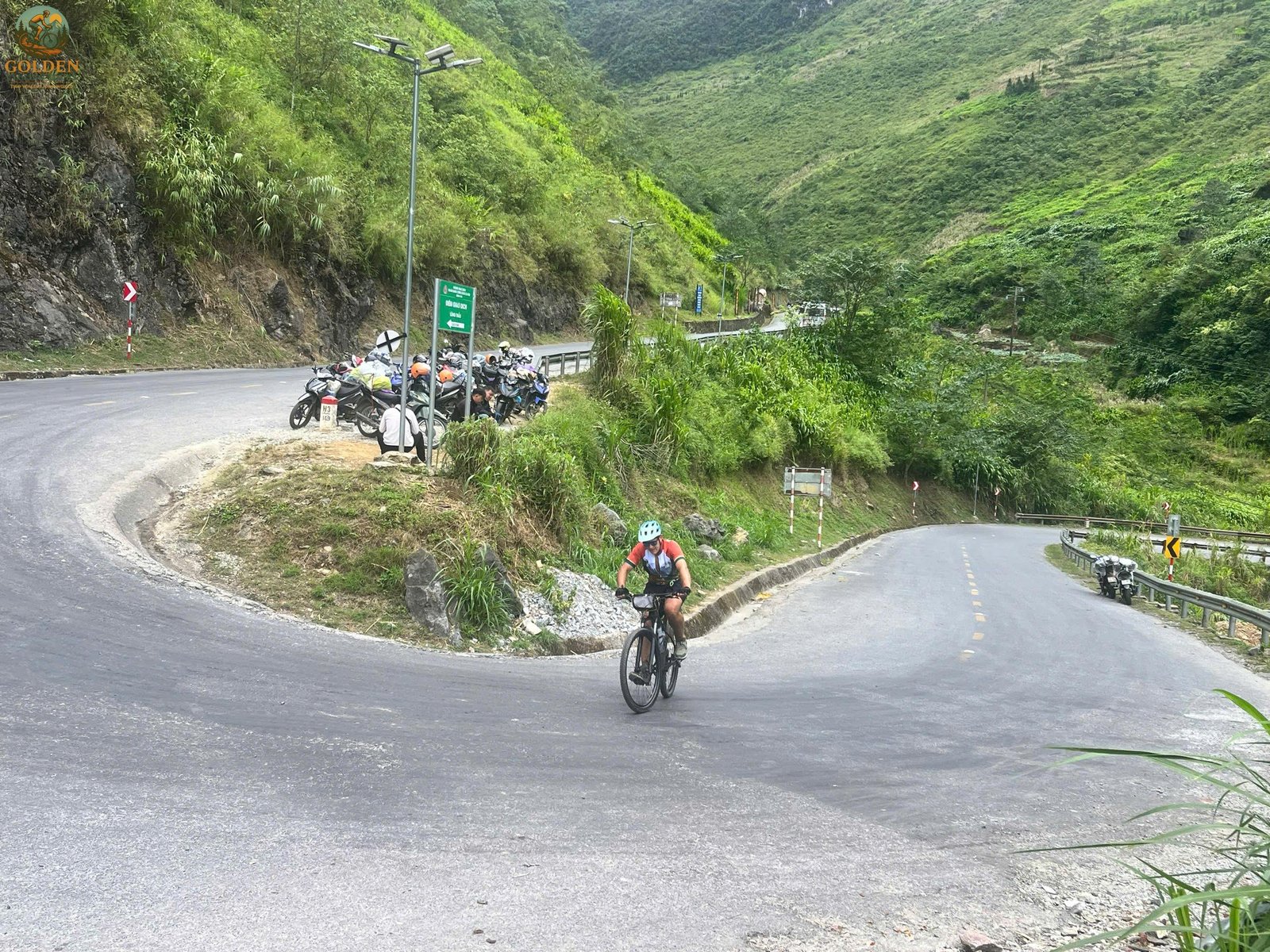
With self-guided or e-bike cycling tours in Northern Vietnam, the journey becomes more than a holiday. It becomes an intimate encounter with a landscape that rewards curiosity, a culture that welcomes respectful travelers, and a way of traveling that allows you to feel every mile rather than simply watch it pass through a vehicle window.
Whether you dream of conquering the legendary mountain roads of Ha Giang, pedaling through the peaceful rice paddies of Mai Chau, exploring the forested valleys of Pu Luong Nature Reserve, or drifting through the dramatic limestone scenery of Ninh Binh, Northern Vietnam offers a remarkable range of cycling experiences.
The question is not simply where to ride. It is how you want to experience the journey.
Do you want the independence of a self-guided cycling adventure, choosing your own pace and stopping wherever inspiration strikes? Or would you prefer an electric-assist bicycle that makes demanding climbs more manageable while preserving the freedom and pleasure of riding through the mountains?
With Golden Cycling Tours, you can explore cycling routes, regional destinations, and multi-day itineraries to find an adventure that matches your fitness, interests, available time, and travel style.
Discover your next adventure at Golden Cycling Tours.
Northern Vietnam is a region of extraordinary contrasts. In a single journey, you may travel from bustling urban streets to quiet farming villages, from humid river valleys to cool mountain passes, and from expansive rice fields to remote highland communities.
Cycling brings these contrasts within reach. You can hear the rhythm of village life, smell freshly harvested rice, pause beside a roadside tea stall, and watch the landscape change with every bend.
The best cycling holiday is not necessarily the one that covers the greatest distance. It is the one that allows you to experience the places between the destinations.
A self-guided cycling tour suits independent travelers who enjoy making their own discoveries. Depending on the selected itinerary, you may receive route information, navigation files, accommodation arrangements, bicycle rental, luggage transfers, or local support.
Instead of following a guide at every moment, you can enjoy the freedom to stop for photographs, spend longer in a village, take a leisurely lunch, or explore a quiet country lane.
Imagine cycling past a small market where baskets overflow with green vegetables, herbs, and freshly picked fruit. A local vendor smiles and gestures toward a plate of steaming rice cakes. You stop, rest your legs, and discover a delicious taste of everyday Vietnamese life.
These unscripted moments often become the memories travelers treasure most.
Self-guided cycling is particularly appealing to experienced cyclists, couples, small groups of friends, and travelers who enjoy independent exploration.
However, independence requires preparation. You should be comfortable using GPS navigation, checking route conditions, communicating basic needs, and responding to unexpected changes in weather or traffic.
Before booking, confirm exactly what the itinerary includes. Support services, accommodation, route guidance, and luggage transfers vary between tours.
An electric-assist bicycle offers another way to experience the mountains without turning every climb into a test of endurance.
The motor provides assistance as you pedal, helping reduce the effort required on hills and making longer rides more accessible to travelers with different fitness levels.
Imagine approaching a long mountain ascent. The road begins to climb, the air becomes cooler, and the valley below opens into a patchwork of fields and forest. Your legs still work, your breathing still quickens, and the scenery still has to be earned—but electric assistance helps you maintain a comfortable rhythm.
At the summit, you stop beside the road. A breeze carries the smell of vegetation after a recent shower. Far below, a river glints between limestone walls. The quiet click of the bicycle's drivetrain fades as you take a long drink of water and admire the view.
That is the appeal of an e-bike: not eliminating the adventure, but helping you enjoy more of it.
E-bike tours are particularly suitable for travelers who:
Want to explore mountainous terrain without relying entirely on physical strength.
Prefer a more comfortable pace over long distances.
Are traveling with companions who have different cycling abilities.
Want to spend more energy enjoying landscapes, villages, and cultural stops.
Are returning to cycling after a long break.
Electric assistance does not eliminate the need for balance, braking skills, road awareness, or fitness. Steep descents, rough surfaces, rain, and traffic still require care.
Battery range also depends on elevation, rider weight, terrain, assistance settings, and battery condition. Ask your operator about charging arrangements and the availability of replacement batteries or support vehicles on remote routes.
Explore regional options through Vietnam E-Bike Tours.
The two options are not mutually exclusive. Some travelers prefer a conventional bicycle and complete independence; others choose an e-bike to enjoy a demanding landscape more comfortably.
A self-guided tour describes how you travel, while an e-bike describes the bicycle you ride. Depending on the operator and itinerary, you may be able to combine both.
Choose self-guided cycling if you value navigation, independence, flexible stops, and the satisfaction of planning your own day.
Choose an e-bike if you want electric assistance on climbs, a more manageable effort over longer distances, or a comfortable way to experience mountainous terrain.
Choose a self-guided e-bike adventure, where available, if you want both independent exploration and assistance on challenging sections.
If you prefer a guide, a support vehicle, or more structured daily activities, ask about guided or private alternatives.
The most rewarding route depends on what you want to see. Some destinations are ideal for gentle countryside riding, while others offer demanding mountain climbs and dramatic highland scenery.
Ha Giang is one of Northern Vietnam's most spectacular destinations for adventurous cyclists. Its landscape is defined by steep limestone mountains, deep valleys, winding roads, and communities whose traditions remain closely connected to the surrounding land.
The road through the highlands rarely stays straight for long. One moment you are climbing between dark rock walls; the next, the landscape opens into a vast panorama of mountains layered into the distance.
The legendary Ma Pi Leng Pass is a major highlight of the wider Ha Giang Loop. Its dramatic road runs above the Nho Que River, where turquoise water winds through a deep limestone gorge.
On a clear day, the views feel almost unreal. On misty mornings, the mountains emerge gradually from the clouds, creating a quieter, more mysterious atmosphere.
Cyclists may also encounter traditional villages, hillside farms, local markets, and mountain roads that reveal a different perspective around every corner.
Why ride here?
Experience some of Vietnam's most dramatic mountain scenery.
Challenge yourself on climbs and winding highland roads.
Discover local food and ethnic minority cultures respectfully.
Enjoy photography opportunities throughout the journey.
Combine cycling with cultural visits and scenic stops.
Ha Giang is best suited to cyclists who are comfortable with mountain terrain or travelers choosing an appropriate e-bike itinerary with suitable support.
Explore Ha Giang Bike Tours.
For an extended adventure, consider the 10-Day Ha Giang Loop & Hoang Su Phi Cycling Adventure.
Another option is the 8-Day Northern Vietnam Cycling Tour: Epic Ha Giang Loop Adventure, which offers a longer format for exploring the region by bicycle.
Hoang Su Phi, in Ha Giang Province, is celebrated for its spectacular terraced landscapes. Across steep mountain slopes, rice fields form intricate patterns that change color throughout the agricultural year.
During the growing season, the terraces glow with shades of green. Around the rice planting period, water reflects the sky like hundreds of small mirrors. Near harvest, the mountains take on a golden appearance.
Cycling here is as much about observation as physical effort. You might hear water flowing through narrow irrigation channels, see farmers working along the terraces, or pass traditional houses surrounded by gardens.
The climbs can be demanding, and road conditions vary. Nevertheless, travelers seeking a deeper connection with rural Northern Vietnam may find the landscape exceptionally rewarding.
Discover routes through the Ha Giang Bike Tours collection and ask about itineraries that include Hoang Su Phi.
For travelers who love dramatic scenery and a sense of discovery, Cao Bang is an outstanding destination.
Its landscapes combine forested mountains, quiet rural roads, limestone formations, and valleys shaped by rivers and streams.
One of the region's great natural attractions is Ban Gioc Waterfall, a spectacular cascade on the border between Vietnam and China. The sound of falling water fills the surrounding valley, while mist rises above the river and green vegetation frames the scene.
Nearby, Nguom Ngao Cave offers another perspective on the region's geological wonders, with underground chambers and striking limestone formations.
Cycling in Cao Bang can combine rural exploration with visits to major attractions, although the precise route and access arrangements depend on the selected itinerary.
Highlights include:
Ban Gioc Waterfall, one of the region's most celebrated natural landmarks.
Nguom Ngao Cave, known for its limestone formations.
Mountain roads, riverside villages, and quiet countryside.
Local markets and opportunities to experience regional food.
Scenic routes through the broader Northeast Vietnam region.
Explore Cao Bang Bike Tours or browse Vietnam Northeast Bike Tours.
For a broader multi-region journey, consider the Best Vietnam Cycling Northeast Tour — 15 Days.
If your ideal cycling holiday involves quiet roads, fertile valleys, rice paddies, and cultural immersion, Mai Chau is an excellent place to begin.
Surrounded by green mountains, Mai Chau Valley offers a gentler introduction to rural cycling than the more demanding highlands of Ha Giang.
The roads lead past rice fields, bamboo groves, village homes, and small workshops. Water buffalo graze near the fields, while farmers work beneath the changing light of the morning.
The atmosphere invites you to slow down.
Stop to photograph a wooden stilt house. Listen to birdsong along a village lane. Take a break beneath the shade of a tree and watch the countryside move at its own pace.
The area is closely associated with White Thai communities, whose traditional stilt houses, weaving practices, food, and hospitality contribute to its distinctive cultural character.
Mai Chau works particularly well for couples, families with suitable cycling experience, leisure cyclists, and travelers who want to combine outdoor activity with cultural discovery.
Explore Mai Chau Bike Tours.
For a shorter adventure, discover the 4-Day Northern Vietnam Cycling: Mai Chau to Pu Luong Cycling Adventure.
Pu Luong Nature Reserve offers a more secluded atmosphere, with forested mountains, terraced fields, streams, and scattered villages.
The countryside changes with the seasons. Some slopes are covered in dense green vegetation; others reveal cultivated terraces and open views across the valley.
Traditional water wheels, where accessible, provide a glimpse into the practical ingenuity of rural communities. Their wooden structures turn steadily in flowing streams, lifting water toward fields that depend on careful irrigation.
Cycling routes in and around Pu Luong vary in difficulty. Some follow paved village roads, while others may include steep gradients or rougher surfaces. Always confirm the route and bicycle suitability before booking.
Beyond cycling, visitors can explore village paths, enjoy home-cooked meals, and spend quiet evenings listening to insects and the soft sounds of the countryside.
For travelers who prefer immersion over speed, Pu Luong is an excellent place to appreciate Northern Vietnam's slower rhythms.
Discover Pu Luong Bike Tours.
Ninh Binh provides a striking contrast to the mountain passes of the far north.
Here, towering limestone formations rise from fertile plains, rivers weave between cliffs, and rice fields spread across the valley floor. The terrain is generally more suitable for relaxed cycling than the steep roads of Ha Giang, although individual routes differ.
In Trang An, visitors can discover a remarkable landscape of limestone karsts, waterways, caves, and historic sites. The area is part of the Trang An Landscape Complex, a UNESCO World Heritage property.
Tam Coc is famous for boat journeys through river scenery framed by limestone cliffs and rice fields.
Hoa Lu Ancient Capital introduces visitors to an important period in Vietnamese history, while Bich Dong Pagoda offers a picturesque combination of architecture, hills, and greenery.
Cycling allows you to travel between these places at a more intimate pace, stopping for photographs, refreshments, or a closer look at rural life.
Explore Ninh Binh Bike Tours.
For a multi-destination e-bike holiday, consider the 6-Day Mai Chau, Pu Luong & Ninh Binh E-Bike Tour.
Ba Be Lake, within Ba Be National Park, is an appealing destination for travelers who want to combine cycling with lakeside scenery and nature-based exploration.
The surrounding landscape includes forested slopes, rural settlements, rivers, and water views that feel far removed from the pace of the capital.
Cycling in the broader area can reveal small communities and landscapes that are easy to overlook when traveling by car.
Depending on your itinerary, you may also have opportunities to explore the lake by boat or enjoy other local excursions.
Road surfaces and elevation vary, so check whether the route is appropriate for a conventional bicycle or whether electric assistance would be useful.
Discover Ba Be Lake Bike Tours.
You do not have to limit your holiday to a single destination.
A longer journey can connect several regions, revealing the changing character of Northern Vietnam as you move between mountains, valleys, villages, rivers, and historic landscapes.
For travelers who want to compare routes and trip lengths, start with Cycling Northern Vietnam or browse the complete Golden Cycling Tours collection.
The right route depends on your preferred distance, terrain, travel dates, accommodation style, and whether you want guided support or independent navigation.
Choosing the right season can make a substantial difference to your cycling experience. Northern Vietnam has varied elevations and local weather patterns, so conditions in the lowlands may differ from those in the high mountains.
Autumn is often one of the most attractive periods for cycling in Northern Vietnam.
Temperatures in many areas become more comfortable than during the hottest months, while the landscape can be especially photogenic.
In Hoang Su Phi and parts of the northern highlands, September and October may coincide with rice harvests, creating golden terraces and striking mountain scenery. Exact harvest dates vary with elevation, local farming schedules, and weather.
In the valleys around Mai Chau and Ninh Binh, the cooler conditions can make daytime riding more enjoyable.
This period is particularly appealing to photographers, active travelers, and cyclists planning multi-day journeys.
However, mountain weather remains unpredictable. Check forecasts and local road conditions before setting off.
Spring is another excellent period to explore much of Northern Vietnam.
The countryside becomes lush, fields begin to flourish, and temperatures are often suitable for outdoor activities.
Around Mai Chau, rice fields and village landscapes can look particularly vibrant. Mountain destinations may feature fresh vegetation and flowering plants, depending on elevation and local conditions.
Spring is a good option for travelers seeking countryside scenery, cultural visits, and moderate cycling days.
Early spring can still be cool, misty, or damp in higher areas, so pack adaptable layers.
Winter can bring a different atmosphere to the northern highlands.
Mountain areas, including Ha Giang, may experience cold temperatures, fog, and limited visibility. Higher elevations can feel substantially colder than Hanoi or the lowland valleys.
For experienced travelers who appreciate moody mountain scenery, winter may offer a memorable experience. However, it requires careful clothing choices and flexibility.
E-bike batteries may also perform differently in cold weather, making it important to discuss battery range and charging plans with your operator.
If clear views and comfortable cycling temperatures are your priorities, check the forecast carefully before selecting winter dates.
Summer brings intense greenery, warm temperatures, and the possibility of beautiful countryside views.
It can also bring high humidity, heavy rain, thunderstorms, and periods of difficult road conditions.
Mountain roads may become slippery, and localized flooding or landslides can affect routes. Conditions differ from place to place and can change quickly.
If you plan a summer cycling holiday, allow flexibility in your schedule, avoid riding during dangerous weather, and choose an itinerary with suitable support.
For many travelers, March to May and September to November are sensible starting points when planning a cycling holiday in Northern Vietnam.
The best month still depends on the destination and the experience you want.
Choose autumn for the possibility of golden rice terraces and comfortable riding weather. Choose spring for green landscapes and fresh countryside scenery. Consider winter for quieter travel with appropriate cold-weather preparation, or summer if you are flexible and prepared for rain.
Before booking, compare the conditions for your chosen region rather than relying on a single weather description for all of Northern Vietnam.
Choosing the right itinerary is about matching the route to your interests, not simply choosing the longest or most famous tour.
If you enjoy climbing, mountain scenery, and the satisfaction of reaching remote destinations under your own power, look into Ha Giang, Hoang Su Phi, and the broader Northeast Vietnam region.
The 10-Day Ha Giang Loop & Hoang Su Phi Cycling Adventure is a potential choice for travelers with enough time for an extended mountain journey.
For an even broader itinerary, explore the 15-Day Best Vietnam Cycling Northeast Tour.
Ask about daily elevation gain, road surfaces, vehicle support, and the availability of an e-bike before confirming your booking.
Travelers who prefer peaceful valleys, cultural experiences, and a less demanding pace may enjoy a route linking Mai Chau and Pu Luong.
The 4-Day Mai Chau to Pu Luong Cycling Adventure is a useful starting point for comparing shorter itineraries.
It offers a different kind of reward: quiet roads, village encounters, rural food, and time to appreciate the scenery without rushing.
If you want to experience several landscapes while keeping the physical effort manageable, consider an itinerary that includes Mai Chau, Pu Luong, and Ninh Binh.
The 6-Day Mai Chau, Pu Luong & Ninh Binh E-Bike Tour brings together countryside riding, natural scenery, and cultural attractions.
Confirm that the specific departure offers e-bikes and that the bicycle type is appropriate for the terrain.
Independent travelers should look for clear route descriptions, reliable navigation files, appropriate accommodation, luggage arrangements, and emergency contacts.
Some itineraries may be available on request rather than as fixed departures. Hotel availability, bicycle type, and support arrangements can vary.
Start by browsing Golden Cycling Tours and asking the team which routes are suitable for self-guided travel.
A good self-guided itinerary should give you freedom without leaving you uncertain about essential logistics.
Cycling through Northern Vietnam is a journey for the appetite as well as the legs.
The aromas of the countryside change throughout the day. Early mornings bring the fragrance of noodle broth and fresh herbs. Around lunchtime, the smell of grilled meat drifts from roadside kitchens. In the evening, rice steams in wooden houses while families gather around shared dishes.
Food varies by province, village, season, and ethnic community, but several dishes are worth seeking out.
Pho is a familiar Vietnamese dish that many travelers enjoy before a day of cycling.
A bowl typically contains rice noodles, broth, herbs, and beef or chicken, depending on the preparation. The warm broth provides a comforting start on a cool morning.
Look for busy local eateries where food is prepared fresh and served hot.
Bun cha, particularly associated with Hanoi, combines grilled pork, rice noodles, fresh herbs, and a dipping sauce.
The smoky aroma of the meat, the freshness of the herbs, and the balance of savory and tangy flavors make it a satisfying meal.
Availability varies in smaller rural communities, so consider enjoying this dish in Hanoi or larger towns along your route.
Com lam is a traditional preparation of rice cooked inside bamboo sections. It is associated with several northern mountainous communities and can be found in places such as Mai Chau, depending on local availability.
The rice may have a delicate bamboo fragrance and a pleasantly chewy texture. It is often served with grilled meat, sesame salt, or other local accompaniments.
It is a memorable way to experience the region's connection between food, forest resources, and traditional cooking.
In the northern highlands, local meals may include grilled pork, chicken, seasonal vegetables, mushrooms, tofu, rice, and regional specialties.
The exact dishes differ among communities and restaurants.
A shared meal in a village homestay can offer a valuable glimpse into local hospitality, particularly when your host explains the ingredients and how a dish is prepared.
Vietnamese coffee is an essential part of the country's café culture. Depending on the establishment, you may encounter strong drip coffee, iced coffee with condensed milk, or other regional preparations.
In the highlands, tea can also be part of everyday hospitality.
A short break at a roadside café is a good opportunity to rehydrate, check your route, and enjoy the view.
For breakfast and lunch, local restaurants and small eateries are often convenient options. In larger towns, you may find a wider choice of dishes, while remote areas offer a more limited selection.
Many village homestays provide meals when arranged in advance. Confirm whether breakfast, lunch, dinner, drinking water, and snacks are included in your particular tour package.
If you have allergies, dietary restrictions, or vegetarian requirements, communicate them before departure. Carry familiar snacks if you expect to ride through remote areas where food options may be limited.
Accommodation is part of the cycling experience. In Northern Vietnam, where you sleep can shape your understanding of the region just as much as where you ride.
A village homestay can provide a more intimate experience of rural Northern Vietnam.
Depending on the property, you may sleep in a traditional-style wooden house, a private guest room, or a simple room in a family-run establishment.
In Mai Chau and around Pu Luong, some homestays offer views of rice fields, gardens, or surrounding hills.
Evenings may be filled with the sound of insects, distant conversation, and the gentle movement of the countryside settling into night.
Standards vary, so check whether private bathrooms, air conditioning, heating, mosquito protection, and other amenities are available.
Eco-lodges and countryside retreats can offer additional comfort while keeping you close to nature.
These are attractive options for couples, travelers seeking quiet surroundings, and cyclists who appreciate a comfortable place to recover after a day outdoors.
Around Pu Luong, some properties overlook terraced fields or wooded valleys. In Ninh Binh, accommodations range from countryside bungalows to hotels near major attractions.
If sustainability matters to you, ask how a property manages water, waste, energy, and its relationship with the surrounding community rather than relying on the word “eco” alone.
Hotels are often the most practical choice in Hanoi, Ha Giang City, and other larger settlements.
They can offer convenient access to restaurants, shops, transport connections, and bicycle services.
For a multi-day cycling itinerary, ask whether your accommodation can store bicycles securely, wash cycling clothing, provide early breakfast, and accommodate luggage transfers.
Consider your comfort preferences, budget, location, and the amount of time you want to spend interacting with local communities.
For remote cycling routes, prioritize secure bicycle storage, clean facilities, suitable meals, and a practical location along the itinerary.
If your tour includes accommodation, read the itinerary carefully to confirm room categories, meal arrangements, and whether upgrades are available.
Planning the transport around a cycling holiday helps make the journey smoother and safer.
Hanoi is the main international gateway for many travelers exploring Northern Vietnam.
Depending on your itinerary, you may arrive by air and transfer to your hotel before beginning the cycling tour.
Travelers may then use a private transfer, minibus, or other arranged transport to reach destinations such as Mai Chau, Pu Luong, Ha Giang, or Cao Bang.
Travel times vary with road conditions, traffic, and the exact starting point, so allow sufficient time between international arrivals and your cycling departure.
A bicycle allows you to move slowly enough to appreciate details that are easily missed from a vehicle.
You can stop beside a rice field, explore a quiet village road, or take photographs whenever the landscape catches your attention.
Conventional bicycles suit riders who enjoy physical effort and are comfortable with the route's elevation and surface. E-bikes offer assistance on climbs and may be more comfortable for longer or hillier itineraries.
Always choose a bicycle suited to the actual terrain rather than assuming every route is appropriate for every bike.
Some guided and organized cycling tours provide support vehicles, luggage transfers, or assistance with mechanical problems. Others may offer a more independent experience.
These services should never be assumed to be included.
Before booking, ask whether your itinerary includes a support vehicle, how luggage is transported, what happens in the event of a puncture or mechanical failure, and whether an alternative transfer is available if you cannot complete a stage.
Buses and private vehicles can be useful for reaching remote regions or returning to Hanoi after your cycling adventure.
Local taxis and other transport services may be available in larger towns, but options can be limited in remote mountain communities.
If you intend to travel independently, organize essential transfers in advance, particularly when carrying a bicycle or traveling during busy periods.
Northern Vietnam's roads vary considerably. Some rural routes are quiet, while others share space with cars, motorcycles, trucks, and agricultural vehicles.
Mountain descents can include sharp bends, limited visibility, uneven surfaces, and changing weather.
Ride defensively, keep a manageable speed, use appropriate lights and a helmet, and avoid descending quickly on unfamiliar roads. Do not ride through severe weather or continue when fatigue compromises your control.
For self-guided tours, save your route offline, carry a charged phone and power bank, and know whom to contact if you need assistance.
Cycling brings you close to the everyday life of the communities you pass through. This is one of its greatest rewards, but it also creates a responsibility to travel thoughtfully.
Northern Vietnam is culturally diverse. The region includes communities such as the White Thai, Hmong, Tay, Dao, and others, each with distinct traditions, languages, clothing, food, and local histories.
These communities should not be treated as a single cultural group. Customs differ by location and family, and traditions continue to evolve.
In some communities, traditional houses have particular customs regarding entry, seating, and shared spaces.
Follow your host's guidance, remove your shoes if requested, and ask before entering private areas.
A friendly greeting, patience, and a willingness to learn can help make encounters more meaningful.
People working in fields, selling goods, or spending time with their families are not simply part of the scenery.
Ask permission before taking close-up photographs, particularly of children, private homes, ceremonies, or religious settings.
Respect a refusal without argument.
Buying food from local restaurants, purchasing appropriate handmade products, or arranging a homestay can help distribute tourism income within the community.
Fair payment matters. Avoid pressuring vendors to accept prices that do not reflect the value of their work.
Where possible, choose locally owned services and ask your operator how its trips benefit the communities along the route.
When visiting temples, pagodas, and other sacred places, dress modestly and follow posted guidance.
Keep noise low, avoid disturbing ceremonies, and ask before photographing religious activities.
Carry reusable water bottles where practical, dispose of waste responsibly, and avoid leaving food packaging along the road.
Stay on appropriate routes, respect protected areas, and do not disturb wildlife or damage vegetation for photographs.
Responsible cycling helps preserve the landscapes and cultural experiences that make Northern Vietnam special.
A carefully prepared packing list helps you enjoy the journey without carrying unnecessary weight.
Bring a well-fitting helmet, padded cycling shorts, comfortable gloves, breathable clothing, suitable cycling shoes, sunglasses, and sunscreen.
For longer rides, consider a small repair kit, spare tubes compatible with your bicycle, tire levers, and a compact pump if these are not supplied by your operator.
Confirm what equipment is included before packing duplicates.
Mountain temperatures can differ considerably from those in the lowlands.
Pack lightweight layers, a waterproof jacket, quick-drying clothing, and warmer garments for high elevations or winter departures.
In wet weather, suitable footwear and clothing can make a significant difference to comfort and safety.
For self-guided tours, download your route and relevant maps before departure.
Carry a charged phone, power bank, and any navigation device you normally use. If you rely on mobile data, check coverage and arrange a suitable connectivity plan.
For e-bike tours, follow your operator's guidance about battery charging and do not assume charging facilities are available everywhere.
Pack personal medication, basic first-aid supplies, insect repellent, hand sanitizer, and any items required for your individual needs.
Carry enough water for the planned distance, especially in hot or remote areas.
If you have particular health or mobility considerations, discuss the route's elevation, distance, and emergency arrangements with your operator before booking.
Choosing the right itinerary involves more than finding a beautiful photograph or an appealing destination name.
You need a route that suits your ability, a bicycle appropriate for the terrain, practical accommodation arrangements, and clear information about what happens if the weather changes or a mechanical problem occurs.
Golden Cycling Tours offers a range of cycling adventures and destination collections that travelers can explore when planning a Northern Vietnam holiday. Its website features conventional cycling, e-bike, multi-day, and other cycling experiences, with specific arrangements varying by tour.
Start with the main Golden Cycling Tours website to compare available itineraries.
For mountain landscapes and dramatic highland roads, browse Ha Giang Bike Tours.
For waterfall scenery and the landscapes of the northeast, explore Cao Bang Bike Tours.
For a more relaxed countryside experience, compare Mai Chau Bike Tours and Pu Luong Bike Tours.
If you prefer to explore several regions, browse Vietnam Northeast Bike Tours and Cycling Northern Vietnam.
For additional comfort and a more premium travel style, you can also investigate Vietnam Luxury Bike Tours.
Before confirming your tour, clarify:
Whether the itinerary is guided, self-guided, or available in both formats.
Whether an e-bike is available for your chosen departure.
The daily cycling distance and total elevation gain.
Road surfaces, traffic conditions, and the technical difficulty of each stage.
Whether accommodation, meals, luggage transfers, and support vehicles are included.
What happens if you need to shorten a ride or cannot complete a stage.
Whether route files, navigation assistance, and emergency contacts are provided.
The cancellation policy, payment conditions, and any seasonal surcharges.
These details help you select a journey that fits your expectations and reduces uncertainty once you arrive.
Your next adventure may begin with the quiet lanes of Mai Chau, the forests of Pu Luong, the limestone scenery of Ninh Binh, or the legendary mountain roads of Ha Giang.
Whichever route you choose, give yourself time to enjoy the small moments: the first sip of coffee at sunrise, the scent of rice fields after rain, the sound of a village market, and the sudden silence when you stop at a mountain viewpoint.
Explore the available itineraries at Golden Cycling Tours and contact the team to discuss your preferred travel dates, bicycle type, riding experience, and accommodation needs.
The road is waiting. Choose your pace, prepare your bicycle, and let Northern Vietnam reveal itself one pedal stroke at a time.
A self-guided tour describes a travel arrangement in which you navigate the route independently, using the navigation and support services provided for your itinerary. An e-bike tour describes a ride using an electrically assisted bicycle.
Depending on availability, a tour may combine both options. Always confirm the details of your selected itinerary.
Some countryside routes may be suitable for beginners with basic cycling skills, but not every Northern Vietnam route is appropriate for inexperienced riders.
The mountain roads around Ha Giang, for example, may involve significant climbs, technical descents, and changing weather. Beginners should look for easier routes, shorter distances, and appropriate support.
E-bikes can help reduce the effort required on climbs and longer rides, making certain itineraries more accessible.
However, riders still need to balance, steer, brake, and manage road conditions safely. The suitability of a tour depends on the individual's abilities and the route's difficulty.
For many itineraries, March to May and September to November are attractive periods.
Autumn can offer beautiful rice terraces and comfortable conditions, while spring often brings lush greenery and fresh countryside scenery. Weather varies by elevation and region, so check local conditions before departure.
A short countryside holiday may take four days, while a broader journey through several regions can require 10 to 15 days or more.
Your ideal duration depends on the destinations you want to visit, the daily distance you prefer, and whether you want time for cultural activities and sightseeing.
An e-bike may be suitable for certain itineraries through the Ha Giang region, but availability and route suitability must be confirmed.
Mountain climbs, long distances, remote charging opportunities, and steep descents require careful planning. Ask about battery range under climbing conditions, charging arrangements, bicycle specifications, and emergency support.
Popular options include pho, rice dishes, grilled meat, fresh vegetables, regional specialties, and meals served at village homestays.
Choose freshly prepared food, stay hydrated, and carry snacks on remote stages where restaurants may be limited. Inform your operator about dietary requirements before departure.
Accommodation options include hotels in towns, countryside lodges, and village homestays.
Mai Chau and Pu Luong are particularly appealing for travelers interested in rural accommodation, while larger towns may provide more conventional hotel facilities.
Check the amenities, meal arrangements, and bicycle storage options before booking.
Cycling can be rewarding, but road conditions and traffic vary significantly.
Mountain roads may feature sharp bends, steep descents, fog, rain, and uneven surfaces. Ride cautiously, wear a helmet, follow local advice, and avoid riding in dangerous weather.
Choose a route appropriate for your experience and confirm the available support services.
Not necessarily. Self-guided tours generally emphasize independent navigation, while the availability of a support vehicle, luggage transfer, mechanical assistance, or emergency support depends on the package.
Read the itinerary carefully and ask the operator to confirm the services included.
E-bike rental may be available as part of selected tours, but availability depends on the destination, itinerary, and departure date.
Check the bicycle specifications, frame size, battery arrangements, and whether the bike is suitable for the route's terrain before confirming your reservation.
Visit Golden Cycling Tours or browse the full tour collection.
Choose an itinerary, review the available dates and inclusions, and contact the team to confirm the bicycle type, accommodation, route difficulty, and booking conditions.
Northern Vietnam is home to diverse communities with different languages, traditions, and ways of life.
Dress respectfully, ask permission before taking photographs, follow your host's guidance, and support local businesses fairly. Approach each encounter with curiosity and respect rather than assuming every community shares the same customs.
Not necessarily. The region offers a wide range of cycling experiences, from relatively gentle valley routes to demanding mountain adventures.
The key is selecting an itinerary that matches your current fitness and riding skills. E-bikes may make some climbs more manageable, but they do not remove the need for safe riding and suitable preparation.
Rain is possible in every season, and mountain weather can change quickly.
Depending on the conditions, you may need to slow down, wait for the weather to improve, shorten the ride, or use alternative transport. Confirm the operator's weather policy and support arrangements before departure.
Cycling holidays are often remembered through a collection of small victories: reaching a summit after a demanding climb, discovering a quiet village, enjoying a well-earned meal, or watching the sunset over a valley.
When evaluating a cycling operator, look beyond promotional photographs. Read recent reviews for the specific itinerary you are considering, paying attention to bicycle quality, communication, route planning, accommodation, and the handling of unexpected situations.
The Golden Cycling Tours website publishes customer ratings and testimonials for selected trips. For example, the company's website lists feedback on cycling experiences that mentions professional service, bicycle condition, scenic routes, and the satisfaction of completing challenging climbs. Experiences and ratings differ between itineraries.
You can review an example of published feedback on this Northern Vietnam cycling tour page.
Before booking, consider the following questions:
Do reviewers describe the same tour and travel style you want?
Are the comments recent enough to reflect the current service?
Do travelers mention the route difficulty and actual riding conditions?
Are bicycle availability and support services clearly described?
How does the operator respond to problems or requests?
After your journey, consider sharing an honest review of your experience with Golden Cycling Tours. Your feedback can help future travelers choose a suitable route, prepare for local conditions, and understand what to expect from a cycling holiday in Northern Vietnam.
A useful review describes the itinerary you took, your approximate experience level, the bicycle you used, the accommodation, and the aspects of the trip you enjoyed most.
Real experiences are more valuable than generic praise because they help travelers make informed decisions.
There is a particular kind of freedom in cycling through Northern Vietnam.
It is the freedom to pause when a valley opens before you, to follow the scent of a village kitchen, to exchange a smile with a farmer in the fields, and to feel the road rise beneath your wheels as mountains gather on the horizon.
With a self-guided bicycle, you can embrace independence and the satisfaction of navigating your own adventure. With an e-bike, you can experience more of the landscape with electric assistance on demanding climbs.
From the dramatic roads of Ha Giang and the rice terraces of Hoang Su Phi to the peaceful valleys of Mai Chau, the forests of Pu Luong Nature Reserve, and the limestone landscapes of Ninh Binh, Northern Vietnam offers a cycling experience for a wide range of travel styles.
The most rewarding journey is the one that matches your pace, interests, and abilities.
Explore the routes, compare the itineraries, and start planning with Golden Cycling Tours. Your Northern Vietnam cycling adventure could be closer than you think.

.jpg "Thai Binh Vietnam Bicycle")
.jpg "Phu Tho Vietnam Cycling")
.jpg "Thai Nguyen Cycling Vietnam")
.jpg "Tuyen Quang Cycling Vietnam")
.jpg "Vinh Phuc Cycling Vietnam")
Leave a Reply
Your email address will not be published. Required fields are marked *