- Call us Via Whatsapp: +84 (0) 832 126 699
4.9 stars on our site
(15,000 reviews)
- Monday - Sunday : 08:00 - 17:00
(15,000 reviews)

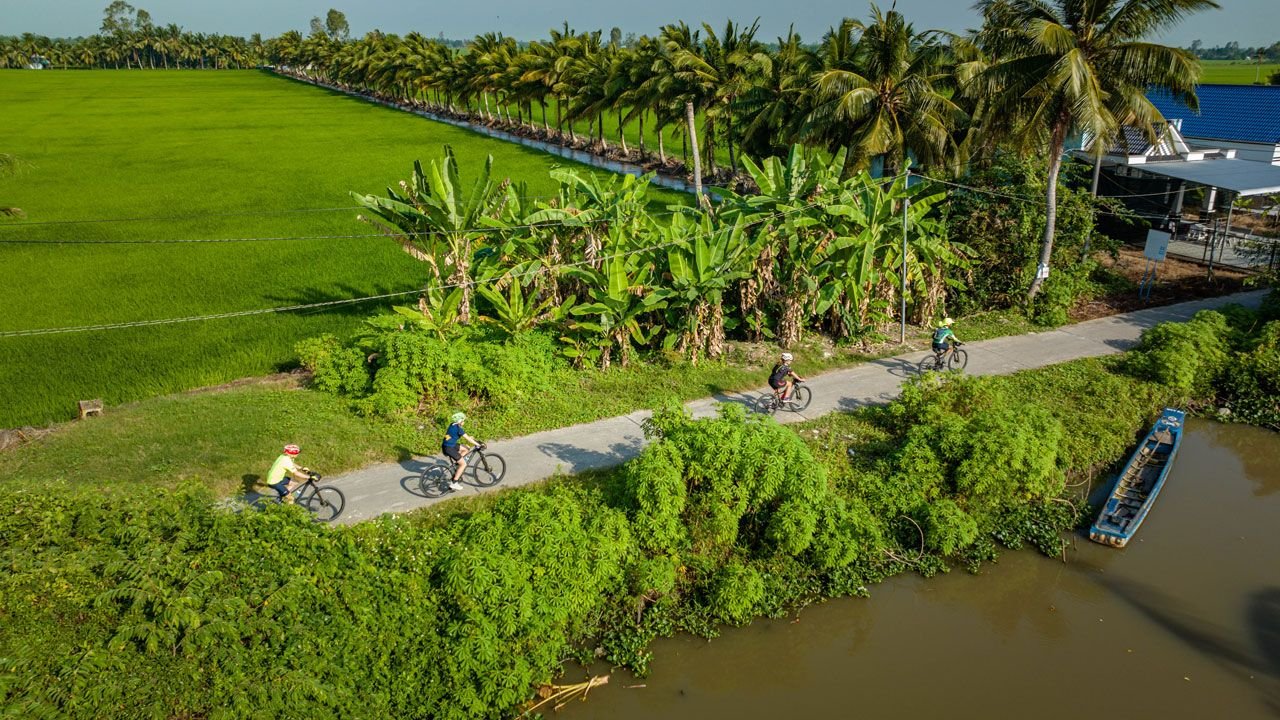
Are there self-guided cycling tours available that don’t require a guide? Absolutely. For travelers who love independence, spontaneous discoveries, and the freedom to explore at their own pace, self-guided cycling tours can be an exceptional way to experience Vietnam. Instead of following a guide in a group, you can ride through quiet countryside lanes, pause beside emerald rice fields, explore traditional villages, and decide when to stop for a steaming bowl of local noodles or a photograph of a spectacular mountain pass.
Vietnam is particularly rewarding for independent cyclists. Its landscapes change dramatically from one region to another: limestone mountains rise above winding roads in the north, terraced rice fields spill down hillsides in the highlands, and peaceful rural paths weave through villages where daily life unfolds at an unhurried rhythm.
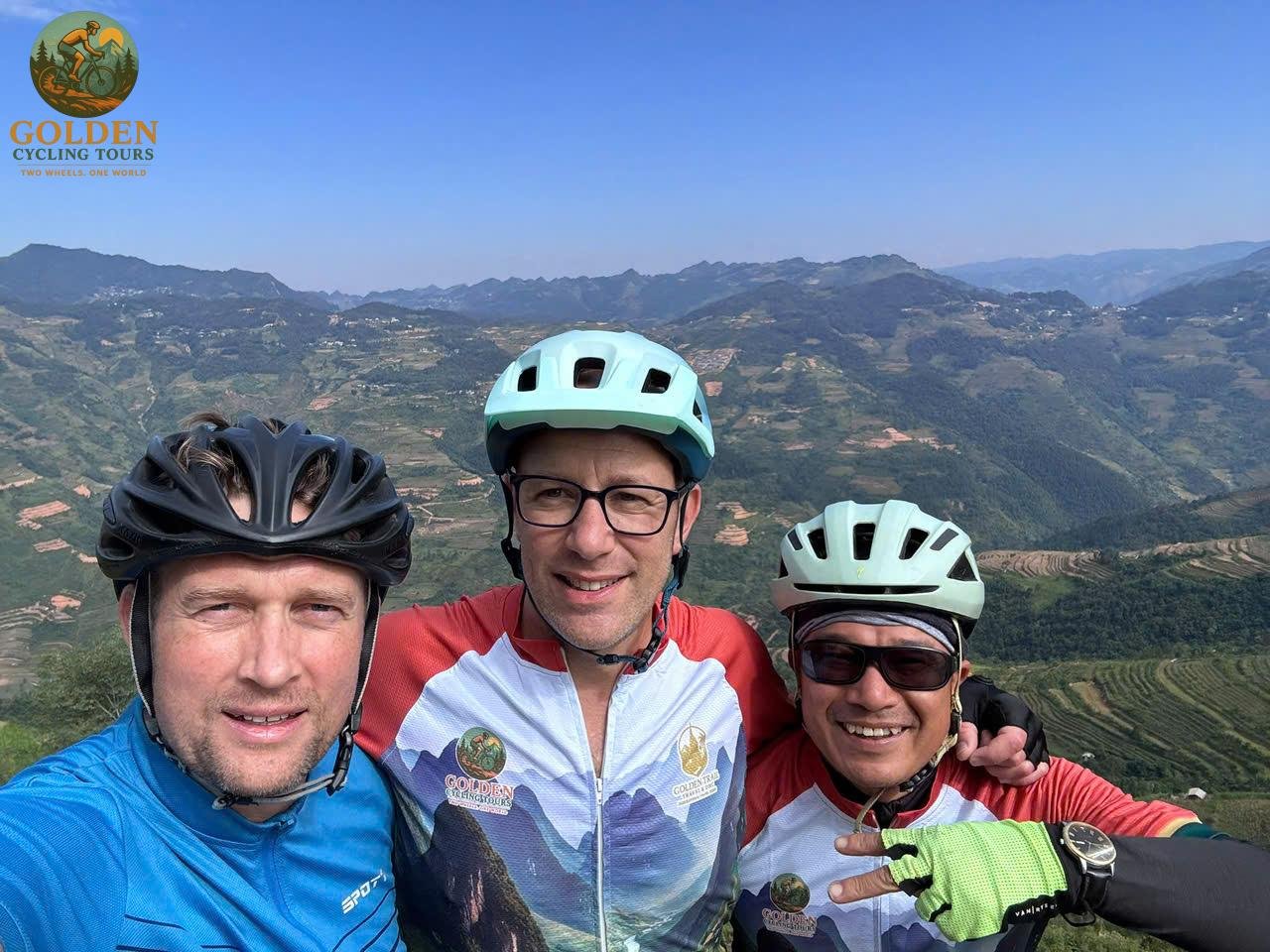
If you are searching for self-guided cycling tours in Vietnam, this guide explains how they work, what to expect, where to ride, when to travel, and how to prepare for a rewarding adventure without a guide. It also introduces cycling destinations and tour options from Golden Cycling Tours, helping you discover a route that matches your fitness, interests, and preferred level of independence.
Self-guided cycling tours allow you to explore a destination without riding alongside a professional cycling guide. Depending on the package, the tour operator may arrange accommodation, bicycle rental, route notes, maps, navigation files, luggage transfers, or emergency assistance. You then follow the route independently.
The key distinction is that self-guided does not necessarily mean unsupported. Some itineraries provide detailed logistical assistance, while others require travelers to organize almost everything themselves.
A typical self-guided cycling holiday begins with a route plan and practical information about the journey. You receive instructions on where to start, which roads to follow, where to stay, and how to reach the next overnight destination.
A well-organized package may include:
Route maps and written directions: Guidance for following the planned cycling route.
GPS navigation files: Digital tracks for a compatible cycling computer or smartphone, when offered.
Bicycle rental: A suitable bike selected for the route and terrain, subject to the package.
Accommodation arrangements: Pre-booked hotels, guesthouses, homestays, or other specified lodging.
Luggage transfers: Available on certain itineraries, but not something to assume is included.
Emergency contact information: A way to request assistance if an operational problem arises, when provided by the operator.
Local sightseeing information: Suggestions for cultural attractions, scenic stops, and places to eat.
Always check the individual tour description, included services, exclusions, and booking conditions. These details determine whether your trip is a fully independent adventure or a self-guided experience with logistical support.
The right format depends on what you want from your holiday.
Self-guided cycling tours suit independent travelers who enjoy navigation, flexible schedules, and discovering places without a group leader. You can spend extra time photographing a valley, take a leisurely lunch, or stop to explore a village when the opportunity arises.
Guided cycling tours offer a different experience. A professional guide can explain local customs, interpret the landscape, assist with navigation, and help coordinate the group. Depending on the itinerary, a support vehicle may also be available.
Neither format is universally better. The best choice depends on your cycling experience, confidence, preferred travel style, and the complexity of the route.
Vietnam is more than a destination to cross off a travel list. It is a country best experienced slowly, where the character of a place often reveals itself between the famous attractions.
On a bicycle, you are close enough to smell freshly cut grass after a rain shower, hear roosters calling from behind bamboo fences, and feel the temperature change as you leave a sunlit valley for a shaded mountain road.
Self-guided cycling makes these small discoveries part of the adventure.
One of the greatest advantages of independent cycling is the freedom to set your own rhythm.
Imagine leaving your accommodation early in the morning, when the air is cool and mist hangs above the rice paddies. Your tires whisper over the road as the countryside slowly wakes. You stop beside a field to watch farmers tending their crops, then continue toward a village where breakfast is served with fresh herbs and fragrant broth.
There is no group waiting for you to finish taking photographs. There is no need to rush past a beautiful viewpoint simply because the itinerary says it is time to leave.
That freedom is the heart of a self-guided cycling holiday.
Cycling brings you into contact with the spaces between Vietnam's major attractions.
A narrow lane might lead to a quiet riverside hamlet. A small market might offer a glimpse of local life before the tour buses arrive. A roadside stall might become the most memorable lunch of the journey.
Independent travel encourages curiosity, but it also requires sound judgment. Choose safe stopping places, respect private property, and ask permission before photographing people, homes, or cultural ceremonies.
Sight: Watch the morning light spread across the layered mountains of Ha Giang, illuminate the limestone formations of Ninh Binh, or turn the rice terraces of Hoang Su Phi into a patchwork of green and gold.
Sound: Hear the rhythmic click of your gears, birds calling from the forest, water moving through irrigation channels, and the distant hum of village life.
Smell: Breathe in the earthy scent of damp soil after rain, the sweetness of ripening rice, woodsmoke rising from a kitchen, and fresh mint crushed into a bowl of noodles.
Taste: Sample fragrant pho, smoky grilled pork, sticky rice, mountain vegetables, and seasonal fruit bought from a local market.
Touch: Feel the cool morning breeze against your face, the changing texture of asphalt and compacted gravel beneath your tires, and the satisfying warmth in your legs after a climb.
These sensations make cycling more than transportation. They turn the journey itself into the destination.
Northern Vietnam offers extraordinary variety for cyclists, from relatively gentle rural rides to demanding mountain routes. Choosing the right destination is essential because road conditions, elevation, traffic, and access to services can vary considerably.
The following destinations are worth exploring when planning a self-guided adventure. They are destination suggestions rather than a claim that every location has a currently bookable, guide-free package. Confirm the specific itinerary and support arrangements before making a reservation.
Mai Chau is an appealing starting point for travelers who want to experience rural Vietnam at a relaxed pace.
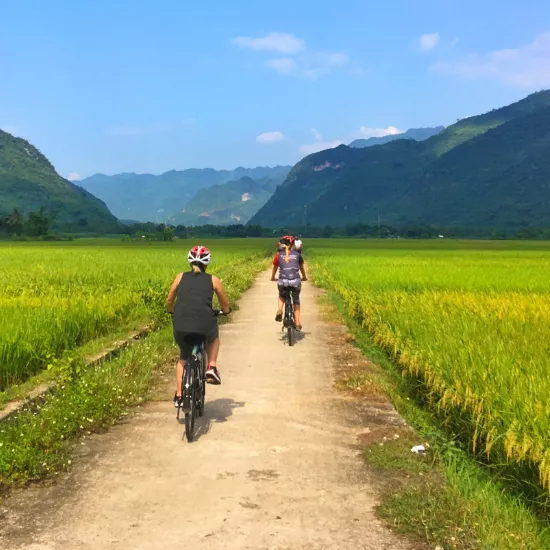
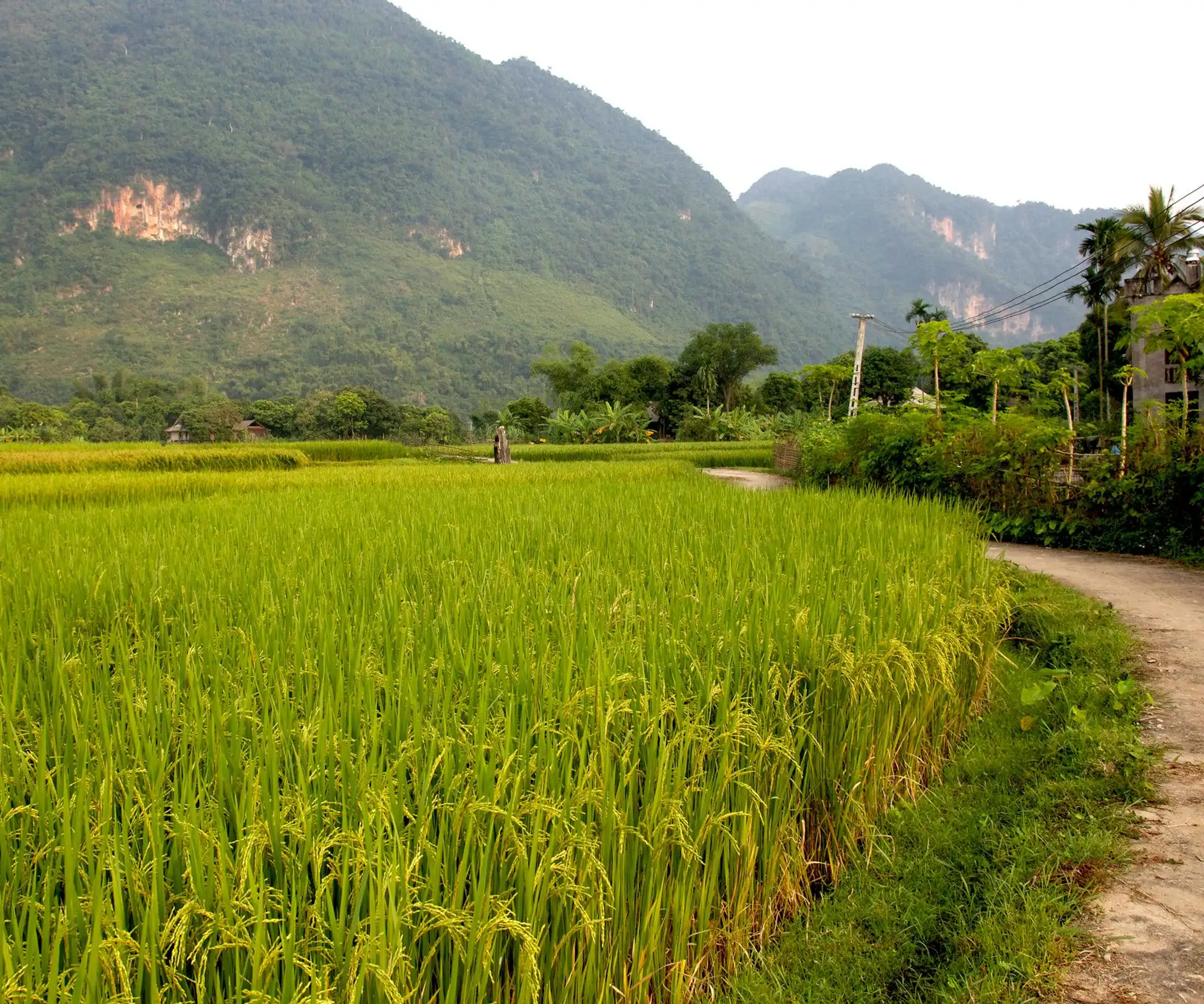
A valley of rice fields is surrounded by green hills, while villages and traditional stilt houses provide glimpses of local life. Roads and lanes through the valley can offer a rewarding combination of gentle cycling, cultural exploration, and scenic stops, although the suitability of individual routes depends on traffic and surface conditions.
Imagine pedaling past bright green paddies while water glitters between rows of young rice. A farmer walks along a raised path carrying tools, and the fragrance of cooked rice drifts from a nearby home. You slow down to photograph the mountains reflected in a flooded field, then continue toward a village where a simple meal offers a welcome pause.
What to explore in Mai Chau:
Rural lanes and rice-field landscapes.
Traditional villages and stilt-house architecture.
Local markets and regional food.
Countryside viewpoints and opportunities for photography.
For destination information, visit Mai Chau Bike Tours.
Travelers interested in a multi-day northern countryside itinerary can also explore the 4-Day Mai Chau to Pu Luong Cycling Adventure. Ask Golden Cycling Tours whether a guide-free arrangement is available for your preferred dates and what services would be included.
Pu Luong Nature Reserve is known for its forested mountains, agricultural valleys, terraced fields, and villages surrounded by greenery.
For cyclists, the region promises a sense of immersion in the countryside. Roads rise and fall between hills, and the landscape changes with the light: mist-softened ridges in the morning, bright rice fields at midday, and warm colors settling across the valley in the late afternoon.
The terrain is not uniformly easy. Some routes include steep gradients, narrow roads, uneven surfaces, or sections that become difficult after rain. Independent riders should review elevation profiles and road conditions carefully before committing to a route.
Highlights around Pu Luong include:
Rice terraces and cultivated valleys.
Traditional villages and local architecture.
Mountain viewpoints and forest scenery.
Opportunities to experience rural hospitality.
Explore Pu Luong Bike Tours for destination ideas.
If you prefer a shorter countryside escape, the 4-Day Mai Chau to Pu Luong Cycling Adventure is a useful itinerary to investigate. Confirm whether the operator can arrange independent riding and whether accommodation, luggage transfers, or other assistance can be included without a guide.
Ha Giang is one of Vietnam's most dramatic cycling regions. Towering limestone mountains, deep valleys, winding roads, and remote settlements create a landscape that feels almost cinematic.
A ride through the region can bring moments of breathtaking beauty: a ribbon of asphalt clinging to a mountainside, clouds moving across distant peaks, and tiny villages appearing between immense walls of rock.
The famous Ma Pi Leng Pass is among the region's most celebrated landmarks. Its mountain road offers extraordinary views toward the deep valley of the Nho Que River. However, this is serious mountain terrain, not a casual countryside ride. Steep gradients, sharp bends, traffic, changing weather, and exposed road sections demand confidence and careful preparation.
A self-guided ride here is best considered by experienced cyclists who are comfortable with route planning, mountain descents, mechanical basics, and making decisions when conditions change.
Recommended Ha Giang experiences include:
Mountain roads and panoramic viewpoints.
Remote villages and regional markets.
Local cuisine and highland hospitality.
Scenic sections around Ma Pi Leng Pass and the Nho Que River, subject to route selection and safe access.
Discover the region through Ha Giang Bike Tours.
You can also review the 10-Day Ha Giang Loop and Hoang Su Phi Cycling Adventure or the 8-Day Northern Vietnam Epic Ha Giang Loop Adventure. These itineraries are starting points for comparing routes and trip lengths; do not assume they are guide-free by default. Ask specifically about a self-guided version and the assistance available if you encounter a problem.
Cao Bang offers a compelling mix of mountain scenery, rural communities, and geological wonders.
The region's best-known attraction is Ban Gioc Waterfall, where water cascades over a broad limestone ledge amid lush vegetation and dramatic cliffs. The sound of falling water carries across the landscape, while the spray creates a cool contrast to the warmth of the surrounding countryside.
The wider region also offers rural roads, valleys, and scenic mountain views. Before riding independently, check the route's road surface, elevation, traffic, and access conditions. A beautiful destination does not automatically mean every connecting road is suitable for every cyclist.
Highlights to consider:
Ban Gioc Waterfall.
The limestone scenery of northern Vietnam.
Rural villages and local markets.
Photography stops along suitable countryside roads.
Learn more through Cao Bang Bike Tours.
For travelers who want to explore a broader region, Vietnam Northeast Bike Tours offers another starting point for comparing possible cycling itineraries.
Ba Be National Park offers a different atmosphere from the exposed mountain roads of Ha Giang. Forested hills, limestone cliffs, waterways, and quiet lakeside communities create a destination for travelers who appreciate nature and a slower pace.
Cycling can form part of an itinerary that combines countryside exploration with time near the water. Depending on your chosen route, you may be able to pair riding with a boat excursion or a visit to local villages.
The region's natural beauty is best enjoyed thoughtfully. Keep noise low, carry reusable water containers where practical, avoid leaving waste behind, and follow local rules in protected areas.
Explore Ba Be Lake Bike Tours for destination inspiration.
Ninh Binh is an excellent destination for travelers who want memorable scenery without committing to a high-mountain expedition.
The region's limestone karsts rise above rice fields, rivers, and rural settlements. Flat or gently rolling sections can provide a more approachable cycling experience than the steep roads of the northern highlands, although conditions vary by route and traffic.
Consider visiting Trang An Scenic Landscape Complex, a UNESCO World Heritage Site, and the spectacular viewpoints around Hang Mua. Tam Coc is also known for its river scenery and limestone formations.
Picture a quiet morning ride beside emerald fields. The road bends toward a cluster of limestone peaks, and the air carries the scent of wet earth and tropical vegetation. After a few kilometers, you pause beside a river, watching a small boat glide between steep green cliffs.
For travelers who want to combine several northern landscapes, Ninh Binh can work well as part of a broader cycling holiday.
Explore Ninh Binh Bike Tours.
You may also want to review the 6-Day Mai Chau, Pu Luong, and Ninh Binh E-Bike Tour. Because this is an e-bike itinerary, confirm whether independent riding is available and whether navigation, charging arrangements, accommodation, and luggage transport match your needs.
Golden Cycling Tours features cycling experiences across Vietnam, including northern mountain adventures, countryside routes, and e-bike holidays. The important question is not simply which destination looks beautiful, but which itinerary can accommodate your preferred level of independence.
Start with the operator's main Vietnam cycling tours collection and review the specific details of each trip.
The 15-Day Best Vietnam Cycling Northeast Tour is worth investigating if you want a longer journey through the landscapes of northern and northeastern Vietnam.
Before booking, ask whether a self-guided departure is available, how daily navigation is handled, and whether luggage is transported between overnight stops. Also confirm the expected daily distance, elevation gain, road surface, and options for changing a stage if weather or fatigue becomes an issue.
The 10-Day Ha Giang Loop and Hoang Su Phi Cycling Adventure may appeal to travelers drawn to remote mountain scenery and challenging climbs.
This kind of terrain requires more preparation than a gentle valley ride. Ask for the route profile, expected riding times, road-condition guidance, emergency procedures, and details of any available support.
The 6-Day Mai Chau, Pu Luong, and Ninh Binh E-Bike Tour is a useful option to compare if you want to cover more ground with electric assistance.
An e-bike can make rolling terrain more manageable, but it still requires safe braking, suitable handling, and careful battery planning. Confirm charging access at overnight stops and the expected range under the actual route conditions.
You can compare more destinations using these Golden Cycling Tours pages:
These links help you compare destinations and styles of travel. However, the availability of a self-guided format, specific equipment, luggage transfers, or emergency support must be verified for each itinerary before booking.
Navigation is one of the most important parts of independent cycling. A beautiful route becomes much more enjoyable when you know where you are going and have a practical backup plan if the route changes.
Before departure, download the navigation files and maps provided for your tour, if available. Save them on your cycling computer or smartphone, and download offline maps for the areas you will visit.
Do not rely exclusively on a mobile data connection. Remote mountain valleys may have weak coverage, and battery life can fall quickly when GPS navigation runs continuously.
A sensible navigation setup includes:
A compatible device with the route loaded.
Offline maps covering the entire riding area.
A fully charged power bank.
A written route summary and accommodation addresses.
Emergency contact details stored offline.
A backup way to identify the next destination.
Ask Golden Cycling Tours whether GPS files or route devices are included, available on request, or subject to an additional fee for your specific tour.
Study the day's distance, climbing, descent, and main turns before setting off.
A 50-kilometer ride on relatively flat roads can feel very different from a 50-kilometer route through steep mountain terrain. Elevation gain, road surface, heat, traffic, and the number of technical descents all affect the time and energy required.
In northern Vietnam, do not assume that the shortest route is the safest or most enjoyable. A narrow shortcut may be steep, rough, or unsuitable for your bicycle.
On a self-guided ride, you may need to deal with a puncture or a loose component without immediate help.
Depending on the bicycle and the package, useful equipment may include:
A spare tube compatible with your tires.
Tire levers and a pump.
A multitool suitable for your bicycle.
Basic puncture-repair supplies.
A small first-aid kit.
Lights and reflective equipment.
A charged phone and emergency contacts.
Check what the rental package provides before purchasing extra equipment. Golden Cycling Tours' individual tour information should be consulted for the actual bicycle, included accessories, and any repair support.
Mountain weather can change quickly. Rain may reduce visibility, make descents slippery, and affect the condition of unpaved sections. Fog can obscure bends and vehicles, while intense sunshine can increase the risk of dehydration.
Check the forecast before riding and be willing to adjust your plans. If conditions become unsafe, stop at a secure location rather than trying to complete the original route at all costs.
Sometimes, but it depends on the itinerary.
A self-guided tour may include accommodation and daily route instructions while requiring you to carry your own luggage. Another package may transfer your main bags between overnight stops, allowing you to ride with only water, snacks, a rain jacket, and basic essentials.
These are different service levels, so confirm them before paying a deposit.
Ask the operator:
Is the trip genuinely self-guided, with no guide accompanying the daily rides?
Are hotels or homestays booked in advance?
Is the main luggage transported to the next accommodation?
Is bicycle rental included in the quoted price?
Are GPS tracks, route notes, and offline navigation instructions provided?
Is there an emergency contact number during the trip?
What happens if the bicycle breaks down or the route becomes impassable?
Are airport transfers and transfers between destinations included?
Are meals, entrance fees, and boat trips included or paid separately?
Can the route be adapted for your fitness level or travel dates?
Golden Cycling Tours explains that arrangements for vehicles and other services depend on the tour proposal and itinerary. Review its Terms and Conditions and request written confirmation of exactly what is included in your chosen package.
Food is one of the great pleasures of cycling in Vietnam. Meals provide more than calories: they offer a window into regional traditions, ingredients, and the rhythms of everyday life.
A bowl of pho or another regional noodle soup can be a comforting start before a long ride. The broth is warm and aromatic, often carrying notes of ginger, herbs, and spices. Fresh greens add fragrance and texture, while rice noodles provide an accessible source of energy.
In countryside areas, breakfast may be simpler: sticky rice, eggs, bread, fruit, or a bowl of noodles from a family-run eatery.
Choose food that suits your appetite and tolerance before riding. Drink safe water and allow enough time for digestion before a demanding climb.
A small local restaurant can be one of the most memorable stops of the day.
In northern Vietnam, you may encounter grilled pork, rice dishes, tofu, seasonal vegetables, fresh herbs, and regional specialties. In some highland communities, meals may feature locally grown greens, corn-based dishes, or preparations that differ from those in major cities.
If you stop at a market or roadside eatery, look for freshly prepared food and places with good turnover. Carry a few snacks in case your route passes through an area with limited dining options.
After a day in the saddle, a relaxed dinner can feel like a reward in itself.
Imagine sitting at a wooden table while the evening air cools. Steam rises from a bowl of soup, grilled food crackles softly, and the smell of fresh herbs mingles with the faint scent of woodsmoke from nearby kitchens.
In places such as Mai Chau and Pu Luong, some accommodations offer home-style meals. Ask in advance about vegetarian options, food allergies, dietary restrictions, and meal availability, especially if you will arrive late.
Carry water and snacks for sections with few shops.
Bring small cash for rural eateries and markets.
Ask about ingredients if you have allergies.
Tell accommodation providers about dietary needs before arrival.
Avoid experimenting with unfamiliar foods immediately before a demanding ride if you have a sensitive stomach.
Accommodation is an important part of route planning, especially when you are riding without a guide.
A homestay can offer a personal introduction to the countryside. You may stay in a traditional-style house, share a home-cooked meal, or learn about the agricultural work that shapes the surrounding landscape.
Experiences vary from one property to another, so confirm room arrangements, bathroom facilities, meal options, and whether secure bicycle storage is available.
Guesthouses and locally operated hotels can be practical choices for independent cyclists. They may provide private rooms, laundry services, and easy access to restaurants or shops.
When booking, check whether the property is close to the planned route and whether there is a safe place to store your bicycle overnight.
Travelers who prefer more comfort may want to compare boutique lodges and higher-end stays, particularly around established tourism destinations.
Explore Vietnam Luxury Bike Tours for relevant travel inspiration, then verify the accommodation level offered by your selected itinerary.
For a smooth self-guided trip, establish:
The exact property name and address.
Check-in times and late-arrival arrangements.
Whether breakfast and dinner are included.
Whether luggage delivery is available.
Where to store your bicycle securely.
Whether the property can help with local transport if needed.
Do not assume that every remote village has multiple accommodation choices. During busy periods, pre-booking is often the more reliable option.
A cycling holiday often includes more than the days spent on the bicycle. You may need to travel from an international airport to the starting point, transfer between regions, or return to your departure city after the final ride.
A private transfer can be convenient when you are carrying cycling equipment or traveling with a group. Depending on the booking, the vehicle may need enough room for bicycles and luggage.
Confirm whether the transfer is included, what type of vehicle is used, and whether bicycle transport requires advance arrangements.
Buses and trains can be useful for travel between major destinations, but bicycle policies, luggage limits, schedules, and onward connections vary.
If you plan to carry your own bicycle, check the operator's rules before purchasing a ticket. A boxed bicycle may require additional space or advance permission.
Flights can save time when traveling between distant regions. However, airlines have different requirements for bicycle packing, baggage dimensions, and sports equipment fees.
If you are renting a bicycle through a tour operator, you may be able to avoid some of the complications of transporting your own bike. Compare the total cost and convenience before deciding.
Before confirming a tour, make sure you know how to reach the starting accommodation and leave the final destination. This is particularly important when the tour starts and ends in different locations.
For route-specific transfer options, ask Golden Cycling Tours to clarify what can be arranged and what you must organize independently.
A self-guided cycling holiday gives you the freedom to explore, but it also places greater responsibility on you to travel respectfully.
Vietnam's cultural life is diverse. Traditions, languages, food, clothing, and everyday customs differ between regions and communities. In northern mountain areas, you may encounter communities with distinctive local traditions and strong ties to agriculture, weaving, markets, and family life.
A quiet lane beside a house is not necessarily a public sightseeing area. Slow down when passing homes, keep noise low, and avoid entering private property without permission.
If you wish to photograph someone, ask first whenever practical. A friendly greeting and a respectful attitude often create a warmer interaction than treating a village as a backdrop.
Buying lunch at a local restaurant, staying in a locally operated guesthouse, or purchasing crafts directly from artisans can help tourism spending reach the people who live in the destination.
Choose products thoughtfully and avoid pressuring vendors for photographs or discounts.
In places such as Pu Luong Nature Reserve and Ba Be National Park, follow local conservation rules and use designated routes where required.
Carry your rubbish until you find an appropriate disposal point, avoid disturbing wildlife, and do not remove plants or natural objects from protected areas.
Rural roads are working spaces used by pedestrians, motorcycles, agricultural vehicles, and other cyclists. Ride predictably, signal when turning, and slow down near people, animals, markets, and blind bends.
In mountain regions, do not stop in the middle of a narrow road for photographs. Find a safe place well away from moving traffic before taking pictures.
Vietnam has several climatic regions, so there is no single ideal month for every cycling destination. Weather can vary between the northern mountains, the central regions, and the south.
Autumn is often an attractive period for exploring northern Vietnam, with generally milder temperatures than the hottest summer months. Conditions vary by location and year, and rain can still affect mountain roads.
This period can be appealing for trips through Ha Giang, Cao Bang, and other northern destinations. Check local forecasts and route conditions, especially if your itinerary includes high passes or remote roads.
Spring can bring fresh greenery, changing agricultural landscapes, and comfortable riding conditions on many northern routes. Temperatures rise as the season progresses, and rain or mist may still occur.
For a countryside trip through Mai Chau, Pu Luong, or Ninh Binh, spring can offer beautiful scenery and opportunities to experience rural life.
Summer brings abundant greenery, but heat, humidity, heavy rain, and thunderstorms can complicate cycling plans. In mountainous areas, wet roads and reduced visibility can make steep descents more hazardous.
If traveling in summer, plan earlier starts, carry adequate water, and maintain flexibility in your daily itinerary.
Winter can bring cool temperatures, damp conditions, and fog to northern Vietnam, especially at higher elevations. Some days may be clear and atmospheric, while others can feel cold and visibility may be limited.
Bring appropriate layers and avoid committing to exposed mountain rides without checking the forecast.
Choose travel dates based on the destination, your preferred riding conditions, and your comfort with weather uncertainty. For high-mountain routes, prioritize safe road conditions and visibility over a particular calendar month.
Before booking, ask the operator which seasonal conditions are typical for your exact itinerary and whether alternative routes or rest days are possible.
Independent cycling is rewarding when you are prepared for the distance, terrain, and practical responsibilities.
Start training several weeks before departure, adjusting the duration to your current fitness and the demands of your planned route.
Include steady rides, longer endurance sessions, and practice on hills if your itinerary includes mountain terrain. For challenging routes such as Ha Giang, preparation should account for sustained climbing and technical descents, not just total daily distance.
A hybrid bike may be suitable for many paved and moderately rough roads. A mountain bike can provide additional control on rougher surfaces, while an e-bike may help reduce the effort required on climbs.
The best bicycle depends on the actual route, tire requirements, bike fit, and your riding ability. Confirm the recommended bike type with the operator rather than choosing solely by appearance.
Useful items include:
A properly fitted helmet.
Padded cycling shorts and breathable clothing.
Lightweight rain protection.
Gloves and comfortable cycling shoes.
Sunscreen and insect repellent.
Reusable water bottles or a hydration system.
A small first-aid kit and personal medication.
A phone, power bank, and offline navigation.
Basic repair equipment appropriate to the bicycle.
Check whether your tour includes a helmet, repair kit, lights, lock, and other accessories. These items vary by package.
Set realistic riding goals. If you are tired, dehydrated, or struggling to control your bicycle on a descent, stopping or shortening the ride is a sensible decision.
Independent travel gives you flexibility, but it also means you are responsible for recognizing when conditions exceed your abilities.
Yes, provided you choose a route that matches your skills and prepare appropriately.
A beginner may be comfortable riding through Mai Chau or selected countryside routes around Ninh Binh, where suitable itineraries can offer gentler terrain. However, road traffic, route-finding, heat, and the need to handle basic problems still matter.
Remote mountain routes require more experience. A challenging ride through Ha Giang may involve long climbs, steep descents, limited services, and changing weather. Beginners should consider a guided option, a supported itinerary, or a less demanding destination if they are uncertain about riding independently.
Before booking, ask about daily distances, elevation gain, road surfaces, traffic levels, and the availability of emergency assistance. These details are more useful than a broad label such as “easy” or “moderate.”
Customer feedback can help you judge whether a cycling tour matches your expectations. However, reviews are most useful when they describe specific experiences rather than offering only a general star rating.
When researching Golden Cycling Tours, look for verified feedback about:
The accuracy and clarity of route instructions.
The quality and fit of the rental bicycles.
Whether the accommodation matched the description.
The reliability of luggage transfers, if included.
How the operator responded when a problem occurred.
Whether the actual terrain and daily distances matched the published itinerary.
Read reviews on the relevant tour page and check whether the reviewer traveled independently or with a guide. This distinction matters because navigation, mechanical assistance, and daily logistics can differ significantly between formats.
Customer review publishing note: Add a genuine, permission-cleared review from a traveler who completed the relevant tour. Do not publish invented testimonials or attribute comments to customers without verification. If no suitable review is available, use this section to explain the practical details travelers should confirm before booking.
Yes. Self-guided cycling tours are available in the wider cycling-tour market, and Golden Cycling Tours features cycling experiences and resources related to independent travel. However, not every itinerary is offered without a guide. Confirm that the specific tour and departure date support guide-free riding before booking.
You can explore destinations and itineraries through Golden Cycling Tours. Start with the main tours collection, then ask the company which options can be arranged as self-guided trips and what services are included.
Some packages provide GPS files, route notes, maps, or other navigation resources, while others may offer certain items only on request or for an additional fee. Check the specific tour's included services and confirm that the navigation format works with your device.
Luggage transfers depend on the package. Some cycling holidays include daily luggage transport; others expect you to carry your belongings. Ask the operator to confirm the arrangement in writing, including luggage limits, collection times, and what happens if you change your route.
You may need to repair a simple puncture yourself or contact the operator's designated assistance service if one is provided. Ask which tools and spare parts are supplied, whether mechanical support is available, and what costs you may be responsible for.
It can be, but safety depends on route choice, preparation, weather, traffic, navigation, and your ability to handle unexpected situations. Share your itinerary with someone you trust, carry emergency contacts, and avoid remote or technically demanding routes beyond your experience.
Often, independent cycling is possible for solo travelers, but availability, accommodation supplements, bicycle rental, and transfer costs vary. Confirm the minimum booking requirements and any single-traveler surcharge before reserving.
Some itineraries offer e-bikes, but availability depends on the specific tour. Review Vietnam E-Bike Tours and ask about battery range, charging access, spare batteries if relevant, and whether the route is suitable for independent e-bike riding.
For many travelers, a suitable route around Mai Chau or Ninh Binh may be a more approachable introduction than a demanding mountain loop. The best choice depends on your cycling experience, comfort with traffic, fitness, and preferred scenery.
Spring and autumn are often attractive seasons for northern cycling, although conditions vary by destination and year. Check the local forecast and road conditions before departure, especially for high-altitude routes and mountain passes.
Both options can work. Renting may simplify transport logistics and make it easier to obtain a bicycle suited to the route. Bringing your own bike can be worthwhile if you need a specific fit or setup, but you should confirm airline rules and transfer arrangements in advance.
Look for explicit wording confirming that no guide accompanies the daily rides. Then check how navigation, accommodation, luggage transfers, mechanical problems, and emergencies are handled. Ask the operator to confirm any unclear details in writing.
A self-guided cycling holiday offers something increasingly valuable: the chance to travel at your own pace and experience a place beyond its most famous photographs.
In Mai Chau, you can ride beside rice fields and discover village life. In Pu Luong, forested hills and terraced valleys create a quieter rhythm. In Ninh Binh, limestone peaks rise above waterways and rural roads. For experienced cyclists, Ha Giang and Cao Bang offer a more demanding world of mountain passes, remote settlements, and spectacular views.
The best trip is not necessarily the longest or the most difficult. It is the one that matches your ability, interests, and appetite for independence.
Explore Golden Cycling Tours, compare the available cycling itineraries, and ask about self-guided departures, navigation, bicycle rental, luggage transport, accommodation, and emergency assistance before booking. With the right route and preparation, you can enjoy the freedom of independent cycling while making informed decisions about the support you need.
Your next great cycling memory might begin with a quiet road, a distant mountain ridge, and the simple sound of your tires rolling into the morning.

Leave a Reply
Your email address will not be published. Required fields are marked *