- Call us Via Whatsapp: +84 (0) 832 126 699
4.9 stars on our site
(15,000 reviews)
- Monday - Sunday : 08:00 - 17:00
(15,000 reviews)

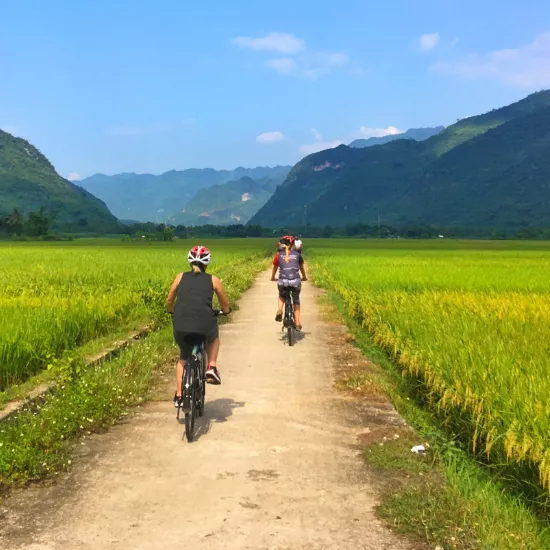
Imagine waking up in a peaceful Vietnamese village as the first light of dawn spills across emerald rice fields. Roosters call from behind wooden houses, the aroma of freshly brewed Vietnamese coffee drifts through the cool morning air, and somewhere nearby, a farmer begins work in the fields. You step outside, check your bicycle, tighten your helmet, and open your route map.
There is no group waiting for you. No guide setting the pace. No fixed schedule telling you when to stop.
Today, the road belongs to you.
You pedal past narrow village lanes, follow quiet roads between limestone mountains, pause whenever a spectacular view catches your eye, and discover small cafés that might never appear in a conventional travel itinerary. Every turn becomes a choice, every stop an opportunity, and every kilometre a new encounter with Vietnam.
But can I do a self-guided cycling tour in Vietnam?
Absolutely—Vietnam can be a rewarding destination for independent cycling, particularly if you choose your route carefully and prepare for the country's traffic, weather, terrain, and local conditions. Rural destinations such as Mai Chau, Ninh Binh, and selected routes around Pu Luong Nature Reserve can offer wonderful opportunities for independent exploration. More remote mountain regions, including Ha Giang and Cao Bang, can also be explored by bicycle, but they demand more preparation, stronger navigation skills, and careful attention to road safety.
There is one important distinction: cycling independently does not necessarily mean booking a tour marketed as self-guided. Some tour operators provide guided experiences, while others may offer independent arrangements or customised services. Always confirm the format of a specific itinerary before booking.
In this comprehensive guide, we will explain how to plan a self-guided cycling tour in Vietnam, where to ride, when to travel, what to eat, where to stay, and how to enjoy the freedom of independent cycling without overlooking safety. We will also introduce cycling destinations and itineraries from Golden Cycling Tours to help you compare your options.
Yes. You can organise a self-guided cycling tour in Vietnam, either by arranging the trip independently or by finding a provider that explicitly offers a self-guided package.
A self-guided cycling trip usually means that you ride without a cycling guide accompanying you throughout the journey. You may navigate using a smartphone, GPS device, route notes, or a pre-planned itinerary. Depending on your arrangements, you might book accommodation, transport, and bicycle rental yourself or purchase some of these services separately.
The defining feature is that you manage your own ride rather than relying on a guide to lead the group.
A self-guided cycling tour can include several different arrangements:
Independent travel: You organise your own bicycle, route, accommodation, meals, and transport.
Pre-planned self-guided package: A provider may arrange accommodation, route information, and other agreed services while you ride independently.
Independent riding with logistical support: Certain arrangements may include luggage transfers, emergency contacts, or other assistance without a guide riding alongside you.
Partially supported cycling: You ride independently on selected days but receive a guide, driver, or other support for particular sections.
These formats are not interchangeable. Before booking, establish exactly what is included, who is responsible for navigation, and what assistance is available if you encounter a mechanical problem or need to change your plans.
Vietnam offers remarkable diversity for bicycle travel. You can pedal beside rice paddies, follow rural roads through traditional villages, explore limestone landscapes, or challenge yourself on mountain passes in the northern highlands.
The country also has practical advantages for travellers, including a wide range of accommodation, local food options, and transport connections between many popular destinations.
However, suitability varies considerably by region.
Easier rural exploration: Selected routes around Mai Chau and Ninh Binh can suit recreational cyclists who prefer shorter distances and less demanding terrain.
Mixed-terrain adventure: Routes around Pu Luong Nature Reserve may combine paved roads, rolling hills, and rougher sections.
Advanced mountain cycling: Ha Giang, Hoang Su Phi, and parts of Cao Bang involve substantial climbing, remote roads, and more complicated logistical planning.
Long-distance regional travel: Multi-day journeys across northern Vietnam require careful planning for accommodation, food, navigation, bicycle maintenance, and weather.
For a broad overview of available destinations, explore Cycling Northern Vietnam and the Golden Cycling Tours website.
Choosing between independent cycling and a guided tour is one of the most important decisions you will make.
Both formats can be rewarding. The right choice depends on your experience, preferred level of independence, language confidence, and willingness to handle unexpected situations.
A self-guided cycling tour gives you greater control over your daily experience.
You can stop to photograph a water buffalo standing beside a rice field, spend an extra hour in a village café, or take a quiet break beneath a tree when the midday heat becomes intense. If a scenic detour catches your attention, you can explore it when the route and conditions allow.
You can also choose your own rhythm. Strong riders may prefer longer days, while travellers who prioritise photography and cultural encounters may prefer shorter stages.
However, that freedom comes with responsibility. You must understand the route, manage your time, assess road conditions, and make decisions when something goes wrong.
On a guided cycling tour, a guide accompanies the group and helps coordinate the experience.
Depending on the package, a guided tour may offer local knowledge, navigation assistance, cultural interpretation, route planning, and support with practical arrangements.
This can be especially valuable in remote mountain areas where mobile coverage may be unreliable or where weather and road conditions change quickly.
A guide can also help you discover the meaning behind what you see: the design of a traditional house, the seasonal rhythms of rice cultivation, or the significance of a local market.
Consider a self-guided trip if you:
Have previous experience planning independent cycling holidays.
Are comfortable using GPS navigation and offline maps.
Can repair a puncture and handle basic bicycle problems.
Prefer making your own decisions about pace and sightseeing.
Can communicate your needs and respond calmly to unexpected situations.
Consider a guided or supported trip if you:
Are unfamiliar with Vietnamese roads.
Want local cultural interpretation.
Prefer help with navigation and daily logistics.
Plan to ride in remote mountainous areas.
Would feel more comfortable with an established support plan.
Neither option is automatically better. A carefully planned independent trip can be wonderful, while a guided tour can provide greater peace of mind.
Vietnam is not one uniform cycling destination. The landscape, traffic, road surface, and level of difficulty change dramatically between regions.
For many first-time independent cyclists, the best strategy is to start with a manageable destination and build experience before attempting a demanding mountain expedition.
Mai Chau is one of the most appealing places to consider if you want to experience rural northern Vietnam at a relaxed pace.
<text> </text>
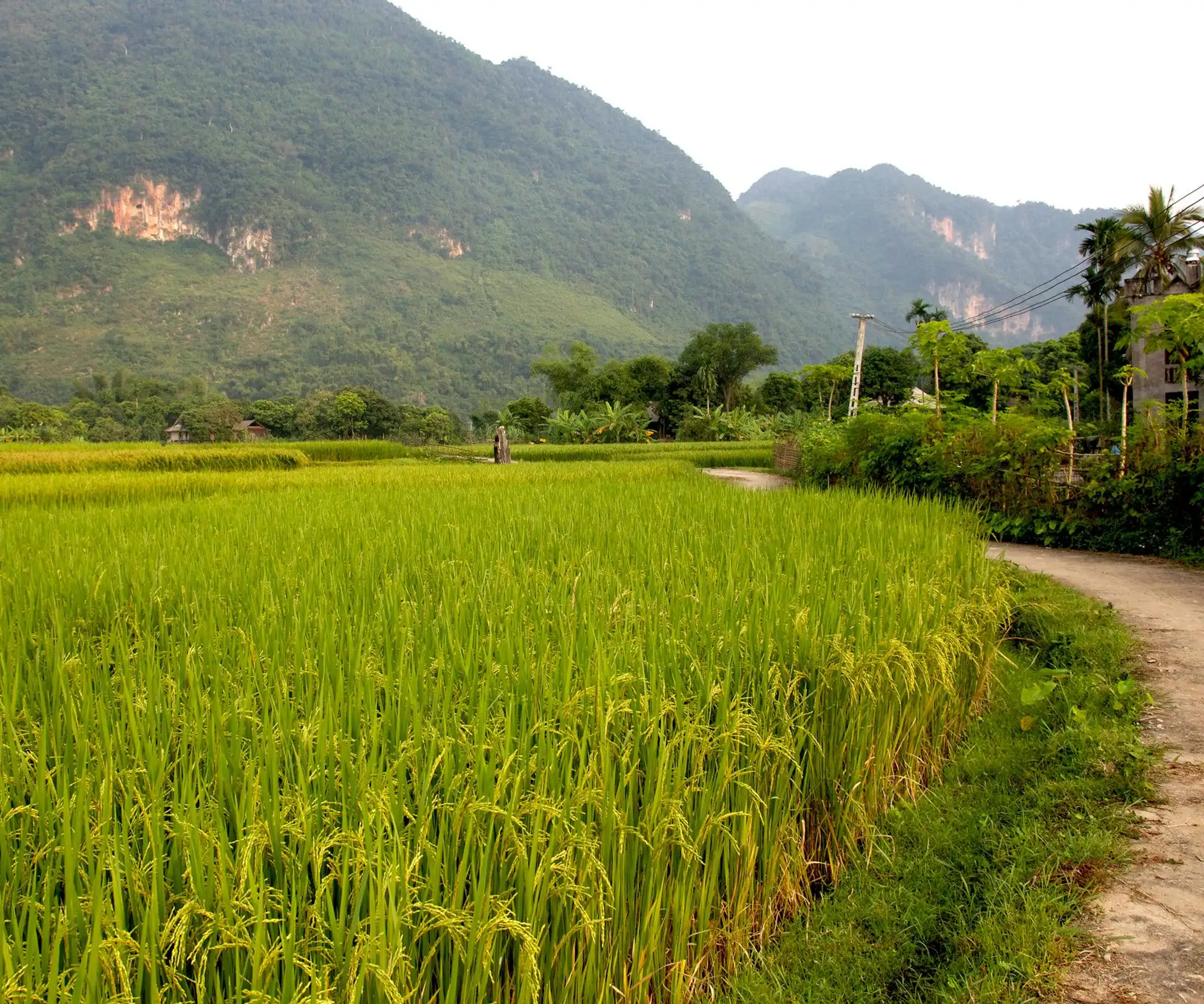
The valley opens beneath green mountains, with rice fields spreading between traditional villages and narrow roads winding through the countryside. In the early morning, the air may feel cool and slightly damp. You hear birds calling from the trees, bicycles rolling along village lanes, and the distant hum of daily farm work.
As you ride, the scenery changes subtly. One moment you are passing emerald paddies bordered by low embankments; the next, you are pedalling past wooden houses, roadside gardens, and small shops selling drinks and snacks.
This landscape can be ideal for independent exploration, provided you choose a suitable route and remain aware of local traffic.
Mai Chau Valley: A beautiful setting for countryside cycling and photography.
Lac Village: A well-known village where visitors can experience local crafts, homestays, and cultural traditions.
Pom Coong Village: Another popular area for discovering village life and traditional architecture.
Surrounding rice fields and rural lanes: Particularly appealing during periods when the fields are green or golden.
Selected routes around the valley can be suitable for recreational cyclists, including travellers who are new to multi-day cycling. However, longer excursions into the surrounding hills can be more demanding.
For route ideas, visit Mai Chau Bike Tours.
If you would rather compare a planned itinerary before deciding whether to travel independently, consider the 4-Day Northern Vietnam Cycling Adventure from Mai Chau to Pu Luong. Confirm directly whether the current package is guided, self-guided, or available in a customised format.
Pu Luong Nature Reserve offers a different atmosphere from the open valley of Mai Chau.
Here, the landscape becomes more layered. Forested hills rise above terraced fields, streams pass through green valleys, and villages sit quietly along winding roads. On a cool morning, mist may cling to the slopes while sunlight filters through the trees.
Cycling can feel wonderfully immersive. The road narrows, the gradient changes, and the sounds of traffic gradually give way to birdsong, flowing water, and the soft movement of leaves in the wind.
However, Pu Luong should not automatically be considered easy. Some routes involve steep gradients, uneven surfaces, and isolated sections. A self-guided cyclist should understand the route profile and confirm road conditions before setting out.
Pu Luong Nature Reserve: A landscape of forest, agricultural terraces, and rural settlements.
Ban Don: A village commonly visited for its valley scenery and accommodation.
Terraced rice fields: Particularly attractive when the crops are green or approaching harvest.
Traditional villages and water-powered irrigation features: Opportunities to observe aspects of rural life, where accessible.
Pu Luong can suit travellers who enjoy rural scenery and are comfortable with rolling terrain. Choose shorter stages if you are not accustomed to climbing.
Explore Pu Luong Bike Tours and compare the 4-Day Mai Chau to Pu Luong Cycling Adventure.
Ninh Binh is an excellent destination to consider if you want a combination of countryside cycling, cultural attractions, and dramatic limestone scenery.
<text> </text>
The landscape is strikingly cinematic. Towering karst formations rise from flat green fields, rivers wind between limestone walls, and small roads pass through quiet villages. The air may carry the smell of damp earth after rain, fresh grass from the fields, and the fragrance of food drifting from a roadside kitchen.
Some routes are relatively flat and can be more approachable than the mountain roads of northern Ha Giang. Nevertheless, traffic, heat, route selection, and the distance between attractions still matter.
Trang An Landscape Complex: A UNESCO World Heritage Site known for its limestone karsts, waterways, and cultural history.
Tam Coc: A famous landscape of rice fields, river scenery, and towering rock formations.
Mua Cave viewpoint: Known for its panoramic views, reached by climbing a long flight of steps rather than by bicycle alone.
Hoa Lu Ancient Capital: A historic site associated with Vietnam's early independent dynasties.
Bich Dong Pagoda: A picturesque temple complex set among limestone scenery.
Plan your bicycle route around opening times, walking visits, and boat excursions. Do not attempt to cycle directly to every attraction if access is restricted or unsuitable.
Selected routes can be an appealing choice for beginners and leisure cyclists, especially if you stay in one base and explore nearby attractions in stages.
Discover Ninh Binh Bike Tours or consider the 12-Day North Vietnam Cycling Adventure from Hanoi to Ninh Binh.
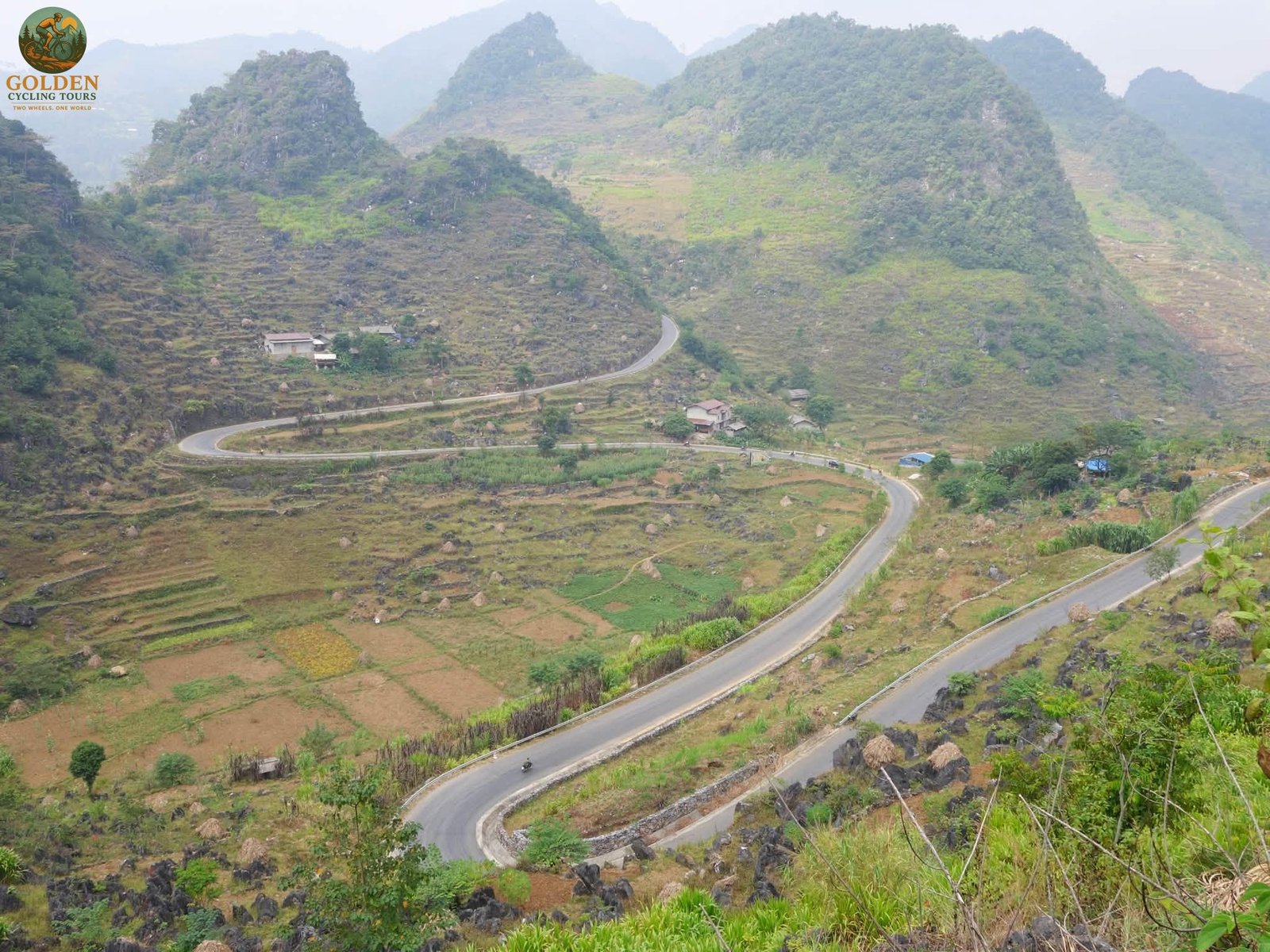
Ha Giang is one of the most dramatic cycling destinations in Vietnam, but it requires a more serious approach to independent travel.
<text> </text>
Imagine climbing a mountain road as limestone walls rise on either side. Your breathing deepens, your legs push steadily against the pedals, and the chain clicks as you shift into a lower gear. At every bend, another panorama appears: serrated ridges, deep valleys, stone villages, and narrow roads carved into the mountainside.
The reward can be spectacular. The physical demands, however, are equally real.
Dong Van Karst Plateau UNESCO Global Geopark: A remarkable landscape of limestone mountains and traditional settlements.
Ma Pi Leng Pass: A legendary mountain road with dramatic views over the Nho Que River.
Dong Van Old Quarter: A historic town offering architecture, markets, and opportunities to experience local life.
Lung Cu Flag Tower: A prominent landmark in Vietnam's northernmost region.
Du Gia: A quieter valley area known for rural scenery and village life.
The classic Ha Giang Loop is largely paved, but road surfaces, gradients, traffic, and weather can vary. Steep climbs, blind bends, fog, and remote sections make navigation and safety planning particularly important.
It can be suitable for experienced, well-prepared cyclists who understand mountain riding and can manage their own logistics. However, it is generally not the easiest place to learn independent cycling in Vietnam.
Before departure, plan daily distances carefully, download offline maps, identify accommodation and food stops, and establish an emergency plan. Do not rely exclusively on mobile data or assume that help will always be close by.
Explore Ha Giang Bike Tours.
For a longer mountain expedition, review the 10-Day Ha Giang Loop and Hoang Su Phi Cycling Adventure and the 8-Day Epic Ha Giang Loop Adventure. These are tour options to investigate, not a guarantee that independent self-guided arrangements are included.
Cao Bang is another compelling destination for travellers who want to explore the northern mountains.
<text> </text>
The scenery includes green valleys, limestone formations, rural settlements, and roads that weave through a quieter part of northern Vietnam. The journey can feel remote and peaceful, particularly when you leave the busier towns behind.
Ban Gioc Waterfall: A spectacular waterfall on the Vietnam–China border.
Nguom Ngao Cave: A limestone cave known for its impressive formations.
Thang Hen Lakes: A scenic group of lakes surrounded by limestone landscapes.
Pac Bo Historical Site: An important site associated with Ho Chi Minh's revolutionary history.
Distances between attractions can be significant, and mountain routes may involve challenging climbs. Independent cyclists should check road conditions and allow sufficient time for sightseeing.
Explore Cao Bang Bike Tours.
Ba Be Lake offers a quieter side of northern Vietnam, with forested hills, waterways, and villages that invite a slower style of exploration.
Cycling around the region can be rewarding for travellers who value natural scenery and cultural encounters more than speed. However, not every road is flat, and the difficulty depends on the route you choose.
Consider the distances between villages, food stops, accommodation, and attractions before committing to a full day of riding.
Explore Ba Be Lake Bike Tours for regional cycling ideas.
Hoang Su Phi is known for its striking terraced rice fields and mountain scenery.
Depending on the season, hillsides may glow with fresh green crops or warm golden tones. Villages and cultivated slopes reveal the relationship between local communities and the mountainous landscape.
Cycling here can be physically demanding because of the terrain and the distances between settlements. It is best approached with a realistic route plan and appropriate experience.
If you want to combine Ha Giang with this region, investigate the 10-Day Ha Giang Loop and Hoang Su Phi Cycling Adventure.
A successful independent cycling trip begins long before you turn the pedals.
The key is to plan enough to stay safe while leaving room for the spontaneous discoveries that make independent travel special.
Do not choose a route based only on beautiful photographs or the number of kilometres listed in a travel guide.
Consider the total distance, elevation gain, road surface, traffic, weather, and number of consecutive riding days. A 40-kilometre mountain route can be more demanding than a much longer ride on flat roads.
For your first independent cycling holiday, consider a base such as Mai Chau or Ninh Binh. More experienced cyclists can investigate longer routes in Ha Giang, Cao Bang, and Hoang Su Phi.
Your daily distance should account for more than the time spent pedalling.
Allow time for meals, photographs, sightseeing, mechanical problems, and unexpected weather. If you plan to visit several attractions, shorten the riding stage accordingly.
For recreational cyclists, a day of 25–45 kilometres on relatively gentle terrain may leave room for sightseeing. Mountain stages can require much more time even over shorter distances.
Treat these numbers as planning examples, not universal recommendations.
Mobile data and GPS navigation are not the same thing. Your phone may still determine its position without a reliable internet connection, provided you have downloaded suitable offline maps and the relevant map data.
Before leaving:
Download maps for the entire route.
Save accommodation locations and key junctions.
Mark fuel stations, shops, pharmacies, and likely food stops where relevant.
Carry a charging cable and power bank.
Keep a backup navigation method, such as a second device or printed route notes.
Share your planned itinerary with someone you trust.
Check the route carefully before following a suggested detour. A navigation app may recommend a road that is steep, rough, unsuitable for bicycles, or closed to through traffic.
Accommodation is easier to find in major tourist areas than in remote mountain villages.
During busy periods, festivals, or holidays, advance booking can prevent you from reaching a destination only to discover that suitable rooms are unavailable.
Confirm check-in times, meal arrangements, bicycle storage, and whether the property is actually located near your intended route.
Do not assume that every village will have a restaurant open when you arrive.
Carry enough water for the next section of your route and identify possible refilling points. In remote areas, bring snacks that can sustain you if your planned lunch stop is closed.
A good independent cyclist plans for small delays rather than expecting every part of the day to run perfectly.
Some cycling routes form a loop, while others begin and end in different towns.
Check how you will reach the starting point, whether your bicycle can be transported safely, and how you will return to Hanoi or continue to your next destination.
Confirm luggage capacity, bicycle-loading arrangements, and departure times with your transport provider.
The right bicycle can make a major difference to comfort, safety, and how much you enjoy the route.
A mountain bike can be a good choice for rougher roads, broken surfaces, and mixed-terrain routes. Wider tires and stable handling can improve comfort on uneven sections.
It may be particularly useful for more demanding routes around the northern mountains.
A gravel bike can be well suited to predominantly paved roads and suitable hard-packed surfaces. Its efficient riding position may appeal to cyclists who want to cover longer distances.
Choose tires with adequate width and grip for the actual road conditions. Do not assume every rural road is smooth or that a gravel bike is appropriate for every unpaved track.
A touring bike can be practical for travellers carrying their own luggage.
A stable frame, reliable components, and suitable gearing are important when riding for several days with extra weight.
An e-bike can reduce the effort required on climbs and help recreational riders manage longer days.
However, you must consider battery range, charging opportunities, total bicycle weight, and the consequences of running out of assistance in a remote area.
Explore Vietnam E-Bike Tours if you want to compare e-bike travel options. Confirm whether a specific itinerary can be completed independently and what equipment or support is provided.
Vietnam stretches across several climate zones, so the best cycling season depends on your destination.
Northern Vietnam's mountains can be cool, misty, and wet at certain times of year, while lower valleys may feel hot and humid. Central and southern Vietnam have different seasonal patterns.
Spring is often a good period to explore destinations such as Mai Chau, Pu Luong, and selected routes in the northern mountains.
Temperatures can be comfortable for riding, and the countryside often looks fresh and green. However, fog, rain, and changing temperatures can still affect mountain routes.
Autumn is another useful period to consider for northern Vietnam.
In some areas, rice terraces turn golden as the harvest approaches. Conditions can be favourable for cycling, although rain and fog remain possible and temperatures may fall later in the season.
This period is particularly attractive for travellers who want to combine cycling with landscape photography.
Summer can bring lush vegetation and vivid green fields. However, heat, humidity, and heavy rain can make cycling more difficult.
Wet roads, poor visibility, and the risk of landslides may affect routes in mountainous regions. Independent travellers should check local conditions carefully and remain flexible.
Winter can bring beautiful clear days, but northern mountain destinations may become cold, particularly at higher elevations and early in the morning.
Fog and low cloud can reduce visibility, and wet or cold conditions may make descending uncomfortable.
Bring appropriate layers and avoid riding through poor visibility simply to maintain your schedule.
For many northern Vietnam cycling trips, March to May and September to November are sensible starting points for planning. These are general seasonal guidelines rather than guarantees of ideal weather.
Choose your dates based on the destination, your tolerance for heat and cold, and the specific route. Check forecasts and local road conditions close to departure.
For more regional inspiration, visit Vietnam Northeast Bike Tours.
One of the great pleasures of independent cycling is discovering Vietnamese food at your own pace.
A small roadside restaurant may offer a more memorable lunch than a carefully selected tourist venue. You may smell garlic sizzling in a hot pan, hear bowls and chopsticks clattering in the kitchen, and watch steam rise from a bowl of noodle soup as you sit down after a warm morning ride.
Pho: Vietnam's famous noodle soup, often served with herbs and condiments.
Bun cha: Grilled pork with noodles, fresh herbs, and dipping sauce, especially associated with Hanoi.
Banh mi: A convenient bread roll filled with a variety of savoury ingredients, useful for a quick stop.
Com rang: Fried rice that can make a practical meal when you need carbohydrates after riding.
Local rice dishes: Common in rural areas and often served with vegetables, meat, fish, or tofu.
Regional specialities: Dishes vary by destination. In northern mountain areas, you may encounter local preparations of pork, buffalo, vegetables, corn, and herbs.
In places such as Mai Chau, Ninh Binh, and larger towns in Ha Giang, you can generally find restaurants, cafés, or local eateries, although opening hours and choice vary.
In more remote areas, food options may be limited. Check whether your accommodation provides dinner and breakfast, and identify likely stops before leaving each morning.
Carry snacks in case a restaurant is closed or the distance between villages is greater than expected.
Drink safe water and use reputable refill points. Choose food that is freshly prepared and served hot when possible. If you have food allergies or dietary restrictions, learn how to communicate them and tell accommodation providers in advance.
Avoid experimenting with unfamiliar foods immediately before a very demanding ride if you know your stomach is sensitive.
Accommodation shapes both the atmosphere of your trip and your ability to recover between rides.
A homestay can offer a more personal view of rural Vietnam.
You might sleep in a traditional wooden house, share dinner with other travellers, or wake to the sound of farm animals and birds outside. Some properties offer simple shared facilities, while others provide private rooms and more modern amenities.
Facilities vary, so confirm bathroom arrangements, privacy, heating or cooling, and meal availability before booking.
Guesthouses and small hotels are useful options in towns and popular tourist destinations.
They can provide private rooms, more predictable facilities, and convenient access to restaurants and shops.
In mountain regions, choose accommodation with a realistic relationship to your daily route. An inexpensive room far from your intended destination may create an unnecessarily long day.
In destinations such as Pu Luong and Mai Chau, selected eco-lodges and retreats offer scenic surroundings and a quieter atmosphere.
These can be appealing if you want to combine cycling with rest, photography, and cultural exploration.
Explore Vietnam Luxury Bike Tours for cycling-related travel ideas, but verify the accommodation category and included services for any specific itinerary.
Before confirming a stay, check:
Room type and bathroom facilities.
Breakfast and dinner availability.
Secure bicycle storage, if needed.
Access to drinking water.
Laundry or drying facilities.
Check-in times and late-arrival arrangements.
Cancellation terms.
Distance from the planned route.
For a multi-day independent ride, good recovery is as important as the quality of the road.
Transport planning is especially important when your cycling route does not start and finish in the same place.
Sleeper buses and coaches connect Hanoi with many destinations in northern Vietnam.
However, not every service accepts bicycles in the same way. Confirm whether your bicycle must be boxed, whether an additional fee applies, and whether the vehicle has sufficient luggage capacity.
Do not assume that a bicycle can be carried simply because ordinary luggage is accepted.
A private transfer can be useful if you are travelling with a group, carrying valuable equipment, or need to reach a remote starting point.
Ask about vehicle size, bicycle protection, loading arrangements, luggage capacity, and the exact pickup location.
Vietnam's railway network connects several major cities, but train services do not reach every cycling destination directly. Bicycle carriage rules and available space depend on the service.
Check current policies before purchasing tickets, and plan onward transport from the station to your accommodation or cycling route.
Taxis and ride-hailing services can be convenient for short transfers, but standard vehicles may not have room for a bicycle.
Confirm transport capacity before relying on these services.
Some cycling packages may include transfers or bicycle transport. Others may require you to arrange these independently.
If you are considering a package from Golden Cycling Tours, confirm exactly what is included before booking. Browse the available cycling tours and ask whether the specific itinerary supports independent riding.
Independent cycling creates opportunities to connect with places at a slower pace. It also requires awareness of local customs, privacy, and the communities whose roads you are using.
Northern Vietnam is home to diverse ethnic communities, including Hmong, Tay, Dao, and others. Cultural traditions vary between communities and villages.
When visiting local settlements, avoid treating residents as scenery. Ask permission before photographing people, especially children, and respect refusals.
If you enter a home or homestay, follow the host's guidance about footwear, shared spaces, and household customs.
Buy refreshments from local shops, eat at village restaurants when practical, and choose locally run accommodation where it suits your plans.
These small decisions can help distribute tourism spending beyond the busiest destinations.
Slow down near pedestrians, children, animals, and parked vehicles. Avoid loud music and aggressive riding, and never leave litter along the road.
Remember that village roads are part of everyday life, not dedicated cycling tracks.
A few expressions can make daily interactions easier:
Xin chào — Hello.
Cảm ơn — Thank you.
Xin lỗi — Excuse me or sorry.
Bao nhiêu tiền? — How much does it cost?
Nhà vệ sinh ở đâu? — Where is the toilet?
A smile, patience, and a respectful greeting can make a small roadside encounter feel memorable.
Independent cycling is rewarding, but preparation is essential. You will be responsible for many decisions that a guide might otherwise help manage.
Traffic conditions vary widely between cities, highways, rural roads, and mountain regions.
Avoid busy roads when a safer alternative exists. Ride predictably, remain visible, and be cautious at junctions and blind corners.
In mountain areas, do not assume that approaching vehicles can see you around a bend. Control your speed and leave enough room to stop.
Review the entire day's route rather than relying on turn-by-turn instructions alone.
Look for steep climbs, remote sections, river crossings, major junctions, and possible road closures. A route recommended for motorcycles or cars may not be appropriate for bicycles.
At minimum, know how to fix a puncture and perform basic checks on your brakes, tires, chain, and gears.
Carry a spare tube or suitable repair kit, tire levers, a pump or inflator, and the tools required by your bicycle.
For remote trips, consider whether you can obtain replacement parts locally. Some specialist components may be difficult to source outside major cities.
Do not rely entirely on the next village having an open shop.
Carry sufficient water for the next section, plus snacks for delays. Keep your phone charged and bring a power bank. An e-bike rider should also plan battery use and charging opportunities carefully.
Save the contact details for your accommodation, transport provider, and any support service included in your trip.
Share your itinerary with a trusted person and agree on when you will check in. If mobile coverage is unreliable, establish an alternative plan before entering remote areas.
Travel insurance should explicitly cover the activities you plan to undertake, including cycling in mountainous terrain where applicable.
Heavy rain, poor visibility, fatigue, road damage, and mechanical problems can make a route unsafe.
Be willing to shorten a stage, stop for the day, or arrange alternative transport. Flexibility is one of the strengths of independent travel, not a failure to complete the original plan.
The following is an illustrative itinerary for travellers who want to combine rural cycling, cultural experiences, and varied landscapes. It is not a confirmed Golden Cycling Tours self-guided package, and it should be adapted to your fitness, route preferences, and current road conditions.
Spend the day preparing your bicycle, checking equipment, and organising navigation.
Explore the Old Quarter on foot, enjoy a bowl of pho, and allow time to rest after your journey.
Transfer from Hanoi to Mai Chau and settle into your accommodation.
If time and daylight permit, enjoy a short introductory ride around the valley. Use this opportunity to check your bicycle and familiarise yourself with local traffic.
Ride through selected rural roads around Mai Chau Valley, visiting villages and rice fields.
Keep the route flexible so you can stop for photographs, refreshments, and cultural visits.
Travel or cycle towards Pu Luong Nature Reserve, depending on the route you choose and your fitness.
The terrain may become more demanding, so plan the stage carefully and confirm road conditions before departure.
Enjoy a shorter ride through selected villages and countryside around Pu Luong.
Allow time for walking, photography, and resting. A relaxed day can help you recover before the next transfer.
Arrange transport to Ninh Binh, taking care to confirm bicycle carriage in advance.
After arrival, explore the local area if time allows, or use the afternoon to rest.
Explore suitable countryside routes near Tam Coc or the Trang An Landscape Complex.
You can combine cycling with a boat trip or a visit to a historic site, provided you leave enough time for both.
This itinerary prioritises manageable exploration rather than trying to cover every destination by bicycle. If you prefer a fully planned regional trip, investigate the 6-Day Mai Chau, Pu Luong, and Ninh Binh E-Bike Tour. Confirm the actual cycling format and services offered before booking.
A self-guided cycling holiday requires decisions about routes, bicycles, accommodation, transfers, and daily logistics. Some travellers enjoy arranging every detail themselves; others prefer to compare established itineraries before deciding how much independence they want.
Golden Cycling Tours provides a starting point for exploring cycling experiences across northern Vietnam. The most important step is to identify which specific services are available for the route you want.
Use these destination pages to compare landscapes and possible cycling regions:
Ha Giang Bike Tours for dramatic mountain scenery and demanding climbs.
Cao Bang Bike Tours for limestone landscapes and waterfall excursions.
Mai Chau Bike Tours for rural valley cycling.
Pu Luong Bike Tours for forested hills and village scenery.
Ninh Binh Bike Tours for limestone karsts and countryside roads.
Ba Be Lake Bike Tours for lake and forest landscapes.
Vietnam Northeast Bike Tours for a wider view of the northern mountain region.
Vietnam E-Bike Tours for cycling options with electric assistance.
Vietnam Luxury Bike Tours for comfort-focused cycling travel.
You may also want to review these tours as starting points for a discussion with the operator:
These links help you compare destinations, trip lengths, and cycling styles. They should not be interpreted as confirmation that every listed tour is self-guided.
Contact the operator and confirm:
Is the specific itinerary genuinely self-guided, guided, or partially supported?
Are bicycles included, or must you rent one separately?
Are route files, GPS tracks, or written navigation notes provided?
Is luggage transferred between accommodation stops?
What happens if you have a mechanical problem or cannot complete a stage?
Are accommodation, meals, and transfers included in the quoted price?
Can the daily distances be adjusted to match your fitness?
Is there a contact for assistance during the trip?
These questions help you understand exactly what you are paying for and whether the arrangement suits your expectations.
Visit Golden Cycling Tours or browse the full tour collection to begin comparing options.
Reviews can help you understand whether a cycling experience matches its description. For self-guided travel, look for feedback about route accuracy, accommodation, bicycle quality, communication, luggage arrangements, and how the provider responds when plans change.
Important publishing note: The following is a review template, not a real customer testimonial. Replace it with a genuine, permission-approved review before publishing.
“We enjoyed exploring northern Vietnam at our own pace. The quiet village roads, rice fields, and mountain views were highlights of the trip. Before departure, we made sure we understood the route, accommodation arrangements, and what support was available, which helped us feel more prepared for the journey.”
— [Insert verified customer name or approved initials], [confirmed trip name and travel date]
For stronger credibility, use real feedback that describes the actual itinerary and services received. Do not imply that a customer used a self-guided package unless that was genuinely the arrangement.
If you publish ratings, ensure they are authentic and supported by the original review source.
Yes. You can organise an independent cycling trip or book a package that explicitly offers self-guided travel. Your responsibilities depend on the arrangement, so confirm who handles navigation, accommodation, luggage, bicycle maintenance, and emergency assistance.
It can be rewarding when planned carefully, but safety depends on the route, traffic, weather, road conditions, and your experience. Choose suitable roads, avoid riding beyond your ability, carry essential supplies, and have a clear emergency plan.
Selected routes around Mai Chau and Ninh Binh can be good starting points for recreational cyclists. They offer attractive rural landscapes and opportunities to combine cycling with sightseeing. Always assess the exact route rather than assuming the whole region is easy.
Yes, if they choose a suitable route and prepare properly. Beginners should start with shorter stages, practise navigation and basic bicycle maintenance, and avoid remote mountain routes until they have sufficient experience.
Not always. Experienced cyclists may prefer independent travel, while a guide can be valuable for navigation, cultural interpretation, and support in remote areas. Your decision should reflect your skills, the route, and your comfort with uncertainty.
You should confirm this directly for the particular itinerary you are interested in. The existence of a cycling tour does not automatically mean it is self-guided. Ask about independent riding, navigation materials, luggage transfers, bicycle rental, and available support.
Bicycle rental may be available in popular tourist destinations, but the selection, sizing, condition, and rental terms vary. Confirm the bicycle type, maintenance standards, included equipment, and repair arrangements before relying on a rental for a multi-day trip.
Bringing your own bicycle can be worthwhile if you need a specific frame size or component setup. However, it requires careful transport planning, and you should confirm airline rules, packing requirements, and local transfer arrangements.
March to May and September to November are useful periods to consider for many northern routes. Weather varies by location and year, so check local forecasts, road conditions, and seasonal temperatures before departure.
The appropriate distance depends on fitness, terrain, elevation, weather, and sightseeing plans. A shorter rural route may allow a relaxed day, while a mountain stage can be demanding even over a modest distance. Build your itinerary around the route profile, not distance alone.
Restaurants, cafés, and local eateries are available in many towns and popular tourist areas. Remote routes may have fewer options, so plan meal stops, carry snacks, and confirm whether your accommodation provides food.
Homestays, guesthouses, hotels, and selected eco-lodges are common options depending on the destination. Choose accommodation that matches your budget, comfort requirements, and daily route. Confirm bicycle storage and meal arrangements where necessary.
Yes. These destinations can form part of a multi-day northern Vietnam itinerary. However, travel between them may require transfers, and not every section is suitable for cycling. Plan realistic distances and confirm how your bicycle and luggage will be transported.
Experienced cyclists may be able to organise an independent journey through Ha Giang, but the region demands careful planning. Steep climbs, mountain descents, remote stretches, variable weather, and limited services in some areas make navigation and emergency preparation especially important.
Potentially, if a suitable e-bike and the required services are available. Check battery range, charging points, spare equipment, and whether the route is appropriate for the bicycle. Confirm whether the provider permits independent riding on the specific itinerary.
Start at goldencyclingtours.com and compare the available destinations and itineraries. Before paying, confirm the tour format, inclusions, current price, departure dates, and whether self-guided arrangements are available.
So, can I do a self-guided cycling tour in Vietnam?
Yes—and for travellers who enjoy independence, it can be an unforgettable way to experience the country.
Imagine the freedom of leaving your accommodation at sunrise, following a quiet road between rice fields, and stopping at a roadside café simply because the smell of fresh coffee draws you in. Imagine hearing birds above the trees, feeling the warm air on your arms, and watching limestone mountains rise from the mist as the road bends into another valley.
These are the moments that make independent cycling special. You are not simply moving between destinations. You are experiencing the spaces in between.
But freedom works best with preparation. Choose a route that matches your ability, understand the terrain, plan your accommodation and transport, prepare for changing weather, and know what to do if your bicycle or your plans fail.
For a first independent trip, consider the countryside around Mai Chau or selected routes in Ninh Binh. If you have more experience, you may want to explore the forests and hills of Pu Luong, the limestone mountains of Cao Bang, or the spectacular passes of Ha Giang.
And if you would like help comparing destinations and arrangements, explore Golden Cycling Tours, review the northern Vietnam cycling destinations, and ask which services can be arranged for your preferred style of travel.
The best cycling holiday is not necessarily the longest or most difficult. It is the one that gives you the confidence to explore, the time to connect with local life, and the freedom to enjoy the journey.
Your route may be planned, but the discoveries along the way are yours to make.


Leave a Reply
Your email address will not be published. Required fields are marked *