- Call us Via Whatsapp: +84 (0) 832 126 699
4.9 stars on our site
(15,000 reviews)
- Monday - Sunday : 08:00 - 17:00
(15,000 reviews)

The morning fog hangs low like liquid silver over the jagged ridges of Dong Van Karst Plateau Geopark. You step onto the damp tarmac, the cool mountain mist clinging to your skin, and engage your pedals with a reassuring snap. Up ahead, a wall of dark asphalt snake-bends into the clouds. As you shift into your climbing gears, the rhythmic tick-tick-tick of the cassette sets the cadence for the epic ride ahead. Your lungs expand with the scent of wild pine and damp earth, while your leg muscles prime themselves for thousands of meters of vertical gain.
Understanding the Road Conditions, Climbs, and Descents: 10 Days Cycling Ha Giang is essential for any cyclist aiming to conquer this legendary terrain. From smooth, sweeping asphalt high above vertical gorges to loose, technical gravel tracks winding through golden rice terraces, this corner of Southeast Asia presents a masterpiece of topography. Organized expertly by Golden Cycling Tours, this 10-day route tests your endurance, rewards your technical bike handling, and immerses your senses in unmatched wilderness.
Whether you are gearing up for high-altitude passes or looking to explore Cycling Northern Vietnam, this breakdown provides an in-depth, rider-focused analysis of what to expect on every stage of your expedition.
Riding the far north of Vietnam requires adaptability. Over 10 days, the surface under your tires evolves continuously, demanding distinct tactical adjustments in tire pressure, gear selection, and braking technique.
The primary arterial mountain passes, such as Bac Sum Pass and sections of Ma Pi Leng Pass, feature well-engineered smooth asphalt. These stretches allow for sustained climbing cadences and exhilarating high-speed descents. However, high-altitude weather can leave moisture on shaded apexes, requiring smooth line choices and steady lean angles.
As you branch off into remote minority settlements toward Pho Bang Ancient Town or high-altitude ridges near Nam Hong, the terrain transitions into narrow concrete tracks. These paths can be weathered by seasonal mountain rainfall, featuring hairline cracks, embedded cobbles, and occasional moss-covered sections that demand sharp focus and responsive handling.
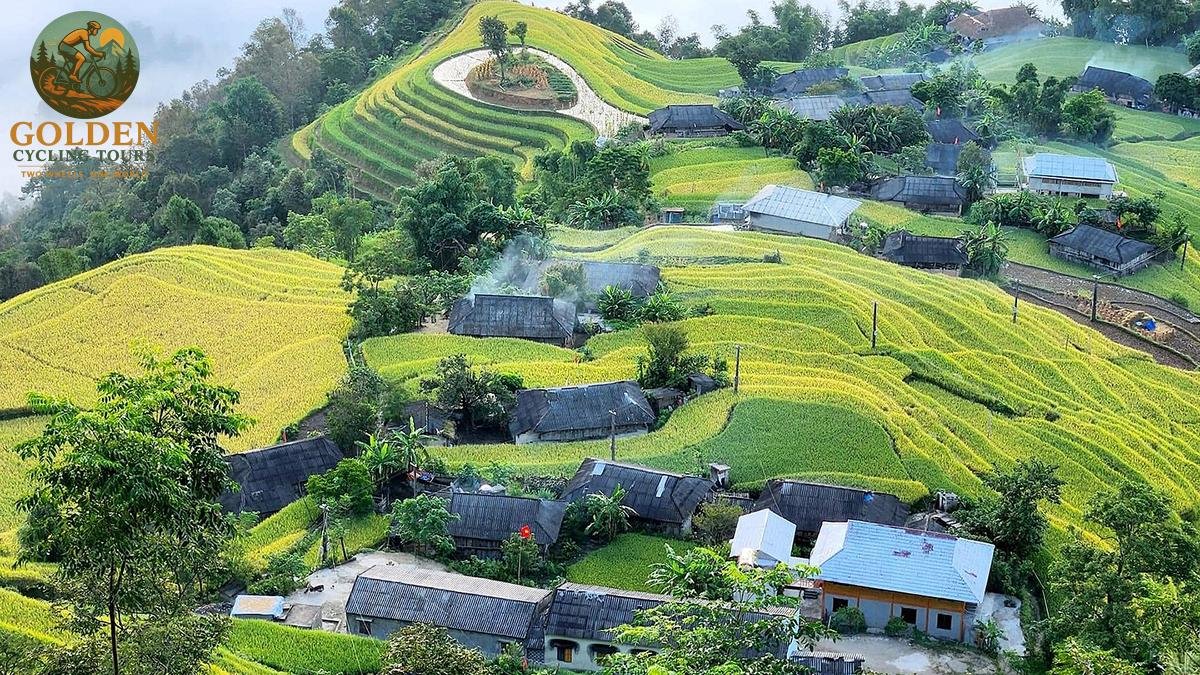
When traversing the heart of the Hoang Su Phi Terraced Rice Fields, asphalt disappears in favor of raw agricultural gravel, packed dirt, and narrow dirt singletracks. Here, tire traction becomes paramount. A gravel bike with 38-45mm tires or a front-suspension hardtail mountain bike provides the ideal balance of grip and climbing efficiency.
Distance: ~20 km shakedown | Elevation Gain: ~150 m
Primary Terrain: Flat urban tarmac transitioning into gentle rural tarmac
The expedition begins with an air-conditioned transfer from Hanoi, leaving the urban sprawl behind for the emerald foothills of the northern frontier. Upon arrival in Ha Giang City, mechanics from Golden Cycling Tours adjust saddle heights, check hydraulic brake pressures, and calibrate gear indexing. A short late-afternoon ride along the banks of the Lo River lets you check your setup under warm valley sunlight.
Distance: ~55 km | Elevation Gain: ~1,300 m
Key Climb: Bac Sum Pass (11 km climb, average gradient 6-8%)
Surface: Smooth asphalt with tight technical switchbacks
The climbing begins immediately after leaving the valley. Bac Sum Pass rises relentlessly up a limestone staircase. Your quads burn as you climb through dense subtropical flora, each pedal stroke echoing against mossy rock walls. Cresting the summit brings you to Quan Ba Heaven Gate, where cool mountain air hits your chest. Looking down, the breathtaking Quan Ba Twin Mountains rise like emerald mounds out of the fertile valley basin. The descent into Quan Ba is wide and fast, offering sweeping views of traditional wooden homestays below.
Distance: ~65 km | Elevation Gain: ~1,100 m
Key Feature: Mien River valley roads and pine forest ascents
Surface: Mixed asphalt, occasional roadworks gravel
Leaving Quan Ba, the route tracks alongside the clear green currents of the Mien River before pitching up into shaded pine woodlands. The air smells cleanly of resin and damp needles. The gradients here fluctuate between 4% and 7%, allowing for a smooth gear rhythm. Descending into Yen Minh, you carve around long curves as the scent of woodsmoke floats up from valley chimneys.
Distance: ~50 km | Elevation Gain: ~1,400 m
Key Climb: Chin Khoanh Pass (9 hairpin switchbacks, gradient up to 10%)
Surface: Engineered asphalt with narrow sections near historic valleys
This stage plunges into the core of the UNESCO-protected Dong Van Karst Plateau Geopark. The signature highlight is Chin Khoanh Pass, a steep series of serpentine switchbacks carved directly into towering gray cliffs. You will pause to explore the majestic Vuong Family Palace (H'mong King Palace), tucked inside a pine-scented valley of giant cypress trees. The final approach to Dong Van Ancient Town features smooth rolling crests surrounded by jagged limestone monoliths.
Distance: ~40 km | Elevation Gain: ~1,000 m
Key Feature: Ma Pi Leng Pass (The King of Vietnamese Passes)
Surface: High-altitude cliffside asphalt, narrow shoulders, dramatic drop-offs
This is the central highlight of the entire itinerary. Ma Pi Leng Pass clings to sheer vertical cliffs 1,000 meters above the turquoise waters of the Nho Que River. As you pedal along the cliff edge, looking down into Tu San Canyon—the deepest gorge in Southeast Asia—the sheer scale of the landscape is awe-inspiring. The descent into Meo Vac is a technical masterclass: sharp hairpins, fast straights, and breathtaking exposures that require total focus and precise braking control.
Riders seeking this iconic pass can book the flagship 10-Day Ha Giang Loop & Hoang Su Phi Cycling Adventure for a fully supported mountain experience.
Distance: ~75 km | Elevation Gain: ~900 m
Key Feature: Rolling descents alongside mountain torrents
Surface: Smooth to medium asphalt, low vehicle traffic
Leaving the high karst peaks, the route descends toward Bao Lac. This stage provides a welcome change of pace, featuring long downhill stretches and flat valley floors where you can ride in a tight paceline. You will cross wooden suspension bridges and ride past waterwheels grinding grain near Tay minority villages.
Distance: ~90 km (mixed riding & support vehicle transfer)
Key Feature: Topographical transition from limestone to granite massifs
Surface: Variable asphalt, country roads
As you head west toward the border of Hoang Su Phi, the sharp jagged karst topography gives way to massive, dome-shaped granite massifs covered in primary rainforest. This stage acts as a transition day, allowing your legs to rest before you hit the unpaved agricultural tracks of the western highlands.
Distance: ~58 km | Elevation Gain: ~1,550 m
Key Climb: Nam Hong Terraced Ridge (gradient 7-12%, unpaved sections)
Surface: Dirt tracks, crushed river gravel, broken concrete
Entering the Hoang Su Phi Terraced Rice Fields brings a shift in terrain. The climbs here are raw, steep, and unpaved, winding through villages like Nam Hong and Ban Luoc. The sound of rolling gravel under your tires replaces the smooth hum of tarmac. The reward for every tough climb is an sweeping view of golden, hand-carved rice terraces cascading down the mountainside.
Distance: ~45 km | Elevation Gain: ~1,200 m
Key Feature: Trails beneath Tay Con Linh Peak
Surface: Technical singletrack, packed earth, village footpaths
Riding in the shadow of Tay Con Linh Peak, the highest summit in Northeast Vietnam, you explore remote Red Dao mountain tracks. The routes narrow into technical singletracks where motor vehicles cannot travel. After completing the day's ride, you will rest at high-altitude eco-lodges and enjoy traditional Red Dao herbal baths brewed from forest roots.
Distance: ~35 km downhill descent | Support van transfer to Hanoi
Key Feature: Final high-speed mountain descent to valley floor
Surface: Smooth asphalt descending back to national highway
The final morning features a thrilling downhill blast from the high terraces back to the Ha Giang valley. Reflecting on over 500 kilometers of hard-won elevation and world-class scenery, you board the comfortable support vehicle for a relaxing drive back to Hanoi.
For cyclists who prefer electric pedal assistance to conquer these demanding mountain passes, explore Vietnam E-Bikes Tours or book the popular 6-Day Mai Chau Pu Luong Ninh Binh E-Bike Tour.
Cycling through Northern Vietnam engages all five senses:
Radiant contrast between gray limestone cliffs and the turquoise Nho Que River.
Shimmering golden terraces of Hoang Su Phi Terraced Rice Fields cascading into misty valleys.
Colorful traditional attire of H'mong and Dao women working in high-altitude cornfields.
Crisp metallic click-clack of your rear derailleur shifting under load.
Rush of wind past your helmet on 10-kilometer descents down Bac Sum Pass.
Songbirds and roaring mountain waterfalls echoing through Tu San Canyon.
Fresh fragrance of pine needles baking under the sun near Yen Minh.
Earthy scent of woodsmoke rising from homestay hearths at dusk.
Sweet aromas of blooming wild mountain orchids along granite cliff walls.
Hot, savory broth of beef pho after a cold morning pass.
Warm, sweet buckwheat cakes cooked fresh at mountain pass summits.
Biting kick of traditional corn wine shared with local hosts during evening meals.
Cool mountain mist settling on your arms at high altitude.
Deep, satisfying burn in your quads and calves halfway up Chin Khoanh Pass.
Soothing warmth of a Red Dao herbal bath after a full day in the saddle.
Selecting the right season is crucial for optimal road conditions and weather:
Conditions: Crisp air, minimal rainfall, stable road surfaces, temperatures 15°C to 24°C.
Highlights: The Hoang Su Phi Terraced Rice Fields turn bright gold in September and October. October and November bring pink buckwheat flower blooms across Dong Van Karst Plateau Geopark.
Conditions: Pleasant riding temperatures (18°C to 26°C), clear skies, dry asphalt.
Highlights: Peach and plum trees blossom across stone villages, creating picturesque backdrops for long climbs.
Conditions: Cold temperatures (5°C to 15°C), occasional fog on high passes like Ma Pi Leng Pass.
Highlights: Quiet roads with minimal tourist traffic, perfect for riders who enjoy cool mountain air.
Conditions: High humidity, heavy rain showers, potential landslides on steep mountain passes.
Recommendation: Recommended only for experienced foul-weather riders with professional support teams.
For comprehensive regional options across the northeast, check out Vietnam Northeast Bike Tours or luxury travel packages at Vietnam Luxury Bike Tours.
Cycling long daily distances burns thousands of calories. The regional cuisine in Ha Giang and Hoang Su Phi provides healthy, nutrient-rich fueling:
Thang Co & Men Men: Traditional H'mong dishes made from steamed cornmeal and herb-infused stews, offering ideal complex carbohydrates for long climbs.
Smoked Mountain Buffalo Meat: Lean, high-protein meat cured over woodfire smoke with wild jungle pepper (Mac Khen).
Buckwheat Cakes (Banh Tam Giac Manh): Soft, warm cakes made from buckwheat seeds—a great mid-ride energy snack at pass summits.
Wild Mountain Pork & Hill Chicken: Free-range meats grilled over charcoal with fresh lemongrass and garlic.
Red Dao Herbal Teas: Served hot at homestays in Nam Hong to aid muscle recovery.
All meals provided by Golden Cycling Tours are prepared fresh at clean family eateries and authentic village homestays.
Rest and recovery are vital on a 10-day physical trek. Accommodations along this route combine comfort, cleanliness, and local character:
In Hoang Su Phi, you stay at handcrafted bamboo lodges built on stilts overlooking rice terraces. These lodges feature private hot showers, comfortable beds, wifi, and panoramic views of mountain valleys.
In traditional villages like Ban Luoc and Quan Ba, you experience highland hospitality. Sleeping in traditional wooden houses of Tay or Red Dao hosts gives you an authentic look into local customs, complete with communal family dinners.
In main towns like Dong Van Ancient Town and Meo Vac, cozy 3-star boutique hotels offer private rooms, comfortable bedding, secure bike storage, and modern amenities.
Navigating these remote mountain passes requires dependable logistical backing. Booking through Golden Cycling Tours provides complete support:
An air-conditioned van or minibus accompanies the group throughout the 10-day journey. If a climb becomes too steep or your legs need a rest, you can jump into the support vehicle at any time.
Professional bike mechanics ride with the group, equipped with spare tires, inner tubes, chains, toolkits, and high-pressure pumps. Bikes provided include high-performance mountain bikes and gravel bikes equipped with hydraulic disc brakes for safe descents down Chin Khoanh Pass and Bac Sum Pass.
Your main luggage travels in the support van between accommodations. All you carry on your bike is a small handlebar bag or jersey pockets for your phone, camera, and extra layers.
The northern mountains are home to ethnic minority communities, including the H'mong, Tay, Red Dao, and Giay tribes.
Dong Van Market & Meo Vac Sunday Market: Vibrant gathering spots where villagers trade cattle, hand-woven brocade fabrics, silver jewelry, and fresh produce.
Historic Architecture: Unique stone-fenced yards designed to withstand cold mountain winds in Pho Bang Ancient Town.
Always ask permission before taking photos of local adults or children in villages.
Dress respectfully when visiting village homes or historic sites like Vuong Family Palace.
Avoid giving out plastic candy or money directly to children along mountain passes; instead, support local schools or purchase handmade crafts from village artisans.
Here is a quick checklist of landmarks featured along the route:
Ma Pi Leng Pass: The undisputed king of Vietnam's mountain passes.
Dong Van Karst Plateau Geopark: UNESCO Global Geopark featuring dramatic rock formations.
Hoang Su Phi Terraced Rice Fields: National landscape heritage site with golden terraces.
Nho Que River & Tu San Canyon: Emerald waters cutting through deep gorges.
Quan Ba Twin Mountains & Heaven Gate: Iconic gateway into the high mountain plateau.
Vuong Family Palace: Historic estate of the H'mong King located in a pine-scented valley.
Tay Con Linh Peak: The highest peak in Northeast Vietnam.
If you want to explore more two-wheeled adventures across Vietnam, Golden Cycling Tours offers routes for every preference:
For riders seeking a longer journey, check out the 15-Day Best Vietnam Cycling Northeast Tour. This route extends beyond Ha Giang into the waterfalls of Cao Bang Bike Tours and the quiet waters of Ba Be Lake Bike Tours.
If you are short on time, explore lush valleys closer to Hanoi:
Discover valley trails with Mai Chau Bike Tours and reserve rides through Pu Luong Bike Tours.
Book the short escape: 4-Day Mai Chau to Pu Luong Cycling Adventure.
Book specialized mountain itineraries via Ha Giang Bike Tours.
"Analyzing the Road Conditions, Climbs, and Descents: 10 Days Cycling Ha Giang before booking was key for me. The reality exceeded every expectation. Ma Pi Leng Pass is as breathtaking and dramatic as any pass in the Alps. The mechanical support was top-notch, keeping our hydraulic disc brakes and drivetrains in perfect order throughout the trip."
"The contrast between the limestone cliffs of Dong Van and the golden terraces of Hoang Su Phi was incredible. Our guide paced our climbs perfectly on Bac Sum Pass, and the Red Dao homestays were warm and welcoming. Golden Cycling Tours managed every detail flawlessly."
The climbs feature gradients ranging from 6% to 12%, with daily elevation gains between 900 and 1,550 meters. Moderate-to-high cardiovascular fitness is recommended, though the support van is always available if you need a break.
A high-quality gravel bike with 38mm+ tires or a hardtail mountain bike with front suspension is ideal. Hydraulic disc brakes are essential for precise control on long descents down passes like Chin Khoanh Pass and Ma Pi Leng Pass.
Yes, when riding with an experienced guide team. Guides provide safety briefings before major descents, set a safe lead pace, and warn riders of sharp switchbacks or road surface changes.
Pack padded cycling bibs (3-4 pairs), moisture-wicking jerseys, windproof/waterproof rain jackets, full-finger gloves for descents, UV sunglasses, and warm layers for high-altitude evenings in winter.
Yes. Local Vietnamese cuisine offers fresh vegetables, tofu, mushrooms, eggs, and rice. Golden Cycling Tours caters to vegetarian, vegan, gluten-free, and nut-allergy requirements upon request.
Mastering the Road Conditions, Climbs, and Descents: 10 Days Cycling Ha Giang is one of the most rewarding cycling achievements in Asia. From standing atop Ma Pi Leng Pass to carving through the unpaved terraces of Hoang Su Phi, this journey combines physical challenge with unforgettable natural beauty. Book your cycling expedition with Golden Cycling Tours today and experience Northern Vietnam from the saddle!

.jpg "Cycling in Vietnam in March")
.jpg "Vietnam mountain bikes Trail")
.jpg "Vietnam Biking Trails")
.jpg "Ha Giang Cycling Tours")
Leave a Reply
Your email address will not be published. Required fields are marked *