- Call us Via Whatsapp: +84 (0) 832 126 699
4.9 stars on our site
(15,000 reviews)
- Monday - Sunday : 08:00 - 17:00
(15,000 reviews)

Pu Luong is one of Northern Vietnam’s most captivating destinations for travelers who want to experience nature beyond the usual tourist trail. Here, limestone mountains rise above emerald valleys, narrow village lanes wind between traditional stilt houses, and terraced rice fields change color with the seasons. The air carries the fragrance of damp earth, wild vegetation, and fresh mountain leaves, while the gentle rhythm of rural life invites visitors to slow down and explore.
For cyclists, this landscape offers something particularly special: the opportunity to experience Vietnam at ground level, where every bend reveals a new view and every village offers a glimpse into local life.
Exploring Nature Trails on a Pu Luong Cycling Tour is about much more than covering distance. It is about feeling the cool morning air on your face, hearing your tires roll across a quiet country road, smelling woodsmoke drifting from a village kitchen, and pausing beneath towering limestone cliffs to appreciate the stillness of the mountains.
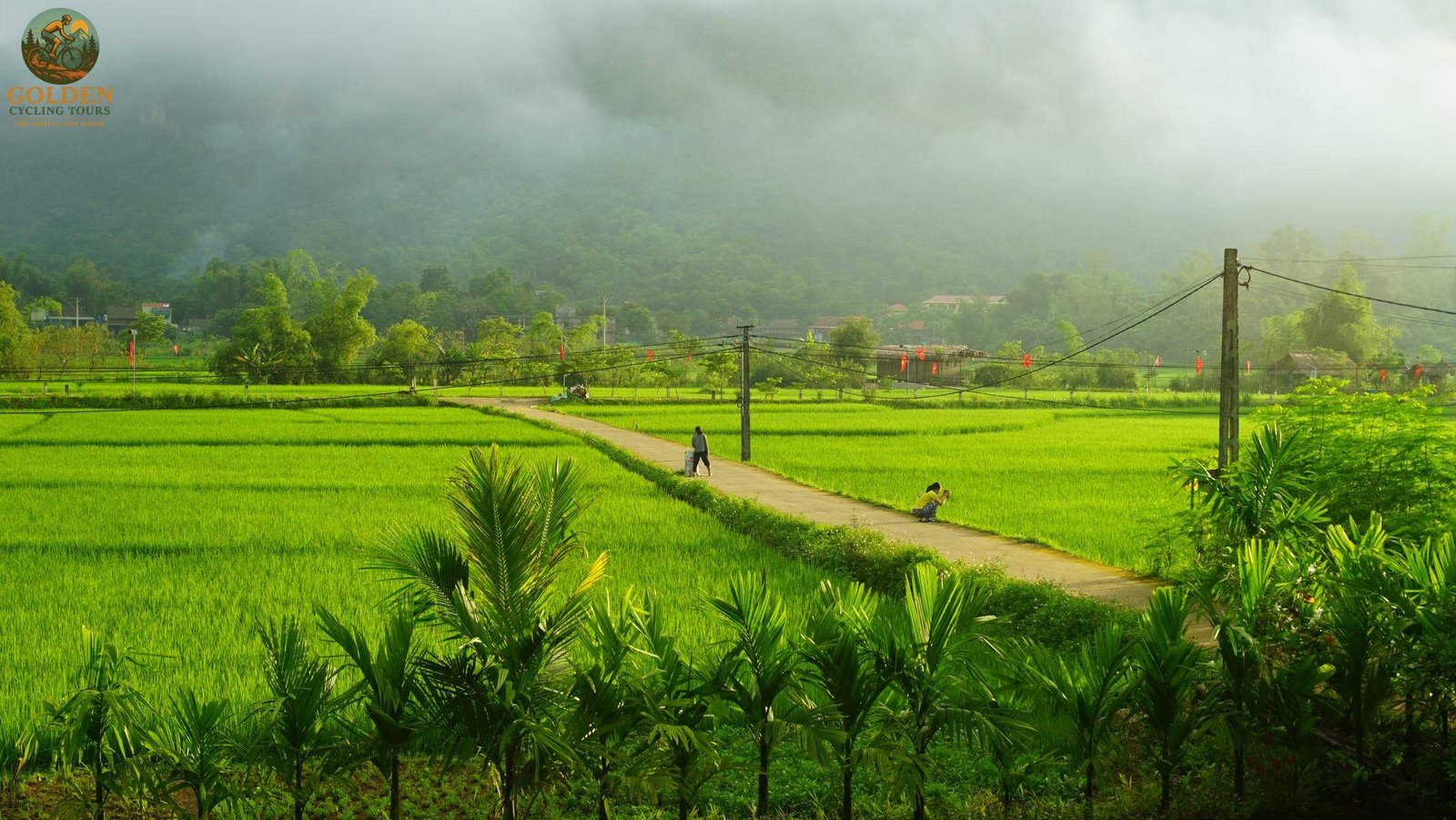
With carefully planned routes and local knowledge from Golden Cycling Tours, travelers can discover the natural beauty, cultural richness, and peaceful atmosphere of Pu Luong Nature Reserve while enjoying an unforgettable cycling adventure in Northern Vietnam.
Located in Thanh Hoa Province, Pu Luong Nature Reserve is known for its forested limestone mountains, terraced rice fields, traditional villages, and remarkable biodiversity. Compared with Vietnam’s busiest tourist destinations, Pu Luong often feels quieter and more intimate, making it an excellent choice for travelers who want to connect with nature.
Cycling allows you to experience the region at a comfortable pace. Rather than watching the scenery pass through a vehicle window, you become part of the landscape. You notice the changing texture of the road, the sound of water flowing through irrigation channels, and the way sunlight moves across the rice terraces.
The first impression of Pu Luong is often its dramatic contrast. Dark green mountains rise above bright rice fields, while small villages sit quietly along the valley floor. In the early morning, mist may settle between the hills, creating a layered panorama that changes as the sun climbs higher.
As you ride along the valley roads, the scenery unfolds gradually. A turn may reveal a wooden house surrounded by banana trees; another may open onto a broad view of terraced fields and distant ridgelines.
These moments are what make Exploring Nature Trails on a Pu Luong Cycling Tour so rewarding. The journey is not defined by one famous viewpoint, but by a succession of intimate encounters with the natural world.
Pu Luong’s cycling experience can include paved village roads, narrow rural lanes, rolling hills, and steeper sections depending on the chosen route. Some routes are suitable for relaxed recreational cycling, while others demand more endurance and confident bike handling.
The terrain is part of the adventure. A gradual climb may test your legs, especially under the midday sun, but the reward is often a sweeping view over the valley. On a descent, the cool air brushes your face as the road curves between fields and houses.
Road conditions can vary with rainfall and season. Travelers should confirm the planned route, surface type, elevation gain, and daily distance with Golden Cycling Tours before booking.
Cycling creates natural opportunities to interact with local communities. You may pass farmers working in the fields, children walking home from school, or families preparing lunch outside traditional houses.
A friendly greeting or a short stop at a village shop can become one of the most memorable parts of the journey. These everyday moments reveal a side of Northern Vietnam that travelers may miss when moving quickly between major attractions.
For more regional inspiration, explore Mai Chau cycling tours and Pu Luong cycling tours.
A cycling journey through Pu Luong combines physical activity, scenic exploration, and cultural discovery. The precise experience depends on your itinerary, fitness level, bicycle type, and the season in which you travel.
Rice terraces are among Pu Luong’s most recognizable landscapes. Their appearance changes throughout the agricultural year, creating a living mosaic across the hillsides.
During periods of vigorous growth, the fields glow in shades of green. Near harvest, they may turn golden, contrasting beautifully with the dark mountains and pale limestone formations. After rain, the earth smells rich and fresh, and small streams may run more visibly beside the paths.
As you pedal through these landscapes, take time to appreciate the details: water glistening between the rice plants, birds moving across the fields, and the delicate sound of leaves shifting in the breeze.
The best viewpoints are not always the most obvious ones. Sometimes a quiet bend in a village road provides a more intimate perspective than a crowded lookout.
Pu Luong’s forested environment is another reason cyclists are drawn to the area. Depending on the route, you may ride beside wooded slopes, pass beneath leafy canopies, or stop near small streams that descend from the surrounding hills.
In shaded sections, the temperature can feel noticeably cooler. The scent of wet leaves and soil becomes stronger after rainfall, while birdsong and insects create a natural soundtrack.
Not every forest path is suitable for every bicycle or rider. Some hiking trails are narrow, steep, or vulnerable to erosion and should not be treated as cycling routes without local confirmation. A guided itinerary helps distinguish appropriate cycling roads from walking-only trails and ecologically sensitive areas.
Villages are an essential part of the Pu Luong experience. Instead of treating them as brief stops between scenic attractions, consider them an important part of the journey itself.
Ride slowly through settled areas, give pedestrians plenty of space, and ask permission before photographing people or entering private property. If you stop near a home or workshop, a smile and a polite greeting can make the interaction more welcoming.
The result is a cycling holiday that feels less like a checklist of attractions and more like a gradual introduction to the region.
A well-designed Pu Luong cycling itinerary balances riding time with opportunities to explore on foot, enjoy viewpoints, and meet local residents. The following places can help shape your trip, although not every location will fit every cycling route.
Pu Luong Nature Reserve is the natural heart of the region. Its limestone mountains, forest habitats, valleys, and agricultural landscapes create a remarkable setting for outdoor travel.
The reserve is especially appealing to travelers who enjoy observing the relationship between nature and rural life. Forested slopes rise above cultivated land, and villages are often surrounded by small gardens, streams, and rice fields.
Cycling routes generally use suitable roads around the reserve and its communities rather than unrestricted access to every forest trail. If your interests include hiking or wildlife observation, ask your tour operator which activities are permitted and whether they require a separate guide.
Travel tip: Bring a reusable water bottle, sun protection, and a lightweight rain jacket. Conditions can change quickly in mountainous terrain.
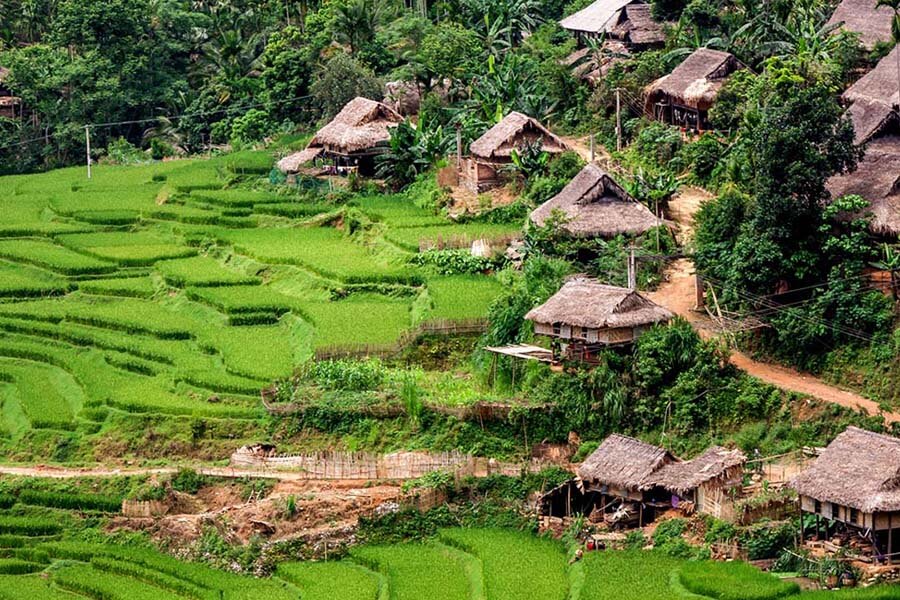
Don Village is one of the best-known places to experience Pu Luong’s rural atmosphere. Traditional stilt houses, green hills, rice fields, and small accommodation properties create a peaceful setting for an overnight stay or a short stop.
Cyclists can use the village as an opportunity to rest, enjoy local food, and learn about daily life in the area. Depending on the route, nearby roads may offer beautiful views across the valley.
Early morning is particularly atmospheric. Thin mist may hover above the fields, and the sounds of village life gradually replace the quiet of the night.
Hieu Waterfall is a popular natural attraction in the Pu Luong area. Water cascades over rocky sections into clear pools, creating a refreshing contrast to the heat of a cycling day.
The waterfall is best treated as a sightseeing stop rather than an assumption that every section is accessible by bicycle. Your itinerary may require parking the bike and walking the remaining distance.
Take care on wet rocks, follow local safety advice, and avoid entering fast-moving or deep water unless conditions are confirmed safe.
For many visitors, the combination of a morning ride and a waterfall visit creates a memorable day of outdoor exploration.
The terraced landscapes around Pu Luong offer some of the region’s most photogenic scenery. Rather than rushing from one viewpoint to another, plan time to stop, take photographs, and observe the agricultural patterns.
The fields are working landscapes, not simply scenic backgrounds. Stay on public roads and designated paths, and avoid walking through cultivated areas without permission.
For cyclists, the best experience often comes from riding at a pace that allows spontaneous stops whenever the scenery changes.
Mai Chau Valley makes a natural companion destination for travelers exploring Pu Luong. Known for its green fields, traditional villages, and broad valley views, Mai Chau offers a different but complementary atmosphere.
A combined Mai Chau and Pu Luong itinerary can provide a varied journey through Northern Vietnam’s countryside. Depending on the route, cyclists may encounter rolling roads, rural settlements, mountain scenery, and sections that require additional climbing.
Discover the region through Mai Chau cycling tours, or consider the 4-day Northern Vietnam cycling adventure from Mai Chau to Pu Luong.
Thung Khe Pass, also known as White Stone Pass, is a memorable mountain-road attraction on routes between Hanoi and the Mai Chau area. Its exposed limestone slopes and sweeping views make it a striking stop for road travelers and cyclists following suitable sections of the regional route.
The pass should not automatically be included in every Pu Luong itinerary. Road traffic, elevation, distance, and the overall cycling plan must be considered before adding it to a ride.
For experienced cyclists, a route involving mountain roads can add a sense of achievement. For leisure riders, a support vehicle or a shorter alternative may make the trip more enjoyable.
The following outline is an illustrative three-day concept, not a confirmed package itinerary. Actual distances, road conditions, accommodation, and stops should be verified with Golden Cycling Tours before travel.
Begin the journey by leaving the busy streets of Hanoi and traveling toward the mountains of Northern Vietnam. Depending on the transport arrangement, the first cycling section may begin around Mai Chau or another suitable point along the route.
As the city gives way to rural landscapes, the atmosphere changes. Buildings become less frequent, the road begins to climb, and green hills gradually dominate the horizon.
After a briefing and bicycle check, ride at a comfortable pace through selected rural roads. Pause for photographs, water, and lunch before continuing toward Pu Luong if the itinerary and daylight allow.
The evening is a chance to settle into a village homestay or eco-lodge, enjoy a freshly prepared meal, and listen to the sounds of the countryside.
After breakfast, begin the day when the air is still cool. The first kilometers may pass through quiet villages and cultivated valleys, with the mountains rising ahead.
The route can be planned around rice terraces, scenic rural roads, and selected communities. Short climbs provide opportunities to test your endurance, while easier sections allow you to relax and enjoy the surroundings.
Stop for lunch at a suitable local restaurant or accommodation. In the afternoon, depending on road conditions and the itinerary, visit a village or arrange a walk to a natural attraction such as Hieu Waterfall.
Return to your accommodation for a shower, dinner, and a relaxed evening. This is often the perfect time to review photographs and appreciate how much of the region you have experienced at cycling speed.
Start with a short ride or village walk before breakfast, depending on the schedule. Morning light often brings out the textures of the rice fields and limestone hills.
After checking out, travel back toward Hanoi or continue to another destination in Northern Vietnam. Travelers with additional days can consider combining Pu Luong with Mai Chau or extending their journey toward Ninh Binh.
For a longer route, explore the 6-day Mai Chau, Pu Luong, and Ninh Binh e-bike tour.
Choosing the right season can transform your cycling experience. Weather, rainfall, temperature, rice-growing cycles, and trail conditions all influence what you will see and how comfortable your rides will be.
Spring and late spring often bring pleasant opportunities for cycling, although conditions vary from year to year. The hills become lush, and the fields develop fresh green tones.
Temperatures can be suitable for active travel, especially if rides begin early in the morning. As the day warms, shaded breaks and adequate hydration become increasingly important.
This period is a good choice for travelers who enjoy vibrant landscapes and relatively comfortable riding conditions.
Early summer can bring active agricultural scenery, with water visible in some rice fields and a rich green color spreading across the valleys.
However, heat, humidity, and rainfall may increase. Routes can become slippery after heavy showers, and thunderstorms may affect travel plans.
Cyclists visiting during this period should choose breathable clothing, carry rain protection, and remain flexible about daily distances.
For many visitors, September and October are particularly appealing because some rice fields may turn golden before harvest. The contrast between the terraces, forested mountains, and traditional villages can be spectacular.
Harvest timing varies by altitude, local farming schedules, and weather, so golden fields cannot be guaranteed on a specific travel date.
If photographing rice terraces is a priority, ask Golden Cycling Tours about current local conditions before confirming your booking.
Winter brings cooler conditions and a quieter atmosphere. Morning temperatures may be low, and mist can soften the mountain scenery.
These months can be enjoyable for cyclists who prefer cooler weather, but layered clothing is important. Some days may be damp or foggy, and visibility can change quickly.
For a balance of green scenery and comfortable riding, consider March to May. For a chance to see golden rice terraces, investigate September to October and confirm the likely harvest period locally.
The best time ultimately depends on your priorities: photography, comfortable temperatures, quiet roads, or a particular combination of destinations.
Pu Luong is not only a destination for mountain scenery. It is also a living cultural landscape shaped by the communities who farm the land, maintain traditional homes, prepare local food, and welcome visitors.
The wider Pu Luong area is associated with Thai and Muong communities, whose traditions contribute to the region’s distinctive cultural identity.
Traditional stilt houses are a familiar feature of local villages. Raised above the ground, they reflect local building practices and adaptation to the surrounding environment.
As you cycle through the countryside, you may see gardens, rice cultivation, small livestock areas, and everyday household activities. These are not staged performances but parts of daily life.
Cultural practices differ between communities and households, so visitors should approach each encounter with curiosity rather than assumptions.
The best cultural experiences begin with respect. Slow down near homes, avoid blocking narrow roads, and ask permission before taking photographs of people or private spaces.
If you are invited into a home, follow your host’s guidance. Dress modestly when appropriate, avoid touching personal or ceremonial objects without permission, and be considerate when joining meals.
A guided cycling trip can help bridge language and cultural differences, especially when your guide explains local customs and introduces you to residents.
Depending on the timing of your visit, you may encounter local markets, seasonal agricultural activities, traditional textiles, or community celebrations.
Events vary by village and date, so do not assume that a particular festival will take place during your trip. Ask locally about opportunities to visit markets or learn about crafts in a way that benefits residents.
Responsible tourism is not simply about seeing a place. It is about leaving it with its landscapes, traditions, and community dignity respected.
Food is an important part of the Pu Luong experience. After several hours on the bicycle, a generous meal of rice, vegetables, herbs, and local specialties can be especially satisfying.
Com Lam — Bamboo-Tube Rice
Com lam is rice cooked inside a bamboo tube. The bamboo gives the rice a subtle aroma, while the texture can be soft and pleasantly fragrant.
It is a natural choice for travelers interested in traditional mountain-region food.
Grilled Local Specialties
Depending on the establishment and season, meals may include grilled meats, freshwater fish, vegetables, and herbs. Ask about the ingredients and preparation method if you have dietary restrictions.
Fresh Vegetables and Seasonal Produce
Many meals feature vegetables and herbs that complement the richer flavors of grilled dishes. After a long ride, these fresh sides can make a welcome addition to lunch or dinner.
Traditional Home-Cooked Meals
A meal at a local homestay may include rice, soup, vegetables, and several shared dishes. Menus vary between properties, so inform your host or tour operator in advance about vegetarian, vegan, allergy-related, or other dietary requirements.
The most convenient dining options are often village homestays, eco-lodges, and small local restaurants around accommodation areas such as Don Village.
Because the region is rural, restaurant choices may be more limited than in major cities. Some properties prepare meals by advance arrangement rather than operating as walk-in restaurants.
For the best experience:
Ask your accommodation to arrange dinner before arrival.
Confirm whether breakfast and lunch are included in your tour.
Carry snacks for longer cycling sections.
Bring sufficient drinking water and refill where safe facilities are available.
Tell your host about food allergies before meals are prepared.
Cycling days can require more energy than expected. A balanced meal, regular hydration, and planned snack breaks help keep you comfortable on the road.
Accommodation is part of the atmosphere of a Pu Luong holiday. Instead of large urban hotels, visitors often choose small lodges and homestays that blend with the surrounding countryside.
A traditional homestay can offer a closer connection to village life. Depending on the property, guests may sleep in a private room or a shared space within a traditional-style house.
The appeal lies in the simple details: the sound of rain on the roof, the scent of a home-cooked meal, and the quiet of the valley after sunset.
Facilities vary. Confirm room privacy, bathrooms, hot water, mosquito protection, and bedding arrangements before booking.
Some eco-lodges offer private rooms, terraces, gardens, or views across rice fields and limestone mountains. They can be an excellent choice for travelers who want comfort without losing the sense of being surrounded by nature.
A balcony overlooking the valley can be especially memorable at sunrise, when the first light reaches the hills and mist begins to lift from the fields.
When selecting a place to stay, consider:
Proximity to the planned cycling route.
Secure bicycle storage, if required.
Availability of early breakfast.
Laundry and drying facilities during rainy periods.
Private versus shared bathrooms.
Meal options and dietary needs.
Access for support vehicles, where applicable.
If accommodation is included in your cycling package, ask Golden Cycling Tours to confirm the property category and facilities before booking. Room availability and standards can vary by date and location.
Pu Luong is a rural destination, so a little transport planning makes the journey much smoother.
Many travelers begin in Hanoi, then travel toward Mai Chau and Pu Luong by private vehicle, transfer, or an arranged tour service.
Travel time depends on the exact starting point, traffic, weather, and chosen route. Allow flexibility rather than relying on a fixed estimate, especially when connecting with flights or other transport.
If you are bringing your own bicycle, confirm how it will be transported and whether disassembly or a protective bike case is required.
Cycling is an excellent way to explore selected roads around Pu Luong, but not every road or trail is appropriate for every rider.
Routes may include paved roads, narrow village lanes, rolling terrain, and climbs. After heavy rain, some surfaces can become slippery or damaged.
Before departure, ask your operator to explain the route profile, daily distance, elevation gain, surface type, and expected riding hours.
A support vehicle can provide practical assistance with luggage, supplies, and unexpected difficulties, depending on the package. It may also offer a fallback option for riders who need to shorten a stage.
An e-bike can make climbs more manageable and help riders with different fitness levels enjoy the same landscape. However, battery range depends on terrain, rider weight, assistance level, temperature, and battery condition.
Explore Vietnam e-bike tours if you prefer a more assisted riding experience.
A little preparation helps you focus on the scenery rather than the discomforts of the road.
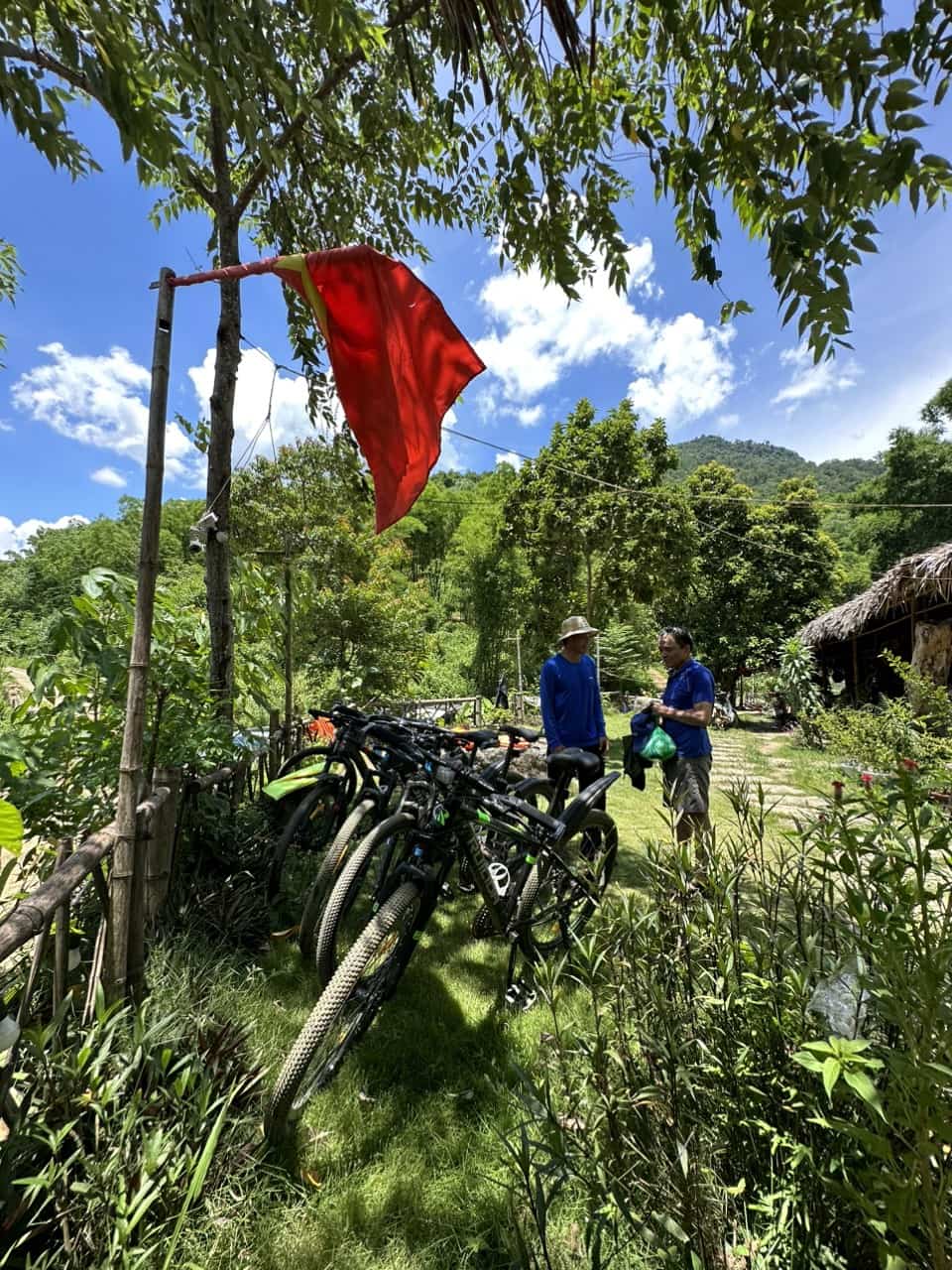
A hybrid bike, touring bike, gravel bike, or mountain bike may be suitable depending on the planned route. Tire width, gearing, braking performance, and rider comfort matter more than choosing a bicycle based on appearance alone.
For rougher surfaces, wider tires and reliable brakes can improve confidence. For predominantly paved routes, a comfortable touring or hybrid setup may be sufficient.
Confirm the bike specification with Golden Cycling Tours before booking.
Useful items include:
A properly fitted cycling helmet.
Breathable cycling clothing.
Padded shorts or comfortable riding apparel.
Cycling gloves and suitable footwear.
A lightweight rain jacket.
Sunscreen and sunglasses.
Insect repellent.
A refillable water bottle.
Basic personal medication and blister care.
A small waterproof bag for electronics.
Mountain weather can change rapidly. Even during warmer months, a light extra layer may be useful for cool mornings or wet descents.
The goal is not to sprint through the landscape. Start conservatively, especially if you are unfamiliar with the terrain or have several days of cycling ahead.
Shift gears before a climb becomes difficult, maintain a steady cadence, and take short breaks before fatigue becomes overwhelming. On descents, reduce speed when visibility is limited and leave enough distance from other riders.
Follow your guide’s instructions and never assume a narrow road is clear around a blind bend.
Pu Luong’s scenery depends on healthy ecosystems and respectful visitor behavior. Carry your rubbish until you can dispose of it properly, stay on appropriate routes, and avoid disturbing wildlife.
Do not enter restricted forest areas or take plants, rocks, or other natural materials from protected locations. Choose local services where possible and respect the privacy of residents.
Pu Luong can suit a range of cycling abilities, but the right itinerary matters.
Travelers who cycle occasionally may enjoy shorter stages on suitable roads, with frequent breaks and time for sightseeing. A private itinerary can often be adjusted to prioritize scenery over distance.
More experienced cyclists may prefer longer stages, additional climbing, or a route that links Pu Luong with Mai Chau and other Northern Vietnam destinations.
The challenge should match your fitness and technical skills. A longer ride is not automatically a better ride if it leaves too little time to appreciate the destination.
Families and groups with different fitness levels should discuss age, riding experience, bicycle sizes, support arrangements, and alternative transport in advance.
E-bikes may help some participants manage hills, but battery range and charging arrangements should be confirmed. Younger riders should use correctly sized equipment and ride only on routes appropriate for their ability.
A well-organized cycling holiday combines beautiful routes with practical details: bicycle quality, transfers, accommodation, meals, safety planning, and local guidance.
Golden Cycling Tours can help travelers explore cycling options across Northern Vietnam and compare itineraries according to their interests, available time, and preferred riding style.
Start with the Golden Cycling Tours official website to explore the company’s tour offerings.
If you want to experience Pu Luong as part of a wider journey, consider these options:
4-Day Northern Vietnam Cycling: Mai Chau to Pu Luong — a focused option for travelers interested in the countryside around Mai Chau and Pu Luong.
6-Day Mai Chau, Pu Luong, and Ninh Binh E-Bike Tour — worth exploring if you prefer electric assistance and a multi-destination journey.
12-Day North Vietnam Cycling Adventure: Hanoi to Ninh Binh — an option for travelers who have more time to explore beyond one region.
All Golden Cycling Tours packages — browse the wider collection and compare possible itineraries.
For other cycling regions, explore Northern Vietnam cycling tours, Vietnam Northeast bike tours, Ha Giang bike tours, Cao Bang bike tours, and Ba Be Lake bike tours.
Cyclists seeking a more ambitious mountain journey may also be interested in the 8-Day Ha Giang Loop cycling adventure, the 10-Day Ha Giang Loop and Hoang Su Phi cycling adventure, or the 15-Day Best Vietnam Cycling Northeast Tour.
For travelers interested in a higher-comfort experience, explore Vietnam luxury bike tours.
Before booking, confirm the current itinerary, route difficulty, inclusions, accommodation category, bicycle availability, cancellation terms, and departure dates directly with the operator.
Real customer feedback can help future travelers understand the riding experience, service quality, and atmosphere of a cycling holiday. To maintain credibility, publish verified reviews from actual guests rather than invented testimonials.
Use the following formats as placeholders and replace them with approved customer feedback before publishing.
“[Insert the customer’s verified comments about the rice terraces, mountain views, village roads, and favorite moments during the tour.]”
— [Customer name or approved initials], [Travel date]
“[Insert the customer’s verified comments about the guide, route planning, bicycle condition, support arrangements, and overall organization.]”
— [Customer name or approved initials], [Travel date]
“[Insert the customer’s verified comments about the homestay or lodge, meals, hospitality, and cultural experiences.]”
— [Customer name or approved initials], [Travel date]
Publishing tip: Include only reviews you have permission to use. Do not invent names, ratings, travel dates, or claims about services. If possible, link to the original review platform or identify the source with the customer’s consent.
Two to four days can provide a useful starting point, depending on whether you want a short countryside ride or a more comprehensive trip with village visits and nearby destinations. A longer itinerary may combine Pu Luong with Mai Chau or Ninh Binh.
The ideal duration depends on your fitness, route preferences, and how much time you want for sightseeing.
March to May can offer fresh green landscapes and pleasant riding opportunities. September to October may be especially attractive for travelers hoping to see golden rice terraces.
Weather and harvest timing vary, so confirm local conditions before choosing your travel dates.
Yes, provided the route is selected carefully. Beginners should consider shorter stages, suitable road surfaces, manageable climbs, and regular rest stops.
Ask your operator for the elevation profile and daily distance before committing to a package.
Not necessarily. A hybrid, touring, gravel, or mountain bike may be appropriate depending on the route surface. Wider tires can improve comfort on rougher sections, while suitable gearing helps with climbs.
Confirm the recommended bicycle type with the tour operator.
An e-bike may be a good option for riders who want assistance on hills or prefer to conserve energy for sightseeing. Battery range, charging facilities, and bike availability should be checked in advance.
You can compare options through Vietnam e-bike tours.
Bring a helmet, comfortable cycling clothing, suitable shoes, sunscreen, insect repellent, rain protection, a refillable water bottle, and any personal medication you need.
A lightweight waterproof bag is useful for protecting your phone and other valuables.
Common choices include village homestays and eco-lodges around areas such as Don Village. Facilities vary, so confirm room type, bathroom arrangements, meals, bicycle storage, and other requirements before booking.
Look for com lam, grilled local specialties, seasonal vegetables, herbs, and traditional home-cooked meals. Availability varies by property and season, so ask your host what is being served.
Inform your accommodation in advance about allergies and dietary restrictions.
It may be possible to include Hieu Waterfall as a sightseeing stop, depending on your route and schedule. Some sections may require walking rather than cycling.
Check the access conditions and allow enough time to enjoy the visit safely.
A guided tour can simplify route planning, local communication, bicycle arrangements, accommodation coordination, and support logistics. It can also provide context about the region’s landscapes and communities.
Independent cycling may suit experienced travelers who are comfortable arranging their own transport, route, and accommodation.
Yes, a multi-destination trip can offer a varied experience of Northern Vietnam’s countryside, mountain roads, and limestone landscapes. The route should be planned around available time, transfer logistics, and the level of cycling difficulty you prefer.
Review the 6-Day Mai Chau, Pu Luong, and Ninh Binh E-Bike Tour as one possible starting point.
Visit Golden Cycling Tours and review the available packages. Before confirming, ask about departure dates, itinerary details, daily distances, elevation gain, bike type, accommodation, meals, transfers, guide services, and cancellation conditions.
Sharing your travel dates, group size, cycling experience, and preferred comfort level can help the operator recommend a suitable option.
Some destinations impress through grand monuments. Pu Luong leaves a different kind of memory: the hush of a mist-covered valley, the scent of rice fields after rain, the warmth of a home-cooked meal, and the satisfaction of reaching a viewpoint under your own power.
A cycling journey gives these moments room to unfold. You feel the road beneath your tires, hear the steady rhythm of your bicycle, and notice the small details that disappear when traveling too quickly.
Exploring Nature Trails on a Pu Luong Cycling Tour is an invitation to experience Northern Vietnam with all your senses. Ride through peaceful countryside, discover Pu Luong Nature Reserve, visit traditional villages, taste regional food, and enjoy the ever-changing scenery of the mountains and rice terraces.
Whether you are planning a short countryside escape or a longer journey through Mai Chau, Pu Luong, and Ninh Binh, thoughtful route planning can make the experience more comfortable, meaningful, and rewarding.
Begin planning your journey with Golden Cycling Tours and discover a slower, more immersive way to explore Vietnam by bicycle.

.jpg "Pu Luong Cycling Tours")
Leave a Reply
Your email address will not be published. Required fields are marked *