- Call us Via Whatsapp: +84 (0) 832 126 699
4.9 stars on our site
(15,000 reviews)
- Monday - Sunday : 08:00 - 17:00
(15,000 reviews)

Some journeys are measured in kilometres. Others are measured in heartbeats, mountain horizons, and the unforgettable moment when a narrow trail opens onto a valley that seems to belong to another world.
Northern Vietnam MTB Tours offer precisely this kind of adventure. In the remote northern highlands, limestone mountains rise like ancient fortresses, emerald rivers wind between sheer cliffs, and terraced rice fields carve intricate patterns into hillsides shaped by generations of farmers. Every climb demands determination. Every descent rewards courage. Every village offers a glimpse into a way of life deeply connected to the land.
From the legendary mountain roads of Ha Giang to the cascading waterfalls of Cao Bang and the mist-covered ridges surrounding Sapa, mountain biking reveals a side of Vietnam that conventional sightseeing rarely reaches.
Imagine the rhythmic click of your drivetrain as you climb a remote mountain pass. Feel cool air brush against your face while pine-scented forests replace the warmth of the valley. Hear the distant call of a rooster, the rushing sound of a hidden stream, and the cheerful greetings of local villagers as you pedal through quiet mountain communities.
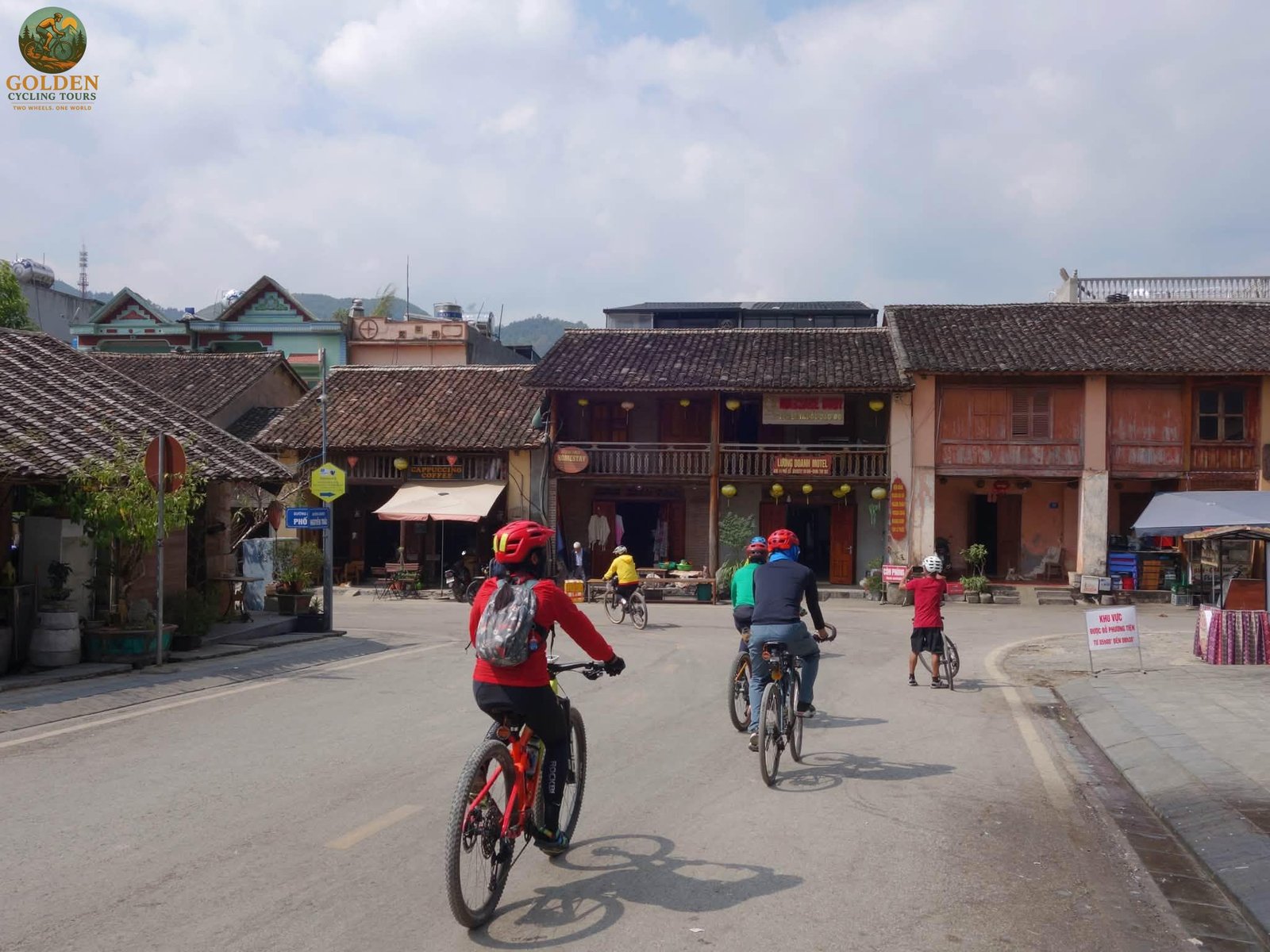
This is not simply a cycling holiday. It is a journey through spectacular landscapes, living cultures, authentic Vietnamese cuisine, and the extraordinary freedom of travelling under your own power.
With Golden Cycling Tours, riders can explore Northern Vietnam through carefully planned cycling adventures, scenic mountain routes, local accommodation, cultural encounters, and support services designed to make the journey more comfortable and rewarding.
Whether you are an experienced mountain biker searching for demanding climbs or an adventurous traveller hoping to discover Vietnam beyond the usual tourist trail, Northern Vietnam offers an experience worth travelling across the world to find.
Northern Vietnam is one of Southeast Asia's most compelling regions for adventurous cyclists. Its extraordinary geographical diversity creates a landscape where dramatic mountain passes, quiet rural roads, remote valleys, and traditional villages can become part of the same journey.
Unlike destinations dominated by a single famous trail, the northern highlands offer a collection of interconnected cycling regions, each with a distinct personality.
Ha Giang is the destination for riders who dream of enormous mountain horizons, challenging ascents, and exhilarating descents.
The celebrated Ha Giang Loop crosses a landscape of jagged limestone peaks, narrow valleys, and winding mountain roads. Beyond the bends, tiny settlements cling to hillsides while fields and stone walls reveal how local communities have adapted to a demanding environment.
The legendary Ma Pi Leng Pass is among the region's most memorable highlights. Here, the road traces a spectacular mountainside above the turquoise waters of the Nho Que River, with cliffs rising dramatically from the gorge below.
The climb can feel relentless. Your breathing deepens, your legs settle into a steady rhythm, and the next hairpin seems to arrive just as the previous one disappears behind you. Then, at a viewpoint above the valley, the scale of the landscape suddenly makes every effort worthwhile.
Explore our dedicated Ha Giang Bike Tours to discover cycling experiences in this remarkable mountain region.
If Ha Giang feels raw and monumental, Cao Bang often feels quieter, greener, and more intimate.
The region is famous for Ban Gioc Waterfall, where broad curtains of white water descend over limestone terraces near the Chinese border. Mist rises above the river, sunlight glitters across the spray, and the surrounding greenery creates a striking contrast with the pale limestone cliffs.
Cycling through Cao Bang reveals another side of northern Vietnam: peaceful agricultural valleys, bamboo groves, traditional villages, and roads that wind through a landscape shaped by water and stone.
The wider Non Nuoc Cao Bang UNESCO Global Geopark offers remarkable geological scenery and opportunities to explore the region's natural and cultural heritage.
For cyclists who value scenic exploration as much as physical challenge, Cao Bang provides an excellent complement to the dramatic terrain of Ha Giang.
Discover more through Cao Bang Bike Tours.
Sapa, in the northwestern highlands, is renowned for its dramatic scenery, cool mountain air, and terraced rice fields.
The surrounding landscape rises and falls in a succession of steep ridges and deep valleys. In the early morning, mist can drift between the mountains, partially concealing villages and revealing them again as the clouds move.
Routes around Muong Hoa Valley, Lao Chai, and Ta Van offer opportunities to experience the region's agricultural landscapes and village life. Depending on the route, riders may encounter paved mountain roads, rougher rural surfaces, and short sections of uneven terrain.
For mountain bikers, the attraction lies in the combination of scenery, elevation, and cultural discovery. However, not every trekking trail is suitable or legally accessible for bicycles, so routes should be selected according to local access rules, trail conditions, and rider ability.
Explore Sapa Bike Tours for inspiration when planning a cycling journey through Vietnam's northwestern mountains.
A successful mountain biking adventure is about more than reaching a destination. It is about the sequence of experiences along the way: the first cool breath of morning air, the sound of tyres crossing gravel, a roadside bowl of steaming noodles, and the extraordinary views that appear after a difficult climb.
Few cycling experiences in Vietnam are as visually powerful as riding through Ma Pi Leng Pass.
The road follows a steep mountainside above the Nho Que River, creating an unforgettable combination of exposed cliffs, distant peaks, and deep blue-green water. The scenery changes with the light. Morning often brings softer colours and drifting cloud, while clear afternoons reveal the sharp contours of the surrounding mountains.
On the climb, concentrate on maintaining a sustainable cadence rather than chasing speed. Short pauses at safe viewpoints allow you to recover, take photographs, and appreciate the landscape without rushing.
Descents demand equal attention. Steep gradients, tight bends, changing road surfaces, local traffic, and occasional loose material make controlled braking and conservative cornering essential.
The experience is not about descending as quickly as possible. It is about moving confidently through one of Vietnam's most extraordinary mountain landscapes.
The Dong Van Karst Plateau Geopark is a world of sculpted limestone, rugged ridgelines, and valleys where small communities have developed distinctive agricultural traditions.
Cycling through the geopark reveals the remarkable relationship between people and geology. Stone walls divide small plots, houses sit among grey limestone formations, and mountain roads connect settlements separated by steep terrain.
The Happiness Road, a historic route through the Ha Giang highlands, adds another layer of meaning to the journey.
As the road bends around a mountainside, you may see a traditional market, children walking home from school, or farmers carrying supplies between fields. These everyday moments give the region a human dimension that no panoramic photograph can fully capture.
In Cao Bang, the journey to Ban Gioc Waterfall can become a memorable cycling day in its own right.
Rural roads pass through green fields, limestone hills, and quiet settlements. Along the way, the scenery changes from enclosed valleys to broader agricultural landscapes, creating a rewarding rhythm between riding and exploration.
At the waterfall, the sound arrives before the full view: a deep, continuous rush of water that grows louder as you approach. Sunlight catches the spray, and the river moves through a landscape of green vegetation and pale rock.
Allow enough time to explore the waterfall area responsibly, follow local access rules, and enjoy the scenery without rushing to the next stop.
Hoang Su Phi, in Ha Giang Province, offers a different kind of mountain spectacle.
Here, terraced rice fields wrap around steep hillsides in layered curves. During the growing season, the landscape becomes a tapestry of vivid green. Around the water preparation period, flooded terraces can reflect the sky like fragments of glass. Near harvest, golden rice transforms entire mountainsides.
Cycling in this region combines physical challenge with opportunities to observe rural life. Small roads climb between villages, while narrow valley routes reveal fields, streams, and traditional homes.
The gradients can be demanding, and route conditions vary with the weather. Nevertheless, for riders who enjoy remote landscapes and cultural immersion, Hoang Su Phi is one of Northern Vietnam's most rewarding destinations.
The villages around Sapa, including Lao Chai and Ta Van, offer opportunities to experience the region's terraced agriculture and cultural diversity.
A ride through Muong Hoa Valley may reveal rice fields descending toward a river, footpaths crossing hillsides, and homes surrounded by gardens and fruit trees.
The atmosphere changes with the season. Spring brings fresh growth, summer intensifies the greens, and autumn can turn the rice terraces golden. In misty weather, the mountains seem to dissolve into layers of grey and blue.
Some sections are steep, slippery, or unsuitable for bicycles, particularly after rain. A knowledgeable local guide can help identify appropriate cycling routes and respectful places to stop.
For travellers seeking a quieter natural setting, Ba Be National Park is an excellent extension to a Northern Vietnam cycling itinerary.
The region is known for its freshwater lake, forested mountains, limestone formations, and villages of the Tay ethnic community. Cycling routes around the wider area offer a slower, more contemplative experience than the exposed high passes of Ha Giang.
A day here can combine scenic riding with a boat excursion, a village visit, or time spent beside the water.
Explore Ba Be Lake Bike Tours when considering a longer northeastern Vietnam adventure.
Choosing the right route is essential. Northern Vietnam's mountain roads can be physically demanding, and distances alone do not accurately reflect the difficulty of a cycling day.
Elevation gain, surface quality, weather, road traffic, and the availability of support all influence the experience.
Ha Giang generally suits riders who are comfortable with sustained climbs, long mountain descents, and variable weather. Some itineraries involve substantial daily distances and significant elevation gain.
Cao Bang offers a mixture of rolling rural roads, longer climbs, and scenic valley riding. Difficulty depends on the chosen route and the amount of climbing included.
Sapa presents steep terrain and potentially challenging surfaces around mountain villages. Careful route selection is especially important where paths become narrow or slippery.
Hoang Su Phi rewards riders with remote scenery but can require strong climbing fitness and flexibility when weather affects road conditions.
For a first mountain biking trip in Vietnam, consider a shorter itinerary or an e-bike option. Experienced cyclists may prefer a multi-day route that links several highland regions.
A mountain bike is a strong choice for routes that include rough roads, gravel, uneven surfaces, or occasional off-road sections.
A gravel bike may be suitable for itineraries dominated by paved mountain roads and well-maintained rural surfaces, provided the route and tyre setup are appropriate.
An e-bike can make sustained climbing more manageable, especially for travellers who want to enjoy the scenery without pushing their physical limits on every ascent.
Review the available Vietnam E-Bike Tours if assisted riding appeals to you.
For more demanding adventures, discuss bike specifications, tyre width, gearing, brake condition, battery range where applicable, and replacement-bike arrangements with your tour operator before departure.
Prepare for changing temperatures and conditions rather than packing exclusively for warm weather.
Recommended essentials include:
A properly fitted helmet and padded cycling shorts.
Gloves, sunglasses, and suitable cycling shoes.
Moisture-wicking layers and a lightweight waterproof jacket.
Sunscreen, personal medication, and basic blister care.
A reusable water bottle or hydration system.
A small daypack and a waterproof phone pouch.
A compact power bank and any necessary charging equipment.
A light insulating layer for cool mornings and high elevations.
Your exact equipment list should reflect the itinerary, the season, and the services included in your selected tour.
Northern Vietnam has a varied mountain climate, so the ideal departure period depends on whether you prioritise comfortable riding temperatures, rice terraces, waterfall scenery, or quieter roads.
Autumn is often one of the most attractive periods for cycling in Northern Vietnam.
In Ha Giang, cooler air can make long climbs more comfortable, while the terraced landscapes of Hoang Su Phi may display beautiful harvest colours. In Sapa, autumn offers opportunities to see rice terraces approaching harvest, although exact timing varies by altitude and local farming schedules.
October and November are particularly appealing for many riders seeking a balance of scenery and riding conditions.
However, weather remains unpredictable in the mountains, and occasional rain, fog, or cold spells can still affect routes.
Spring often brings comfortable temperatures, new vegetation, and increasingly green landscapes.
The hills around Ha Giang and Cao Bang can look especially vibrant, while rural valleys offer excellent opportunities for photography and village visits.
March and April can be good months for riders who prefer milder conditions. May can become warmer and wetter as the rainy season approaches, so flexibility is important.
Summer brings intense greenery, active agricultural landscapes, and impressive water flow at many waterfalls.
It can also bring heavy rain, high humidity, muddy surfaces, reduced visibility, and a greater risk of landslides or road disruption in mountainous areas.
This season may appeal to experienced riders who are comfortable adapting their plans. It is less suitable for anyone expecting consistently dry roads or predictable daily conditions.
Winter can offer a quieter atmosphere and clear views on favourable days, but temperatures in the northern mountains can become surprisingly cold.
Fog, damp conditions, and chilly descents may affect comfort and visibility. High-altitude areas can feel considerably colder than Hanoi.
If travelling during winter, pack warm layers and choose an itinerary with appropriate flexibility and accommodation.
For many visitors, March to May and September to November are sensible starting points when choosing a Northern Vietnam cycling holiday.
If your priority is golden rice terraces, consider the local harvest calendar in Hoang Su Phi and Sapa. If you want to see waterfalls at their most powerful, summer rainfall can enhance the scenery, but it also increases weather-related risks.
Always check current forecasts and local road conditions before departure. No season guarantees dry roads or uninterrupted access to every mountain route.
One of the greatest rewards of Northern Vietnam MTB Tours is the opportunity to experience communities whose traditions remain closely connected to their landscapes.
The northern highlands are home to many ethnic groups, including the Hmong, Dao, Tay, Nung, and Giay communities. Each has its own cultural practices, clothing traditions, languages, architecture, and local history.
Markets in places such as Dong Van and Meo Vac can provide a fascinating window into regional life.
Farmers and traders gather to exchange produce, household goods, clothing, and livestock. The atmosphere is full of colour and movement: bright embroidered fabrics, baskets of vegetables, the smell of freshly prepared food, and the sound of conversations drifting between stalls.
Market days vary by location, so confirm the schedule before arranging a visit.
When taking photographs, ask permission first, particularly when photographing individuals, children, or private activities.
A village visit should be an opportunity for mutual respect rather than simply a photo stop.
Dress appropriately, follow your guide's advice, ask before entering private property, and respect local religious or ceremonial practices. Purchase locally made products directly from artisans where possible, and avoid treating traditional clothing or cultural events as performances created solely for visitors.
Homestays can provide opportunities to learn about local food, farming, architecture, and family life. However, accommodation standards and available facilities vary, so discuss expectations in advance.
The cultural calendar of Northern Vietnam includes Lunar New Year celebrations, local market gatherings, and community festivals.
Some events follow the lunar calendar or local traditions, meaning their dates change from year to year. If a festival is important to your trip, check its timing with a local guide rather than assuming it takes place on a fixed Gregorian date.
A thoughtfully planned cycling journey allows these encounters to unfold naturally, leaving room for conversation, shared meals, and the unexpected moments that often become the most memorable parts of a trip.
Cycling through the northern highlands is also a journey through regional Vietnamese cuisine.
After several hours of climbing, few things are more satisfying than sitting down to a hot meal while steam rises from a bowl and the smell of fresh herbs fills the air.
Pho remains one of Vietnam's best-known dishes, with fragrant broth, rice noodles, herbs, and meat or other regional variations.
Bun dishes offer another popular option, combining rice vermicelli with grilled meat, broth, fresh vegetables, or dipping sauces, depending on the preparation.
In mountain towns, look for simple local restaurants serving rice, stir-fried vegetables, soups, eggs, chicken, pork, tofu, and seasonal ingredients.
These meals can be particularly practical for cyclists because they provide a combination of carbohydrates, protein, fluids, and vegetables.
In Cao Bang, local food traditions include banh cuon Cao Bang, a rice-roll dish often served with a distinctive savoury broth.
You may also encounter regional noodle dishes, local sausages, roasted meats, and seasonal produce.
The best dining experience is often found in a modest family-run restaurant where the menu reflects what is available locally rather than an extensive list designed for international tourists.
In Ha Giang, regional specialities include thang co, a traditional dish associated with Hmong culinary culture, and men men, made from ground maize and commonly associated with the highlands.
Other dishes may feature mountain vegetables, rice, tofu, local meats, and herbs.
Not every speciality will suit every traveller, and ingredients vary. If you have dietary restrictions, allergies, or religious food requirements, communicate them clearly before ordering or booking a meal.
Around Sapa, you may find grilled meats, hotpot, local vegetables, and dishes incorporating regional herbs and produce.
On cold evenings, a steaming hotpot can be especially inviting after a day spent riding through misty mountain valleys.
For cyclists, the most useful dining strategy is to combine regional food experiences with reliable meals before and after long rides. Eat familiar, carbohydrate-rich foods before demanding stages, stay hydrated, and carry snacks when riding through remote areas where shops may be scarce.
The best places to eat depend on your overnight stops and daily cycling distances.
In Ha Giang City, Dong Van, and Meo Vac, look for established local restaurants serving rice meals, noodle soups, and regional specialities.
In Cao Bang City and villages along the route to Ban Gioc Waterfall, restaurants and family-run eateries can provide local noodle dishes, cooked meals, and refreshments.
Around Sapa, choose restaurants in town or ask your guide to recommend reputable village eateries that welcome visitors.
For remote cycling stages, do not assume that restaurants will be available at convenient times. A planned lunch stop, sufficient snacks, and drinking water are particularly important on long climbs.
If your Golden Cycling Tours itinerary includes meals, confirm which breakfasts, lunches, and dinners are covered before departure. This helps you budget for additional drinks, café stops, and personal dining choices.
Accommodation is part of the adventure, offering a chance to experience the atmosphere of the mountains after the day's cycling ends.
In Ha Giang City, Dong Van, Meo Vac, Cao Bang City, and Sapa, travellers can find a range of hotels and guesthouses.
These are practical choices for cyclists who value private bathrooms, comfortable beds, and a convenient place to rest, charge devices, and prepare equipment for the next stage.
Availability and facilities vary, particularly during holidays and peak travel periods, so advance reservations are recommended.
In rural areas, a homestay can offer a more intimate connection with local life.
Depending on the property, you may sleep in a traditional stilt house, share a home-cooked meal, or wake to the sounds of village activity and the first light spreading across the surrounding hills.
Facilities can be simpler than those in hotels. Shared bathrooms, basic heating, and communal sleeping arrangements may be part of the experience.
Choose accommodation that works for your comfort requirements and ask about bedding, bathroom facilities, and room arrangements before booking.
Good recovery makes a major difference on multi-day cycling tours.
Prioritise adequate sleep, hydration, nutritious meals, and time to stretch after long climbs. If your itinerary includes repeated high-elevation days, avoid planning demanding additional activities every evening.
Travellers seeking a more comfortable experience can explore Vietnam Luxury Bike Tours and discuss accommodation upgrades with their tour operator.
Northern Vietnam's mountainous geography makes transportation planning an important part of the journey.
Many cycling itineraries begin in Hanoi, Vietnam's capital and a major transport hub.
International travellers generally arrive at Noi Bai International Airport, then continue by private transfer, shuttle, or another suitable service to their accommodation or tour meeting point.
From Hanoi, journeys to the northern mountains can take several hours, depending on the destination, road conditions, and traffic.
A support vehicle can simplify travel between distant cycling regions and provide assistance when conditions change.
On supported tours, vehicles may carry luggage, water, snacks, and spare equipment, while offering a practical alternative when a rider needs to rest or a road becomes unsuitable for cycling.
Confirm exactly what support is included in your itinerary. Vehicle availability, luggage arrangements, and the ability to skip a cycling section vary by operator and tour.
The most rewarding approach is often to use transfers strategically and spend your cycling time on the most scenic and appropriate roads.
This can help avoid unappealing traffic-heavy sections while preserving time for mountain passes, rural valleys, and village visits.
For a multi-region trip, consider combining Ha Giang, Cao Bang, and Sapa only when the available days allow sufficient riding, recovery, and transfer time.
Do not underestimate travel distances simply because destinations appear close together on a map. Mountain roads are winding, and journey times can change significantly with weather and traffic.
The following outline illustrates how a longer journey might combine the region's major landscapes. It is a planning concept, not a confirmed departure or fixed itinerary.
Begin in Hanoi, travel north, and prepare your bike for the highlands.
Spend the first cycling days exploring the valleys and mountain roads around Ha Giang, gradually adjusting to the terrain. Depending on your route, highlights may include Quan Ba Heaven Gate, the Twin Mountains, and the dramatic landscapes of the Dong Van Karst Plateau Geopark.
Allow time for bike fitting, route briefings, and recovery after the transfer from Hanoi.
Ride through the rugged highlands around Dong Van, following the Happiness Road toward the legendary Ma Pi Leng Pass.
Stop at safe viewpoints overlooking the Nho Que River, then continue toward Meo Vac according to the chosen route.
This section can be challenging, so plan conservatively around elevation gain, weather, and descending conditions.
Transfer toward Cao Bang and explore its rural landscapes by bicycle.
Depending on road conditions and your preferred riding distance, include the Ban Gioc Waterfall region, the surrounding countryside, and selected sites within the Non Nuoc Cao Bang UNESCO Global Geopark.
A flexible schedule allows time to appreciate the waterfall and local villages without turning every stop into a race against the clock.
Continue toward Sapa for a different mountain atmosphere.
Explore suitable roads around Muong Hoa Valley, Lao Chai, and Ta Van, with route choices based on trail access, surface conditions, and your cycling experience.
Use the final days to balance riding with cultural visits and recovery.
If you have additional time, consider extending the journey to Hoang Su Phi for its remarkable rice terraces or Ba Be National Park for a quieter landscape of lake, forest, and village life.
A longer itinerary is generally more enjoyable than trying to cover every region in too few days.
For a professionally organised route through the northeastern highlands, explore the Best Vietnam Cycling Northeast Tour – 15 Days.
The ideal cycling holiday depends on your fitness, available time, preferred accommodation, and appetite for adventure. Golden Cycling Tours offers several routes that can help you explore Northern Vietnam in different ways.
The 10-Day Ha Giang Loop & Hoang Su Phi Cycling Adventure is a strong option for travellers seeking challenging riding, dramatic mountain scenery, and encounters with local communities.
The operator's published itinerary describes demanding cycling stages, support services, and a combination of guesthouses and homestays. Review the daily distances, elevation, inclusions, and current departure details to ensure the trip matches your experience.
Another option is the Northern Vietnam Cycling Tour: 8-Day Epic Ha Giang Loop Adventure, which may suit travellers looking for a more compact mountain-focused journey.
The 12-Day North Vietnam Cycling Adventure: Off the Beaten Path from Hanoi to Ninh Binh offers another way to experience the diversity of northern Vietnam.
For a longer northeastern journey, consider the Best Vietnam Cycling Northeast Tour – 15 Days.
Travellers can also explore the broader Vietnam Northeast Bike Tours collection or browse Cycling Northern Vietnam for additional inspiration.
Not every memorable cycling holiday needs to involve extreme mountain passes.
The 4-Day Northern Vietnam Cycling: Mai Chau to Pu Luong Cycling Adventure provides an alternative focused on rural landscapes and the valleys of northern Vietnam.
The 6-Day Mai Chau, Pu Luong & Ninh Binh E-Bike Tour is worth considering if you want electric assistance and a broader mix of countryside and cultural experiences.
Explore these destinations through:
For additional options, browse the complete Golden Cycling Tours collection.
A successful mountain cycling trip requires more than a beautiful route. It depends on thoughtful logistics, appropriate equipment, realistic daily distances, reliable communication, and the ability to adapt when mountain conditions change.
Golden Cycling Tours helps travellers discover Vietnam through organised cycling experiences designed around regional scenery and local encounters.
Depending on the selected itinerary, tour services may include:
Guided cycling with an English-speaking guide.
Mountain bikes and helmets.
Accommodation and specified meals.
Support vehicle assistance and luggage transfers.
Drinking water, fruit, and snacks during riding stages.
Selected entrance fees and village or homestay arrangements.
Inclusions differ between tours, so check the individual itinerary before making a booking.
If you are an experienced rider, ask about elevation gain, technical difficulty, road surfaces, and the physical demands of each day.
If you prefer a more relaxed adventure, discuss shorter stages, e-bike availability, rest days, and suitable accommodation.
If you are travelling as a couple or group with different fitness levels, ask whether the itinerary can accommodate varying riding abilities.
The best tour is not necessarily the hardest or longest. It is the one that gives you enough time to appreciate the landscapes, enjoy local culture, and finish each day with the energy to look forward to the next.
Visit Golden Cycling Tours to explore available itineraries, compare destinations, and enquire about your preferred travel dates.
Ha Giang, Cao Bang, and Sapa are three standout destinations.
Ha Giang is famous for limestone mountains and demanding passes, Cao Bang offers waterfalls and quiet rural landscapes, while Sapa is known for terraced rice fields and highland villages.
For a longer adventure, consider adding Hoang Su Phi, Ba Be National Park, or other northern destinations.
March to May and September to November are useful starting points for planning.
Spring often brings fresh green scenery and comfortable riding temperatures. Autumn can offer excellent conditions for mountain cycling and attractive rice terrace landscapes.
The best time depends on the destination, elevation, rainfall, and the experience you want. Check local forecasts and road conditions before departure.
Not necessarily, but you should select an itinerary that matches your fitness and technical ability.
Some tours focus on challenging mountain roads and sustained climbing, while others offer gentler countryside routes.
If you are new to mountain biking, discuss your experience honestly with the operator and consider an e-bike or a shorter itinerary.
The Ha Giang Loop can be physically demanding because of its steep climbs, repeated elevation changes, long descents, and mountain weather.
Difficulty varies considerably by route, distance, and bike choice. A supported tour may make logistics easier, but it does not remove the physical demands of the ride.
Build your fitness before travelling and choose daily distances appropriate to your ability.
Yes. An e-bike can make long climbs more manageable and help riders conserve energy for extended sightseeing.
However, battery range can decrease on steep terrain, and charging opportunities may be limited in remote areas. Confirm battery capacity, charging arrangements, and support options before booking.
Explore Vietnam E-Bike Tours for suitable itinerary ideas.
Yes, with sufficient time and careful planning.
The destinations are spread across a large mountainous region, and transfers can take several hours. A longer trip allows you to experience each area without sacrificing too many cycling days.
If you have limited time, focus on one or two regions rather than trying to cover everything.
Hotels and guesthouses are practical in larger towns such as Ha Giang City, Cao Bang City, and Sapa.
In rural areas, homestays offer opportunities to experience local hospitality and village life.
Check the accommodation standards, room arrangements, bathroom facilities, and meal inclusions before confirming your itinerary.
You can expect Vietnamese noodle soups, rice dishes, vegetables, eggs, tofu, chicken, pork, and regional specialities.
Look for banh cuon Cao Bang in Cao Bang and traditional highland dishes in Ha Giang and Sapa.
If you have food allergies or dietary requirements, inform your tour operator in advance.
Mountain cycling requires care and good judgement.
Steep descents, tight bends, wet surfaces, fog, local traffic, and occasional road damage can create hazards. Ride at a controlled speed, use suitable equipment, follow your guide's instructions, and stop only at safe locations.
Weather-related road closures or landslides may require itinerary changes.
Bring a helmet, gloves, cycling clothing, suitable shoes, sunglasses, sunscreen, a waterproof jacket, personal medication, and a hydration system.
Warm layers are important for cool mornings and high elevations. A small repair kit and spare essentials can also be useful, depending on the support services provided.
Confirm the final equipment list with your tour operator.
Absolutely. Cycling through the northern highlands creates opportunities to visit markets, observe agricultural traditions, stay in homestays, and enjoy regional food.
Respect local customs, ask before photographing people, and follow your guide's advice when visiting homes, places of worship, or cultural events.
Visit goldencyclingtours.com to explore available tours and choose an itinerary that matches your interests.
Review the route, departure dates, price, inclusions, physical difficulty, and cancellation conditions. You can then use the booking or enquiry options on the relevant tour page to confirm availability and arrange your trip.
Northern Vietnam rewards those who are willing to travel slowly enough to experience it.
It rewards the rider who keeps climbing when the road bends upward again, who pauses to watch mist lift from a valley, and who discovers that the most meaningful part of a journey may be a simple conversation over a home-cooked meal.
From the monumental limestone walls of Ha Giang to the cascading waters of Ban Gioc Waterfall, from the terraced slopes of Hoang Su Phi to the misty villages surrounding Sapa, every destination offers a different expression of the northern highlands.
Northern Vietnam MTB Tours bring these landscapes together through the physical challenge and freedom of cycling. The experience is as much about the people you meet and the places you discover as it is about the distance you cover.
With the right itinerary, suitable equipment, and thoughtful local guidance, the journey becomes more than a sporting challenge. It becomes an opportunity to experience Vietnam through movement, taste, sound, and human connection.
Let Golden Cycling Tours help you plan your next adventure.
Explore the complete collection of Vietnam cycling tours, discover the mountains through Ha Giang Bike Tours, or begin planning your journey through Cao Bang Bike Tours.
Your next great mountain adventure may be waiting just beyond the next bend.

.jpg "Thai Binh Vietnam Bicycle")
.jpg "Phu Tho Vietnam Cycling")
.jpg "Thai Nguyen Cycling Vietnam")
.jpg "Tuyen Quang Cycling Vietnam")
.jpg "Vinh Phuc Cycling Vietnam")
Leave a Reply
Your email address will not be published. Required fields are marked *