- Call us Via Whatsapp: +84 (0) 832 126 699
4.9 stars on our site
(15,000 reviews)
- Monday - Sunday : 08:00 - 17:00
(15,000 reviews)

Should I choose a mountain bike (MTB) or a gravel bike for a trip to Ha Giang? It is one of the most important questions to answer before planning a cycling adventure through Vietnam’s spectacular northern mountains. The right bicycle can transform a demanding journey into an unforgettable experience, helping you climb high mountain passes, descend winding roads with confidence, and explore remote valleys without worrying about every stone beneath your tyres.
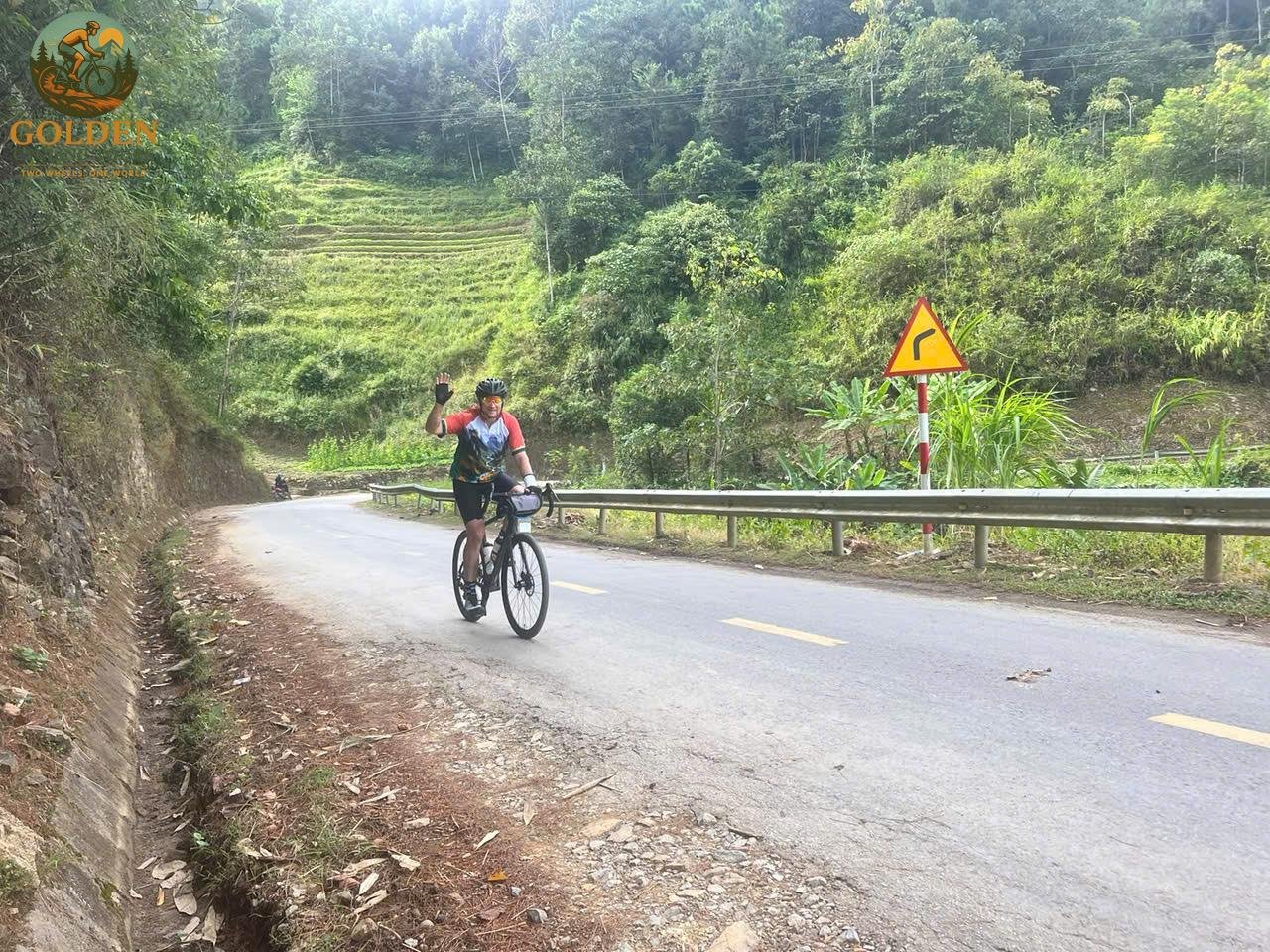
Ha Giang is not an ordinary cycling destination. Here, limestone mountains rise like ancient fortresses above emerald rivers, narrow roads trace the edges of dramatic cliffs, and quiet villages sit among cornfields and weathered stone walls. Every bend reveals another breathtaking panorama. Every climb tests your rhythm, patience, and determination.
But what is the best bicycle for this landscape: a rugged mountain bike or a lightweight gravel bike?
The answer depends on your route, riding experience, preferred level of comfort, luggage, and the surfaces you expect to encounter. A mountain bike offers stability and control on rough terrain, while a gravel bike can feel faster and more efficient on long stretches of paved mountain road.
In this guide, we will compare both options in detail, explain which bicycle suits different types of cyclists, and help you plan a memorable journey with Golden Cycling Tours. Whether you are dreaming of the legendary Ma Pi Leng Pass, the breathtaking Nho Que River, or the remote landscapes of Hoang Su Phi, choosing the right bike is the first step towards an extraordinary adventure.
For most cyclists planning a route that combines paved mountain roads with occasional rough tracks, a gravel bike is an excellent option. It offers an appealing balance of speed, climbing efficiency, and versatility.
However, if your itinerary includes broken surfaces, loose stones, uneven village roads, or more technical off-road sections, a mountain bike may be the better choice.
The important distinction is that Ha Giang is not exclusively an off-road destination. Many sections of the classic mountain route follow paved roads, but steep gradients, tight hairpin bends, changing weather, and occasional damaged surfaces make bicycle selection particularly important.
A mountain bike is ideal for riders who value stability over speed. Its wider tyres, upright riding position, and suspension options can make rougher sections easier to manage.
An MTB is particularly suitable if you want to explore smaller roads around rural settlements, take detours onto uneven tracks, or prioritise confidence on challenging descents.
A gravel bike is often a strong choice for cyclists who enjoy long road journeys, steady climbing, and covering more distance each day.
Its drop handlebars provide several hand positions, while its relatively lightweight frame and efficient tyres can help reduce fatigue over extended rides. A gravel bike with sufficiently wide tyres and appropriate gearing can handle many of the mixed surfaces found on a well-planned Ha Giang itinerary.
If your route mainly follows paved roads and you are comfortable riding a drop-bar bicycle on steep descents, consider a gravel bike.
If your route includes substantial rough terrain, you are carrying heavier luggage, or you prefer a more upright position and additional stability, consider a mountain bike.
If you are unsure, ask your tour operator about the exact route, expected road surfaces, daily climbing, bicycle specifications, and available support before making your decision.
Before comparing bicycles, it helps to understand what makes cycling in Ha Giang so distinctive.
Located in Vietnam’s far north, Ha Giang is famous for its rugged limestone formations, winding mountain roads, traditional villages, and extraordinary highland scenery. The landscape changes dramatically as you move between valleys, mountain passes, and remote settlements.
One moment, you may be riding beside terraced fields and small roadside homes. Minutes later, the road climbs into exposed limestone country, where steep rock faces tower above the asphalt and the valley drops away beneath you.
The classic routes through Quan Ba, Yen Minh, Dong Van, and Meo Vac include long paved sections with sustained climbs and descents. The main challenge is not necessarily loose gravel under every tyre; it is the combination of gradient, cornering, traffic awareness, and cumulative fatigue.
A climb may begin gently, then tighten into a sequence of switchbacks. Your breathing becomes deeper, your legs settle into a steady rhythm, and the chain clicks softly as you shift into an easier gear.
At the top, the reward can be extraordinary: jagged peaks layered against a pale sky, drifting mist between mountain ridges, and villages that seem almost suspended above the valleys.
On the descent, the priorities change. You need reliable brakes, predictable handling, good visibility, and enough control to respond to blind corners, vehicles, animals, or unexpected road damage.
Some detours and rural sections may include broken pavement, loose stones, uneven concrete, dirt, or gravel. Road conditions can change after heavy rain, construction, or local maintenance work.
This is where the distinction between an MTB and a gravel bike becomes more noticeable.
An MTB generally absorbs impacts more comfortably and offers greater control on technical terrain. A gravel bike can manage many rough surfaces, but tyre width, tyre pressure, frame geometry, and rider experience become especially important.
Rain can make corners slippery, increase braking distances, and wash debris onto the road. Mist may reduce visibility on exposed passes, while cool mountain air can feel surprisingly cold after a sweaty climb.
Even during a generally favourable season, conditions can change between the lower valleys and higher elevations. Always check local weather and road information before riding, and be prepared to shorten or modify your route.
Both bicycles can deliver an exceptional Ha Giang cycling experience, but they are designed around different priorities.
Mountain bike: Usually the more forgiving choice on broken surfaces and uneven tracks. Wider tyres can run at lower pressures, helping absorb vibration and improve grip. A suspension fork can add comfort and control when the route includes repeated impacts.
Gravel bike: Generally comfortable on paved roads, compact gravel, and moderate rough surfaces when correctly fitted. Wider tubeless tyres can reduce vibration, although the frame and fork usually provide less impact absorption than a suspension-equipped MTB.
Winner: Mountain bike for consistently rough terrain; gravel bike for predominantly paved routes with occasional rough sections.
Mountain bike: Low climbing gears make steep gradients easier to manage, especially when the bicycle is carrying luggage. The upright position can also feel reassuring at slower speeds.
Gravel bike: Often lighter and more efficient on paved climbs. A suitable wide-range cassette and compact or subcompact chainring can provide low enough gears for long mountain ascents.
Winner: It depends on gearing, total weight, and the rider. A well-geared gravel bike is excellent on paved climbs, while an MTB can be advantageous on steep, loose, or uneven surfaces.
Mountain bike: Wide tyres, stable geometry, and suspension on suitable models can increase confidence on rough descents. The upright position may help riders feel more in control at lower speeds.
Gravel bike: Can descend paved mountain roads very effectively when fitted with suitable tyres and powerful brakes. Its narrower handlebar position and responsive handling may appeal to experienced road cyclists.
Winner: Mountain bike for rough, unpredictable descents; gravel bike for riders confident on paved mountain roads.
Regardless of bicycle type, descend cautiously, keep a safe distance from other riders, and never assume that a blind corner is clear.
Mountain bike: Wider, more aggressive tyres and a heavier frame may require more effort on long paved sections. However, efficient tyres and a well-maintained modern MTB can still cover substantial distances.
Gravel bike: Usually more efficient on asphalt and smoother gravel, making it attractive for riders who want to cover longer distances without unnecessary effort.
Winner: Gravel bike for predominantly paved itineraries and distance-focused riding.
Mountain bike: Often a comfortable choice for carrying equipment on rougher roads, particularly when its frame has suitable mounting points or the tour provides a support vehicle.
Gravel bike: Can be excellent for bikepacking, especially when equipped with frame bags, a saddle bag, and suitable mounts. However, load capacity and attachment options vary by model.
Winner: Neither automatically wins. Choose according to the bicycle's rated load, mounting options, luggage arrangement, and the amount of equipment you need to carry.
Mountain bike: Suspension components may require additional maintenance, but a rigid MTB can be mechanically straightforward. Wide tyres may also offer useful protection against impacts.
Gravel bike: A rigid fork and simpler setup can reduce the number of suspension components that need attention. Nevertheless, gravel bikes are not immune to punctures, damaged wheels, or drivetrain problems.
Winner: A well-maintained bicycle with readily available replacement parts is more important than the category alone.
For a classic paved-road itinerary, a gravel bike is a compelling all-round choice for riders who value efficiency. For an itinerary with significant rough tracks or more demanding off-road exploration, an MTB offers greater versatility.
The best bicycle is not necessarily the most expensive or technically advanced. It is the one that matches the route, fits your body, has appropriate gearing, and allows you to ride safely and confidently throughout the journey.
A mountain bike is particularly appealing if you want to experience Ha Giang beyond the main paved roads.
Imagine leaving a quiet mountain town in the early morning. The air smells of damp earth and woodsmoke, and thin clouds drift above the limestone ridges. As you pedal away from the main road, the surface becomes rougher, with patches of gravel and uneven stones.
On an MTB, wider tyres and a stable riding position can make these changing surfaces feel more manageable.
The bicycle is not designed to eliminate every bump, but it can help you maintain control when the road becomes less predictable.
Not every cyclist enjoys spending hours in an aggressive, forward-leaning posture.
Many MTBs provide a more upright position that can feel comfortable for riders who prefer a relaxed view of the road and surrounding scenery. The best fit still depends on frame size, handlebar reach, saddle position, and individual mobility.
A beginner may feel more confident on an MTB because of its wide tyres and familiar flat handlebars. However, a mountain bike does not automatically make steep mountain roads easy.
You still need to practise braking, cornering, shifting gears, and controlling speed on descents. If you are new to cycling in mountainous regions, consider a shorter guided itinerary with manageable daily distances and vehicle support.
For a mixed-terrain cycling trip, consider:
Tyres wide enough for the roughest planned surfaces, with a tread pattern suited to the route.
Low climbing gears for long and steep ascents.
Reliable disc brakes, with pads and rotors in good condition.
A suspension fork if the route includes substantial rough terrain.
Comfortable grips and a professionally adjusted saddle.
Suitable luggage mounts or a support vehicle for heavier bags.
A rigid or hardtail MTB may be sufficient for many touring itineraries. Full suspension is most useful when the route genuinely requires it; extra suspension adds complexity and may reduce efficiency on smooth roads.
A gravel bike is an excellent option for riders who want to experience Ha Giang as a long-distance mountain journey rather than a technical off-road expedition.
Gravel bikes are well suited to cyclists who like finding a sustainable rhythm over long distances.
As the road climbs through Quan Ba, your hands move between the different handlebar positions. Your breathing settles into a measured pattern, and the drivetrain hums quietly beneath you.
On smoother sections, the bicycle feels eager to move forward. Every pedal stroke contributes to the climb, and the reward comes when the road opens onto a sweeping view of the mountains.
If your itinerary includes long paved stretches between towns, a gravel bike can be a practical choice.
Its efficient tyres and geometry can help experienced riders maintain a steady pace while conserving energy. This can leave more time for photography, local markets, village visits, and relaxed meals at the end of the day.
Drop handlebars offer several hand positions, which can help reduce repetitive pressure during a long ride. However, they may feel unfamiliar to cyclists accustomed to flat bars.
Before setting off, practise riding in different hand positions, braking while descending, and changing gears without losing control.
For a mountainous route, look for:
Tyres with enough clearance for wider rubber, commonly around 38–45 mm or more where the frame permits.
A low climbing gear suitable for sustained gradients.
Strong, well-maintained disc brakes.
Tyres with a versatile tread that balances paved-road efficiency and grip on rough surfaces.
A comfortable fit that allows you to ride for several consecutive days.
Suitable frame bags or luggage mounts if you are carrying your own equipment.
The ideal tyre width depends on the actual route, frame clearance, wheel size, rider weight, and tyre construction. A wider tyre is not automatically better if its tread and pressure are unsuitable for the surface.
The best choice becomes clearer when you match the bicycle to the places you want to visit.
Quan Ba Heaven Gate offers a dramatic introduction to the landscapes of northern Vietnam. Mountain ridges overlap in the distance, while the famous Twin Mountains rise above the valley like sculpted green forms.
The roads around this area include paved climbing and descending, making both bicycle types viable for a suitable itinerary.
A gravel bike is a strong option for riders comfortable with paved mountain roads. An MTB may appeal more if your route includes rougher detours or if you simply prefer its handling.
Around Yen Minh, the scenery changes between forested slopes, open valleys, and small settlements. Depending on the route, you may encounter quiet paved roads as well as uneven rural surfaces.
This is a good area for a mixed-terrain itinerary. A gravel bike suits riders focused on efficient travel, while an MTB offers additional comfort when exploring rougher side roads.
Pause where it is safe to do so. Listen to the wind moving through the trees, the distant sound of village activity, and the quiet ticking of a cooling drivetrain. These small moments often become as memorable as the major viewpoints.
The Dong Van Karst Plateau Geopark is one of the defining landscapes of Ha Giang. Jagged limestone formations rise from the earth, and narrow roads thread through a rugged world shaped by geological time.
The classic paved route is accessible to appropriately equipped gravel bikes and mountain bikes, but steep gradients and sharp bends demand concentration.
If your planned journey stays mainly on asphalt, a gravel bike can be highly efficient. If you want to explore more challenging surfaces, an MTB offers a wider margin of comfort and control.
Take time to appreciate the local architecture, stone fences, cornfields, and mountain villages rather than treating the geopark as a series of climbs to conquer.
Ma Pi Leng Pass is one of the most celebrated mountain roads in Vietnam. The route follows dramatic cliffs above the deep valley of the Nho Que River, with exposed limestone faces and distant peaks creating an almost cinematic landscape.
The ascent may be long and demanding, while the descent requires smooth braking, careful line choice, and constant awareness of other road users.
A gravel bike can perform beautifully on the paved road when fitted with appropriate tyres and gearing. An MTB can provide extra confidence if the surface is rough or the rider prefers a more stable setup.
Neither bicycle removes the risks associated with exposed mountain roads. Ride within your ability, avoid stopping in unsafe places, and follow your guide's instructions.
From viewpoints above the Nho Que River, the water can appear as a narrow ribbon of green winding between towering walls of stone. The scale of the landscape is difficult to understand until you stand above it and look down.
A cycling day in this region should leave room for more than pedalling. Depending on local conditions and your itinerary, you may be able to add a boat trip or visit designated viewpoints.
Your bicycle choice matters most on the approach roads. Both an MTB and a gravel bike can work well on suitable paved sections, while rougher access routes favour a more robust setup.
Dong Van Old Quarter offers a chance to slow down after a demanding day, explore historic streets, and enjoy local food.
Further north, Lung Cu Flag Tower is an important landmark associated with Vietnam's northernmost region. Visiting it requires route planning, time, and awareness of local access requirements.
A gravel bike can be ideal for linking paved roads between these destinations. An MTB may be more suitable if the itinerary includes substantial rough-surface detours.
Check the planned distances and climbing before combining too many attractions into one day.
Hoang Su Phi is known for spectacular terraced landscapes that change with the seasons. During the growing period, the hills become vivid green; around harvest time, the slopes can glow with golden rice.
Routes in this region may include steep roads and rougher rural sections, depending on the itinerary.
An MTB is worth considering for trips that include more challenging village roads. A gravel bike can still be an excellent choice for a carefully selected route focused on paved roads and scenic climbs.
Explore the region through Golden Cycling Tours' Ha Giang cycling experiences and ask which routes best match your preferred bicycle.
Choosing between an MTB and a gravel bike is only part of the preparation. A suitable setup can make a substantial difference to comfort, safety, and enjoyment.
Tyres connect you to the road. Their width, rubber compound, tread pattern, and pressure affect grip, comfort, rolling resistance, and puncture protection.
For a gravel bike, wider tyres can provide a useful balance between speed and stability. For an MTB, choose a tread that suits the route rather than assuming the most aggressive tyre is always best.
Tyre pressure should be adjusted to the rider's weight, luggage load, tyre width, wheel system, and surface. Excessive pressure can make rough roads uncomfortable, while insufficient pressure can increase the risk of rim strikes or tyre damage.
Ha Giang's mountain roads can include sustained climbs that reward sensible gear selection.
A wide-range cassette and sufficiently low climbing gear help you maintain a comfortable cadence rather than forcing your legs to grind through every ascent.
Shift before the gradient becomes extremely steep where possible. Smooth, early gear changes are easier on the drivetrain than sudden shifts under heavy load.
Reliable brakes are essential on long descents.
Before the trip, inspect brake pads, rotors, cables or hydraulic systems, and wheel condition. Learn to control your speed before corners rather than braking abruptly in the middle of a turn.
Use both brakes smoothly, keep your eyes focused on the road ahead, and leave extra space when riding in a group.
Pack lightweight layers that can adapt to changing temperatures. A breathable jersey, padded cycling shorts, gloves, rain protection, and a windproof layer are useful for mountain conditions.
Bring a helmet that fits correctly, sunglasses or clear-lens eyewear, sunscreen, basic repair equipment, and enough water for the distance between reliable refill points.
A small first-aid kit and a fully charged phone are sensible additions. Your tour operator should explain which repair tools, spare parts, and emergency arrangements are provided.
You do not need to be a professional cyclist to enjoy Ha Giang, but you should be realistic about the physical demands.
Mountain cycling involves repeated climbs, sustained effort, and long descents that require concentration even when you are not pedalling hard. Heat, humidity, cold, and luggage can all affect how difficult a day feels.
If you ride occasionally and can comfortably cycle for one to two hours, consider a shorter itinerary with manageable distances, a suitable bicycle, and flexible support.
You may benefit from shorter days that leave time for sightseeing rather than attempting to complete the longest possible route.
If you ride several times a week and are comfortable with hills, a longer Ha Giang itinerary may be appropriate.
Practise climbing at a sustainable pace, riding for consecutive days, and descending safely before your departure.
Experienced riders may prefer longer days or more challenging routes, but fitness alone is not enough. Technical skills, weather awareness, road conditions, and the ability to manage fatigue remain important.
Ask for daily distance and elevation profiles rather than judging difficulty from distance alone. A short day with a steep climb can be harder than a longer route on rolling terrain.
The best time to cycle in Ha Giang depends on the weather you prefer and the scenery you want to experience.
Autumn is popular for cooler conditions, mountain scenery, and seasonal colour. Depending on the year and location, rice terraces may turn golden, while buckwheat flowers can add delicate pink and white tones to the landscape.
This period can be busy, so reserve accommodation and tours early if your dates are fixed.
Spring often offers pleasant conditions for cycling, with fresh green vegetation and beautiful mountain views. Temperatures can be comfortable for long climbs, although weather remains variable at higher elevations.
April and May can become warmer and wetter as the season progresses, so check the forecast before departure.
Summer brings vivid green landscapes but also heat, humidity, heavy rain, and possible landslides. These conditions can complicate cycling plans and make some routes unsuitable.
If you travel during this period, use a flexible itinerary and follow local advice on road safety.
Winter can offer a quieter atmosphere, but highland temperatures may fall considerably, especially early in the morning and on exposed passes. Fog and damp conditions can also affect visibility and comfort.
Pack warm layers and avoid rushing into cold, misty descents.
For broader travel planning, consult the official Vietnam Tourism guide to Ha Giang. Weather and flower timing vary from year to year, so no seasonal window guarantees specific conditions.
Food is an essential part of a cycling journey. After hours of climbing, a warm meal is more than a source of energy: it is an opportunity to experience the flavours and hospitality of the northern highlands.
Look for opportunities to sample:
Thang co, a traditional highland dish often associated with local markets.
Au tau porridge, a regional speciality that should be eaten only when properly prepared by an experienced local cook.
Local rice dishes, seasonal vegetables, tofu, eggs, and stir-fried greens.
Regional corn-based foods and handmade noodles.
Freshly prepared soups and simple family-style meals at homestays.
Recipes and ingredients vary between communities, households, and restaurants. If you have allergies or dietary restrictions, explain them clearly before ordering.
In towns such as Ha Giang City, Yen Minh, Dong Van, and Meo Vac, look for established local restaurants and eateries recommended by your guide.
For a more personal experience, many homestays serve home-cooked meals featuring rice, vegetables, meat, tofu, and seasonal ingredients. These meals can provide a welcome opportunity to talk with your hosts and learn about daily life.
A mountain cycling day is not the time to skip breakfast. Eat a balanced meal before departure, carry easy-to-digest snacks, and drink regularly rather than waiting until you feel thirsty.
Long climbs can drain energy quickly, especially in warm conditions. Your guide can help identify suitable meal stops and water refill points along the route.
Accommodation can shape the entire rhythm of your trip, from the quiet of a mountain morning to the comfort of resting after a demanding ride.
Homestays offer opportunities to experience regional food, family hospitality, and the atmosphere of village life.
Depending on the property, facilities may be simple or relatively comfortable. Confirm bedding, bathroom arrangements, heating, and secure bicycle storage if these are important to you.
Hotels and guesthouses in Ha Giang City, Dong Van, and Meo Vac can provide convenient access to restaurants, shops, and route connections.
They may be a good choice if you prefer a private room, a hot shower, and a more predictable level of comfort after a long day.
Travellers who prefer additional comfort can ask about higher-end properties or upgraded accommodation where available along the planned route.
Availability can vary considerably in remote mountain areas. Do not assume that a premium property is available in every overnight location.
For tailored accommodation arrangements, discuss your preferences with Golden Cycling Tours.
Many travellers begin their journey in Hanoi, travelling to Ha Giang City by sleeper bus, limousine van, or private vehicle.
The journey commonly takes several hours, depending on the transport service, traffic, and road conditions. If you are bringing your own bicycle, confirm in advance whether the operator accepts bicycles and whether special packing is required.
A private transfer can be convenient for groups or travellers carrying bulky cycling equipment.
If you plan to bring your own MTB or gravel bike, protect the frame, wheels, drivetrain, and derailleur during transport. Confirm bicycle storage and transfer arrangements with your tour operator before booking.
If you prefer not to travel with your own equipment, ask whether a suitable rental bicycle is available and whether its size, gearing, tyres, and condition match your needs.
A support vehicle can carry luggage, provide access to supplies, and offer assistance if a rider becomes exhausted or encounters a mechanical issue.
However, support services vary between tours. Confirm whether a vehicle accompanies the group throughout the route, whether luggage transfers are included, and what happens if weather or road closures require a change of plan.
A guided cycling tour can be particularly useful in a remote mountain region where route planning, language, local knowledge, and emergency coordination matter.
Ha Giang is not simply a landscape to ride through. It is home to diverse communities with distinctive traditions, languages, clothing, architecture, food, and livelihoods.
The Hmong, Tay, Dao, Lo Lo, and other communities contribute to the region's rich cultural identity. Traditions vary by village and family, so approach every encounter with curiosity and respect rather than assuming that all communities share the same customs.
Local markets can offer a glimpse of everyday life, from the exchange of produce to traditional textiles and regional food.
Ask permission before photographing people, particularly children, private homes, religious spaces, or market vendors at work. A friendly greeting and a respectful approach can make an interaction more meaningful than a hurried photograph.
Choose locally owned restaurants, homestays, and craft sellers where practical. Purchase goods fairly, avoid aggressive bargaining over small amounts, and ask your guide about the meaning of locally made products.
Carry your rubbish until you find an appropriate disposal point, avoid disturbing crops or livestock, and stay on permitted roads and trails.
Ride quietly through villages, slow down around pedestrians and animals, and never stop in a place that blocks traffic or creates a hazard.
Responsible cycling helps preserve the character of the places that make Ha Giang so memorable.
Choosing the right bicycle is easier when the route is designed around your experience, preferences, and expectations.
Golden Cycling Tours offers a starting point for exploring cycling itineraries across Ha Giang and northern Vietnam. Before choosing a trip, discuss your cycling background, preferred bicycle, desired daily distance, luggage needs, and interest in cultural experiences.
Explore the following options to identify a route that matches your plans.
Ha Giang Bike Tours: Explore cycling options in the dramatic northern highlands.
8-Day Northern Vietnam Cycling Tour: Epic Ha Giang Loop Adventure: A route to investigate if you want a dedicated multi-day Ha Giang cycling experience.
10-Day Ha Giang Loop and Hoang Su Phi Cycling Adventure: An option to consider if you want to combine the famous loop with the terraced landscapes of Hoang Su Phi.
Best Vietnam Cycling Northeast Tour – 15 Days: Explore a longer journey through northeastern Vietnam.
Vietnam Northeast Bike Tours: Browse cycling experiences in the northeastern region.
Cycling Northern Vietnam: Discover broader cycling options across northern Vietnam.
If you are still deciding what kind of cycling holiday suits you, consider these additional destinations and itineraries:
Cao Bang Bike Tours: Explore another spectacular region of northern Vietnam.
Ba Be Lake Bike Tours: Consider a journey around a striking natural lake landscape.
Mai Chau Bike Tours: Explore cycling in a region known for valleys and rural communities.
Pu Luong Bike Tours: Discover routes through landscapes of forests, villages, and rice terraces.
Ninh Binh Bike Tours: Consider a contrasting landscape of limestone formations, waterways, and flatter countryside.
Vietnam E-Bike Tours: Explore electric-bike options if you want assistance on demanding climbs.
Vietnam Luxury Bike Tours: Investigate premium cycling experiences and comfort-focused arrangements.
4-Day Mai Chau to Pu Luong Cycling Adventure: Consider a shorter journey through northern Vietnam's countryside.
6-Day Mai Chau, Pu Luong, and Ninh Binh E-Bike Tour: Explore an electric-bike itinerary through several contrasting landscapes.
All Golden Cycling Tours: Browse available tours and compare itineraries.
These links are useful starting points, but check the current itinerary, bicycle options, inclusions, accommodation, and availability directly with the operator before booking. Not every tour necessarily offers both MTB and gravel-bike rentals.
Before confirming a trip, ask:
Which bicycle models and sizes are available?
Can I choose between an MTB and a gravel bike?
What are the daily distances and total elevation gains?
How much of the route is paved, gravel, or rough terrain?
Are helmets, repair kits, spare parts, and luggage transfers included?
Is there a support vehicle, and what assistance does it provide?
What is the plan if heavy rain or a road closure affects the route?
Can the itinerary be adjusted to my cycling experience?
Clear answers help you choose a trip that matches your abilities rather than simply selecting the longest or most adventurous-sounding itinerary.
When comparing cycling tours, genuine customer feedback can reveal details that a route description may not explain.
Look for verified reviews that discuss bicycle condition, route planning, guide communication, accommodation quality, food, support services, and how the operator responded when conditions changed.
For a Ha Giang cycling trip, particularly useful feedback includes comments about:
Whether the bicycle was suitable for the terrain.
Whether daily distances and climbing matched the advertised difficulty.
How the guide handled steep descents and changing weather.
Whether support and luggage arrangements worked as promised.
Whether the tour allowed enough time to enjoy villages and viewpoints.
Editorial note: Add a verified review from a real Golden Cycling Tours customer here before publication. Include the customer's permission where required, the original wording, and a genuine source or attribution. Do not publish invented names, quotations, ratings, or customer experiences as authentic testimonials.
A gravel bike is often ideal for a route dominated by paved mountain roads, while an MTB is generally better for rough tracks and more technical surfaces. The best option depends on the exact route, rider experience, tyres, gearing, and comfort preferences.
Yes. A gravel bike can be suitable for many paved sections of the classic route. Choose tyres with adequate clearance and grip, low enough climbing gears, and reliable brakes. If your itinerary includes extensive rough or technical terrain, compare it with an MTB option.
Not necessarily. An MTB may be slower on smooth paved roads, particularly with aggressive tyres, but it can provide greater comfort and control on rough surfaces. A well-maintained MTB with suitable tyres can be an excellent touring bicycle.
There is no single ideal width for every route. Gravel bikes commonly use tyres around 38–45 mm or wider where permitted, while mountain bikes generally use wider tyres. Choose based on the actual surface, tyre clearance, rider weight, luggage, and manufacturer recommendations.
Not always. A suspension fork can be useful on rough tracks, but many paved mountain routes can be ridden on a rigid gravel bike or rigid MTB. The rougher the planned route, the more valuable suspension may become.
It can be suitable for recreational cyclists with a carefully chosen itinerary, but the mountain terrain should not be underestimated. Beginners should consider shorter days, appropriate gearing, a guided tour, and support options. Anyone uncomfortable with steep descents should practise before the trip.
March to May and September to November are often attractive periods for cycling, although conditions vary. Autumn is popular for seasonal scenery, while spring can offer fresh landscapes and comfortable temperatures. Heavy summer rain and winter cold may require additional planning.
Bringing your own bicycle allows you to ride a familiar setup, but transporting it requires planning and careful packing. Renting can be more convenient if the operator has a suitable, well-maintained bicycle in your size. Confirm availability and specifications before booking.
An e-bike can help reduce the effort required on long climbs, making a mountain itinerary more accessible to some riders. However, battery range, charging access, total bicycle weight, and support arrangements need to be considered carefully. Explore Vietnam E-Bike Tours if electric assistance interests you.
That depends on the operator's fleet, rental arrangements, and the route. Ask in advance whether a different bicycle can be provided and whether switching models would affect the itinerary or cost.
Check your brakes, tyres, wheels, and overall bicycle condition. Descend at a speed appropriate to visibility and road conditions, leave extra space, and anticipate blind corners and other road users. If you are unfamiliar with steep mountain descents, discuss the safest approach with your guide.
Start with the Golden Cycling Tours website, explore Ha Giang Bike Tours, and compare the available itineraries. Contact the operator to confirm bicycle type, daily distances, climbing, accommodation, support, and availability before making a reservation.
So, should you choose a mountain bike (MTB) or a gravel bike for a trip to Ha Giang?
If you dream of covering long stretches of paved mountain road, climbing efficiently, and enjoying a steady rhythm between spectacular viewpoints, a gravel bike may be your ideal companion.
If you want extra stability on rough surfaces, more confidence on uneven tracks, and the freedom to explore challenging rural detours, a mountain bike may suit you better.
There is no universal winner. The right choice is the bicycle that matches your route, physical ability, riding experience, and preferred style of adventure.
Imagine cresting Ma Pi Leng Pass after a long climb. The wind brushes your face, the scent of mountain vegetation hangs in the cool air, and the Nho Que River glimmers far below between towering limestone cliffs. Your legs are tired, but the view makes every pedal stroke worthwhile.
That is the experience worth preparing for: not simply reaching a destination, but feeling every kilometre of the journey.
With the right bicycle, a realistic itinerary, and thoughtful preparation, Ha Giang can become one of the most rewarding cycling adventures in Vietnam. Explore Golden Cycling Tours to compare routes and discuss which cycling experience best matches your ambitions.

.jpg "Cycling in Vietnam in March")
.jpg "Vietnam mountain bikes Trail")
.jpg "Vietnam Biking Trails")
.jpg "Ha Giang Cycling Tours")
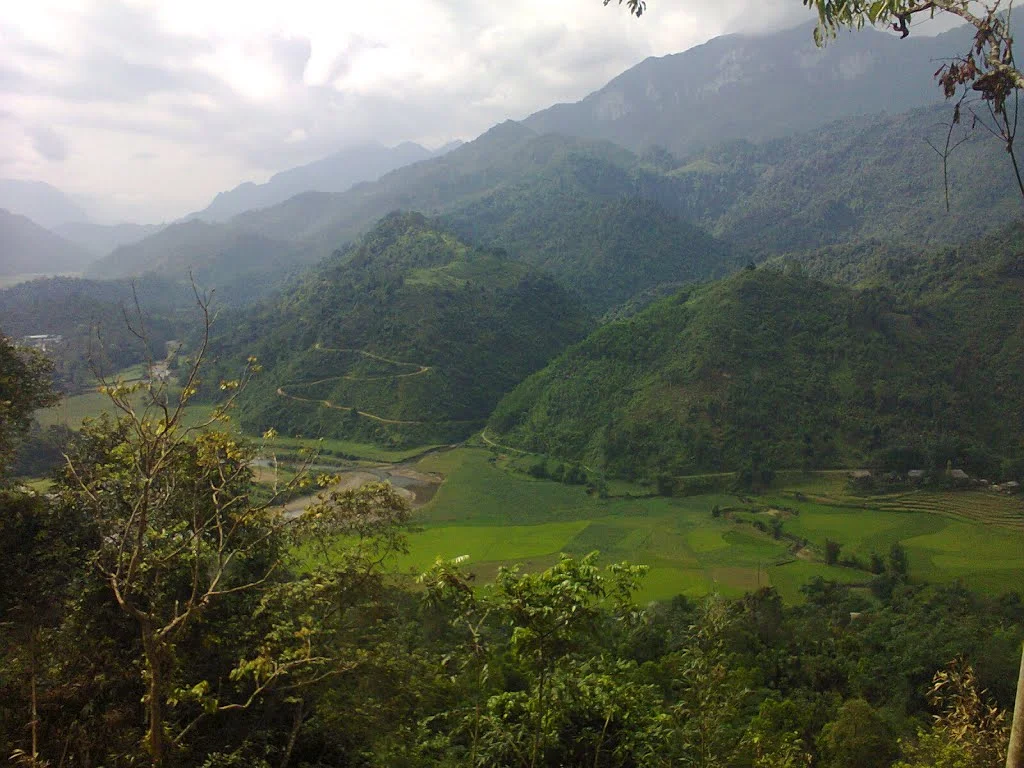
Leave a Reply
Your email address will not be published. Required fields are marked *