- Call us Via Whatsapp: +84 (0) 832 126 699
4.9 stars on our site
(15,000 reviews)
- Monday - Sunday : 08:00 - 17:00
(15,000 reviews)

Imagine the first light of morning spilling across emerald rice fields. Mist rises slowly from the valleys, curling around limestone mountains while roosters call from distant villages. Your tires roll over a quiet country road, the chain whispers with every turn of the pedals, and the air carries the earthy fragrance of wet soil, bamboo, and freshly cut grass.
This is the magic of a Mai Chau to Pu Luong Cycling Tour—a journey that takes you beyond Vietnam’s busy cities and into a landscape shaped by rice cultivation, traditional stilt houses, forested hills, and generations of rural life.
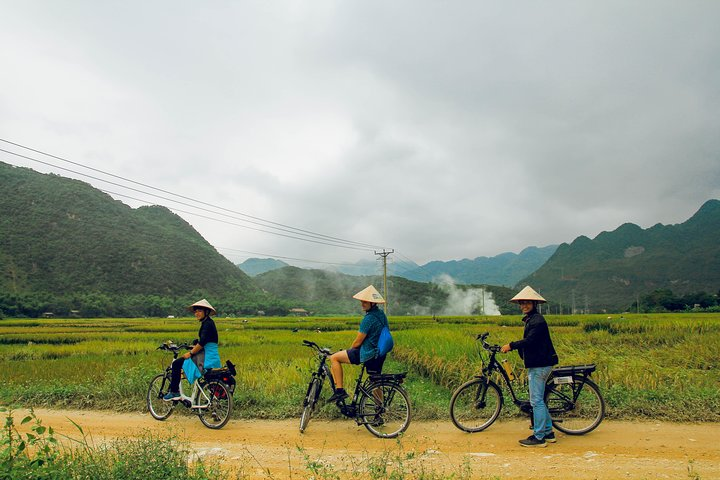
Beginning in the peaceful valley of Mai Chau and continuing toward the lush landscapes of Pu Luong Nature Reserve, this cycling adventure reveals a quieter, more intimate side of northern Vietnam. Rather than rushing between famous landmarks, you travel at the rhythm of the countryside, stopping to admire terraced fields, greet local residents, sample home-cooked dishes, and discover small villages tucked between the mountains.
A Mai Chau to Pu Luong Cycling Tour can appeal to a wide range of travelers, from recreational cyclists seeking scenic rural roads to experienced riders looking for longer days in the saddle. The exact challenge depends on the route, distance, elevation, road conditions, and support arrangements selected for your trip.
With Golden Cycling Tours, travelers can explore cycling experiences in northern Vietnam and discuss an itinerary that suits their fitness, interests, and preferred travel style.
Explore the official website: Golden Cycling Tours
Northern Vietnam is famous for its dramatic mountain passes and spectacular highland landscapes, but the countryside between Mai Chau and Pu Luong offers a different kind of adventure. Here, the journey is as much about the people and the small details of rural life as it is about the scenery.
The valley around Mai Chau opens into a patchwork of rice paddies, village gardens, small streams, and traditional houses. Depending on the season, the fields may glow with fresh green shoots, turn golden before harvest, or shimmer with water beneath the open sky.
As you cycle along narrow rural lanes, the landscape changes with every bend. Water buffalo graze beside the fields, farmers work beneath broad-brimmed hats, and children wave from village entrances.
The pace invites you to notice things that might disappear from view through a car window: the texture of a bamboo fence, the smell of rice cooking over a wood fire, or the cool shade beneath a canopy of trees.
The transition from Mai Chau toward Pu Luong Nature Reserve brings a growing sense of immersion in the mountains. Roads wind between forested slopes, small settlements, agricultural terraces, and valleys where the morning mist can linger long after sunrise.
Pu Luong Nature Reserve is especially appealing to travelers who appreciate landscapes that feel peaceful and relatively unhurried. Its limestone mountains, forest habitats, cultivated hillsides, and traditional villages create a memorable setting for slow travel.
The route should not be described as entirely flat or uniformly paved. Depending on the itinerary, cyclists may encounter sustained climbs, rolling roads, rough sections, and village lanes. Confirm the actual surface conditions with your tour operator before choosing a bicycle.
Cycling provides opportunities to encounter rural life at a human pace. You may see families preparing meals, farmers carrying baskets between fields, or artisans continuing traditional household activities.
The region is home to Thai and Muong communities, among others. Cultural experiences vary by village and should be approached with respect rather than treated as performances guaranteed to happen on every trip.
A thoughtful itinerary allows time to ask permission before taking photographs, learn about local customs, and support family-run accommodation and restaurants.
Not every cyclist wants the same experience. Some prefer leisurely rides with frequent photography stops, while others enjoy longer distances and more demanding climbs.
A well-planned Mai Chau to Pu Luong Cycling Tour should account for:
Your cycling experience and daily distance preference.
The amount of climbing and the steepness of the gradients.
Road surfaces and traffic conditions.
The availability of rest stops, luggage transport, and support vehicles.
Accommodation standards and the time available for cultural visits.
Whether a conventional bicycle or an e-bike best suits your needs.
For a wider selection of routes, visit Golden Cycling Tours’ tour collection.
The precise route depends on the selected tour. The following overview describes the landscapes and experiences travelers may encounter, rather than promising a fixed distance, elevation profile, or road surface for every departure.
Mai Chau is a natural starting point for a cycling journey through the rural landscapes of northern Vietnam. The valley is known for rice fields, traditional Thai stilt houses, village paths, and a relaxed atmosphere that encourages travelers to slow down.
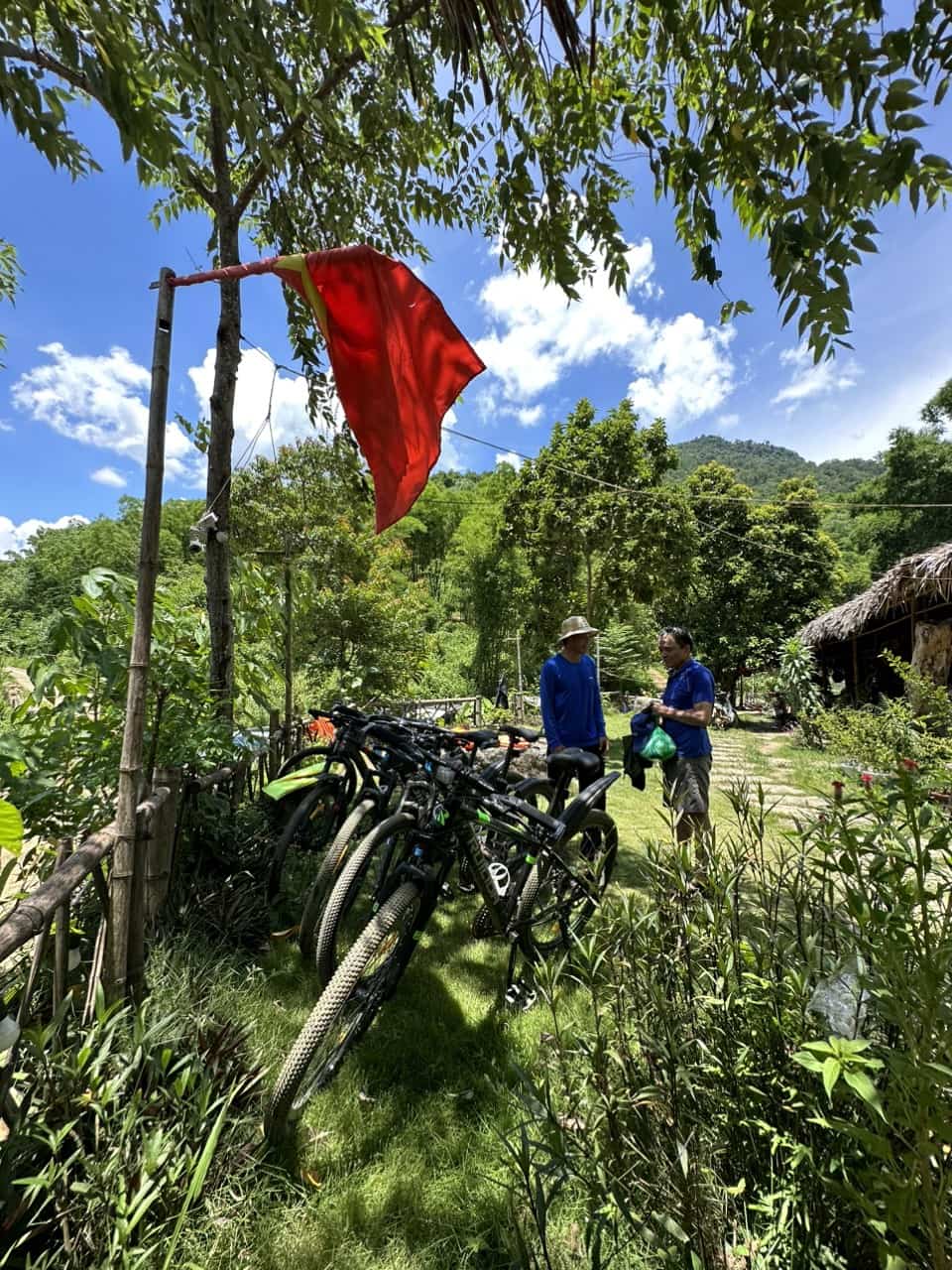
Before setting off, take time to check your bicycle, adjust your helmet, fill your water bottles, and review the day's route.
As the pedals begin turning, the valley gradually wakes around you. Sunlight catches the edges of the rice plants, while the rhythmic sound of bicycle tires blends with birdsong and the distant activity of village life.
Explore Lac Village, known for traditional Thai stilt houses and local handicrafts.
Visit Pom Coong Village to experience the atmosphere of a rural Thai settlement.
Cycle through the rice fields surrounding Mai Chau Valley.
Sample local dishes in a family-run restaurant or homestay.
Take an early-morning walk to appreciate the valley before the day becomes warm.
Travelers who want to explore the area further can browse Mai Chau bike tours.
Leaving the central valley, the scenery becomes more varied. Small roads may pass through cultivated land, skirt wooded hills, and climb toward viewpoints overlooking the surrounding countryside.
This is where a cycling journey becomes a sequence of sensory impressions.
The road rises gently beneath your wheels. Your breathing becomes more deliberate as the gradient increases. The chain clicks as you shift into an easier gear, and the warm air carries the scent of grass, wood smoke, and damp earth.
At a bend in the road, the view may open across a green valley dotted with houses and fields. A short stop allows your legs to recover while you listen to insects in the roadside vegetation and the wind moving through the trees.
Some routes may include steeper or rougher sections. Avoid assuming that every village road is smooth or suitable for every bicycle. Your operator should confirm the expected terrain and help select a route appropriate to your ability.
Changing views of rice fields and mountain slopes.
Quiet rural settlements and opportunities to observe everyday life.
Natural pauses for photography and refreshments.
A gradual transition from open valley scenery to more enclosed mountain landscapes.
The satisfaction of covering the landscape under your own power.
The most memorable moments are often unplanned: a conversation with a welcoming resident, a small roadside stall, or a brief stop to watch farmers working in a field.
As you approach Pu Luong Nature Reserve, the landscape becomes increasingly defined by forested limestone mountains, cultivated slopes, traditional settlements, and deep green valleys.
The reserve protects important natural habitats, while local communities continue to cultivate land and maintain long-standing rural traditions. The balance between nature and agriculture gives the region its distinctive character.
Depending on your route, you may encounter narrow village roads, rolling terrain, or climbs that demand steady pacing. Keep your breathing controlled, shift gears before the gradient becomes too steep, and leave enough energy to enjoy the destination rather than treating every climb as a race.
Ban Don is one of the best-known village areas associated with tourism in Pu Luong. Its mountain views, rice terraces, and traditional accommodation make it an appealing place to pause after a day of cycling.
Depending on the season and visibility, the hills may appear in layers of deep green, pale mist, or golden agricultural tones. The atmosphere changes throughout the day, giving photographers and nature lovers plenty of reasons to linger.
Ban Hieu Waterfall is a popular natural attraction in the Pu Luong area. The sound of flowing water and the cool atmosphere around the falls offer a refreshing contrast to warm hours spent on the bicycle.
Access conditions and the amount of walking required can vary. Confirm the route and available time with your guide or accommodation before including the waterfall in a cycling itinerary.
Kho Muong Village is known for its secluded mountain setting and traditional rural atmosphere. Nearby, Kho Muong Cave offers an additional natural attraction for travelers interested in limestone landscapes.
These visits may require extra time, walking, or a separate route from the day's cycling stage. They are best planned according to weather, local access conditions, and the overall itinerary.
For destination information and possible cycling options, visit Pu Luong bike tours.
A journey through northern Vietnam is not simply a visual experience. The landscape becomes memorable through the combination of sound, scent, texture, taste, and physical effort.
At sunrise, mist softens the outlines of the mountains. By midmorning, the rice fields become more vivid, and sunlight reveals the different shades of green across the valley.
Clouds move over the limestone slopes, sometimes exposing distant ridgelines and sometimes concealing them behind a veil of white. During harvest periods, cultivated fields may turn golden, creating a striking contrast with the darker forests.
The bicycle makes its own quiet music: tires humming across the road, gears clicking during a shift, and the soft mechanical rhythm of the drivetrain.
Beyond the bicycle, you may hear roosters, birds, flowing water, the rustle of bamboo, and conversations from nearby homes. On busier roads, engine noise and passing traffic may interrupt the quiet, so remain alert and ride predictably.
The countryside offers changing scents throughout the day. After rain, the soil releases a deep, earthy fragrance. Near fields and forest edges, the air may smell of wet leaves and vegetation. Around village kitchens, the aroma of steamed rice, grilled meat, and wood smoke can make a lunch stop especially inviting.
A climb can warm your shoulders and make your breathing more noticeable. A shaded road may bring a sudden feeling of coolness, especially after rain or during an early start.
The surface beneath your tires also changes the experience. Smooth asphalt allows a steady rhythm, while rougher sections demand relaxed hands, a balanced posture, and careful attention to traction.
A day in the saddle builds an appetite. A bowl of rice, fresh vegetables, grilled meat, or a warm local soup can feel especially satisfying after a demanding ride.
Local food varies by village and season, so treat each meal as an opportunity to discover regional flavors rather than expecting an identical menu everywhere.
The difficulty depends on the chosen itinerary, total distance, elevation gain, road conditions, weather, and your fitness.
The journey may be suitable for recreational cyclists if the route is designed around moderate distances and adequate rest. More challenging versions may include extended climbs, rough roads, or longer days in the saddle.
If you are relatively new to cycling, consider an itinerary with shorter daily distances, frequent stops, and manageable gradients.
Before booking, ask for the expected riding distance each day, total climbing, steepest sections, and whether the route can be adjusted if you become tired.
An e-bike may help reduce the effort required on climbs, but it does not remove the need for balance, braking skills, road awareness, and sufficient battery capacity.
Riders with regular cycling experience may enjoy a combination of valley roads, rolling terrain, and moderate climbs.
Practice riding at a sustainable pace rather than using all your energy early in the day. A comfortable cadence, suitable gearing, and consistent hydration can make a substantial difference over several hours.
Experienced riders may prefer longer stages or routes with more climbing. Discuss the actual elevation profile with your operator before assuming the itinerary includes difficult mountain passes or technical off-road trails.
Unlike some high-mountain routes in northern Vietnam, the Mai Chau–Pu Luong experience is often valued for its mixture of rural landscapes, village roads, and natural scenery rather than for one legendary summit.
A hybrid bike, touring bike, mountain bike, or e-bike may be suitable depending on the confirmed route.
Mountain bike: A practical option for rougher roads and mixed surfaces.
Hybrid or touring bike: Comfortable for many paved and well-maintained rural roads.
Gravel bike: Suitable when the route surface, tire clearance, gearing, and riding conditions match the bicycle's setup.
E-bike: Helpful for reducing climbing effort, provided battery capacity and charging arrangements suit the itinerary.
Confirm the bicycle specifications, frame size, tire condition, repair support, and equipment included in the package before departure.
The best time to ride depends on your priorities: comfortable temperatures, clearer mountain views, lush rice fields, or golden harvest scenery. Northern Vietnam's weather varies by elevation, and mountain conditions can change quickly.
Spring is often an attractive period for cycling around Mai Chau and Pu Luong. Temperatures are generally more comfortable than during the hottest summer periods, and the countryside can look particularly fresh.
March and April may offer pleasant riding conditions, although mist, light rain, and changing temperatures are still possible. May can become warmer, especially on exposed roads.
Best for: Travelers who enjoy green landscapes, comfortable mornings, and a balance between outdoor activity and cultural visits.
Summer brings strong vegetation and vivid countryside, but it can also bring high temperatures, humidity, and heavy rainfall.
Rain may make some roads slippery, while intense showers can affect access to trails and natural attractions. Plan early starts, carry sufficient water, and allow flexibility in the schedule.
Best for: Travelers who prioritize lush scenery and are comfortable adapting plans to changing weather.
Important: Check current local forecasts and road conditions before riding. Avoid exposed or steep sections during thunderstorms or when surfaces are unsafe.
Autumn is often one of the most appealing periods for a Mai Chau to Pu Luong Cycling Tour. Depending on the local agricultural calendar, rice fields may shift toward golden hues, and the cooler air can make cycling more comfortable.
September may still bring rain in some areas. October and November often provide attractive conditions, although weather varies from year to year.
Best for: Photographers, nature lovers, and cyclists seeking a combination of scenic views and relatively comfortable riding temperatures.
Winter can bring a peaceful atmosphere, cooler mornings, and misty mountain scenery. Some days may be dry and pleasant, while others feel damp or chilly.
Pack layers, gloves if needed, and rain protection. Visibility can change quickly in the hills, so keep a flexible schedule.
Best for: Travelers who enjoy cooler weather and atmospheric landscapes rather than consistently warm conditions.
For many travelers, March to May and October to November are strong periods to consider. If golden rice fields are your priority, ask about the expected harvest conditions for your travel dates rather than assuming every valley will be golden at the same time.
For trip planning and alternative routes, explore Cycling Northern Vietnam.
Food is an essential part of exploring Mai Chau and Pu Luong. Meals often reflect the agricultural landscape, local ingredients, and culinary traditions of the region.
Com lam is sticky rice cooked inside bamboo tubes. The rice absorbs a subtle bamboo fragrance as it cooks, producing a soft texture and a distinctive aroma.
It is often served with grilled meat, sesame salt, or other local accompaniments. After a morning ride, it makes a memorable introduction to the food culture of the region.
Grilled pork, chicken, and seasonal vegetables may feature on menus at local restaurants and homestays. Marinades and preparation styles vary from kitchen to kitchen.
The smoky aroma of grilled food, fresh herbs, and warm rice makes dinner especially satisfying after a day outdoors.
Depending on availability, meals may include leafy greens, bamboo shoots, herbs, mushrooms, and seasonal vegetables. Simple soups and vegetable dishes can help replenish fluids and provide a lighter option after strenuous riding.
Consider these options:
Family-run restaurants around Mai Chau Valley.
Homestays in Lac Village and nearby settlements.
Local eateries around Ban Don and other tourism areas in Pu Luong.
Accommodation restaurants that prepare meals using seasonal ingredients.
The availability of specific dishes varies, so ask ahead if you have dietary restrictions or food allergies. Vegetarian, vegan, halal, or gluten-free options should be confirmed directly rather than assumed.
Choosing the right accommodation can transform a cycling trip from a demanding physical challenge into a restorative travel experience.
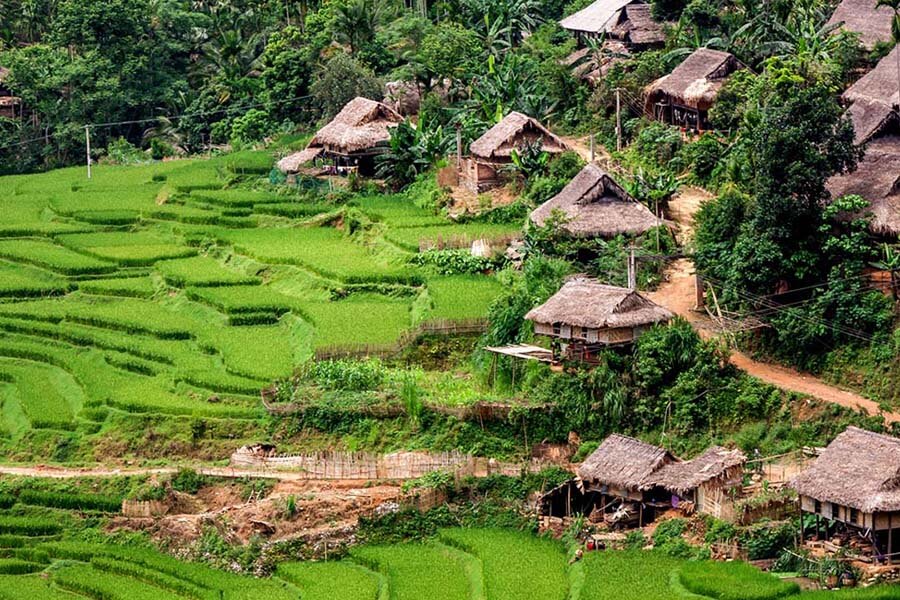
A homestay offers an opportunity to experience rural hospitality and learn about local life. Some traditional Thai houses are built on stilts, with communal areas where guests can relax and share meals.
Facilities vary widely. Some properties offer simple rooms and shared bathrooms, while others provide private rooms and modern conveniences. Confirm sleeping arrangements, bathroom facilities, meals, and bicycle storage before booking.
In Pu Luong, some lodges are positioned to take advantage of valley views, terraced hills, and forested slopes. Depending on the property, guests may enjoy balconies, gardens, swimming pools, or open-air dining areas.
Imagine sitting outside after a long ride, listening to insects in the trees while mist drifts across the valley. A warm shower, a good meal, and a quiet night's sleep can make the next day's ride feel much easier.
Consider the following when selecting a place to stay:
Distance from the planned cycling route.
Secure bicycle storage and any available maintenance support.
Private or shared bathroom facilities.
Meal availability and dietary requirements.
Heating, cooling, and hot-water arrangements.
Accessibility during heavy rain.
Whether luggage transfer is included in your tour.
If comfort and upgraded accommodation are priorities, explore Vietnam luxury bike tours and confirm the actual accommodation standard offered on your selected itinerary.
Most international travelers begin their journey in Hanoi, Vietnam's capital. From there, ground transport is commonly used to reach Mai Chau.
Depending on your budget and preferred travel style, you may consider:
A private car or minivan.
A shared transfer, where available.
A tour-arranged transfer.
Other scheduled transport options confirmed for your travel dates.
Travel times vary with traffic, departure point, weather, and road conditions. Ask your operator to confirm the transfer duration, pickup location, luggage allowance, and whether bicycle transport is included.
During a cycling tour, the transition between destinations may be completed by bicycle, support vehicle, or a combination of both, depending on the itinerary.
Do not assume that every package includes a support vehicle or luggage transfer. Ask Golden Cycling Tours to confirm:
Whether you ride the entire route between the two areas.
Whether luggage is transferred separately.
Whether a support vehicle is available and under what conditions.
How mechanical problems or fatigue are handled.
Whether optional transfers are included in the price.
At the end of the journey, travelers may arrange a private transfer or another suitable ground transport option back to Hanoi. Allow enough time for traffic and flight check-in, particularly if you are departing on the same day.
Browse all cycling tours from Golden Cycling Tours to compare possible itineraries and discuss transport arrangements.
The landscapes of Mai Chau and Pu Luong are inseparable from the communities that live and work within them. Thai and Muong cultural traditions contribute to the region's architecture, food, agriculture, and everyday rhythms.
Traditional stilt houses are an important feature of many villages in the region. Their design reflects local building traditions, environmental conditions, and ways of organizing family life.
When visiting a home, follow your host's guidance about where to sit, where to leave footwear, and which areas are private. A friendly greeting and a willingness to listen can make an encounter more meaningful than a hurried photograph.
Rice cultivation shapes the calendar of rural life. Planting, tending, and harvesting all require careful work and coordination, and the appearance of the fields changes throughout the agricultural year.
Cyclists may see farmers working in the fields or carrying crops along village paths. Observe from a respectful distance and avoid riding through cultivated areas unless access is explicitly permitted.
Some communities maintain traditions of weaving, embroidery, music, dance, and communal celebrations. Opportunities to experience these traditions depend on the village, season, and arrangements made by local hosts.
If a cultural performance is offered, ask whether it is a regular community activity or a special event arranged for visitors. Support locally owned businesses where possible and avoid assuming that every community follows the same customs.
A respectful visitor should:
Ask permission before photographing people, homes, or private activities.
Dress appropriately when visiting religious or culturally significant places.
Avoid leaving litter or disturbing wildlife.
Purchase handicrafts directly from local makers when possible.
Follow local guidance around farming areas and natural attractions.
Learn a few polite Vietnamese greetings before the trip.
The goal is not simply to pass through the countryside, but to leave with a deeper appreciation for the people who make it distinctive.
A cycling itinerary can be enhanced with short walks, cultural visits, and time to enjoy the landscape beyond the saddle.
Mai Chau Valley is the region's defining landscape, with rice fields, small villages, and mountain backdrops. It is ideal for relaxed cycling, photography, and an introduction to rural northern Vietnam.
Lac Village is known for traditional stilt houses, local handicrafts, and visitor accommodation. It is a convenient place to learn about local culture and sample regional food.
Pom Coong Village offers another opportunity to experience the village atmosphere of the Mai Chau area. Visit respectfully and remember that it is a living community rather than simply a tourist attraction.
Pu Luong Nature Reserve is the main natural highlight of the journey. Its limestone mountains, forests, agricultural terraces, and rural settlements create a landscape that rewards slow exploration.
Access to particular paths and attractions can depend on weather and local conditions, so plan excursions with knowledgeable local guidance.
Ban Don is associated with scenic mountain views and accommodation overlooking the surrounding countryside. It can be a rewarding overnight base for travelers wishing to explore the Pu Luong area.
Ban Hieu Waterfall provides an opportunity to experience the region's flowing water and lush vegetation. Allow extra time for access and walking, and follow local safety advice.
Kho Muong Village and Kho Muong Cave offer an additional perspective on the landscape and settlement patterns of the region. The visit should be arranged according to the day's route, available time, and current access conditions.
The following is an illustrative itinerary, not a guaranteed daily schedule for every Golden Cycling Tours package. Distances, riding time, accommodation, and route surfaces must be confirmed before booking.
Arrive in Mai Chau, settle into your accommodation, and check your bicycle. If time permits, take a relaxed introductory ride through the valley and visit Lac Village or Pom Coong Village.
Enjoy a local dinner and rest before the main cycling stages.
Begin with an early breakfast and set off along the planned countryside route. Depending on the selected itinerary, the day may include rice fields, small settlements, rolling roads, and scenic stops.
Maintain a comfortable pace, drink water regularly, and stop when needed to enjoy the landscape. After the ride, spend the evening at a local homestay or another confirmed accommodation option.
Ride toward Pu Luong Nature Reserve along the route confirmed by your operator. Expect the terrain and riding effort to depend on the chosen roads and elevation profile.
After arriving in the Pu Luong area, enjoy a meal and take time to appreciate the mountain views. If the schedule and conditions allow, consider a short walk or a visit to a nearby village.
Depending on your departure time, enjoy a relaxed morning around Ban Don, visit another accessible attraction, or take a short local ride.
After breakfast, transfer toward Hanoi or continue to your next destination according to your travel arrangements.
For a specific four-day itinerary, see 4 Days Northern Vietnam Cycling: Mai Chau to Pu Luong Cycling Adventure.
Good preparation makes the experience safer and more comfortable.
A properly fitted helmet.
Padded cycling shorts and breathable clothing.
Comfortable cycling shoes.
Gloves and sunglasses.
Water bottles or a hydration system.
Sunscreen and insect repellent.
A lightweight rain jacket.
Basic personal medication and a small first-aid kit.
A phone, offline maps, and a portable power bank.
Mornings and evenings can be cooler than the middle of the day. Pack layers that can be added or removed easily.
During the rainy season, waterproof protection and spare dry clothing are especially useful. A small dry bag helps protect electronics and important documents.
If possible, build up your cycling endurance in the weeks before departure. Practice riding for several hours, climbing moderate hills, and controlling your bicycle on descents.
You do not need to train like a professional athlete for every itinerary, but a reasonable fitness base will help you enjoy the scenery without becoming overwhelmed by the physical effort.
The countryside may feel peaceful, but safe riding requires attention and preparation.
Stay aware of motorbikes, cars, pedestrians, animals, and agricultural vehicles. Keep to a predictable line and avoid sudden movements.
On descents, control your speed before entering a bend. Loose gravel, wet leaves, potholes, and muddy surfaces can reduce traction, especially after rain.
Heat and humidity can make a ride more demanding than expected. Drink regularly rather than waiting until you feel thirsty, and take breaks before fatigue affects your concentration.
Carry suitable snacks for longer stages and let your guide know if you feel unwell or need to slow down.
Heavy rain can make rural roads slippery and may affect access to some attractions. Fog can reduce visibility, while strong sun can increase the risk of dehydration.
Follow local guidance and be willing to modify the route when conditions become unsafe.
Ask the operator whether the package includes a guide, support vehicle, spare bicycle, mechanical assistance, first-aid provisions, luggage transfer, and drinking water.
These services can vary between itineraries. Make sure the written proposal clearly states what is included, what costs extra, and how emergency situations are handled.
Planning a cycling trip through rural northern Vietnam involves more than choosing a destination. Route selection, accommodation, transfers, bicycle setup, daily distances, and local conditions all affect the quality of the experience.
Golden Cycling Tours offers a starting point for travelers comparing cycling experiences across Vietnam. Before booking, discuss your preferred riding style, fitness level, accommodation expectations, and interest in cultural or natural attractions.
Useful resources include:
When enquiring, ask for a day-by-day itinerary, estimated distances, elevation gain, road surfaces, bicycle specifications, accommodation details, transfer arrangements, and the exact services included in the price.
If you have additional time, consider expanding your trip to other parts of the country.
Ha Giang: Explore the dramatic northern highlands with Ha Giang bike tours or the 8-Day Epic Ha Giang Loop Adventure.
Cao Bang: Discover another mountainous region through Cao Bang bike tours.
Northern Vietnam: Browse Vietnam Northeast Bike Tours for more regional possibilities.
Ba Be Lake: Consider the landscapes around Ba Be Lake bike tours.
Ninh Binh: Combine cycling with limestone scenery and rural landscapes through Ninh Binh bike tours.
Longer northern journeys: Explore the 15-Day Best Vietnam Cycling Northeast Tour, the 10-Day Ha Giang Loop and Hoang Su Phi Cycling Adventure, or the 12-Day North Vietnam Cycling Adventure from Hanoi to Ninh Binh.
These are different cycling experiences, not automatic extensions of the Mai Chau–Pu Luong route. Check the itinerary, available dates, and transfer requirements before combining destinations.
Authentic customer feedback helps travelers understand the experience beyond the itinerary description. For a Mai Chau to Pu Luong Cycling Tour, useful feedback may address the quality of route planning, the scenery, the guide's communication, accommodation, meals, and the handling of unexpected changes.
Important: The following is a review template, not a real customer testimonial. Replace it with a genuine review from a verified traveler before publishing.
Headline: A Memorable Cycling Journey Through Northern Vietnam
“Cycling from Mai Chau toward Pu Luong gave us the chance to experience northern Vietnam at a slower pace. We enjoyed the rural scenery, the quiet village roads, and the opportunity to learn more about local life. The most memorable moments were the views across the valley and the feeling of reaching our destination after a rewarding day on the bicycle.
Before booking, we received information about the route, accommodation, and daily riding expectations. The experience was especially enjoyable because we had time to stop, take photographs, and appreciate the landscape.”
Replace this template with a verified review and confirm that every statement accurately reflects the customer's experience. Do not attribute invented words to a real person or imply that a review was independently verified unless that verification has taken place.
The duration depends on the itinerary. Travelers can consider a multi-day trip that allows time for cycling, cultural visits, and exploration of the surrounding countryside. Golden Cycling Tours lists a four-day Mai Chau to Pu Luong cycling adventure. Confirm the current itinerary and departure details directly with the operator.
It can be suitable for some beginners if the selected route has manageable distances and climbing. However, the terrain is not uniformly flat, and some itineraries may include demanding climbs or rough surfaces. Share your cycling experience with the operator before booking.
March to May and October to November are often attractive periods to consider. Conditions vary by year, elevation, and rainfall. If you want to see golden rice fields, ask about the expected harvest period for your specific travel dates.
The right bicycle depends on the confirmed road surfaces and elevation profile. A mountain bike may suit rougher sections, while a hybrid or touring bike can work well on many paved rural roads. A gravel bike or e-bike may also be suitable if its setup matches the route.
An e-bike may be a good option for travelers who want assistance on climbs or prefer to manage their effort. Check battery range, charging opportunities, bicycle availability, and whether the selected tour supports e-bikes. You can explore Vietnam e-bike tours.
Not necessarily. These arrangements vary by tour and group configuration. Confirm whether luggage is transported separately, whether a support vehicle follows the route, and what assistance is available in case of a mechanical problem or fatigue.
Travelers may choose traditional homestays around Mai Chau or accommodation in the Pu Luong area, including properties with views of the surrounding hills. Facilities and comfort levels vary, so check the exact accommodation included in your package.
Consider com lam, grilled local meat, fresh vegetables, bamboo shoots, and seasonal dishes served by local restaurants and homestays. Menus vary, so inform your host about allergies and dietary requirements in advance.
Possibly, depending on the route, schedule, weather, and access conditions. The waterfall may require extra time for walking or a separate excursion. Confirm the plan with your guide or accommodation.
Some families with older children and suitable cycling experience may enjoy a carefully selected itinerary. Consider daily distance, climbing, traffic, heat, and access to rest stops. For younger children or inexperienced riders, request a tailored route and discuss safety arrangements in detail.
You do not necessarily need to be an advanced cyclist, but you should be comfortable with the planned riding time and terrain. Regular practice, suitable gearing, hydration, and a realistic daily schedule will help. Ask for the route's elevation profile before making a decision.
Start by visiting the Golden Cycling Tours website or the specific four-day Mai Chau to Pu Luong cycling tour page. Contact the operator to confirm dates, availability, price, inclusions, bicycle options, accommodation, and cancellation terms before paying.
A Mai Chau to Pu Luong Cycling Tour is an invitation to experience northern Vietnam beyond its busiest roads and most familiar viewpoints.
It is the soft light over Mai Chau Valley, the scent of damp earth after a passing shower, the rhythmic clicking of the gears on a climb, and the sudden quiet of a village road surrounded by green hills. It is the taste of warm rice after a long ride, the welcome of a local host, and the satisfaction of reaching Pu Luong Nature Reserve under your own power.
The journey does not need to be rushed. Take time to watch the clouds move across the mountains, stop for photographs when a valley opens before you, and leave room for the unexpected moments that make travel memorable.
Whether you prefer a leisurely countryside ride, a more physically demanding cycling holiday, or an e-bike adventure, the best itinerary is one that matches your ability and gives you time to appreciate the places you visit.
Begin planning with Golden Cycling Tours, review the Mai Chau to Pu Luong cycling itinerary, and confirm the route details that matter to you.
The mountains are waiting, the valley roads are calling, and northern Vietnam is ready to be discovered one pedal stroke at a time.

.jpg "Pu Luong Cycling Tours")
Leave a Reply
Your email address will not be published. Required fields are marked *