- Call us Via Whatsapp: +84 (0) 832 126 699
4.9 stars on our site
(15,000 reviews)
- Monday - Sunday : 08:00 - 17:00
(15,000 reviews)

The mountains of Northern Vietnam do not reveal their beauty all at once. They unfold around each bend, rise above every climb and disappear into clouds that drift across ancient limestone peaks. In Ha Giang, a cycling journey is more than a ride between destinations. It is an encounter with a landscape that challenges your legs, sharpens your senses and rewards every kilometre with extraordinary views.
Imagine setting off at dawn, when the mountain air feels cool against your skin and a thin veil of mist hangs above the valleys. Your gravel tyres roll over the pavement with a low, steady hum. The freehub clicks as you coast into a bend. Somewhere nearby, woodsmoke rises from a village kitchen, mixing with the earthy scent of damp soil and vegetation after the night’s rain.
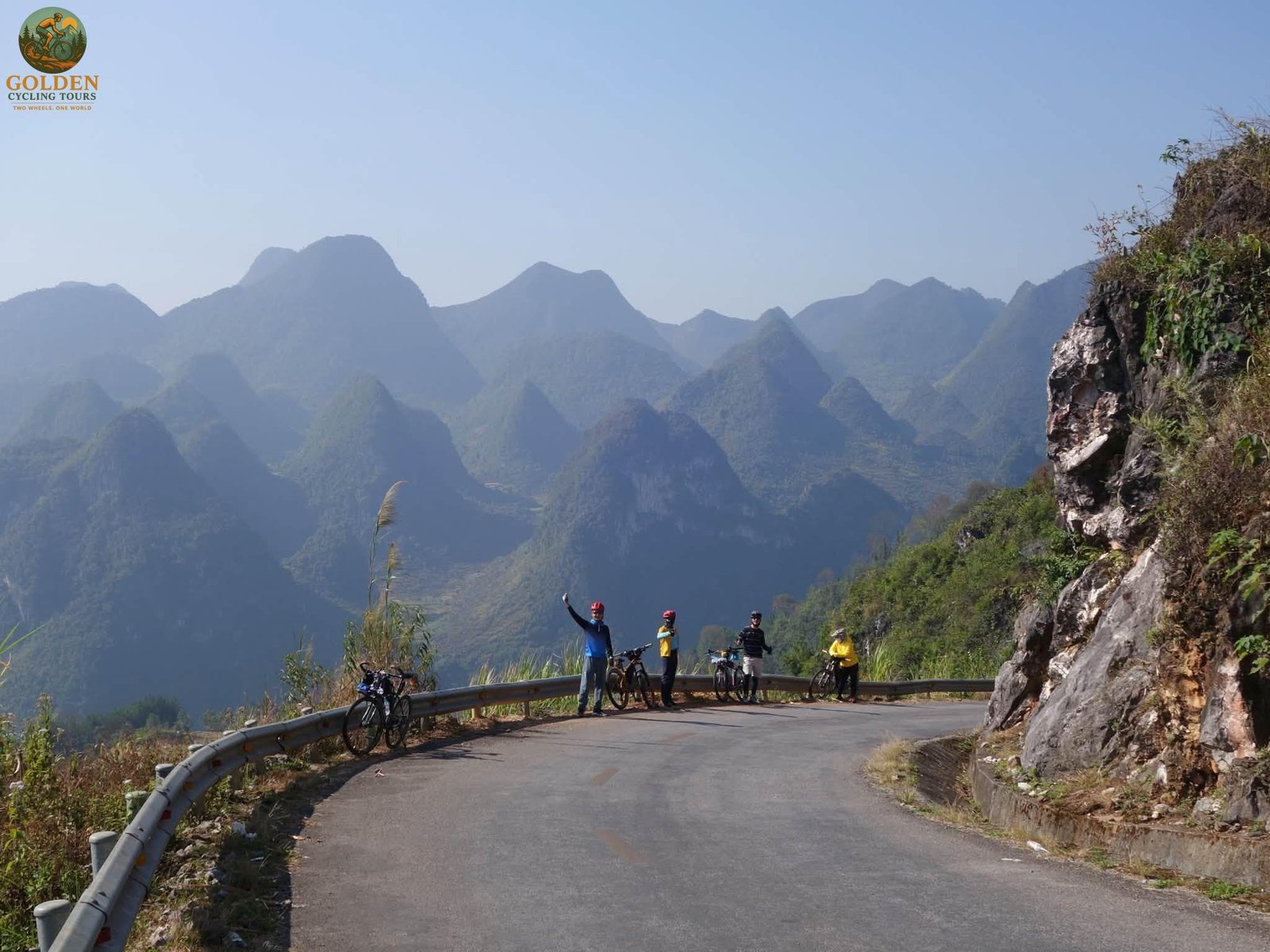
Ahead, the road climbs towards a wall of limestone. Your breathing deepens. Your legs settle into a rhythm. You shift into an easier gear and follow the curve of the mountain, knowing that the next viewpoint may reveal a river winding far below or a village tucked between towering ridges.
So, is Ha Giang suitable for gravel cycling? Absolutely—provided you choose the right route, prepare for mountain conditions and understand what the region’s roads are really like.
Ha Giang is famous for its spectacular mountain roads, challenging gradients, dramatic passes and remote highland communities. Many iconic routes are paved rather than gravel, but road quality can vary, and some itineraries may include broken asphalt, loose stones or selected unpaved sections. This mixture makes the region appealing to versatile gravel riders, although it does not mean every road is suitable for every bicycle or ability level.
In this comprehensive guide, discover the best places to ride, how to choose your gravel bike, when to visit, where to eat and sleep, how to travel from Hanoi, and how to plan a rewarding cycling holiday with Golden Cycling Tours.
Yes, Ha Giang is suitable for gravel cycling, especially for riders who enjoy long mountain climbs, technical descents, winding roads and changing surfaces. It is particularly attractive to cyclists who value spectacular scenery and cultural experiences as much as speed.
However, it is important to understand the difference between a gravel-friendly destination and a destination covered entirely in gravel roads.
The celebrated Ha Giang Loop mainly follows paved mountain roads. Some stretches are smooth and flowing, while others may have damaged pavement, gravel at the road edges, potholes, roadworks or loose debris. Unpaved detours may be possible in certain areas, but their condition, legality and suitability should be checked locally before riding.
For a gravel cyclist, the attraction lies in versatility: a bicycle capable of climbing efficiently on asphalt while offering additional comfort and control when the surface becomes rough.
Several qualities make Ha Giang a compelling destination for adventurous cyclists.
Spectacular mountain terrain: Long climbs, steep gradients and exposed ridgelines deliver a serious physical challenge.
Changing road surfaces: Predominantly paved routes may include rough patches and loose material, making tyre choice and bike handling important.
Unforgettable scenery: Limestone mountains, deep valleys, terraced fields and winding rivers create an extraordinary backdrop.
Cultural encounters: Local markets, village homes, family-run eateries and traditional farming landscapes add depth to the journey.
A sense of remoteness: Even when following established cycling routes, the highlands can feel vast and wild, especially early in the morning before the roads become busy.
The result is a destination where every climb has a purpose. You ride not merely to reach the next town, but to discover what waits beyond the ridge.
The best bicycle depends on your planned route.
A gravel bike is often a versatile choice for a journey that combines paved mountain roads with rough patches or suitable unpaved sections. A road bike can be effective on predominantly paved routes, provided the rider is confident descending mountain roads. A mountain bike may be more appropriate when a confirmed itinerary includes sustained rough tracks or technical off-road riding.
For many visitors, a gravel bike offers a useful balance of climbing efficiency, comfort and adaptability.
The key is to match your equipment to the actual itinerary rather than choosing a bicycle based only on the destination’s reputation.
Ha Giang’s landscape is shaped by steep mountains, limestone formations, narrow valleys and roads that repeatedly climb and descend. Distances that appear modest on a map can become demanding once elevation gain, tight corners and changing weather are taken into account.
The climbs are an essential part of the experience. Some rise gradually through cultivated valleys before becoming steeper as the road approaches a mountain ridge. Others turn sharply up exposed slopes, demanding a lower gear and a patient approach.
Your breathing becomes more pronounced. Sweat gathers beneath your helmet. The chain moves across the cassette with a series of precise clicks as you adjust your cadence. The landscape seems to retreat slowly behind you until, suddenly, the road opens towards a broad view of the mountains.
The best strategy is to pace yourself. Choose a sustainable gear, eat before you become hungry and save enough energy for the descent and the next climb.
Mountain descents can be exhilarating, but they demand respect. Blind corners, traffic, animals, road debris, fog and wet surfaces may appear unexpectedly.
A gravel bike can offer additional stability on rough patches, but wider tyres do not remove the need for careful braking and sound judgement. Slow down before corners, maintain a predictable line and avoid sudden steering movements on loose surfaces.
The goal is not to descend as quickly as possible. It is to arrive safely with enough energy to appreciate the landscape around you.
Do not assume that every attractive mountain road is an unpaved track. Ha Giang’s classic cycling experience is largely defined by paved mountain roads and their changing conditions.
| Road condition | What riders should expect |
|---|---|
| Smooth asphalt | Efficient riding and easier climbing |
| Broken or patched pavement | Additional vibration and the need to scan the road |
| Loose stones near road edges | Reduced traction and a need for careful cornering |
| Wet roads | Longer braking distances and less predictable grip |
| Mud, debris or road damage | Possible delays, rerouting or the need to walk the bicycle |
Road conditions may change after heavy rain, landslides or construction. Before departure, confirm the current route with a knowledgeable local guide or operator.
Few places capture the drama of Northern Vietnam as powerfully as Ma Pi Leng Pass.
The road winds between Dong Van and Meo Vac, tracing a steep mountainside above the magnificent Nho Que River. Limestone cliffs rise around the route, while the landscape drops away into the immense Tu San Canyon.
As you climb, the scenery changes with every turn. A rock wall gives way to an open viewpoint. A sharp bend reveals another ridge, another valley and another stretch of road suspended above the landscape.
The physical experience is equally vivid. Your thighs begin to burn as the gradient increases. Your breathing becomes deeper and more deliberate. The wind moves across your face, carrying the cool scent of mountain vegetation. When the road briefly levels, the chain quiets and the freehub clicks as you coast towards the next bend.
Much of the celebrated pass is paved, so the challenge is not continuous gravel riding. It is the combination of steep gradients, exposed corners, changing weather and traffic.
For gravel cyclists, Ma Pi Leng Pass is a highlight that rewards patience, confidence and careful preparation.
The approach to Quan Ba Heaven Gate introduces riders to a landscape of dramatic limestone formations, cultivated slopes and green valleys.
From elevated viewpoints, the Quan Ba Twin Mountains rise above the surrounding terrain like rounded green islands. Below them, fields and settlements form a patchwork of human activity within the vast mountain landscape.
The climb may begin gently before becoming more demanding around a series of bends. Settle into a rhythm rather than attacking the first steep section. Stop only in safe, designated areas and give yourself time to enjoy the view.
For riders who are new to the region, Quan Ba can be a memorable introduction to the terrain and scale of Ha Giang.
Around Yen Minh, the scenery shifts between wooded slopes, agricultural valleys and mountain roads that climb towards the rocky highlands.
Depending on your route, you may encounter smoother pavement followed by damaged sections or gravelly road edges. This is where a versatile gravel setup can be useful, particularly when carrying light luggage.
Keep your eyes moving between the road surface and the landscape ahead. Relax your shoulders, maintain a controlled cadence and avoid letting a beautiful viewpoint distract you from an approaching bend.
Dong Van is a natural stop for cyclists exploring the karst plateau. Its old quarter, local eateries and guesthouses offer an opportunity to rest after a day of climbing.
In the evening, warm lights illuminate traditional façades. The sound of conversation drifts from small restaurants, and the aroma of hot soup and freshly prepared food fills the streets.
After hours of effort, even a simple meal can feel extraordinary. Take time to walk through the town, speak with your host and prepare for the following day rather than treating the stop as merely a place to sleep.
The Nho Que River winds through one of the most dramatic landscapes in Northern Vietnam. From suitable viewpoints, its green water contrasts with the towering limestone walls of Tu San Canyon.
Reaching a viewpoint by bicycle is not the same as riding all the way to the river. Some access roads can be steep, narrow or unsuitable for a loaded gravel bike. A boat trip may offer a more appropriate way to experience the canyon from below, depending on local access and operating conditions.
Plan the stop carefully, leave enough daylight for your ride and never descend an unfamiliar track simply because it appears on a map.
The Lung Cu Flag Tower is an important landmark in Vietnam’s northernmost region and can be a meaningful addition to a Ha Giang itinerary.
The surrounding roads may involve extra climbing, so consider your available time, fitness and the weather before adding the detour. Secure your bicycle where permitted and follow local rules when visiting the site.
For travellers who enjoy combining physical challenges with cultural exploration, the journey towards Lung Cu adds another dimension to the cycling experience.
A reliable bicycle makes the difference between concentrating on the scenery and worrying about every rough patch.
For mixed-surface mountain riding, gravel tyres around 38–45 mm wide can be a useful starting point, depending on your bicycle, rider weight, luggage and route.
A moderately textured tread can provide a balance between efficient rolling on pavement and dependable grip on rougher surfaces. Very aggressive tyres may feel slower on long paved climbs, while extremely slick tyres offer less reassurance when the road becomes loose or muddy.
Before travelling, check tyre condition, frame clearance and recommended pressure. If you use a tubeless setup, make sure you know how to repair a puncture.
Ha Giang rewards sensible gearing. A sufficiently low climbing gear helps you maintain a steady cadence on long ascents, especially when carrying luggage.
Grinding a heavy gear may feel manageable on the first climb, but repeated mountain passes can quickly drain your energy. Shift before the gradient becomes severe, stay seated when traction allows and keep enough strength in reserve for later sections.
Reliable brakes are essential for repeated descents. Check brake pads, rotors and cables or hydraulic components before departure. If you are unsure about their condition, have a qualified mechanic inspect the bicycle.
Carry a multi-tool, tyre levers, a spare tube or compatible tubeless repair kit, a pump or inflator, a chain quick link and basic first-aid supplies. Remote sections may offer few repair options, so self-sufficiency matters.
The best time to ride depends on your preferred scenery, tolerance for cold or heat, and willingness to adapt to changing weather.
For many cyclists, March to April and September to November are attractive periods. Spring can bring fresh greenery and blossoms, while autumn is known for cooler conditions and seasonal landscapes in parts of the region. However, weather varies from year to year, and no month guarantees dry roads or clear mountain views.
Spring can be a wonderful time to explore Ha Giang. The landscape may appear especially fresh, and temperatures can be comfortable for long climbs.
Mornings at higher elevations may still be chilly, and mist can reduce visibility. Bring a windproof layer, full-finger gloves and clothing that can be adjusted as the day warms.
Summer brings lush vegetation, but heavier rain can make cycling more difficult. Wet pavement reduces grip, rough tracks may become muddy and landslides can interrupt routes.
If you travel during this period, monitor the forecast and local road conditions. Allow flexibility in your itinerary and be prepared to shorten a ride or change the route.
Do not continue onto an exposed pass when severe weather makes the conditions unsafe.
Autumn is a particularly appealing period for many visitors. In suitable areas, terraced rice fields may turn golden before harvest, while seasonal flowers add colour to the highlands.
Temperatures can be pleasant for cycling, although conditions vary with elevation and the weather system. October and November can also be busy, so consider reserving accommodation in advance.
Winter brings a different atmosphere. Mountain air can feel sharply cold, especially during early starts, and fog may reduce visibility on exposed roads.
Pack insulating layers, a windproof jacket and warm gloves. If road grip or visibility is poor, delay the descent or change the day’s plan.
The best time for a Ha Giang cycling tour is the period when the weather, route conditions and your own ability align. Always check current forecasts and local advice before riding.
Food is an essential part of a cycling journey. After a long climb, a hot meal provides energy and an opportunity to experience the flavours of the highlands.
Banh cuon Ha Giang is a popular breakfast choice. Soft rice sheets are served with a warm broth in many local eateries, creating a comforting start to a cool mountain morning.
The delicate texture, savoury aroma and warmth of the soup are especially welcome before a long ride.
Thang co is associated with Hmong food culture and traditional highland gatherings. Ingredients and preparation can vary, and its flavour may be unfamiliar to first-time visitors.
If you want to try it, ask your host or guide for a reputable local place and a clear explanation of the dish.
Au tau porridge is another regional speciality associated with Ha Giang. The raw tuber requires appropriate preparation, so order the dish from an established local vendor rather than attempting to prepare it yourself.
For cyclists, familiar dishes are often just as useful as regional specialities. Rice, noodles, eggs, vegetables, tofu, meat and soup can provide a practical combination of carbohydrates and protein.
Carry portable snacks such as bananas, nuts, biscuits or energy bars for longer stretches between towns. Do not assume that every remote road has a shop selling food and drinks.
Look for local restaurants, family-run eateries and market food stalls in Ha Giang City, Yen Minh, Dong Van and Meo Vac.
Ask your host or guide about opening hours and recommended places. If you have allergies or dietary requirements, communicate them before setting off, particularly when travelling through remote areas.
After a demanding day in the saddle, good accommodation is part of the adventure. A comfortable bed, a warm meal and a secure place for your bicycle can make recovery easier.
Family-run homestays offer opportunities to experience local hospitality and, in some cases, share meals with your hosts.
Facilities vary. Confirm room arrangements, bathroom access, hot water and secure bicycle storage before booking. Respect household privacy and ask before photographing residents.
Ha Giang City, Dong Van and Meo Vac offer hotels and guesthouses that can provide convenient overnight stops.
Depending on the property, you may have access to private rooms, laundry services or space to store your bicycle. These facilities are not guaranteed, so confirm the details directly.
Before confirming accommodation, ask whether the property can provide secure bicycle storage, early breakfast arrangements, laundry facilities and luggage storage if needed.
During busy travel periods, reserve ahead where possible. If your itinerary includes remote villages, confirm the overnight arrangements rather than assuming suitable accommodation will be available on arrival.
Hanoi is the most common starting point for international travellers heading to Ha Giang.
Long-distance buses and limousine vans connect Hanoi with Ha Giang City. Journey times are commonly around six to eight hours, depending on the service and traffic, but schedules can change.
If you are bringing your own gravel bike, confirm the operator’s bicycle policy before purchasing a ticket. Ask about packaging, extra charges, luggage limits and whether the bicycle must be partially disassembled.
A private transfer can be convenient for cyclists carrying a bike box, spare wheels or multiple bags. It may also simplify the journey if you are travelling as a group.
Confirm vehicle capacity, pick-up arrangements and any additional charges before booking.
Cycling is the main activity, but other transport options can help with transfers, rest days or unexpected changes.
Bicycle: The best way to experience the mountain roads directly.
Support vehicle: Useful when explicitly included in the confirmed itinerary.
Private car: Practical for sightseeing or accompanying non-cycling travellers.
Local bus or van: Useful between major towns, subject to schedules and bicycle capacity.
Do not assume that a support vehicle or luggage transfer is included in every cycling tour. Confirm these services with the operator before booking.
Ha Giang is home to diverse ethnic communities, including Hmong, Dao, Tay and Lo Lo people, among others. Their languages, clothing, architecture, farming traditions and local markets contribute to the region’s cultural richness.
For cyclists, moving slowly through the landscape creates opportunities to observe daily life beyond the major viewpoints.
Markets in places such as Dong Van and Meo Vac can bring together residents trading produce, textiles, livestock and household goods. Market days vary by location, so ask locally if you want to plan a visit.
These are living community spaces rather than staged attractions. Ask permission before taking photographs, particularly of children, vendors or people in traditional clothing.
Dress appropriately when visiting culturally significant places. Follow your host’s guidance about shoes, shared spaces and meal etiquette.
Avoid riding quickly through crowded markets, blocking village entrances or entering private property for photographs. A respectful greeting and a willingness to listen can make an encounter more meaningful than a rushed stop.
Take rubbish with you, avoid disturbing livestock and never ride across cultivated terraces or private land without permission.
If a rough track appears on a map, do not assume it is open to cyclists. Check access and local conditions before riding. Responsible travel helps protect the landscapes and communities that make Ha Giang special.
The following is an illustrative route framework rather than a confirmed Golden Cycling Tours itinerary. Exact distances, road surfaces, climbing and overnight stops should be verified before departure.
Begin with a ride towards Quan Ba Heaven Gate. Use the first day to adapt to the terrain, test your gearing and establish a sustainable pace.
Stop at safe viewpoints and allow time for changing weather. Avoid adding unverified gravel detours simply to make the day more adventurous.
Continue through the mountain scenery towards Yen Minh and Dong Van. Expect climbing, corners and variable road quality.
Keep your effort steady, eat regularly and leave enough daylight for the final kilometres. Once in Dong Van, explore the old quarter and enjoy a well-earned meal.
This is the dramatic centrepiece of the journey. Ride carefully across Ma Pi Leng Pass, stopping at suitable viewpoints to appreciate the Nho Que River and Tu San Canyon.
The road deserves your full attention. Do not rush the descent, and check access conditions before adding a visit to the river.
Choose your return route according to your fitness, available time and the weather. Some riders return towards Ha Giang City; others continue on a longer pre-arranged itinerary.
Confirm road conditions, transfer arrangements and the next overnight stop before committing to the day.
Planning a cycling holiday in Ha Giang involves more than finding a scenic road. You need to consider daily climbing, road surfaces, bicycle suitability, accommodation, transport and contingency arrangements.
Golden Cycling Tours is a useful starting point for exploring cycling itineraries across Northern Vietnam. Review the current tour information and confirm the services included in your selected package before booking.
Start with the Ha Giang Bike Tours destination page to explore options related to the region.
For a longer journey, review the 10-Day Ha Giang Loop and Hoang Su Phi Cycling Adventure. You can also explore the 8-Day Northern Vietnam Cycling Tour: Epic Ha Giang Loop Adventure.
These itineraries are useful starting points for planning, but confirm whether the current route is suitable for gravel bikes and whether any unpaved sections are included.
Before confirming a tour, ask Golden Cycling Tours:
What proportion of the route is paved, rough or unpaved?
What are the daily distances and total elevation gains?
Is a gravel bike available, or should I bring my own?
Are luggage transfers, mechanical assistance and a support vehicle included?
What happens if heavy rain, a landslide or a road closure affects the route?
Which accommodation and meals are included?
Can the itinerary be adjusted to match my fitness and riding experience?
Clear answers will help you choose a journey that matches your expectations.
If you have more time, consider extending your trip beyond Ha Giang. Northern Vietnam offers a variety of landscapes, from dramatic mountain roads to rice valleys, forested hills and limestone formations.
Explore Cao Bang Bike Tours if you want to discover another spectacular region of Northeast Vietnam.
The area is known for limestone scenery, rural villages and Ban Gioc Waterfall. A wider Northeast Vietnam itinerary may combine cycling with cultural stops and natural attractions.
The Ba Be Lake Bike Tours collection is worth exploring if you want to combine cycling with time around Ba Be Lake and Ba Be National Park.
Confirm the terrain and access arrangements for your chosen itinerary, especially if you prefer gravel riding over predominantly paved roads.
Discover Mai Chau Bike Tours for a different cycling experience. The valley’s rice fields, villages and rural roads can offer a gentler contrast to Ha Giang’s demanding mountain passes.
The 4-Day Mai Chau to Pu Luong Cycling Adventure is another itinerary to consider when comparing cycling styles and destinations.
Explore Pu Luong Bike Tours for forested hills, terraced fields and rural settlements around Pu Luong Nature Reserve.
The terrain differs from Ha Giang, so confirm the route profile and surface conditions if you intend to ride a gravel bike.
Browse Ninh Binh Bike Tours if you want to combine cycling with sightseeing among limestone formations, waterways and historic attractions.
For a longer journey through Northern Vietnam, review the 12-Day North Vietnam Cycling Adventure from Hanoi to Ninh Binh.
If you want assistance on steep climbs, explore Vietnam E-Bike Tours. E-bikes can make climbing more manageable, but battery range, charging access and bike suitability must be confirmed.
For travellers seeking a more comfort-focused experience, browse Vietnam Luxury Bike Tours. Check the actual accommodation standard and support arrangements for the specific tour.
You can also compare these wider itineraries:
Visit Golden Cycling Tours or browse all cycling tours to discuss which route best matches your experience, preferred bike and available travel dates.
Preparation allows you to focus on the landscape rather than preventable problems.
Pack a breathable cycling jersey, padded shorts, a windproof jacket, a waterproof shell and layers that can be removed as the temperature rises.
Full-finger gloves, sunglasses, sunscreen and a warm layer are useful. During cooler months, bring thermal accessories for early starts and exposed ridgelines.
Bring a multi-tool, tyre levers, a spare tube or suitable tubeless repair kit, a pump or inflator and a chain quick link compatible with your drivetrain.
Wear a properly fitted helmet and carry front and rear lights for situations where visibility deteriorates. Plan to finish mountain riding in daylight rather than depending on lights to compensate for poor conditions.
Carry enough water for the longest stretch between reliable refill points. Snacks such as bananas, nuts, biscuits and energy bars can help maintain energy on extended climbs.
Download offline maps, keep your phone charged and consider carrying a power bank. Share your planned route with someone and ask locally about sections where mobile reception may be limited.
The mountains reward patience. Descend at a speed that allows you to react to traffic, debris and changing road surfaces. Brake before corners and avoid abrupt steering on loose material.
If you are uncertain about a section, stop safely and assess whether walking the bicycle is the better choice.
Heavy rain can reduce grip and create landslide risks. If local authorities or experienced guides advise against travelling through an area, do not attempt to pass a closure.
Keep your itinerary flexible enough to accommodate delays or a change of route.
Ha Giang’s roads are shared by residents, motorcyclists, buses, trucks, agricultural vehicles and other travellers. Keep a predictable line, avoid stopping in the carriageway and move completely off the road before taking photographs.
Eat before hunger becomes urgent and drink regularly, especially on hot days. A short rest can help you manage the next climb more safely than trying to maintain an unsustainable pace.
If you experience severe dizziness, confusion, chest pain or other concerning symptoms, stop riding and seek appropriate medical assistance.
Ha Giang can suit newer gravel cyclists who have good fitness and some experience riding on roads. However, steep climbs, technical descents and changing weather can be demanding. Complete beginners may prefer a less mountainous destination before attempting the full Ha Giang Loop.
The classic Ha Giang Loop is primarily known for paved mountain roads. Surface quality varies, and some itineraries may include rough or unpaved sections. Always ask for the planned route and surface breakdown before booking.
Tyres around 38–45 mm can be a useful starting point for many mixed-surface itineraries. The ideal width depends on your bicycle’s clearance, rider weight, luggage and actual road conditions.
Difficulty depends on the daily distance, elevation gain, weather, road surface and your experience. Long climbs can be physically demanding, while steep descents require concentration and good braking skills.
Yes, a gravel bike can be suitable for the paved mountain road over Ma Pi Leng Pass, provided you are confident on steep descents and prepared for traffic and changing conditions. The main challenge is the mountain road itself, not a continuous gravel surface.
March to April and September to November are attractive periods for many cyclists. Autumn is particularly popular for its landscapes, but weather varies from year to year. Check current forecasts and road conditions before travelling.
Experienced cyclists can ride independently with careful preparation, suitable equipment and realistic route planning. However, remote sections, steep descents and limited repair options increase the consequences of mechanical problems or navigation errors. Less experienced riders may benefit from an organised itinerary.
Availability varies. Confirm the bike type, frame size, gearing, tyre width and maintenance arrangements with your rental provider or tour operator. Do not assume that a standard mountain-bike rental will meet your needs.
Yes, a longer Northern Vietnam cycling journey may combine multiple destinations. Plan carefully around transfer times, daily distances, road conditions and accommodation. Explore the Vietnam Northeast Bike Tours collection for ideas.
Support vehicles, luggage transfers and mechanical assistance depend on the specific tour. Ask the operator to confirm exactly which services are included in your booking rather than assuming they are standard.
First-hand reviews help future travellers understand the challenges and rewards of cycling in Ha Giang. To maintain credibility, use a verified customer review rather than presenting invented feedback as genuine.
Suggested review format for publication:
“Cycling through Ha Giang gave me an unforgettable perspective on Northern Vietnam. The mountain roads were challenging, the scenery was extraordinary, and the opportunity to stop in local towns made the journey feel much more personal.”
Important: The text above is a sample format only, not a verified testimonial. Replace it with approved feedback from an actual customer before publishing.
Customer name: [Insert verified name or approved attribution]
Tour name: [Insert the exact tour booked]
Travel date: [Insert verified month and year]
Original review source: [Insert review URL or approved source]
Keep the customer’s original meaning intact and obtain permission before publishing their name, photograph or comments.
Yes, Ha Giang is suitable for gravel cycling when the route, bicycle and rider are well matched.
It is a destination for cyclists who love big climbs, winding mountain roads, dramatic limestone scenery and the satisfaction of earning every viewpoint. A gravel bike offers useful versatility when pavement becomes rough, but the region’s famous passes are largely paved. The main challenges include gradients, sharp corners, traffic, weather and changing road conditions.
Choose your season carefully, prepare your bicycle, leave room for unexpected delays and give yourself time to experience the region beyond the saddle.
From the panoramic heights of Quan Ba Heaven Gate to the breathtaking curves of Ma Pi Leng Pass, and from the historic streets of Dong Van to the deep gorge of Tu San Canyon, Ha Giang offers a cycling experience that stays with you long after the journey ends.
Ready to plan your own mountain adventure? Explore Golden Cycling Tours, discover the Ha Giang Bike Tours collection or review the 10-Day Ha Giang Loop and Hoang Su Phi Cycling Adventure.
Before booking, confirm the route surfaces, daily elevation gain, bicycle options and support arrangements. Then prepare your gear, take a deep breath of mountain air and get ready to discover Northern Vietnam one unforgettable turn of the pedals at a time.

.jpg "Cycling in Vietnam in March")
.jpg "Vietnam mountain bikes Trail")
.jpg "Vietnam Biking Trails")
.jpg "Ha Giang Cycling Tours")
Leave a Reply
Your email address will not be published. Required fields are marked *