- Call us Via Whatsapp: +84 (0) 832 126 699
4.9 stars on our site
(15,000 reviews)
- Monday - Sunday : 08:00 - 17:00
(15,000 reviews)

Picture yourself hovering high on a narrow ribbon of asphalt pinned against sheer limestone cliffs in the remote northern wilderness of Vietnam. The morning mountain air is sharp and crisp, filling your lungs with the cold scent of damp pine needles, wild moss, and woodsmoke drifting up from quiet stilt-house chimneys far below. As you squeeze your hydraulic brake levers with firm precision, your rear derailleur clicks smoothly down two cogs. Below your tires lies a vertical abyss dropping hundreds of meters down to the electric turquoise waters of the Nho Que River, winding silently through the jaw-dropping depth of Tu San Canyon.
For endurance cyclists and adventure seekers around the globe, traversing these towering peaks represents the ultimate bucket-list ride. Yet, as you gaze out over the razor-sharp karst pinnacles of Northern Vietnam, one vital question naturally arises before taking your first pedal stroke: Is Cycling the Ha Giang Loop Safe? Safety Tips for a 10-Day Tour are essential to master before embarking on this world-class alpine adventure.
Curated by the veteran mountain guides and mechanics at Golden Cycling Tours, this definitive guide breaks down every safety aspect, gear requirement, road condition, and riding strategy you need to conquer Cycling Northern Vietnam with total confidence and peace of mind.
Tackling high mountain passes like Ma Pi Leng Pass or Quan Ba Pass is undeniably thrilling, but it demands respect for the terrain. With proper preparation, professional support, and sound judgment, cycling through this region is exceptionally rewarding and safe. Knowing Is Cycling the Ha Giang Loop Safe? Safety Tips for a 10-Day Tour helps riders distinguish between adventurous excitement and manageable risk.
Unlike inexperienced motorbiker backpackers who often attempt these dangerous mountain highways without adequate training, bicycle travel occurs at a controlled, deliberate speed. Cyclists maintain superior traction, have a lower center of gravity, and possess far greater situational awareness on tight hairpin switchbacks.
When you join a professionally managed expedition such as our flagship 10-Day Ha Giang Loop & Hoang Su Phi Cycling Adventure, safety is engineered into every kilometer. Escort support vehicles clear traffic ahead, carry your heavy luggage, provide continuous hydration, and guard your rear against passing vehicles.
Navigating mountain roads requires understanding the specific environmental variables of the high-altitude karst plateau.
The ascents and descents along Tham Ma Pass and Nine Ramp Pass feature sustained gradients ranging from 8% to 14%. Riding downhill for extended periods can cause brake fatigue if improperly executed.
Safety Protocol: Never ride your brakes continuously on long descents. Practice cadence-controlled feathering—alternate braking between front and rear wheels to allow disc rotors to cool. Keep your weight centered over the rear wheel when scrubbing speed before entering sharp curves.
Roads winding through the Dong Van Karst Plateau Geopark are narrow and shared with agricultural trucks, local motorbikes, and mountain buses.
Safety Protocol: Always hug the inside right lane on blind curves. Listen attentively for the deep echoes of truck horns reverberating off limestone canyon walls. Never overtake vehicles on blind bends or near cliffside edges.
Sudden alpine mists near Tay Con Linh Peak or rain squalls in Du Gia Village can transform dry asphalt into slippery tracks. Gravel patches from minor rockfalls near cliff cuts also require alertness.
Safety Protocol: Ensure your bicycle is equipped with high-traction, wide mountain tires (minimum 2.1 to 2.35 inches wide) set to optimal tire pressure. Reduce speed immediately when encountering wet concrete or loose mountain gravel.
Your bicycle equipment is your primary life line in the high mountains. Riding remote border passes requires top-tier gear maintained to flawless mechanical standards.
Traditional rim brakes or mechanical cable brakes are insufficient for descending steep passes like Quan Ba Heaven Gate. Hydraulic disc brakes with 180mm cooling rotors provide the modulation and stopping power required to manage long, fast descents safely. Explore curated trips featuring high-spec bikes on our dedicated Ha Giang Bike Tours page.
A properly fitted, high-impact rated cycling helmet is mandatory. For high-speed descents, lightweight full-finger gloves protect your hands against vibration, cold winds, and abrasion. High-visibility jerseys or reflective jackets ensure truck drivers see you through low-hanging alpine fog.
For riders concerned about physical exhaustion compromising their balance on sustained climbs, pedal-assist electric bicycles offer a magnificent solution. Mid-drive motors provide smooth, predictable power assistance on steep inclines, keeping your heart rate stable and your mind clear to navigate technical sections safely. Discover our full fleet of electric mountain bikes on Vietnam E-Bike Tours.
For premium, fully supported trips with high-end carbon and alloy frames, explore our luxury collection at Vietnam Luxury Bike Tours.
Conquering major alpine passes requires physical discipline and technical technique.
Approach Curve ──> Feather Hydraulic Brakes ──> Shift Weight Back ──> Apex Corner ──> Accelerate Smoothly
Look Where You Want to Go: Your bicycle follows your gaze. Never stare at the cliff wall or the guardrail; look through the exit of the turn.
Brake Early, Release in the Turn: Do all your heavy braking in a straight line before entering the corner. Release the brakes slightly as you lean into the turn to maintain maximum tire traction.
Keep the Outside Pedal Down: When leaning into a right turn, keep your left pedal down at the 6 o'clock position with pressure applied to weight the bike tires firmly against the asphalt.
Electrolyte depletion causes muscle cramps and mental fatigue, both of which impair reaction times on technical descents. Drink clean water enriched with mineral salts every 15 minutes, even during cool winter rides through Lung Cu Flag Tower.
Self-guided, solo cycling through extreme terrain carries inherent risks. A sudden mechanical failure or unexpected weather shift high on Ma Pi Leng Pass can strand an unprepared rider miles from basic medical care.
When traveling with Golden Cycling Tours, an air-conditioned support vehicle trails your group at a safe distance throughout the trip.
Immediate Rescue Capability: If you experience exhaustion, altitude dizziness, or minor injury, you can step directly into the air-conditioned support van to rest while your bicycle is mounted on custom bike racks.
Mechanical Reliability: Professional mechanics travel with the group, carrying spare wheels, hydraulic fluid, chains, tires, and back-up bikes to handle any mechanical issue within minutes.
Hydration & Cold Snacks: Enjoy iced water refills, local fruits like dragonfruit and sweet oranges, and energy snacks at every mountain pass summit.
If you wish to explore even broader mountain routes across neighboring provinces with full vehicle support, check out our epic 15-Day Northeast Vietnam Cycling Tour or browse options under Vietnam Northeast Bike Tours.
Safety preparation gives you the peace of mind to absorb the sensory beauty of Far Northern Vietnam:
Ma Pi Leng Pass: Widely celebrated as the undisputed "King of Mountain Passes" in Vietnam, offering dizzying cliffside panoramas looking down into Tu San Canyon.
Nho Que River: A luminous, turquoise ribbon flowing deep within the abyss of Southeast Asia's deepest canyon.
Quan Ba Heaven Gate & Twin Mountains: Cresting Quan Ba Pass reveals sweeping views of the twin fairy breast hills rising symmetrically out of emerald rice paddies.
Tham Ma Pass: The world-famous series of tight, continuous hairpin switchbacks that test your climbing stamina and descending control.
Dong Van Karst Plateau Geopark: A UNESCO Global Geopark boasting prehistoric limestone pinnacles, dark stone forests, and colorful ethnic communities.
Lung Cu Flag Tower: The majestic northernmost landmark of Vietnam, offering panoramic frontier views reaching directly into China.
H'Mong King Palace: Nestled in Sa Phin Valley, this historic fortress displays a blend of traditional H'Mong timber craftsmanship, Chinese stone masonry, and French architectural touches.
Du Gia Waterfall: A pristine natural waterfall surrounded by lush subtropical foliage near Du Gia Village, perfect for a cool post-ride plunge.
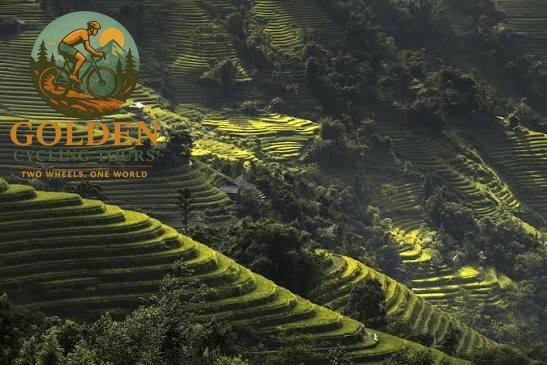
Hoang Su Phi Rice Terraces: Majestic, hand-carved earthen staircases cascading down steep mountain walls across Thong Nguyen, Ban Luoc, and Phung Village.
Tay Con Linh Peak: The highest roof of Northeast Vietnam, shrouded in cloud forests and wild ancient tea trees.
Road safety is directly linked to weather conditions. Selecting the ideal season minimizes hazards such as heavy rain, mudslides, or dense fog:
This is widely regarded as the safest, most spectacular window for mountain biking. Temperatures hover between 18°C and 25°C with dry roads and clear blue skies. The Hoang Su Phi Rice Terraces glow in brilliant shades of golden yellow, while buckwheat flowers blanket Dong Van.
Spring temperatures range from 15°C to 22°C with dry weather ideal for sustained climbing. Wild peach and plum trees bloom in vibrant pinks and whites across Quan Ba and Yen Minh. Morning mist usually dissipates by mid-morning.
Summer brings warm temperatures (25°C to 32°C) and dramatic afternoon tropical rain showers. While rain makes descents slick, early summer creates the mesmerizing "Water Pouring Season," where the terraced fields in Phung Village turn into giant sky-reflecting mirrors.
Winter brings crisp alpine air and cold temperatures (5°C to 12°C). Dense fog frequently hugs high peaks near Tay Con Linh Peak. Cyclists need quality windproof jackets, thermal layers, and full-finger gloves to stay warm and comfortable.
For shorter excursions in milder southern terrain, check out our 4-Day Mai Chau to Pu Luong Cycling Adventure or the luxury 6-Day Mai Chau, Pu Luong & Ninh Binh E-Bike Tour.
Safety also means understanding local culture and traveling respectfully through remote tribal hamlets:
Ha Giang and Hoang Su Phi are home to 17 ethnic minority communities, including the H'Mong, Red Dao, Tay, Nung, and La Chi. These resilient mountain dwellers live in harmony with the rugged karst terrain.
Always ask for permission before taking close-up photographs of villagers, especially children. When entering traditional wooden stilt houses, remove your shoes if requested. Avoid touching sacred altar posts inside local homes.
Plan your itinerary to experience a colorful Sunday market, such as Dong Van Market or Meo Vac Market. Villagers dressed in vibrant hand-embroidered clothing gather at daybreak to trade livestock, silver jewelry, mountain honey, and hand-woven textiles in a lively sensory celebration.
Authentic Mountain Homestays: Experience authentic highland warmth in traditional timber stilt houses in Du Gia Village, Thong Nguyen, and Phung Village. Sleep in cozy rooms with thick woven blankets while listening to mountain streams outside your window.
Eco-Lodges & Boutique Hotels: In Dong Van, Meo Vac, and Thong Nguyen, stay in eco-lodges featuring private balconies, steaming hot showers, and cliffside infinity pools overlooking sculpted rice valleys.
Cycling high passes burns thousands of calories daily. Refuel with hearty regional specialties:
Thắng Cố: A traditional H'Mong herbal mountain stew simmered with cardamom, lemongrass, star anise, and chili.
Five-Color Sticky Rice (Xôi Ngũ Sắc): Fragrant sticky rice naturally dyed using wild mountain plants, served at cozy homestay family dinners.
Smoked Mountain Pork & Buffalo: Slow-cured over hardwood hearth fires, providing savory, protein-dense fuel for long riding days.
Shan Tuyet Tea: Harvested from centuries-old wild tea trees in the cool mists of Tay Con Linh Peak, offering a sweet amber brew that rejuvenates tired legs.
Corn Wine (Rượu Ngô): Traditional mountain spirit distilled with wild forest yeast, shared around homestay dinner tables to celebrate a great day of riding.
Getting from Hanoi to the start point in Ha Giang City takes roughly 5 to 6 hours via comfortable private air-conditioned vehicles or sleeper buses. Professional tours managed by Golden Cycling Tours include all transfers, bike transportation in specialized trailers, and complete luggage handling from hotel to hotel.
To explore other northern regional destinations, check out our collections for Cao Bang Bike Tours, Ba Be Lake Bike Tours, Mai Chau Bike Tours, and Pu Luong Bike Tours.
"I was initially nervous about safety on the cliff roads of Ma Pi Leng Pass. But having the support van behind us and riding a top-end hardtail bike with hydraulic disc brakes made all the difference! The team from Golden Cycling Tours paced us perfectly, handled all logistics seamlessly, and gave us the adventure of a lifetime." — Marcus Vance, Melbourne, Australia
"We chose e-bikes for our 10-day tour through Hoang Su Phi and Dong Van. The bikes were immaculately maintained, the hydraulic brakes responded instantly on every descent down Tham Ma Pass, and the guides prioritized safety every second. Unforgettable cultural immersion with absolute peace of mind!" — Elena & David Rostova, Frankfurt, Germany
Cycling solo without support carries elevated risks due to potential bike break-downs, sudden mountain weather shifts, and remote terrain. Joining an organized tour with a professional support vehicle ensures full mechanical, medical, and navigational safety at all times.
On all guided trips operated by Golden Cycling Tours, a dedicated air-conditioned support vehicle follows the group. You can load your bike onto the rack and ride in comfort inside the van whenever you need a rest.
Yes. Long, steep descents down passes like Quan Ba Pass and Ma Pi Leng Pass require maximum stopping power and heat dissipation. Rim brakes can overheat or fail on sustained alpine descents.
Our guides carry comprehensive wilderness first-aid kits and maintain continuous mobile communication with regional medical facilities. Support vans provide immediate transport to nearest medical centers if ever required.
Yes, for many recreational riders! E-bikes reduce physical exhaustion on steep inclines, allowing you to maintain full mental concentration, muscle control, and balance when handling technical descents.
Riding through jaw-dropping karst peaks, breathing crisp mountain air, and sharing meals with friendly local villagers is an inspiring adventure that will change how you see the world. When you ride with professional guides, top-spec equipment, and full support vehicle escort, you can conquer Vietnam's most famous frontier safely and comfortably.
Contact the mountain travel specialists at Golden Cycling Tours today to reserve your departure on our flagship 10-Day Ha Giang Loop & Hoang Su Phi Cycling Adventure or to build a customized private tour tailored to your riding level.

.jpg "Thai Binh Vietnam Bicycle")
.jpg "Phu Tho Vietnam Cycling")
.jpg "Thai Nguyen Cycling Vietnam")
.jpg "Tuyen Quang Cycling Vietnam")
.jpg "Vinh Phuc Cycling Vietnam")
Leave a Reply
Your email address will not be published. Required fields are marked *