- Call us Via Whatsapp: +84 (0) 832 126 699
4.9 stars on our site
(15,000 reviews)
- Monday - Sunday : 08:00 - 17:00
(15,000 reviews)

Standing on a narrow ledge of concrete clinging to a sheer limestone cliff face, your heart hammers against your ribs like a caged bird. The air at 1,500 meters altitude is crisp, thin, and scented with wild pine, cold damp stone, and distant woodfire smoke from a Hmong settlement far below. Your legs throb with a deep, satisfying burn after grinding up a 12% grade for two straight hours. As you catch your breath, the metallic click-clack of your cooling cassette gears echoes off vertical granite monoliths. Below your front tire, the road drops precipitously into Tu San Canyon, where the emerald ribbon of the Nho Que River weaves through the abyss.
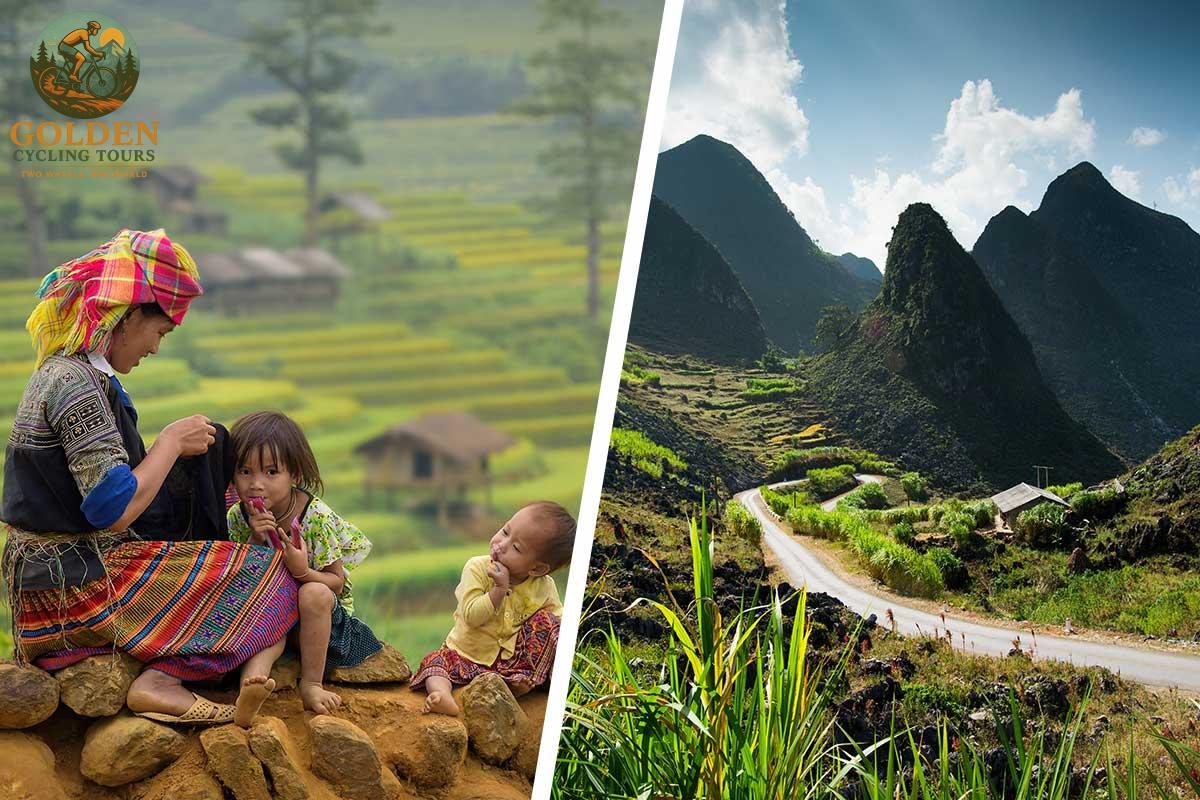
To conquer the great northern passes of Vietnam on two wheels is to experience cycling in its purest, most thrilling form. Among the endless mountain ridges, three passes reign supreme: Ma Pi Leng Pass, O Quy Ho Pass, and Khau Pha Pass. Knowing How to Ride Ma Pi Leng, O Quy Ho & Khau Pha Passes by Bicycle is the key to unlocking an unforgettable alpine expedition across Southeast Asia's most spectacular topography.
Whether you are an endurance cyclist seeking relentless vertical gain or an e-bike enthusiast eager to glide through cloud-wrapped summits, this complete guide provides the tactical insights, elevation profiles, and cultural wisdom required to conquer the legendary big three.
The high-altitude corridors of the north represent an alpine paradise. These three colossal climbs span three distinct mountain provinces—Ha Giang, Lao Cai, and Yen Bai—each presenting unique geographic challenges, gradient profiles, and breathtaking vistas.
Conquering these monster climbs requires more than physical stamina; it demands smart gearing, deliberate pacing, and mechanical preparation. When planning How to Ride Ma Pi Leng, O Quy Ho & Khau Pha Passes by Bicycle, riders must account for variable mountain weather, rapid elevation gain, and long descents that push braking systems to their limits.
Proper preparation includes gearing your bike with compact chainrings (34t or 30t) paired with wide-range cassettes (11-34t or 11-42t). Maintaining a smooth cadence of 70 to 80 RPM prevents premature quadricep fatigue on steep ramps, while high-quality hydraulic disc brakes ensure reliable stopping power during wet alpine descents.
By combining detailed elevation study with the expert logistical backup of Golden Cycling Tours, cyclists can focus entirely on the rhythm of their pedal stroke while taking in the stunning mountain scenery of Cycling Northern Vietnam.
Carved into vertical limestone cliffs along the Dong Van Karst Plateau, Ma Pi Leng Pass is widely considered the most dramatic road in Vietnam. Connecting Dong Van town to Meo Vac, this 20-kilometer pass hangs suspended above the deepest canyon in Southeast Asia.
Total Climb Length: Approximately 20 kilometers
Maximum Elevation: 1,500 meters above sea level
Average Gradient: 7% to 9%, with steep pitch spikes reaching 14%
Key Landmarks: Tu San Canyon, Nho Que River, Happiness Road Monument, Sky Gate Pass
The climb begins with continuous switchbacks out of Dong Van, winding past rocky outcrops where local Hmong farmers till tiny patches of corn between jagged limestone boulders. As you round the northern shoulder of the mountain, the terrain opens abruptly into a breathtaking abyss.
The wind howls through the canyon, carrying the damp mist of river spray from thousands of feet below. Rolling across the narrow cliffside asphalt requires sharp focus as you balance physical exertion with awe-inspiring views of Tu San Canyon.
Pace yourself conservatively during the first 5 kilometers out of Dong Van. Save energy for the steep ramps near the summit ridge. Watch for sudden gusts of wind when rounding exposed cliff corners, and keep an eye out for local goats wandering across the asphalt.
Experience this iconic pass on a dedicated 10-day Ha Giang Loop & Hoang Su Phi Cycling Adventure or explore specialized Ha Giang bike tours.
Stretching nearly 50 kilometers across the majestic Hoang Lien Son Mountain Range, O Quy Ho Pass is the longest mountain pass in Vietnam. It forms a high-altitude bridge between Sapa in Lao Cai province and the tropical valleys of Lai Chau.
Total Climb Length: Nearly 50 kilometers (longest continuous mountain climb in the country)
Maximum Elevation: 2,000 meters above sea level (Heaven's Gate Summit)
Average Gradient: 6% to 8%
Key Landmarks: Heaven's Gate Summit, Fansipan Peak, Silver Waterfall, Love Waterfall
O Quy Ho Pass is legendary for its dramatic microclimates. It is common to begin pedaling in warm sunshine on the Lai Chau side, only to climb into dense, bone-chilling fog and rain near the Heaven's Gate Summit above Sapa.
The road sweeps through broad alpine curves surrounded by thick bamboo forests and cascading waterfalls flowing down from Fansipan Peak, the highest mountain in Indochina. The sound of tires humming on smooth asphalt gives way to the rushing waters of Silver Waterfall as you near the crest.
Due to its length, endurance pacing is essential. Carry windproof jackets and thermal layers in your bar bag, as temperatures drop rapidly above 1,500 meters. The descent down toward Sapa features sweeping high-speed bends, demanding steady hand modulation on brake levers to avoid overheating disc rotors.
Crossing the rugged mountains of Yen Bai province, Khau Pha Pass is celebrated for its stunning views over golden terraced rice fields and deep mountain valleys.
Total Climb Length: Approximately 30 kilometers
Maximum Elevation: 1,500 meters above sea level
Average Gradient: 7% to 10%
Key Landmarks: Mu Cang Chai, Khau Pha Valley, Lim Mong Valley, Cao Pha Rice Terraces
"Khau Pha" translates in the local Thai language to "Sky Horn," referencing the mountain peak that juts high into the clouds like a crescent horn. The ascent climbs past lush mountain forests before opening up to sweeping views over Mu Cang Chai, home to some of the most famous terraced rice fields on Earth.
During the autumn harvest, the entire Khau Pha Valley turns into a shimmering golden basin. Paragliders jump from the summit viewpoint, drifting on thermal currents above cyclists tackling the steep switchbacks below.
The road surface on Khau Pha Pass can feature patches of loose gravel and roadwork dust. Maintain a steady, centered posture on your bike, particularly when climbing out of the saddle on steep 10% gradients. Ensure your tire pressures are adjusted for both traction during the climb and control on technical descents into Lim Mong Valley.
Choosing the right season to attempt these climbs ensures pleasant temperatures, dry road surfaces, and clear visibility across pass summits.
Autumn is the prime window for mountain cycling in the north. Monsoon rains fade away, revealing bright blue skies and cool, fresh air. Daytime temperatures stay between 18°C and 25°C, providing comfortable conditions for intense physical effort.
This period coincides with the golden rice harvest across Mu Cang Chai, Hoang Su Phi, and Mai Chau, filling the mountain air with the sweet scent of ripe grain.
Spring brings mild temperatures and vibrant plant life back to the highlands. Wild peach blossoms, plum trees, and yellow mustard flowers carpet the slopes of the Dong Van Karst Plateau. Morning mists clear early, offering excellent visibility over sweeping descents.
Winter (December to February) brings severe cold, thick fog, and occasional frost to summit passes like O Quy Ho Pass. Thermal base layers, winter cycling gloves, and bright LED tail lights are mandatory.
Summer (June to August) brings tropical warmth along with heavy afternoon downpours that can cause temporary landslides. Riding with a dedicated support vehicle ensures you can bypass difficult weather safely.
Proper recovery, nutrition, and transportation are essential when tackling multi-pass itineraries.
Highland dishes offer energy-dense nutrition made with fresh local ingredients.
Highland Energy Foods: Fuel up with bowls of hot beef Pho infused with star anise, charcoal-grilled mountain pork seasoned with wild mac khen pepper, stir-fried jungle ferns with garlic, and sticky rice baked in bamboo tubes.
Where to Eat: Town centers like Dong Van, Meo Vac, and Sapa feature lively night markets serving hot soups and grilled skewers. In rural nature reserves like Pu Luong Nature Reserve, homestay hosts prepare rich, family-style feasts served on woven bamboo trays.
Resting your body after conquering severe elevation gains is essential for multi-day endurance.
Authentic Stilt Homestays: Stay inside wooden stilt houses built by Tay, White Thai, or Hmong families. Enjoy local hospitality, sleep under comfortable mosquito netting, and wake up to sweeping views over green mountain valleys.
Luxury Eco-Resorts: Riders looking for high-end comfort can relax at eco-lodges featuring infinity pools overlooking deep canyons, full spa services for tired legs, and fine dining. Browse luxury options with Vietnam luxury bike tours.
Getting your bike from Hanoi to remote pass starting points requires carefully managed transportation. Dedicated support vehicles equipped with custom bike racks protect delicate rear derailleurs, hydraulic brake lines, and carbon frames during transit. Having a support vehicle behind you on mountain passes offers peace of mind, providing hydration, snacks, and mechanical aid whenever needed.
The northern passes weave through the ancestral homelands of over 30 distinct ethnic minority groups, including the Hmong, Dao, Tay, Nung, and White Thai communities.
Modest Dress: Wear appropriate clothing when cycling through ethnic villages or relaxing inside local homestays.
Respectful Photography: Always ask for permission with a friendly smile or gesture before taking photos of village elders, artisans, or children.
Local Hospitality: If invited to share a cup of green tea or corn wine with your homestay host, accept with both hands as a polite sign of respect.
Beyond mountain passes, Northern Vietnam offers incredible natural and cultural attractions worth exploring.
Northeast of Ha Giang, Cao Bang features rolling karst valleys, underground caves, and quiet border trails.
Pedal through scenic border sectors to Ban Gioc Waterfall, a magnificent multi-tiered waterfall straddling the border between Vietnam and China. Continue south into Ba Be National Park, where serene lakeside dirt paths circle the pristine waters of Ba Be Lake.
Recommended Tours: Explore regional routes with Cao Bang bike tours, relax around Ba Be Lake bike tours, book the grand 15-day Best of Northeast Vietnam Cycling Tour, or browse all Vietnam Northeast bike tours.
For riders seeking smooth pedaling through quiet countryside, emerald rice paddies, and moderate rolling hills, the valley circuit southwest of Hanoi provides an ideal journey.
Ride through the peaceful valley of Mai Chau before ascending into the protected bio-reserve of Pu Luong Nature Reserve. Finish your ride gliding between the soaring limestone monoliths of Ninh Binh and Tam Coc.
Recommended Tours: Experience these scenic valleys on a 4-day Mai Chau to Pu Luong cycling adventure or select from Mai Chau bike tours and Pu Luong bike tours.
For riders who want smooth pedal assistance across undulating terrain, try the premium 6-day Mai Chau, Pu Luong & Ninh Binh e-bike tour or choose from modern Vietnam e-bike tours.
Here is what global cyclists say after conquering Vietnam's great passes with Golden Cycling Tours:
"Climbing Ma Pi Leng Pass was the most thrilling physical challenge of my life. Seeing Tu San Canyon drop away below my tires while the support van trailed behind gave me the confidence to push all the way to the summit!" – David K., United Kingdom
"Riding an e-bike over O Quy Ho Pass into Sapa was pure magic. The mountain air was crisp, the views over the Hoang Lien Son Mountain Range were spectacular, and the local homestay dinners made every mile worthwhile." – Elena M., Italy
Ma Pi Leng Pass is widely considered the most technical and intense due to its steep gradients, narrow cliffside roads, and sheer drop-offs. However, O Quy Ho Pass presents a greater endurance test due to its 50-kilometer length.
A compact road chainset (50/34t) or sub-compact gravel setup (46/30t) combined with an 11-34t or 11-42t rear cassette is recommended. Front-suspension mountain bikes or modern e-bikes with mid-drive motors are also excellent choices for steep mountain routes.
Yes. Long alpine descents like Khau Pha Pass and O Quy Ho Pass require consistent, reliable stopping power. Hydraulic disc brakes prevent hand fatigue and perform reliably in wet or foggy conditions.
Having a support vehicle (SAG-wagon) is highly recommended. It carries your heavy luggage, provides cold water, fresh fruit, and mechanical assistance, and offers a comfortable seat if fatigue or bad weather sets in.
Yes! Tour operators like Golden Cycling Tours encourage riders to bring their own clipless pedals and familiar saddles to ensure complete personal comfort over multi-day rides.

.jpg "Thai Binh Vietnam Bicycle")
.jpg "Phu Tho Vietnam Cycling")
.jpg "Thai Nguyen Cycling Vietnam")
.jpg "Tuyen Quang Cycling Vietnam")
.jpg "Vinh Phuc Cycling Vietnam")
Leave a Reply
Your email address will not be published. Required fields are marked *