- Call us Via Whatsapp: +84 (0) 832 126 699
4.9 stars on our site
(15,000 reviews)
- Monday - Sunday : 08:00 - 17:00
(15,000 reviews)

Imagine standing at the foot of a towering limestone mountain in northern Vietnam. The morning air is cool against your cheeks. Somewhere in the valley below, a rooster calls across a village, a motorbike hums along a distant road, and mist curls between jagged peaks like smoke rising from an ancient dragon's lair. You clip into your pedals, take a deep breath, and begin climbing.
The road ahead bends sharply around the mountainside. Your legs begin to warm. Your breathing deepens. The chain clicks rhythmically as you shift into an easier gear. Then, after another sweeping corner, the landscape suddenly opens: immense limestone cliffs, emerald valleys, tiny villages clinging to hillsides, and a ribbon of asphalt disappearing into the clouds.
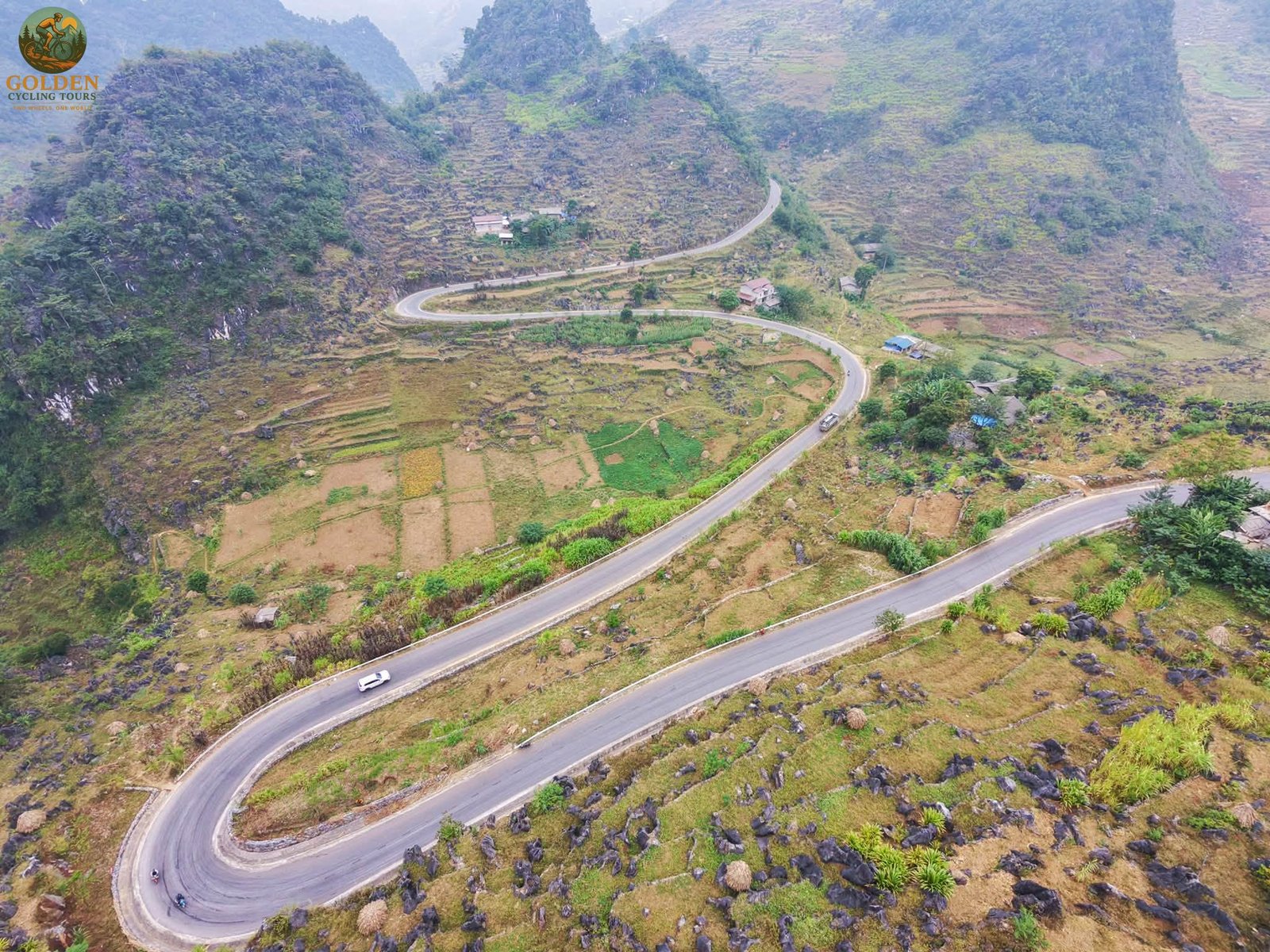
Welcome to the Ha Giang Loop, one of Vietnam's most spectacular mountain journeys.
But before booking your adventure, you probably have one important question: How difficult is cycling the Ha Giang Loop?
The honest answer is that it can be physically demanding, particularly if you ride a conventional bicycle over several consecutive days. The challenge comes from steep climbs, repeated elevation changes, long riding hours, winding mountain roads, unpredictable weather, and the concentration required to descend safely. However, the experience is not reserved exclusively for professional athletes. With an appropriate route, realistic daily distances, suitable equipment, and the right level of support, many recreational cyclists can enjoy this extraordinary region.
In this comprehensive guide, we explore the real difficulty of cycling the Ha Giang Loop, the fitness you need, the toughest mountain passes, the best time to ride, and the practical details that can make your journey safer and more rewarding. We will also explain how Golden Cycling Tours can help you choose a cycling adventure that matches your experience and ambitions.
Cycling the Ha Giang Loop is generally best described as challenging to very challenging, depending on your route, bicycle, daily distance, weather, and fitness level.
A short, carefully planned cycling itinerary with manageable daily distances can be accessible to reasonably fit recreational riders. A demanding multi-day expedition combining long distances, steep climbs, remote roads, and consecutive days in the saddle requires substantially greater endurance.
It is important to distinguish between riding the Ha Giang Loop on a motorbike and completing it by bicycle. Motorbike travelers can cover long distances with relatively little physical effort. Cyclists must earn every viewpoint through their own strength, pacing, and determination.
The following ratings are general planning estimates rather than official trail grades. Actual difficulty depends on the precise route and conditions.
Physical endurance: 4–5 out of 5 for a demanding multi-day itinerary.
Climbing difficulty: 4–5 out of 5 on routes with repeated mountain passes.
Technical cycling: 2–4 out of 5 on predominantly paved roads, potentially higher on rough or off-road alternatives.
Traffic awareness: 4 out of 5 because narrow bends, vehicles, limited sightlines, and occasional road hazards require attention.
Weather exposure: 3–5 out of 5 depending on rain, fog, heat, and temperature.
Overall challenge: 4 out of 5 for a typical ambitious cycling itinerary, with easier and harder variations available.
These scores are illustrative, not measured standards. A short ride with one major climb is very different from a week of consecutive mountain stages.
Five factors explain most of the challenge.
1. Repeated climbing: You rarely spend an entire day on flat terrain. One ascent may be followed by a thrilling descent, but another climb often waits around the next bend.
2. Cumulative fatigue: Your legs may feel strong on day one, yet tired muscles, saddle pressure, and reduced energy can become more noticeable after several consecutive days.
3. Technical descents: Even when a road is paved, tight hairpins, steep gradients, loose debris, wet surfaces, and limited visibility can make descending demanding.
4. Weather changes: Conditions can shift between sunny valleys and cool, misty mountain summits. Rain can reduce grip and visibility.
5. Mental concentration: You need to manage your energy, monitor traffic, anticipate corners, and make sensible decisions when tired.
The reward is equally real: a landscape that changes with every climb and a feeling of achievement that no vehicle can quite reproduce.
The difficulty of cycling the Ha Giang Loop begins with its geography. Northern Vietnam's limestone mountains create dramatic changes in elevation, winding roads, deep valleys, and villages separated by long stretches of mountain terrain.
Rather than riding along a single continuous climb, you experience a succession of ascents and descents. This repeated effort makes the journey more demanding than a simple distance measurement suggests.
Picture the opening minutes of a long ascent. The gradient rises gradually, and your legs settle into a comfortable rhythm. You shift down, relax your shoulders, and focus on turning the pedals smoothly.
Then the road steepens.
Your breathing becomes louder. The muscles above your knees begin to burn, and your heart rate rises. The front wheel follows the road's narrow line as the mountain curves away from you. There may be no dramatic finish line, only another bend and another section of climbing.
This is where pacing becomes essential.
Instead of attacking every hill, choose a gear that allows you to maintain a sustainable cadence. Keep your upper body relaxed, drink regularly, and avoid spending your energy trying to match a faster rider.
A compact climbing gear and a suitable cassette can make a significant difference. On particularly steep sections, walking for a short distance may be a sensible decision rather than a defeat.
The descents can feel like a reward for all that climbing, but they require respect.
As you crest a pass, the view may stretch across layers of dark-green mountains. Cool air rushes across your face, carrying the scent of wet stone, forest vegetation, and distant farmland. The road begins to fall away in a sequence of tight corners.
Your bicycle accelerates quickly.
This is not the place to chase speed. Brake before corners, keep your line predictable, look through the bend, and leave enough room to react to vehicles or unexpected road conditions. Avoid abrupt braking while leaned over, particularly on wet pavement.
If fog becomes dense or rain makes the surface slippery, slow down considerably or stop somewhere safe until conditions improve.
A route covering 50 kilometres with substantial climbing can feel harder than a much longer ride on flat ground. Distance alone does not tell the whole story.
For planning purposes, a rider might find the following broad categories useful:
20–35 km per day: Potentially manageable for many recreational riders when climbing is moderate and breaks are frequent.
35–60 km per day: A substantial mountain-cycling day, depending on elevation gain, road conditions, and riding experience.
60–100 km per day: Potentially very demanding in mountainous terrain, especially when steep climbs repeat over several days.
These are illustrative ranges, not guarantees. A shorter stage with several major passes can be more difficult than a longer route through gentler terrain.
Golden Cycling Tours lists its 10-Day Ha Giang Loop and Hoang Su Phi Cycling Adventure as a challenging journey with nine cycling days and typical daily distances of approximately 60–100 km. That itinerary is better suited to riders with strong endurance or substantial cycling experience than to complete beginners.
Always confirm the current route, elevation profile, daily distances, and support arrangements before booking.
Some sections of the Ha Giang Loop are unforgettable precisely because they combine extraordinary scenery with demanding terrain.
Ma Pi Leng Pass is one of the defining highlights of the Ha Giang region. The road winds between monumental limestone cliffs, revealing dramatic views of the Nho Que River far below.
For cyclists, the experience begins long before the most famous viewpoint.
You may feel the gradient building beneath your wheels as the road climbs through a rugged landscape of exposed rock. Wind brushes across the mountainside. The valley grows deeper with every turn, and the traffic sounds become faint beneath the rush of air and the steady rhythm of your drivetrain.
At the summit, stop somewhere safe and take in the panorama. The river appears like a narrow turquoise ribbon threading through the canyon, its colour contrasting with the grey stone and dark-green slopes.
The difficulty depends on your approach direction, the day's route, and your cumulative climbing. The exposed road, sharp bends, and potential for wind or fog also require attention.
Do not assume that the most dramatic viewpoint is the safest place to stop. Pull completely clear of moving traffic and follow your guide's advice if riding with a group.
The Dong Van Karst Plateau UNESCO Global Geopark offers a landscape unlike the lush river valleys many visitors associate with Vietnam.
Here, grey limestone peaks rise in jagged formations. Stone walls mark agricultural plots, and traditional villages sit between mountains that seem to have been folded together by enormous geological forces.
Cycling through this region is both a physical and sensory experience. The road surface changes in texture beneath your tires, the wind moves through narrow valleys, and sunlight alternates between bright mountain ridges and cool shadows.
The climbing can be relentless, but the scenery provides a reason to pause. Take time to visit local markets, admire traditional houses, and learn about the communities that have adapted their lives to this remarkable terrain.
Tham Ma Pass is well known for its winding road and mountain views. Its curves are visually striking, but they also illustrate why cyclists must maintain a controlled pace.
Approach each bend with enough speed in reserve to stop if necessary. Watch for vehicles, road debris, and riders ahead of you. On steep sections, remain seated when possible to conserve energy and keep your pedal stroke smooth.
For photographers, the surrounding ridges can be beautiful in changing light. For cyclists, they are a reminder that a mountain road can be both a scenic attraction and a serious piece of infrastructure requiring attention.
Du Gia is often associated with peaceful villages, green valleys, and a more relaxed atmosphere than the region's most famous passes.
After a demanding day, the road into the valley may feel like a welcome transition. Vegetation becomes more abundant, the landscape softens, and the sounds of village life return: conversations, cooking, water flowing, and livestock moving along rural paths.
Depending on the itinerary, this area may provide opportunities to explore local settlements, enjoy a quiet evening, or visit nearby natural attractions.
Remember that access roads, river conditions, and weather can affect which activities are appropriate on any given day.
You do not necessarily need to be a competitive cyclist, but you should prepare for the actual demands of the itinerary you choose.
The most useful question is not whether you are athletic in general. It is whether you can ride for several hours, climb repeatedly, recover overnight, and remain alert when you are tired.
Yes, for some beginners, but the route must be selected carefully.
If you have little cycling experience, avoid choosing the longest or most demanding itinerary simply because it looks exciting. A shorter route, fewer kilometres per day, an appropriate bicycle, and reliable support can make the experience more manageable.
Before committing to a multi-day tour, build a foundation of regular riding. Practise climbing, braking, cornering, and maintaining control on uneven surfaces. If you have never ridden on mountain roads, consider gaining experience on safer local routes first.
An e-bike may help reduce the physical burden of climbing, but it does not eliminate the need for balance, braking skills, road awareness, and stamina.
If you already ride regularly, can comfortably complete a few hours in the saddle, and have experience with hills, the Ha Giang Loop may be an excellent next challenge.
Your preparation should focus on sustained climbing rather than speed.
Try to include:
Longer rides that gradually increase in duration.
Hill repeats at a controlled effort.
Back-to-back riding days to practise recovery.
Descending practice on familiar, safe roads.
Strength and mobility exercises for the legs, hips, back, and core.
Practise eating and drinking while riding, too. Mountain adventures are not the place to discover that you struggle to maintain energy over a long day.
Experienced riders may find the physical challenge manageable, but the terrain still deserves respect.
Repeated elevation changes, variable weather, traffic, and long descents can be demanding even for strong cyclists. If you choose an itinerary that extends beyond the classic loop into remote mountain districts, the overall challenge can increase substantially.
The best approach is to treat each stage as part of a longer expedition rather than an isolated performance.
Before booking a demanding cycling tour, ask yourself:
Can I ride comfortably for three to five hours, including breaks?
Can I climb hills without exhausting myself immediately?
Can I brake confidently and control my bicycle on descents?
Can I recover sufficiently to ride again the following morning?
Am I comfortable riding near traffic?
Can I manage basic bicycle adjustments and recognise mechanical problems?
You do not need to answer yes to every question before exploring options. However, any gaps should influence the route, equipment, and support you select.
Choosing the right bicycle can significantly affect how difficult the journey feels.
The best option depends on the surface, your riding experience, your preferred pace, and whether you want to prioritise comfort, speed, or climbing assistance.
A mountain bike is a strong choice for riders who prioritise stability and comfort.
Wider tires offer a larger contact area and can help absorb vibrations from rough pavement, broken road edges, and occasional unpaved sections. A suitable mountain bike also provides stable handling on steep descents.
For a route that includes rough roads or off-road detours, a mountain bike may be especially useful.
However, tire width and suspension do not remove the need for good braking technique or sensible speed management.
A gravel bike can work well on routes that are mainly paved, especially for riders who enjoy longer distances and an efficient riding position.
Choose tires with sufficient width and grip for the actual route, reliable brakes, and gearing suitable for steep gradients. A gravel bike with narrow tires and high road gearing may be uncomfortable or poorly suited to rougher sections.
The classic Ha Giang Loop is largely paved, but road quality can vary and occasional damaged or rough surfaces should be expected. Do not assume every route is a gravel trail simply because it crosses remote mountains.
An e-bike can make the Ha Giang Loop more accessible by reducing the effort required on climbs.
Pedal assistance can help you maintain a more consistent pace and conserve energy over a long day. It may be especially useful if you are a recreational cyclist who wants to experience the scenery without pushing your physical limits as hard.
Nevertheless, an e-bike is not effortless. It is generally heavier than a conventional bicycle, still requires controlled descending, and depends on battery capacity, charging arrangements, and route planning.
Before booking, confirm that the particular tour offers an e-bike option, that the battery range suits the route, and that charging can be arranged at the planned overnight stops.
Explore the available options through Golden Cycling Tours' Vietnam E-Bike Tours.
Preparation is the difference between spending the day enjoying the mountains and spending it wondering how many kilometres remain.
Begin training several weeks before departure if your current fitness is limited.
Start with rides you can complete comfortably. Increase duration gradually, then introduce hills and consecutive riding days. The goal is not to exhaust yourself during training; it is to become accustomed to sustained effort.
If your itinerary includes long mountain stages, practise riding at a steady intensity rather than relying on short bursts of speed.
During a climb, keep your breathing controlled and avoid surging whenever the road steepens.
Shift before the gradient becomes extreme. Relax your grip, keep your shoulders down, and focus on smooth pedal strokes. If your heart rate rises excessively or your technique begins to deteriorate, ease off.
A slower, consistent climb is often faster overall than repeated bursts followed by long recovery stops.
Descending is a skill, not simply a reward for climbing.
Practise using both brakes smoothly, looking through corners, and maintaining a balanced position. Keep your bicycle under control and avoid following another rider so closely that you cannot respond to sudden braking.
On unfamiliar roads, reduce speed before blind corners. Expect possible gravel, potholes, animals, or vehicles appearing from the opposite direction.
Mountain weather can change rapidly. Bring lightweight layers, a waterproof jacket, gloves, sun protection, and clothing appropriate for cool mornings as well as warmer afternoons.
A well-fitted helmet, padded cycling shorts, comfortable shoes, and basic personal repair items are essential. A rear light can improve visibility in dim conditions, but it does not make riding in dense fog safe.
Long climbs use energy steadily, and waiting until you feel hungry can make the final kilometres unnecessarily difficult.
Eat breakfast, carry accessible snacks, and drink regularly. Include familiar carbohydrate-rich foods during longer rides and replenish fluids after sweating.
Local meals can be delicious, but experiment with unfamiliar foods cautiously before a major riding day if you have a sensitive stomach.
Weather has a major influence on how difficult the Ha Giang Loop feels. Temperature, rainfall, visibility, and road conditions can change the same route from an enjoyable adventure into a demanding day.
Spring is often a rewarding period for cycling in northern Vietnam.
Temperatures can be comfortable for sustained exercise, and the landscapes begin to take on fresh green tones. Mountain mornings may still be cool, and mist or occasional rain can affect visibility.
Pack layers and check the forecast before setting out.
Early autumn through late autumn is another popular period to consider.
In September, rice terraces in some areas may display rich golden colours, depending on local planting and harvesting schedules. October and November can offer appealing riding conditions, although temperatures fall as the season progresses.
The mountain air may feel crisp, and the changing light creates extraordinary views across limestone ridges.
This is not a guarantee of dry weather. Late-season cold, rain, and fog can still affect high-altitude roads.
Summer can be beautiful, with lush vegetation and vivid green valleys. However, higher temperatures, humidity, and heavy rain may increase the difficulty of cycling.
Rain can reduce grip, obscure road markings, cause slippery descents, and contribute to landslides or temporary road closures.
If travelling in this season, choose an itinerary with flexibility and confirm local conditions before riding.
Winter can bring clear views on some days, but temperatures in the northern highlands can become very cold, especially early in the morning and at higher elevations.
Fog and low cloud may reduce visibility. Cold fingers can also affect braking and gear control.
Appropriate thermal layers, gloves, and flexible departure times are important.
For many cyclists, March to May and September to November are useful starting points when planning a Ha Giang cycling adventure. The best month depends on your tolerance for cold, heat, rain, and variable visibility.
Check the forecast and road conditions close to departure, and remember that mountain weather can change quickly even during a generally favourable season.
If you want to explore other regions with different terrain and riding styles, consider Cycling Northern Vietnam.
Understanding the rhythm of a riding day helps you decide whether the Ha Giang Loop suits your expectations.
The day often begins with breakfast and bicycle checks.
The air may be cool enough to make your fingers feel stiff as you fasten your helmet. In the distance, mountains rise behind a thin layer of mist. The first few kilometres allow you to settle into a rhythm before the road begins climbing.
Keep your early pace conservative. It is tempting to push hard when your legs feel fresh, but saving energy for later climbs is a smarter strategy.
As the sun rises, the road may become warmer and more exposed.
You feel the heat collecting beneath your helmet. Your jersey sticks lightly to your back, and the sound of the chain becomes a familiar companion. A roadside stop offers water, a simple meal, and a chance to let your heart rate settle.
After a long climb, the reward may be a sweeping panorama across the Dong Van Karst Plateau. Take photographs, but also take a moment to listen: the wind moving across the ridge, distant conversations, and the soft sounds of village life far below.
The final part of the day is often where good pacing matters most.
Your legs may feel heavier, and your concentration may begin to fade. This is precisely when you should avoid unnecessary speed on descents.
Take short breaks, eat if your energy is falling, and communicate honestly with your guide or riding companions. Adjusting the pace is a sign of sound judgement, not weakness.
After arriving at your accommodation, the simple pleasures of travel become especially vivid.
You may smell wood smoke drifting from a nearby kitchen, hear people chatting over dinner, and feel the relief of taking off your cycling shoes. A bowl of steaming soup, fresh vegetables, rice, and a comfortable place to rest can feel extraordinary after a demanding mountain day.
Tomorrow may bring another pass, but tonight you have earned the chance to slow down and enjoy the place you have come to discover.
Cycling the Ha Giang Loop is about more than completing a route. The region's cultural sites, mountain scenery, and quiet valleys make it worth taking time away from the saddle.
Ha Giang City is a practical starting point for exploring the province.
Use the time before your ride to organise your equipment, check your bicycle, and rest after travelling from Hanoi. It is also a useful place to purchase last-minute essentials before heading into more remote areas.
Explore Ha Giang Bike Tours to discover cycling options in the region.
Dong Van Old Quarter offers an opportunity to experience a historic mountain town surrounded by the dramatic geology of the plateau.
Walk through the old streets, observe traditional architecture, and enjoy a meal or coffee before continuing your journey. The atmosphere can feel particularly memorable in the early morning or evening, when the temperature cools and daily life becomes easier to observe.
The Lung Cu Flag Tower is a prominent landmark in Vietnam's northernmost region and a popular excursion for travellers exploring the area.
The approach involves mountain roads, and the final visit may require walking. Allow enough time for the excursion rather than squeezing it into an already demanding cycling stage.
The Nho Que River and Tu San Canyon form one of the region's most recognisable landscapes.
The river's green-blue water contrasts beautifully with towering limestone walls. Depending on weather and local operating conditions, visitors may be able to arrange a boat excursion.
A boat trip is a useful way to appreciate the scale of the canyon from below, offering a perspective that differs completely from the view cyclists experience on the mountain road.
Du Gia is worth considering for its rural atmosphere, green scenery, and opportunities to encounter local life at a slower pace.
If your itinerary permits, spend time walking through the village or exploring nearby countryside with local guidance. Respect private homes, farmland, and community customs, and ask permission before photographing people.
For travellers with additional time, Hoang Su Phi offers another dimension to northern Vietnam's mountain scenery.
Its celebrated rice terraces are shaped by generations of agricultural knowledge. Depending on the season, slopes may appear emerald green, golden, or newly cultivated.
This region features in Golden Cycling Tours' 10-Day Ha Giang Loop and Hoang Su Phi Cycling Adventure, which combines the limestone landscapes of Ha Giang with the agricultural scenery of the western highlands.
Food is an important part of the experience, particularly when you are using significant energy on mountain climbs.
Look for opportunities to sample regional dishes such as:
Thang Co: A traditional dish associated with Hmong communities, commonly prepared with meat and herbs. Ingredients and preparation vary, so ask about the recipe if you have dietary restrictions.
Au Tau porridge: A distinctive Ha Giang speciality traditionally made with au tau tuber after careful preparation. It is usually associated with the local culinary tradition rather than a typical sports-recovery meal.
Buckwheat cakes: A regional snack linked to the buckwheat-growing landscapes of the plateau.
Smoked buffalo meat: A preserved meat speciality found in parts of northern Vietnam.
Local rice dishes and noodle soups: Practical choices for refuelling after a ride.
Regional dishes vary by village, season, and establishment. You do not need to try everything to enjoy the food culture.
Before a demanding ride, choose familiar foods that provide carbohydrates and some protein. Rice, noodles, eggs, bread, fruit, and soup can be practical options depending on what is available.
During longer stages, carry easy-to-digest snacks such as bananas, energy bars, or other foods you know you tolerate well.
After riding, a meal containing carbohydrates, protein, vegetables, and fluids can support recovery.
If you have food allergies or dietary restrictions, tell your tour operator in advance. In remote areas, specialised ingredients may not always be readily available.
Ha Giang City, Dong Van, and other larger towns along popular routes generally provide more dining choices than smaller villages. Homestays and guesthouses may also offer meals when arranged in advance.
On remote sections, options can be limited, so do not assume a restaurant will be available whenever you feel hungry. Confirm meal arrangements with your itinerary provider and carry backup snacks.
Accommodation influences how well you recover between cycling days.
Staying in a local homestay can offer an intimate view of mountain hospitality.
Depending on the property, you may sleep in a traditional stilt house, share a meal with other travellers, or wake to the sounds of a village beginning its day. Facilities vary, and some homestays provide simpler amenities than hotels.
Ask about room arrangements, bathrooms, heating, and privacy before booking if these factors are important to you.
Guesthouses and small hotels in towns such as Dong Van and Meo Vac can offer a useful balance between comfort and location.
After a long day, a hot shower, a dry room, and a quiet bed can make a substantial difference to the next morning's ride.
Availability may be limited during busy travel periods, so advance reservations are sensible.
For a cycling trip, prioritise:
A comfortable and secure place to sleep.
Reliable access to drinking water.
A suitable place to store bicycles, where available.
Dinner and breakfast arrangements that match your riding schedule.
The ability to dry essential clothing after rain.
Clear information about shared rooms and bathroom facilities.
The best accommodation is not necessarily the most luxurious. It is the place that helps you recover, stay comfortable, and enjoy the next day's adventure.
For travellers seeking a more comfort-focused experience, explore Vietnam Luxury Bike Tours and confirm which accommodation standards are available on the specific itinerary.
Most international visitors begin their journey in Hanoi before travelling north to Ha Giang.
A sleeper bus or coach is a common option for travelling between Hanoi and Ha Giang. Journey duration varies with traffic, road conditions, stops, and the departure point.
If you are planning a demanding cycling tour, consider arriving early enough to rest rather than stepping directly off an overnight bus and starting a long mountain ride.
A private transfer can provide greater flexibility, especially for groups or travellers with cycling equipment.
If you are transporting your own bicycle, confirm the vehicle size, bicycle protection, luggage capacity, and loading arrangements before departure.
An organised cycling itinerary may include transport between Hanoi and the cycling region, but inclusions differ by tour.
Check whether the quoted package includes transfers, bicycle transport, airport pickup, or only the cycling portion of the trip.
You can review available itineraries on the Golden Cycling Tours website or browse the complete tour collection.
The Ha Giang region is home to diverse ethnic communities, including Hmong, Tay, Dao, and other groups. Their traditions, clothing, languages, architecture, and agricultural practices contribute to the area's cultural richness.
Cycling offers opportunities to encounter local life at a slower pace, but respectful behaviour matters.
A person in traditional clothing is not a tourist attraction. If you wish to photograph someone, smile, ask permission, and accept a refusal without argument.
The same principle applies to private homes, family gatherings, and religious or ceremonial activities.
Where practical, purchase meals, snacks, and locally made goods from community businesses. If you stay at a homestay, follow the host's guidance about household customs and shared spaces.
Small gestures, such as greeting people politely and keeping noise low in the evening, help create a more positive exchange.
Comfortable cycling clothing is appropriate on the road. When visiting religious sites, homes, or culturally sensitive places, follow local guidance and dress respectfully.
Avoid littering, disturbing livestock, or riding aggressively through villages. Slow down around pedestrians, children, and animals.
A few simple expressions can make interactions warmer:
Xin chào — Hello.
Cảm ơn — Thank you.
Xin lỗi — Excuse me or sorry.
Bao nhiêu tiền? — How much does it cost?
A friendly greeting and a little patience often go a long way, even when you do not share a common language.
The right format depends on your experience, confidence, and preferred travel style.
Independent cycling gives experienced riders flexibility over pace, breaks, and route choices. However, it also requires you to manage navigation, accommodation, repairs, weather decisions, and emergency arrangements.
Mountain roads can become complicated when conditions change. Mobile coverage may be unreliable in remote areas, and finding assistance can take time.
Independent riding is best suited to cyclists who are comfortable planning multi-day trips and making sensible decisions without immediate support.
A guided cycling tour can reduce the burden of planning and provide local knowledge.
Depending on the specific package, services may include a guide, route planning, accommodation arrangements, meals, bicycle equipment, or support transport. These inclusions must be checked against the current tour description rather than assumed.
The advantage is that you can concentrate more fully on riding, scenery, and cultural experiences while the tour team helps coordinate the trip.
For a demanding route, ask about:
Daily distance and cumulative elevation gain.
The expected riding pace.
Whether a support vehicle is available.
What happens if you need to shorten a stage.
Bicycle options and sizing.
Luggage arrangements.
Emergency procedures and mechanical support.
Whether the itinerary can be adapted to your fitness level.
Explore the 10-Day Ha Giang Loop and Hoang Su Phi Cycling Adventure if you want a longer, more demanding mountain experience.
Alternatively, the 8-Day Epic Ha Giang Loop Adventure is another itinerary to investigate when comparing trip lengths and route designs.
For a broader journey across the region, consider the 15-Day Best Vietnam Cycling Northeast Tour.
If the Ha Giang Loop sounds too demanding, you do not need to abandon a cycling holiday in northern Vietnam.
Several other destinations offer memorable scenery with different combinations of terrain, distance, and riding intensity.
Mai Chau is known for its green valley, rice fields, and traditional villages. Depending on the route, cycling here can provide a gentler introduction to northern Vietnam's rural landscapes.
Explore Mai Chau Bike Tours or consider the 4-Day Northern Vietnam Cycling Adventure from Mai Chau to Pu Luong.
This option may suit travellers who want several days of cycling without committing to the full challenge of an extended Ha Giang expedition. The actual difficulty still depends on the chosen route and daily elevation.
Pu Luong Nature Reserve offers a different atmosphere, with forested slopes, terraced fields, and villages scattered across green valleys.
The terrain can still involve steep climbs and uneven roads, but itinerary design can make a substantial difference to the level of exertion.
Discover Pu Luong Bike Tours for ideas.
Ninh Binh is famous for its limestone formations, waterways, temples, and rural roads.
Compared with a demanding mountain expedition, many routes around the flatter valleys can be more approachable for recreational riders. However, the difficulty varies if your itinerary includes hills, longer distances, or mixed surfaces.
Explore Ninh Binh Bike Tours or the 12-Day North Vietnam Cycling Adventure from Hanoi to Ninh Binh.
Cao Bang offers dramatic limestone scenery, rural roads, and access to attractions such as Ban Gioc Waterfall.
Some routes are physically demanding, so it should not automatically be considered an easy substitute for Ha Giang. Nevertheless, it can be a rewarding alternative for travellers seeking a different part of northern Vietnam.
Explore Cao Bang Bike Tours.
Ba Be Lake offers a quieter landscape of water, forested hills, and small settlements. Cycling difficulty depends on the selected route and how much climbing is included.
Explore Ba Be Lake Bike Tours for possible ways to incorporate the region into a northern Vietnam adventure.
If you have more time, combining several destinations can create a varied trip with a balance of mountain riding, village exploration, and scenic recovery days.
Browse Vietnam Northeast Bike Tours to explore regional options.
For a trip combining different riding styles, the 6-Day Mai Chau, Pu Luong, and Ninh Binh E-Bike Tour is another option to investigate.
These alternatives show that northern Vietnam offers more than one way to enjoy cycling. The key is matching the route to your fitness, experience, available time, and appetite for adventure.
If you have several weeks before departure, a simple training plan can help you arrive feeling more confident.
This is a general example for a recreational cyclist. Adapt it to your current fitness, available time, and medical circumstances.
Ride two or three times per week at a comfortable intensity. Focus on relaxed handling, steady breathing, and gradually increasing your time in the saddle.
Include gentle hills if they are available and safe.
Add a weekly ride with several sustained climbs. Practise shifting early and maintaining an even effort.
Include a longer weekend ride, but avoid increasing distance and intensity too quickly at the same time.
If your fitness allows, try riding on two consecutive days. The objective is to understand how your body responds to accumulated fatigue.
Practise eating, drinking, and recovering between rides. Check that your saddle, shoes, and clothing remain comfortable over longer distances.
Avoid exhausting yourself immediately before departure. Keep rides easy, check your bicycle, organise your luggage, and confirm travel logistics.
Review the planned route, likely weather, daily distances, and support arrangements with your tour operator.
If you have a health condition, persistent pain, or concerns about your ability to undertake strenuous exercise, seek appropriate professional advice before starting a demanding tour.
The landscape is extraordinary, but safe riding should always come first.
Do not descend faster than your visibility and braking distance allow. Slow down before blind corners and maintain space between bicycles.
Fog, heavy rain, landslides, and roadworks may change the safest route or departure time. Follow local advice and be prepared to adjust your plans.
A helmet should fit securely and be appropriate for cycling. Gloves and eye protection can improve comfort, while suitable clothing helps you adapt to changing temperatures.
Bring water, snacks, identification, a charged phone, and any personal medication you need. A power bank and basic repair supplies can also be useful.
Tell your guide or riding companions if you feel unusually tired, dizzy, unwell, or unable to control your bicycle confidently. Do not push through serious symptoms simply to complete a stage.
Use predictable lines, avoid sudden manoeuvres, and remain aware of vehicles approaching from behind or around corners. Never assume that another road user has seen you.
A successful cycling adventure is not defined by how quickly you reach the finish. It is defined by experiencing the region safely and returning with memories worth keeping.
There is a particular kind of satisfaction that comes from travelling through mountains under your own power.
At the start of a climb, you may see only the road directly ahead. Your world narrows to the next bend, the movement of your legs, and the sound of your breathing.
Then you reach a ridge.
The mountains spread into the distance. Terraced fields catch the afternoon light, and the river below reflects a colour that seems almost unreal. The fatigue is still there, but it has become part of the experience rather than the entire story.
You begin to appreciate the smaller details: the smell of fresh rice cooking in a village kitchen, the cool shade beneath a tree, the sound of rain tapping against your jacket, and the warmth of a bowl of soup after a long ride.
The Ha Giang Loop is difficult because it asks you to work for these moments. The mountains do not become less steep because you are tired, and the road does not promise perfect weather. But with preparation, patience, and an appropriate itinerary, the challenge can become one of the most memorable parts of the journey.
It can be very challenging for beginners, especially on a multi-day itinerary with long distances and repeated climbs. New cyclists should consider a shorter route, manageable daily stages, suitable gearing, and professional support. Building cycling endurance before departure is strongly recommended.
The ideal duration depends on your route, fitness, and sightseeing priorities. A shorter itinerary may cover selected highlights, while a longer journey allows more time for climbing, cultural visits, and recovery. Confirm the actual cycling days and distances rather than judging a tour by its total duration alone.
Daily distances vary considerably. A recreational itinerary may include relatively short stages, while a challenging expedition can involve approximately 60–100 km per day. In mountainous terrain, elevation gain and road conditions are often more important than distance alone.
Yes, physically. Motorbike travellers still need to manage road safety and long periods on the road, but cyclists must generate the power required for every climb. Descending also requires substantial concentration and bicycle-handling skills.
Not necessarily for every itinerary, but experience helps. Riders attempting a demanding multi-day route should be comfortable with sustained exercise, hill climbing, braking, and descending. Less experienced cyclists should select a route that matches their ability.
An e-bike can reduce the effort required on climbs and make longer stages more accessible. However, it does not eliminate the need for fitness, road awareness, and descending skills. Confirm battery capacity, charging arrangements, bicycle availability, and the suitability of the route before booking.
A mountain bike is a versatile choice for comfort and control, particularly on rough sections. A gravel bike can work well on predominantly paved routes when fitted with suitable tires and climbing gears. The best bicycle depends on the actual itinerary and road conditions.
March to May and September to November are useful periods to consider. Conditions vary from year to year, and rain, fog, and cold temperatures can occur in any season. Check the forecast and local road conditions before departure.
It can be enjoyed responsibly, but mountain roads present real risks. Steep descents, blind corners, traffic, wet pavement, fog, and occasional road damage require caution. Ride within your ability, wear a helmet, and follow local safety advice.
Experienced cyclists may be able to organise an independent trip, but they must plan navigation, accommodation, repairs, weather contingencies, and emergency arrangements. A guided tour can be helpful for riders who prefer local knowledge and organised logistics. Confirm whether a specific Golden Cycling Tours itinerary is guided and what support it includes.
Support arrangements vary by itinerary and group. Ask whether a vehicle is available, whether it can carry luggage or bicycles, and whether riders can use it if they are unable to complete a stage. Do not assume every tour includes the same services.
Homestays, guesthouses, and small hotels are common options in towns and villages along popular routes. Your best choice depends on comfort preferences, availability, and the itinerary. Confirm bathroom facilities, room arrangements, meal options, and bicycle storage before booking.
Choose a substantial breakfast, carry easy-to-digest snacks, and drink regularly. Rice, noodles, eggs, fruit, and soup can be useful options depending on availability. Try local specialities when you have time to enjoy them, and tell your operator about dietary restrictions in advance.
Yes. A longer itinerary can combine the limestone landscapes and mountain passes of Ha Giang with the rice terraces of Hoang Su Phi. The additional distance and climbing may increase the physical challenge, so compare the route profile and daily stages before choosing this option.
Visit Golden Cycling Tours to explore available itineraries and compare their duration, difficulty, bicycle options, and included services. You can start with the 10-Day Ha Giang Loop and Hoang Su Phi Cycling Adventure or browse the wider tour collection. Confirm current dates, prices, route details, and support arrangements directly before booking.
Real customer feedback can help future cyclists understand the difference between the advertised route and the experience on the road.
For this section, publish only verified reviews from actual Golden Cycling Tours customers, with permission where appropriate. Do not publish the example below as a genuine testimonial.
Suggested review format — replace with an approved customer review
“The climbing was more demanding than I expected, particularly on the longer mountain stages. However, the scenery, quiet villages, and views across the limestone peaks made every difficult section worthwhile. Preparing in advance helped me enjoy the journey much more.”
— [Insert verified customer name or approved initials], [tour name and travel date]
For stronger trust and more useful information, consider including a verified review that mentions the rider's previous cycling experience, the tour they completed, the level of difficulty, the quality of the guiding, and any support services they actually received.
If you publish a star rating, make sure it reflects genuine feedback and matches the source from which it was obtained.
So, how difficult is cycling the Ha Giang Loop?
It is demanding enough to require preparation, but for the right rider, that challenge is part of its appeal. The repeated climbs test your endurance. The descents demand concentration. The weather may change without warning, and some days will feel longer than you imagined.
Yet the reward is a journey through one of Vietnam's most extraordinary mountain landscapes.
You will pedal past towering limestone formations, cross legendary mountain passes, look down into deep river canyons, and discover villages where daily life follows rhythms shaped by the seasons and the land. You will feel the cold air on a summit, hear your chain turning through another climb, taste regional dishes after a long ride, and experience the particular satisfaction of reaching a destination through your own effort.
The secret is not to choose the hardest itinerary you can find. It is to choose the journey that matches your fitness, experience, and curiosity.
For experienced cyclists seeking a serious challenge, a longer Ha Giang and Hoang Su Phi expedition may be ideal. For recreational riders, a shorter route, an e-bike option, or a more relaxed northern Vietnam itinerary may offer a better balance.
Explore the possibilities with Golden Cycling Tours, compare the available Ha Giang cycling tours, and select an adventure that lets you experience the mountains with confidence.
The road will climb. Your legs will work. The wind will turn cold at the summit.
And when the mountains finally open before you, you may discover that the most rewarding part of the journey was not simply reaching the top, but everything you experienced along the way.

.jpg "Cycling in Vietnam in March")
.jpg "Vietnam mountain bikes Trail")
.jpg "Vietnam Biking Trails")
.jpg "Ha Giang Cycling Tours")
Leave a Reply
Your email address will not be published. Required fields are marked *